Thursday, January 29, 2026
Home Blog Page 844

Building Trust from Scratch: Navigating Effective Communication for New Brands

0
Effective Communication

Starting a new brand is like setting sail on an uncharted sea. You may have a fantastic product or service, but without trust, your brand’s voyage will be a rough one. Effective communication is the wind in your sails, propelling your brand forward and helping you build trust from scratch. 

Trust is the foundation upon which lasting relationships are built. When people trust a brand, they are more likely to buy its products, recommend them to others, and remain loyal. New brands, especially, must work diligently to establish trust.

The Keys to Effective Communication for New Brands

  1. Define Your Brand Voice: Start by defining your brand’s voice, personality, and values. Are you friendly and approachable, or serious and professional? Your brand voice should be consistent across all communication channels.
  2. Know Your Audience: Understanding your target audience is essential. What are their needs, pain points, and preferences? Tailor your communication to address their specific concerns and desires.
  3. Consistency is Key: Consistency in branding and messaging helps build recognition and trust. Ensure that your branding elements, from logos to color schemes, are consistent across all platforms.

Effective Communication

  1. Transparency: Honesty and transparency are critical. If a mistake is made, acknowledge it and take responsibility. Customers appreciate when brands admit to errors and work to make things right.
  2. Quality Over Quantity: Focus on the quality of your communication over quantity. A few well-crafted and impactful messages are more effective than a barrage of irrelevant content.
  3. Embrace Storytelling: Use the power of storytelling to convey your brand’s mission, values, and the journey that led to its creation. Storytelling connects on an emotional level and makes your brand relatable.
  4. Educate and Inform: Provide your audience with valuable information. Share insights, tips, and content that aligns with your brand’s expertise. Demonstrating knowledge and value can foster trust.
  5. Feedback and Listening: Encourage customer feedback and listen to what your audience has to say. Use their input to make improvements and show that you value their opinions.
  6. Build an Online Presence: Establish a strong online presence through a user-friendly website, engaging social media profiles, and relevant content. Ensure that your online platforms reflect your brand’s values and voice.

Real-World Examples of Effective Communication for New Brands

  • Airbnb: Airbnb successfully built trust with its “Belong Anywhere” campaign. Through storytelling, they highlighted the unique experiences and the personal connections that can be forged when using their platform.

Try more exciting news: Fusing Online and Offline Worlds: Omni-Channel Brand Growth

  • Casper: Casper, a mattress company, used an educational approach to explain the science of sleep and the benefits of their products. Their blog and content library provide valuable information that aligns with their brand values.

The Long-Term Benefits of Effective Communication

  • Trust and Credibility: Effective communication fosters trust and credibility, which can lead to long-term success.
  • Loyal Customer Base: Customers who trust your brand are more likely to become loyal patrons, making repeat purchases and recommending your brand to others.
  • Positive Reputation: Effective communication can help you build a positive reputation, which is invaluable in the long run.
  • Reduced Marketing Costs: As trust grows, it often becomes easier and more cost-effective to attract new customers.

Effective communication is the compass that guides new brands on their journey to building trust. It’s about understanding your audience, being transparent, and creating a consistent, relatable brand voice. Through storytelling, education, and active listening, new brands can set a course for long-term success and navigate the path to becoming a trusted and respected entity in their respective industries.


Advertisement

Relationship-Centric Marketing: Keys to Sustaining Long-Term Consumer Loyalty

0
Customer Relationship-Centric Marketing

Building long-term consumer loyalty in the fast-paced world of marketing is about more than simply making a sale; it’s about cultivating genuine relationships. Relationship-Centric marketing focuses on developing a link between a brand and its customers that extends beyond transactions.

Relationship-Centric Marketing is about prioritizing customer satisfaction, engagement, and trust. It’s the understanding that the real value of a customer goes beyond a single purchase; it lies in their potential as a loyal, returning patron.

The Keys to Building and Sustaining Consumer Loyalty

  1. Deep Understanding of Your Audience: To build meaningful relationships, you must know your audience inside and out. Develop detailed customer personas to understand their needs, preferences, and pain points.
  2. Personalization: Use the data you’ve gathered to personalize the customer experience. Tailor your marketing messages, product recommendations, and communication to each individual’s preferences.
  3. Consistent and Genuine Communication: Maintain open and consistent communication with your customers. Be genuine in your interactions, whether it’s through email, social media, or in-person. Transparency and honesty are crucial.
  4. Exceptional Customer Service: Go above and beyond in delivering customer service. Respond promptly to inquiries and resolve issues with a positive and helpful attitude. A satisfied customer is more likely to become a loyal one.
  5. Surprise and Delight: Surprise your customers with unexpected perks or gestures of appreciation. Whether it’s a special discount, a free sample, or a handwritten thank-you note, these small touches can go a long way in strengthening a relationship.
  6. Loyalty Programs: Implement loyalty programs that reward repeat business. Offer discounts, exclusive access, or early product releases to incentivize customer loyalty.
  7. User-Generated Content: Encourage customers to share their experiences and reviews. User-generated content adds authenticity and provides social proof of the value of your products or services.

Lasting Consumer Relationships

  1. Feedback and Improvement: Regularly seek customer feedback to understand their changing needs and pain points. Use this information to make improvements and show that you value their opinions.
  2. Content Marketing: Create valuable content that goes beyond sales pitches. Offer information, tips, and insights related to your industry. Establish yourself as a trusted source of knowledge.
  3. Sustainability and Social Responsibility: In an age of increasing social awareness, customers appreciate businesses that practice sustainability and social responsibility. Show your commitment to these causes to attract and retain conscious consumers.
  4. Consistency Across All Touchpoints: Ensure that your brand’s messaging and values remain consistent across all customer touchpoints, whether it’s your website, social media, or in-store experience.

Real-World Examples of Relationship-Centric Marketing

  • Amazon: Amazon excels in personalization. Their recommendation system uses past shopping and browsing behavior to suggest products, making customers feel understood and appreciated.
  • Starbucks: Starbucks rewards loyal customers through its app-based loyalty program. It offers personalized recommendations and allows customers to skip the line and order ahead, making the experience more convenient.
  • Zappos: Zappos is renowned for its exceptional customer service. They offer free shipping, free returns, and 24/7 customer support. Their commitment to making customers happy has created a strong and loyal following.

The Long-Term Benefits of Relationship-Centric Marketing

Customers who feel valued and appreciated are more likely to stay loyal to your brand. Satisfied customers become brand advocates, sharing their positive experiences with friends and family. Loyal customers spend more over time, increasing their lifetime value to your business. It’s often more cost-effective to retain existing customers than to acquire new ones. Businesses that excel in relationship-centric marketing have a distinct competitive advantage.

Try more news: Building Trust from Scratch: Navigating Effective Communication for New Brands

Relationship-centric marketing is the key to sustaining long-term consumer loyalty. It’s about building trust, engaging with your customers on a personal level, and delivering exceptional experiences. When customers feel valued, they become not just buyers but brand advocates who keep coming back for more and bring others along. In the world of relationship-centric marketing, it’s these lasting relationships that provide the foundation for sustained success.

Advertisement

Market Munchies: Satisfying Your Appetite for Leads in the Food Business

0
generating leads on food business

Creating a consistent stream of leads in the ever-changing world of food business is like creating a gourmet feast for your brand. Businesses in the food industry, like a great chef, require a formula for success when it comes to lead generation. In this segment, we’ll look at tactics and techniques for satisfying your thirst for leads and expanding your presence in the food industry.

Food Business – Lead Generation:

1. Craft an Irresistible Online Presence

In today’s digital age, your online presence serves as your storefront. A well-designed website that showcases your food products, services, and the overall culinary experience can captivate potential customers. It’s not just about showcasing your offerings but creating an experience that makes visitors eager to take a bite.

2. The Art of Social Media Marketing

Social media platforms like Instagram, Facebook, and Pinterest have become powerful tools for food businesses. High-quality, visually appealing images and engaging content can captivate your audience. Share behind-the-scenes glimpses, food preparation videos, and customer testimonials to build a community of food enthusiasts.

Online Lead Generation

3. Content is King

Content marketing is a potent lead generation strategy. Blogs, articles, and videos that share culinary insights, recipes, and tips can not only attract visitors to your website but also establish your brand as an authority in the food industry. Invest in creating valuable content that your audience craves.

4. Email Marketing: Nurturing Leads

Collect email addresses through your website and social media channels, and use them to nurture leads. Regular newsletters with information about new dishes, promotions, and exclusive recipes can keep potential customers engaged and eager to dine with you.

5. Embrace Local SEO

Local search engine optimization is crucial for food businesses. Ensure that your website and online listings are optimized for local searches, making it easier for hungry customers in your area to find you when they search for nearby dining options.

6. Pay-Per-Click Advertising

Pay-per-click (PPC) advertising can be a potent tool when used judiciously. Running PPC campaigns targeting specific keywords related to your cuisine and location can ensure that your website appears at the top of search engine results.

7. Get Cooking on Social Advertising

Leverage social media advertising platforms to reach your target audience. Facebook and Instagram offer precise audience targeting options, allowing you to reach food lovers based on their interests, demographics, and behavior.

8. Collaborate and Partner Up

Consider collaborating with influencers and local food bloggers. Partnering with individuals who have a following can help you tap into their audience and create a buzz about your food business.

9. Loyalty Programs and Customer Engagement

Loyalty programs and customer engagement strategies can turn one-time diners into repeat customers. Offer special discounts, exclusive menu items, and rewards for regular patrons to keep them coming back for more.

10. Leverage User-Generated Content

Encourage your customers to share their dining experiences on social media, complete with mouth-watering photos of your dishes. User-generated content can be a powerful form of social proof and a great way to attract new customers.

11. Monitor and Analyze

Data is your friend in the quest for leads. Use analytics tools to track the performance of your lead generation efforts. Measure the effectiveness of different strategies and make data-driven adjustments to enhance your results.

Check more news: Relationship-Centric Marketing: Keys to Sustaining Long-Term Consumer Loyalty

12. Word of Mouth

The age-old power of word-of-mouth cannot be underestimated. Delivering exceptional dining experiences can turn your customers into enthusiastic brand advocates who recommend your restaurant to their friends and family.

Case Study: The Successful Local Eateries!

Many local eateries have embraced the power of online presence and social media to attract hungry customers. By sharing mouth watering images of their dishes, engaging with their audience, and running local advertising campaigns, they’ve tapped into a digital food-loving community to generate leads and grow their food businesses.

Satisfying your appetite for leads in the food business is a delectable journey of creativity and strategy. By crafting a captivating online presence, sharing delectable content, and leveraging digital marketing techniques, you can attract a loyal following of food enthusiasts who can’t resist your culinary delights. In the evolving world of food business, the key ingredient for success is the ability to continually innovate and serve up new ways to generate leads and keep your customers coming back for more.

Advertisement

Kylie Cosmetics makes a grand debut at Mumbai International Airport

0
Kylie Cosmetics and Kylie Skin

Coty Travel Retail Asia Pacific is thrilled to introduce Kylie Cosmetics and Kylie Skin by Kylie Jenner at Chhatrapati Shivaji Maharaj International Airport in Mumbai. The store, officially opened on October 17, 2023, occupies a prime location within the Mumbai Duty Free, providing travelers with a chance to discover and buy an extensive range of Kylie Cosmetics and Kylie Skin products before embarking on their flights.

Kylie Cosmetics and Kylie Skin, meticulously crafted brands by Kylie Jenner, encapsulate her vision of inspiring, educating, and offering a skincare line that seamlessly incorporates self-care into daily routines. Infused with Kylie’s iconic style, these brands present uncomplicated and delightful beauty regimens, thoughtfully formulated with clean and vegan ingredients.

“We are excited to bring Kylie Cosmetics and Kylie Skin to the Mumbai International Airport, making it accessible to travelers worldwide as the brand rapidly expands in the travel retail sector,” said Guilhem Souche, Coty Global Travel Retail Senior VP.

Avishek Bambi Das, CEO of Mumbai Travel Retail Private Limited said, “We are elated that Kylie Cosmetics is finally making a strong presence in India. This provides us with a significant opportunity to collaborate with one of the world’s most renowned brands. I firmly believe that with the launch of Kylie Cosmetics at Mumbai Duty Free, we are reaching a vast audience given her globally established following.”

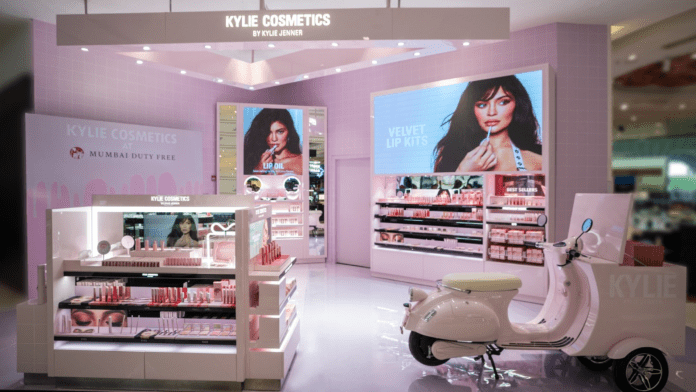
Conveniently located just by the entrance of Mumbai Duty Free, travelers are immediately greeted by the pristine blush pink aesthetic that captures the very essence of the brand. Blending modern elegance with a timeless charm, the store provides a spotless sanctuary for beauty aficionados to immerse themselves in the deliberate allure of Kylie Cosmetics. This immaculate, refined, and exquisite setting is a haven where a deep appreciation for all things beauty springs to life.

Set to make its debut at Mumbai International Airport, this dynamic store proudly displays the full spectrum of Kylie Cosmetics makeup products, encompassing offerings for the eyes, lips, and convenient travel kits. Patrons at Mumbai Duty Free can explore renowned items like the Matte Lip Kit, High Gloss, Pressed Blush Powder, Kylash Volume Mascara, and the Skincare Discovery Set. The inclusive assortment boasts a sleek and minimalistic packaging design, carefully tailored to cater to the demands of travelers, promising an instantly refreshed and sophisticated appearance.

In order to elevate the overall travel retail experience for guests, skilled beauty experts will be on hand to provide personalized Kylie makeovers, makeup consultations, and product suggestions at the makeup display. An eye-catching pink Vespa, perfect for Instagram-worthy moments, adds a dash of playfulness and allure. The Kylie Cosmetics logo adorns full-length mirrors, allowing travelers to embark on or conclude their journey with a comprehensive and memorable experience.

In honor of the unveiling of Kylie Cosmetics and Kylie Skin at Mumbai Duty-Free, a grand launch event was held in the vicinity of the store’s opening date, extending invitations to VIP patrons and prominent influencers to immerse themselves in the captivating realm of Kylie Cosmetics and Kylie Skin.

Advertisement

UK-India free trade agreement sparks concerns among British rice millers

0

A £1 billion ($1.2 billion) sector of the UK economy is apprehensive about its prospects as the UK and India draw nearer to a much-anticipated free-trade agreement.

British rice millers like Tilda and Veetee Rice have prospered over the years by importing low-tariff unmilled brown rice from countries such as India and Pakistan, then refining the grains into the white product that UK consumers adore.

However, as India pushes for a significant reduction in tariffs on white rice, and with minimal communication from British trade authorities, the industry, which sustains over 3,000 jobs across 16 mills and processing facilities spanning from Kent in southern England to Yorkshire in the north, is increasingly anxious about its future.

“It is crucial that existing tariffs on milled (white) rice are maintained,” Alex Waugh, outgoing director of The Rice Association, said at a private event in the House of Commons last month attended by rice industry leaders and government officials. “If access on milled rice is conceded, the basis of operations will be undermined, the incentive for future investment in the UK will be lost and ultimately jobs will go.”

A spokesperson for the UK Department for Business and Trade said officials were working towards an “ambitious trade deal.”

“We have always been clear we will only sign a deal that is fair, balanced and ultimately in the best interests of the British people and the economy,” the spokesperson said.

An individual familiar with the UK discussions stated that the matter of rice tariffs had not yet been thoroughly resolved. They mentioned that it remained a contentious issue, and both sides were still some distance away from resolving the more “challenging” aspects of a trade agreement.

Another source, who was informed about the Indian negotiating team, verified that the issue of rice tariffs was highly sensitive and that no agreement had been reached on this matter as of now.

At present, the UK imports significant quantities of brown rice from India, with approximately 150,000 metric tons, which accounts for a quarter of its overall rice imports, originating from India. Import tariffs play a crucial role in making this economically viable. The tariff on brown basmati rice is £25 per ton, or zero if it falls under a list of special varieties. This stands in stark contrast to the tariff on white basmati rice, which is around £121 per ton.

According to industry leaders, a significant reduction in tariffs on white rice could render UK mills obsolete. This move is anticipated to provide minimal cost advantages for consumers, potentially jeopardizing the reliability of rice supply and posing a risk of decreased product quality.

Waugh argues that India wouldn’t reap significant benefits from reduced UK tariffs. He noted that farmers in India typically receive better prices from UK mills for their brown rice compared to local buyers. This is because UK mills prioritize pesticide compliance and increasingly seek out rice with enhanced sustainability credentials.

On the other hand, Indian millers are expected to export relatively small quantities of their milled rice to the UK, which may have a limited impact on their overall profits.

Waugh further emphasized that the negative consequences for the UK go beyond mere job losses and reduced production.

Advertisement

United Breweries sets sights on premium beer segment to reclaim market share

0
United Breweries Ltd

United Breweries, which controls half the country’s beer market, is now focused on recapturing market share, particularly within the premium segment, and rectifying the company’s foundational aspects, all in the face of intensifying competition and state-specific regulatory hurdles.

“We have a very strong innovation portfolio, but at the same time, there is enough work to be done on fixing our fundamentals and continuing to grow the business,” UB managing director Vivek Gupta said during his first earnings call after he joined the maker of Kingfisher and Heineken last month. “We are humble that we have a lot of ground to cover and put fundamentals in place.”

Gupta said company executives are meeting key stakeholders in the government and state governments to understand “how the company can ease some of the barriers in the business…”

During the July quarter, the majority of companies in the sector, including UB and Carlsberg, attributed their sluggish growth to supply-chain challenges and alterations in their market distribution strategies. For example, UB cited the cancellation of Sunday shift permissions in Telangana as a reason for capacity constraints in their plants. Additionally, their inter-state sales were impacted due to unprofitability stemming from the influence of import duties.

Furthermore, administrative supply-chain challenges in Karnataka during April and May had a detrimental effect on volumes, resulting in a loss of market share. Nonetheless, UB has asserted that it is in the process of steadily reclaiming its market share and has committed to investing INR 350 crore in the current fiscal year as capital expenditure.

The company has obtained approval from the Haryana government to export its products to Delhi, a development that could potentially boost the export of premium brands like Kingfisher Ultra.

UB commands approximately 50% of the segment, with AB InBev closely following at almost a quarter, and Carlsberg ranking as the third largest player in the Indian market, holding a share of less than 18%. Collectively, these companies dominate 90% of India’s beer market.

In contrast, AB InBev, renowned for producing Budweiser and Corona, has been progressively capturing market share and surpassing the beer market, thanks to increasing demand for its premium brands. During the quarter concluding on September 30, UB recorded a 7% growth in volume, with premium product sales expanding by 10%.

“A 10% premium growth sounds like a nice number, but it’s not where we should be in terms of premium, and we are not doing as well as the market is doing,” Radovan Sikorsky, CFO at UB, told investors. “It’s one of the priorities that Vivek is looking at. He sees the importance of premium growth as one of the pillars of growth.”

India, a tropical country with promising demographics and increasing affluence, remains one of the largest beer markets for the big brewers. But it is heavily taxed, and the government has issued licences to only 80,000 alcohol outlets in the country, where more than 20 million people enter the legal age for drinking every year. Yet, beer accounts for just 10% of the country’s spirits market, with per capita consumption of 2 litres, lower than that in most Asian markets.

Advertisement

Haier India unveils Metalustre series, elevates kitchen spaces with striking steel finish refrigerators and innovative features

0
Metalustre

Haier Appliances India, a renowned global leader in household appliances and the top-ranked brand in major appliances for 14 years running, is excited to unveil its newest breakthrough: the Metalustre series. This collection comprises refrigerators with a striking steel finish, representing yet another substantial advancement by Haier in elevating kitchen spaces for consumers and infusing a contemporary flair into their daily routines.

The fresh Metalustre series encapsulates its unique and vibrant steel finish on both top-mounted and bottom-mounted refrigerators, in perfect harmony with the brand’s mission to bring customer-inspired innovations to India. This comprehensive product range, proudly labeled as ‘Made in India, Made for India,’ is meticulously manufactured at Haier’s cutting-edge facility in Ranjangaon, Pune.

NS Satish, President of Haier Appliances India said, “In a world where customers continually seek high-end home appliances, Haier’s new Metalustre refrigerators are poised to redefine the kitchen landscape. With their vibrant steel finish, these refrigerators are not merely designed for food storage but to inspire and uplift, ensuring each visit to the kitchen is a delightful experience. The introduction of the colorful steel finish underscores Haier’s unwavering commitment to both functionality and aesthetics, reflecting our dedication to understanding the diverse needs and preferences of Indian consumers while delivering best-in-segment products nationwide.”

With its premium aesthetic, the Metalustre refrigerators showcase a colorful steel finish that captivates the eye. Offered in three dynamic shades – Green Inox, Storm Inox, and GE Black – Haier’s latest Metalustre refrigerator collection represents the perfect selection for enhancing the look of your kitchen. The visual allure of these refrigerators, combined with their contemporary features, introduces a dash of opulence to your living area.

The recently introduced refrigerator line comes in a range of capacities tailored to suit the needs of any family. This selection encompasses various models, including Top Mount (240 Litres), Bottom Mount (237 Litres), Big Top Mount (328 Litres), and Big Bottom Mount (325 Litres), guaranteeing a solution for a wide array of households. Particularly focused on user comfort, the Bottom Mount and Big Bottom Mount refrigerators minimize bending by an impressive 90 percent, while providing generous storage capacity.

The Metalustre refrigerator series by Haier is designed with a stabilizer-free operation feature, offering robust protection against voltage fluctuations. This function is incorporated in both the Top Mount and Big Top Mount models, shielding the compressors from potential harm, ultimately boosting their longevity and dependability. This feature empowers customers to relish steady cooling without the necessity for an external stabilizer, no matter the power fluctuations.

The Metalustre series also includes the Turbo Icing feature, accessible in the Top Mount and Big Top Mount models. This functionality enables swift cooling and freezing, conserving time while effectively maintaining the freshness and taste of stored food. As for the Bottom Mount models, they feature a 1-Hour icing feature to ensure quick freezing, delivering added convenience.

The Big Top Mount and Big Bottom Mount models are equipped with Triple Inverter and Dual Fan technology, elevating energy efficiency and delivering precise cooling. This advancement guarantees consistent temperatures across all refrigerator compartments, thereby preserving the freshness of food and lowering energy usage. The newly introduced Metalustre series also boasts a Twin Energy Saving Mode, fine-tuning power consumption for environmentally-conscious users. The Dual Fan Technology enhances airflow by drawing it from multiple entry points within the refrigerator, prolonging the freshness of a variety of food items.

The convertible function empowers users to convert the refrigerator into a 100 percent fridge space, creating room for additional items. State-of-the-art technology enables users to independently control the temperature in each section, offering optimal conditions for the preservation of fruits, vegetables, meats, dairy products, and frozen items. With a spectrum of choices, ranging from 5-in-1 convertible capabilities to 14-in-1 convertible features, Haier’s latest refrigerator line effectively addresses the varied requirements of Indian households.

Advertisement

Samosa Singh launches new outlet in Hyderabad, expands reach with diverse culinary offerings

0
Samosa Singh
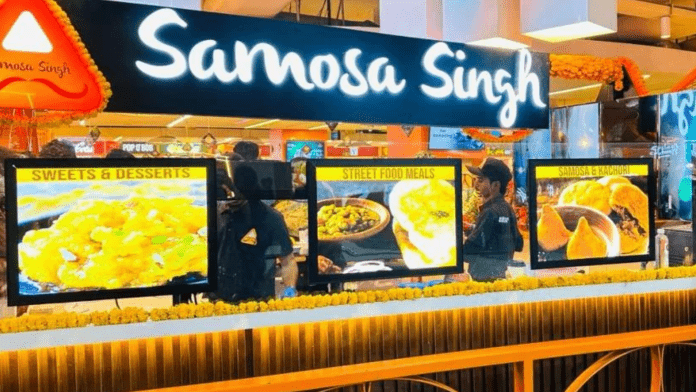
Samosa Singh (Representative Image)

Samosa Singh, a well-known figure in the Indian Snacking Industry, is thrilled to declare the inauguration of its Quick Service Restaurant (QSR) at Sarath City Mall, situated on Kondapur Road in Hyderabad. This achievement signifies the company’s bold expansion efforts, further solidifying Samosa Singh’s status as a trailblazer within the industry. Through this strategic move, Samosa Singh is poised to position itself among the new-wave startups, with aspirations of achieving a remarkable tenfold increase in revenue over the coming year.

The placement of this Samosa Singh Quick Service Restaurant (QSR) within the mall is poised to make a substantial impact. This strategically positioned outlet will facilitate offline and online events, drawing an increased number of visitors to both the QSRs and the mall. The newly inaugurated outlet will feature a diverse array of options, including favorites like Kachori, Dahi Bhalla, and various Chaat, which have proven to be bestsellers alongside their samosas. Furthermore, they will offer delectable desserts such as Gulab Jamun, Rabdi, and Ras Malai, which are certain to complement the rich tapestry of Indian flavors.

Shikhar Veer Singh, Founder, Samosa Singh, said “We at Samosa Singh believe in more than just selling products; we’re dedicated to building lasting relationships with our customers. This new outlet in Hyderabad is a destination where our ideology for the brand Samosa Singh started. We look forward to welcoming you, your family, and friends to our new outlet as we embark on this exciting journey together.”

Nidhi Singh, Co-Founder Samosa Singh, said “Samosa Singh is on the journey to lead the Indian snack market. Our team has worked tirelessly to create this vibrant space that reflects our commitment to quality, innovation, and customer experiences. We are also thankful to our consumers for their continued support, and we can’t wait to create wonderful memories with you all at our new location.”

What distinguishes Samosa Singh is its seamless fusion of traditional recipes with innovative flavors. The brand is continuously refining its method for crafting mouthwatering samosas that not only outshine their competitors in taste but also promote a healthier alternative.

The brand is expanding pan India.

Advertisement

BBMP shuts down 21 Bengaluru pubs, bars, and restaurants over fire-safety violations

0

BBMP inspects eateries and pubs for adherence to fire-safety measures, but hoteliers argue that this is an insufficient solution.

In response to a recent fire incident at a café located on the terrace of a three-story building, officials from the Bruhat Bengaluru Mahanagara Palike (BBMP) were observed conducting inspections of pubs, bars, and restaurants throughout the city on Friday.

Under the guidance of Dr. Balasundar, the BBMP Chief Medical Officer (Public Health), a team of officials conducted inspections at 280 establishments. Of these, 167 were served notices for breaching safety regulations. Additionally, 21 pubs, bars, and restaurants were instructed to cease operations due to their non-compliance with safety norms.

Bengaluru South tops the list with seven establishments closed, followed by Bengaluru East in second place with six closures. Bengaluru West secures the third position with five closures. Additionally, authorities mandated the closure of one establishment each in Bommanahalli, Bengaluru East, and RR Nagar. Notably, Dasarahalli and Yelahanka Zones had no reported violations. The majority of the closed pubs in Bengaluru West were operating from rooftop locations.

“We will continue inspecting the pubs, bars & restaurants and hotels in future. The establishments that have been served notices, must respond on the measures taken to comply with the norms,’’ said BBMP Chief Medical Officer (Public Health) Dr Balasundar.

It is said that during the inspection, the officials found fire extinguishers placed at the wrong locations. The teams also found that most joints had no fire exits. “We have ordered the closure of pubs, bars and restaurants that don’t have fire exits. We will revoke closure orders only after fire exits are facilitated and penalty is paid for violation of the norms all these years,’’ Dr Balsundar said.

He said that he has directed the owners to organise fire safety mock drills for workers and employees. “We found that most of the pubs, bars and restaurants operating from rooftops had not organised any fire safety mock drills for their employees,’’ he said.

Bruhat Bengaluru Hotels Association executive committee member Krishnaraj S P said that closure of these establishments is not a solution. “It is the BBMP that issues trade licences to them. It is their responsibility to verify whether the owners have taken measures to follow fire safety norms,’’ said Krishnaraj.

Bruhat Bengaluru Hotels Association president PC Rao described the fire mishap at Mudpipe Café as unfortunate. “It is the responsibility of owners of pubs, bars and restaurants to take fire safety measures for the welfare of employees. A majority of owners have already put in place fire safety measures by installing fire extinguishers and creating awareness on how to use LPG. We have decided to organise safety programmes, training, make posters, and guidelines for the benefit of hoteliers. Closure is not an answer. We are planning to have a meeting with the BBMP officials shortly,’’ said Rao.

Advertisement

Bootstrapped agritech startup Agriall sets new industry standard with $4M turnover in just 3 months

0
Agriall

Agriall, a self-financed agritech startup, has demonstrated remarkable entrepreneurial acumen by establishing a new industry standard. Within a mere three months, they achieved an impressive turnover of $4 million. This outstanding accomplishment highlights the company’s swift expansion and its dedication to transforming the agricultural sector through technological innovation.

Established by visionary entrepreneurs Avantikka Kapur, Karanjeet Singh, Dr. Aqsa Desai, Pranali Kate, along with Co-Founders Prathamesh Madye and Maaz Desai, Agriall embarked on a mission to deliver innovative, technology-driven solutions to the edible oil industry. What adds to the remarkable nature of this accomplishment is that the company is entirely self-funded, depending solely on the investments and ingenuity of its stakeholders.

Agriall’s triumph can be credited to its pioneering approach to agriculture, harnessing technology to empower stakeholders with data-driven insights, sustainable methodologies, and streamlined supply chain management.

The $4 million in turnover stands as evidence of Agriall’s resolute dedication to tackling the hurdles encountered by the edible oil industry. This achievement not only marks a noteworthy milestone for the company but also serves as a brilliant illustration of what can be accomplished through determination, innovation, and a deep comprehension of the sector.

The team at Agriall is elated by their rapid success and is determined to continue its mission of empowering stakeholders and making agriculture more sustainable and profitable. This remarkable achievement has certainly put Agriall on the map as a pioneer in the agritech industry, and all eyes are now on this bootstrapped startup to see what groundbreaking innovations they will unveil next.

Advertisement