Saturday, January 31, 2026
Home Blog Page 825

Turning Challenges into Opportunities: Leveraging Social Media for Crisis Resolution

0
Social Media Management crisis

Businesses are faced with a new reality in the digital age: crises can happen at any time and are frequently sparked by the very platforms that are essential to their day-to-day operations. Although social media is an effective tool for marketing, it can also lead to possible problems. But with the correct approaches, social media can become an invaluable tool for crisis management. 

To be followed are the ways as to how businesses can leverage social media to navigate and ultimately overcome challenging situations, turning potential PR disasters into opportunities for growth and brand resilience.

  • Acknowledging the Power of Social Media

Social media is the modern-day town square, where news, opinions, and information spread at lightning speed. Businesses need to understand that a crisis can erupt on social platforms, and the first step in leveraging social media for resolution is acknowledging its power.

  • Early Detection and Rapid Response

The key to managing a crisis on social media is early detection and rapid response. Monitoring social media channels for signs of trouble and addressing issues promptly can prevent a situation from escalating. A timely response can also demonstrate your commitment to customer satisfaction and transparency.

  • Empathetic and Transparent Communication

In times of crisis, empathetic and transparent communication is paramount. Admit any mistakes or issues, and provide clear and honest information. Assure your audience that you are actively working to resolve the situation. This approach can turn a negative situation into an opportunity to build trust and goodwill.

  • Mobilizing Brand Advocates

Social media provides a platform to mobilize your brand advocates and loyal customers. Encourage them to share positive experiences and defend your brand when appropriate. Their authentic support can be a powerful counterforce against negative sentiment.

  • Storytelling for Reputation Management

Craft a narrative that aligns with your brand values and mission. Use storytelling to showcase your commitment to resolving the crisis and improving your products or services. A compelling narrative can help rebuild trust and reinforce your brand’s resilience.

  • Using Social Listening Tools

Leverage social listening tools to gain insights into public sentiment and monitor ongoing conversations. These tools can help you identify trends, gauge audience reactions, and adapt your crisis resolution strategy in real-time.

  • Learning and Continuous Improvement

Every crisis offers an opportunity for learning and continuous improvement. After the resolution, analyze what went right and what could have been done better. Implement changes and enhancements to prevent similar issues in the future.

  • Turning Crisis into Opportunity

Ultimately, a well-handled crisis can be transformed into an opportunity. By addressing the issue transparently and demonstrating your commitment to improvement, you can emerge from the crisis with a stronger brand image and a more loyal customer base.

Final Thoughts:

The age of social media presents businesses with both challenges and opportunities. While a crisis can seem like a daunting prospect, it can also be a chance to showcase your commitment to customer satisfaction and transparency. By embracing early detection, rapid response, empathetic and transparent communication, and leveraging your brand advocates, you can transform a crisis into an opportunity for growth and brand resilience. Social media listening tools, storytelling, and a commitment to continuous improvement round out the strategies for effectively managing and resolving crises in the digital age. As the digital landscape continues to evolve, businesses that master the art of leveraging social media for crisis resolution will find themselves better equipped to navigate and thrive in the face of challenges.

Advertisement

User-Centric Storytelling: Using User-Generated Content to Drive Brand Narratives

0
user generated content

Storytelling has an indisputable power in the marketing industry. Ordinary goods and services are transformed into captivating brand narratives by magic. But modern consumers want to be involved in the stories, not just listen to them. User-generated content (UGC) helps solve that problem by enabling brands and users to co-create narratives. 

So, let’s dive into the fascinating world of user-centric storytelling and how you can use UGC to drive your brand’s narrative forward.

  • The Evolution of Brand Storytelling

Traditional brand storytelling often followed a one-sided approach, with companies dictating the narrative to their audiences. In the age of social media and content sharing, consumers have become active participants in brand narratives. They create, share, and shape stories around brands they love.

  • Authenticity and Trust

User-generated content is a goldmine of authenticity. When real people share their experiences and opinions, it resonates with other consumers on a much deeper level than polished marketing content. This authenticity builds trust and credibility for your brand.

  • Leverage the Power of Social Proof

Social proof is a potent persuasion tool. When prospective customers see that others have had positive experiences with your brand, it reduces skepticism and encourages them to take action. User-generated content serves as a tangible form of social proof.

  • Building a Community

User-generated content fosters a sense of community. It creates a space where customers can share their enthusiasm, ask questions, and connect with like-minded individuals who share an interest in your brand. This community can become an organic extension of your brand’s story.

  • Embracing Diverse Perspectives

UGCs provide diverse perspectives on your brand. Through photos, videos, reviews, and testimonials, users bring unique viewpoints and experiences that enrich your brand narrative. This diversity can attract a broader audience and deepen the emotional connection.

  • Co-Creating Content

Incorporating UGC into your storytelling means you’re co-creating content with your customers. Their stories become an integral part of your brand’s narrative. It’s a collaborative effort that allows your customers to influence the way your brand is perceived.

  • Encouraging User Participation

To make user-centric storytelling work, encourage user participation. Create campaigns and initiatives that invite users to share their stories and experiences with your brand. This can include contests, hashtags, or simply asking for their thoughts and opinions.

  • Curating and Showcasing UGC

It’s essential to curate and showcase UGC in a way that aligns with your brand’s messaging and aesthetics. This ensures that the user-generated content fits seamlessly into your overarching narrative. It should enhance, not disrupt, your story.

In the age of user-centric storytelling, brands have the opportunity to create powerful and authentic narratives by harnessing the creativity and experiences of their customers. By leveraging user-generated content, you can infuse your brand with authenticity, trust, social proof, and a sense of community. You’re not just telling your story; you’re co-creating it with your users. Embracing diverse perspectives and encouraging user participation leads to a dynamic brand narrative that resonates deeply with your audience. As the marketing landscape continues to evolve, those who embrace user-centric storytelling will find themselves at the forefront of building meaningful and enduring brand narratives.

Advertisement

The Relationship Continues: Strategies for Ongoing User Engagement

0

In our present active digital environment, a user’s initial conversion is only the start of a lengthy and worthwhile journey. For businesses, retaining customers over time is just as important as attracting new ones and maintaining their engagement. 

The following are some of the strategies that will help you maintain a lasting and fruitful relationship with your users, ensuring they continue to benefit from your products or services: 

  • Create Valuable Content

One of the most effective ways to keep users engaged is to consistently provide them with valuable content. This content can come in various forms, such as blog posts, videos, webinars, or newsletters. By offering information, insights, and solutions that address their needs and interests, you establish your brand as a valuable resource they can turn to.

  • Personalized Experiences

Personalization is a game-changer when it comes to user engagement. Leverage user data to tailor the user experience. By understanding their preferences, you can provide recommendations, content, and promotions that resonate with them. A personalized approach makes users feel seen and valued, which fosters long-term commitment.

  • Regular Communication

Consistent and meaningful communication is essential for maintaining user engagement. Regularly reach out to your users through email, social media, or in-app messaging to keep them informed about updates, new features, and relevant news. This ongoing dialogue reminds them of the value you offer and keeps your brand top-of-mind.

  • User Surveys and Feedback

Listening to your users is paramount. Use surveys, feedback forms, and social media interactions to gather their opinions and insights. Act on this feedback to make improvements and demonstrate that you care about their experience. Users who feel heard are more likely to stay engaged.

  • Gamification and Rewards

Gamification elements and reward systems can be powerful tools for keeping users engaged. By introducing challenges, points, badges, or loyalty rewards, you add an element of fun and competition to the user experience. These tactics motivate users to continue interacting with your product or service.

  • Community Building

Building a community around your brand is a proactive way to foster user engagement. Consider creating a forum, social media group, or dedicated space for users to connect, share experiences, and support one another. A vibrant community strengthens the emotional connection users have with your brand.

  • Proactive Support

Provide exceptional customer support even after the initial conversion. Make sure users have access to support channels, FAQs, and chat options. Address their issues and questions promptly, demonstrating your commitment to their success.

  • Educational Resources

Empower your users with educational resources. Offer webinars, tutorials, knowledge bases, and how-to guides that help them get the most out of your product or service. The more they learn and succeed with your offering, the more engaged they’ll become.

Final Thoughts:

User engagement is a continuous effort that goes beyond the initial conversion. By creating valuable content, personalizing experiences, maintaining regular communication, gathering user feedback, implementing gamification and rewards, building a community, offering proactive support, and providing educational resources, you can keep users engaged over the long term. The relationship you cultivate with your users doesn’t just benefit your business; it also enhances their experience and builds brand loyalty. In a fast-evolving digital landscape, businesses that prioritize ongoing user engagement are those that can expect lasting success and flourishing customer relationships.

Advertisement

The Recipe for Success: Developing a Mobile-First Strategy for Your Food Business

0
Mobile-First Strategy

It’s no secret that mobile technology has become an essential part of our everyday lives in today’s fast-paced, digital world. It is now imperative for businesses in the food industry to adapt to this mobile-centric landscape. 

The following are the essential ingredients for crafting a mobile-first strategy that will help your food business thrive in an increasingly competitive market.

  • Embracing the Mobile Revolution

Mobile technology has completely transformed the way consumers interact with food businesses. Whether it’s browsing menus, placing orders, or reading reviews, smartphones have become the go-to device for making dining decisions. A mobile-first strategy recognizes this shift and prioritizes the mobile experience.

  • A User-Friendly Mobile App

For a food business, a well-designed mobile app is a must-have. It should be intuitive, visually appealing, and offer a seamless experience. This app should allow customers to browse your menu, place orders, track deliveries, and earn loyalty rewards effortlessly. Ensure that your app is available on both iOS and Android platforms to reach a broader audience.

  • Responsive Website Design

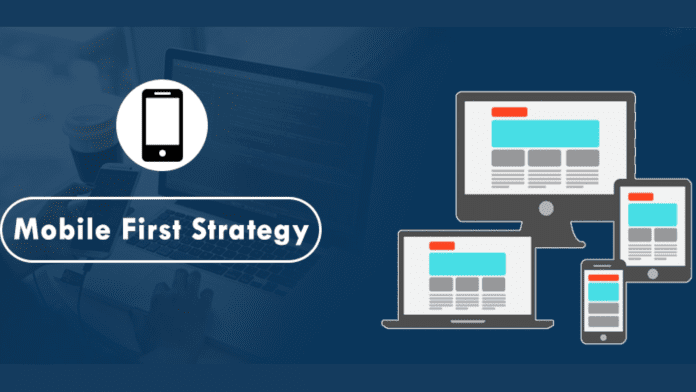
A mobile-first strategy doesn’t stop with a mobile app. Your website should also be responsive, providing an optimal experience for users on various devices. A mobile-responsive site ensures that potential customers can access your menu and other information easily, regardless of whether they’re on a smartphone, tablet, or desktop computer.

  • Mobile Payment Options

Incorporate multiple mobile payment options to simplify the checkout process. Offer secure payment gateways and integrate popular mobile wallets like Apple Pay and Google Wallet. The easier it is for customers to pay, the more likely they are to complete their orders.

  • Streamlined Ordering and Delivery

Efficiency is key when it comes to food delivery. Implement features like real-time order tracking, delivery time estimates, and automated delivery notifications. A smooth ordering and delivery process enhances the customer experience and encourages repeat business.

  • Personalized Recommendations

Leverage customer data to provide personalized food recommendations. If a customer frequently orders vegetarian dishes, offer tailored suggestions for new menu items or promotions. This personalization shows that you understand your customers’ preferences, making them more likely to return.

  • Customer Feedback Integration

An essential ingredient in your mobile-first strategy is the ability to gather and respond to customer feedback. Integrate feedback mechanisms within your app and website, and actively address reviews and comments. This two-way communication not only builds trust but also helps you refine your offerings.

  • Marketing and Loyalty Programs

Use your mobile platforms to run marketing campaigns and loyalty programs. Send out targeted offers, exclusive discounts, and rewards to your app users. Encouraging customer loyalty through your mobile platform keeps them engaged and coming back for more.

Final Thoughts:

In the food business, a mobile-first strategy is like a secret recipe for success. It ensures that your brand is accessible, efficient, and tailored to the needs of your customers in today’s mobile-centric world. Whether it’s through a user-friendly mobile app, responsive website, mobile payment options, streamlined ordering and delivery, personalized recommendations, customer feedback integration, or marketing and loyalty programs, the ingredients for a thriving food business are clear. By embracing mobile technology and putting your customers first, your food business can not only survive but thrive in this competitive industry. As the mobile landscape continues to evolve, those who prioritize a mobile-first approach are sure to be the cream of the crop in the food industry.

Advertisement

Strategic Branding: Crafting an Image that Sets You Apart in the Marketplace

0
Brand Image

Being unique in the highly competitive world of business-to-business marketing is a never-ending task. A strong brand image, though, can be your hidden asset. It’s about the whole essence of your brand, not just a memorable slogan or catchy logo because the first thing, in this competitive realm, that makes you stand out over the others is the logo of the brand. 

  • The Power of Perception

Branding is all about perception. How your B2B brand is perceived by your target audience can make all the difference. Whether you’re aiming for innovation, reliability, trustworthiness, or any other quality, your branding sets the stage for that perception.

  • Defining Your Unique Selling Proposition

A strong brand begins with a clear understanding of what makes your business unique. This unique selling proposition (USP) is what sets you apart from your competitors. It could be a particular service, a commitment to quality, or a unique approach to problem-solving. Your branding should reflect your USP.

  • Understanding Your Audience

Effective branding also means understanding your target audience. What are their pain points, their desires, and their values? Your brand should resonate with your audience’s needs and aspirations. The more you connect with them on a personal level, the stronger your branding.

  • Consistency Across All Touchpoints

Your brand image should be consistent across all touchpoints. This includes your website, marketing materials, social media, and even the way your employees present themselves. A consistent image builds trust and familiarity.

  • Crafting a Unique Visual Identity

Visual elements play a significant role in branding. A distinctive logo, color palette, and typography help create a memorable and recognizable brand. When a potential customer sees your logo, they should immediately associate it with your brand values and offerings.

  • Telling a Compelling Story

Your brand story is the narrative that encapsulates your journey, values, and mission. It’s the emotional core of your brand. A compelling story not only engages your audience but also helps them connect with your brand on a deeper level.

  • Adapting to Market Trends

Branding isn’t static. It should evolve with market trends and changing customer preferences. By staying attuned to the shifting landscape, you can ensure your brand remains relevant and appealing.

  • Monitoring and Measuring

Measuring the effectiveness of your branding efforts is essential. Utilize metrics such as customer feedback, market surveys, and website analytics to evaluate how well your brand is resonating with your target audience. Adjust your strategy as needed to maintain and enhance your brand’s impact.

Final Thoughts:

Strategic branding is your means of getting around the crowded marketing scene. It takes more than just coming up with a catchy tagline or logo to create a cohesive image that embodies your USP, connects with your target market, and tells a powerful tale. Maintaining your brand’s relevance and appeal requires both a flexible approach to market trends and a unified visual identity. In a crowded market, you can make sure your  brand stays unique by tracking and evaluating the results of your branding initiatives. Strategic branding will be essential to creating a strong and enduring brand presence in the ever-changing marketing landscape.

Advertisement

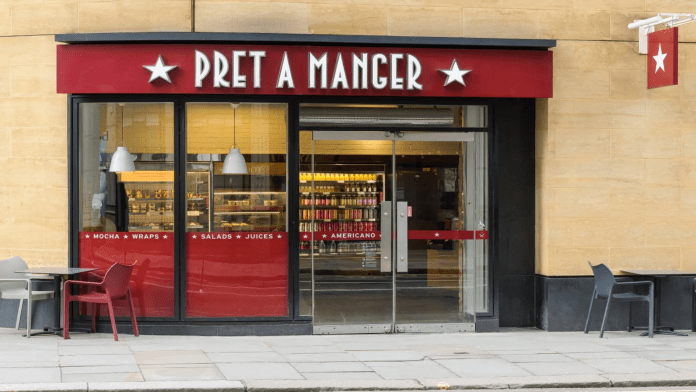
Pret A Manger set to double presence in Germany by 2026, launches five new locations in Berlin for immediate expansion

0
Pret A Manger
Pret A Manger

Pret A Manger, the British sandwich and coffee chain, is looking to expand its footprint in Germany by doubling its current presence, as reported by the World Coffee Portal.

In pursuit of this expansion, the sandwich and coffee chain has collaborated with franchisee PM Nord.

By the year’s end, the sandwich and coffee chain intends to launch five new eateries in Berlin.

The initial pair of the five locations are scheduled to open in November 2023. The first will be situated at Friedrichstrasse, a bustling cultural and retail center, while the second will be located at the Sony Center within The Playce at Potsdamer Platz.

The rest of the establishments are scheduled for Leipziger Platz, the shopping center at The Playce at Potsdamer Platz, and Steglitzer Schloßstraße.

In a statement, PM Nord said, “Following the success of our shops in German transport hubs, launching the Pret brand in downtown Berlin is a major milestone in our European expansion.

“We’ve long heard that locals would love to have a Pret in the city centre, so we’re delighted to be working with new franchise partner PM Nord GmbH to bring our freshly made food and organic coffee to more people and add something new to Berlin’s vibrant food-to-go scene.”

The coffee company made its debut in the German market in 2018 when it inaugurated its inaugural restaurant at Berlin Central Station. At present, it manages four establishments in Frankfurt, Berlin, and Düsseldorf.

The launch of these new restaurants aligns with Pret A Manger’s expansion strategy, aiming to double its brand presence by the year 2026.

Earlier this month, Pret A Manger established a new joint venture partnership with its current franchisee, Dallas International (Dallas), to accelerate the brand’s expansion in the United States.

The company’s objective is to broaden its presence through the establishment of new company-owned stores and the signing of additional franchise agreements.

The restaurant brand presently employs a staff of 9,900 team members across 15 international markets, which encompass Belgium, Canada, Dubai, France, Germany, Hong Kong, India, Italy, Kuwait, Luxembourg, Singapore, Switzerland, the UK, and the US.

Advertisement

Kinder brings joy to Diwali celebrations with mix assortment packs

0
Kinder Mix

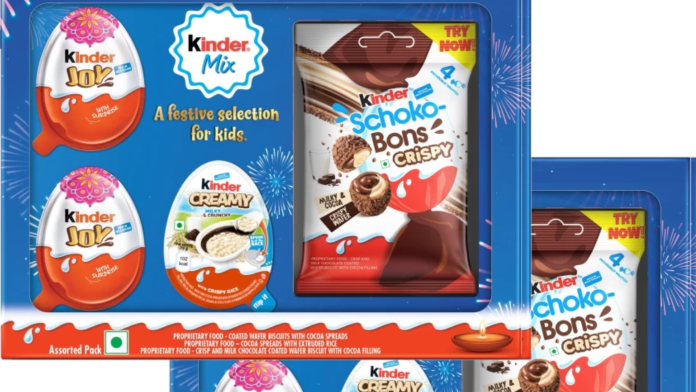
Ferrero India, a division of the globally renowned Ferrero Group recognized for its sweet-packaged items, has unveiled the Kinder Mix Assortment Pack and Kinder Joy Multi-pack. This release marks a significant step in fortifying the seasonal gifting range of the Kinder Brand in India. Tailored for the festive gifting season, the Kinder Mix Assortment Pack and Kinder Joy Multi-pack are thoughtfully designed additions under the Kinder brand umbrella.

Diwali stands as one of the grandest celebrations of the year, a time when families and friends unite to revel in love and joy. Among the most cherished traditions during this festive season is the exchange of gifts. In the diverse landscape of the Indian market, confectionary options abound, ranging from traditional sweets to contemporary delicacies. While these choices cater to a wide range of age groups, only a select few manage to truly captivate a child’s heart. Witnessing the sheer delight that radiates from a child’s face when they receive a considerate gift from their elders is an incomparable and heartwarming sight. This not only brings immense happiness to the child but also elevates the overall festive spirit within the entire family.

With a strong focus on delighting children, Kinder brands has introduced two gifting choices: the Kinder Mix Assortment Pack and the Kinder Joy T3 Multi-pack. The Kinder Mix Assortment Pack comprises two Kinder Joys, one Kinder Creamy, and one Kinder Schoko-Bons Crispy, all crafted with high-quality ingredients.

Amedeo Aragona, marketing Head Indian Subcontinent – Kinder Brands said, “As a brand committed to delivering exceptional experiences through a blend of fun, genuine care, modernity, and balance, Kinder has consistently been a leader in crafting enjoyable moments for both families and their kids. The introduction of Kinder’s seasonal gifting choices further enhances this legacy, acknowledging India’s affinity for gifting and offering tailored selections during festive seasons.”

The assorted gift packs can be found at various prominent retail locations, encompassing modern trade, traditional stores, and e-commerce platforms, such as Amazon, Flipkart, Blinkit, and Big Basket.

Advertisement

Zoomo and Uber Eats team up to transform food delivery in London with E-mopeds

0
Zoomo

Zoomo, a leading electric fleet solutions provider, has joined forces with Uber Eats, the popular online food delivery platform, to enhance the availability of light electric vehicles for couriers in London.

Through this fresh collaboration, Zoomo will introduce high-performance E-mopeds to its product lineup, accompanied by discounted rates for their monthly and weekly rentals.

In an effort to combat emissions arising from food delivery services, Uber Eats couriers will benefit from reduced rental fees for top-notch E-mopeds during their first month of subscription. This promotion makes these E-mopeds available through Zoomo for just £149, inclusive of insurance.

This announcement aligns with Uber Eats’ ambitious objective of achieving 100% emission-free food delivery globally by 2040, with a specific focus on major European cities by 2030. Additionally, this partnership further bolsters Zoomo’s mission to shift urban transportation to light electric vehicles and improve courier access to cost-effective and efficient mobility solutions.

Nicolas de Juniac, UK general manager at Zoomo, said, “We admire Uber’s commitments to reduce the carbon footprint of food delivery trips. By joining forces with Uber Eats to enhance courier access to E-mopeds, we’re not only taking significant strides toward a greener delivery landscape but also setting the stage for a more sustainable and efficient industry – and this is just the beginning. We’re excited to work closely with Uber Eats, growing our partnership and leading the charge toward a brighter, eco-conscious future, all while empowering valued couriers. It’s a win-win-win partnership: for the environment, for our riders and for Zoomo.”

Advertisement

Premier Foods acquires protein-rich breakfast brand Fuel10k in £34 Million deal

0
Fuel10k

Premier Foods has revealed its acquisition of Fuel10k, a prominent breakfast brand, in a deal worth £34 million, further solidifying its foothold in the breakfast meal category.

Premier Foods is a large UK-based food manufacturer known for its extensive lineup of renowned brands, which includes household names such as Mr Kipling, Cadbury, and Batchelors. Building on its track record of acquisitions, the company has now added Fuel10k to its portfolio, following the acquisition of The Spice Tailor, an Indian and South East Asian meal kit brand, in July of the previous year.

Premier announced that the transaction, finalized on October 29, 2023, is poised to significantly bolster the company’s standing in the breakfast category, leveraging its prior accomplishment with the popular introduction of Ambrosia porridge pots.

The company is set to make an initial payment of £29.6 million, utilizing its existing cash reserves. Additionally, a minimum deferred payment of £4 million will become due in the fiscal year 2026/2027, with any potential increments contingent on meeting specific growth targets.

Premier referred to Fuel10k as a breakfast brand enriched with protein, labeling it as ‘on-trend’ in the statement that revealed the acquisition.

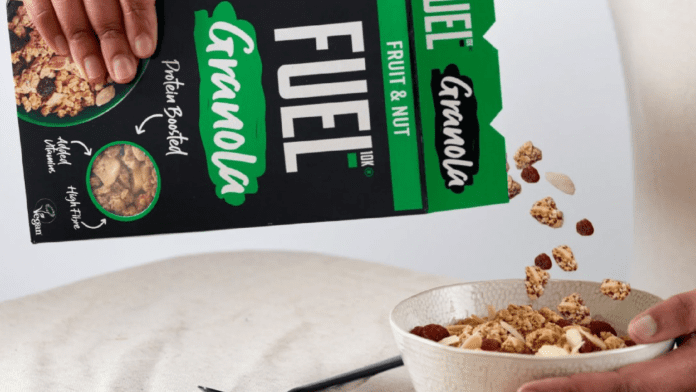
The brand’s product lineup encompasses granola, porridge, cookies, and a range of protein-rich snacks. Over the past three years, it has consistently achieved robust double-digit revenue growth. Its products are available through prominent UK retailers, convenience outlets, and online platforms.

Alex Whitehouse, chief executive officer of Premier Foods, said, “Possessing a differentiated category position, with its protein-enriched product range and appealing to a younger demographic, we expect to deliver significant further profitable growth of Fuel10k through the deployment of our successful branded growth model”.

Fuel10k’s Co-Founder, Barney Mauleverer, commented, “We are very excited to be passing the reigns on to the owner of such a great stable of UK brands. Having built the foundations from start-up, the FUEL10K brand is now primed to accelerate into the future and achieve even more great things.”

Advertisement

Ecotone unveils Europe’s largest organic coffee and tea facility

0
Ecotone

Ecotone, a producer of organic and plant-based food, has recently unveiled what the company asserts to be the largest 100% organic coffee and tea facility in Europe.

The company, which possesses brands in seven different countries, has introduced La Caféière with a €10 million investment in response to the increasing need for high-quality, organic hot beverages.

Supported by funding from the European Union and the European Agricultural Fund for Rural Development, La Caféière is a crucial element of Ecotone’s worldwide ‘Food for Biodiversity’ initiative, aimed at achieving the most rigorous environmental and sustainability criteria.

As stated by Ecotone, La Caféière’s roasting smoke burner reduces CO2 emissions by 30% when compared to conventional approaches. The facility is designed to enhance global sustainability standards through the use of green energy, efficient wetland water management, 100% LED lighting, and photovoltaic roof panels, all with the goal of making tea and coffee production as environmentally sustainable as possible.

The facility also adheres to a complete circularity policy, with 85% of all remaining materials being either recycled or repurposed into compost, and the remaining 15% are incinerated with energy recovery.

Ecotone stated that La Caféière’s suppliers engage in agricultural practices that surpass conventional organic standards. These practices encompass the cultivation of diverse plant species within each plot, ensuring fair income for small-scale producers, and active efforts by partner cooperatives to combat deforestation in their respective regions.

Over 60% of La Caféière’s sales will be comprised of Fairtrade certified products moving forward, with a goal to reach a level of over 70% Fair Trade coffee and tea within the next two years. The facility is set to annually produce 100 tonnes of tea and receive 3200 tonnes of organic coffee, resulting in the sale of 5.5 million units of organic coffee each year.

Advertisement