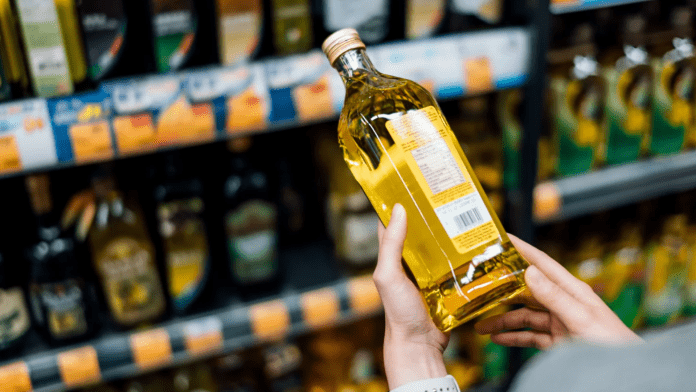
In Spain, the leading global producer of olive oil, numerous supermarkets are implementing heightened security measures due to escalating prices and a rise in theft incidents. The surge in prices has resulted in one-liter bottles of extra-virgin olive oil being marketed for as high as 14.5 euros ($15.77) in certain supermarkets. As a response, retailers are attaching security tags to olive oil bottles, aligning them with products such as spirits, cosmetics, and appliances to deter shoplifting and thefts, as reported by Reuters.
Over the last two years, the cost of olive oil has surged by 150%, primarily attributed to an intense drought in Southern Europe, a significant production region. Besides Spain, key olive oil producers encompass Italy, Greece, and Portugal. The escalating prices have placed a financial strain on households dependent on this oil. Spain, as the foremost global olive oil producer, contributes approximately 40% to the world’s total output.
“We are witnessing a significant increase in shoplifting,” said Ruben Navarro, CEO of Tu Super, a supermarket chain operating in Spain’s Andalucia region told Reuters. “Olive oil has become an attractive product for thieves to steal.”
To deter theft, Tu Super has taken measures by linking sizable 5-litre olive oil bottles together and securing them to shelves with padlocks since September.
The future of olive oil appears concerning, as Deoleo, the world’s leading producer, anticipates that olive oil prices in Spain will persist at unprecedented levels until at least June, owing to consecutive droughts in the southern regions of the country.
According to news sources, numerous Carrefour and Auchan supermarkets in Spain are installing security tags on one-liter bottles of olive oil, necessitating staff intervention for removal.
Instances of olive oil theft from mills have also been reported by Spanish police. In Spain, thefts of items valued at less than 400 euros go unpunished unless it constitutes a repeated offense.
Purple Style Labs (PSL), the umbrella organization for Pernia’s Pop-Up Shop (PPUS), has successfully raised $8 million in Series D funding. The financing was spearheaded by Sanket Parekh from Pidilite Family Office. Noteworthy contributors in this funding round include Signet (Harish Shah Family Office), Hira Group Family Office, and several prominent investors like Neelesh Bhatnagar, Masaba Gupta, Rahul Garg, Atul Gupta, and Singularity Growth Opportunities Fund I.
This marks the second funding round for Mumbai-based company Purple Style Labs in 2023. Having previously secured $14 million in a Series C round in April, the latest investment has propelled the company’s valuation to $352 million. Purple Style Labs has now raised nearly $50 million in total.
Established in 2015 by Abhishek Agarwal, Purple Style Labs stands as an omnichannel luxury fashion platform, providing a space for individuals to explore and purchase Indian designer wear. The company aspires to create a fashion conglomerate, encompassing two multi-designer platforms – Pernia’s Pop-Up Shop and the Stylist.
Following the strategic acquisition of Pernia’s Pop-Up Shop in 2018, Purple Style Labs has expanded its presence globally by establishing 15 Pernia’s Pop-Up Studio experience centers. These centers cater to both womenswear and menswear and are situated in key cities such as Mumbai, Delhi, Bengaluru, Hyderabad, Kolkata, Ahmedabad, Surat, and an international location in Mayfair, London.
As per the startup data intelligence platform TheKredible, the company experienced a remarkable fourfold increase in revenue, reaching INR 174.56 crore in FY22 compared to INR 44.05 crore in FY21. Purple Style Labs asserts that it has sustained over 100% year-on-year growth for the past two years, concluding FY23 with consolidated gross sales exceeding $60 million (INR 500 crore).
The company aims to attain gross sales of $200 million (INR 1,600 crore) within the next two to three years and is set to explore the possibility of an IPO in 2026.
Purple Style Labs competes with ShopStyle, IndianRoots, Arvind Fashion, FabIndia, and Jivaana, among others.
While Australia emerged victorious against India, securing its sixth cricket World Cup, quick-commerce companies in the nation rejoiced. From flowers to soft drinks and chips, customers placed orders for a variety of products on platforms such as Swiggy and Zepto, leading these firms to achieve their highest daily sales ever on November 19.
For instance, Zepto reported receiving between 400,000 to 500,000 orders on that day, marking its “highest-ever order volume.”
Orders for “munchies, beverages, ice creams, and other processed foods saw an increase of 50-100 percent compared to a typical Sunday… surpassing even the scale of Diwali,” emphasized a spokesperson for Zepto, underscoring the magnitude of the event for the entire country.
Zepto, which included a complimentary can of Thums Up with every order exceeding INR 299 in value, reported delivering 200,000 cans by 5:30 p.m. This translated to Zepto achieving at least INR 6 crore in daily sales on November 19, closely aligning with its FY23 performance.
Similar scenarios unfolded on other platforms as well.
“As anticipated, Instamart clocked its highest ever orders during the World Cup finals between India and Australia, beating previous highs like the India-Pakistan match and Diwali,” a Swiggy Instamart spokesperson said.
Blinkit, owned by Zomato, also noted, “Orders for chips consistently peak on days when India is playing. We are currently on course to achieve a new all-time high in chip sales on Blinkit on November 19,” stated Albinder Dhindsa, CEO of Blinkit, around 5 p.m. on X (formerly Twitter).
More than a hundred thousand fans attended the cricket stadium, with a significant majority donning blue jerseys to express their backing for the home team. Likewise, data indicated that fans supporting the Indian cricket team from home also purchased the latest jerseys in substantial quantities.
Swiggy reported that orders for the Indian jersey on Instamart reached a peak of nine jerseys per minute.
The surge occurs as quick-commerce firms are actively expanding their stock keeping units (SKUs) to boost average order volumes (AOVs) and expedite their journey to profitability.
Offering the cricket jersey for INR 999 was a strategic move in that direction. The pricing of the jersey was noteworthy, given that the average order value (AOV) for most quick-commerce firms typically hovers around INR 460-480, with some exceptions during specific seasons.
“Working with Adidas this world cup season was a good decision,” Dhindsa said on November 19.
Earlier this year, the BCCI announced the signing of a kit sponsorship agreement with Adidas, extending until 2028.
As companies experienced a spike in grocery orders, even food orders reached unprecedented levels for certain players. Swiggy, for instance, stated that “by late evening on November 19, orders for food had already exceeded the previous records set during New Year’s Eve and Diwali in the same timeframe by a significant margin.” However, the food tech startup did not disclose specific numerical figures.
Pizza and burgers emerged as the top food choices on the match day. As the match unfolded, customers also placed orders for biryanis, thalis, kachoris, and kebabs, according to Swiggy’s findings.
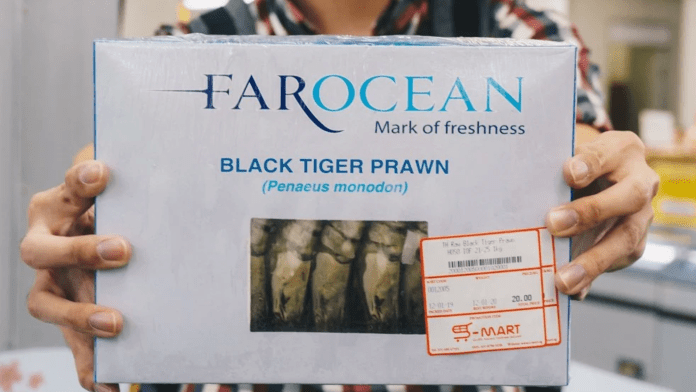
Far Ocean, a food processing company, and its director were fined a total of $378,000 for multiple offenses, which included the absence of expiry dates or the presence of incorrect ones on 5,880kg of fish and meat products.
The Singapore Food Agency (SFA) has identified this case as the most comprehensive one it has investigated thus far.
On November 20, Far Ocean Sea Products faced a fine of $223,000, with Jordan Quek Ruiming, aged 36, being directed to pay a fine amounting to $155,000.
If Quek is unable to pay the specified amount, he will be required to serve a 620-day prison sentence.
Quek has been serving as a director of the company since July 1, 2015, and holds directorship positions in several other firms, including Bakers & Co and JSI Investments.
Prior to pronouncing the sentence, District Judge Eugene Teo observed that, during an inspection, food products expired by three years were discovered on the company’s premises and processed for sale.
Stressing that the scale of the offences was “quite unprecedented”, he said, “Food safety ought to be the primary concern for all food suppliers.”
In October, Far Ocean Sea Products and Quek pleaded guilty to 30 charges each, related to the violation of the conditions stipulated in the firm’s licenses, along with an additional charge for unlawfully utilizing a room at its premises for food processing.
The company also confessed to an additional charge of impeding officers in their investigations by tampering with a sealed room.
Quek and the company were confronted with an additional 97 charges, all of which were taken into account during the sentencing process.
Characterized as a “major market participant” by the prosecution, Far Ocean provides and markets fish and meat products to commercial customers.
Their clientele comprises hotels, supermarkets, food and beverage establishments, airlines, and non-commercial customers both in Singapore and abroad.
During previous proceedings, Deputy Public Prosecutors Niranjan Ranjakunalan, Kayal Pillay, and Gladys Lim stated that Far Ocean held two licenses permitting the operation of a processing establishment in Fishery Port Road for the production of fish and meat products intended for consumption.
As a stipulation, the company was required to guarantee that every package of meat or fish product was distinctly marked and labeled with its expiration date.
On July 3, 2019, officers from the Singapore Food Agency (SFA) conducted an inspection of Far Ocean’s facilities in response to a complaint against the company. During the inspection, a significant quantity of products lacking proper marking and labeling of expiry dates was discovered.
Inquiries uncovered that Far Ocean failed to maintain an accurate inventory of its meat and fish products. Additionally, the company lacked proper records of invoices and production dates.
Consequently, a substantial quantity of expired meat and fish products was present on the premises, including items whose expiration had exceeded three years. These products were stored alongside those that had not yet reached their expiration dates.
During the second day of the inspection on July 4, 2019, officers from the Singapore Food Agency (SFA) sought permission to access a room designated exclusively for use as a dry store, which was found to be locked.
An employee mentioned that the room was not in use, and the keys were not present on the premises.
Through a gap in the door, the officers noted the presence of meat-slicing machines, along with meat pieces and white substances resembling meat fats in a drainage area. These observations suggested that the room was utilized for meat processing.
To facilitate their inspection once the keys were surrendered, the officers sealed all three doors leading to the room.
The following day, upon obtaining the keys, the officers discovered that the room had been tidied up, and the machines were covered with plastic wraps.
Inquiries disclosed that the staff accessed the room through an opening in a false ceiling.
The prosecution stated in October that the company had a longstanding practice of instructing staff to clean the room whenever an inspection occurred.
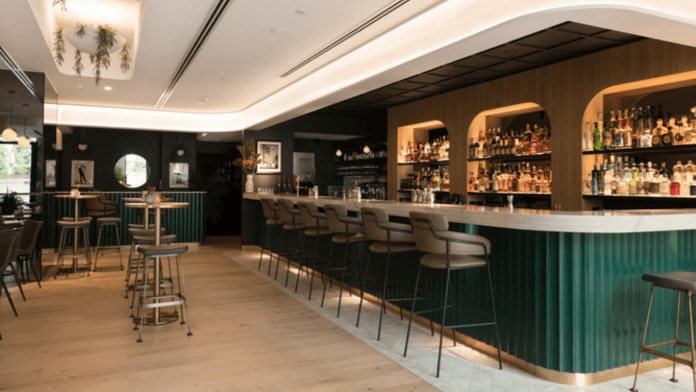
Sydney’s Maybe Sammy has recently been crowned the world’s most influential bar, clinching the prestigious #1 spot in the Top 500 Bars 2023 awards.
During the Top 500 Bars 2023 awards ceremony in Paris, the announcement was made, and Maybe Sammy Venue Manager Sarah Proietti, along with Bar Manager Hunter Gregory, received the prestigious award.
Securing the top position was Maybe Sammy, with New York’s Double Chicken Please, Barcelona’s Paradiso, Paris’ Little Red Door, and Singapore’s Jigger & Pony following closely behind in the Top 500 Bars 2023 rankings.
“To be named #1 bar in the world by the Top 500 Bars feels very surreal,” says Co-founder Stefano Catino.
“It’s such an honour for our bar team to be recognised for the time and effort they put into making the experience at Maybe Sammy exceptional and for that to be acknowledged on a global scale is so humbling. We couldn’t be happier to top the list this year, it’s a very special moment for the whole team.”
The remaining entries on the list encompassed 122 cities and 53 countries, with an additional 22 Australian establishments earning a place among the recognized venues.
Other Australian establishments that secured spots on the list were The Baxter Inn (87), Black Pearl (119), Re- (122), Cantina OK (132), Dean & Nancy (134), PS40 (164), Byrdi (167), Old Mate’s Place (177), and Above Board (187).
The Top 500 Bars list was assembled from information sourced from over two thousand online outlets, incorporating a mix of expert opinions, reviews, and input from the general public.
Avadh Sugar & Energy Ltd, a company within the K K Birla group, has disclosed a net profit of INR 29 crore for the quarter ending in September, marking a significant improvement from the INR 16 crore loss recorded in the same period last year.
During the quarter, the Kolkata-based company reported a total income of INR 799 crore, showcasing a notable increase from the INR 594 crore recorded in the corresponding period of the previous year.
The company reported a higher EBITDA of iNR 78 crore for July-September compared to INR 6 crore in the same period last year, according to a statement released by the company.
“The company now proposes to increase sugar cane crushing capacity from 10,000 TCD (tonnes of cane crushed per day) to 13,000 TCD, and also improve energy efficiency,” it said.
“The Indian agri-economy was impacted by the El Nino effect in 2023, resulting in a rainfall deficit during the critical months of the sugarcane cycle. With an anticipated lower production in the upcoming sugar season, we expect domestic sugar prices to remain firm, reinforcing our positive outlook on the sector,” Co-chairperson C S Nopany said.
India, the leading global exporter of rice, is anticipated to extend its restrictions on international sales throughout the upcoming year. This decision is likely to keep the essential grain near its peak price levels, reminiscent of those seen during the food crisis of 2008.
Lower prices, coupled with ample stockpiles, have positioned India as one of the top global shippers over the past decade. Recent statistics reveal that India now accounts for almost 40% of the total global shipments, with prominent buyers including African nations like Benin and Senegal.
However, Prime Minister Narendra Modi, who is set to seek reelection next year, has consistently increased constraints on shipments as part of an effort to control domestic price surges and safeguard Indian consumers.
“As long as domestic rice prices face upward pressure, the restrictions are likely to stay,” said Sonal Varma, chief economist for India and Asia ex-Japan at Nomura Holdings Inc. “Even after the elections, if domestic rice prices do not stabilize, these measures are likely to get extended.”
India has implemented export duties and set minimum prices, restricting the export of broken and non-basmati white rice varieties. This led to a significant price surge, reaching a 15-year high in August. Buyers from the most vulnerable importing nations refrained from making purchases, and some even sought waivers. As of October, rice prices remained 24% higher compared to the previous year, as reported by the UN’s Food and Agriculture Organization.
According to B.V. Krishna Rao, the president of the Rice Exporters Association, representing India’s shippers, Modi’s government aims to secure ample domestic supplies and mitigate price hikes. Rao suggested that the government is likely to maintain the current export restrictions until the upcoming vote next year.
The onset of El Niño, a phenomenon known for adversely affecting crops across Asia, could exacerbate the tightening of the global rice market. This occurs at a juncture when world stockpiles are on track for a third consecutive annual decline. The Thai government has indicated that paddy output in the second-largest rice exporter is expected to decrease by 6% in 2023-24 due to dry weather conditions.
“Rice is tough because there are just not a lot of other suppliers,” said Joseph Glauber, a senior fellow at the International Food Policy Research Institute in Washington. India leaves “a big hole to fill,” he added.
Adding to the policymakers’ caution, concerns about India’s crop are further complicating the situation. Estimates from the farm ministry suggest that the monsoon-sown harvest may decrease by nearly 4% compared to the previous year due to irregular rainfall. The cumulative rainfall during the monsoon period from June to September was the lowest in five years.
A top priority for the government is guaranteeing the availability of supplies to support the country’s free food program, benefiting over 800 million people. Earlier this month, Modi declared the extension of the arrangement by five years, making this announcement just days before a series of five state elections.
The significance of the handouts increases as food costs continue to climb. Data compiled by the food ministry indicates that retail prices of rice in New Delhi have risen by 18% from a year earlier, while wheat is now 11% more expensive.
A representative from the food and trade ministries stated that the government is consistently monitoring food prices, and a well-considered decision on exports will be made at the appropriate time, taking into account the interests of both consumers and farmers.
While India’s policy may eventually favor financially strained consumers in the world’s most populous nation, the same cannot be said for vulnerable populations elsewhere in Africa and Asia. Billions in these regions depend on a bountiful global rice supply.
In the Philippines, rice inflation reached a 14-year peak in September, despite a presidential directive to limit costs. Meanwhile, in Indonesia, the government is increasing imports to alleviate prices ahead of the presidential election in 2024.
West Africans, particularly Nigerians, have felt the impact of escalating costs. In September, the price of rice, a key component for preparing jollof, a widely enjoyed dish in many Nigerian households, surged by 61%. During that month, annual food inflation accelerated to 30.6%, coinciding with headline inflation rising to 26.7%—the swiftest rate since August 2005.
The US rice industry, for its part, said India’s export ban was unnecessary. “India has more than sufficient stocks right now,” said Peter Bachmann, president and CEO of USA Rice. “While our exporters (and other major exporters in Asia) are benefiting in the short term, when India lifts the export ban in the coming months, they will once again significantly distort world prices.”
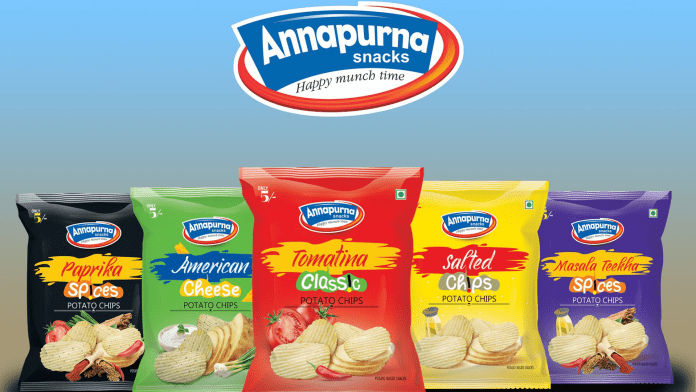
On Sunday, Annapurna Swadisht Ltd announced its goal to achieve a revenue doubling in the fiscal year 2023-24, surpassing INR 300 crore. The company also aims to sustain a compound annual growth rate (CAGR) of no less than 50 percent over the next 4-5 years.
A senior official from the food-focused FMCG company in East and Northeast India stated that the company’s ambitious growth will be propelled by increased market penetration and expansion into two major categories: biscuits and noodles.
In pursuit of this goal, the company has enlisted the expertise of GP Sah, the global CEO of the Nepal-based FMCG company that possesses the Wai Wai branded noodles, to guide the company through its upcoming phase of expansion.
With the aim of achieving a topline of INR 1,000 crore within the next 3-4 years, Annapurna’s managing director, Shreeram Bagla, has brought in new talent to the company, increasing it from INR 160 crore in FY’23.
“A revival in rural demand, driven by greater distribution strategies and the addition of new categories like biscuits and noodles, will help Annapurna achieve robust growth in the coming years.
“In FY’24 itself, we are targeting to cross a topline of INR 300 crore, up from INR 160 crore in FY’23,” stated GP Sah, the joint managing director, during an interview.
During the first half ending September 30, 2023 (H1’FY24), the company with a focus on snacks, listed on the NSE SME platform, announced a substantial increase in revenue, nearly reaching 100 percent to INR 131.13 crore, along with a noteworthy jump of 128 percent in Profit After Tax (PAT) to INR 6.56 crore.
Sah mentioned that while the biscuits market is valued at INR 50,000 crore, and the noodles segment has reached INR 12,000 crore, there is substantial untapped potential in both sectors due to their comparatively low per capita consumption when compared to neighboring countries.
Describing the reasoning behind the growth projection, Sah emphasized that the reduction in raw material prices is enabling the industry to recalibrate prices, providing enhanced advantages to consumers through diverse forms and formats. This includes the introduction of premium products in smaller SKUs specifically tailored for urban markets.
Moreover, with a favorable monsoon, barring a few regions, there is anticipated relief for rural demand, alleviating the pressure on the FMCG sector.
“We are doing very well in the snacks segment, which now accounts for about 75 per cent of our current revenue, and we will continue to innovate in this segment, which is worth INR 1 lakh crore, including bhujia and namkeen among others,” he said.
The company predominantly serves Tier III and Tier IV markets in Bihar, Jharkhand, West Bengal, Assam, Odisha, and Uttar Pradesh. Its product portfolio comprises nearly 72 SKUs (stock-keeping units) spread across ten main categories, encompassing fryums, namkeens, snacks, candies, and cakes.
With a network of almost 550 distributors and more than 115 super distributors, the products are accessible through an extensive presence in over 6 lakh retail touchpoints.
Discussing the introduction of new categories, Sah mentioned that the company intends to have a presence in both the mass and premium segments for noodles, while focusing solely on the mass segment for biscuits.
Nevertheless, he underscored the company’s commitment to solidify its position in the current markets of the eastern and northeastern states.
Currently, the company plans to adopt an asset-light approach by outsourcing the production of the new categories (biscuits and noodles).
ASL possesses five proprietary manufacturing units situated in various locations across West Bengal, including Asansol, Siliguri, Gurap, and Dhulagarh. Additionally, the company has entered into six contractual/leasing arrangements at Kakinara (West Bengal), Hazaribagh (Jharkhand), Ranigunj (West Bengal), Ganjam (Odisha), Siliguri (West Bengal), and Mathura (Uttar Pradesh).
Having been listed in September 2022, the company raised approximately INR 65.43 crore through a preferential issue of equity shares and warrants to fuel its expansion, according to the official.
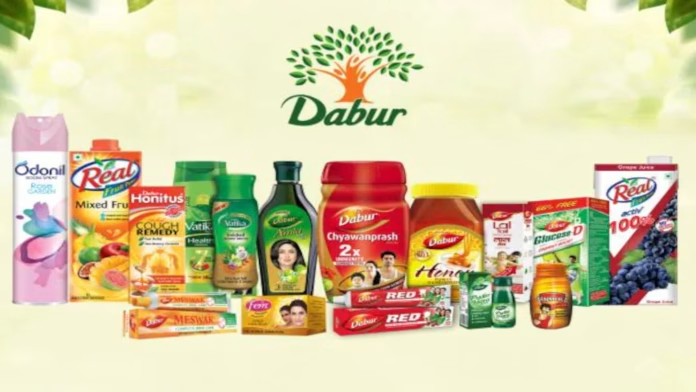
Dabur, a prominent manufacturer of FMCG and ayurvedic products, is aiming to establish a new facility in South India within the next year. This strategic move aligns with the company’s expansion plans in the region, as indicated by CEO Mohit Malhotra.
In an interview, CEO Mohit Malhotra stated that Dabur, currently deriving 20% of its domestic sales from South India, has witnessed a doubling of its business in the region over the past 5-6 years. The company is actively identifying market gaps and specific consumer needs to introduce customized products tailored to these markets.
With 13 manufacturing units nationwide, the company is expanding its capacity to meet growing demand. Additionally, it is diversifying its manufacturing activities by incorporating new production lines, according to the CEO.
Dabur India, with an annual capex of approximately INR 350-450 crore, also aims to extend its manufacturing activities to international markets, serving regions such as the Middle East and Europe.
Moreover, the company is streamlining its manufacturing operations by closing down units where tax incentives are expiring and concurrently establishing new units in areas transitioning to the GST regime, as mentioned by Malhotra.
On Dabur’s business in South India, Malhotra said,“We have made substantial progress in South India… it now contributes 19 to 20 per cent of Dabur’s domestic business. This was not even 10 per cent around seven to eight years back and thus contribution from the Southern region has doubled.”
When asked about the new plant in South India, Malhotra said, “I do not think it’s a few years away. Maybe it is a year away. Within a year, we might plan something for South of India as business scales up.”
Dabur’s most recent investment for establishing a new unit occurred in Indore, with a total investment of approximately INR 350 crore.
Within the southern market, numerous FMCG manufacturers, such as Wipro, have entered the food segment with region-specific offerings. Dabur is actively identifying market gaps in this region to introduce customized products that meet the specific needs of the consumers.
“We are creating a framework in the company where we can create products which are exclusively meant for the South of India for which we have got this framework called RISE, which is regional insights, speed and execution,” said Malhotra.
Certain brands like Dabur Red constitute 40 percent of the company’s business in South India, and Dabur Honey and Odonil hold significant prominence in that market, he mentioned.
“So we are looking at a lot of pollination of products in South of India to increase our saliency,” he said.
However, Malhotra also emphasized that, when compared to other FMCG makers boasting a saliency of 30 percent, Dabur’s salience stands within the range of 20 percent.
“So there is a huge gap of 10 to 15 per cent to be covered in the South. That is an area that will be our focus for geographical growth,” he added.
Discussing international markets, he highlighted that the Middle East and North Africa (MENA) region is the most significant market and represents a “growth frontier” for Dabur. The company operates a manufacturing facility in the UAE and leverages the Greater Arab Free Trade Area Agreement (GAFTA) to serve the Saudi Arabian market.
“If Saudi Arabia opens up and scales up, we might look at a manufacturing unit even in Saudi Arabia. We have another second unit in Egypt, which is the second largest market after Saudi Arabia,” he said.
In its manufacturing operations in Egypt and supply to East Africa, Dabur utilizes the Common Market for Eastern and Southern Africa (COMESA).
Dabur also has a factory in Turkiye, which ships to European markets. It also has a factory in South Africa which caters to SADC (Country / Southern African Development Community) markets of 12 countries.
In the United States, Dabur has partnered with a contract manufacturer that also serves the Canadian market.
“Business is doing well in international markets. There is a recovery after Covid but geopolitical issues are always there,” said Malhotra while referring to trouble brewing in the Middle East, and the Russia-Ukraine War.
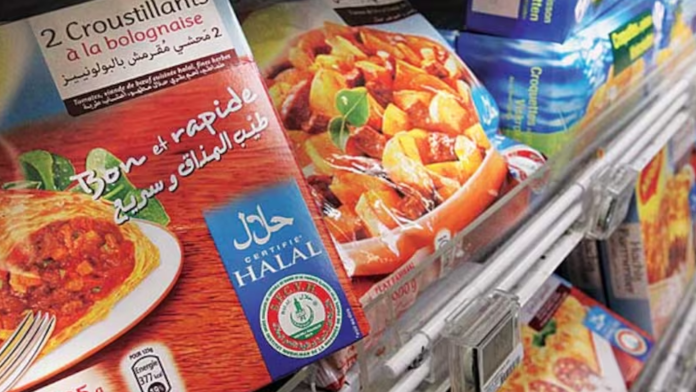
On November 18, the Uttar Pradesh government implemented a prohibition on the use of the Halal tag for products. The state government announced an immediate ban on the production, storage, distribution, and sale of food items carrying Halal certification. It’s worth noting that products intended for export are exempt from these restrictions.
“Strict legal measures will be implemented against any individual or firm engaged in the production, storage, distribution, buying, and selling of Halal-certified medicines, medical devices, and cosmetics within Uttar Pradesh,” an official order said.
The order stated that the Halal certification of food products, being a parallel system, introduces confusion about the quality of food items and is deemed untenable under Section 89 of the Food Safety and Standards Act.
“The right to decide the quality of food items lies only with the authorities and institutions given in Section 29 of the said Act, who check the relevant standards as per the provisions of the Act”, it added.
The statement highlighted that specific medicines, medical devices, and cosmetic products are observed to display the Halal certificate on their packaging or labels. However, this practice is deemed inconsistent since there are no provisions in the government rules pertaining to drugs, medical devices, and cosmetics for marking Halal certification on labels. Furthermore, the Drugs and Cosmetics Act of 1940 and its related rules do not make any reference to Halal certification.
The move is a direct response to a filed police case against a company and several other organizations. They stand accused of exploiting people’s religious sentiments to boost sales through the provision of allegedly “forged” Halal certificates.
Entities including Halal India Private Limited Chennai, Jamiat Ulama-i-Hind Halal Trust Delhi, Halal Council of India Mumbai, Jamiat Ulama Maharashtra, and others have been registered in a case. The Uttar Pradesh government stated that they are accused of exploiting religious sentiments to enhance sales by issuing Halal certificates exclusively to customers of a specific religion.
The complainant expressed apprehensions about a widespread conspiracy, suggesting purported efforts to unlawfully reduce the sales of products from companies without the Halal certificate, as stated by the Uttar Pradesh government.
According to the statement, these companies purportedly provided counterfeit Halal certificates to numerous businesses for financial benefits, thereby not only fueling social discord but also breaching public trust.
Jamiat Ulama-i-Hind Halal Trust, in response, categorically dismissed the accusations as “baseless” and affirmed its commitment to take “necessary legal measures to counter such unfounded claims.”
The food commissioner’s office stated that the labels of specific food items such as dairy products, sugar, bakery products, peppermint oil, salty ready-to-eat savories, and edible oils, feature the mention of Halal certification.
Halal certification serves as an assurance that the food is prepared in adherence to Islamic law and remains free from adulteration. Products containing animals or animal byproducts deemed prohibited under Islamic law are ineligible to receive halal certification.
Precisely, halal foods are products made, produced, manufactured, processed, and stored using machinery, equipment, and/or utensils that have been cleansed in accordance with Islamic law. These foods are free from any components that Muslims are prohibited from consuming.
We use cookies to ensure that we give you the best experience on our website. If you continue to use this site we will assume that you are happy with it.