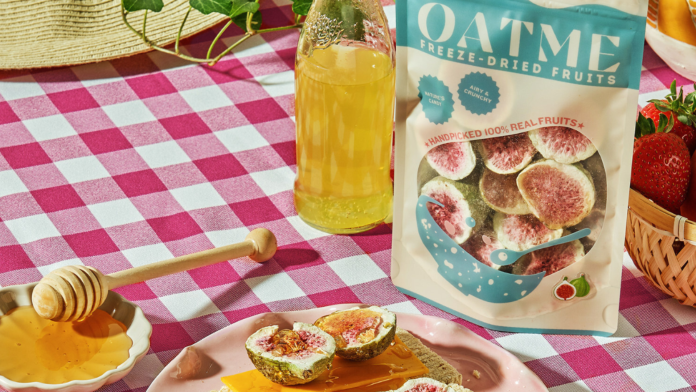
Oatme Superfood debuts a fresh selection of freeze-dried fruits, positioned as a nutritious ‘stocking stuffer’ just in time for the upcoming holiday season.
The Canadian health-conscious snack brand expressed its intention with the launch to inspire consumers to reconsider their choice of stocking stuffers, moving away from traditional chocolates and confectionery in favor of a healthier alternative.
Oatme’s freeze-dried fruits and packaging are crafted exclusively from 100% real fruit, containing no additional sugars or preservatives. The entire range is locally produced and packaged in British Columbia, Canada.
The portable snack assortment comprises variations such as strawberry, fig, and mango. It preserves the nutritional advantages of fresh fruit, providing a rich source of vitamins, fiber, and antioxidants.
The company’s founders commented, “We believe that the joy of the holiday season should be accompanied by treats that are both delicious and wholesome. Our freeze-dried fruits provide a burst of natural flavour, making them an ideal stocking stuffer for families, friends, and colleagues.”
Employees of Honasa Consumer, the parent entity of Mamaearth, are reportedly contemplating the sale of shares worth INR 150 crore in a block deal set to take place this week.
According to CNBC-Awaaz, the workforce is anticipated to divest a pool of 31 lakh Employee Stock Ownership Plan (ESOP) shares at a discount ranging from 5% to 7% off the present market price.
According to the company’s disclosure, Honasa has issued stock options through two schemes, namely ESOP 2018 and ESOP 2021.
This development coincides with a significant surge in Mamaearth’s stock price over the past week. The shares experienced a notable increase of over 43% last week, propelled by favorable financial results for Q2 FY24.
The stocks are currently trading nearly 47% above the listing price from earlier this month. At the close of Friday’s trading session, Mamaearth recorded a 12.5% increase, reaching INR 475.1 on the BSE.
Should the block deal transpire, it is anticipated that the stock will undergo a correction.
It is noteworthy that Mamaearth’s IPO garnered significant interest from its employees, with their reserved portion being oversubscribed by 4.88 times. This marked the second-highest subscription rate, trailing only the QIB category, which saw a subscription of 11.5 times.
In Q2, Mamaearth disclosed a profit after tax (PAT) of INR 29.4 crore, reflecting a substantial year-on-year (YoY) increase of nearly 94%. Additionally, in the first half of FY24, the company reported a profit of INR 54.1 crore, a significant turnaround from the net loss of INR 151 crore incurred in FY23.
During the September quarter, the company significantly reduced its employee benefit expenses, primarily because the vesting conditions of Employee Stock Ownership Plans (ESOPs) for numerous Momspresso employees (a former subsidiary of Mamaearth) were not met due to the closure of the business.
In a recent research note, Jefferies labeled Honasa as a remarkable exception among digital-first beauty and personal care brands in India, citing its exceptional scale, profitability, and capital efficiency.
The brokerage anticipates that the company will achieve industry-leading revenue growth in the upcoming years, accompanied by an enhancement in profitability. Nevertheless, it noted that the intensifying competition in the beauty and personal care (BPC) sector would necessitate continuous innovation from the company.
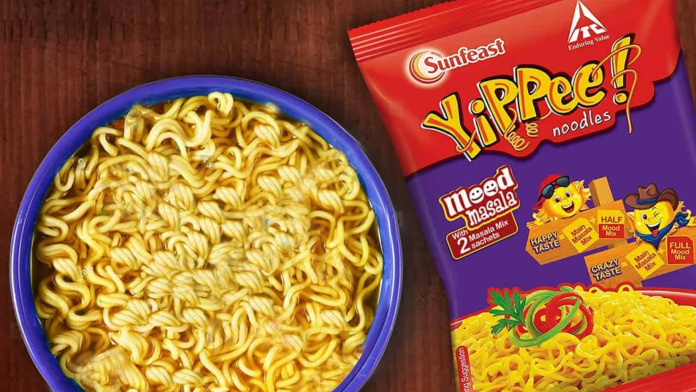
Following Nestle, Sunfeast Yippee, the instant noodles brand of ITC Ltd., is staging a significant return at the INR 10 price mark to counter competition and expand its market presence, particularly in smaller towns and villages.
The manufacturer of packaged goods has introduced a new version, YiPPee! Wow Masala Noodles, available at INR 10 for a 50 gm packet. ITC’s flagship Magic Masala variant is priced at INR 12 for a 55 gm packet. Similar to many companies, ITC adjusted the price of its noodles to accommodate increasing raw material costs.
“Our flagship Magic Masala variant continues to be our key growth driver since launch,” Suresh Chand, vice president and head of marketing for snacks, noodles and pasta at ITC Foods, said in a statement on Monday.
“However, with YiPPee! Wow Masala, we are looking to satiate consumers with a differentiated and delicious flavour of instant noodles.”
Nestle India Ltd.’s Maggi holds a dominant position in the INR 40,000 crore instant noodles market. ITC follows as the second-largest player in this segment, boasting a 25% market share, trailing behind Nestle, which commands a 55% share. Other major contenders eyeing substantial roles in the instant noodles market include Hindustan Unilever Ltd.’s Knorr, Nissin Foods, and CG Corp Global’s Wai Wai brand. Additionally, Patanjali Ayurved Ltd. has entered the market with its atta noodles.
ITC’s recent release closely follows the introduction of a new INR 10 variant of Maggi noodles by the market leader. This launch also aligns with increased competition from regional players that is impacting the market shares of major companies. It’s noteworthy that the INR 10 price point attracts significant consumer interest for packaged goods manufacturers, a trend observed not only in the food category but also in non-food categories like shampoo.
In August, the 12-month rolling sales or moving annual total of INR 10 packs experienced a 6% increase, surpassing the 5% growth observed for INR 20 packs, as per data provided by Kantar Worldpanel. The data also highlights that although the growth of INR 5 packs has slowed down, it continues to be a favored price point, contributing approximately 32% of the total volume in the food category.
“Price-point packs are extremely important to a product mix,” according to K Ramakrishnan, managing director-South Asia at Kantar Worldpanel.
“The INR 20 pack has seen steady growth over the last couple of years; however, it’s far from being as popular as INR 5 or INR 10 yet.”
In rural markets, the predominant channel for reaching consumers is through low-unit pack sizes, as stated by Nitin Gupta from Emkay Global.
As the impact of the Covid-19 pandemic diminishes and inflation subsides, smaller local competitors have gained strength. Capitalizing on reduced prices of certain raw materials utilized in the consumer goods sector, such as milk and barley, they have effectively competed with larger, well-funded corporations like ITC and Hindustan Unilever.
For instance, HUL has publicly acknowledged a loss of market share in its mass segment, which includes lower-priced products, attributed to competitive forces. According to research by Kantar covering the 12-month period ending April, the volume growth of local brands has outpaced that of national brands considerably. The recent initiative by the noodle maker is expected to assist the company in fending off local competition.
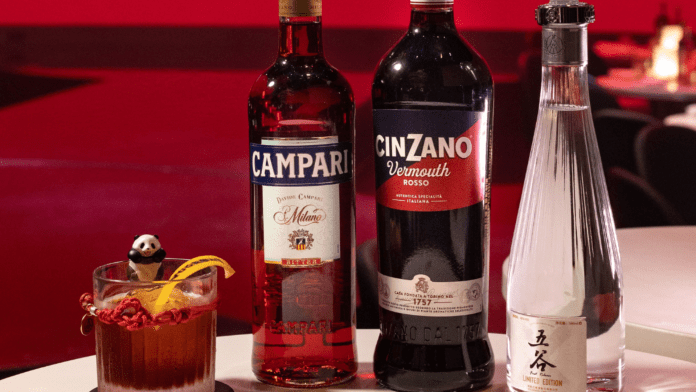
Campari Group and Sichuan Yibin Wuliangye Group have entered into a Memorandum of Understanding (MOU) to establish a strategic cooperation relationship.
The strategic collaboration in Yibin City, China, will facilitate the partnership between the two beverage companies in various areas, including the co-creation of new products, expanding channels, enhancing marketing cooperation, and promoting brand culture.
It will assist in the collaborative growth of both entities within the domestic Chinese market and the global spirits market.
At the signing ceremony, Bob Kunze-Concewitz, CEO of Campari Group, provided an overview of the history and achievements of Campari Group while underscoring the significance of the Chinese market.
Kunze-Concewitz remarked that the “collaborative spirit” between the two firms is grounded in a profound appreciation for each other’s strengths and mirrors the “common values of pragmatism and agility.”
The strategic collaboration seeks to leverage the strengths of both entities and was characterized by Matteo Fantacchiotti, Campari’s Group Deputy CEO and Managing Director of the Asia Pacific Region, as a “significant milestone” in the worldwide spirits industry.
In partnership with Wuliangye, Campari will explore avenues for growth while fostering cultural exchange through spirits. This is exemplified by Campari Group’s diverse portfolio of Western spirits and Wuliangye’s prominence in Chinese Nongxiang Flavor Baijiu.
The two companies intend not only to acquaint consumers in China and beyond with diverse spirits that embody various cultures but also to collaboratively create new products tailored for different occasions through their partnership.
Zeng Conggin, Secretary and Chairman of the Party Committee of Wuliangye Group, expressed that the collaboration will signify a “breakthrough in product innovation” for both spirits groups. He emphasized it as a “passionate collision of cultural exchanges between the East and the West,” foreseeing it as a catalyst for the prosperity and development of the global spirits industry.
In September this year, Wuliangye and Campari jointly introduced a fresh cocktail called the ‘Wugroni,’ crafted from a blend of Wuliangye Baijiu co-created by both companies. With the formal signing of the strategic memorandum, the collaboration between the two firms is set to deepen even further.
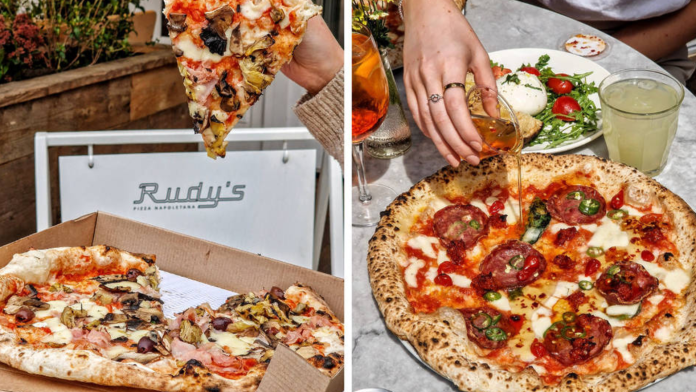
Rudy’s Pizza Napoletana, a restaurant chain, is set to broaden its footprint in the UK with the launch of two additional London venues in December 2023, as per the report from the Hackney Gazette.
The pizzeria, renowned for its authentic classical Neapolitan-style pizzas, is scheduled to inaugurate a new establishment on Shoreditch High Street on December 4th.
Situated beneath the recently constructed Fora office development, the two-story restaurant will showcase a spacious and bright ground-floor area, along with a more intimate basement dining room and courtyard.
Following that, Rudy’s intends to launch a restaurant in Fitzrovia, situated on a corner plot along Tottenham Court Road, on December 18th.
Rudy’s prepares fresh dough every day using Caputo “00” flour, allowing it to ferment for a minimum of 24 hours. The resulting dough is then cooked for approximately 60 seconds, producing soft and classic pizzas.
Options include Marinara, Margherita, Calabrese, and Porchetta varieties. The Calabrese pizza is adorned with tomato, fior di latte, basil, and ‘nduja sausage, while the Porchetta pizza features roast porchetta, sage-roasted potatoes, and smoked mozzarella.
Rudy’s Pizza managing director Neal Bates was quoted by the publication as saying, “We’re delighted to be able to offer our truly traditional Neapolitan pizza to even more Londoners.
“We’re looking forward to becoming a part of the neighbourhoods of both Shoreditch and Fitzrovia, getting to know the locals and finally opening our doors at both sites.”
As of April 2023, Retail & Leisure International announced that Rudy’s Pizza Napoletana had plans to inaugurate its latest establishment in Harborne, Birmingham, by July 2023.
As per data gathered by Oxford University’s Our World in Data, the typical consumption of wine for the average Brit is now around 37 bottles annually. In contrast, the intake of beer has decreased to approximately 124 pints, marking a significant decline from the figure of 50 years ago.
Despite a substantial decline in beer consumption over the past few decades, particularly with the nearly halved number of pubs, it still maintains its position as the nation’s preferred beverage. Beer leads as the favorite drink, with 36.1% of the population choosing it, slightly surpassing wine at 33.7% in terms of the overall share.
Despite a substantial increase in celebrity endorsements, a broader range of offerings, and the introduction of new products, the popularity of spirits has remained relatively constant. It holds a share of approximately 24% of the total alcohol consumed in the UK, comparable to the levels observed in 1980. Currently, individuals in the UK consume about 94 shots of spirits per year.
The news comes as the UK gears up for the festive period, with the average Brit expected to indulge in around six alcoholic drinks on Christmas day alone, commencing their first sip at approximately 9:05 am.
However, data from last year has indicated that up to a third of adults chose to abstain from drinking altogether during the Christmas season.
Last year, the percentage of Brits intending to abstain from alcohol increased by 10%, as revealed in an Ocado survey of 2,000 respondents. Out of those surveyed, 38% expressed their intention not to drink, marking an increase from 28% in 2021.
This trend coincides with the ongoing surge in sales of alcohol-free beverages, primarily propelled by Generation Z and Millennials. More than half (56%) of individuals aged 18-34 are inclined to abstain from alcohol during the festive period, in contrast to a quarter of those aged 55 and above.
The on-trade and overall sales received a boost last year due to the decision to hold the FIFA World Cup during the winter and festive period, culminating in the final taking place just a week before Christmas Day. However, only pubs reaped the benefits of increased trade, as cocktail bars and restaurants were adversely affected by the tournament.
The CEO of Snapdeal, Himanshu Chakrawarti, anticipates a positive year ahead for retail and e-commerce enterprises, attributing this outlook to the robustness of the Indian economy, increased demand across diverse categories, and momentum from semi-urban areas.
“As we are seeing currently, our economy is in a very good shape and all aspects of the business, specifically the categories that we operate in, which is in the in disposable income categories… I think we’re going to see a significant boost-up next year,” Chakrawarti told PTI.
He made these remarks during the Digital Acceleration & Transformation Expo (DATE with Tech).
“We are seeing green shoots come through even in the semi-urban areas and with the tailwind that we have, I think both retail and e-commerce should see a fairly good year in 2024,” Chakrawarti said.
Regarding Snapdeal’s expansion strategies, the head of the e-commerce platform expressed the intention to explore avenues for reaching a wider audience in rural areas and encouraging them to make online purchases.
“And there’s a lot of effort that we are making predominantly in the voice and the vernacular space. That is one area where we are going to see a lot of innovation that we will carry out for the Tier-2 and beyond audiences, as we bring technology to them,” he said.
The company is also exploring methods to encourage more customers to choose digital payment methods.
“The second part which we are working on is to how to convert a lot of them (users) from cash-on-delivery to digital payments. With government’s initiatives that we’ve seen and the amount of digital penetration, it is something that we are working on…to increase the digital payments penetration,” Chakrawarti said.
Regarding the possibility of an IPO for Snapdeal, Chakrawarti stated that the company will assess how to further capitalize on the business “at the right moment,” whether it be through the public market or through private means.
“But having said that, our preference has always been for the public market… to go public. So at the opportune moment, when it is right and we feel it is, and when we are ready for it, we will be looking at it,” he said.
Regarding the funding downturn in the startup ecosystem, Chakrawarti is of the opinion that there is an ample supply of capital for ventures that prioritize sound business fundamentals.
“I don’t think there’s a lack of capital availability. What has happened is that the capital is going to businesses which are working on generating revenues and profits, and focusing on basics of business not just growth and customer acquisitions… which in any case is what should have been,” he said.
Investors are currently scrutinizing these aspects closely, and startups that prioritize fundamental business principles will encounter no difficulties.
“There is enough capital available in the market,” he said.
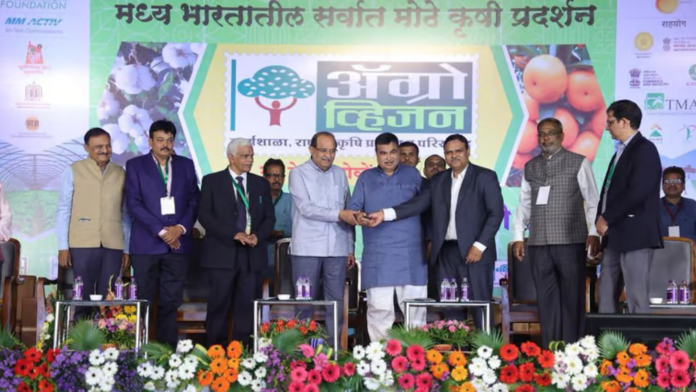
Nitin Gadkari, Hon’ble Minister for Road Transport & Highways, Government of India, virtually laid the foundation stone for Mother Dairy’s proposed state-of-the-art mega milk processing plant in Nagpur, Maharashtra. This significant event unfolded during the inaugural day of Agrovision 2023, in the esteemed presence of Radhakrishna Vikhe Patil, Hon’ble Minister for Revenue, Animal Husbandry & Dairy Development, Government of Maharashtra, Dr. Meenesh Shah, Chairman, National Dairy Development Board (NDDB), and Manish Bandlish, Managing Director, Mother Dairy Fruit & Vegetable.
The new plant, set up with an investment of over INR 500 crores, will span 25 acres in the Butibori Industrial Estate, Nagpur. The upcoming facility is designed with a processing capacity of 6 lakh liters of milk per day, expandable up to 10 lakh liters per day. It will produce poly-pack milk and various value-added dairy products, including ice creams, chaach, lassi, paneer, etc.
During the event, Nitin Gadkari, the esteemed Minister for Road Transport & Highways in the Government of India, expressed that the day is truly auspicious. He highlighted the collaborative efforts of the Government of India, Government of Maharashtra, and NDDB-Mother Dairy, marking a new chapter in dairy development for the Vidarbha and Marathwada regions.
Mr. Gadkari reaffirmed his vision for Vidarbha and Marathwada to play a crucial role in enhancing the milk production of Maharashtra. He emphasized the significant contribution of NDDB and Mother Dairy in boosting milk production in these areas, recognizing the positive impact of their interventions on the region’s dairy farmers’ returns. Mr. Gadkari noted that the forthcoming operational Mother Dairy processing plant would create new opportunities for farmers in Vidarbha and Marathwada. To replicate the success of the dairy development program, he encouraged NDDB and Mother Dairy to explore potential avenues for fruits, vegetables, and edible oils produced in the region, leveraging the Safal and Dhara brands.
Gadkari commended the Government of Maharashtra for providing NDDB-Mother Dairy with this opportunity and consistently striving to improve the conditions for the region’s milk producers. He expressed that the Government of India shares equal enthusiasm for the ongoing dairy transformation in these areas.
Radhakrishna Vikhe Patil, Hon’ble Minister for Revenue, Animal Husbandry & Dairy Development, Government of Maharashtra, stated that the dairy development project being undertaken in Vidarbha and Marathwada has indeed provided a new ray of hope to the dairy farmers of the region.
Patil emphasized that previously, dairy farmers in the region struggled to receive profitable returns, prompting some to exit the dairy business. However, with the entry of NDDB-Mother Dairy into the region, the situation has undergone a significant transformation. He also noted the remarkable increase in milk production due to the dairy development project, a stark contrast to the previous negligible levels. Patil commended the foresight behind such a positive change. He underscored the Government of Maharashtra’s commitment to supporting the expansion of this dairy development project into numerous additional districts.
During the event, Dr. Meenesh Shah, Chairman of the National Dairy Development Board, highlighted the initiatives and strategies implemented by NDDB and Mother Dairy for the dairy development in Vidarbha and Marathwada. He underscored the significance of the livestock and dairy sectors in the socio-economic development of the rural areas. Dr. Shah shared that as a result of the Vidarbha-Marathwada Dairy Development Project, the average daily milk procurement in the region has reached approximately 3 lakh liters, benefiting around 30,000 farmers across 3000 villages in 11 districts. The dairy farmers in the region have accrued benefits amounting to around INR 2000 crores for their produce.
Manish Bandlish, Managing Director of Mother Dairy Fruit & Vegetable Pvt. Ltd., expressed that Mother Dairy has successfully developed a resilient procurement network and a substantial presence in booths/retail. He mentioned the organization’s efforts to strengthen the entire value chain in the region through the new plant. The planned Nagpur milk processing plant, equipped with state-of-the-art technology, will be Mother Dairy’s fifth facility in the Western region. This expansion complements the existing plants in Gujarat and Maharashtra, underscoring the commitment to extend beyond Delhi NCR and specifically target growth in the Western markets.
The upcoming facility stands as one of Mother Dairy’s largest dairy processing centers, featuring state-of-the-art technology and infrastructure. The products produced at this facility will be distributed and marketed throughout various regions of the country.
The hospitality sector is undergoing a remarkable resurgence, driven by a significant uptick in weddings and associated events. Post-pandemic festivities are reverberating throughout the industry, signaling a significant change in preferences and customs and painting a dynamic picture of evolving traditions. According to the latest projections from CAIT, a substantial rise is anticipated, with around 3.8 million weddings expected to take place this season, in contrast to 3.2 million weddings during the same period last year.
Jaideep Dang, Managing Director of the Hotels and Hospitality Group at JLL, highlights a broader trend, remarking, “In Q3 2023, the hotel sector maintains robust performance growth, primarily propelled by increases in Average Daily Rates (ADRs). This strong upward trajectory, fueled by weddings and the approaching winter holidays, underscores the industry’s adaptability and enduring business appeal.”
Monisha Dewan, Vice President of Sales & Distribution – South Asia at Marriott International, offers a quantitative outlook on this expansion, expressing, “In 2023, weddings and associated events have experienced a notable surge, with an annual average growth rate of around 30 percent, and there is an expectation that this trend will persist into 2024.” This significant upswing, along with its economic implications, positions the hospitality sector as a resilient and strategic participant in the business landscape.
Quantifying this surge in celebrations, CAIT’s estimates project a substantial economic impact. The forecasts suggest that weddings this season are poised to generate a business value of INR 4.74 lakh crore encompassing goods and services, reflecting a notable rise from INR 3.75 lakh crore the previous year. This data not only highlights the changing dynamics of wedding celebrations but also emphasizes the considerable economic contribution of the hospitality sector within the context of business news.
Vikramjit Singh, President of Lemon Tree Hotels, emphasizes this transformation, expressing, “Following the pandemic, there has been a noteworthy rise in the quantity of weddings and associated events.” Beyond being a numerical increase, this trend signifies a strategic shift in consumer behavior within the industry.
A discernible trend in this revival is the inclination toward more intimate gatherings, especially in Tier-1 cities. Singh explains that couples and families are choosing smaller, personalized celebrations. This departure from the conventional grandeur of weddings with over 500 guests is motivated by a practical decision, with events now tailored to a more modest guest list of 200-300 individuals.
At the same time, the economic viability of destination weddings is becoming increasingly evident. Cities like Udaipur, well-known for hosting weddings, are experiencing a consistent flow of tourists in search of the perfect backdrop for their special day.
Somesh Agarwal, Managing Director of Radisson Blu Palace Resort & Spa in Udaipur, notes the strategic appeal of these locations, stating, “We host around 100 weddings a year, from big fat to intimate weddings and ceremonies.” This trend not only reflects a demand for unique settings but also positions these destinations as lucrative business avenues for the hospitality sector.
Capitalizing on this upswing, hotels are forming specialized teams to orchestrate weddings. This strategic initiative not only elevates the overall guest experience but also creates supplementary revenue streams. The influence extends beyond the hotel premises, offering a substantial boost to related sectors.
As per the CAIT report, the calculations encompass a breakdown of expenses, with five percent allocated for banquet halls, hotels, and other wedding venues, another five percent for event management, twelve percent for tent decoration, ten percent for catering services, four percent for flower decoration, three percent for travel and cab services, two percent for photo and video shoots, three percent for orchestra and band services, three percent for lights and sound, and the remaining three percent for miscellaneous expenses.
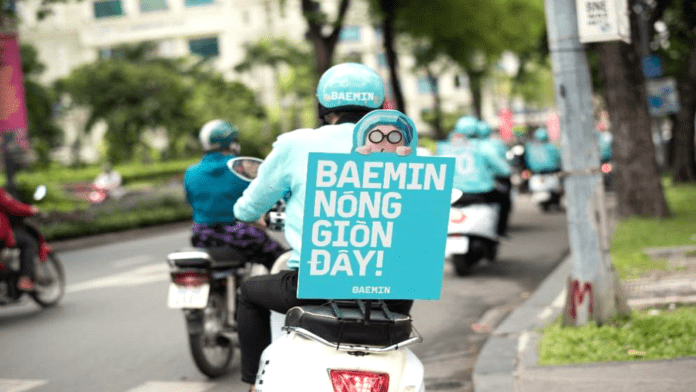
After four years of operation in Vietnam, Baemin, South Korea’s leading food delivery platform, is set to withdraw from the market on December 8 due to intense competition, according to media reports on Saturday.
Germany-based Delivery Hero SE has opted to exit the Vietnamese market, citing challenges stemming from global macroeconomic conditions and long-term profit trends. According to media reports, the parent company of Baemin Vietnam will shift its focus to other markets where it maintains a leading position.
During August, Delivery Hero’s co-founder and Chief Executive, Niklas Östberg, informed Reuters that the company’s overall business in the Asian market was thriving, except for Vietnam. Consequently, the German company initiated the process of downsizing its operations in Vietnam during the third quarter of this year.
In 2019, Baemin made its entry into the Vietnamese market through the acquisition of the local player Vietnammm from the Dutch company Takeaway.com. According to tech industry research firm Momentum Works, Baemin Vietnam held a 12% market share in the country’s food delivery sector last year. This figure trailed behind Grabfood, which had a 45% market share, and Shopeefood, which held a 41% share in the same period.
In October, Baemin secured the leading position in Korea’s food delivery market, capturing approximately 65% of the market share, as reported by Seoul-based data research firm IGAWorks. Following Baemin, the second-largest player was Yogiyo with a 19% share, while Coupang Eats held the third position with a 15% share.
In 2019, Delivery Hero inked an agreement to purchase an 88% stake in Woowa Brothers Corp., the operator of Baemin, for $4 billion. The ultimate transaction value, disclosed by the German food delivery giant in March 2021, amounted to €5.7 billion ($6.2 billion).
In 2021, Delivery Hero divested its entire stake in Yogiyo to a consortium comprising GS Retail Co., Affinity Equity Partners, and the UK-based investment firm Permira for 800 billion won ($612.4 million). This divestiture was a prerequisite for the acquisition of Baemin, mandated by the Korea Fair Trade Commission due to concerns about Delivery Hero’s potential monopoly in Korea.
We use cookies to ensure that we give you the best experience on our website. If you continue to use this site we will assume that you are happy with it.