Consumer Affairs Secretary Rohit Kumar Singh has asked the Open Network for Digital Commerce (ONDC) to address concerns regarding liability in instances of incorrect or defective product deliveries.
Speaking at the ‘Deloitte Growth with Impact Government Summit,’ Singh highlighted the importance of addressing liability issues to deliver satisfactory services to consumers, as reported by the news agency PTI.
“If I order through an app of a bank through Amazon and buy it from a seller located elsewhere and I get the wrong phone, then who is liable? So the issue of liability… I keep telling Mr T Koshy (ONDC CEO) that you have to address the issue of liability otherwise this thing is not going to work,” Singh was quoted as saying.
Established on December 31, 2021, ONDC is a non-profit platform in the private sector supported by the Department for Promotion of Industry and Internal Trade (DPIIT). Its objective is to democratize e-commerce within the country.
In April last year, the government initiated a soft launch of ONDC in five cities, including Delhi-NCR, Bengaluru, Bhopal, Shillong, and Coimbatore. Since then, the network has experienced significant growth. While it began with food and grocery delivery, the platform has expanded by onboarding partners in electronics, fashion, and mobility services.
Recently, Koshi mentioned that ONDC is exploring opportunities to enter the financial products and services sector. Additionally, there have been recent reports indicating ONDC’s foray into skill-based services like appliance repair and teaching assistance.
“I hope ONDC becomes a success, but in the law where does ONDC fit in? It is neither the seller nor the buyer. But If I am buying through the app…if something goes wrong, there are five parts of the chain (in ONDC supply chain), then who is liable,” said Singh at the event.
He mentioned that in the event of a legal proceeding, the government would consistently bear the liability, given its involvement in the matter.
“Before things like ONDC become mammoth and huge, the issue of liability must be addressed,” he added.
According to the report from the news agency, an official stated that ONDC is actively developing a system to ensure proper grievance redressal for consumers.
In a recent report, Redseer indicated that ONDC is positioned to drive growth in the e-commerce sector across various domains and has the potential to generate $250-300 billion in gross merchandise value by 2030.
Zomato is set to venture into the catering business, utilizing its extensive network of restaurant partners. According to a senior executive at the food delivery platform, this move is part of a broader strategy aimed at servicing large orders.
In an interview, Rakesh Ranjan, Chief Executive for food delivery, mentioned that the company is considering the addition of more offerings to its loyalty program, Gold, despite concerns about potential impacts on profitability.
“If I want to have a gathering of 20 people at home…right now food delivery does not lend itself well into that kind of a use case. It’s winter, I want to have a party, or I want to do a small picnic in the local park. There are tons of such use cases in the offline world. But the food delivery does not lend itself into it very well. It’s only about tying some of those loose threads…so that’s what we’re going to be focusing on,” he said.
In June, Zomato launched the multi-cart feature, enabling users to place orders from several restaurants simultaneously.
This aligns with the overarching strategy of the Gurugram-based company to expand the range of use cases for food delivery, aiming to increase its overall addressable market. Ranjan mentioned that Zomato is actively working on creating “occasions” for customers to order more through operational adjustments and strategic marketing campaigns.
“That’s one clear vector that we are going to be working on. We believe that occasional orderers, low frequency orderers, if they’re able to associate more occasions with Zomato and food delivery, then that’s a large base that we can address,” he said.
Ranjan emphasized that the focal point of Zomato’s upcoming initiatives would be the creation of meaningful occasions.
Earlier this year, the company introduced ‘Zomato Everyday’ with the aim of catering to cost-conscious customers at the bottom of the pyramid.
In the July-September quarter, Zomato disclosed a gross order value (GOV) of INR 7,980 crore for food delivery, marking a 20% year-on-year increase. Nearly 40% of this total was attributed to Zomato Gold.
Ranjan mentioned that the company intends to incorporate additional non-food offerings into the program.
“We understand that similar programmes are also available with our competitors and hence we want to make sure that our programme stands out not just on pricing, but also on experience. So, we will be investing time, energy and technology on improving the experience of our Gold customers,” he said.
“We’re also trying to see if we can offer Gold customers something outside food as well…we recently did a collaboration with Adidas, for example, where Gold customers had special privileges on Adidas…so we’re also trying to figure out if there are manifestations beyond food, which makes our customers feel more privileged but a lot of the work will happen just in terms of making sure that Gold customer experience of buying food on our platform is as impeccable as it can get,” Ranjan added.
Nevertheless, he clarified that the expansion of Gold will not encompass Zomato’s quick-commerce platform, Blinkit, which is owned by the company.
Significantly, Swiggy, Zomato’s primary competitor, administers a loyalty program named Swiggy One, which encompasses both food delivery and quick commerce.
Additionally, although Zomato is experiencing order growth driven by its high-frequency Gold customers, the associated offerings are negatively affecting the profit margins of food delivery orders. While the specific variance in margins between Gold subscribers’ orders and those of regular customers was not disclosed by the company, it highlighted during its September-quarter earnings that Gold orders exhibited a “meaningfully worse-off” contribution margin compared to non-Gold orders.
“We recognise the fact that margins get diluted…but Gold also powers a lot of growth,” Ranjan said. “What we are now prioritising at least for the next couple of months is that we don’t want to bug ourselves a lot with margin dilution. We think that Gold is still a good growth lever for the entire ecosystem. And we want to continue powering Gold and continue to get the volume and the GOV growth that comes with it.”
Meanwhile, Zomato is downsizing certain earlier initiatives that have not met expectations.
A notable example is Zomato Legends, a feature through which the company initially introduced intercity food delivery. On one hand, the company has ceased the program in specific cities where the intercity delivery service was provided. On the other hand, it has modified the product to offer a 60-minute delivery service focused on delivering pre-stocked food items.
“We are constantly trying to evaluate many opportunities and have almost nil sunk cost bias. If something doesn’t work, we don’t need to stick to it for very long,” Ranjan said.
“Legends was done in a particular way. It was loved by our customers, but it wasn’t helping us scale. In fact, for a good set of customers, it wasn’t helping solve their hunger pangs, because the food was getting delivered the next day. So, it had to be reengineered a little bit,” he added.
In the ever-evolving landscape of consumerism, the phrase “omni-channel” has transcended buzzword status to become the linchpin of successful marketing strategies. The paradigm has shifted from a multi-channel approach to a seamless, integrated experience across all touchpoints. This post delves into the intricacies of omni-channel strategies, exploring how businesses can harness their power to not only attract but, more importantly, retain customers in an era where loyalty is the ultimate currency.
The crux of omni-channel strategies lies in weaving a holistic narrative throughout the customer journey. It’s not just about the individual touchpoints – be it online, offline, mobile, or in-store – but the synergy and fluidity with which customers transition between them. A cohesive experience ensures that every interaction contributes to a singular narrative, creating a seamless journey that resonates with the customer.
Consistent Brand Image: The Foundation of Trust
Inconsistency is the nemesis of brand trust. Omni-channel strategies mandate a consistent brand image across all platforms. From the website to social media, from the brick-and-mortar store to mobile apps, customers should encounter a unified brand personality. This consistency not only fosters trust but also reinforces the brand’s identity, making it instantly recognizable and relatable.
Personalization at Scale: Tailoring Experiences for Individuals
The true power of omni-channel strategies lies in their ability to deliver personalized experiences at scale. By leveraging data insights from various touchpoints, businesses can tailor their interactions with customers. Whether it’s recommending products based on browsing history, acknowledging past purchases, or offering exclusive promotions, personalization fosters a sense of being understood, enhancing customer loyalty.
Seamless Transition between Channels: Convenience as a Catalyst
In the age of instant gratification, convenience is paramount. Omni-channel strategies ensure a seamless transition between channels. A customer can explore products online, visit a physical store for a hands-on experience, and then make a purchase through a mobile app – all without missing a beat. This fluidity not only meets the customer where they are but also eliminates friction in the buying process.
Data-Driven Insights: Shaping Informed Strategies
The amalgamation of data from various channels provides businesses with a treasure trove of insights. Omni-channel strategies are not just about reaching customers; they’re about understanding them. By analyzing customer behavior across channels, businesses can make informed decisions, refine marketing strategies, and anticipate needs, ultimately fostering a deeper connection that transcends transactional interactions.
Post-Purchase Engagement: Sustaining the Relationship
The customer journey doesn’t end at the point of purchase. Omni-channel strategies extend into post-purchase engagement, ensuring that customers remain engaged and satisfied even after the transaction. Whether it’s through personalized post-purchase communications, loyalty programs, or exclusive content, businesses can nurture the relationship, turning a one-time buyer into a loyal advocate.
Measuring Success: Beyond Sales to Customer Satisfaction
While increased sales are a tangible outcome of effective omni-channel strategies, the true measure of success lies in customer satisfaction and loyalty. Metrics such as Net Promoter Score (NPS), customer retention rates, and lifetime value provide insights into the lasting impact of omni-channel efforts. Positive customer experiences not only drive repeat business but also amplify the brand through word-of-mouth recommendations.
The omni-channel advantage goes beyond mere convenience; it’s a strategic imperative for businesses looking to cultivate lasting customer loyalty. By creating a holistic customer journey, maintaining a consistent brand image, personalizing experiences, ensuring seamless transitions, leveraging data-driven insights, sustaining post-purchase engagement, and measuring success beyond sales, businesses can harness the true power of omni-channel strategies, turning casual customers into loyal advocates in an era where the customer’s journey defines the success of the brand.
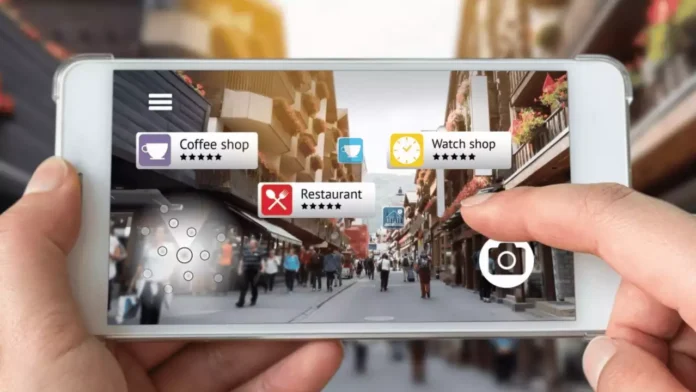
Beyond the flashy gimmicks and fleeting trends, strategic augmentation is becoming a cornerstone for long-term brand growth. This article aims to unravel the layers of AR implementation, providing insights into how businesses can create a roadmap that goes beyond the immediate wow factor to foster sustained engagement and growth.
Immersive Brand Experiences: Beyond the Ordinary
At the heart of AR’s potential lies the ability to immerse consumers in experiences that transcend the ordinary. Whether it’s virtually trying on products, exploring virtual showrooms, or engaging in interactive storytelling, AR opens doors to a new dimension of brand-consumer interaction. The strategic use of AR goes beyond novelty, creating memorable experiences that linger in the minds of consumers, forging a deeper connection with the brand.
Personalization through AR: Tailoring Experiences for Individuals
One of the standout features of AR is its capacity for personalization. Brands can leverage AR to tailor experiences based on individual preferences and behaviors. From personalized product recommendations to interactive tutorials that cater to specific needs, AR transforms brand interactions into bespoke journeys. This not only enhances customer satisfaction but lays the groundwork for long-term loyalty as consumers feel seen and understood.
In industries where tactile interaction is integral, AR provides a revolutionary solution. The ability to virtually try products before making a purchase mitigates the uncertainty consumers often face when shopping online. From testing furniture placements in a virtual living room to trying on virtual makeup, AR instills confidence in purchasing decisions, reducing the likelihood of returns and fostering trust in the brand.
Educational AR: Positioning Brands as Knowledge Leaders
Beyond selling products, AR can position brands as thought leaders in their respective industries. Educational AR experiences, such as interactive guides, tutorials, or behind-the-scenes explorations, not only showcase a brand’s expertise but also contribute to the consumer’s knowledge base. By becoming a source of valuable information, brands can position themselves as trusted authorities, cultivating a relationship that extends beyond transactions.
Seamless Integration into Everyday Life: AR as a Lifestyle Companion
The most impactful use of AR seamlessly integrates into the fabric of consumers’ daily lives. Whether it’s using AR for navigation, virtual companionship, or enhancing real-world experiences, the goal is to make AR an indispensable part of consumers’ routines. This strategic integration ensures that the brand becomes a constant presence, fostering a relationship that extends beyond sporadic interactions.
Measuring Success: Beyond Impressions to Lasting Impact
As brands embark on the AR journey, it’s crucial to measure success beyond the surface-level metrics. While the number of interactions and impressions provides a snapshot, the true impact lies in the lasting influence on consumer behavior. Metrics such as increased brand loyalty, repeat engagement, and sustained interest in AR experiences are indicative of a successful strategic augmentation.
The integration of Augmented Reality into brand strategies is not just about chasing the latest tech trend; it’s a deliberate and strategic move towards creating lasting brand value. By crafting immersive experiences, personalizing interactions, providing virtual try-before-you-buy options, positioning as knowledge leaders, seamlessly integrating into daily life, and measuring success in terms of lasting impact, brands can develop a roadmap for leveraging AR that goes beyond the ephemeral to lay the foundation for sustainable, long-term growth.
Knowing which pitches and negotiations are truly indicative of growth potential is like negotiating a complicated maze in the fast-paced world of sales, where every one of them could be the difference between success and failure. The terrain where the subtleties of sales success offer a vivid picture of ventures worthy of investment exists beyond the basic numbers and conventional measurements. This post will explore the nuances of the measurements that measure success and reveal the unrealized potential that drives future prosperity.
1.Conversion Rates: The Art of Turning Leads into Gold
Conversion rates, often seen as a basic metric, carry profound implications for growth potential. Beyond the mere percentage, understanding the journey from lead to conversion unveils insights into the effectiveness of sales strategies. High conversion rates not only signify a robust sales process but also indicate an alignment between the product or service and the needs of the market.
2.Customer Acquisition Cost (CAC): Balancing Investment and Return
Investment in sales endeavors is inevitable, but the key lies in striking a balance. Customer Acquisition Cost (CAC) goes beyond the financial investment; it encapsulates the resources, time, and effort expended to convert a prospect into a customer. A low CAC indicates efficiency, ensuring that the growth achieved is not overshadowed by exorbitant acquisition costs.
3.Customer Lifetime Value (CLV): The True Measure of Success
While securing new customers is paramount, understanding their long-term value is equally crucial. Customer Lifetime Value (CLV) gauges the total worth of a customer throughout their engagement with the business. A high CLV not only indicates customer satisfaction but also suggests the potential for upselling, cross-selling, and cultivating a loyal customer base that acts as a sustainable growth engine.
4.Sales Velocity: Accelerating Growth Momentum
Sales velocity measures the speed at which deals move through the pipeline, from initial contact to closure. A high sales velocity not only signifies efficiency but also indicates the potential for rapid scalability. It’s not just about closing deals; it’s about doing so with agility and maintaining momentum in the market.
5.Lead Response Time: The Race Against Competitors
The swiftness with which a sales team responds to leads directly impacts conversion rates. It’s a real-time reflection of the team’s agility and the level of importance accorded to potential customers. In the competitive landscape, a rapid response can be the decisive factor that tips the scale in favor of a particular business.
Churn Rate: Retention as a Growth Strategy
While acquiring new customers is essential, retaining existing ones is equally vital for sustained growth. Churn rate measures the percentage of customers who discontinue their engagement with a business. A low churn rate not only indicates customer satisfaction but also frees up resources that can be redirected towards acquiring new customers, creating a cyclical pattern of growth.
The metrics that truly measure sales growth potential go beyond the surface-level numbers. They provide a nuanced understanding of the efficiency, effectiveness, and sustainability of sales efforts. By analyzing conversion rates, CAC, CLV, sales velocity, lead response time, and churn rate, businesses can unearth insights that guide strategic decisions, ensuring that every investment in sales contributes not just to immediate success but lays the groundwork for a future of sustained growth and prosperity.
At the core of this balancing act is the realization that quantity alone does not make a thriving sales force. The era of the hard sell, characterized by sheer volume and aggressive tactics, is gradually giving way to a more nuanced approach. Sales professionals are no longer mere transactional entities but architects of relationships, weaving a tapestry of trust and value. Striking this balance is not about sacrificing one for the other but about orchestrating a symphony where both elements harmonize to create an unparalleled sales performance.
The journey to achieving this equilibrium begins with redefining success metrics. Traditionally, the number of deals closed and revenue generated has been the yardstick for sales triumph. However, a paradigm shift is occurring as businesses recognize that a customer-centric approach is the cornerstone of sustained success. Quality, in this context, encompasses customer satisfaction, loyalty, and the long-term viability of relationships forged. It’s about transforming a sale into a partnership and a customer into an advocate.
Sales teams are now embracing a consultative approach, taking the time to understand the unique needs of each prospect. This shift is not a departure from quantity but a transcendence. Every conversation becomes an opportunity to deliver value, and each interaction is a chance to elevate the customer experience. It’s the realization that in a world inundated with options, excellence is the differentiator, the secret sauce that transforms a product or service from a mere commodity into an indispensable solution.
Technology, often blamed for distancing the human touch, paradoxically plays a pivotal role in achieving this delicate balance. Data analytics and artificial intelligence, when wielded judiciously, empower sales teams to optimize their efforts. Predictive analytics guide professionals towards high-value leads, while AI-driven insights facilitate personalized interactions. In this landscape, technology is not a replacement for human intuition but a co-pilot, enabling sales professionals to focus on what they do best – building relationships and delivering excellence.
Training and development programs are undergoing a metamorphosis to equip sales teams with the skills required to navigate this nuanced environment. Communication skills, emotional intelligence, and adaptability are becoming as crucial as traditional sales acumen. The emphasis is on fostering a culture where each team member understands that their role extends beyond closing deals; it encompasses nurturing relationships that transcend transactions.
The essence of quantifying quality in sales performance lies in embracing a holistic perspective. The dichotomy between quantity and excellence is a false dilemma – success in sales demands both. It’s about achieving volume without compromising value, closing deals while laying the foundation for enduring relationships. The sales professionals of tomorrow are not mere closers but orchestrators of a symphony where quantity and excellence dance in perfect harmony, creating a crescendo of success.
The ability to not only react but also proactively adapt to market trends emerges as the keystone for brand resilience and sustainable success in the ever-changing world of business, where change is the only constant. Brands need to become skilled surfers who can anticipate changes and capitalise on market trends in order to not just survive but also grow. It is no longer enough for them to simply ride the waves of change. We explore the tactics that turn market trends from obstacles to opportunities in this inquiry, laying forth a plan for the growth and resilience of brands.
Anticipating Trends: The Strategic Surfboard
Proactive adaptation begins with anticipation. Brands must cultivate a keen awareness of industry shifts, consumer behaviors, and emerging technologies. By staying ahead of the curve, brands can position themselves as trendsetters rather than followers. This strategic foresight becomes the surfboard that enables them to ride the wave of change with confidence and agility.
Consumer-Centric Approach: Riding the Wave of Preferences
Market trends often mirror shifts in consumer preferences. Brands that prioritize understanding their target audience can ride the wave of changing preferences. Conduct thorough market research, gather customer feedback, and analyze data to identify emerging trends. By aligning products, services, and strategies with consumer desires, brands not only adapt but become trend leaders in their respective industries.
Agile Business Models: Surfing the Waves of Innovation
The rigid business models of the past are giving way to agile frameworks that facilitate rapid adaptation. Embrace flexibility in processes, operations, and decision-making. An agile business model allows brands to pivot in response to market trends, experiment with new approaches, and capitalize on emerging opportunities without the constraints of traditional structures.
Technology Integration: Catching the Tech Break
Brands that leverage technology not only keep pace with change but also catch the tech break for transformative growth. From embracing e-commerce platforms to adopting emerging technologies like AI, AR, or blockchain, integrating technology becomes the surfboard that propels brands into the forefront of innovation.
Data-Driven Decision-Making: Navigating the Currents
Data is the current that guides brands through the dynamic landscape of market trends. Implement robust data analytics to track consumer behavior, market dynamics, and performance metrics. By making data-driven decisions, brands gain insights that go beyond intuition, allowing them to navigate the currents of change with precision and make informed strategic moves.
Brand Storytelling: Crafting a Narrative Amidst the Waves
In the tumultuous sea of market trends, brand storytelling becomes the lighthouse that guides consumer perception. Brands should craft a narrative that not only reflects their values but also resonates with the evolving aspirations of their audience. By telling a compelling story, brands create a connection that withstands the turbulence of trends, fostering long-term loyalty and resilience.
Collaborative Innovation: Synchronizing with Industry Currents
Innovation seldom happens in isolation. Brands that actively participate in collaborative efforts within their industry ecosystem synchronize with the prevailing currents of change. Whether through partnerships, joint ventures, or participation in industry forums, collaborative innovation allows brands to harness collective intelligence and collectively ride the waves of emerging trends.
Adaptation is an ongoing process, and brands must foster a culture of continuous learning. Encourage employees to stay informed about industry developments, attend training programs, and engage in knowledge-sharing initiatives. A learning culture transforms employees into expert surfers, equipped to navigate the waves of change and contribute to the brand’s resilience and growth.
Sustainability Integration: Navigating the Green Tide
Sustainability isn’t just a trend; it’s a transformative wave reshaping industries. Brands that integrate sustainable practices into their operations not only ride the green tide of consumer consciousness but also contribute to a more resilient and responsible business model. Sustainability becomes the compass guiding brands toward a future where environmental and social impact align with market trends.
Mastering the Art of Market Surfing
Anticipating trends, adopting a consumer-centric approach, embracing agile business models, integrating technology, relying on data-driven decision-making, crafting compelling brand storytelling, engaging in collaborative innovation, fostering a continuous learning culture, and integrating sustainability are the surfboards and navigational tools that enable brands to not only stay afloat but ride the waves with finesse. In the pursuit of brand resilience and growth, it’s not about avoiding change; it’s about becoming expert surfers, skillfully riding the waves of market trends toward a horizon of sustainable success.
GRM Overseas recently divested over 3 percent of its holdings in GRM Foodkraft Pvt. Ltd. (“Foodkraft”), a subsidiary of GRM Overseas Ltd. specializing in the Indian food market, to Sauce.vc, a venture capital fund with a consumer-centric focus. The transaction amount remains undisclosed. In addition, Sauce.vc has procured an extra 1 percent stake from other existing shareholders.
Commenting on the investment Atul Garg, MD, GRM Overseas said, “We are delighted to welcome Sauce.vc as a strategic investor. We look forward to deriving substantial advantages from the wealth of experience and a demonstrable history of creating new-age brands by the Sauce team. Our goal is to evolve our brands into distinguished names in their respective product categories. We also intend to work with the Sauce team to identify emerging areas for launching new brands in packaged foods and to explore deepening our presence in digital channels including e-grocers, quick commerce, and e-commerce. Sauce’s investment aligns with our commitment to rapidly scale and diversify our product portfolio.”
Manu Chandra, Founder & Managing Partner, Sauce.vc said, “Foodkraft has a strong legacy and established strengths in supply chain and distribution in packaged foods and staples. We aim to utilise this deep know-how and wide distribution reach to launch new food brands in promising new categories. The business is a key addition to our diverse portfolio of investments and we would like to play an enabling role to help it achieve its mission.”
Under its 10X Shakti Brand, the company offers an assortment of products, including basmati rice sold under brands such as 10X Zarda King XXL, WHEAT FLOUR (Atta), Besan, Daliya, Suji, Poha, and more.
10X Ready-to-cook product kits, including popular options like Hyderabadi Biryani and One Pot Moradabadi Biryani, have gained significant acceptance in the markets.
GRM Foodkraft is actively present in both online and offline retail, as well as the direct-to-consumer (D2C) segment. With a network of over 52 Distribution Centers (DCs), it caters to a vast network of over 160,000 Kirana stores.
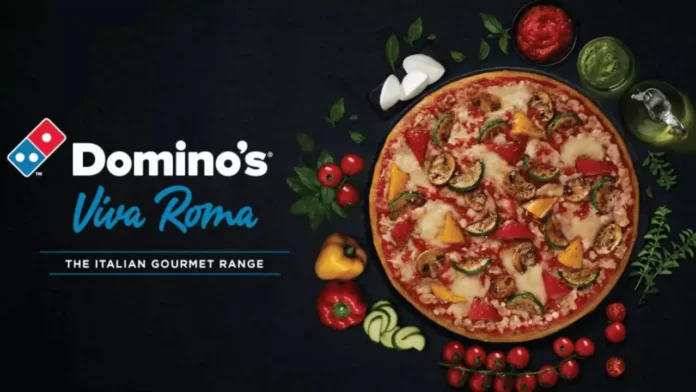
Domino’s Pizza, the leading pizza chain in India, has given a fresh makeover to its delightful selection of gourmet pizzas known as Viva Roma. This enticing new lineup of pizzas provides a luxurious gourmet flair, enhancing the overall dining experience for consumers.
The enhanced Viva Roma collection introduces five premium pizzas, adorned with a medley of delectable toppings, including sumptuous cheeses like Bocconi, Mozzarella, Cheddar, and Spicy Ghost Pepper. Complemented by a sauce crafted from the finest tomatoes of Italy, these pizzas boast flavorful toppings and delightful garnishes, all resting on a crisp thin-crust base to create a truly appetizing Italian Gourmet pizza experience. Domino’s, building upon the success of the original Viva Roma range, has painstakingly curated an updated menu that mirrors the evolving tastes and preferences of its discerning customer base. The revitalized Viva Roma selection stands as a testament to Domino’s unwavering commitment to delivering exceptional quality and innovation in every slice.
Sandeep Anand, EVP and CMO Domino’s Pizza said, “As a brand, we are constantly pushing the boundaries when it comes to innovation in pizzas. Keeping in tune with this spirit of Domino’s, we are delighted to announce the unveiling of our much-loved revamped Viva Roma range of Pizzas. Domino’s Viva Roma range focuses on premium ingredients, bold taste, and authentic Italian flavors; we believe the revamped range will redefine pizza indulgence and delight our loyal customers.”
The invigorating new selection exemplifies menu diversification and is set to enhance the overall pizza experience for consumers. Alongside this delightful launch, the new Viva Roma range comes with an exciting surprise—Domino’s is literally transporting people to Rome with its thrilling “Ticket To Rome” contest. To participate, contestants are required to share an image of their Gourmet Pizza Bill from Domino’s along with an Italian word that captures the essence of the pizza-eating experience. Based on participation, two fortunate winners will each receive a one-way ticket to Rome. The contest is scheduled to go live on December 10, 2024.
The revamped range is available for order at Domino’s restaurants in Delhi-NCR, Mumbai, Bangalore, Chennai, Pune only, or through the Domino’s app with an enticing offer of Flat INR 300 off on a minimum order value of INR 1500.
Skippi, the ice popsicle brand, is aiming to achieve a revenue of INR 100 crore in the next financial year 2024-25, as stated by Ravi Kabra, the company’s co-founder.
After its feature on Shark Tank India last year, the brand noted a 100-fold surge in sales. Comparing last year’s fiscal sales with those of the current year, Kabra mentioned that the company has witnessed a growth of 40-50 percent.
In the last fiscal year, the brand recorded a revenue of INR 30 crore. Looking ahead, it has set its sights on exceeding INR 70 crore in the current fiscal year. The company is currently in a profitable position and underscores its dedication to maintaining a focus on the profitability of its business.
In terms of overall revenue contribution, the brand revealed that approximately 70-80 percent of its revenue is derived from general trade outlets, which include mom-and-pop stores, kirana shops, and general stores. Modern trade outlets account for 7-10 percent of its revenue, while the remaining share comes from international markets, social commerce, and e-commerce platforms such as Amazon, Flipkart, Swiggy Instamart, Zepto, and Blinkit.
Additionally, it has partnered with the fintech company Cred to expand its business reach.
Speaking on the brand positioning and pricing strategies, Kabra said, “We are very well positioned with a product range from INR 10 to INR 30 price points that are not heavy on consumers’ pocket. We have created a fun category and I think it will continue to grow in the coming years.”
The brand stated that, leveraging its current pricing strategy, it has successfully expanded its presence in the tier 2 and 3 markets.
On the recent product launches and entry into the FMCG category with cornsticks, Kabra shared, “Our product launches are very competitive in terms of pricing. And we are also looking at a volume scale to reach a net profit of 15-18 percent in the food and beverages space.”
Moreover, the brand disclosed its current presence at 22,000 outlets and anticipates doubling this figure, aiming for coverage at 55,000 outlets by the conclusion of the fiscal year.
Discussing its manufacturing process, Skippi mentioned that it produces its ice popsicles at its manufacturing facility in Hyderabad. Additionally, it relies on contract manufacturers to outsource the production of cornsticks and cream rolls.
In order to broaden its reach and meet the growing demand of consumers nationwide, Skippi is planning to establish a larger facility in Hyderabad.
Earlier, it secured $133,894.80 from Shark Tank India in exchange for a 15 percent equity stake. Currently, the company is actively seeking additional funding to support similar expansion initiatives.
At present, Skippi distributes its products through online marketplaces and rapid commerce channels, which include Amazon, Flipkart, Swiggy Instamart, Zepto, and Blinkit. The brand has also partnered with the fintech firm Cred to extend its outreach to more consumers.
Furthermore, the brand has established its footprint in international markets, including the UAE, Kuwait, Qatar, New Zealand, Canada, Fiji Islands, and others. Recognizing a substantial opportunity for exports to various global markets, the brand intends to proceed with a measured approach for international expansion, prioritizing scaling efforts in the domestic market initially.
We use cookies to ensure that we give you the best experience on our website. If you continue to use this site we will assume that you are happy with it.