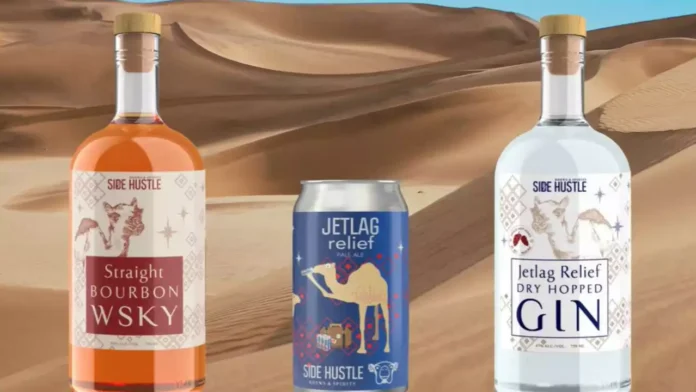
A beer brewery is set to open in Abu Dhabi, United Arab Emirates, this month, establishing itself as the first company authorized to legally produce alcohol in the region.
Scheduled for its grand debut this month, Craft, the microbrewery and gastropub by Side Hustle Brews, is set to open its doors in The Galleria Al Maryah Island in Abu Dhabi. Although the brand had been selling beers in the UAE and on Etihad Airlines flights, its brewing operations were previously conducted in the US.
In 2021, Abu Dhabi updated its alcohol licensing regulations, allowing license holders the privilege of producing beverages on-site for consumption within authorized venues.
The brewery is set to offer on-site crafted hops, grains, and cocktails courtesy of Side Hustle, the UAE’s pioneering craft alcohol brand, complemented by a menu featuring southern smokehouse and pub cuisine.
Side Hustle Brews & Spirits’ founder and CEO, Chad McGehee, said, “As founders of the local craft movement, we acknowledge the responsibility presented to us and are both humbled and thrilled to open Abu Dhabi’s first craft microbrewery”.
“We commit to delivering innovative and authentic F&B experiences worthy of the UAW’s high standards as we build Craft by Side Hustle into a brand the community can be proud to call their own.”
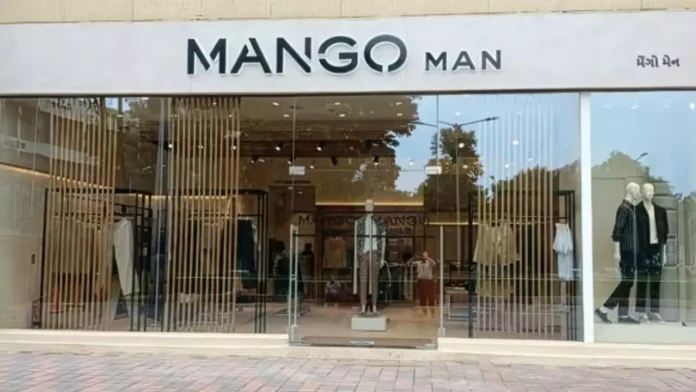
European fashion brand Mango Man has announced the opening of a new store at Inorbit Mall in Vadodara, Gujarat, as per a social media post by a mall official.
“Let your stylish side shine with Mango, Drive in the trendy and exquisite clothing collection by Mango at your favourite destination. Congratulations team Mango and Welcome to the Inorbit Vadodara family,” said Jerry Rajesh, Center Head – Inorbit Mall in a LinkedIn post.
Mango has a worldwide presence with more than 2,560 stores and a workforce of over 14,000 employees. The online channel contributes to 36% of the brand’s sales. Furthermore, Mango operates more than 1,000 factories globally, with store distribution spanning across different regions: 317 in America, 1,839 in Europe, 414 in Asia, and 45 in Africa.
The brand is actively working towards incorporating 100% sustainable cotton, recycled polyester by 2025, and achieving the use of 100% cellulose fibers from controlled sources by 2030.
Conglomerate ITC is eyeing a significant 50% jump in room inventory over the next five years.
During its institutional investors and financial analysts day on Tuesday, the company announced its goal to achieve 200 hotels with 18,000 keys over the next five years, with two-thirds of them in the managed portfolio.
Currently, ITC boasts 12,000 rooms spread across 131 hotels in 80 destinations. Having transitioned to an ‘asset right approach’ some years ago, the company now holds over 50% of its room inventory in the managed portfolio.
During the presentation to analysts, Anil Chadha, the divisional chief executive of ITC’s hotels business, highlighted a robust pipeline of managed hotels, totaling 35 hotels with more than 3,200 keys. Over the next five years, premium hotel keys are expected to comprise 45% of the total managed portfolio, an increase from the current 30%.
The company is also considering specific greenfield/brownfield projects, with exploration currently underway for 300 rooms in this category. Additionally, by early 2024, the owned capacity is set to expand with the inclusion of Welcomhotel Chennai (undergoing renovations, adding 90 keys) and ITC Ratnadipa, Colombo (352 keys).
Over the last 24 months (from January 2022 to December 2023), ITC has inaugurated 22 hotels.
It’s worth noting that in August, ITC approved the demerger of the hotels business. This decision was driven by the maturity, scalability, and the business’s readiness to chart its independent growth path.
The expansion is fueled by the current resurgence in the hospitality sector following the post-pandemic recovery. ITC’s hotel segment achieved a record-breaking performance in the second quarter, with revenues increasing by 20.5% year-on-year (YoY) to INR 675 crore, and pre-tax profits surging by 53% to INR 132.95 crore.
However, within various business verticals, the conglomerate aimed to enhance both scale and profitability as an integral component of the ITC Next strategy.
Chairman and Managing Director, Sanjiv Puri, reportedly emphasized that ITC Next involves establishing structural drivers of competitiveness through substantial investments in innovation. The goal is to develop a future-ready portfolio built on science-led platforms that cater to the evolving needs of consumers.
Export initiatives and strategically valuable acquisitions were also fundamental components of the ITC Next strategy.
The pursuit of new avenues for growth included the exploration of higher-value-added products and services, as well as opportunities at the intersection of digital and sustainability.
Shoppers Stop is placing a significant emphasis on its beauty segment, actively expanding its standalone specialty beauty stores, incorporating shop-in-shops within its department stores, and forming distribution partnerships with renowned global luxury brands. With the objective of deriving approximately 25% of its upcoming revenues from the beauty business, the company is intensifying its presence in this market.
At present, the company operates 13 standalone specialty beauty stores branded as SS Beauty. It is scheduled to inaugurate a spacious 3800 sq ft store at Bangalore International Airport Terminal 2 later this month, with plans for another substantial 9000 sq ft store in Kolkata set to open in March.
Biju Kassim, Customer Care Associate and CEO of Beauty, Shoppers Stop said, “Our desire is to have 3-5 large format flagship stores under SS Beauty. We also expect to have 30-35 mid size format stores and 40-50 small format stores. Our aimbition is to eventually have upto 100 stores in the few years. We want to ensure that this expansion is done in a sustainable manner with a strong focus on profitability.”
Talking about the strategy to open large format flagship stores, “ These large format stores will offer the best beauty brand assortment and presentation. So for instance, in terms of education, we are on track to do one million makeovers and master classes this year. So the store will focus on leveraging on various elements to deepen consumer engagement,” he added.
As the company extends its department store network, it will also increase the presence of beauty shop-in-shops.
“We will add 15-20 department stores every year. So besides the standalone beauty store expansion, the footprint of our beauty shop-n-shops will also grow. So overall, we have a very robust plan in the beauty space,” he added.
At the group level, the current contribution of revenue from the beauty segment stands at approximately 18 percent for the company.
“We believe the beauty space has a strong potential especially in post-Covid times when consumers engagement in this space has increased signficiantly. We think this contribution will grow to 20 per cent in the near future and our desire is to further grow it to about 25 per cent. Given the low per cap consumption, we believe the combination of engagement and education will enable the beauty segment consumption to see strong growth in the coming years,” he added.
The company has been expanding its distribution partnerships with global beauty brands, exemplified by the recent introduction of NARS Cosmetics.
“We have a strong portfolio of global brands and continue to look for opportunitie to grow the distribution business. For instance : We currently distribute fragrances of brands such as Armani, Prada and Valentino. These brands will also be launching their make-up lines by March-April,” Kassim explained.
Swiggy, the prominent online food delivery platform, reported on Tuesday that it has been instrumental in facilitating the distribution of loans totaling INR 102 crore over the past 12 months. Impressively, a noteworthy sum of INR 10.1 crore was disbursed in November alone.
Swiggy has collaborated with Betterplace and Refyne to facilitate the provision of these loans.
Delivery partners are not restricted in the number of loans they can apply for, as long as they uphold a positive repayment track record. This policy has empowered delivery partners to secure loans, on average, up to three times throughout their association with the platform, as stated by the company.
“Our loans initiative isn’t just a programme, it’s another way of looking out for our delivery partners. Personal emergencies, needs, and aspirations often need quick access to funds. We’re glad that our delivery partners trust Swiggy for having their backs” Mihir Shah, Head of Operations, at Swiggy, said in a statement.
Swiggy has recently unveiled the Hospicash policy in collaboration with Reliance General Insurance.
The policy provides coverage to the delivery partner in circumstances such as death, partial or temporary disability, and hospitalization.
The premium for this policy is established at a nominal 1% of the loan amount.
Swiggy additionally provides extensive assistance to educate and raise awareness among its delivery partners regarding both the Hospicash policy and the loan application process.
New loan applicants receive assistance through informative messages, confirmation of loan details, and support in document submission. The company also intends to educate individuals with reservations about taking loans.
Furthermore, Swiggy stated that a specialized Central Insurance team, in conjunction with the Loan service and Insurance customer service team, is accessible to address any concerns or complaints.
Over the past three years, the FMCG segment of the diversified conglomerate ITC has seen substantial growth, with a compounded annual growth rate of 14 percent. Additionally, the Aashirvaad brand, within this business, has achieved consumer spends totaling INR 8,000 crores, as highlighted in a company presentation.
ITC is “one of the fastest growing FMCG Businesses in India” with rapid scale in revenues, which is largely “driven by brands developed in-house”, ITC in an investor presentation released on Tuesday.
ITC reported that its FMCG products now have a presence in three out of every four households in India.
The foods business of the company has maintained a compounded annual growth rate (CAGR) of 13 percent over the past decade, experiencing a threefold increase in the last ten years.
ITC announced that the Sunfeast brand has surpassed INR 5,000 crores in terms of consumer expenditures.
Furthermore, the snacks brand Bingo, instant noodles under the Yipee label, Agarbatti brand Mangaldeep, stationery brand Classmate, and spice brand Sunrise have all crossed INR 1,000 crore in terms of consumer spends.
The company calculates annual consumer spend by combining the consumer expenditures on its goods. This includes the net sales turnover of the brands, along with channel margins and taxes.
ITC has expressed its commitment to enhancing Aashirvaad’s presence in the kitchen through adjacent offerings. Presently, the brand offers a variety of products, including atta, ghee, salt, spices, and instant mixes.
The company is currently elevating consumer choices by introducing additional products, thereby creating new avenues for value addition.
Launched by ITC in May 2002, the brand has since risen to become the leading choice for branded packaged atta nationwide.
With a portfolio boasting more than 25 world-class mother brands in the FMCG segment, the company has achieved a consumer spend of INR 29,000 crore in FY 23.
Over the past three years, ITC introduced 300 products in the FMCG segment.
Its overall reach now spans 7 million outlets, with a direct outreach to 2.6 million households.
The company is expanding the MasterChef brand and nurturing the development of chocolates.
In the personal wash category, ITC mentioned that it is a INR 24,000 crore industry with the presence of 3,000 brands.
The Fiama brand is heavily represented in modern distribution channels. Additionally, Savlon, the hygiene brand acquired in 2015, has witnessed nearly a tenfold growth in the past six years.
Healthtech startup Healthify, formerly known as HealthifyMe, has partnered with the foodtech major Swiggy to enhance meal delivery services. Furthermore, the company is actively focusing on amplifying its presence in the enterprise vertical, with plans for substantial growth in that sector.
As part of this collaboration, users can now order diet-aligned meals recommended by Healthify’s AI coach Ria through Swiggy. Within the Healthify app itself, customers have the convenience of placing their meal orders seamlessly.
“With Ria’s smart dietary recommendations, users can effortlessly order aligned meals through the Healthify app, simplifying sticking to a healthy diet,” the startup said in a statement.
This feature is set to be accessible to Healthify Smart subscribers from December 15 onwards.
During the ‘Ignite’ annual event in Bengaluru, Healthify’s co-founder and CEO, Tushar Vashisht, highlighted the commercial nature of the partnership. Nevertheless, the startup refrained from disclosing details about whether the collaboration involves a revenue-sharing model.
“Our advancements in AI-powered photo-tracking with Snap and our strategic partnership with India’s top food delivery app, Swiggy, represent significant milestones in making healthy living accessible and actionable,” Vashisht added.
During the event, the startup unveiled the introduction of Coach Co-Pilot, an AI-powered health platform designed to assist users in analyzing and managing their dietary, fitness, stress, and sleep patterns. The platform provides personalized plans tailored to individual user needs.
Users of Healthify will have the capability to engage in conversations with the AI coach, Ria. This AI feature, working in tandem with Healthify’s team of human coaches, facilitates users in tracking nutrition by analyzing pictures of their food.
Within the company’s B2B vertical, Healthify has existing collaborations with various companies, such as AWS and HCL. The company intends to expand its partnerships with additional enterprises and, as a strategic move in its B2B initiative, aims to enhance its corporate wellness programs and apps to strengthen its foothold in the enterprise sector.
In FY23, Healthify experienced a notable 10% reduction in losses, decreasing from INR 157 Cr in FY22 to INR 42 Cr. Simultaneously, the company achieved a significant increase in total revenue from operations, reaching a record INR 228 Cr compared to INR 185.25 Cr in FY22.
Vashisht stated that the startup is progressing towards achieving a modest double-digit growth in revenue for FY24.
Established in 2012 by Vashisht, Healthify utilizes AI to produce tangible outcomes in areas such as eating habits, fitness, and weight management. It achieves this by monitoring lifestyle factors and offering access to coaches, among other advantages.
Serving over 40 million users in over 300 cities, the startup has secured a total funding of $130 million from notable investors such as Khosla Ventures and Leapfrog, among others. Within its user base of 40 million, 250,000 are paying subscribers, and the platform boasts a roster of over 1,000 coaches.
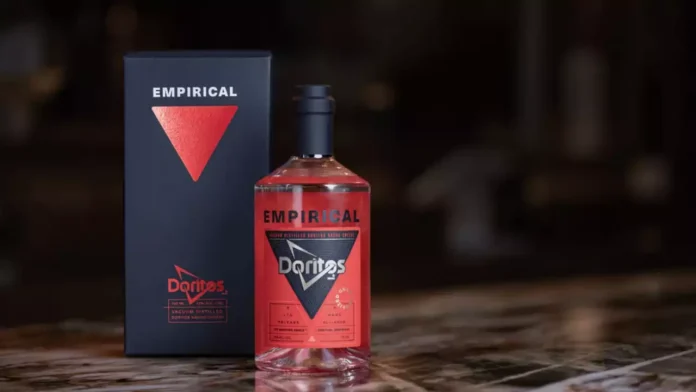
Doritos is banking on a novel approach to captivate individuals with their tortilla chips: incorporating alcohol.
The brand owned by PepsiCo is launching a fresh spirit inspired by Doritos’ nacho cheese flavor, described as “authentic in taste” in a press release. Collaborating with Empirical, a Danish company renowned for crafting unique spirits with inventive flavors, the chip maker is introducing this innovative product.
Exclusively accessible through online channels, the limited-edition flavor becomes available for purchase on Wednesdays in New York and California, with a price tag of $65 for a 750ml bottle.
This marks another unconventional offering in the realm of food-related products from major brands. Not long ago, Kahlúa and Absolut Vodka collaborated on a fragrance capturing the essence of an espresso martini, while Dunkin’ transformed its iced coffees and teas into canned cocktails. Additionally, Arby’s ventured into the spirit world by turning its iconic curly and crinkle fries into vodka and crafting a smoked bourbon designed to complement its roast beef.
The goal of these offerings is to arouse customers’ curiosity, ignite conversations, and elevate brand recognition. Essentially, it’s a marketing tactic cleverly masquerading as a retail product. Nevertheless, one shouldn’t anticipate a substantial boost to Pepsi’s bottom line from these ventures.
Doritos and Empirical are characterizing their partnership as a “first-of-its-kind innovation for both brands.” The spirit was crafted in Empirical’s laboratory, utilizing a production technique that involved using Doritos chips and maintaining their “essence through vacuum distillation.” According to the spirit maker, this method preserves more of the authentic Doritos flavor when compared to conventional approaches.
The spirit’s flavor “opens with umami and tangy aromas of nacho cheese, moving to the deeper, corn-forward flavors of the chip to finish on a soft salty note,” the company said.
As it is a flavored spirit and not confined to a specific liquor category, Doritos suggests blending it with tequila or mezcal for a unique take on a Bloody Mary or a Margarita. Alternatively, the spirit can be enjoyed on its own or over ice.
“While the flavor may seem wacky, the collaboration has novelty value, and it is likely a lot of people will be interested enough to try it out,” said Neil Saunders, retail analyst and managing director at GlobalData Retail. He added that Empirical and Doritos are both known for “being playful and fun.”
“Consumers are in the mood to test new things and are looking for products that are interesting and a bit different from the run of the mill,” he said.
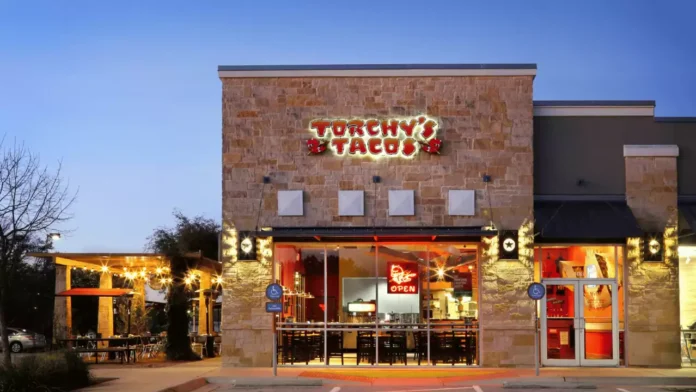
Uber Eats has formed a delivery collaboration with Torchy’s Tacos, a restaurant chain based in the United States, on its online food ordering and delivery platform.
From December 2023, Torchy’s Tacos will integrate its extensive network of over 100 locations, spanning across states such as Colorado, Indiana, Louisiana, North Carolina, Tennessee, and Virginia, into the Uber Eats app.
Torchy’s offers a menu that includes Green Chili Queso, tacos made from scratch, and margaritas.
Customers ordering $25 or more from Torchy’s Tacos menu between December 11 and 24 will receive complimentary queso and chips.
Members of Uber One can avail themselves of a 10% discount on their orders and enjoy complimentary delivery on eligible orders exceeding $15.
Torchy’s CEO and founder Mike Rypka stated, “Since the day we started in that Austin trailer park 17 years ago, our mission has always been to make damn good tacos, queso and drinks available for all.
“We couldn’t be more excited to partner with Uber Eats and have their help in continuing that mission.”
In addition to the on-demand delivery option, patrons of Torchy’s Tacos can leverage group orders, split bills, and utilize the “re-order” feature to maintain consistency in their Taco Tuesday orders.
Sarfraz Maredia, Vice President and Head of Uber Eats Americas, expressed, “Collaborating with Torchy’s Tacos marks a significant shift for famished Uber Eats users, both in their home state of Texas and beyond.”
“We are thrilled to bring this beloved brand onto the app and deepen the creative ways we can work together. And as a Texan myself, I feel incredibly fortunate to have such strong local partners who pride themselves on high standards — both for the quality of their food and how they treat their customers.”
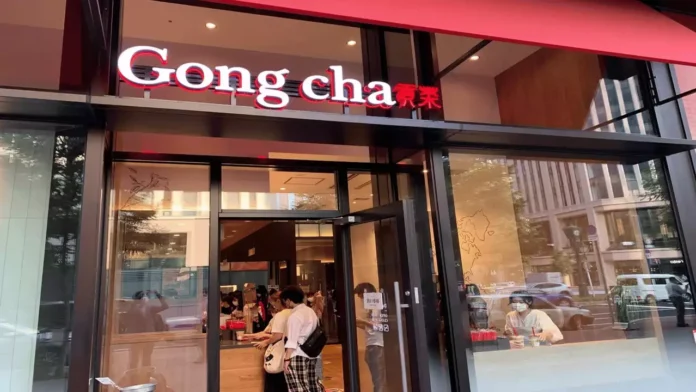
Gong cha, the tea drink franchise, has recently entered into agreements with two new master franchisees, granting them territorial rights for the Great Pacific Northwest and Central America.
The bubble tea brand, with a presence in over 2,100 locations across 23 countries, is set to broaden its footprint in Washington, Oregon, and Idaho through the Great Pacific Northwest franchise agreement with Ajay Keshap.
For 25 years, Keshap has been the proprietor of a diversified franchise group in the United States. Within the group’s portfolio are 24 Denny’s restaurants and 15 Papa John’s pizza establishments.
The group possesses area development rights for Dave’s Hot Chicken in the state of Washington.
In Central America, Gong cha has entered into an agreement with the husband and wife duo, Justin Willingham and Monica Fonseca.
Willingham and Fonseca will start by opening the first Gong cha location in Honduras, then proceed to expand the brand to Costa Rica, El Salvador, and Guatemala.
Their goal is to launch one or two locations in early 2024, aiming to reach a total of 50 stores across their territory by 2033.
Collectively, these two agreements will enhance the presence of the bubble tea brand in the Americas by over 100 stores.
Gong Cha Americas president Geoff Henry expressed, “We’re pleased to collaborate with Ajay, Justin, and Monica to introduce Gong cha to new markets in the Pacific Northwest and Central America.”
“With their experience and leadership in the franchise space, we know they will find great success introducing Gong cha’s premium product to a brand new audience.”
Since 2014, Gong cha Americas has successfully launched over 400 establishments spanning the United States, Canada, and Mexico.
Having established over 225 stores across 19 states, the brand is projected to achieve its 1,000th milestone in the Americas by 2026.
We use cookies to ensure that we give you the best experience on our website. If you continue to use this site we will assume that you are happy with it.