Mumbai-based health snack brand Epigamia has appointed Rahul Jain, its co-founder and chief operating officer, as the new chief executive officer.
He takes over from Rohan Mirchandani, the fellow co-founder who has transitioned into the position of executive chairman.
Ankur Goel, an original member of Epigamia responsible for managing the company’s supply chain and business intelligence functions, has been promoted to the position of Chief Operating Officer (COO).
In his newfound position, Jain will lead the company’s overarching business initiatives, crafting a distinctive proposition within the FMCG space. Epigamia stated in a press release that he will be responsible for formulating strategies to maintain competitiveness, identifying fresh opportunities, and promoting innovation.
A graduate of IIT-Bombay and the Indian School of Business-Hyderabad, Jain initiated his career in finance with Deutsche Bank’s Credit Structuring team. Following his MBA, he introduced Doctor Moo, an organic milk brand, and later collaborated with Mirchandani to establish Epigamia.
In the past year, Epigamia has implemented strategic measures to enhance its cost structure efficiency across various functions, resulting in notably improved profit margins, as stated by the company.
The brand is present at over 20,000 touchpoints across 30 towns. Additionally, its products are accessible through major retail chains like DMart, Reliance, Nature’s Basket, and More, as well as on e-commerce platforms including Big Basket, Swiggy Instamart, Amazon, Zepto, and BlinkIt.
In the nine months leading up to September, ITC Ltd has emerged as the leading fast-moving consumer goods (FMCG) manufacturer in the food sector based on domestic sales, surpassing competitors such as Adani Wilmar, Britannia, Parle Products, and others. This information is according to the most recent data from market tracker NielsenIQ, as disclosed by three industry executives.
During the specified period, ITC achieved food FMCG sales amounting to INR 17,100 crore, surpassing competitors such as Britannia with INR 16,700 crore, Adani Wilmar with INR 15,900 crore, Parle Products with INR 14,800 crore, Mondelez with INR 13,800 crore, and Hindustan Unilever Ltd (HUL) with INR 12,200 crore, as indicated by NielsenIQ data.
In comparison to the same period last year, ITC has risen from the fourth position, where Adani Wilmar held the lead. Adani Wilmar recorded sales of INR 16,100 crore in the January-September period last year, while Britannia reached INR 14,900 crore, Parle at INR 14,800 crore, ITC at INR 13,900 crore, and Mondelez at INR 12,400 crore, according to NielsenIQ data.
According to industry executives, one of the primary factors enabling ITC to surpass Adani Wilmar was the significant decline in edible oil prices.
This has influenced the earnings of the nation’s leading edible oil company during the nine-month duration. In September, edible oil prices were consistently below $1,000 per tonne, a notable decrease from the peak of $2,000 per tonne observed in April-May 2022. Concurrently, ITC benefited from a rise in atta prices. The company’s packaged atta, marketed under the Aashirvaad brand, stands as the primary revenue generator for its food business.
Additionally, the majority of items within its extensive product range are experiencing growth. The company consistently introduces over 100 new food FMCG products annually.
Hemant Malik, the Executive Director of ITC Ltd, stated that every product category within the company’s food business has contributed to growth this fiscal year.
Under the purview of Malik, who manages ITC’s foods business, the portfolio encompasses rapidly expanding categories like biscuits, witnessing an 11% growth in the current calendar year, and salty snacks, with the market experiencing a growth exceeding 20%.
“The current trends along with the increase in atta prices have contributed to boosting revenue growth,” he said.
Despite the government’s ongoing prohibition on wheat exports, the retail inflation for wheat this year has fluctuated between 5% and 9%.
Angshu Mallick, CEO of Adani Wilmar, attributed the decline in sales solely to the decrease in edible oil prices.
According to a spokesperson from NielsenIQ, the company does not authenticate, validate, or furnish details on company-specific data, adhering to the confidentiality clauses outlined in their client agreements.
Adani Wilmar has experienced a decline in revenue due to the decrease in edible oil prices, but there has been an increase in volume sales.
In the first half (April-September) of the current fiscal year, the company recorded a 18% year-on-year growth in volume, accompanied by a 13% decline in sales revenue. According to Adani Wilmar’s recent quarterly earnings release, profitability was adversely impacted by the decrease in edible oil prices.
The success in the foods business is pivotal for ITC as it pursues its ambition to become the country’s leading non-cigarette FMCG company and mitigate exposure to taxation uncertainties in the cigarette industry. Contributing over 82% to its non-cigarette FMCG sales, the foods business stands as a profitable cornerstone of ITC’s diversified portfolio.
According to NielsenIQ data, snacks, food products, and packaged groceries emerge as pivotal segments propelling the growth of the entire food FMCG category in the country. Within the food segment, Nestle leads in modern trade contribution at 18.8%, followed by HUL at 15.9%, Mondelez at 14.2%, ITC at 12.2%, and Adani Wilmar at 11.3%.
Fast-moving consumer goods (FMCG)-centric BIA Brands has acquired Mumbai-based TrueKind, marking its initial venture into the skincare space.
Nevertheless, the financial terms of the deal were not disclosed by the company.
Through this acquisition, Hyderabad-and Dubai-based BIA Brands aims to launch a variety of skincare products and cosmetics, as well as curate offerings tailored for its youthful customer base.
Established in 2022 by Sudhakar Adapa and Anudeep Chappa, BIA operates as a ‘house of brands,’ dedicated to constructing and expanding various brands. The platform’s objective is to foster the development of global brands originating from India.
Earlier, BIA had acquired three companies in the food and beverage (F&B) domain, including the specialty coffee brand Brew & Bliss, the flavored nuts startup Nut-O-Licious, and the blends company La Kah Fay.
“It embodies our goal to enhance our international reach and introduce innovative products. We are setting the stage to build and foster truly global brands that originate from India, transcending geographical boundaries and consumer expectations,” said Adapa.
BIA recently appointed Karen Wilson Kumar, a former manager at Louis Vuitton and Ferragamo, as the Chief Executive Officer of its beauty and personal care (BPC) segment.
“Leading the BPC segment at BIA Brands is an opportunity of a lifetime. Our goal is to blend the rich legacy of TrueKind with innovative approaches to meet the evolving needs of our consumers, ensuring quality, efficacy, and sustainability in all our products,” Kumar said.
Meanwhile, TrueKind, founded by Keshav Biyani and Prabhu Karthikeyan in October 2021, is a skincare brand that emphasizes a range of products, asserting their commitment to being vegan and cruelty-free.
Biyani expressed his confidence in BIA and said that it will carry forward the commitment of TrueKind to offer effective skincare solutions. “TrueKind is poised for great success and growth under their stewardship,” he added.
FMCG-centric startups in India have been attracting attention from investors for a considerable period.
Lately, Unilever, a prominent FMCG company, supported the beauty and personal care brand WishCare with an investment of INR 20 Cr ($2.4 Mn) through its venture capital arm, Unilever Ventures. The startup plans to utilize the funds to enhance its research and development capabilities and intensify efforts in formulating high-efficacy products enriched with clinically tested ingredients.
Based on data, the market size of the beauty and personal care industry was $4 billion in 2022, and it is projected to achieve a 27% Compound Annual Growth Rate (CAGR), reaching $28 billion by the year 2030.
Japanese tech investor SoftBank’s SVF Growth is exploring the possibility of divesting another 1.1% stake in Zomato through a block deal worth $135 million.
According to several media sources, SVF Growth is anticipated to trade the shares at INR 120.5 each, representing a slight markdown compared to Zomato’s closing price of INR 121.8 on the BSE on Thursday (December 7).
At the end of the September 2023 quarter, SVF Growth (Singapore) Pte Ltd held a 2.17% stake in Zomato, comprising 18.71 crore shares. In October, the Japanese investor divested a 1.1% stake, equivalent to 9.36 crore shares, in the foodtech major.
Should the stake sale occur, it would signify SoftBank’s complete withdrawal from Zomato.
It is noteworthy that SoftBank has been consistently reducing its stake in publicly traded Indian tech companies over the past several months. In August of this year, SVF Growth divested a 1.15% stake, equivalent to 10 crore shares, in Zomato, thereby reducing its ownership in the company to 2.17%.
Conversely, SoftBank’s SVF Doorbell (Cayman) recently sold 2.5% of its stake in the logistics unicorn Delhivery for nearly INR 740 crore. The Japanese company is actively seeking exits from other publicly listed Indian startups in its portfolio, such as Paytm and PB Fintech.
In the meantime, several other global investment firms, including Alipay and Alibaba from China, have been making efforts to divest from the publicly listed companies in their India portfolio.
Last week, Alipay completed its exit from Zomato by divesting its entire 3.44% stake in the company through various block deals, totaling INR 3,336.7 crore. Notably, these shares were acquired by investors such as Morgan Stanley and Fidelity Investment.
Dunzo, the hyperlocal delivery platform grappling with a significant financial downturn, has allegedly been unable to disburse salaries to its employees for the month of November.
According to a Moneycontrol report, Dunzo is anticipating the receipt of the initial installment of capital from its investors to fulfill salary payments.
“We have got assurance from our investor that expected funds will be wired to us by early next week. We should be able to release the November salaries as soon as we receive it. With this infusion we should be able to manage salaries for the next couple of months till we close out the round of equity in January,” the startup reportedly told its employees.
Dunzo has a history of repeatedly falling behind schedule in disbursing employee salaries. Despite announcing plans to settle delayed June and July payments in November, it remains uncertain whether these payments have been successfully processed.
An email inquiry sent to Dunzo regarding the current status and outstanding salaries from previous months went unanswered.
At present, the startup supported by Reliance Retail has reduced its workforce by more than 30% and has witnessed departures at the managerial level.
Earlier, the cash-strapped company was reported to be exploring the possibility of raising $25 million to $30 million in funding.
“As this (the fresh funding) is based on external factors, we would recommend members to plan for a worst-case timeline of Dec 15, 2023,” Dunzo has now reportedly its employees. “We will continue to put our best efforts to find other alternatives as well. Regret the delay and request your continued support.”
In FY23, Dunzo witnessed a nearly fourfold increase in its losses, reaching INR 1,801 crore from INR 464 crore in the preceding fiscal year. Concurrently, the operating revenue surged by 317% year-on-year (YoY) to INR 226.6 crore.
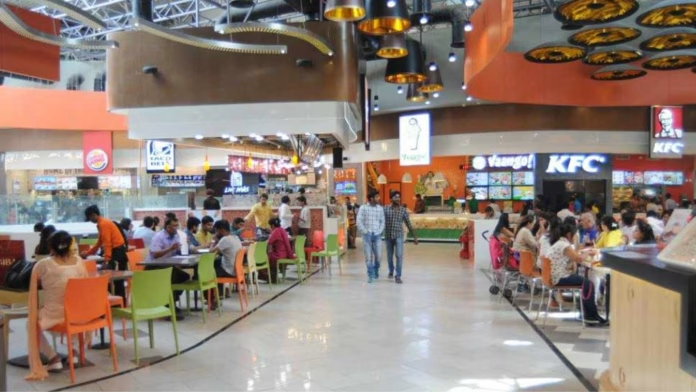
India’s retail scene is undergoing a notable change as property developers launch malls exclusively focused on food. In these establishments, over 50% of the space is allocated to food outlets and entertainment areas. This shift underscores the increasing acknowledgment of the pivotal role played by food and beverages as the primary revenue drivers for malls.
Prestige, headquartered in Bengaluru, has recently inaugurated a 125,000 sq ft mall exclusively featuring restaurants and cinemas. Additionally, the company is in the planning stages for a larger 500,000 sq ft mall following a similar concept. Meanwhile, Omaxe Group from Delhi is in the process of developing a mall in Chandni Chowk, New Delhi, with 70% of the space reserved for restaurants. Signature Global, another prominent developer, already operates a food-only mall in Ghaziabad.
Phoenix, headquartered in Mumbai, and DLF, based in New Delhi, are both expanding the space dedicated to restaurants in their existing properties and upcoming projects. This decision stems from the sustained rise in customer foot traffic and revenue growth observed in eateries following the post-pandemic period.
“We have taken a lot of feedback from the operators of our first food-only mall, and we are using that for better experience in the second mall, which will be bigger. Eating out has emerged as the biggest trend post Covid and that has made us confident to do a bigger mall where every restaurant will have an outdoor space,” said Muhammad Ali, CEO, Forum Malls of Prestige group.
Until approximately three years ago, food and beverage outlets occupied around 10% of the retail space in malls. However, this percentage has now increased to 20%. Mall operators express their readiness to allocate even more space to eateries in response to this growing trend.
“Food is big business, and it becomes unbeatable when paired with the right ambience. That’s precisely what we have done at Dawatpur, the Omaxe Chowk food court,” said Mohit Goel, managing director, Omaxe Group.
Omaxe Chowk, located in Chandni Chowk, offers a leasable area of 375,000 square feet, with a specific allocation of 100,000 square feet dedicated to food and beverage outlets.
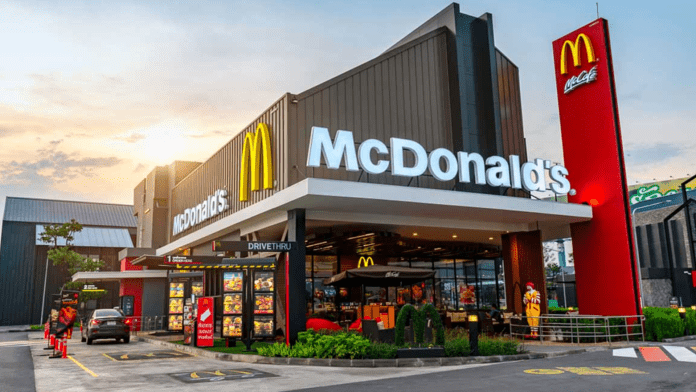
On Wednesday, McDonald’s announced an aggressive expansion roadmap, targeting 50,000 restaurants worldwide by 2027. The chain also shared plans to introduce CosMc’s, a new network of small-format shops with a focus on cold beverages.
The fast-food giant, which had 40,275 restaurants at the end of 2022, aims to rapidly expand its network of flagship locations by about one-quarter, marking the speediest expansion in the brand’s history.
Regarding CosMc’s, a concept alluded to by McDonald’s executives in July, the company intends to open its first store in Chicago in 2024, followed by nine additional locations in Texas. This initiative is reminiscent of an animated orange character with six arms featured in McDonald’s marketing from 1986 to 1992.
According to the company’s website, CosMc’s is characterized as being “inspired by nostalgia” and features a menu that includes beverages like S’mores Cold Brew and Sour Tango Lemonade, as well as sandwiches and baked goods.
Speciality beverages and coffee are a fast-growing $100 billion category and “a space that we believe we have the right to win,” Chief Executive Chris Kempczinski said at an investor day.
McDonald’s, having rapidly expanded during mid-century America, currently holds the top position as the largest chain in the fast-food industry, slightly surpassing Starbucks and Subway, both prominent global brands.
To facilitate the expansion, the company intends to allocate approximately USD 2.5 billion in capital expenditures in 2024, with additional annual increments ranging from USD 300 million to USD 500 million until 2027.
Manu Steijaert, Chief Customer Officer, mentioned that the current expansion is advancing at a much faster pace compared to the previous increase from 30,000 to 40,000 restaurants, which spanned over 18 years.
“Hopefully you can feel the confidence we have in McDonald’s’ development potential over the next four years and beyond,” Steijaert said.
Recent sales growth has been driven by new offerings, including the well-received “McCrispy” chicken sandwich. The chain has additionally experienced increased online orders in the wake of the Covid-19 pandemic, and its reputation for affordability has helped maintain customer traffic amid a period of heightened inflation.
The chain forecasted a nearly two percent increase in revenue for the year 2024.
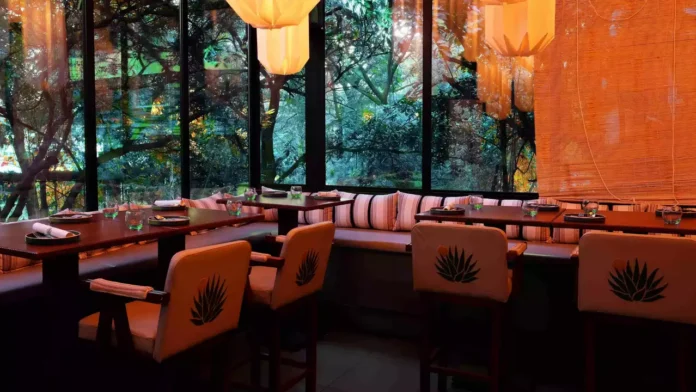
Juju, Pune’s first tequila bar, is set to transport the city to a Mexican adventure. Tucked into the lively heart of Kalyani Nagar, Juju’s design seamlessly combines a glasshouse aesthetic with thoughtfully curated tables and high chairs, creating a snug atmosphere.
The highlight, a decor inspired by cacti, gracefully descends from above, swaying with captivating elegance. Its soft glow, harmonizing with ambient lighting, creates an intimate and romantic scene. The seating layout includes a series of large windows offering a charming view of Pune’s leafy streets. A central communal table promotes spontaneous interactions, nurturing engaging conversations and unexpected friendships.
Karan Khilnani, co-founder of Elephant & Co, said, “Juju is the natural extension we envisioned as a quaint tequila bar experience that drinks, dines, and dances with a modern Mexican soul. Juju promises to be a 36-seater cozy and intimate bar that provides an unparalleled dining and drinking experience.”
Chef partner Hanoze Shroff emphasises their commitment to seasonality, stating, “We have deliberately kept the menu small and super seasonal. A majority of ingredients remain authentically Mexican, but I have also introduced Indian elements that blend well with the Mexican ethic.”
The capacity to employ the “Voice of Authority” is a powerful instrument for people looking to build influence and credibility in the dynamic world of work relationships. Good communication has the ability to change people’s opinions and build trust whether it takes place in a boardroom, lecture hall, or online. This post reveals tactics that go beyond words to make a lasting impression as it delves into the subtleties of developing a convincing Voice of Authority.
1. Commanding Confidence:
At the heart of any authoritative voice lies unwavering confidence. Whether addressing a crowd or engaging in one-on-one conversations, projecting confidence in both tone and body language creates an aura of assurance that captivates listeners. Confidence isn’t just about what you say; it’s about how you say it and the conviction that accompanies your words.
2. Expertise as a Foundation:
Credibility is inherently tied to expertise. Establishing oneself as an authority requires a deep well of knowledge in the subject matter. Continual learning, staying abreast of industry trends, and honing one’s skills are essential components of building an authoritative voice. When you speak from a place of genuine expertise, your words carry weight and resonate more profoundly with your audience.
3. Expertise: The Cornerstone of Credibility:
True authority stems from genuine expertise. Demonstrating a deep understanding of the subject matter not only instills confidence in the audience but also positions the communicator as a credible source. The continuous pursuit of knowledge and a commitment to staying abreast of industry trends are the secret ingredients that bolster one’s authority.
4. Engaging Storytelling:
In the tapestry of communication, stories are the threads that weave connections. The authoritative voice is one that can seamlessly integrate relevant anecdotes, case studies, and examples to illustrate key points. By tapping into the emotional resonance of storytelling, the communicator transcends information transfer, creating a memorable and impactful experience.
5. Active Listening:
Credibility isn’t a one-way street. The authoritative communicator is also a skilled listener. By actively engaging with the perspectives of others, acknowledging their input, and incorporating relevant insights, the communicator fosters an environment of mutual respect. This not only enhances credibility but also encourages collaboration and understanding.
6. Consistency in Message:
A cacophony of conflicting messages erodes credibility. The Voice of Authority is one that maintains consistency in messaging across diverse platforms and situations. Whether addressing a team, presenting to stakeholders, or participating in a public forum, a consistent and coherent message reinforces the credibility of the communicator.
7. Adapting to the Audience:
The authoritative communicator understands the importance of tailoring the message to the audience. Whether speaking to experts in the field or conveying complex concepts to a lay audience, the ability to adapt language and tone enhances relatability, making the message more accessible and resonant.
The Voice of Authority is not a monologue but a symphony of deliberate choices in communication. From the confidence exuded in body language to the precision of language and the depth of expertise, establishing credibility is a deliberate and ongoing process. By embracing these principles, individuals can elevate their communication skills, turning every interaction into an opportunity to wield the transformative power of the Voice of Authority.
Building enduring relationships with customers is more important for success in the ever-changing business world than merely closing a deal. Effective communication and sincere concern are essential to these kinds of relationships. This post delves into tactics that transcend transactional interactions and explore the domain of meaningful involvement, cultivating relationships that endure over time.
Understanding your audience is the cornerstone of effective communication. Embrace data-driven insights to tailor your messages according to consumer preferences, behaviors, and demographics. Whether through personalized emails, targeted social media content, or customized promotions, the art of personalized communication ensures that your messages resonate with individuals on a personal level, creating a sense of connection and relevance.
1. Responsive Customer Support: Turning Challenges into Opportunities
Exceptional customer support is not just a service; it’s an opportunity to showcase care and commitment. Respond promptly to inquiries, address concerns with empathy, and go the extra mile to exceed expectations. In the age of social media, where experiences are shared instantly, turning a challenging situation into a positive customer service story can significantly enhance your brand’s reputation and loyalty.
2. Consistent Engagement Across Channels: Meeting Consumers Where They Are
Whether consumers engage with your brand through social media, email, or in-store, maintain a unified brand voice and messaging. This cohesion reinforces brand identity and ensures that consumers receive a seamless experience, irrespective of the channel. Meeting consumers where they are fosters familiarity and strengthens the overall connection.
3. Value-Added Content: Educate, Entertain, and Enrich
Beyond promotional messages, offer content that adds value to consumers’ lives. Whether it’s educational resources, entertaining content, or exclusive insights, providing information that extends beyond immediate sales pitches establishes your brand as a valuable resource. This approach not only positions your brand as an authority in your industry but also keeps consumers engaged between purchases.
4. Loyalty Programs: Rewarding Ongoing Engagement
Loyalty programs are more than just discounts; they’re an acknowledgment of the ongoing relationship with your brand. Implement loyalty programs that reward not only purchases but also other forms of engagement, such as referrals, social media interactions, or writing reviews. These programs not only incentivize continued loyalty but also make consumers feel appreciated and valued.
5. Surveys and Feedback: Listening and Adapting
Consumer engagement is a two-way street, and active listening is crucial. Implement surveys and feedback mechanisms to understand consumer satisfaction, preferences, and areas for improvement. Act on the insights gained, demonstrating to consumers that their opinions matter. This iterative process not only refines your offerings but also strengthens the bond by showcasing a commitment to continuous improvement.
Final Thoughts: Building Bridges, Not Transactions
The transformation of one-time transactions into lasting relationships requires a commitment to communication and care. By embracing personalized communication, providing responsive customer support, maintaining consistency across channels, offering value-added content, implementing loyalty programs, and actively seeking feedback, brands can build bridges that withstand the test of time. In the journey of consumer engagement, it’s not just about the product; it’s about the stories, connections, and experiences that make consumers choose your brand time and time again.
We use cookies to ensure that we give you the best experience on our website. If you continue to use this site we will assume that you are happy with it.