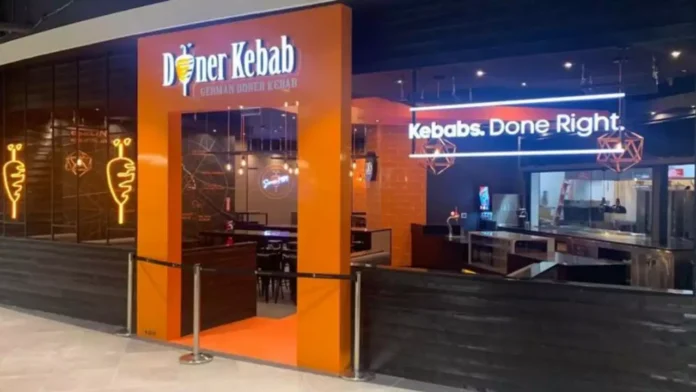
The menu was created to commemorate the introduction of GDK’s inaugural motorway services concept at Baldock Services, located on the A1 in Hertfordshire.
The extensive breakfast selection will debut at the upcoming motorway services venue, scheduled to open in December, generating 30 employment opportunities in the vicinity. Furthermore, the brand intends to test the menu in London, specifically at its Holborn establishment on Southampton Row.
Taking the spotlight on the morning menu is the Doner Egg Brioche. Other breakfast choices on the extensive menu feature the Big Breakfast Wrap. This breakfast main consists of GDK’s high-quality, lean doner meat, two free-range eggs, hash brown bites, sliced tomatoes, onions, and is topped with GDK’s signature melted cheese and garlic sauces. Customers can complement their meal with a cup of coffee from the well-known Italian brand Lavazza.
GDK boasts a presence of more than 130 restaurants exclusively in the United Kingdom.
The Darjeeling tea industry, already grappling with financial crises due to factors like low production, reduced demand in export markets, and diminished price realization, faces an additional challenge. The import of affordable teas from Nepal reached 10.4 million kg between January and October this year, deepening the industry’s crisis. Compounding the issue, Nepal has successfully penetrated traditional export markets for Darjeeling tea, engaging in direct exports to countries like Germany and Japan, further impacting the industry’s economic stability.
Concerns among Darjeeling planters are mounting as they fear that domestic consumers are increasingly opting for Nepal teas, mistakenly identifying them as Darjeeling teas. This trend is causing significant harm to the Darjeeling tea market within the country. Industry insiders argue that despite DGCIS figures indicating the entry of 10.4 million kg of Nepal tea until October, the actual figure could be as high as 17 million kg.
Madhav Sarda, managing director of Golden Tips Company said “The Ilam district in Nepal and Darjeeling in West Bengal have the same climate. It is just an imaginary line that divides the two. The tea produced in Ilam is almost similar to that of Darjeeling. So a lot of teas are entering from Ilam to India and are being sold in the domestic market as Darjeeling tea. And the volume is gradually increasing every year.”
Trade sources report that approximately 17 million kg of Nepal teas have made their way into India this year, encompassing a variety that includes both orthodox or premium teas and CTC teas.
Sarda mentioned that Nepalese teas are priced significantly lower than Darjeeling teas, with a difference ranging from approximately 35% to 50%.
“They are blended with Darjeeling teas and are sold as Darjeeling teas. The consumers can’t differentiate between Darjeeling teas and Nepalese teas. Even the tea experts sometimes fail to differentiate between the two,” he said.
Over the years, the production of Darjeeling tea has declined, dropping from 11 million kg to 6.6 million kg in 2022.
“The production will be less this year because of bad weather during the initial phase of the new season of the tea crop cycle,” said a Darjeeling planter.
Sandeep Mukherjee, principal adviser of Darjeeling Tea Association said “Of the 87 tea estates in Darjeeling, 7 are permanently closed. Many of them are somehow surviving and are not able to clear the statutory dues of the workers. The fate of the Darjeeling industry is uncertain and we do not know how long the gardens will continue their operations.”
In 2022, the Darjeeling tea industry recorded an export of 3.02 million kg of tea.
“Darjeeling tea industry is in ICU and this year the exports will be less. Both the central government and state government should take immediate steps to revive Darjeeling tea,” said Anshuman Kanoria, chairman of the Indian Tea Exporters Association (ITEA).
The Karnataka state government has directed beer manufacturers to cease third-shift operations at their breweries, attributing the decision to a shortage of permanent excise officers and staff throughout the state.
This decision could result in a significant disruption in the production of brewing products in India’s second-largest beer-consuming state.
Nevertheless, spirits manufacturers with distilleries have not received the same notice, causing concern among beer makers that a potential shift in demand towards hard liquor might occur in the event of supply constraints for their brands.
United Breweries, AB InBev, Bira, and Carlsberg collectively possess seven breweries in Karnataka, all of which operate in three shifts and rank among the largest in the country for these companies.
“We sincerely urge policymakers in the state to reconsider the decision to cancel the third-shift operation in the brewery. This decision will significantly impact the state’s thriving beer industry, jeopardising employment and causing a shortage of beer during the peak demand period around Christmas, New Year and beyond which is the peak season for beer,” said a company official of a leading beer company.
In India, numerous state governments either regulate the retailing or wholesale distribution of liquor, or both, with taxes on alcohol constituting a significant portion of their revenue. Over 50% of the retail price is directed towards state and central governments through Value Added Tax (VAT) and excise duty. In August, Karnataka declared a 20% rise in additional excise duty on domestically produced liquor.
In the fiscal year 2022-23, the excise revenue generated from total liquor sales in Karnataka amounted to approximately INR 30,000 crore. Beer constitutes 15% of Karnataka’s alcohol excise revenue, experiencing a twofold increase over the past two years to reach INR 4,500 crore. The state annually consumes 3.8 million hectoliters of beer, contributing to 13% of India’s overall volume sales.
“This will also potentially steer retailers and consumers towards stronger alcoholic beverages which have been growing but not as rapidly as beer,” one of the top brewers in the state said on the condition of anonymity.
India, characterized by a tropical climate, promising demographics, and rising affluence, stands as one of the largest beer markets for the world’s leading brewers. Despite its potential, the country faces heavy taxation, and the government has granted licenses to only 80,000 alcohol outlets. This is noteworthy given that more than 20 million people reach the legal drinking age in India each year.
Comprising only a tenth of the nation’s spirits market, beer in India has a per capita consumption of two litres, which is lower than in many other Asian markets. Despite the potential for market expansion, companies express optimism tempered by the acknowledgment that evolving regulations pose one of the most significant challenges to operations in India.
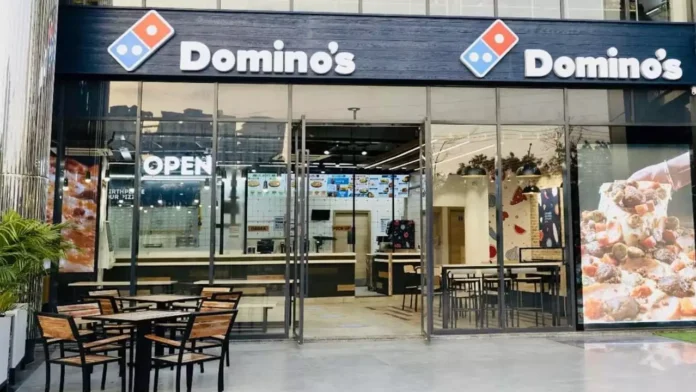
On Thursday, Russell Weiner, the global CEO of Domino’s Pizza, remarked that the company has been successfully gaining market share from independent and regional pizza competitors. He highlighted India and China as the focal points for international growth for the global pizza giant in the coming year.
“A large, fragmented category offers significant growth opportunity,” Russell said in a presentation during the company’s Global Investor Day on Thursday.
Acknowledging the rise of regional rivals across all its markets worldwide, Domino’s noted in its presentation, “We will get more customers through a value strategy.”
Both in India and on a global scale, Domino’s has been implementing strategies such as introducing more value meals and ramping up consumer promotions to counter the growing competition from emerging regional pizza brands.
“We have addressed business challenges. If we don’t open stores, our competitors will,” Domino’s, which competes aggressively with Yum Restaurants-owned Pizza Hut in the organised Quick Service Restaurant (QSR) market, said.
In the third quarter of 2023, Domino’s disclosed global retail sales exceeding $4.2 billion, with an equal split between the United States and other international markets.
The pizza chain additionally mentioned that India and China will take the lead in international store expansion in 2024, projecting the number of stores in India to increase from the current 1,961 to 3,000 by 2029.
Meanwhile, Jubilant FoodWorks (JFL), the entity holding franchise rights for Domino’s Pizza and Dunkin Donuts in India, announced a 26% decrease in net profit to INR 97.20 crore in the September quarter, despite a 5% growth in revenue to INR 1,368.63 crore.
“We reckon that the recovery in the dine-in business is uninspiring, while operating margins remained under stress due to negative operating leverage,” ICICI Securities wrote in a report on JFL after its second quarter earnings. “Key downside risks are raw material costs turning inflationary and increase in competitive intensity,” the report added.
Over the last four quarters, Western-style Quick Service Restaurant (QSR) companies in India have witnessed a decline in sales, attributed to inflation impacting consumer spending preferences towards lower-priced alternatives. Additionally, competition from hyper-local brands has escalated during this period.
Due to unseasonal rainfall damaging onion crops in Maharashtra and causing a surge in domestic prices to INR 40/kg in wholesale trade, India has implemented a ban on onion exports until March 31, 2024. Traders and farmers anticipate a significant decline in onion prices in January as a result of this measure.
Central government officials recently conducted field surveys in Maharashtra to evaluate the impact of unseasonal rainfall. Over the past few weeks, the prices of onions have risen to INR 38-41/kg in wholesale trade for high-quality onions. This increase is attributed to robust export demand from Bangladesh, which has provided support to domestic prices.
Traders mentioned that prices were expected to stabilize within the next week, given the daily increase in arrivals of kharif onions.
“The arrival of late kharif and kharif onions will flood the markets in January, which can bring down the prices to as low as INR 10-15/kg,” said a Pune-based onion trader, who requested not to be identified.
The primary timeframe for onion exports is from December to February, which also benefits farmers as the onions harvested during this period have limited keeping quality. Concerns among trade insiders have arisen, suggesting that the export ban might prompt farmers to reconsider planting rabi onions.
After more than five years, India has waived the import duty on yellow peas, reducing it from 50% to nil. The Ministry of Finance issued the notification to this effect late on Thursday night.
“There is still the minimum import price of Rs 200/kg in force. Imports cannot take place unless this price restriction is removed,” said Bimal Kothari, president, Indian Pulses and Grains Association (IPGA).
The delayed sowing of rabi chana in Maharashtra and Gujarat is believed to be a factor influencing the decision to eliminate import duties on yellow peas.
India previously imported substantial quantities of yellow peas to address the shortfall in domestic chana production. These imports served as a substitute for chana in the production of chana flour (besna) by the dal mills.
Nevertheless, owing to the initiatives of the central government, India has achieved self-sufficiency in chana. The surplus chana stocks held by the central government played a crucial role in ensuring food security for the impoverished during the Covid years.
India has implemented a reduction in the stock limit for wheat held by traders and millers, as disclosed by the senior-most civil servant in the food ministry on Friday. The objective is to augment the availability of the grain and regulate prices effectively.
Concerns have arisen among Indian authorities regarding the volatility in food prices in anticipation of the upcoming general elections scheduled for May. Given that food prices constitute nearly half of the retail inflation basket, the government is undertaking measures on the supply side to mitigate food inflation.
Sanjeev Chopra, the Secretary at the Ministry of Consumer Affairs, Food and Public Distribution, announced a reduction in the limit for wheat stocks held by traders and wholesalers to 1,000 tonnes, effectively halving the previous threshold. Simultaneously, inventory limits for millers and retailers have also been decreased.
“The idea is there should not be any artificial scarcity… Whatever people are holding has to come out in the market so we have given them 30 days’ time to adapt to the new stock limits. Additional availability will have cooling effect on the prices.”
Additionally, Chopra stated that the government stands ready to release an extra 2.5 million metric tons of wheat into the market if deemed necessary to control prices.
On Friday, the Reserve Bank of India maintained its rates for the fifth consecutive meeting, citing an uncertain inflation outlook fueled by persistent food price increases staying above 6%.
Following a decline in production, India has instituted a ban on the export of wheat and non-basmati rice. Additionally, New Delhi has imposed restrictions on sugar exports this year and, as of Thursday, instructed sugar mills to refrain from using cane juice or syrup for ethanol production.
According to a Reuters poll, it is anticipated that India’s retail inflation increased in November, driven by elevated food prices, following a three-month decline.
In September, India implemented stricter restrictions on the limits for wheat stocks held by millers, traders, and retailers.
The Indian Sugar Mills Association, a prominent trade body, projects a decline of 8% in India’s sugar production to 33.7 million tons during the marketing year 2023/24. This projection is attributed to diminished yields resulting from inadequate and poorly timed rainfall in crucial sugar-producing states.
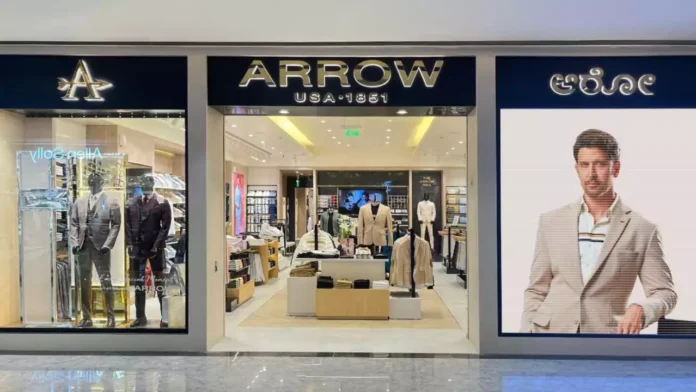
Arrow strategically increased its presence in southern India by opening an exclusive brand outlet in Bengaluru, Karnataka. The newly inaugurated Arrow Retail Identity, located in the Mall of Asia, goes beyond the traditional store concept, covering a generous 1400 sq. ft. This innovative retail endeavor not only transforms the shopping experience but also emphasizes Arrow‘s dedication to offering unmatched style and sophistication to Bengaluru’s fashion-forward community. This initiative is aligned with Arrow’s robust expansion strategy, focusing on thriving in high-growth markets.
The recently revealed Arrow store at the Mall of Asia showcases a carefully curated assortment of high-quality menswear designed to cater to the discerning tastes of the contemporary gentleman. Whether it’s impeccably crafted suits or casually chic attire, Arrow’s diverse range of offerings stands as a testament to the brand’s commitment to timeless elegance and exceptional craftsmanship.
Anand Aiyer, CEO of Arrow shared, “We are delighted to announce the opening of our newest store in the vibrant city of Bangalore. The Mall of Asia provides the perfect backdrop for Arrow’s commitment to offering the finest in menswear. At Arrow, we cater to all occasions in men’s fashion, all while upholding our promise to dress the modern man in both elegance and comfort.”
The store highlights Arrow’s Fall-Winter 23 Collection, showcasing the latest fashion essentials. This includes the renowned Autopress shirts, celebrated for their wrinkle-free quality, and Autoflex trousers featuring a comfortable flexible waistband. The collection also encompasses ceremonial suits and blazers for special events, sophisticated linen blazers for an elevated appearance, and diverse lines such as Arrow Sports with polos and chinos. Additionally, Arrow New York presents modern workwear and casual attire to cater to a variety of styles.
Alipay Singapore Holding intends to divest its entire 3.44% share in the prominent food delivery company Zomato on Wednesday. The Chinese company has established the minimum price at INR 111.28 per share for this transaction. Zomato’s latest closing share price was INR 113.8. At the specified base price, Alipay anticipates raising INR 3,290 crore. The share sale is being managed by BofA Securities and Morgan Stanley, the designated investment banks.
Antfin Singapore Holding, an affiliated entity of Alipay, held another 6.39% stake in Zomato at the end of the September 2023 quarter.
Last month, following the expiration of its lock-in period, SoftBank sold 1.1% equity in Zomato at INR 111.2 apiece, raising INR 1,040 crore.
In August, Internet Fund III, a venture capital fund overseen by Tiger Global, and Apoletto Asia, a fund supported by Israeli billionaire Yuri Milner, divested shares amounting to INR 1,412 crore in the prominent food delivery company.
On Friday, the Japanese technology investor SoftBank executed a block deal, selling 9.35 crore shares of the foodtech giant Zomato for INR 1,127 crore.
According to NSE data, SVF Growth (Singapore) divested a 1.06% stake in the company at a price of INR 120.5 per share.
Invesco, ICICI Prudential Insurance, Goldman Sachs (Singapore), Kadensa Capital, Morgan Stanley Asia Singapore, and other entities acquired the shares that flooded the market.
At the end of September 2023, SVF Growth (Singapore) held a 2.17% stake in Zomato, owning 18.71 crore shares. However, in October, the investor sold a 1.09% stake in the company for a sum of INR 1,040.5 crore.
The recent sale of shares strongly suggests that the investor has likely fully divested from Zomato.
Engaging in a selling streak, the Japanese investor aims to capitalize on the upward trend in Indian equity markets and new-age tech stocks. Before this, SVF Growth had sold a 1.15% stake in Zomato for INR 947 crore in August 2023.
This aligns with the broader market trend, as international investors have been divesting their holdings in domestic new-age tech firms. In a recent development, Chinese tech giant Alipay exited Zomato by liquidating its entire 3.44% stake through various block deals, fetching INR 3,336.7 crore earlier this month.
In August, venture capital firm Tiger Global sold 12.24 crore shares of Zomato for INR 1,123 crore.
The ongoing streak of stake sales coincides with Zomato’s announcement of its second consecutive profitable quarter in the financial year 2023-24 (FY24). The foodtech giant witnessed a remarkable surge in its profit after tax, reaching INR 36 crore in the September quarter of FY24, marking an 18-fold increase from the INR 2 crore PAT recorded in the preceding quarter.
Meanwhile, Zomato has been facing its share of challenges. Both Zomato and its competitor Swiggy have purportedly received notices for a combined Goods and Services Tax (GST) bill of INR 1,000 crore. This amount stems from the 18% tax imposed on the total collection from delivery fees since the commencement of their operations.
This month might just be what you’ve been waiting for, as this trio of colossal events makes its way to your city. India, being the heartbeat of cultural diversity welcomes all taste buds and celebrates passions like no other, and these events are here as a testament to the vibrant spirit of the people. If you’re enthusiastic about gastronomy, pets and pop culture, get ready to revel in an unforgettable experience of food, music, people and exploration.
Zomaland
Zomaland, one of India’s biggest food events is ready for its 4th edition in 2023-24. It’s a culinary carnival beyond imagination; a vibrant experience, where flavours, games, music and live entertainment come together and foster an environment for food enthusiasts, local businesses and artists to have an unforgettable experience. Beyond the gustatory delights, Zomaland is a thriving platform for local businesses to gain exposure and recognition, contributing to the growth of the flourishing food industry. This culinary extravaganza is your passport to diverse culinary realms while celebrating the roots of our country.
When & Where:
New Delhi | Dec 16-17 | JLN Stadium, Gate No.2
Chandigarh | Dec 23-24 | Chimney Heights Resort
Hyderabad | Jan 20-21 | GMR Arena
Mumbai | Feb 10-11 | Jio World Garden
Kolkata | Feb 24-25 | Aquatica Resort
Bengaluru | March 16-17 | Embassy International Riding School
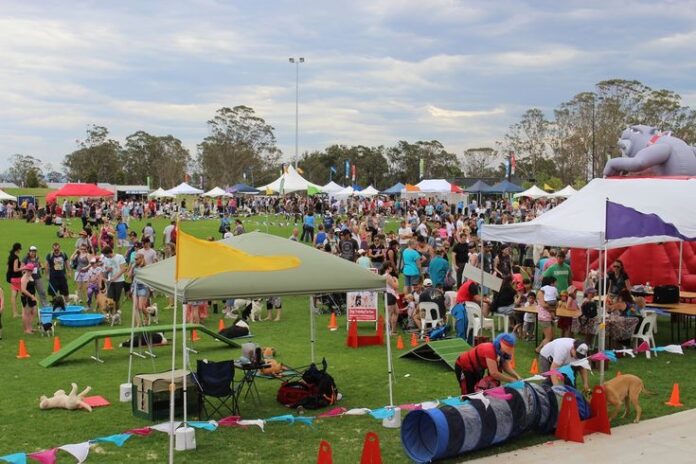
India’s largest pet festival, Pet Fed, unfolds as a carnival for pets and their fond owners across wide spreads of lush greenery. From fashion shows to security dog spectacles, the event creates a haven for pets and pet lovers alike. With workshops, stalls, and an abundance of fun and knowledge, Pet Fed strengthens the bond between pets and their owners, offering a unique chance for all animal lovers to be surrounded by thousands of four-legged friends. As pets indulge in various activities, their owners are treated to an array of food, drinks, and music, enhancing the joyous atmosphere.
Comic Conventions, commonly known as Comic Cons, have evolved to become a pilgrimage for pop culture enthusiasts. Movie-buffs, readers, artists, writers, collectors, and more gather under one roof to celebrate a cultural phenomenon that has taken the world by storm. With artists, publishing houses, and pop-culture entities showcasing their creations, Comic Con becomes a vibrant marketplace for one-of-a-kind artworks, comics, and collectibles. It’s not just an event; it’s a congregation of passion and fandom.
These monumental events, extending from the realms of food to pets, and comics, promise an unparalleled experience for those who seek to immerse themselves in a day out, surrounded by passionate zeal, diverse cuisines, bonding with our four-legged friends or delving into the world of pop-culture.
We use cookies to ensure that we give you the best experience on our website. If you continue to use this site we will assume that you are happy with it.