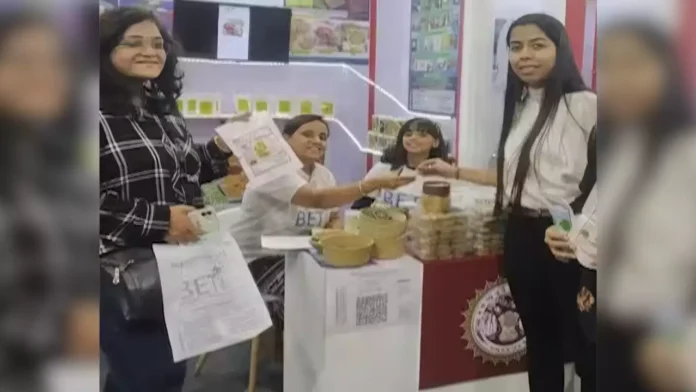
Delhi frequently makes news headlines due to its smog, a consequence of pollution primarily stemming from stubble burning in neighboring states, significantly affecting the Air Quality Index (AQI). Although stubble burning has long been a concern, one woman from Indore has ingeniously transformed it into a positive venture. Dr. Pooja Dubey Pandey, a resident of Indore, chose to embark on mushroom cultivation using stubble, providing nutritious produce to the public.
Dr. Pooja, a medical professional, initiated mushroom farming on a stubble farm, using her innovative approach to enhance her economic situation. Beyond financial gains, she is contributing to promoting a healthier lifestyle by offering fresh produce. The inspiration for her venture struck during a visit to Delhi, where she observed the pollution and pondered how to convert this challenge into an opportunity. Driven by this idea, she not only made a positive impact on the environment but also established a successful mushroom cultivation enterprise. Furthermore, Dr. Pooja is actively training young individuals to join her in this journey, creating a sustainable and impactful initiative that has gained significant media attention.
In 2017, Dr. Pooja Dubey Pandey inaugurated BETi in Indore. BETi, an acronym for Biotech Era Transforming India, was founded as a hub for research and training. Its primary objective is to offer dependable custom Spawn services and training for mushroom cultivation in India. In 2019, the company attained certification as a DPIIT-recognized startup as part of the Startup India initiative. The company is jointly directed by Pooja and Mr. Pradeep Pandey.
Pioneering Mushroom Cultivation:
Drawing upon her decade-long expertise in research, academia, and industry, Pooja established her Mushroom Spawn Production Laboratory. The laboratory not only specializes in mushroom spawn production but also pioneers skill and product development initiatives. This includes providing training, internships, and research projects to students.
During an interview, Mr. Pradeep Pandey disclosed that BETi’s products are presently being exported to nations such as Sri Lanka, Nepal, and Japan. He further shared that their startup business currently employs 25 individuals. When discussing the monthly turnover, he revealed it stands at INR 15 to INR 20 lakh. In addition to mushroom cultivation, they have diversified into the production of biscuits, namkeen, and various other products.
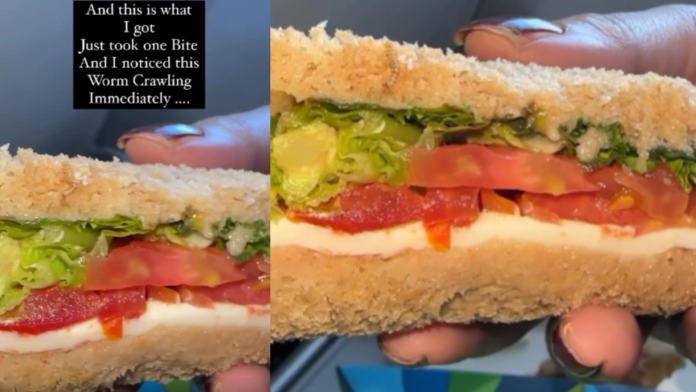
Nutritionist Khushboo Gupta recounts her “most unpleasant encounter” aboard an Indigo flight, where she discovered a live worm in her sandwich. Gupta, expressing her dismay at the declining food and service standards of the budget airline, posted a stomach-turning video of the incident on Instagram.
The Delhi-based dietician stated that she took an Indigo flight from the national capital to Mumbai on the morning of December 29. While booking the flight, she had added and duly paid for a veg sandwich that was duly served to her during the journey.
Upon taking a bite of the sandwich, Gupta was startled to observe a crawling worm. To exacerbate the situation, the flight attendant responded very “casually” when she asked for other passengers to be notified of the incident, allowing them to decide whether or not to consume their meals.
“Despite knowing the quality of sandwiches was not good… the flight attendant continued to serve sandwiches to other passengers. There were kids, elderly and other passengers …. What if any one catches infection,” Gupta asked as she shared the incident on Instagram.
She mentioned that upon informing the Indigo flight attendant about the worm, the response received was simply, “I will replace it with something else.” She also promised to bring it to the attention of the concerned department later.
The flight attendant subsequently came back with an alternative food item for Gupta, which she declined to accept.
“I didn’t want to create a panic situation …. but Her first action should have been to make other passengers aware so that they make an informed decision about consuming the sandwich or not,” the dietician wrote.
She ended by stating that she didn’t want a refund or compensation from Indigo but stressed the importance of putting passenger safety first for the airline.
Indigo takes action:
The airline acknowledged the issue and is collaborating with its caterer to ensure that corrective measures are implemented.
“We are aware of a concern raised by one of our customers regarding their experience on flight 6E 6107 from Delhi to Mumbai. We want to emphasize our unwavering commitment to maintain the highest standards of food and beverage service on board. Upon investigation, our crew had immediately ceased the service of the specific sandwich in question. The matter is currently under thorough examination, and we are working closely with our caterer to ensure appropriate corrective measures are taken. We sincerely apologize for any inconvenience caused to the passenger,” Indigo said in a statement.
The report from the India SME Forum (ISF) highlights the sustained dominance of well-established platforms such as Amazon and Flipkart among MSMEs for sales. A recent study conducted by the Forum for Internet Retailers, Sellers, and Traders (FIRST) India, a division of ISF, has shared year-end insights regarding the impact of e-commerce during the 2023 festive season.
Gathering data from more than 32,000 respondents across the nation, the study emphasized a significant increase in online retail activity.
Riding the Amazon Wave:
Around 80% of sellers disclosed that their revenues stemmed from online and e-commerce sales. Among these, 60% noted a doubling in their sales, while a striking 90% reported a minimum 30% year-on-year increase in online sales.
Vinod Kumar, President of India SME Forum and Trustee and President of FIRST India commented, “From an estimated INR 90,000 crore this year, we anticipate festive sales to surge beyond INR 1,00,000 crore in 2024, as we continue guiding these enterprises towards a trajectory of prosperity by integrating offline and online retail.”
Kumar’s statement highlights the Forum’s dedication to guiding businesses towards growth by integrating traditional offline avenues with the digital landscape.
The findings of the report indicated a strong trajectory for the online retail sector, foreseeing a substantial leap to $350 billion in the next five years. This growth is credited to the rising use of smartphones, increasing rates of digital adoption, and governmental initiatives such as Digital India and One District-One Product, collectively driving the expansion of e-commerce.
FMCG (Fast-Moving Consumer Goods) distributors in India express dissatisfaction and resist Hindustan Unilever’s (HUL) changes to their margin structure. They claim that the FMCG giant is pursuing a “draconian agenda” to boost profits at the distributors’ detriment.
The All India Consumer Products Distributors Federation (AICPDF) has expressed concerns about Hindustan Unilever’s (HUL) recent decision to reduce distributor margins, particularly amid sluggish sales growth in challenging market conditions, as reported by PTI.
This move by HUL has sparked apprehension within the federation, leading to discussions about potential courses of action. The AICPDF is even considering measures such as suspending purchases, a strategy previously employed to address analogous concerns within the industry.
“AICPDF strongly opposes this move, labelling it as a double standard approach, seemingly driven by a draconian agenda to boost company profitability,” the association said.
As per a news report, Hindustan Unilever (HUL), the proprietor of brands such as Lux, Lifebuoy, Surf Excel, Rin, Pond’s, and Dove, has decreased the fixed margin by 60 basis points. Concurrently, the company has elevated the variable margins for its distributors, marking an increase of 100 to 130 basis points.
“This decision, coupled with the offer of increased variable margins, suggests a shift in management strategy that may jeopardize the entire distribution network. Distributors fear being pressurized and blackmailed into compromising their rightful margins,” said AICPDF, which claims to represent over 4 lakh distributors and stockists pan India.
FMCG companies commonly provide distributors with two types of incentives: fixed margins and variable margins. Fixed margins typically fall within the range of 450 to 600 basis points and remain stable. In contrast, variable margins are contingent on factors such as performance and can vary accordingly. These incentives constitute a substantial aspect of how FMCG companies bolster their distributor networks.
“Drawing parallels with past instances, notably Mondelez, AICPDF highlights how similar structures and complex parameters can make it challenging for distributors to achieve the promised variable margins,” said AICPDF.
It also raised doubts about the company’s motives, “calling on them to reconsider and uphold a 5 percent base margin while providing incentives separately.”
Hindustan Unilever adjusts royalty fee:
In January 2023, HUL announced that the royalty fee it pays to its parent company, Unilever Plc, will increase by 80 basis points. This increment will be implemented gradually over the course of three years.
This marked the first instance in a decade where the parent company opted to increase the royalty fee. The preceding arrangement, encompassing technology, trademark licenses, and central services, was forged with the parent company in January 2013 and was slated for a 10-year duration.
HUL recorded a 4% increase in its standalone net profit, reaching INR 2,717 crore for the quarter ending September 2023, compared to INR 2,616 crore in the corresponding quarter of the previous year.
In the reported period, the company saw a 4% year-on-year (YoY) rise in sales, reaching INR 15,027 crore. The company’s profit surpassed expectations. Nonetheless, its revenue fell slightly below the anticipated figures.
In the September quarter, the reported underlying volume growth was 2%, falling below analysts’ projections of 3%. However, the EBITDA for the quarter reached INR 3,694 crore, maintaining margins at 24.18%, exceeding the estimated figures of INR 3,609 crore and 23.5%, respectively.
Room rates for some well-known hotels in key Indian markets have reached their highest point ever for December 31, indicating a remarkable end to the year for the industry.
Leela Palaces Hotels & Resorts properties in Delhi, Jaipur, and Udaipur are currently experiencing record-high rents, according to a spokesperson for the company. The Leela Palace Udaipur, with no available rooms for December 31, was previously charging approximately INR 1,06,200 for a night’s stay on Christmas, as listed on Booking.com.
Six Senses Fort Barwara in Rajasthan is charging INR 1,20,000 for December 31, as stated by its commercial director, Rajat Gera.
“We also have multiple queries for our Maharaja suite priced at INR 7 lakh a night,” he said. “There is an influx of inbound tourism, which had been pretty stagnant and inconsistent so far. Domestic travellers book late and the influx of international tourists has led to rates going up substantially. Those who hadn’t planned in advance are willing to pay a premium.”
Hotels in Goa record historic highs:
Akash Kalia, the cluster commercial director for Hilton Hotels, Goa, mentioned that the rates for DoubleTree by Hilton Goa-Panaji, Hilton Goa Resort Candolim, and DoubleTree by Hilton Goa-Arpora-Baga have reached historic highs.
Despite changes in booking patterns influenced by factors like the reopening of international borders and the re-establishment of routes by international airlines due to increased demand, Kalia stated that Goa continues to be a “relevant” destination.
“The state’s unique year-end offerings contribute to its appeal,” he said. “It’s safe to say that, overall, the numbers for our properties are currently at an all-time high.”
Manish Tolani, the Vice President and Commercial Director for India at Hilton, mentioned that leisure destinations are thriving in terms of business, with average rates being 40% higher than in previous years.
“This can be easily attributed to the rising demand for travel and the consumers’ desire to spend on travel and seek new experiences,” he said. “Our hotels in city locations have also been seeing a demand rush for December 31 due to last-minute bookings from unplanned travellers who want to relax and unwind with their family at a luxury city hotel of their preference.”
Raj Chopra, owner of the JW Marriott Mussoorie Walnut Grove Resort & Spa, said that no rooms were available at the property for December 31.
“Our rate of INR 32,000 is the highest ever,” he said.
The current rates for the New Year mark the peak for Wyndham Hotels & Resorts, attributed to a surge in demand, as stated by Nikhil Sharma, Market Managing Director for Eurasia.
“There are certain locations where the prices are notably higher, especially on December 31,” he said.
“Our hotels in Mussoorie, Kasauli, Udaipur, Kochi, Amritsar, Statue of Unity, and Dwarka in Gujarat seem to have particularly elevated tariffs for that specific date.”
Akhil Arora, Chief Executive Officer of Espire Hospitality Group, stated that the rates for ZANA Lake Resort in Udaipur are higher than last year for December 31. A two-night stay is now priced at INR 55,000 plus taxes.
“It’s certainly the peak of the market. Rates are probably at the highest than they have ever been for all leisure markets,” said Vijay Thacker, managing director of consulting firm Horwath HTL India. “What is driving the rates is a combination of the propensity to spend among people and market positivity. People are willing to spend on leisure and luxury experiences. International arrival numbers are also higher than last year for the luxury segment. It’s a demand-supply scenario.”
Chander K Baljee, Chairman and Managing Director of Royal Orchid & Regenta Hotels, mentioned that the properties in Mysore and Kabini within the chain have achieved record figures for December 31.
“Most hotels are chock-a-block at leisure destinations and it seems that people are still searching till the last minute and are willing to spend more,” he said.
A New Year’s Eve immersion package at the Fairmont Jaipur is priced at INR 65,000 plus taxes for December 31.
Providing the reasoning behind the pricing, which is the highest ever, Indu Khatri, Director of Sales and Marketing at the hotel, mentioned that the package will encompass “exclusive” experiences and “top-tier” spirits.
6-Pack Abs: On New Year’s Eve, when the clock strikes midnight, many of us plan to better ourselves. We should strive for greatness this year and establish a tough but ultimately gratifying goal: to have the toned abs that make Hrithik Roshan the fittest celebrity. Unleash your inner Hrithik in 2024 by following this thrilling path, which delves into the secrets of Hrithik’s chiselled body.
Hrithik Roshan’s Chiseled Marvel: The Inspiration We All Need
Decoding the Hrithik Roshan Ab Workout: Secrets Revealed
Often referred to as the “Greek God” of Bollywood, Hrithik Roshan worked very hard to get his amazing body. This was not an overnight transformation. We’ll go further into his fitness story, following his rise to fame and the hard work that gave him his trademark 6-pack abs. What is the process for creating a pair of abs that grabs attention? We will analyse Hrithik’s ab training programme and discover the moves that give him his signature washboard stomach. Read up on these tips so you may include them in your own workout routine.
The Mental Blueprint: A Roadmap to Success
Mindset Matters: Keeping a Positive and Resilient Outlook
Starting a fitness journey isn’t only about working out; it also involves mental resilience. Maintaining an optimistic outlook and developing the tenacity to push through tough times as you strive for 6-pack perfection is an art to learn.
Many people who are serious about their fitness use visualisation as a technique to help them reach their objectives. In order to keep yourself motivated and see yourself succeeding, we will walk you through the steps of creating a mental blueprint.
Establishing a Solid Foundation: The Significance of Nutritional Diet
Macro Mastery: Crafting Your Personalized Nutrition Plan
They say that abs are built in the kitchen, and Hrithik’s diet certainly proves that. Find out how to follow a food plan that works with your fitness objectives by exploring the famous diet secrets that power his workouts.
When you want to shape your abs, knowing what macronutrients are is essential. We’ll help you create a personalised nutrition plan that supports your quest for 6-pack abs by breaking down the significance of proteins, lipids, and carbs in your diet.
Unleashing the Beast: The Ultimate 6-Pack Abs Workout Routine
The Art of Consistency: Designing a Workout Schedule That Works for You
Immerse yourself in Hrithik’s fitness regimen as we delve into the workouts that focus on strengthening the abdominal muscles. These workouts can help you achieve your ideal abdominals, whether you’re just starting out or are looking to develop your core strength. Staying consistent is essential for achieving success in any fitness quest. So that you may maintain your dedication to your fitness objectives all year, we will help you develop a practical and long-term exercise plan.
Overcoming Obstacles: How to Avoid Difficulties on Your Journey
Overcoming Plateaus: Strategies to Push Past Fitness Plateaus
There is no way to avoid reaching a point of stagnation in any fitness programme. Learn the most effective strategies for breaking past fitness plateaus and continuing to grow your six-pack. Unexpected occurrences and challenges are a part of life that cannot be avoided. If you want to continue your fitness journey even when things become difficult, you should educate yourself on some real-world tactics that may help you cope with unforeseen problems.
Responsibility and Assistance: Assembling Your Ideal Team
The Power of Partnerships: Finding a Workout Buddy or Trainer
It is accountability that will transform the game. Gain an understanding of the benefits of working out with a friend or hiring a personal trainer to assist you in maintaining your motivation and staying on schedule.
Currently, technology has the potential to be a reliable partner. Explore a world of virtual tools and programs that have the potential to turn your smartphone into a trainer by ensuring that you remain accountable and keep track of your progress.
Triumph Awaits: Embrace the Journey to Your Dream Physique in 2024
Success awaits those who dare to dream big, so bear that in mind as we near the end of this fantastic journey to toned abs. Recognise the importance of embracing challenges, being determined, and celebrating even the little triumphs along the way. Put your inner Hrithik on full display in 2024 and finally get those six-pack abs you’ve always desired. You have no choice but to succeed on the road, and the payoff will blow your mind. Get the physique you’ve always wanted by starting the countdown now!
Tap into the Restorative Potential of Infused Waters for a Healthy Liver
Keeping our livers healthy usually takes a back seat in our hectic lives. Infused waters are like a miraculous elixir; they help you reverse the tide and treat your liver well. Bid farewell to fatty liver problems and set off on a revitalising path to detoxification and rejuvenation. Boost your liver health and treat your taste buds with these five delicious infused water recipes.
Understanding Fatty Liver
A Quiet Battle: The Mysteries of Fatty Liver Revealed
Fatty liver disease is a silent killer that affects millions of people yet frequently goes undetected until it’s too late. Focusing on this frequently neglected organ, this section seeks to educate readers on the signs, symptoms, and potential outcomes of fatty liver disease. A person may take charge of their liver health by learning the fundamentals of fatty liver.
Fatty liver disease causes liver cell fat buildup and may also cause inflammation, fibrosis, and cirrhosis. This condition increases liver cancer and metabolic problems, which cause cardiovascular disease and diabetes. Fatigue, stomach discomfort, and weight gain are ill effects of fatty liver disease. Fatty liver disease may influence general health and behavioural issues beyond liver function. Lifestyle adjustments must be implemented early to stop and reverse the disease. Medical advice is needed for diagnosis and treatment.
Water, the unsung liver health hero, is essential for liver function. This part discusses the science of optimal hydration and how dehydration may cause fatty liver disease. Learning about water prepares you for the intriguing world of infused waters.
Basic water might be boring. Infused water is a tasty and healthy way to hydrate. We nourish our livers and gratify our taste buds by flavouring water.
The Fantastic Five Infused Waters
Citrus Symphony: Lemon and Lime Zest
The Citrus Symphony is a tasty and effective liver detox drink made with zest from lemons and limes. The citric acid in lemons increases the production of liver-detoxifying enzymes. Because of the high levels of vitamin C it contains, it acts as an antioxidant, protecting liver cells from harm. In contrast to vitamin C’s enhancing effects on immunity and liver function, flavonoids shield the liver against inflammatory threats.
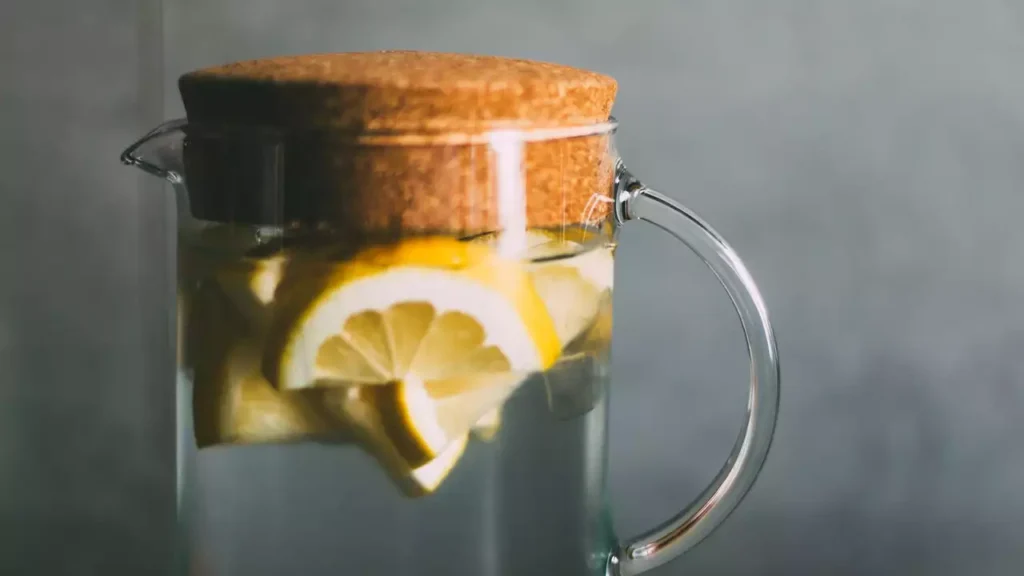
To prepare this symphony, cut a lemon into thin slices and let them steep in a pitcher of water for half an hour or more. Drinking this infused water first in the morning will speed up your metabolism and help cleanse your system. This delicious beverage is only the beginning of what the Citrus Symphony has to offer; it’s an approach to life that promotes better health and more zest.
Berry Bliss: Antioxidant-Rich Mixed Berries
Berry Bliss, a colourful mixed berry drink, is rich in antioxidants. It stimulates the palette and supports liver health. The mix of blueberries, strawberries, and raspberries adds colour and health benefits. Anthocyanin-rich blueberries fight liver oxidation and improve cellular health. Strawberries provide vitamins and antioxidants for liver function and detoxification. Raspberries’ fibre boosts digestion, which is essential to liver function.
Berry Bliss is made by combining a handful of each fruit in a pitcher of water to blend the flavours. Enjoy this delicious elixir frequently to gratify your taste buds and nourish your liver with nature’s antioxidants. I wish you a berrylicious health journey!
Minty Fresh Detox: Mint and Cucumber Magic
Minty Fresh Detox is a refreshing infusion combining cucumber and mint that will rejuvenate you. This pleasant beverage will delight your senses and detoxify your liver. The infusion is pleasant, anti-inflammatory and antioxidant thanks to cucumbers, which are low in calories and hydrated. The magic happens when mint, renowned for its digestive benefits and stomach-calming effects, is added. It naturally aids digestion, maintaining the healthy intestinal environment needed for liver function.
Slice a cucumber and add a handful of fresh mint leaves to a pitcher of water to make this refreshing drink. To tantalise your taste buds and revitalise your liver, use Minty Fresh Detox every day. Cheers to cucumber-mint magic!
Tropical Paradise: Pineapple and Coconut Elixir
Tropical Paradise, a heavenly elixir of pineapple and coconut, will take you to an exotic paradise. Taste and liver health are celebrated in this infusion. Pineapple’s bromelain and antioxidants improve digestion and reduce inflammation, helping the liver. Coconut adds lauric acid, an antibacterial that balances the stomach for liver health.
Mix pineapple chunks and coconut water in a pitcher to make this delicious drink. Tropical Paradise will satisfy your tropical hideaway needs and replenish your liver. Give yourself a taste of paradise for a happier, healthier you!
Ginger Zing: Spicy Ginger and Turmeric Fashion
Ginger Zing unleashes the power of ginger and turmeric in a strong and stimulating blend. Besides its delicious flavour, this infusion boosts liver health. Ginger’s anti-inflammatory and digestive capabilities shine, boosting detoxification and liver health. The mix benefits from
turmeric’s antioxidant and anti-inflammatory properties. They make a zesty drink that tantalises the taste senses and aids the liver’s detoxification.
Add sliced ginger and a dash of turmeric to a water pitcher for a refreshing and healthy drink. Ginger Zing awakens your senses and infuses your liver with ginger and turmeric—a spicy symphony for a healthier you!
Final Thoughts
Let’s toast to well-being as we conclude our research into infused waters and liver health. From the fiery Citrus Symphony to the antioxidant-packed Berry Bliss, the refreshing Minty Fresh Detox, the exotic Tropical Paradise, and the stimulating Ginger Zing, each elixir has pleased our taste buds and rejuvenated the liver.
These infused waters are more than just beverages—they are a commitment to self-care and liver wellbeing. Here’s to every detoxifying drink, joyful flavours, and total wellness from each infusion. As you raise your glass, celebrate your liver health dedication. I wish you a healthy liver, body, and zest!
Zomato, the online food delivery platform, has been issued a show cause notice by the Goods and Services Tax (GST) office, totaling INR 401.7 crore. The notice is in relation to the alleged failure to remit taxes on delivery fee collections from customers between October 29, 2019, and March 31, 2022.
This resulted in a decline in Zomato’s shares, with an initial decrease of 1.69 per cent on BSE, opening at INR 124.90, and a 1.77 per cent decrease on NSE, opening at INR 124.80.
Zomato, in a recent regulatory filing, clarified that the sum in question is derived from delivery charges collected from customers on behalf of delivery partners during the specified period.
The development adds to the challenges faced by Zomato, as it grapples with regulatory scrutiny and financial obligations. This show cause notice comes at a time when Zomato’s share prices are showing signs of recovery after a period of volatility.
Simultaneously, Zomato’s Live Entertainment division is poised to broaden its footprint by venturing into new cities and establishing new intellectual properties (IPs). This strategic move is in harmony with Zomato’s recent addition of a specialized tab on its app, aiding users in exploring and participating in anticipated events across various cities.
Launched in 2018, Zomato Live Entertainment kicked off with the Zomaland IP, a vibrant amalgamation of a food carnival and music festival spanning eight cities. It drew in approximately 200,000 customers, offering an immersive experience with its blend of culinary delights, entertainment, and music.
Zeenah Vilcassim, the CEO of Zomato Live, expressed the company’s goal of achieving a significant double-digit contribution to Zomato’s top line within the next three years.
She stated that even though Zomato Live currently contributes a single-digit percentage to Zomato’s overall revenue, attaining a low double-digit contribution would be substantial, considering the scale and size of the business in online ordering.
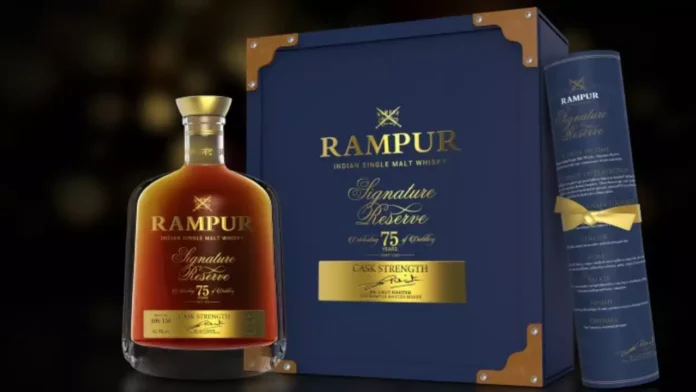
Radico Khaitan, a trailblazer in the Indian IMFL industry, has announced the exclusive availability of the last three bottles of the internationally acclaimed Rampur Signature Reserve Indian Single Malt Whisky at Hyderabad Airport Duty-Free.
Rampur Signature Reserve, part of the limited-edition collection from the Rampur franchise, underwent a meticulous aging process in American Standard Oak Barrels, enduring the challenges of numerous Indian summers. The Master Maker, with precision, chose and set aside four distinct casks, subsequently transferring them to specially selected PX Sherry Butts from Jerez, Spain, for the final maturation phase.
Sanjeev Banga, President-International Business, RadicoKhaitan, expressed enthusiasm, stating, “At Radico Khaitan, we consistently set industry standards. To mark 75 years of Rampur Distillery, we launched a super luxury variant of Rampur Indian single malt whisky in the International market. These are individually numbered bottles strictly on allocation basis. Each bottled is individually numbered and carries the signature of Dr Lalit Khaitan, Chairman and the Rampur Master Maker. We are thrilled to bring the last 3 bottles to our home country to mark a tribute to the origin.”
Banga extended a warm invitation to whisky enthusiasts, collectors, and travelers to indulge in the unparalleled quality of Radico Khaitan’s products and explore the diverse range of premium spirits available at the duty-free.
Radico Khaitan’s Opulent Selection
Alongside the exclusive Rampur Signature Reserve, Radico Khaitan has curated a range of their premium brands at Hyderabad duty-free. This encompasses the distinguished Rampur Asava Indian Single Malt Whisky, the rich and complex Rampur Double Cask Indian Single Malt Whisky, the acclaimed Jaisalmer Indian Craft Gin and Gold edition, and the regal Royal Ranthambore Heritage Collection Whisky.
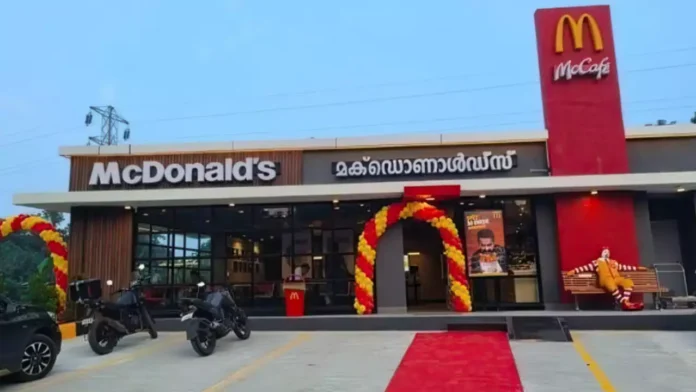
US-based fast-food chain McDonald’s has recently inaugurated its new drive-through store in Kerala, as announced by a company official on social media earlier this week.
The standalone outlet spans a 14,000 sq. ft. plot of land in the Kottayam district.
“Presenting our newest store in the state of Kerala at Kottayam. It’s a free-standing drive-thru on a pad of 14,000 sq. ft. land. Enjoy the McDonald’s experience,” said Sachin Damle, director – real estate at Hardcastle Restaurants Pvt. Ltd. in a LinkedIn post.
The establishment features a McCafé in addition to its drive-thru and McDelivery services.
“We are looking forward to expanding similar format stores across west and South of India,” added Damle.
Hardcastle Restaurants possesses and manages McDonald’s eateries throughout West and South India. Maintaining a master franchisee connection with McDonald’s Corporation USA, it has safeguarded the brand since 1996.
Diverse Formats Drive Success:
The company functions through diverse formats and brand extensions, encompassing standalone restaurants, drive-thrus, 24/7 operations, McDelivery, McBreakfast, and dessert kiosks.
McDonald’s India maintains its dedication to establishing drive-thru destination stores in city suburbs and along national highways. According to a previous company release, it is anticipated that 30-35% of new stores in the next 4-5 years will be drive-thrus.
As of June 2023, the fast-food chain presently runs more than 361 restaurants spanning 58 cities in West and South India.
We use cookies to ensure that we give you the best experience on our website. If you continue to use this site we will assume that you are happy with it.