Thursday, January 22, 2026
Home Blog Page 712

Flavourful Adventure: Exploring the Maharashtra’s Cuisine Beauty!

0
Vada pav
(Representative Image)

From the sizzling streets of Mumbai to the rural villages, From the famous Vada Pav, the Mumbai burger, to the spicy Misal Pav, Maharashtra’s Cuisine is a true representation of India’s diverse culinary heritage. The cuisine makes you indulge in the rich and buttery Puran Poli, a sweet flatbread filled with a mixture of chana dal and jaggery, and the flavorful Bharli Vangi, stuffed eggplants in a spicy masala. 

Maharashtrian cuisine in itself is a true explosion of many flavours! One of the major specialities is the unique spice blend, the famous Goda Masala. This blend of cinnamon, cardamom, cloves, nutmeg, coriander, and other spices creates a depth of flavour in every dish. 

Beauty of Maharashtra’s Cuisine!

Street food is another attraction across the region. With dishes like the famous Vada Pav, Mumbai burger, and Tangy Bhel Puri, the Maharashtrian street food is a total deal alone. Coastal areas of the region also boast an array of seafood delicacies like crispy Pomfret Fry and spicy Surmai Fry. 

And for those who prefer vegetarian dishes, Maharashtrian cuisine offers a range of delicious options, from the creamy Sabudana Khichadi to the spicy Missal Pav and stuffed Bharli Vangi. And let’s not forget the sweet treats like Puran Poli, rich and creamy Shrikhand, and sweet and juicy Modak. 

This is one such cuisine that will make your tastebuds thank you. Each region and community in Maharashtra’s Cuisine incredibly diverse and a Flavourful adventure. The Maharashtrian cuisine holds up for Varadi Cuisine, Konkani Cuisine, and Malvani Cuisine, along with Desi and Brahmin Cuisines. Each of these cuisines has its identity in the region, based on its ingredients and geography.

Konkani Cuisine

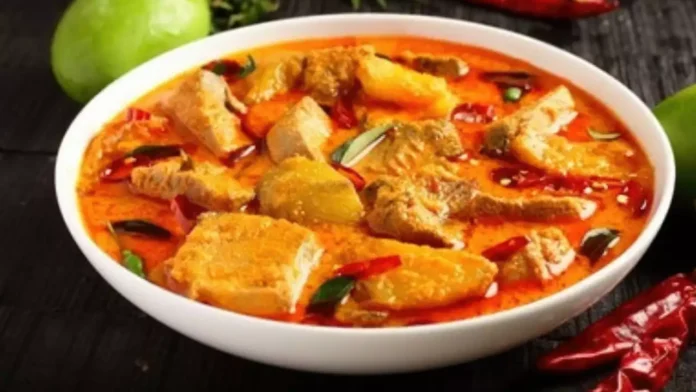
Originating from the Konkan region of western India, along the coast of the Arabian Sea, Konkani cuisine is known for its use of seafood and coconut in dishes. Its highly unique blend of spices and flavours will blow your mind.

One of the notable ingredients in Konkani cuisine is the kokum fruit, which gives dishes a sour flavour and is also used to make the popular drink solkadi. Coconut is also widely used in this cuisine, adding a rich and creamy texture to dishes like fish curry, prawns masala, and other seafood dishes.

Konkani Cuisine
Konkani Cuisine (Representative Image)

Konkani cuisine is influenced by the local geography and culture, with the abundant seafood from the Arabian Sea playing a significant role in the dishes. This cuisine is considered to be one of the most flavorful and aromatic in India.

Here are 3 must-try dishes/drinks from Konkani cuisine:

  1. Fish Curry – A flavorful and aromatic curry made with fish, coconut milk, and a blend of spices.
  2. Prawns Masala – A spicy and tangy dish made with prawns, coconut, and a mixture of spices.
  3. Solkadi – A refreshing drink made from kokum and coconut milk, perfect for hot summer days.

Varadi Cuisine

Varadi cuisine is characterized by its use of spices, especially chilli peppers, garlic, and ginger. It is known for its fiery, spicy flavour and will be loved by those who enjoy bold and spicy dishes. This cuisine is influenced by the Portuguese and is commonly found in the Konkan and Varadi regions of Maharashtra.

The dishes from the Varadi cuisine include staple foods such as fish curry, chicken curry, and rice, along with a variety of other dishes like pithla, sukka, and kolambi bhajji. Its unique style of spices creates a fiery, tangy flavour that is both bold and delicious. It is often enjoyed with freshly made bread or rice, making it a staple of the local diet.

Varadi Cuisine
Varadi Cuisine (Representative Image)

In addition to its delicious flavour, Varadi cuisine is also known for its use of locally-sourced and seasonal ingredients, making it a sustainable and healthy choice for those who wish — Good Food and Mood.

Here are 3 must-try dishes/drinks from Varadi cuisine:

  1. Fish Curry – A spicy and tangy fish curry made with coconut milk, chilli peppers, and a mix of spices.
  2. Chicken Xacuti – A spicy chicken dish made with a unique mix of aromatic spices, coconut milk, and chilli peppers.
  3. Pithla – A thin, spicy lentil soup made with besan flour and a blend of spices.

Malvani Cuisine

Malvani Cuisine represents the rich cultural and traditional influences of the Maharashtra coastal region with a style Mix of Spices, Herbs and Seafood. The significance of Malvani cuisine lies in its deep roots in the cultural heritage and traditions of the coastal people, who take great pride in their culinary heritage.

The cuisine has become an integral part of the regional identity and has gained popularity beyond the coast, enjoyed by people all over India and beyond. From its use of spices and seafood to its reflection of cultural heritage, Malvani cuisine is a delicious and important part of the food landscape of Maharashtra.

Malvani cuisine
Malvani cuisine (Representative Image)

Here are 3 must-try dishes/drinks from Malvani cuisine:

  1. Kombdi Vade: A traditional Malvani dish made with spicy chicken curry and a type of fried bread.
  2. Mutton Rassa: A spicy mutton dish made with a blend of spices and coconut milk, it is a popular dish in the region and is often served with rice or roti.
  3. Kolambi Bhaat: A rice dish made with prawns and spices, it is a flavorful and delicious dish that is popular in the coastal region.

If you are new to the Mighty Maharashtrian Cuisine, Here are 10 recommended dishes from the Maharashtrian Cuisine before you get ready for the Flavoured Adventure:

  1. Vada Pav
  2. Bhakri
  3. Puran Poli
  4. Solkadi
  5. Modak
  6. Amti
  7. Kanda Poha
  8. Thalipeeth
  9. Matki Usal
  10. Batata Bhaji

Maharashtrian cuisine is a symphony of spices and textures. The cuisine uses ingredients like coconut, peanuts, and the famous Goda Masala, adding depth and richness to every bite. 

Festivals in Maharashtra are a feast for your senses, especially when it comes to food, as the range explodes! During festivals, families and communities come together to cook and enjoy traditional dishes – Puran Poli(Definies every festival), Modak(A definite dish during the Ganesh Chaturthi), Karanji and Sheera.

 These traditional dishes are not only delicious but also hold significant cultural and religious importance in the households of Maharashtra. Therefore, try them on your next visit to Maharashtra and give our socials a thumbs up for giving you the best of information. 

Advertisement

Amazon, Walmart, and Target go head to head in race to accelerate delivery speeds

0
e-commerce
E-commerce

Walmart, Target, and Amazon are deeply invested in the shipping wars, a strategic maneuver acknowledged by retail experts as crucial for maintaining a competitive edge against low-cost Chinese retailers Shein and Temu. In the case of Walmart and Target, their financial dedications are also focused on narrowing the gap in delivery speed with Amazon, which stands as the benchmark for swift shipping and remains the undisputed leader in speed.

Under its updated distribution model, Amazon has significantly accelerated the delivery of packages to Prime customers’ doorsteps this year. The new approach involves dividing the country into eight regions and predominantly dispatching items from warehouses within those specific areas. Amazon’s rationale behind this strategy is to reduce shipment distances and minimize touchpoints, thereby not only expediting deliveries but also effectively reducing operational costs.

Previously, the fulfillment of orders by the Seattle-based e-commerce giant involved warehouses scattered across the country. As of July, the company disclosed that 76% of customer orders were now being fulfilled within their specific regions, a notable uptick from the previous figure of 62% before the implemented change.

“We remain on pace to deliver the fastest delivery speeds for Prime customers in our 29-year history,” Amazon CEO Andy Jassy said in October during an earnings call with analysts.

Company executives highlight that the acceleration in shipping speed is also a result of Amazon’s expansion of same-day delivery, initially launched in 2015 for Prime members subscribing at $139 annually for free two-day shipping and other perks. These same-day delivery sites are compact warehouses located in metropolitan areas, primarily stocking the top 100,000 products in demand. Currently, Amazon boasts 55 of these sites nationwide, with plans to double the number in the coming years, as revealed by Sarah Mathew, the Vice President of Delivery Experience at Amazon.

“Psychologically, fast delivery is very important to the consumer when ordering online,” said Neil Saunders, managing director of GlobalData Retail. “That is why everyone is trying to push out more into this space even though it’s very expensive to support and it often requires a lot of new infrastructure.”

In an effort to catch up, Walmart and Target are investing substantial funds in upgrading warehouses, establishing new facilities, and undertaking various initiatives aimed at cost reduction.

Utilizing over 4,000 of its nationwide stores as fulfillment centers and delivery hubs for online orders, Walmart has incorporated a strategy to enhance order processing and expedite deliveries to customers. In November, the company announced plans to introduce 40 additional “parcel stations” in stores across nine states by the year’s end. These stations, functioning akin to mini post offices for receiving and delivering packages, were set to operate prominently during the holiday season, according to the nation’s largest retailer.

At the same time, the Bentonville, Arkansas-based company is actively engaged in transforming its warehouses through automation, with the goal of expediting the delivery process to both stores and customers.

Walmart is pursuing this initiative through diverse approaches. It is implementing automation across all 42 of its regional distribution centers, which store non-perishable items and dispatch goods to replenish stores. Additionally, the company is constructing four automated warehouses specifically designed for handling perishable items. Moreover, there are plans to incorporate over 100 smaller facilities connected to its stores, with a focus on managing online orders.

Since last year, Walmart has launched its first three fully automated “next generation” fulfillment centers. These centers house a broader selection of highly sought-after items, streamlining the packing and shipping process from 12 steps down to five. The company asserts that these hubs, in conjunction with modifications to its transportation network, have led to a significant “drastic increase” in the volume of orders eligible for next-day shipping. Walmart’s overarching aim is to double the daily fulfillment of customer orders and extend next- and two-day shipping coverage to nearly 90% of the United States.

Meanwhile, Target has set its sights on enhancing shipping speed by bolstering its own warehouses, referred to as sortation centers, through a previously announced $100 million investment earlier this year.

Packages for online orders are received at sortation centers from 30 to 40 nearby Target stores. At these centers, the packages undergo sorting, batching, and routing processes for delivery to local neighborhoods through either a third-party carrier or Shipt, a company owned by Target. Anticipated to double their delivery volume, these warehouses are expected to handle more than 50 million packages this year.

Advertisement

Onion prices plunge by 50% following govt ban on exports

0
Onion
Onion

Following the government’s decision to prohibit onion exports on December 7, wholesale markets have witnessed a significant 50% decline in onion prices. Traders anticipate that prices will either stay stable or experience a slight decrease in the upcoming weeks, attributing this trend to the increasing arrival of kharif onions.

Continue Exploring: India halts onion exports as prices soar due to unseasonal rainfall

Market data compiled by the APMC reveals that the average wholesale prices of onions at Lasalgaon AMPC have dropped to INR 20-21 per kilogram, marking a decrease from the previous INR 39-40/kg observed just before the ban on exports.

The central government first imposed a minimum export price (MEP) on onions, which was followed by the decision to impose a complete ban on exports on December 7. Onion prices started falling immediately after the export ban was announced.

According to trade insiders, onion farmers, who have been protesting for the removal of the export ban, are optimistic that the government might reconsider its decision, much like the partial revision seen in the ban on diverting sugarcane juice for ethanol.

“Onion farmers are slowly bringing their crop to the markets as they are still hopeful that the central government may revoke the ban on onion exports,” said Ajit Shah, an onion exporter from Mumbai.

Traders have noted a significant rise in the arrival of kharif onions, also referred to as red onions, leading to increased pressure on prices.

However, “good demand for onions across the country…may help keep the prices stable for a few days”, said Nandkumar Shirke, an onion trader from Ahmednagar in Maharashtra.

On December 6, at the Lasalgaon APMC, the average price of red onions stood at INR 39.50/kg, with the highest price reaching INR 45/kg. As of Tuesday, these prices have decreased to INR 21/kg and INR 25/kg, respectively. Consequently, the average price has witnessed a 47% decline following the export ban, while the highest price has dropped by 44%.

Market insiders have indicated that the data on onion arrivals in wholesale markets reveals a greater influx of kharif onions than initially anticipated by the government.

As of December 19, the Lasalgaon market, for instance, has witnessed the arrival of 3.66 lakh tonnes of red onions this month, nearly matching the total arrival for the entire month of December 2022, which was 3.69 lakh tonnes.

“We are getting good quality red onions. Crop from only those fields, which were affected by the hailstorm has been damaged,” said an official of Lasalgaon APMC who requested not to be identified.

Advertisement

Morrisons Daily collaborates with Just Eat for on-demand grocery delivery

0
Morrisons Daily

Rolling out in December, Morrisons Daily convenience stores are set to provide on-demand delivery in collaboration with Just Eat. The initiative, initially launching in 60 stores, has ambitious plans to expand its reach to over 650 stores in the early months of the upcoming year.

Customers will gain online access to thousands of products through the Just Eat app and website.

Amy Heather, strategic accounts director, Just Eat UK, said, “We know that our customers are increasingly seeking convenience, particularly in those busy moments like Christmas, and our partnership with Morrisons Daily shows our ongoing commitment to delivering a wide range and more options for our customers to get whatever they need, wherever and whenever they need them.”

As part of the partnership, a 50% discount on selected essentials at participating stores is being offered by Just Eat until December 24th.

Joseph Sutton, online and wholesale director, Morrisons Convenience, said, “We have Morrisons Dailys across the country and partnering with Just Eat will offer another fast and convenient way for customers to get Morrisons groceries delivered straight to their door. We’re committed to offering great value and high quality products to our customers however they choose to shop.”

Advertisement

16 Okami restaurants in Australia enter voluntary administration amid ongoing business challenges

0
Okami

Okami, a Japanese restaurant chain, has opted for voluntary administration for 16 of its Australian establishments, as reported by SmartCompany. The Okami network spans over 50 locations throughout the country.

According to documents filed with the Australian Securities and Investments Commission, Okami’s establishments in Victoria, New South Wales (NSW), South Australia (SA), and the Australian Capital Territory (ACT) are currently under administration.

The sites currently undergoing administration comprise Braddon and Mawson in the ACT, Cronulla, Camden, Dubbo, Marrickville, Pennant Hills, Penrith, Sutherland, and Wagga Wagga in NSW, along with Ballarat, Camberwell, Hampton, Melton, and Sunbury in Victoria, and Glenunga in SA.

Three additional enterprises, undisclosed in communication with Okami, have likewise shuttered as part of the ongoing administration proceedings.

Philip Campbell-Wilson and John McInerney of Grant Thornton were designated as co-administrators for the restaurants on December 15, 2023.

According to a statement provided to SmartCompany by Campbell-Wilson, the venues currently under administration fall under the direct management of Okami Distribution and are distinct from the broader business franchise network.

Preliminary examinations indicate possible factors contributing to the recent challenges encountered by the business.

Campbell-Wilson was quoted by SmartCompany as saying, “Based on our initial discussions with the founder of the Okami business, they believe there has been a lag effect from the Covid-19 pandemic combined with inflationary pressure on costs which has led to a decline in sales and escalated operational costs.”

The Australian Taxation Office and other entities are anticipated to be significant creditors of the business.

The co-administrator also mentioned that the inquiry has just commenced, and the specifics will undergo further in-depth investigation.

The restaurants are anticipated to sustain their operations throughout the holiday season, providing a reprieve for their 250 full-time, part-time, and casual employees.

Advertisement

US equity firm Triton Pacific bolsters Tasty D’Lites holdings with Dunkin’ acquisition

0
Dunkin

US-based private equity firm Triton Pacific Capital Partners has announced that its portfolio company, Tasty D’Lites, is entering into an agreement to acquire 17 Dunkin’ restaurants in the US.

Tasty D’Lites is set to obtain a central manufacturing facility in Vermont as part of the acquisition.

The companies have not revealed the financial specifics of the transaction.

Triton Pacific Capital Partners CEO Craig Faggen said, “We are thrilled by the future growth opportunity this acquisition has presented us.

“Dunkin’ is a well-established leader in the quick service restaurant industry, especially in the Northeast, where there is an extremely loyal customer base.

“We believe that this demand, combined with our tenured operational leadership and the attractive economics of the acquisition, provides a compelling opportunity for Tasty D’Lites and our partners.”

The agreement will function as a secondary platform investment for Tasty D’Lites, enhancing its current operations in Charlotte, North Carolina.

This agreement solidifies Tasty D’Lites’ footprint in the Northeast region.

Tasty D’Lites now boasts 37 Dunkin’ restaurants across Vermont and North Carolina.

The Tasty Restaurant Group, a restaurant management company affiliated with Triton Pacific, oversees a portfolio of 410 quick-service restaurants on behalf of Triton Pacific.

The portfolio of restaurants encompasses operations from brands like Dunkin’, Pizza Hut, Burger King, Baskin-Robbins, KFC, and Taco Bell, spanning 20 U.S. states.

In April 2023, Tasty Chick’n, a portfolio company of Triton Pacific Capital Partners, finalized the acquisition of a two-unit KFC restaurant operator in Alabama, USA.

Triton Pacific acquired each of the restaurants in Colbert County, Alabama, in the northwestern region of the state, as part of the Florence-Muscle Shoals MSA metropolitan area, at a cost below $300,000 per restaurant.

The acquisition will serve as a strategic add-on investment for Tasty Chick’n, currently managing five KFC restaurants in Alabama.

Advertisement

Y Combinator-backed Guac fights food waste with customized, AI-based forecasts

0
Vegetables
(Representative Image)

Ineffective forecasting of grocery demand contributes to a higher level of waste than one might anticipate. In the United States, grocery stores discard approximately 10% of the roughly 44 billion pounds of food produced annually, as reported by a reliable source. This not only has negative environmental implications, as food waste is a significant contributor to carbon emissions, but it also imposes financial burdens on grocers. According to Retail Insights, insufficient inventory availability leads to a loss of up to 8% of revenues for food and grocery retailers.

Entrepreneurs Euro Wang and Jack Solomon personally encountered the micro-level consequences of the forecasting issue at their neighborhood supermarket, where their favorite guacamole frequently went out of stock.

Euro Wang & Jack Solomon

“It turns out that even the largest retailers struggle to predict future demand and frequently overstock and understock inventory,” Wang explained in an email interview. “With more extreme weather in recent years, there’s increasingly been supply shortages in fresh food. That makes the efficient allocation of the limited supply all the more important. On top of this, inflationary pressures and increases in labor costs have been threatening grocers’ margins more and more.”

Motivated to address the issue with technology, Wang and Solomon joined forces to establish Guac, a platform employing AI to forecast daily sales for individual items at specific store locations. In a recent seed round, Guac secured $2.3 million in funding, with 1984 Ventures leading the investment and support from Y Combinator and Collaborative Fund.

“Food waste and food security are issues that Jack and I care deeply about, and we were really excited about an opportunity to actually address food waste at its core,” Wang said.

Before founding Guac, Wang was employed at Boston Consulting Group, and Solomon conducted research in AI for grocery logistics. Their paths crossed during their undergraduate studies at Oxford University, where they first met.

At Guac, Wang, Solomon, and the dedicated engineers collaborate to construct customized algorithms. These algorithms anticipate optimal order quantities for grocery items by considering variables like weather conditions, sporting events, betting odds, and even analyzing Spotify listening data to grasp consumer purchasing behavior. Clients of Guac receive personalized recommendations, encompassing details such as shelf life, minimum order quantities, promotions, and supplier lead times. These insights seamlessly integrate into their existing inventory ordering software and workflows.

“Traditionally, forecasting is done using Excel formulas or simple regression models,” Wang said. “But for fresh food that expires quickly, you need something better … Because we use so many external variables, we’re able to identify which real-world variables cause the changes in demand.”

In the realm of food demand forecasting, Guac is not the sole player. Crisp offers an open data platform covering every aspect of the grocery supply chain, while Freshflow is developing an AI-powered forecasting tool aimed at assisting retailers in optimizing the replenishment of fresh and perishable goods in their stock.

However, according to Wang, Guac stands out due to its commitment to transparency and the meticulous refinement of its forecasting models.

“Our machine learning model isn’t like a black box that mysteriously predicts a 20% increase in demand — instead, we tell our customers things like, ‘This 20% increase is because there’s a conference happening nearby,’” Wang said. “Even if a retailer is already using machine learning, we can still improve their forecasting because of our access to a lot more external datasets. When we remove our unique external variables that we use and only include the basic datasets (e.g. weather and public holidays), we actually see the forecast error double.”

Some early customers are convinced that Guac can add value. The company is working with retailers, including grocery delivery companies in North America, Europe, and the Middle East, and has partnered with an unnamed supermarket chain with around 300 locations. Guac is also already generating revenue and anticipates being able to expand its engineering team in the coming year.

“The grocery industry is fairly resistant to economic downturns,” Wang said. “Everyone has to eat, and when the economy slows down, people are actually buying more groceries because they eat out less. And the pandemic helped speed up digitization in grocery stores, which allowed us to integrate our predictions with customers’ systems more smoothly. On the subject of the pandemic, shoppers behaved very differently during the pandemic — which means it’s a lot harder for grocers to just rely on the past three years of historical sales data to predict future demand. With our algorithm, we’re able to adjust for the ways the pandemic biased sales data in 2020 and 2021 — and even for the residual effects of the pandemic afterwards.”

Advertisement

Domino’s Pizza takes on upscale pizzerias in India with premium offerings and hyper-localized approach

0
Domino's
Domino's

Domino’s Pizza, the leading food services brand in India managed by Jubilant FoodWorks Ltd (JFL), is actively addressing increased competition from upscale pizzerias and local pizza establishments. The company’s senior executives have expressed their commitment to intensify efforts and focus on expanding their business in response to the heightened competitive landscape.

The pizza franchise is introducing a variety of premium cheeses for its gourmet selection, along with novel toppings and sauces. Additionally, company executives announced on Tuesday that they are increasing the sampling of gourmet pizzas in the top-10 markets across the country.

“We are very happy with local pizzerias coming in – they are seeding the market and that’s good. We are in 400 cities. In other 600 cities, there are local players serving pizza,” JFL managing director Sameer Khetarpal said.

In response to increased competition at the regional level, Domino’s has begun to categorize toppings and varieties. For instance, they have introduced an all-vegetarian toppings segment in Gujarat, a region that has witnessed the emergence of nearly 90 new local players in the past year alone.

“In every city we go to , there is a local player which is serving pizza. What we are doing is bringing in international quality, delivered fast,” Khetarpal said.

Over the past year, increased competition has emerged from both gourmet chains and smaller, hyper-local, and regional players. Brands such as Tossin, Joey’s, Leo’s Pizzeria, and Ovenstory have gained market share in smaller, niche markets by exercising stringent cost control and focusing on limited but targeted marketing expenditures.

Khetarpal highlighted that in India, the consumption of pizza occurs three times a year, in contrast to the United States where it is consumed approximately 35 times annually. “So my challenge is to grow pizza as a category, not just compete with other pizza brands but also all other fast foods – whether western or Indian,” he said.

“When we go to a new city, we do see what the local choices are for customers,” he added.

Starting this week, Domino’s Pizza is launching a new campaign with new messaging aimed at Gen Z and millennials, integrated with new boxes, refreshed stores, outfits for delivery teams, and bikes for the delivery workforce.

Continue Exploring: Jubilant FoodWorks launches aggressive 360-degree rebranding for Domino’s

Sameer Batra, president and chief business officer of Domino’s India, said the chain is doubling down on gourmet pizzas. “Gourmet pizza consumption is happening in 12-15 pin codes in India only; for those pin codes we have launched new gourmet ranges, new types of cheese, changed toppings, special varieties of tomatoes and sauces,” Batra said.

JFL, holding franchise rights for Dunkin Donuts and Popeyes in India, recorded a 26% decrease in net profit to INR 97.20 crore for the quarter ending September 2023. However, there was a 5% growth in revenue, reaching INR 1,368.63 crore.

During the recent Global Investor Day meeting, Domino’s Pizza CEO Russell Weiner mentioned that the company has been successfully gaining market share from independent and regional pizza competitors. He highlighted India and China as key focal points for international growth in the coming year, projecting an increase in the number of stores in India to 3,000 by 2029, up from the current 1,961.

Acknowledging the rise of regional rivals across all its markets worldwide, Domino’s noted in its global presentation, “We will get more customers through a value strategy.”

In a statement, IIFL Securities observed that the pizza market is becoming increasingly crowded, with regional chains representing nearly 30% of all outlets. The report highlighted the notable expansion of home-grown brands such as La Pino’z, which have more than doubled their stores in the span of three years.

Advertisement

Delhi High Court clears Dabur’s Red Paste ad with slight tagline modification

0
Dabur Red Paste

Acknowledging the necessity for granting a degree of freedom to advertisers, the Delhi High Court has granted permission to Dabur India to release its advertisement for Dabur Red Paste, an ayurvedic toothpaste, with a minor modification. The court specified that the company is permitted to utilize the tagline “World’s leading Ayurvedic paste” in lieu of the original “World’s number 1 Ayurvedic paste.”

“It is clear that advertising is part of commercial speech and some puffery is allowed as long as the same does not go beyond the grey areas and the assertions made are reasonable,” Justice Prathiba M. Singh said.

In Dabur’s context, the judge remarked that the advertisement cannot be deemed devoid of any basis. “Moreover, the report relied upon by the plaintiff also cannot be completely ignored and some credence can be given to the fact that as per the report, the plaintiff is selling one of the major toothpaste brands. In the opinion of this court, in business, some amount of freedom ought to be given to the advertiser,” she said, while permitting Dabur to publish the advertisement, however, with a slight modification.

Dabur India approached the High Court in response to the Advertising Standards Council of India’s (ASCI) directive on September 30, instructing Dabur to amend its advertisement and refrain from publishing content deemed misleading, constituting unfair portrayal and exaggeration.

Although Dabur had informed the Council that the toothpaste claims were supported by market research studies conducted by Mordor Intelligence, the High Court observed that the report referenced by the company should not be entirely dismissed. Some credibility could be attributed to the fact that Dabur sells one of the prominent toothpaste brands. Nevertheless, the advertising regulator had refuted Dabur’s assertions, particularly regarding the authenticity of the data source that purportedly demonstrates global leadership for the company’s ayurvedic toothpaste.

“After having perused the report and the objections raised by ASCI, this court is of the view that the advertisement cannot remain injuncted forever,” Justice Singh said.

Advertisement

Reliance Industries shells out INR 254 Crore for use of Metro AG’s brand name in India

0
Metro AG

Reliance Industries has paid INR 254 crore to Metro AG for utilizing the German retailer’s brand name in India during the financial year ending September 2023. This payment comes after Reliance’s acquisition of Metro AG’s wholesale chain in the country one year ago.

“Metro AG is providing certain transitional services and licences as part of the transaction to enable the new owner to operate the business. As part of the sale of Metro India, a licence payment of INR 28 million (INR 254 crore) received in advance for using the Metro brand is recognised in the financial year,” Metro said in its latest annual report.

Last December, Reliance Retail Ventures, a unit of RIL, executed a substantial acquisition by purchasing Metro Cash & Carry India for a total cash consideration of INR 2,850 crore. This comprehensive deal encompassed all 31 wholesale stores and the entire real estate portfolio across six store locations. The transaction was successfully concluded in May 2023. Notably, the wholesale and retail giant expressed that the evolving landscape marked by increased market consolidation, accelerated digitalization, and intense competition has led to a misalignment of Metro India’s business with its core growth strategy.

In the report, Metro stated that, taking into account the outgoing cash and factoring in the prepayment for the use of the Metro brand, the initial net cash inflow for the divested assets and liabilities totals INR 0.3 billion (INR 2,731 crore).

“However, positive Ebitda-effective earnings from disposal of its Indian business was INR 150 million (INR 1,363 crore), including transaction costs,” it added.

Advertisement