Effective from January 2024, the GSTN has incorporated two new sections in GSTR-1 to enhance reporting accuracy.
In Table 14, it is now possible to include information about taxable outward supplies made through e-commerce operators. Suppliers can furnish specific details regarding these transactions in this table.
Likewise, Table 15 is assigned for the reporting of taxable outward supplies falling under Section 9(5) of the Central Goods and Services Tax Act, where the responsibility for tax payment lies with the e-commerce operator. Suppliers can now enter pertinent details in this table to ensure thorough reporting.
Seamless Tax Compliance via GSTN Reforms:
Regarding GSTR-3B, the revised Table 3.1.1 specifically addresses supplies notified under Section 9(5) of the CGST Act, 2017. It is mandatory for both suppliers and e-commerce operators to individually record supplies for which the tax liability is borne by the e-commerce operator.
Unlike the previous setup, GSTR-1 did not have specific tables for reporting individual transactions, resulting in the automatic non-filling of Table 3.1.1 in GSTR-3B.
However, from January 2024, the incorporation of Tables 14 and 15 into GSTR-1 enables suppliers and e-commerce operators in India to precisely record their supplies. This enhancement simplifies the reporting procedure, guaranteeing accuracy in tax-related records for both suppliers and e-commerce operators and facilitating the automatic population of Table 3.1.1 in GSTR-3B.
Alcohol sales during the festive season of Christmas and New Year witnessed a significant surge, with some industry players experiencing over a 20 percent increase in demand compared to the previous year. India indulged in a variety of alcoholic beverages, and there was a growing preference for premium products.
During the holiday season, there was a notable surge in alcohol sales nationwide. For instance, Delhi recorded a 14 percent year-on-year (Y-o-Y) growth in December, with sales reaching 4.56 crore bottles. In Karnataka, the state-run Mysore Sales International Limited (MSIL) outlets reported liquor sales worth INR 18.85 crore on December 31, reflecting an increase of INR 4.34 crore compared to the sales of INR 14.51 crore on the same day the previous year.
Likewise, on New Year’s Eve, it is reported that the Andhra Pradesh State Beverages Corporation Limited (APSBCL) recorded alcohol sales of INR 147 crore, which is double its typical daily sales. In Hyderabad, during the final three days of 2023, there were reports of the sale of 4.76 lakh cases of various kinds of liquor and 6.31 lakh cases of beer, amounting to INR 658 crore.
This year, industry players experienced heightened momentum compared to the corresponding period last year. Jagatjit Industries achieved a growth rate of 18-20 percent during the holiday season, contributing to a year-on-year (Y-o-Y) growth of 23 percent for the October-December 2023 period. Tilaknagar Industries observed a volume growth exceeding 10 percent over the previous year during the holiday season.
The sales volume of The Beer Cafe chain surged by around 25 percent during the holiday season, compared to the corresponding period in 2022. Likewise, the homegrown beer brand Lone Wolf reported a significant increase in sales volume, with a growth rate exceeding 200 percent compared to the same period last year. NAO Spirits, the craft gin maker backed by United Spirits, noted a nearly 100 percent year-on-year increase in secondary sales.
Devender Gulia, Director, Sales and Marketing, Jagatjit Industries Limited noted, “During holiday seasons in India, people are filled with festive spirits embracing joy and celebration. The alcobev industry also experiences a surge in demand as people indulge in festive spending, savoring moments with loved ones, increase in outdoor consumption due to long weekends, wedding season, parties, get-togethers with their preferred spirits.”
Diverse Alcohol Tastes:
Over the recent days, Indian consumers diversified their alcohol choices. Rahul Singh, Senior Vice-President of Pubs at Bira 91, mentioned that despite the winter season, several beer brands in their portfolio maintained popularity, and there was a noticeable increase in interest for Rum and Whisky.
Gin also emerged as a favored option during this season. Anand Virmani, Co-founder and CEO of NAO Spirits, said, “We noticed a notable shift toward high-quality craft Indian spirits, and there has been a noticeable increase in on-trade consumption, returning to pre-Covid levels.”
The offerings, including Greater Than London Dry Gin, Hapusa Himalayan Dry Gin, and Pipa Rum de Goa, gained significant traction.
The premiumisation trend gained momentum, with Tilaknagar Industries stating that its growth was driven by brands in the ‘prestige and above’ segment.
“The younger consumer is more experimental and is looking at premium offerings for an elevated experience. Additionally, there has been a very visible inclination towards flavored spirits which has further been seen in the growth in the overall flavored spirits industry,” said Amit Dahanukar, Chairman and Managing Director, Tilaknagar Industries.
Omni-channel fashion group Tendam has collaborated with the e-commerce platform Myntra to venture into and enhance its presence in India, as announced in their joint press release on Tuesday.
Tendam specializes in brand management within the premium mass market segment. It operates as an inclusive omni-channel ecosystem that maximizes the overall engagement of more than 350 million consumers across both physical and digital retail outlets.
“For over a century, Tendam has been delivering stylish fashion across Spain and other parts of the world and it’s a great period for us to launch the brand in India as our customers are following and adopting global trends and styles more closely than ever before,” said Jayanti Ganguly, vice president – category management at Myntra.
The company possesses ten proprietary brands, which include Women’secret, Springfield, Cortefiel, Pedro del Hierro, Hoss Intropia, Slowlove, High Spirits, Dash and Stars, Ooto, Hi&Bye, Springfield Kids, and Fifty.
Tendam’s Franchise Stores Set to Open in Pune and Ludhiana:
The lingerie brand Women’secret is the first of Tendam’s flagship brands to be available on Myntra in India. Additionally, Tendam will reinforce its market presence with the opening of two franchised stores in Pune’s Phoenix Mall of the Millennium and Ludhiana’s Silver Arc Mall in January 2024, aiming to grow sustainably in India by opening around 20 stores over the next three years.
“We are delighted to have an association that will enable us to develop our omni-channel business. Myntra is the ideal partner for us. They are aligned with our omni-channel strategy and have the capacity and expertise to fully develop it in the country,” said Antonis Kyprianou, franchise general manager of Tendam.
The strategic initiative fortifies the presence of Tendam’s brands in India, affirming the company’s robust international growth prospects. This follows an expansion strategy, collaborating with adept retail partners possessing firsthand market knowledge, experience, and professionalism, as highlighted in the release.
Tendam conducts its operations in nearly 80 countries spanning four continents, boasting over 1,800 points of sale. These include directly managed stores, e-commerce platforms, and franchise outlets.
Bengaluru-based Myntra currently offers over 6000 fashion and lifestyle brands such as H&M, Levis, Tommy Hilfiger, Louis Philippe, Jack & Jones, MANGO, Forever 21, Marks & Spencer, Nike, Puma, Crocs, M.A.C, and Fossil. Covering services across 19,000 pin codes in India, Myntra’s pioneering omni-channel technology is leveraged by 5600 stores across various brands, serving over 140 cities.
Cloud kitchen startup Curefoods reported a fourfold increase in operating revenue, reaching INR 382 crore for the fiscal year ending on March 31, 2023. However, the loss widened nearly five times to INR 342 crore.
The company, operating well-known brands such as EatFit, CakeZone, Nomad Pizza, Sharief Bhai Biryani, and Frozen Bottle, reported a loss of INR 72 crore on a revenue of INR 89 crore in FY22, as per company filings obtained through the business intelligence platform Tofler.
Curefoods Revenue Breakdown:
Curefoods generated INR 374 crore from product sales, marking a fourfold increase compared to the previous year, as indicated by the filings.
Expenditures surged four-and-a-half times, reaching INR 754 crore from INR 166 crore. The company allocated INR 103 crore to employee benefit expenses, nearly four times higher than in FY22.
The most substantial cost component in FY23 was advertising and promotional expenses, which increased by over four times, reaching INR 107 crore.
Rival cloud kitchen firm Rebel Foods reported an operating revenue of INR 1,195.2 crore for FY23, approximately 40% higher than the previous year. Nevertheless, its loss widened to INR 656.5 crore from INR 534.2 crore in FY22.
Curefoods was founded by former Flipkart executive Ankit Nagori in 2020. On October 31, SnackFax reported that Flipkart co-founder Binny Bansal was likely to infuse $25-30 million into his former colleague’s startup, taking his total investment in the company to around $50 million.
In April, Curefoods closed a INR 240 crore fundraising round with Three State Ventures, led by Bansal. The round included both primary and secondary investments. This aligns with the trend of increased funding activities in the sector during 2023. Rebel Foods, for instance, secured a INR 75 crore debt from Northern Arc and Stride Ventures. In December, the cloud kitchen-focused startup Kitchens@ raised an impressive INR 540 crore in a funding round, with private equity firm Finnest taking the lead.
On October 30, it was reported that Curefoods had closed the acquisition of foodtech company Yumlane and its proprietary technology. In 2021, Curefoods took Yumlane Pizza franchise rights for the southern Indian market, and subsequently purchased a 10% stake in the company in 2022.
Curefood’s results come as the wider food-delivery ecosystem races to increase profitability. The listed platform Zomato posted a profit of 36 crore INR for the quarter ended September 30. In May, rival Swiggy said that its core food-delivery business had turned profitable in March but did not provide further details.
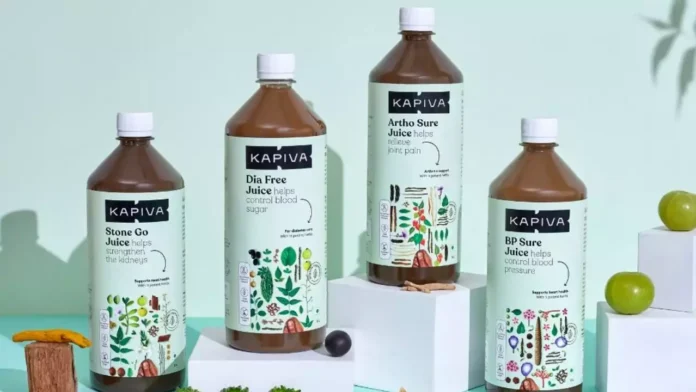
Kapiva, a D2C Ayurvedic consumer products startup backed by Fireside Ventures and Vertex Ventures, reached a noteworthy milestone in the fiscal year 2022-23. The company’s revenue crossed the INR 100-crore mark for the first time, underscoring its dedication to expansion through continued investment.
In FY23, Kapiva reported a revenue of INR 114 crore from operations, nearly doubling the figure of INR 59 crore in FY22, as per regulatory filings with the Registrar of Companies (RoC). However, the company also witnessed a widened net loss, increasing from INR 48 crore in the previous year to INR 64 crore in FY23.
The increased losses were attributed to “additional investments in the team and marketing costs.”
The company recorded a total revenue of INR 116.4 crore in FY23, a substantial rise from INR 62 crore in FY22, with a significant portion attributed to product sales on its platform.
In FY23, the startup incurred total expenses amounting to INR 181 crore, showing an increase from INR 110 crore in FY22. Specifically, sales and marketing expenses reached INR 64 crore in FY23. Furthermore, total employee benefit expenses escalated to INR 33 crore in FY23 from INR 22 crore in FY22, while transportation costs rose to INR 17 crore from INR 12 crore during the corresponding period.
Established in 2015, Kapiva specializes in Ayurveda-based fast-moving consumer goods, spices, and health and wellness products that target concerns like hair fall, weight loss, digestion, and diabetes.
Due to the increasing demand for Ayurveda and wellness products, the market for Ayurvedic products is projected to surge to INR 1,82,400 crore by 2028, witnessing significant growth from INR 62,600 crore in 2022. This growth is anticipated at a compounded annual growth rate of 19.3% during the period from 2023 to 2028, according to the market research firm International Market Analysis Research and Consulting Group (Imarc Group).
The Ayurvedic products market has experienced heightened consumption following the Covid-19 pandemic, coupled with a government-driven initiative to endorse Ayurvedic products.
Kapiva Goes Global:
The company, backed by investors such as 3one4 Capital, Maninder Gulati of Oyo, and Rishabh Mariwala of Marico, is strategizing international expansion. In April 2023, it injected $2 million into its US-based subsidiary for this endeavor. In June 2023, Kapiva appointed Nicholas Kelley as the CEO for the United States.
As per Tracxn, Kapiva has secured more than INR 22 million in funding. This includes a funding round of over INR 6 million finalized in October 2022, with contributions from investors such as healthcare-focused, mid-stage private equity firm Orbimed, Vertex Ventures, and 3one4 Capital.
Amongst various D2C Ayurveda brands, The Ayurveda Co secured INR 100 crore in funding in March 2023, while The Ayurveda Experience, backed by Anicut Capital, raised INR 50 crore in December 2022.
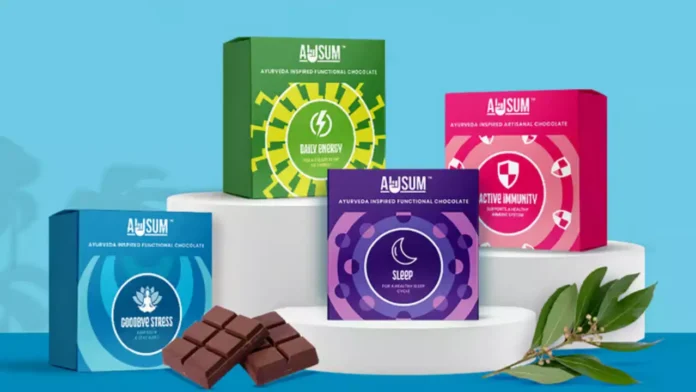
Awsum, India’s first Ayurveda-inspired functional chocolate brand, has recently announced its availability on Akasa Air, as revealed in an Instagram post.
Founded by two friends, Pranav Sharma and Kritik Thakur, Awsum aims to address the challenges of modern-day lifestyle disorders encountered by urban working millennials. The brand incorporates Ayurvedic principles to produce healthier products without compromising on taste. Their chocolates are infused with herbs and nutrients, aiding the body in addressing health disorders associated with the demands of modern-day lifestyles.
Awsum Pioneers Functional Chocolate in India:
Moreover, the brand asserts that functional chocolate represents a novel and unexplored category in the Indian markets, with no comparable brands occupying the same space.
The concept of Awsum originated against the backdrop of the nationwide lockdown imposed by the government due to Covid-19 in 2020. The co-founders, personally grappling with issues like sleep deprivation, daytime lethargy, and anxiety, transformed their own experiences into the creation of the brand. Awsum is designed to assist people in addressing these challenges in a more convenient and exciting manner. The inception of their ‘Awsum’ idea took place at the Gurugram-based startup incubator, Huddle, known for closely collaborating with selected high-growth startups. Additionally, the company receives support and mentorship from a group of highly accomplished individuals and industry experts.
Café Akasa, the in-flight dining service of Akasa Air, is reintroducing its special Makar Sankranti meal with a fresh menu to commemorate the first festival of the year in the skies. Travelers on Akasa Air can savor a culinary experience influenced by traditional cuisines, including Puran Polis, Gajar Mirch ka Achar accompanied by Til Dry Fruit Gajak, and a beverage of their choice.
This special meal is accessible throughout January 2024 across the Akasa Air network and can be conveniently pre-ordered through Akasa Air’s website or mobile app.
Akasa Air continues its ongoing effort to honor the diverse cultures and festivals of India through its festive meals, aligning with the brand’s commitment to providing an inclusive travel experience. The festive special meals by Akasa Air have garnered widespread appreciation from travelers nationwide over the past year. The airline has now introduced the second edition of its Makar Sankranti meal, featuring a new curation that aims to promote India’s rich culinary heritage and embrace the festive spirit in the skies.
Year-Round Celebrations with Akasa Air:
Since the launch of operations in August 2022, Akasa Air has introduced specially curated meal options that are inspired by regional specialties associated with celebrations during popular festivals and special occasions like Valentine’s Day, Holi, Eid al-Fitr, Mother’s Day, International Yoga Day, Monsoon season, Onam, Ganesh Chaturthi Dussehra, Diwali, and Christmas, among others. The airline also offers a pre-selection of cakes on its regular menu for flyers who want to celebrate the birthdays of their loved ones in the skies.
As part of Café Akasa’s updated menu, patrons can anticipate a diverse selection of over 50+ meal options encompassing healthy, fusion, festive, and gourmet choices to accommodate a broad range of diets and palates.
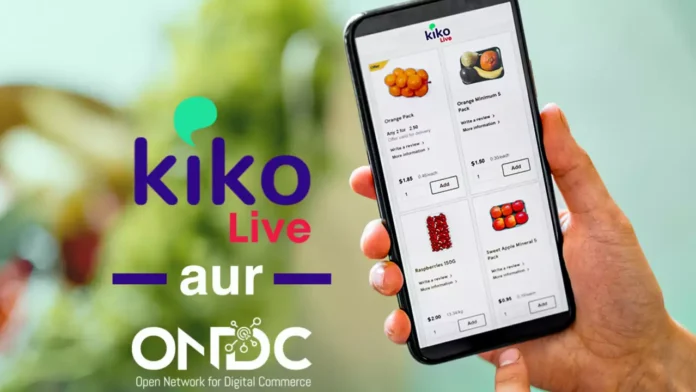
The Kiko app solution was originally designed to aid local retailers in managing their delivery orders through phone calls, WhatsApp, and other channels. On the ONDC network, Kiko aims to tap into a broader customer base, providing an expanded choice for buyers.
“We are gradually onboarding our list of retailers onto the ONDC network due to the overwhelming surge in orders. Some sellers are already receiving 20-25 orders daily without running promotions. Orders are growing at over 100% week on week, leading us to scale our operations and support teams, too. Our sellers maintain a near 100% fill rate and successful delivery rate, a trend we aim to sustain during our expansion,” said Kiko’s founder Alok Chawla.
Kiko Live Aims to Assist 50,000 New Sellers:
Retailers utilizing the Kiko app can explore and receive orders from a vast pool of potential customers via the ONDC network. The Kiko seller app additionally provides integrated payment and hyperlocal logistics solutions to registered retailers. The company stated that in the next few quarters, it intends to assist more than 50,000 new sellers, particularly those venturing into online selling for the first time, to join the network.
In November, Hindustan Unilever Limited (HUL) announced its commitment to onboarding nearly 1.3 million kirana stores on ONDC, aiding them in competing with e-commerce and quick-service grocery retailers.
“We are delighted to witness Kiko’s remarkable growth on ONDC. We strive to create a transparent ecommerce ecosystem with equal opportunities for all and Kiko’s success adds to the vibrancy and success of our Network,” said ONDC MD and CEO T Koshy.
Kiko Live is supported by early-stage investors, including 9 Unicorns, Venture Catalysts, SOSV, and GSF, along with angel investors like the Chief Executive Officers of Indiamart, Spotify India, and Nazara.
SUGAR Cosmetics, the beauty e-commerce brand led by Vineeta Singh, saw its sales inching closer to the INR 500 crore mark in the financial year ending on March 31, 2023. In FY23, the startup reported an operating revenue of INR 420.2 crore, marking an impressive 89% increase from the INR 221.8 crore generated in the previous fiscal year.
It is pertinent to mention that SUGAR Cosmetics earns its revenue by selling cosmetics and beauty products.
Established by Singh and Kaushik Mukherjee in 2015, SUGAR Cosmetics embarked on its journey as a D2C brand, utilizing an online platform. Later, it transitioned to an omnichannel model and claims to have over 40,000 retail outlets across more than 550 cities in India. The platform markets products in the lips, eyes, face, nails, and skin categories.
Taking into account other income, the startup’s total revenue amounted to INR 428.3 Cr, marking a 91.3% increase from the INR 223.8 Cr generated in the previous fiscal year.
With the increase in revenue, the startup has managed to control its losses. In FY23, the startup incurred a net loss of INR 76.2 Cr, a marginal increase from INR 75.9 Cr in the previous fiscal.
SUGAR Cosmetics Expenditure Breakdown:
The Shark Tank judge played a key role in the startup’s total expenditure increase by 69% to INR 505.5 Cr in FY23, as compared to INR 300 Cr in FY22.
SUGAR’s primary expenditure centered around marketing. In a bid to enhance brand awareness, the startup allocated INR 162.5 Cr, constituting nearly 40% of its revenue. The advertising expenses for FY23 were 67% higher than the INR 97.5 Cr spent in the preceding fiscal year.
To replenish its shelves, SUGAR allocated INR 113.9 Cr in the year under review, reflecting a 72% increase from the INR 66.3 Cr spent in FY22.
In FY23, SUGAR allocated INR 60.8 Cr for employee salaries and other welfare expenses, marking a 71% increase from the INR 35.5 Cr spent in FY22. According to LinkedIn, the startup maintains an employee headcount of approximately 1,000.
The startup enhanced its EBITDA margin to -14.55% in FY23, a notable improvement from the -30.48% recorded in FY22.
SUGAR Cosmetics secured approximately $85 million in various funding rounds, with Elevation Capital, A91 Partners, and India Quotient being some of its investors.
The startup, last valued at around $500 million, was reportedly in talks to raise another $100 million at approximately a $700 million valuation. SUGAR closely competes against the likes of WoW Skin, which has seen its sales plummet in FY23, Plum, MamaEarth, and Nykaa, among others.
HyugaLife, a health and wellness platform, has recently raised $1 million in a new funding round with contributions from Stride Ventures and Getvantage.
The newly acquired funds will be utilized to enhance the platform’s product and technological infrastructure.
“We are excited about the opportunities ahead as we leverage this support to drive innovation & enhance user experiences,” said Sachin Parikh, Founder, HyugaLife.
HyugaLife’s Impressive Growth:
Backed by cricketer KL Rahul and actress Katrina Kaif, HyugaLife reports a notable surge in its user base in 2023, achieving a fivefold expansion in revenue.
The startup offers an extensive selection of more than 10,000 products across 10 categories, including health supplements, sports nutrition, health foods, and more. These items are sourced directly from over 400 brands, establishing HyugaLife as a comprehensive one-stop destination for health-conscious individuals in India.
Apart from its product range, the platform is actively cultivating its brand through initiatives focused on trust, authenticity, and education. Programs such as ‘H-Tested,’ introduced by the platform in collaboration with KL Rahul, guarantee that users receive products adhering to stringent standards.
We use cookies to ensure that we give you the best experience on our website. If you continue to use this site we will assume that you are happy with it.