Fast-moving consumer goods (FMCG) companies in India are anticipated to experience sustained challenges in the October-December quarter. This is likely to be reflected in both the top-line growth, and the margins are expected to be consistent with those observed in the July-September quarter.
Brokerages expect volume growth to remain soft and not very different from Q2.
“We expect demand and margin trends to be broadly similar to that witnessed in 2Q,” Kotak Institutional Equities said in its report on the sector.
Price Reductions Impacting FMCG Revenue:
Also, during the year, companies resorted to cutting the prices of their products as commodity prices softened, thus also having restricted the growth in revenue in the quarter.
The domestic brokerage firm also added, “We expect muted low-to-mid single-digit volume growth and a deceleration in revenue/Ebitda growth for most staple companies.”
Vishal Gutka, the Vice President of Research (Consumer and Retail) at PhillipCapital India, further mentioned that rural demand remains subdued due to the impact on farm income. Additionally, competition from regional players continues to erode the market share of larger players.
“We expect Tata Consumer Products, Jyothy Labs and Nestle India to do better than the rest of the FMCG universe. Nestle India is expected to continue to report double-digit revenue growth in the December quarter,” Gutka added.
Kotak Institutional Equities also anticipates that EBITDA (earnings before interest, tax, depreciation, and amortization) growth will outpace revenue growth. The report highlights that despite this being the festive quarter, there is a lack of an upswing in demand.
“There was some delay in winter demand in the north and also the winter season was delayed and warm in the east which had an impact on the sale of health supplements and skincare categories in the quarter,” said Sachin Bobade, vice president at brokerage firm Dolat Capital.
He added that he anticipates a growth rate in volumes for home and personal care in the low single digits.
Nuvama Institutional Equities also added that the rural volumes continued to remain weak in the quarter ending in December. The brokerage highlighted the emergence of local players in many categories, and consumers have resorted to downgrading, especially at the mass end of the market.
Retail intelligence firm Bizom noted that in October, sales of fast-moving consumer goods (FMCG) saw an uptick as kiranas, or mom-and-pop stores, stocked up ahead of Diwali.
Excluding branded commodities, the value of FMCG sales increased by 7 percent in October compared to the corresponding month last year. However, when including branded commodities, sales declined by 4.8 percent.
In November, the company observed that FMCG sales were affected by the impact of excessive stocking for Diwali. Additionally, it mentioned that repeat purchases in stores were experiencing significant pressure, particularly for beverages, personal care, and branded commodities.
“We also see that movement of products in both packaged foods and confectionery has maintained and grown in November 2023, this is a positive indicator of movement in these categories for festive gifting and consumption,” said Akshay D’Souza, chief of growth and insights at Bizom.
In November, there was a 7.5 percent decline in sales, with rural growth experiencing a 9.6 percent slump and urban growth dropping by 3.5 percent.
Invesco has increased the valuation of the food and grocery delivery platform Swiggy by approximately 9% to $8.5 billion in its records as of October 31, according to the filings submitted to the US Securities and Exchange Commission by the US asset manager.
Invesco has also adjusted the valuation of the fintech startup Pine Labs to $3.9 billion, down from the previous valuation of $4.1 billion.
The most recent valuation, however, remains lower than Swiggy’s peak valuation of $10.7 billion, which was assigned at the beginning of 2022 when Invesco spearheaded a $700-million funding round for the company.
Crossover funds typically review and adjust the valuations of their investments on a quarterly basis.
Among various factors, adjustments in valuations by investors in privately held companies frequently mirror shifts in their public market counterparts.
From July 31 to October 31, the market capitalization of Swiggy’s listed competitor, Zomato, grew by approximately 25% to reach about $11 billion. According to data from the Bombay Stock Exchange (BSE) as of Thursday, Zomato now holds a market capitalization of around $13 billion.
Swiggy has reportedly initiated talks with bankers in August to assess its valuation, in preparation for a potential initial public offering (IPO) this year.
Baron Capital, another US-based asset manager with investments in Swiggy, increased its investment to $8.5 billion in August. During that period, Baron Capital elevated Swiggy’s valuation by 34% compared to its previous assessment.
The primary shareholder, Prosus, recently reported that Swiggy’s loss decreased by 35% from a year ago, reaching $208 million for the half-year ended September 30. Previously, Prosus had indicated that Swiggy had incurred a loss of approximately $540 million between January and December 2022.
Swiggy and Zomato have been engaged in a intense competition for market share in the Indian food delivery industry, concurrently competing in the quick commerce ecosystem through their Instamart and Blinkit verticals.
Brokerage firms estimate Swiggy’s market share to be around 45% in the virtual duopoly till the middle of 2023.
Nevertheless, the two companies have recently attracted the attention of the government. Swiggy received a notice for approximately INR 350 crore in unpaid goods and services tax (GST) from the tax authorities, while Zomato received a notice for INR 402 crore in similar unpaid taxes.
India is celebrated for its vibrant culinary wonders, featuring a diverse range of food and beverage (F&B) experiences in every state. Nevertheless, the Indian palate yearns for more fresh and exotic cuisines and flavors.
With a population of over 140 Crore people showing a strong affinity for a variety of food and beverages, Indian entrepreneurs appear to have discovered a lucrative market that is anticipated to reach $68 billion by 2030. Remarkably, startups have seized this opportunity by addressing people’s needs through direct-to-consumer (D2C) channels.
As per analysis, the beauty and personal care segment (28.6%) leads the direct-to-consumer (D2C) market in India, closely followed by the food and beverage (F&B) industry at 27%.
F&B Giants and Emerging Stars:
From well-established brands such as KFC, Amul, Baskin Robbins, and McDonald’s to emerging startups like WickedGud, Chaayos, Coolberg, and Vahdam India, Indian consumers have a plethora of choices. Despite this, there is ample room for both existing and new players to thrive in the sector.
The statement above finds support in the success of various food and beverage startups like Blue Tokai Coffee Roasters, Plix, Pluckk, and TagZ, which have gained significant traction in the industry with the backing of investors’ confidence.
The entry of innovative startups with unique product offerings has injected new life into the sector, leading SnackFax to curate a list of the food and beverage brands that are disrupting the Indian market.
Here are the F&B Brands to keep an eye on in 2024:
Burger Singh:
Founded in 2014 by Kabir Jeet Singh, Nitin Rana, and Rahul Seth, Burger Singh is a quick-service restaurant (QSR) chain based in Gurugram.
In 2019, the company received an undisclosed funding amount from RB Investments, headquartered in Singapore. Following that, in 2022, Burger Singh successfully raised INR 30 Crore in its Series A funding round. Negen Capital led the round, with participation from LetsVenture, Mumbai Angels, Old World Hospitality, and musician Jasleen Royal.
After the fundraising in 2022, the fast-food chain announced its plan to utilize the funds for opening 120 new food outlets by the end of FY23.
In December 2023, Burger Singh secured an undisclosed amount in a pre-Series B funding round led by the trading company Turner Morrison Ltd. The funding round also saw active participation from Homage Ventures LLP – Office of Aditya Ghosh.
As of July 2022, Burger Singh had over 80 exclusive food outlets and 12 franchisees spread across different locations in India.
In the competitive Quick Service Restaurant (QSR) sector, Burger Singh competes with renowned brands like Burger King, McDonald’s, Subway, Domino’s, and KFC.
A dedicated runner, Avnish Chhabria used to lament the absence of locally-produced organic and plant-based nutritional supplements in India, essential for him to maintain peak performance.
Relying on international brands sparked the concept of establishing an indigenous plant-based vitamin and mineral supplements brand. With the goal of providing a more affordable option for the majority of Indians who couldn’t afford imported plant-based supplements, Chhabria founded Wellbeing Nutrition in late 2019.
Since its inception, the company has swiftly expanded its operations. Currently, it provides a diverse range of over 53 SKUs and employs an omnichannel strategy to attract customers. The brand produces plant-based vitamin and mineral supplements in various forms, including capsules, oral strips, and effervescents, among others.
The startup collaborates with a global team of gastroenterologists, nutritionists, and experts to develop its line of products. Additionally, it sources raw materials from over 200 organic farms and certified companies across 19 countries.
Leveraging a multi-faceted omnichannel strategy, the Mumbai-based direct-to-consumer brand achieved a revenue of INR 19.5 crore in FY22. With ambitious goals, it aims to reach 100 million customers and generate INR 100 crore in revenue by 2023. Additionally, there are plans for international expansion, targeting entry into the US, the UK, and the UAE by 2025.
With support from Hindustan Unilever Limited (HUL) and Fireside Ventures, Wellbeing Nutrition has secured a total funding of $10 million from various investors. In the previous year, HUL acquired a 19.8% equity stake in the startup.
Dogsee Chew:
Founded by Bhupendra Khanal and Sneh Sharma in 2015, Bengaluru-based Dogsee Chew offers vegetarian dog treats that are natural, human-grade, and protein-rich. These treats are made from yak milk cheese by residents of villages in Nepal, Sikkim, and Darjeeling.
In 2023, the startup successfully raised $6.7 million in its Series A funding round from Mankind Pharma and Sixth Sense Ventures.
In November 2021, it secured $7 million in its Pre-Series A funding round from Sixth Sense Ventures. Presently, it maintains a presence in more than 30 countries.
DropKaffe:
Beverage startup DropKaffe, established in 2019 by Rakshit Kejriwal, Lakshmi Dasaka, and Chaitanya Chitta, sells ready-to-drink cold coffee, fresh coffee beans, coffee powders, and gourmet foods under the brand SLAY Coffee through its website and cafe chains.
As per its LinkedIn page, the startup is present in more than 160 locations spanning 19 cities in India.
In 2016, its parent company secured $550K in a funding round led by Fireside Ventures’ Kanwaljit Singh, Srini Anumolu & Meena Ganesh of GrowthStory, Apurva Salarpuria from Salarpuria Group, Sidharth Pansari from Primac, Rahul Gidwani, Hitesh Oberoi from Naukri, Nirupa Shankar from Brigade Group, and Bhupen Shah also participated in the round.
The venture asserts that it caters to over 500,000 customers in 20 cities throughout the country.
Eat Better:
Established in 2020 by Mridula Kanoria and Shaurya Kanoria, the Jaipur-based organic food startup Eat Better offers nutritious snacks like coffee and almond laddoos, hazelnut chocolate laddoos, vanilla, and cacao laddoos, among other options, through its website and various e-commerce platforms.
The startup operates a production facility in Jaipur and oversees a workforce comprising more than 50 female employees.
In March 2022, it secured a seed funding of INR 5.5 Cr to strengthen its team, expand offerings, and develop marketing and distribution channels.
Several investors, including Java Capital, Mumbai Angels, Shiprocket Ventures, CapierCapital, and Plan B Capital, took part in the funding round.
Earlier, it claimed to have reported over 10x growth in revenues between October 2020 and March 2022.
Good Flippin’ Burgers:
Founded in 2019 by Viren D’silva, Sijo Mathew, and Sid Marchant, the burger chain Good Flippin’ Burgers operates 23 outlets across Mumbai and Delhi, with 16 situated in Mumbai. The brand expanded into the Delhi market by opening seven new outlets in 2023.
In 2023, the startup secured $4 million in its Series A round, spearheaded by Tanglin Venture Partners. Additionally, it raised $1.1 million in a seed round led by Nikhil Bharadwaj, director of Kerala Blasters Football Club, along with Karan Bhagat and Yatin Shah of IIFL Wealth.
Operating in just two Indian cities, the startup has aspirations to broaden its presence across the country. It is currently in the process of embracing cloud, hybrid, and dine-in formats, with a particular emphasis on establishments within malls and airports.
Chaayos:
Established in 2012 by Nitin Saluja and Raghav Verma, the F&B brand Chaayos offers a variety of teas and pre-packaged food products through both offline and online platforms. The brand leverages cutting-edge technologies such as AI and IoT to streamline its operations effectively.
Earlier, the brand shared that 45% of its revenue comes from online tea deliveries. The brand operates 190 retail outlets across six Indian cities. In June 2022, it secured $53 million in its Series C funding to develop tech infrastructure and expand its presence.
Its capitalization table features Alpha Wave Ventures, Elevation Capital, Think Investments, Tiger Global, SAIF Partners, InnoVen Capital, Pactolus, and Ola cofounders Bhavish Aggarwal and Ankit Bhati, among others.
Chai Point:
Founded in 2010 by Amuleek Singh Bijral and Professor Tarun Khanna, Chai Point follows an omnichannel approach to selling various tea varieties and snacks. It opened its first retail store in 2010, introduced home delivery of its flagship teas in 2014, and rolled out tea and coffee vending machines in 2016.
In 2018, the D2C F&B brand successfully raised $20 million in its Series C funding round. To date, it has accumulated $36 million in funding from backers such as Paragon Partners, Eight Roads, Saama Capital, and DSG.
In the fiscal year 2020-21, the company’s revenues from operations were INR 55.64 Crores, while the loss after tax amounted to INR 78.49 Crores, as per Tofler.
Country Delight:
Established in 2013 by Chakradhar Gade and Nitin Kaushal, Country Delight acquires milk and various food items like ghee, cottage cheese, fruits, and vegetables directly from farmers, delivering them to customers’ doorsteps.
In May 2022, the company raised $108 million in its Series D funding round from Venturi Partners, Temasek, SWC Global, Trifecta Capital, and a host of other investors. Prior to this, it had also raised $25 million in a Series C round led by Elevation Capital. Thus far, the total raised in funding amounts to $133 million.
It asserts a 10x growth in the last three years and boasts of catering to over 1.5 million customers nationwide. Additionally, the company claims to deliver more than 8 billion orders each month, spanning across 11 states in India.
Its cap table features investors such as Matrix Partners, Orios Venture Partners, Elevation Capital, and IIFL PE Fund, among others.
Curefoods:
Curefoods, founded in 2020 by Ankit Nagori, is a cloud kitchen aggregator that houses several brands, including EatFit, Sharief Bhai, Aligarh House Biryani, and CakeZone, among others. It manages over 150 cloud kitchens in 15 Indian cities.
In 2023, Curefoods secured a funding of $37 million from Three State Ventures, the fund led by Binny Bansal. Furthermore, Bollywood actress Nora Fatehi not only invested in Curefoods but also took on the role of the brand ambassador for its sub-brand, CakeZone.
Its cap table comprises Iron Pillar, Chiratae Ventures, Accel Partners, Sixteenth Street Capital, and Bollywood actor Varun Dhawan, among other contributors.
In the fiscal year 2021-22, it disclosed operational revenue of INR 1.3 Cr, with consolidated losses amounting to INR 7.4 Cr, as per Tofler.
Desi Farms:
Set up in 2016 by Prateek Gupta and Sunil Shahi, D2C startup Desi Farms sells dairy products such as Malai Dahi, whole buffalo milk, Shrikhand, and Amrakhand, among others.
To cut out intermediaries, the dairy startup collaborates with local farmers to source fresh milk and milk products. Subsequently, these products undergo stringent quality checks at the processing unit, where the milk is treated without the use of chemical preservatives.
It delivers dairy products to customers without imposing any charges and additionally offers personalized subscription services to its users.
The startup presently provides 48 SKUs and asserts to have a customer base of over 10K paid users. In 2022, it established over 50 offline outlets in Pune and Navi Mumbai. In the fiscal year 2022, it achieved a revenue of INR 8.8 Cr.
The Filling Station:
Established in 2021 by Mahua Ghosh and Suvankar Ghosh, the Mumbai-based healthy food snack startup, The Filling Station, specializes in selling nutrient-rich laddoos, oil-free snacks, and nutrient-rich spreads. These products are conveniently available for purchase on their website and through popular e-commerce platforms such as Amazon and Flipkart.
For its snacks, the startup incorporates ingredients like palm, oats, makhana, seeds, nuts, and date fruit. Mahua Ghosh, one of the co-founders, brings with her 11 years of experience in the food industry, having worked with various fast-food joints, cloud kitchens, and retail brands. The venture has garnered recognition from the Centre’s Startup India Initiative, as mentioned on their website.
Drink Prime:
Established in 2016 by software engineer Vijender Reddy Muthyala and corporate executive Manas Ranjan Hota, DrinkPrime is a watertech startup that enables users to rent IoT-enabled water purifiers through the platform’s app and website.
Operating on a monthly and daily subscription model, DrinkPrime came into existence after the duo failed to find a reliable and affordable water purifier. Since inception, the startup’s purifiers have been installed in more than 72,000 locations, and it has garnered over 1 Lakh subscribers.
Supported by investors like Omidyar Network India, Sequoia Surge, and 9Unicorns, DrinkPrime has raised over $11.5 Mn in capital across multiple funding rounds. It directly competes with domestic startups in the watertech sector, including Swajal and OwO.
Looking to expand nationwide, the startup aims to reach 1 million households across the country.
Flistaa:
Established in 2021 by CA Harshvardhan Chhatbar, Flistaa is a beverage brand specializing in providing premix beverages in sachets. The brand offers a diverse array of Indian beverages, including street juices, milkshakes, sharbat, and more.
In December 2021, the Ahmedabad-based D2C startup reportedly received an undisclosed amount of investment from ah! Ventures’ First Gear Platform.
FreshToHome:
FreshToHome was incorporated in 2015 by serial entrepreneur Shan Kadavil and Mathew Joseph. Kadavil’s inspiration to enter the direct-to-consumer (D2C) meat and fish industry came when his personal fish supply faced disruption due to the impending closure of Sea To Home, an ecommerce platform based in Kerala.
Teaming up with Joseph, a co-founder of Sea To Home and an angel investor, Kadavil initiated his new venture. Since then, the direct-to-consumer (D2C) meat startup has experienced substantial growth, currently catering to 160 cities in India and all seven emirates in the UAE.
Having secured investments from notable backers like Amazon Sambhav Venture Fund, E20 Investment, Mount Judi Ventures, Investcorp, and Iron Pillar, the D2C meat startup has amassed a total funding of $256 Mn through various funding rounds.
Rivaling companies such as Licious, Zappfresh, and Meatigio, among others, the company aims to enhance its growth by extending its store count to 100 across all major metros by the end of 2024.
Happilo:
Founded in 2016 by Vikas Nahar, Happilo sells a range of healthy snacks such as nuts, dry fruits, seeds, and dry roasted snacks through its website and offline stores. The brand also provides the option to pay through EMIs.
In February of last year, the Bengaluru-based D2C brand secured $25 Mn from Motilal Oswal Private Equity. The startup then claimed that it had expanded over 4x in the last 24 months. It also said that it was aiming for a revenue of INR 2,000 Cr over the next four years.
To date, Happilo has secured a cumulative funding of $38 Mn.
Happy Nature:
Set up in 2022 by Sahil Chopra, Parth Birendra, Vikas Singh, and Vishal Rastogi, Happy Nature is a farm-to-fork dairy startup. It operates a dairy farm in Jhajjar, Haryana.
The startup has devised its standard operating procedures (SOPs) to maintain low aflatoxin levels in cow’s milk, all without incorporating chemical preservatives and antibiotics. Currently, it caters to over 80,000 customers across Delhi-NCR, Punjab, and Haryana, offering a diverse range of more than 35 SKUs.
In the financial year 2021-22 (FY22), the company disclosed a 69% year-on-year surge in its revenue, reaching INR 14.4 Cr. Additionally, it has outlined plans to achieve an annual revenue of INR 150 Cr by the year 2025.
Heads Up For Tails:
Established in 2008 by Rashi Narag, Heads Up For Tails offers an extensive array of pet products, including preservative-free treats, organic supplements, and orthopedic beds. The company is dedicated to raising awareness among pet parents about the importance of pet care and wellness.
In August 2021, the pet care brand based in Delhi successfully raised $37 Mn in its Series A funding round, with Verlinvest and Sequoia Capital India leading the investment. At that time, the company employed 350 individuals and expressed intentions to introduce new product offerings throughout India. Furthermore, it aimed to broaden its product portfolio in international markets.
The startup has accumulated a total funding of $50.3 Mn thus far.
iD Fresh Food:
Set up in 2005 by PC Musthafa, Abdul Nazer, Shamsudeen TK, Jafar, and Noushad TA, iD Fresh Food offers a range of ready-to-make food products, including dosa and idli batter, rice rava idli batter, both in India and internationally.
In January 2022, the Bengaluru-headquartered D2C startup secured $68 Mn in its Series D funding round, bringing its total funding to $104 Mn.
Presently, it operates in over 45 cities worldwide, including Mumbai, Bengaluru, Pune, Hyderabad, and Dubai, among others.
Among its investors are NewQuest Capital Partner, Premji Invest, Sequoia Capital, Helion Ventures, and Azim Premji.
Kapiva:
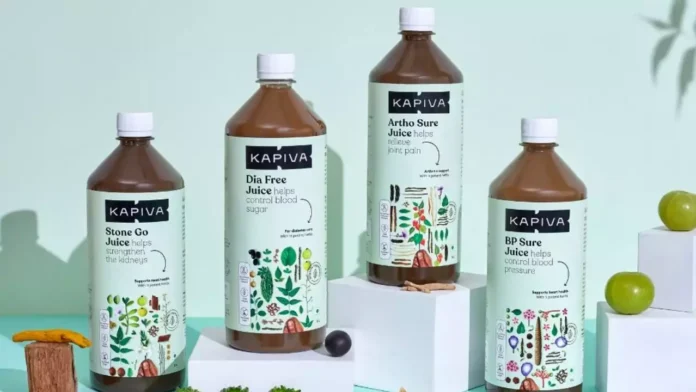
In 2020, when the pandemic confined millions of Indians to their homes, the ancient Indian science of health, Ayurveda, unexpectedly gained widespread popularity. For Ameve Sharma, Ayurveda had never been pushed to the sidelines.
From the renowned 103-year-old Baidyanath family, the scion, educated at INSEAD and New York University, grew up observing the way the ancient science aided individuals from various backgrounds. Faced with numerous inquiries from friends about Ayurvedic medications, Sharma recognized a significant gap in the market, prompting him to establish Kapiva.
Offering a diverse range of over 100 SKUs, Kapiva markets Ayurvedic consumables and products, including juices, Shilajit, hair oil, shampoos, resins, and more.
At the core of Kapiva’s operations is the procurement of high-quality raw materials and the implementation of global-standard processing. The startup is placing significant emphasis on increasing awareness, expanding product categories, and elevating quality to achieve widespread adoption. As a consequence of these efforts, the startup asserts to have experienced a 7.5X growth over the past three years.
The company aims to achieve an annual revenue of INR 850 Cr by the fiscal year 2026 from its consolidated global operations, including India.
Supported by investors like Vertex Ventures, Fireside Ventures, and 3one4 Capital, Kapiva has accumulated a total funding of $15.77 Mn through various rounds.
Lahori:
Lahori, founded in 2017 by Saurabh Munjal, Saurabh Bhutna, and Nikhil Doda, sells Indian beverages in four flavors – Zeera (cumin), Nimboo (lemon), Kacha Aam (raw mango), and Shikanji (lemonade) – across India.
Lahori’s parent company, Archian Foods, manufactures approximately 1 million bottles in its production facility. These bottles carry certifications from FSSAI, ISI, HACCP, RoHS, and proudly bear the Make In India accreditation.
In January 2022, Lahori, a Punjab-based startup, received its first institutional funding of $15 million from Verlinvest, securing a minority stake in the company.
Licious:
Founded in 2015 by Abhay Hanjura and Vivek Gupta, Licious provides a variety of meat and seafood options, ranging from prawns and kebabs to mutton and more. Additionally, the company manages the entire supply chain for its products, overseeing procurement, processing, and delivery to ensure a seamless experience for customers.
In March, the foodtech unicorn raised $150 million in funding from Amansa Capital, Kotak PE, Axis Growth Avenues AIF – I, along with contributions from Nithin and Nikhil Kamath of Zerodha, Aman Gupta from boAt, and Haresh Chawla from True North.
Prior to this, it secured $52 million in October 2021. During the financial year 2020-21, it achieved an annual revenue of INR 1,000 Crore with a presence in 14 cities across India. The customer base surpassed 2 million in the fiscal year 2020-21.
Pluckk:
Established in 2021 by Pratik Gupta, Pluckk stands as a direct-to-consumer (D2C) brand specializing in fruits and vegetables. Setting itself apart, the brand provides users with an extensive range of over 400 products across 15+ categories. This diverse selection encompasses salads, dips, juices, cuts, mixes, as well as exotic fruits and vegetables.
At present, Pluckk is active in prominent cities, including Mumbai, Delhi, Bengaluru, and Pune. Future expansion is on the horizon, with plans to broaden its footprint to additional cities in the coming years. The brand disperses its products through its exclusive app, website, and rapid commerce platforms such as Amazon, Swiggy, Dunzo, Zepto, and Reliance Signature Stores.
In early 2023, Pluckk secured $5 million in seed funding from Exponentia Ventures. It has also obtained an undisclosed amount of funding from actor Kareena Kapoor Khan.
Power Gummies:
Founded in March 2018 by Divij Bajaj, Power Gummies is a nutraceutical startup that focuses on selling flavoured and chewable vitamins tailored to address hair, nail, and skin problems. These gluten-free products are certified by the Food Safety and Standards Authority of India (FSSAI).
Experiencing a remarkable surge, its revenue skyrocketed by over 6 times, reaching INR 54 crore in FY22 compared to INR 8.8 crore the previous year. To date, the company has successfully sold over 40 lakh products to a customer base exceeding 10 lakh.
The company has strategic plans to introduce more than 40 SKUs in the upcoming five years, which will include a dedicated range specifically designed for kids. Additionally, there is a focus on expanding its footprint in the UK and other international markets, along with the establishment of additional manufacturing facilities to oversee production, daily operations, and logistics.
Up until now, the startup has secured a cumulative funding amounting to INR $12.9 million. Power Gummies’ list of investors includes 9Unicorns, Venture Catalysts, DSG Consumer Partners, Wipro Consumer Care Ventures, and Sharpp Ventures.
Rage Coffee:
Established in 2018 by Bharat Sethi, Rage Coffee is a company that offers a variety of coffee-based products throughout India. With certifications from FDA, FSSAI, and ISO, Rage Coffee proudly asserts its service to over 7.5 lakh customers and boasts a product portfolio of 18 SKUs.
In March, the D2C food and beverage brand based in Delhi received an undisclosed investment from Indian cricketer Virat Kohli. Preceding this, the company had successfully raised almost $5 million in its Series A funding round.
Cumulatively, it has garnered $7 million in capital from prominent entities including Sixth Sense Ventures, 9Unicorns, Refex Capital, and Keiretsu Forum Chennai.
Rage Coffee recorded revenues of INR 23.5 crore in FY22 and aims to achieve a revenue target of INR 92 crore by the end of FY23. Additionally, it previously emphasized its intention to intensify its physical presence and expand its number of outlets to 10,000 by March 2023.
A lack of healthy snacking options for their kids led Meghana Narayan and Shauravi Malik, two mothers, to the discussion table. The duo identified a substantial gap in the market for kids’ snacks.
To fill this gap, they founded Slurrp Farm in October 2016. The D2C brand sells a range of healthy products, from ready-to-mix pancakes and dosas to noodles and pastas.
Slurrp Farms, distributing its products through its website and various e-commerce platforms, serves customers not only in India but also in countries like the UAE, the US, and the UK.
Supported by notable entities such as the Investment Corporation of Dubai, Fireside Ventures, and actor Anushka Sharma, Slurrp Farms has secured a total funding of approximately $9 million to date.
Capitalizing on its existing growth trajectory, the direct-to-consumer snacks brand aims to achieve a revenue of INR 500 crore by the year 2025.
Sweet Karam Coffee:
Conceived by Anand Bharadwaj, Nalini Parthiban, Srivatsan Sundararaman, and Veera Raghavan, Sweet Karam Coffee specializes in preservative-free South Indian sweets and snacks. Their diverse offerings extend to the ever-popular filter coffee and ready meal mixes, reaching audiences throughout the country.
Established in 2015, this direct-to-consumer brand is committed to addressing the challenge of limited availability and accessibility of well-packaged traditional sweets and snacks that are also free from palm oil.
The brand SKC distributes its products through its website and app, attracting customers from over 32 countries. SKC faces competition from emerging startups like id Fresh Food, DropKaffe, Chaayos, TagZ, and others.
Supported by Fireside Ventures, the startup secured funding of $1.5 million in October 2023.
TagZ:
The D2C snack brand came into the limelight after featuring in the first season of the TV show Shark Tank India and has not looked back since then. Founded in 2019 by Anish Basu Roy and Sagar Bhalotia, the company sells popped chips, which are neither baked nor fried.
The concept originated from Roy’s experiences during his travels abroad, motivating him to explore innovations in the healthy snacks category.
From cricketer Shikhar Dhawan to 9 Unicorns, supporters of TagZ have invested over $4.2 million in the startup thus far. The D2C brand has experienced significant growth, boasting a 30X increase in volumes over the past 18 months, concluding in May 2023.
Available in 5,000 stores spanning 22 cities and distributed through quick commerce platforms, TagZ extends its product reach internationally to markets like Kuwait, Dubai, Maldives, and Australia.
TenderCuts:
Established in 2016 by Nishanth Chandran, TenderCuts specializes in the sale of a diverse range of meat and seafood products, including chicken, mutton, eggs, and frozen food items. The products are available through both its website and physical stores.
The startup secured its latest funding of INR 110 crore in a round led by Paragon Partners in February 2021. Overall, it has raised $29.1 million in funding from prominent investors, including Stride Ventures and Nabventures.
In August 2023, the direct-to-consumer meat delivery brand was acquired by the omnichannel meat brand Good To Go in what seemed to be a distress sale, and the acquisition amount remains undisclosed.
The Divine Foods:
Established in 2019 by Kiru Maikkapillai, The Divine Foods is a direct-to-consumer superfoods brand that offers packaged products featuring Indian kitchen staples such as turmeric, moringa, millet, and more.
Its product range is primarily categorized into four segments, covering women’s care, immunity boosters, diabetic care, and kids. The offerings from this direct-to-consumer brand include skincare products, mil mixes, powdered superfoods, and spreads.
Nurtured under the Tamil Nadu government’s prominent seed funding initiative, TANSEED 4.0, the startup boasts investors including the acclaimed superstar Nayanthara and her husband-director Vignesh Shivan. In October 2023, the Chennai-based direct-to-consumer brand secured an undisclosed amount of funding from this celebrity duo.
The startup asserts that it has catered to over 25,000 customers and is accessible in five nations worldwide.
Vahdam Teas:
Vahdam, founded in 2015 by Bala Sarda, is an online tea brand that sells its products in domestic as well as international markets.
In September 2021, Vahdam reportedly secured INR 174 crore in its Series D round led by IIFL AMC’s PE Fund. After the round, the startup claimed that it had raised INR 290 crore in total funding from investors.
In FY22, it achieved a revenue of over INR 200 crore, up from INR 161 crore in FY21. However, the D2C brand slipped into the red, reporting a loss of INR 16 crore in FY22 against a profit of INR 1.94 crore in FY21.
The startup targets achieving a net revenue of INR 500 crore by the year 2024.
Coolberg:
Established in 2016 by Pankaj Aswani and Yashika Keswani, Coolberg is a non-alcoholic beer brand offering a range of beverages, including cranberry, peach, ginger, malt, strawberry, mint, and cranberry, through its website and offline distribution channels. Presently, it maintains a presence in India, Africa, Maldives, Bhutan, and Nepal.
In 2019, Coolberg secured $3.5 million in its Series A funding round with investments from RB Investments, India Quotient, Ashish Goenka from Suashish Diamonds, and the Indian Angel Network. Before that, it had received an undisclosed amount from India Quotient and the maiden fund of the Indian Angel Network.
In 2022, Ghodawat Consumer acquired the beverage startup for an undisclosed sum. The startup mentioned that this acquisition would assist in cultivating a portfolio of contemporary premium beverage brands as part of the agreement.
Wingreens Farms:
Established in 2011 by Anju Srivastava and Arun Srivastava, Wingreens Farms specializes in the sale of packaged food products, including sauces and spreads, spice mixes, breakfast cereals, non-dairy milk, protein shakes, and more. The distribution encompasses both its website and an offline network, reaching over 200 cities across India.
In May 2022, the D2C food brand acquired the parent company of Postcard, Dharmya Business Ventures, for approximately ₹2.1 million in a cash and share swap agreement.
In December 2021, it secured $17 million in its Series C funding round, with Investcorp leading the investment. Following that, there were reports of an additional INR 22 crore investment from Anicut Capital. To date, the company has amassed a total funding of $49.8 million from various investors.
Zappfresh:
Established in 2015 by Deepanshu Manchanda and Shruti Gochhwal, ZappFresh is a Gurugram-based direct-to-consumer (D2C) meat delivery startup. The company gained prominence as customers increasingly turned to online platforms to fulfill their meat orders during the pandemic-induced lockdowns.
Supported by investors like SIDBI Venture Capital, Dabur Family Office, LetsVenture, and Keiretsu Forum, ZappFresh has accumulated funding totaling $7.9 million. The company recently made its entry into the Bengaluru market by acquiring Dr. Meat for an undisclosed sum.
Capitalizing on its growth figures, Zappfresh aims to achieve an overall revenue of INR 300 crore by the end of FY24, focusing on expanding its presence in Southern India. The company faces competition from entities like Licious and quick commerce platforms including Swiggy Instamart and Blinikit, among others.
Jade Forest:
Founded in 2019 by Shuchir Suri and Punweet Singh, Jade Forest provides a variety of non-alcoholic beverages through its website, e-commerce marketplaces, and last-mile delivery platforms. The pricing of its products ranges from INR 80 to INR 85.
In 2021, it secured $1 million from Mumbai Angels Network. Before this, it secured $250,000 in its seed funding round from angel investors such as Gaurav Kapur, Rohan Abbas, Ashish Tulsian, and AngelList India.
Its products have received certification from the US FDA. Over the past two years, it has extended its presence to 23 cities across India.
Jimmy’s Cocktails:
Gurugram-based Jimmy’s Cocktails, founded in 2019 by Ankur Bhatia and Nitin Bhardwaj, offers a range of cocktail mixers, including gin cherry sour, bloody mary, lime margarita, and mango chilli mojito, among others.
In April, Jimmy’s Cocktails raised $1.8 million in its Pre-Series A funding round, with participation from investors like Roots Ventures, 7Square Ventures, Vishesh Khurana from Shiprocket, Varun Alagh from Mamaearth, Keki Mistry from HDFC, and others.
The startup then said that it had sold over 6 million cocktails in the first three months of 2022.
In the fiscal year 2021-22, it achieved a threefold increase in revenue. Approximately 40% of its revenue originated from Tier II and III cities.
In July 2023, Radiohead Brands, the parent company of the beverage maker, secured $1.3 million and announced the launch of its energy drink brand, Hustle.
Founded in 2020 by Vidur Kataria and Sidhanth Mada, Delhi-based MasterChow offers a range of ready-to-cook products, including noodles, dipping sauces, and sticky rice, among others.
In May, MasterChow secured $1.2 million in funding from Anicut Capital, WEH Ventures, and Fluid Ventures.
Before this, it had secured approximately $462K in its seed funding round from WEH Ventures and some angel investors. The startup had then claimed that it had grown 10x over the previous 12 months and shipped products to over 17,000 pin codes across India.
38: Namhya Foods:
Based in Jammu, Namhya Foods specializes in snacks and beverages crafted from Indian herbs and natural ingredients.
Established in 2019 by Ridhima Arora, the startup took shape when she participated in Shark India’s first season, successfully securing INR 50 lakh for a 10% equity stake. Additionally, she obtained an extra INR 50 lakh in debt funding from Aman Gupta, the co-founder of boAt.
Namhya Foods positions itself as a supplier of wholesome food products tailored to support individuals dealing with various health conditions, including diabetes, heart issues, high blood pressure, cholesterol, thyroid problems, and chest congestion. The company provides a varied range of products.
Besides its operations in India, Namhya Foods has a footprint in the United States and intends to extend its presence into the UAE, Australia, and Canada.
Nourish You:
Conceived in 2015 by Rakesh Kilaru, Krishna Reddy, and Sowmya Reddy, Nourish You specializes in selling nutrient-rich breakfast food products and snacks directly to consumers through its website and various e-commerce platforms, such as Flipkart, BigBasket, and Amazon, among others.
In addition to direct consumer sales, the startup exports its food items to countries such as Singapore, Nepal, Kenya, Dubai, Mongolia, and the Maldives. Among its offerings are products like quinoa flour, chocolate & banana muesli, and cranberry walnut mix.
Earlier, the startup shared that it had 5,000 acres of quinoa and chia farms in Rajasthan, Karnataka, and Madhya Pradesh.
In January 2023, the startup obtained $2 million in seed funding to support research and development activities, enhance brand marketing, and strengthen its distribution and market presence. As a part of this funding round, it also received an undisclosed amount of investment from actress Samantha Prabhu.
Paper Boat:
Founded in 2010 by Neeraj Kakkar and Niraj Biyani, Paper Boat offers a variety of fruit-based drinks with Indian flavors, including aam panna (raw mango), rose tamarind (tamarind juice), chilli guava (guava juice), ‘jaljeera’ (spicy, tangy lemonade), among others.
In August, the startup secured $50.1 million in funding from the sovereign fund Lathe Investment Pte Ltd, owned by GIC.
At that time, it maintained a presence in metro cities, Tier II towns, and beyond. In the fiscal year 2021-22, it recorded revenue of INR 243 crore, with losses amounting to INR 64 crore. Meanwhile, in the fiscal year ending March 2020, it reported revenue of INR 231 crore and losses of INR 100 crore, as per Tofler.
Plix:
Founded in 2019 by Rishubh Satiya and Akash Zaveri, Mumbai-based Plix specializes in plant-based nutrition supplements, offering a range that includes gummies, superfood powders, and effervescent tablets. Plix asserts that its products effectively address concerns related to weight loss, hair fall, skin, daily wellness, women’s health, and workout requirements.
In July 2023, FMCG powerhouse Marico secured a majority 58% stake in Plix for INR 369.01 crore, marking its entry into the direct-to-consumer (D2C) arena. According to the terms of this agreement, Marico assumed control over Plix’s board, and Plix officially became a subsidiary of Marico.
Competing with companies such as OZiva, Setu Nutrition, and Fast&Up, Plix has a customer base of over 1.5 million individuals. The omnichannel brand presents a varied portfolio comprising 60 products across six categories.
Samosa Singh:
Founded in 2016 by Nidhi Singh, Shikhar Veer Singh, Samosa Singh specializes in selling Indian food snacks, including samosa, kachori, pani puri, and matar kulcha, among others. The company serves its customers through cloud kitchens and kiosks.
It had earlier shared that its manufacturing unit has the capacity to produce 25,000 food items daily.
In 2020, the startup raised $2.7 million (INR 17 crore) in a Series A funding round to enhance the capacity of its central kitchen located in Bengaluru. She Capital led the funding round.
As of March 2020, it was established in more than 25 locations across Hyderabad and Bengaluru. The company asserts that it has established 100 cloud kitchens in key cities of South India.
Storia:
Founded in 2017 by Vishal Shah, Mumbai-based Storia offers a range of processed fruit juices, coconut water, and shakes to customers.
In 2021, it secured $6 million in Series A funding from Sixth Sense Ventures. Presently, it has established a presence in 33 Indian cities through its network of 50,000 retail outlets.
During the announcement of its Series A funding round, the startup expressed intentions to introduce new offerings, broaden its distribution network, and venture into the packaged food segment.
The Good Bug:
Conceived in 2022 by Keshav Biyani and Prabhu Karthikeyan, Mumbai-based startup The Good Bugs offers a range of products designed to promote and maintain gut health for consumers. Its primary focus lies in addressing the health concerns of individuals aged 25-60 who may be grappling with the negative consequences of unhealthy dietary and lifestyle choices.
At present, the startup functions as an omnichannel brand, with around 70% of its revenue generated through its website and the remaining 30% from various online marketplaces. Noteworthy is the startup’s recent initiation of partnerships with pharmacies to broaden its offline presence.
Since its inception, the brand asserts that it has served more than 2 lakh customers. It also declares a robust repeat rate ranging from 40-45%. In an effort to broaden its product offerings, the startup plans to introduce 20 new products to its portfolio in the next six to twelve months.
The Whole Truth:
Founded in 2019 by Shashank Mehta, The Whole Truth specializes in selling dark chocolate, muesli, protein bars, nut butter, and energy bars through its website and other ecommerce marketplaces.
In July, the direct-to-consumer (D2C) snack brand raised $6 million in its Series A funding round, with participation from Sequoia Capital India, Matrix Partners India, Sauce.vc, Flipkart’s Kalyan Krishnamurthy, Udaan’s Sujeet Kumar, Ashneer Grover, and Shashvat Nakrani.
The startup had then asserted that it had grown 12x in the last 18 months. Additionally, The Whole Truth stated that 50% of its sales are received through its website, with the remaining portion coming from ecommerce marketplaces.
In 2023, the startup secured $15 million to enhance its manufacturing capacity, recruit talent, and expand its retail distribution.
Troo Good:
Established in 2018 by Raju Bhupati, Troo Good offers a variety of millet, peanut, chocolate, and dry fruit snack bars and mixtures. In its first year, it achieved a revenue of INR 12 Crore, while in 2019, it posted a revenue of INR 24 Crore. The startup claims that it is currently profitable before tax.
In November 2021, Troo Good secured $7.4 million from OAKS Asset Management to expand its business in the domestic market.
True Elements:
Bengaluru-based True Elements, established in 2013 by Puru Gupta and Sreejith Moolayil, is a company that focuses on offering breakfast and snack foods crafted from millets, grains, and seeds. Employing an omnichannel marketing strategy, the brand sells its products through its website, various e-commerce marketplaces, and brick-and-mortar stores.
In May 2023, the consumer company Marico acquired a 53.98% stake in HW Wellness Solutions, the parent company of True Elements, for an undisclosed amount. Before this acquisition, True Elements had received a funding of INR 10 Cr from the Maharashtra State Social Venture Fund the previous year.
In the financial year 2021-22, it recorded sales of over INR 54.3 Cr, compared to INR 36.3 Cr in the previous fiscal year.
At present, the company sells more than 70 products and boasts a portfolio of over 200 stock-keeping units (SKUs) available in 12,000 retail outlets across India. It asserts that over 75% of its revenue is generated through online distribution channels.
Twigly:
Founded in 2015 by Sonal Minhas, Rohan Dayal, and Naresh Kumar Kachhi, Twigly offers freshly cooked food delivered to consumers’ doorsteps through its website and mobile app. Presently, it fulfills orders in Delhi-NCR, featuring a menu that includes burgers, pasta, grill platters, desserts, and a variety of beverages.
As per its founders, the startup is inspired by Sprig, a food delivery startup based in San Francisco that used to provide freshly cooked meals to its customers. Unfortunately, Sprig ceased its operations in 2017.
In September 2018, its competitor acquired Twigly for an undisclosed sum.
49: Wellbeing Nutrition:
Established in 2019, Wellbeing Nutrition is a Mumbai-based direct-to-consumer (D2C) nutraceutical company. Co-founded by Avnish Chhabria and Saurabh Kapoor, the startup specializes in providing nutritious food products, with a primary emphasis on women’s health.
The company’s range of products comprises Melts, vitamin-infused thin strips, Korean Marine for collagen, and Daily Fiber for plant-based prebiotic fiber, among other offerings.
In December 2022, Wellbeing Nutrition successfully raised $10 million (INR 85 Cr) in its Series B funding round, with Hindustan Unilever Limited (HUL) and Fireside Ventures as the lead investors. Presently, HUL holds a 19.8% stake in the startup.
The company has garnered support from a diverse group of investors, including Bollywood actor Rakulpreet Singh, Mira Kapoor, Ashutosh Valani, and Priyank Shah from RENEE Cosmetics, Nikhil Gandhi from MX Player, Harsh Vardhan Bhandari, Jeenendra Bhandari, and several others.
Wellbeing Nutrition operates in the D2C segment and competes with brands such as Power Gummies and Fast&Up.
WickedGud:
Established in 2021 by Bhuman Dani, Soumalya Biswas, and Monish Debnath, WickedGud retails pasta, noodles, malted beverages, and various snacks through its website and ecommerce platforms. The company emphasizes that its products are entirely vegan and incorporate plant-based protein.
In April, WickedGud raised $1 million from investors such as Mumbai Angels, NB Ventures, Dholakia Ventures, Jalaj Dani Family Office, Ashutosh Valani, Priyank Shah from Renee Cosmetics, Ravi Shroff from Excel Industries, Ravi Nigam from Tasty Bite, Ashwini Deshpande from Elephant Design, and several others.
Before this, WickedGud had raised $340K in its pre-seed funding round with contributions from Titan Capital, Archana Priyadarshini from Point One Capital, Gaurav Ahuja from Chrys Capital, Amit Chaudhary from Lenskart, and various others.
The startup caters to customers in the age range of 26 to 42 and asserts an average order value of INR 450.
Beauty and personal care (BPC) items within the rapidly growing direct-to-consumer (D2C) sector became the top-selling category in India, with approximately 3.7 lakh packs of Vitamin C Serum sold in 2023, as per GoKwik’s network data report.
The highest repeat rate was observed in Beauty and Personal Care (BPC) at 30%, followed closely by Fashion at 28%. Meanwhile, the Electronics category recorded one of the lowest repeat rates, standing at 14%.
“D2C brands are increasingly becoming shopper favourites. Shoppers are consistently finding value in shopping from these brands. As a result, the repeat order rate of the most shopped categories has also seen a significant increase. With exclusive deals, loyalty points and offers, deepening markets and evolving trust in these brands, we can expect further growth in this industry,” said Chirag Taneja, co-founder and CEO of GoKwik.
D2C Trends in 2023:
He further stated that 2023 marked another significant year for D2C brands and contributed to their growth. From obtaining funding to omnichannel expansion or becoming listed on the stock exchange, D2C brands have thrived. While shoppers continued to shop various products from the D2C brands, one significant product emerged as the winner, Vitamin C Serum.
Recording more than 3.7 lakh orders, this product secured the highest number of orders within GoKwik’s array of D2C brands, solidifying its place in the skincare regimen of Indian shoppers. Following closely with 3.4 lakh orders, sunglasses claimed the second position as one of the preferred choices among shoppers on the GoKwik network, while skincare combos held the third spot with 2.1 lakh orders.
Last year, D2C shoppers displayed a notable preference for online premium memberships, suggesting an increasing trust and loyalty towards specific brands. Additionally, gift cards experienced substantial demand, emerging as a favored choice for gifting, particularly during the festive season.
“Shoppers buying directly from a D2C brand reflects growing trust in the products available on the brand website with no risk of counterfeits, etc especially when it comes to beauty and cosmetics,” Taneja added.
The three most ordered products in this category were led by Vitamin C Serum, followed closely by Night Cream and Hair Growth Serum.
Fashion claimed the second-highest order volume, suggesting a notable emphasis on individuality within the fashion domain. This trend may be contributing to the rise of numerous brands in subcategories aligning with specific shopper preferences.
Health-Conscious Choices in D2C:
Healthcare products secured the third position in terms of order volume, reflecting the swift transition of Indian shoppers towards health-conscious choices and their growing reliance on D2C brands to meet their health-related needs. Within this category, the best-selling products included immunity kits and ayurvedic oil.
Within the electronics category on the GoKwik network, the top-selling items were wireless earphones, closely trailed by smartwatches. Additionally, there has been a notable surge in the demand for products addressing hair-related concerns, particularly in metro cities such as Delhi, Mumbai, Bangalore, and Kolkata, where hair serum and hair gummies emerged as the most ordered products.
GoKwik accommodates a diverse network of more than 1200 eCommerce brands, encompassing renowned names like Lenskart, Neemans, Man Matters, Purplle, Shoppers Stop, and more. These brands span across various categories such as fashion, beauty, health and nutrition, electronics, and other significant segments in the online shopping domain.
Effective from January 2024, the GSTN has incorporated two new sections in GSTR-1 to enhance reporting accuracy.
In Table 14, it is now possible to include information about taxable outward supplies made through e-commerce operators. Suppliers can furnish specific details regarding these transactions in this table.
Likewise, Table 15 is assigned for the reporting of taxable outward supplies falling under Section 9(5) of the Central Goods and Services Tax Act, where the responsibility for tax payment lies with the e-commerce operator. Suppliers can now enter pertinent details in this table to ensure thorough reporting.
Seamless Tax Compliance via GSTN Reforms:
Regarding GSTR-3B, the revised Table 3.1.1 specifically addresses supplies notified under Section 9(5) of the CGST Act, 2017. It is mandatory for both suppliers and e-commerce operators to individually record supplies for which the tax liability is borne by the e-commerce operator.
Unlike the previous setup, GSTR-1 did not have specific tables for reporting individual transactions, resulting in the automatic non-filling of Table 3.1.1 in GSTR-3B.
However, from January 2024, the incorporation of Tables 14 and 15 into GSTR-1 enables suppliers and e-commerce operators in India to precisely record their supplies. This enhancement simplifies the reporting procedure, guaranteeing accuracy in tax-related records for both suppliers and e-commerce operators and facilitating the automatic population of Table 3.1.1 in GSTR-3B.
Alcohol sales during the festive season of Christmas and New Year witnessed a significant surge, with some industry players experiencing over a 20 percent increase in demand compared to the previous year. India indulged in a variety of alcoholic beverages, and there was a growing preference for premium products.
During the holiday season, there was a notable surge in alcohol sales nationwide. For instance, Delhi recorded a 14 percent year-on-year (Y-o-Y) growth in December, with sales reaching 4.56 crore bottles. In Karnataka, the state-run Mysore Sales International Limited (MSIL) outlets reported liquor sales worth INR 18.85 crore on December 31, reflecting an increase of INR 4.34 crore compared to the sales of INR 14.51 crore on the same day the previous year.
Likewise, on New Year’s Eve, it is reported that the Andhra Pradesh State Beverages Corporation Limited (APSBCL) recorded alcohol sales of INR 147 crore, which is double its typical daily sales. In Hyderabad, during the final three days of 2023, there were reports of the sale of 4.76 lakh cases of various kinds of liquor and 6.31 lakh cases of beer, amounting to INR 658 crore.
This year, industry players experienced heightened momentum compared to the corresponding period last year. Jagatjit Industries achieved a growth rate of 18-20 percent during the holiday season, contributing to a year-on-year (Y-o-Y) growth of 23 percent for the October-December 2023 period. Tilaknagar Industries observed a volume growth exceeding 10 percent over the previous year during the holiday season.
The sales volume of The Beer Cafe chain surged by around 25 percent during the holiday season, compared to the corresponding period in 2022. Likewise, the homegrown beer brand Lone Wolf reported a significant increase in sales volume, with a growth rate exceeding 200 percent compared to the same period last year. NAO Spirits, the craft gin maker backed by United Spirits, noted a nearly 100 percent year-on-year increase in secondary sales.
Devender Gulia, Director, Sales and Marketing, Jagatjit Industries Limited noted, “During holiday seasons in India, people are filled with festive spirits embracing joy and celebration. The alcobev industry also experiences a surge in demand as people indulge in festive spending, savoring moments with loved ones, increase in outdoor consumption due to long weekends, wedding season, parties, get-togethers with their preferred spirits.”
Diverse Alcohol Tastes:
Over the recent days, Indian consumers diversified their alcohol choices. Rahul Singh, Senior Vice-President of Pubs at Bira 91, mentioned that despite the winter season, several beer brands in their portfolio maintained popularity, and there was a noticeable increase in interest for Rum and Whisky.
Gin also emerged as a favored option during this season. Anand Virmani, Co-founder and CEO of NAO Spirits, said, “We noticed a notable shift toward high-quality craft Indian spirits, and there has been a noticeable increase in on-trade consumption, returning to pre-Covid levels.”
The offerings, including Greater Than London Dry Gin, Hapusa Himalayan Dry Gin, and Pipa Rum de Goa, gained significant traction.
The premiumisation trend gained momentum, with Tilaknagar Industries stating that its growth was driven by brands in the ‘prestige and above’ segment.
“The younger consumer is more experimental and is looking at premium offerings for an elevated experience. Additionally, there has been a very visible inclination towards flavored spirits which has further been seen in the growth in the overall flavored spirits industry,” said Amit Dahanukar, Chairman and Managing Director, Tilaknagar Industries.
Omni-channel fashion group Tendam has collaborated with the e-commerce platform Myntra to venture into and enhance its presence in India, as announced in their joint press release on Tuesday.
Tendam specializes in brand management within the premium mass market segment. It operates as an inclusive omni-channel ecosystem that maximizes the overall engagement of more than 350 million consumers across both physical and digital retail outlets.
“For over a century, Tendam has been delivering stylish fashion across Spain and other parts of the world and it’s a great period for us to launch the brand in India as our customers are following and adopting global trends and styles more closely than ever before,” said Jayanti Ganguly, vice president – category management at Myntra.
The company possesses ten proprietary brands, which include Women’secret, Springfield, Cortefiel, Pedro del Hierro, Hoss Intropia, Slowlove, High Spirits, Dash and Stars, Ooto, Hi&Bye, Springfield Kids, and Fifty.
Tendam’s Franchise Stores Set to Open in Pune and Ludhiana:
The lingerie brand Women’secret is the first of Tendam’s flagship brands to be available on Myntra in India. Additionally, Tendam will reinforce its market presence with the opening of two franchised stores in Pune’s Phoenix Mall of the Millennium and Ludhiana’s Silver Arc Mall in January 2024, aiming to grow sustainably in India by opening around 20 stores over the next three years.
“We are delighted to have an association that will enable us to develop our omni-channel business. Myntra is the ideal partner for us. They are aligned with our omni-channel strategy and have the capacity and expertise to fully develop it in the country,” said Antonis Kyprianou, franchise general manager of Tendam.
The strategic initiative fortifies the presence of Tendam’s brands in India, affirming the company’s robust international growth prospects. This follows an expansion strategy, collaborating with adept retail partners possessing firsthand market knowledge, experience, and professionalism, as highlighted in the release.
Tendam conducts its operations in nearly 80 countries spanning four continents, boasting over 1,800 points of sale. These include directly managed stores, e-commerce platforms, and franchise outlets.
Bengaluru-based Myntra currently offers over 6000 fashion and lifestyle brands such as H&M, Levis, Tommy Hilfiger, Louis Philippe, Jack & Jones, MANGO, Forever 21, Marks & Spencer, Nike, Puma, Crocs, M.A.C, and Fossil. Covering services across 19,000 pin codes in India, Myntra’s pioneering omni-channel technology is leveraged by 5600 stores across various brands, serving over 140 cities.
Cloud kitchen startup Curefoods reported a fourfold increase in operating revenue, reaching INR 382 crore for the fiscal year ending on March 31, 2023. However, the loss widened nearly five times to INR 342 crore.
The company, operating well-known brands such as EatFit, CakeZone, Nomad Pizza, Sharief Bhai Biryani, and Frozen Bottle, reported a loss of INR 72 crore on a revenue of INR 89 crore in FY22, as per company filings obtained through the business intelligence platform Tofler.
Curefoods Revenue Breakdown:
Curefoods generated INR 374 crore from product sales, marking a fourfold increase compared to the previous year, as indicated by the filings.
Expenditures surged four-and-a-half times, reaching INR 754 crore from INR 166 crore. The company allocated INR 103 crore to employee benefit expenses, nearly four times higher than in FY22.
The most substantial cost component in FY23 was advertising and promotional expenses, which increased by over four times, reaching INR 107 crore.
Rival cloud kitchen firm Rebel Foods reported an operating revenue of INR 1,195.2 crore for FY23, approximately 40% higher than the previous year. Nevertheless, its loss widened to INR 656.5 crore from INR 534.2 crore in FY22.
Curefoods was founded by former Flipkart executive Ankit Nagori in 2020. On October 31, SnackFax reported that Flipkart co-founder Binny Bansal was likely to infuse $25-30 million into his former colleague’s startup, taking his total investment in the company to around $50 million.
In April, Curefoods closed a INR 240 crore fundraising round with Three State Ventures, led by Bansal. The round included both primary and secondary investments. This aligns with the trend of increased funding activities in the sector during 2023. Rebel Foods, for instance, secured a INR 75 crore debt from Northern Arc and Stride Ventures. In December, the cloud kitchen-focused startup Kitchens@ raised an impressive INR 540 crore in a funding round, with private equity firm Finnest taking the lead.
On October 30, it was reported that Curefoods had closed the acquisition of foodtech company Yumlane and its proprietary technology. In 2021, Curefoods took Yumlane Pizza franchise rights for the southern Indian market, and subsequently purchased a 10% stake in the company in 2022.
Curefood’s results come as the wider food-delivery ecosystem races to increase profitability. The listed platform Zomato posted a profit of 36 crore INR for the quarter ended September 30. In May, rival Swiggy said that its core food-delivery business had turned profitable in March but did not provide further details.
Kapiva, a D2C Ayurvedic consumer products startup backed by Fireside Ventures and Vertex Ventures, reached a noteworthy milestone in the fiscal year 2022-23. The company’s revenue crossed the INR 100-crore mark for the first time, underscoring its dedication to expansion through continued investment.
In FY23, Kapiva reported a revenue of INR 114 crore from operations, nearly doubling the figure of INR 59 crore in FY22, as per regulatory filings with the Registrar of Companies (RoC). However, the company also witnessed a widened net loss, increasing from INR 48 crore in the previous year to INR 64 crore in FY23.
The increased losses were attributed to “additional investments in the team and marketing costs.”
The company recorded a total revenue of INR 116.4 crore in FY23, a substantial rise from INR 62 crore in FY22, with a significant portion attributed to product sales on its platform.
In FY23, the startup incurred total expenses amounting to INR 181 crore, showing an increase from INR 110 crore in FY22. Specifically, sales and marketing expenses reached INR 64 crore in FY23. Furthermore, total employee benefit expenses escalated to INR 33 crore in FY23 from INR 22 crore in FY22, while transportation costs rose to INR 17 crore from INR 12 crore during the corresponding period.
Established in 2015, Kapiva specializes in Ayurveda-based fast-moving consumer goods, spices, and health and wellness products that target concerns like hair fall, weight loss, digestion, and diabetes.
Due to the increasing demand for Ayurveda and wellness products, the market for Ayurvedic products is projected to surge to INR 1,82,400 crore by 2028, witnessing significant growth from INR 62,600 crore in 2022. This growth is anticipated at a compounded annual growth rate of 19.3% during the period from 2023 to 2028, according to the market research firm International Market Analysis Research and Consulting Group (Imarc Group).
The Ayurvedic products market has experienced heightened consumption following the Covid-19 pandemic, coupled with a government-driven initiative to endorse Ayurvedic products.
Kapiva Goes Global:
The company, backed by investors such as 3one4 Capital, Maninder Gulati of Oyo, and Rishabh Mariwala of Marico, is strategizing international expansion. In April 2023, it injected $2 million into its US-based subsidiary for this endeavor. In June 2023, Kapiva appointed Nicholas Kelley as the CEO for the United States.
As per Tracxn, Kapiva has secured more than INR 22 million in funding. This includes a funding round of over INR 6 million finalized in October 2022, with contributions from investors such as healthcare-focused, mid-stage private equity firm Orbimed, Vertex Ventures, and 3one4 Capital.
Amongst various D2C Ayurveda brands, The Ayurveda Co secured INR 100 crore in funding in March 2023, while The Ayurveda Experience, backed by Anicut Capital, raised INR 50 crore in December 2022.
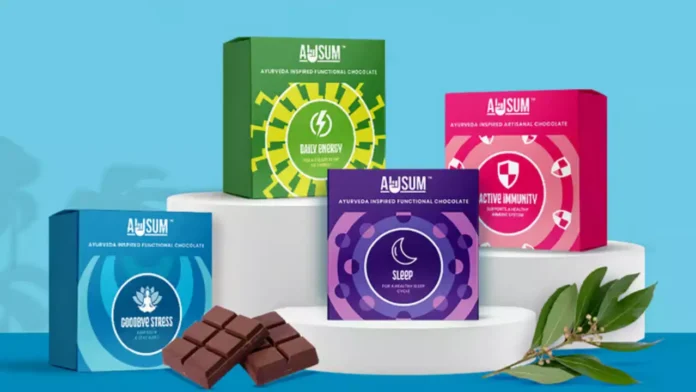
Awsum, India’s first Ayurveda-inspired functional chocolate brand, has recently announced its availability on Akasa Air, as revealed in an Instagram post.
Founded by two friends, Pranav Sharma and Kritik Thakur, Awsum aims to address the challenges of modern-day lifestyle disorders encountered by urban working millennials. The brand incorporates Ayurvedic principles to produce healthier products without compromising on taste. Their chocolates are infused with herbs and nutrients, aiding the body in addressing health disorders associated with the demands of modern-day lifestyles.
Awsum Pioneers Functional Chocolate in India:
Moreover, the brand asserts that functional chocolate represents a novel and unexplored category in the Indian markets, with no comparable brands occupying the same space.
The concept of Awsum originated against the backdrop of the nationwide lockdown imposed by the government due to Covid-19 in 2020. The co-founders, personally grappling with issues like sleep deprivation, daytime lethargy, and anxiety, transformed their own experiences into the creation of the brand. Awsum is designed to assist people in addressing these challenges in a more convenient and exciting manner. The inception of their ‘Awsum’ idea took place at the Gurugram-based startup incubator, Huddle, known for closely collaborating with selected high-growth startups. Additionally, the company receives support and mentorship from a group of highly accomplished individuals and industry experts.
We use cookies to ensure that we give you the best experience on our website. If you continue to use this site we will assume that you are happy with it.