Oakberry, the Açaí brand, has secured BRL 325 million ($67 million) in a Series C funding round, with the goal of expediting the company’s global expansion strategy.
The funding was raised through funds managed by the Brazilian investment bank BTG Pactual (BPAC11), the largest investment bank in Latin America, which also encompasses a portfolio of impact funds.
Oakberry Aims for $200 Million in revenue:
Established in 2016, the company presently operates around 700 stores in over 40 countries. The Brazilian-founded açaí brand expects to surpass $200 million in revenue and expand its global presence to nearly 1,000 stores by the end of this year.
The funds will be utilized to expedite Oakberry’s global expansion strategy, with a particular focus on swift growth in the United States market, as stated by the company.
Georgios Frangulis, CEO and co-founder of Oakberry, said, “We designed Oakberry to be a global brand with a strong footprint in the United States, and the investment from BTG Pactual brings not only a financial partner, but also a strategic partner with a keen focus on reinforcing our expansion. The strategy to invest in corporate stores in high-demand markets, like the United States, represents an excellent opportunity for capital allocation while, at the same time, establishing our brand in these regions.”
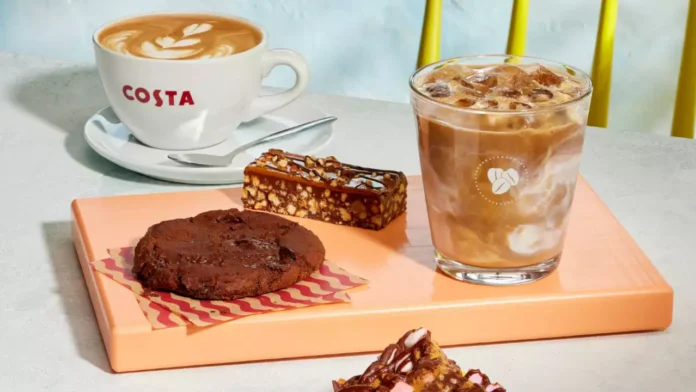
Costa Coffee has unveiled its latest food and beverage menu in the UK, showcasing hot milkshakes and a diverse selection of plant-based culinary choices.
The hot milkshake collection will be offered in three flavors: white chocolate and strawberry, salted caramel coffee, and chocolate hazel. They come with a light whip, and topping options consist of sprinkles, sweet caramel vermicelli, or chocolate brownie crumbs.
Costa’s latest release also includes a range of plant-based selections, launched in partnership with meat-free advocates Bosh!, catering to the growing demand for vegan and vegetarian choices.
The savory plant-based menu offers choices like a saucy chicken fajita wrap, smokin’ BBQ chicken panini, crackin’ ham and cheeze toastie, and a smashin’ sausage bap.
Addressing the tastes of meat enthusiasts, Costa has introduced the pork and apple sausage roll to its menu. Alternatively, the British coffeehouse chain has unveiled the first raisin and almond granola pot.
Costa Coffee’s Toastie Revival:
The company is also bringing back the hog roast toastie, Heinz Beanz and cheese toastie, and also the roast chicken and bacon toastie.
Meanwhile, the vegan dessert menu has also seen the launch of a range of new sweet products in collaboration with Bosh!, including the introduction of the caramelized biscuit rocky road, the double chocolate cookie, and the return of the chocolate and pecan slice.
The recipe for the lemon drizzle loaf cake has been refreshed, now incorporating a lemon glaze and oil.
Costa’s new banana loaf cake features a banana sponge, flavored with banana puree and topped with a sugar glaze, while its new orange and raspberry Victoria sponge includes a vanilla sponge, filled with raspberry jam and orange frosting, topped with raspberries and orange peel.
Coca-Cola HBC is investing €10 million to create a new foundation with a primary focus on supporting communities in the regions where the company operates.
The funds are scheduled for deposit in early 2024 and are anticipated to be subsequently contributed within the year, in accordance with the operational principles of the Coca-Cola HBC Foundation to ensure strong governance.
Coca-Cola HBC’s Targeted Community Support:
The company has identified key areas for community support that hold significance across its diverse locations. These include providing relief during natural disasters, upholding human rights, fostering diversity and inclusion, ensuring employee well-being and engagement, promoting corporate citizenship, addressing packaging and waste management, empowering youth and women, undertaking water stewardship initiatives, and contributing to economic impact.
Zoran Bogdanovic, CEO of Coca-Cola HBC, said, “We recognise the important responsibility we have to the communities in which we operate. Through the socio-economic impact studies that we perform with The Coca-Cola Company, we also understand how our activities deliver sustainable impact to the local economy, helping communities and creating employment.”
“I am pleased to announce the launch of our new foundation, which builds on our long-standing tradition of community action led by our people. It brings clear focus to these critical efforts, and empowers us to make decisions quickly by taking action where it is needed most.”
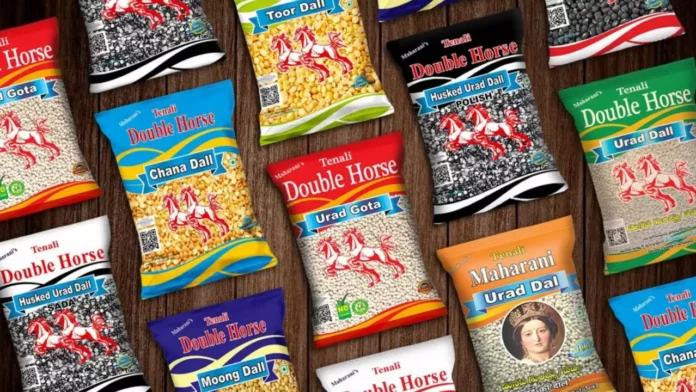
Sattvik Certifications, the leading certification body for vegetarian, vegan, and Jain food & lifestyle, has awarded its Sattvik Vegetarian Certificate to “Tenali Double Horse Group,” a wholesaler specializing in pulses, dals, and instant meals. With a vision to bring excellence and trust to every Indian household, the group, guided by a commitment to quality and customer satisfaction, has become a trusted name resonating with millions.
The Sattvik Vegetarian Certification attests to Tenali Double Horse Group’s steadfast dedication to producing the finest pure vegetarian products, aligning perfectly with the vegetarian principles and standards upheld by the Sattvik Council of India.
Standards Adherence at Tenali Double Horse Group Factory:
Sattvik Certifications conducted a comprehensive inspection of the Tenali Double Horse Group factory, verifying their adherence to all the rules and regulations set forth by the council. The certification is designed to empower the manufacturer and enhance its reputation within the national and international vegetarian community. Additionally, it reinforces the manufacturer’s commitment to providing vegetarian options that meet the standards and dietary requirements of the public.
Tenali Double Horse’s General Manager, PNV Krishna Prasad, said, “Receiving the Sattvik Vegetarian Certificate from the prestigious Sattvik Council of India is a moment of pride for Tenali Double Horse. We have always prioritised the production of pure vegetarian products in order to meet the diverse needs of our customers. This certification not only demonstrates our dedication to maintain the high food quality, but it also strengthens our relationship with our consumers and Nurturing Growth, Collaboration, and Fulfilment.”
As Tenali Double Horse proudly showcases the Vegetarian Certification, it reinforces its standing as a reliable provider of top-notch vegetarian products. The company continues its dedication to collaborating seamlessly with Sattvik Certifications to actively champion and maintain the principles of vegetarianism in the food industry.
“We are delighted to certify the Tenali Double Horse manufacturing units as vegetarian,” he stated. “With this certification, the company has demonstrated that it complies with our strict vegetarian standards, allowing customers to make knowledgeable decisions regarding the purity of the food they eat. We are eager to work with Tenali Double Horse Group in the future to advance vegetarianism and safe food supply chain practices,” said Abhishek Biswas, founder of Sattvik Certifications and Secretary General of the Sattvik Council of India.
The Open Network for Digital Commerce (ONDC) lauds the recent guidelines from the Central Board of Direct Taxes (CBDT) introducing a 1% income tax deduction on the total sales facilitated by e-commerce firms within a multi-operator model framework. These guidelines, outlined in Section 194-O of the Income Tax Act, 1961, mandate a 1% deduction on the gross amount from goods or services sold via digital platforms.
Clarity for ONDC Ecosystem Participants:
As per ONDC, these guidelines provide clarity to participants in the ONDC ecosystem, ensuring a thorough comprehension and adherence to tax obligations. The framework aims to streamline operations and improve compliance for digital transactions, especially in instances involving multiple entities within the digital commerce network.
ONDC stated, “We believe that by providing clarity on the application of Sec 194-O to network models of digital trade where multiple ecommerce entities are involved, these guidelines will contribute to the ease of doing business on the ONDC network and strengthen the compliance framework for digital transactions.”
The CBDT, in a statement, highlighted the purpose of their circular guidelines: “CBDT Circular guidelines have been issued for removal of difficulties and clarity has been provided on various issues pertaining to applicability of Section 194-O of the Act in a multiple ecommerce operator model framework, such as the Open Network for Digital Commerce.”
Coffee Day Enterprises Ltd has reported a cumulative default of INR 433.91 crore on payments of interest and repayment of the principal amount on loans from banks, financial institutions, and unlisted debt securities for the December quarter.
Coffee Day Enterprises Ltd (CDEL), which is paring its debts through asset resolution, in a regulatory update said “the delay in debt servicing is due to liquidity crisis”.
CDEL reported a default of INR 183.36 crore on the payment of the principal amount on loans or revolving facilities like cash credit from banks or financial institutions as of December 31, 2023.
Besides, it has also defaulted on the repayment of interest of INR 5.78 crore on the above.
For unlisted debt securities such as Non-Convertible Debentures (NCDs) and Non-Convertible Redeemable Preference Shares (NCRPS), the default amount was INR 200 crore as on December 31, along with a default in payment of interest of INR 44.77 crore.
“Due to default in repayment of interest and principal… the lenders have sent loan recall notices to the company as well as initiated legal disputes. In view of the loan recall notices, legal disputes and pending one-time settlement with the lenders, the company has not recognised interest from April 2021,” it said.
After the death of Founder-Chairman V G Siddhartha in July 2019, CDEL reduced its debts by resolving assets.
Coffee Day Enterprises’ Repayment and Blackstone Group Deal:
In March 2020, CDEL announced the repayment of INR 1,644 crore to 13 lenders following the completion of a deal with Blackstone Group to sell its technology business park.
The company is also taking legal action to reclaim an amount over INR 3,535 crore, allegedly diverted from the company to Mysore Amalgamated Coffee Estates Ltd, a private firm promoted by V G Siddhartha.
FMCG companies and food service chains are actively flocking to Ayodhya ahead of the Ram temple consecration on January 22. They project an 8-10-fold surge in tourism and the visiting population of the city, contributing to its global branding and facelift.
“Anticipating a substantial surge in consumer demand following the consecration of the Ram temple, we are strategically setting up a greenfield plant in Ayodhya,” said Angelo George, CEO of India’s largest mineral water company Bisleri International.
He mentioned that the plant will cater to the demand from surrounding markets in Uttar Pradesh.
FMCG Companies Eyeing Ayodhya:
Although Ayodhya has been a relatively small market within Uttar Pradesh with a population of around 350,000, it has transformed into a pilgrim hotspot due to the Ram temple. This has created a significant captive market that companies are strategically leveraging, according to executives.
“FMCG companies are ramping up distribution in the city anticipating demand surge of daily essentials, since Ayodhya is coming up as the biggest tourism centre of New India,” said Dhairyashil Patil, national president of the All India Consumer Products Distributors Federation.
He estimated that the floating population of Ayodhya could increase 8 to 10 times, leading to higher demand for packaged water, soft drinks, snacking products, and other grocery items.
Locations with historical significance naturally draw demand, according to executives. Data from the UP Tourism Department reveals that after 325,000 tourists visited Ayodhya in 2021, the number skyrocketed to 23.9 million the subsequent year.
“The renovated Kashi Vishwanath corridor in Varanasi had led to significant surge in demand for us; Ayodhya is much bigger, so we are increasing distribution centres in Ayodhya, despite us already being strong in UP,” said Mayank Shah, senior category head at Parle Products, which makes Monaco and Fab biscuits brands.
Food service chains are also capitalizing on the captive demand.
Sanjeev Agrawal, chairman of McDonald’s India, north and east, said, “We are setting up a new outlet on the Lucknow-Ayodhya highway to cater to the anticipated surge in tourists.”
As per Kabir Jeet Singh, co-founder of Burger Singh backed by LetsVenture, which established its outlet in Civil Lines, Ayodhya, close to the Ram Mandir complex about nine months ago to seize the initial advantage in the city, Ayodhya currently ranks among his top 10 performing outlets.
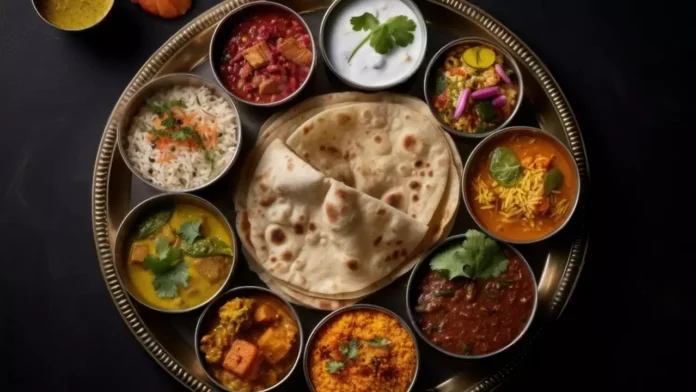
A representative from a prominent food services consultancy mentioned that certain chains are establishing outlets exclusively serving vegetarian fare in Ayodhya to align with religious sentiments. Meanwhile, others, aiming to continue offering non-vegetarian options for a diverse international audience, are strategically placing outlets on the outskirts of the city to tap into the demand from travelers.
The construction of the Ram Janmabhoomi temple in Ayodhya has resulted in the city undergoing extensive redevelopment, including a revamped railway station with food plazas, a new airport, development projects with investments of over INR 15,700 crore, and the initiation of more than a dozen new hotel projects. Nripendra Mishra, the chairperson of the Ram Mandir construction committee, conveyed to the news agency PTI last year that the current population of Ayodhya, standing at 350,000, could potentially increase by 500,000 due to the influx of tourists and individuals migrating to the city following a surge in economic activity triggered by the temple’s inauguration.
Nykaa, the homegrown beauty retailer, has introduced California-based cruelty-free brand ColourPop Cosmetics to its platform, signaling its entry into the Indian market. In December 2023, ColourPop showcased over 100 products on Nykaa’s platforms, including foundations, concealers, eyeshadow palettes, and lip shades.
“We’re proud to begin our partnership with ColorPop Cosmetics in India. This partnership not only expands our diverse colour cosmetics portfolio but also marks a significant step in offering consumers access to a brand known for its quintessentially vibrant makeup products,” Anchit Nayar, executive director of Nykaa Beauty.
The beauty brand ColorPop, operating on a direct-to-consumer (D2C) model, was established in 2014 by Seed Beauty, the parent company of brands like Fourth Ray Beauty and SOL Body.
ColourPop exclusively available on Nykaa:
“ColourPop was founded with the mission of creating luxury beauty that doesn’t break the bank – and our goal is to bring that magic to customers all over the globe. Our community has been asking to see ColourPop IRL outside of the U.S., and the launch of ColourPop in Nykaa is a huge step forward in our brand mission of delivering on our community’s asks,” said Laura Nelson, founder of Seed Beauty.
The brand will be available exclusively on Nykaa’s platforms, including the Nykaa app, website, and across Nykaa’s retail stores.
Founded in 2012 by Indian entrepreneur Falguni Nayar, Nykaa emerged as a digital-first omni-channel beauty platform. The company broadened its product categories by introducing Nykaa Fashion, Nykaa Man, and Superstore.
Presently, Nykaa provides an extensive array of products from more than 6,200 brands through its digital platforms and across 165 retail stores.
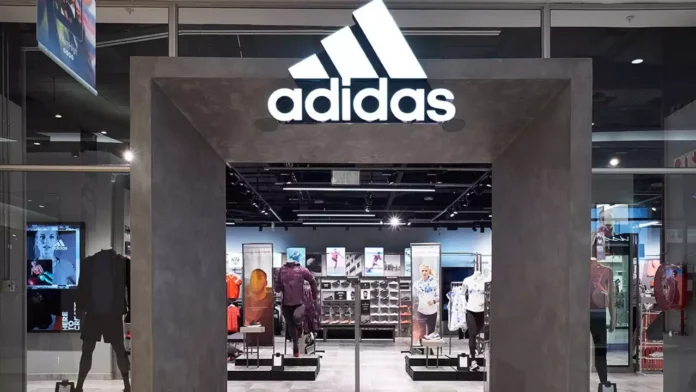
Adidas is establishing its first and only global capacity centre (GCC) in Asia outside China, specifically in Chennai, to concentrate on ‘key processes,’ as per sources familiar with the developments.
The decision by the prominent athletic footwear and apparel giant underscores the ongoing surge of multinational corporations investing significantly in India to establish their Global Capacity Centers (GCCs) and leverage the abundant software skills available in the country.
The German company, based in Herzogenaurach, Bavaria, will establish its Global Business Services (GBS) hub, with Akhil Kapoor at the helm of operations. According to Kapoor’s LinkedIn profile, he holds the position of Vice President – GBS Global Procurement and serves as the Head of GBS India, with Chennai listed as his location.
“Under his leadership, the hub will play a crucial role in key processes such as source-to-pay (S2P), financial planning & analysis (FP&A), invoice-to-cash (I2C), and record-to-report (R2R),” one source said on the condition of anonymity.
Adidas Anticipates Growth:
This person added that Adidas anticipates significant growth in its Chennai center and is planning to add ‘high-quality resources’ over the next three to five years.
“The Chennai hub has been designated as the Global Hub, seamlessly integrating with Adidas’ existing hubs in Porto (Portugal), Dalian (China), Bogota (Columbia), and North America to cater to the company’s global operations,” the person said.
As of the press time, queries directed to Adidas have gone unanswered.
Tamil Nadu Industries Minister TRB Rajaa said that Chennai is establishing itself as the ‘premier choice’ for Global Capacity Centers (GCCs) and research & development centers in India.
“We are leveraging our longstanding reputation as a knowledge hub and manufacturing powerhouse, as this foundation has been instrumental in showcasing our talent pool’s capabilities, earning the trust of existing and potential investors. This trend is particularly evident in the footwear sector, where our state already employs a significant number of women, and now, leading footwear brands are considering Chennai for their GCCs,” he said.
Adidas maintains a corporate office in Gurgaon, and the Chennai facility will be their first Global Capacity Centre (GCC) outside of China in Asia, as clarified by sources.
“Marquee brands in the sports brands space setting up GCCs is a significant development,” Lalit Ahuja, founder of ANSR said. “Brands like Nike and Lululemon which dabble in the same space already have their GCCs in India and typically, the size of such GCCs varies from employing 100 to 2000 people.”
The establishment of the Global Capacity Centre (GCC) by the world’s second-largest sporting goods manufacturer in Chennai is seen as a significant uplift for Tamil Nadu’s growing GCC ecosystem. This sports brand is now part of a group of global companies, including UPS, Hitachi Energy, ChampionX, JGC, Ashley, FleetCor, Sagent, and Udemy, which have recently chosen Tamil Nadu as the location for their first centers in India.
Ramkumar Ramamoorthy, a partner with Catalincs, said, “GCCs are embracing Chennai for specialized skills at the intersection of technology and domain, and for growing at scale.”
“From what started as the hub for GCCs in the BFSI industry, Chennai today boasts of a diversified canvas across manufacturing, health sciences, telecommunications, logistics, energy and retail,” he added.
He mentioned that in logistics, four of the largest container shipping companies—MSC, Maersk, CMA-CGM, and Hapag Lloyd—and in retail, the largest brick-and-mortar and online giants, Walmart and Amazon, have their centers in Chennai.
“Just like in traditional IT services, where several majors have their largest global operations here, we are beginning to see GCCs scale their Chennai presence quite rapidly,” Ramamoorthy said.
According to a recent report by Colliers, Chennai witnessed a remarkable gross office absorption of 10.5 million square feet in CY23, reflecting a substantial 131% growth compared to CY22.
“When a company decides to set up a GCC, it is formalizing that whole construct and proceeding in a focused manner in terms of hiring resources that will work in the GCC to support the parent company from an IT, data and other functions perspective,” Ahuja of ANSR said.
He added that although a retail-focused Global Capacity Centre (GCC) might initially involve finance, procurement, and supply chain functions, it has the potential to progress up the value chain. This progression could include taking on tasks such as product development or the creation of e-commerce platforms, among other possibilities.
Adidas is currently engaged in active recruitment for these roles.
One such post around a month ago read, “We are building our innovation team at #AdidasGBSChennai. Join us and be part of #Adidas.”
This post was for positions such as Manager – Reporting and Performance Management, Senior Specialist – Data Engineer, Business Analyst – Continuous Improvement, and Senior Specialist – ServiceNow.
Kapoor also shared a hiring alert on LinkedIn nine months ago, indicating that the sports brand was seeking an individual to oversee their strategic supplier relationships.
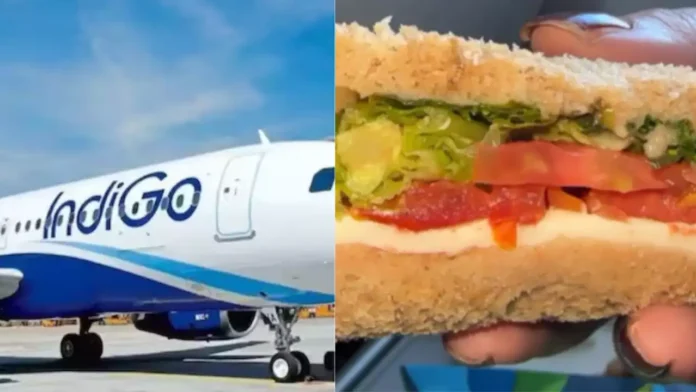
Food safety regulator FSSAI has issued a show cause notice to the country’s largest airline IndiGo for serving unsafe food to a passenger, days after a worm was found in a sandwich served onboard a flight.
On Wednesday, the airline said it has received the show cause notice and would respond as per protocol.
The incident happened onboard flight 6E 6107 from Delhi to Mumbai on December 29. The airline had apologised after the passenger shared a video on social media.
On January 2, the Food Safety and Standards Authority of India (FSSAI) directed the airline to explain why its license should not face suspension or cancellation. The show cause notice cited the violation of the Food Safety & Standards (FSS) Act for serving unsafe food to a passenger on the flight, prompting potential action.
Response Deadline Set by FSSAI:
The airline has been given seven days to respond to the notice.
An IndiGo spokesperson said the airline is in receipt of a “show cause notice from FSSAI with regard to a food item served on flight 6E 6107 from Delhi to Mumbai. We will be responding to the notice, as per protocol”.
Last week, a woman passenger Kushboo Gupta found a worm in the sandwich served onboard the flight. After she shared a video on social media, IndiGo had apologised and said the matter was under thorough examination.
The passenger had shared on Instagram a short video of the worm in the sandwich onboard the flight.
We use cookies to ensure that we give you the best experience on our website. If you continue to use this site we will assume that you are happy with it.