Tuesday, February 17, 2026
Home Blog Page 707

FMCG companies anticipate volume recovery in next fiscal despite lingering inflation, banking on strategic price cuts

0
Consumer goods
(Representative Image)

Prices of edible oil, a category that witnessed the most significant inflation in the consumer basket following the Covid pandemic, have decreased by 13-30% in the past year. However, prices of everyday groceries and household items, such as rice, soaps, and detergents, remain slightly higher compared to 2022, as per the latest price tracker report by Bizom. The report is based on data analysis derived from orders at nearly 7.5 million kirana stores.

During the past two years, the majority of consumer goods companies increased prices by over a quarter to counter escalating costs in areas such as raw materials, supply chain, and energy. The inflation in costs originated with the pandemic but was further intensified by Russia’s invasion of Ukraine. However, this inflationary trend has now subsided.

“The industry has already rolled back about two-thirds of the price hike taken last year, which was in the vicinity of 20-25%. The main reason for rollback is to negate the pressure on volume growth even as input cost inflation still persists, although to a lower extent,” said Mayank Shah, vice-president at Parle Products.

As per the Boston Consulting Group, the prices of household care products, foods, and beverages have more than doubled in the last decade, with a steeper increase observed post-Covid. In the past year, while the prices of rice, milk, soaps, and detergents saw a rise between 1.5% and 6%, categories such as shampoo, hair colour, and flour (atta) experienced a decrease of 1-3%, according to Bizom.

“Among essential products, we see prices in control for most across food and non-food categories except rice. The essential non-food products also are seeing a low single-digit rise in prices as input costs have dropped for these products, leading to a greater focus of brands on gaining market share by controlling prices,” said Akshay D’Souza, chief of growth and insights at Mobisy Technologies, which owns Bizom.

Over the past year, there has been a distinct decline in rural volume, attributed to inflation and unpredictable monsoons. The year-on-year FMCG volume growth for the September quarter stood at 7.2%. According to Kantar, during the June-September 2023 quarter, rural FMCG sales expansion recorded a growth of approximately 6% year-on-year, while urban sales volume witnessed an 8% increase.

City demand is spearheading the overall growth, propelled by the resilience of urban incomes. Companies anticipate a revival in rural volume, driven by a favourable monsoon. Typically, this leads to increased sales with a quarter’s lag.

Companies have indicated that they are reducing price tags, but the impact on sales will only become apparent in the next quarter, once the existing trade pipeline of higher-priced products is completely replenished.

“Large organised players have been squeezed a bit from both ends—regional and unbranded players in rural, and D2C (direct-to-consumer) and new-age players at the premium end. We feel that the market will start showing good volume growth by the next two quarters, fuelled by rural recovery and pricing action by the large players, which has already taken place. The economy is stable and inflation is getting under control,” stated Saugata Gupta, Managing Director at Marico, in a recent statement earlier this month.

Unilever also mentioned that India is currently experiencing deflation, especially in categories exposed to chemical-based raw materials. This has resulted in a disparity between value and volume, putting pressure on pricing growth.

“In the short-term, we are seeing some pressure on that. That will sustain in quarter four, probably a bit of Q1. But I feel that we are going to grow out of that pretty quickly,” Unilever’s chief executive officer Hein Schumacher said at a Barclays Fireside conference.

Advertisement

Brussels Labour Court rules Deliveroo bicycle couriers as employees, overturning previous self-employed classification

0
Deliveroo
Deliveroo

The Brussels Labour Court has mandated that Deliveroo Belgium must recognise its bicycle couriers for food delivery as employees.

The verdict overturns the prior court judgment that favoured the UK-based food delivery company’s classification of the couriers as self-employed.

The labour court’s verdict pertains to the case of 28 bicycle couriers and will potentially grant them additional benefits, reported Reuters.

In 2018, the bicycle couriers collaborated with the Brussels Labour Audit Office and the Belgian National Employment Office to initiate legal action against Deliveroo.

While the current ruling applies specifically to these couriers, it is anticipated to impact the status of other Belgian couriers employed by Deliveroo.

The Brussels labour court ruling said, “The terms of the employment relationship established between Deliveroo and the couriers are incompatible with the qualification of an independent employment relationship and lead to the conclusion that this relationship must be considered as an employee relationship and therefore should be reclassified.”

Following the court’s decision, the company has conveyed its intention to appeal to the Belgian Court of Cassation.

Should the judgment stand, the impacted couriers are anticipated to secure access to employee benefits such as sick leave, a stable salary, and paid vacation.

It conveyed its disappointment through an email, stating, “Because it does not take into account how our model works.”

“We provide flexible work, and this is highly appreciated by the riders that work with our platform in Belgium.”

In September this year, Deliveroo, Uber Eats, and Just Eat entered into a charter with the Transport for London authority.

The charter is anticipated to improve safety for motorcycle couriers and other road users in London.

Advertisement

Renowned Chef Bill Granger passes away at 54, leaving a culinary legacy

0
Bill Granger

Bill Granger, the cherished chef renowned for the acclaimed Bills cafes, passed away on Christmas Day at the age of 54.

The chef passed away in a London hospital, surrounded by family, after a brief struggle with cancer.

The family conveyed the heartbreaking news through Bill Granger’s Instagram account. “It is with great sadness that the family of Bill Granger announce he has passed away on 25th December at the age of 54. A dedicated husband and father, Bill died peacefully in hospital with his wife Natalie Elliott and three daughters, Edie, Inès and Bunny, at his bedside in their adopted home of London.”

Chefs globally paid homage to the Australian icon. Renowned British celebrity chef and restaurateur Jamie Oliver extended his sincere condolences.

“This is devastating news, I’m so sad to hear this, what a guy he was …. a wonderful human, kind calm soul….I admired everything he represented in food I remember the first time I met him many moons ago he couldn’t have been nicer and his food so good …. Sending so much love to all his family.” Food writer and TV star Nigella Lawson also paid tribute, “I’m heartbroken to hear this. So cruel,” she commented.

The news hit deeply Down Under, affecting chefs who had worked with him or been inspired by him, sharing their shock and sadness. Australian chef Neil Perry paid tribute to the “passionate cook and writer” but also the “brilliant person, husband, and father” that he was.

“I still remember all those years ago visiting Bills and seeing an energetic cook scramble divine eggs in that little kitchen in Darlinghurst, the beginning of something very special.” Sean Moran from Sean’s in Bondi commented. “Way too soon. What a class act you were Bill. Thank you for everything you have done to put Australian food on a global stage. You will be greatly missed.”

Born in Melbourne in 1969, Bill Granger initially pursued studies in art and architecture at university. However, at the age of just 24, he chose to leave his academic path and opened his first cafe, Bills, in Darlinghurst. The cafe achieved immediate success, propelling Bill to fame as Australia’s ‘King of Breakfast.’ His name has since become synonymous with his iconic dishes, including fluffy ricotta hotcakes with honeycomb butter, sweetcorn fritters with avocado salsa, and, of course, silky scrambled eggs.

His casual cooking style spurred the growth of casual and communal eating, both in Australia and around the world.

Bill and his wife, Natalie Elliot, are the driving force behind 15 cafes and restaurants globally, featuring four Bills cafes in Sydney and other venues situated in London, Tokyo, Osaka, Fukuoka, and Seoul. His 14 cookbooks achieved best-seller status, and numerous young Australians honed their culinary skills with a cherished copy of Bills Food or Simply Bill by their side.

In January 2023, he was honoured with the Medal of the Order of Australia for his contributions to the tourism and hospitality sector.

Bill Granger is survived by his wife, Natalie Elliott, and their three daughters, Edie, Inès, and Bunny.

Advertisement

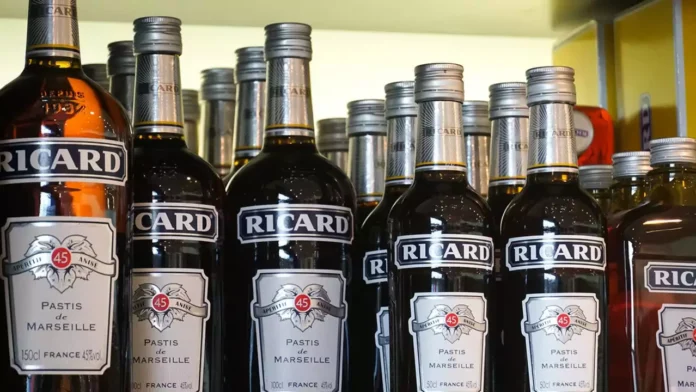
Delhi govt cracks down on illicit liquor serving at events, mandates advance registration for P-10 licences

0
Liquor
Liquor

Following complaints about the illicit serving of liquor at banquet halls, farmhouses, and venues hosting events, parties, and wedding functions without obtaining the mandatory temporary P-10 licence, the Delhi government has directed the operators of such premises to register in advance with the excise department.

In a recent directive, the deputy commissioner (excise) mentioned that online registration, without any payment, will begin on December 25. “In case any excise violation is found on the premises, it may be debarred for at least three months from applying for P-10 permits in the first case,” the order stated. “In case of repeat violation, the premises would be debarred for one year.”

Temporary licences, referred to as P-10 licences, are intended for individuals to serve liquor at private parties. They can be acquired by paying INR 10,000, except for motels, banquet halls, and farmhouses, where the fee is INR 15,000.

A senior official stated that the enforcement team carried out random inspections at venues hosting weddings, related events, and private parties. Penalties were imposed on the host if alcoholic beverages were served without the required permit.

According to the data, 8,237 P-10 licences were granted during the five months of the festival and wedding season, spanning from October 1 to February 28 in the fiscal year 2022-23. In contrast, only 5,353 permits were issued in the seven months from March 1 to September 30 this year. During the festival season in October and November this year, only 1,716 P-10 licences were issued.

Officials mentioned that a large number of events, including those during Christmas, New Year, and wedding-related functions, took place during this period. However, only a few of them obtained the temporary licence.

In November, the excise department reissued instructions to the city’s restaurants, prohibiting them from applying for temporary licences to serve liquor.

Continue Exploring: Delhi govt bars independent restaurants from using P-10 liquor permits

While 935 hotels, clubs, and restaurants possess the excise licence to serve liquor, the count of standalone restaurants eligible to obtain a liquor licence is 5,374.

“These restaurants use the P-10 licence to buy stock from retailers instead of having a regular excise licence because of the higher fee as compared to the charges for the temporary permit. This leads to excise revenue loss to the state exchequer,” said an official.

“We also lose out on additional excise duty, which is up to 20 percent of the price of a bottle, on the sale of each bottle of alcohol sold to a restaurant with a regular licence,” the official added.

Advertisement

Analysts bullish on Mufti menswear IPO: Robust financials and strong brand image fuel optimism

0
Mufti

The much-anticipated debut of Credo Brands Marketing (Mufti Menswear) is set to take place on December 27. Analysts foresee substantial double-digit gains upon listing, pointing to the healthy financial performance in recent years, a strong brand image, robust subscription numbers, reasonable valuations, and positive market conditions.

The INR 550-crore public offering has garnered strong interest from investors, being subscribed 51.85 times between December 19-21. Qualified institutional buyers (QIBs) appear notably optimistic compared to other investors, oversubscribing their allocated portion by 104.95 times. In parallel, the allotted quota for high net worth individuals (HNIs) witnessed a subscription of 55.52 times, while that of retail investors reached 19.94 times.

Shares of the Mufti IPO have garnered substantial interest in the grey market, reportedly trading at approximately 35-40 percent above the issue price of INR 280 per share, as per anonymous analysts. The grey market serves as an unofficial platform where IPO shares can be bought and sold until the official listing.

Dhruv Mudaraddi, a research analyst at StoxBox, anticipates the stock to debut with a premium of about 45 percent over the issue price of INR 280 per share.

He is of the opinion that Credo’s robust listing performance can be credited to its unique combination of strengths.

“The company’s qualitative advantages include a strong brand equity spanning a diverse product range, safeguarding against business model risks. Operating on a scalable and asset-light model, MUFTI demonstrates flexibility for expansion with minimal capital investments,” Mudaraddi said.

Furthermore, the brand’s steadfast position as a trailblazer in men’s fashion and its robust in-house design capabilities create significant entry barriers, given that the company outsources all its products post-designing and does not engage in manufacturing.

From a financial perspective, Mufti has disclosed a commendable Compound Annual Growth Rate (CAGR) of approximately 42 percent for revenue from FY21 to FY23. The net profit has doubled compared to the preceding year, showcasing a substantial increase compared to FY21. Additionally, the EBITDA witnessed a CAGR of 84 percent during this period, demonstrating robust margin performance.

Saral Seth, Vice President of Institutional Equities, and Jainam Shah, Research Associate at Indsec Securities, believe that Credo could be listed at INR 350, representing a 25 percent increase from the issue price.

At the higher price bracket of INR 280 per share, the company is being valued at a Price/Earnings (P/E) ratio of 23.22x, resulting in a market capitalization of INR 1,800.4 crore post the issuance of equity shares. The return on net worth stands at 29.98 percent.

Indsec holds the view that the valuation represents a 35 percent discount compared to its peers.

“The strong earnings growth makes the apparel maker an attractive investment thesis.”

Credo Brands Marketing, providing a diverse range of products encompassing shirts, t-shirts, jeans, and chinos to address year-round clothing requirements, maintains a network of 1,807 touchpoints, extending its presence to 591 cities.

The Mufti Menswear IPO solely consisted of an offer-for-sale issue, lacking any fresh issue component. Consequently, all the net issue proceeds were received by the selling shareholders.

The price band for the offer was between INR 266 and INR 280 per share.

Advertisement

Karigari unveils exquisite new venues in Punjabi Bagh, Dehradun, and Bengaluru

0
Karigari

A celebrated name in Indian gastronomy, Karigari Restaurant has announced the opening of its latest branches in Punjabi Bagh, Dehradun, and Bengaluru. Spearheading this initiative is Chef and culinary maestro Harpal Singh Sokhi, assuring a modern reinterpretation of classical Indian tastes.

The warm and welcoming atmosphere of these venues has been meticulously designed to offer diners an authentic culinary experience that pays homage to the rich tradition of Indian cuisine.

Sokhi expressed his happinessat the expansion, saying, “We are thrilled to bring the Karigari experience to the thriving communities of Punjabi Bagh, Dehradun, and Bangalore.” Our culinary philosophy is around the inventiveness of Indian flavors, and we are eager to share our passion with fellow food enthusiasts.”

By adding additional locations in Dubai and London, Karigari is not only growing domestically but also leaving its imprint abroad. This expansion offers a new gastronomic experience in addition to signifying the brand’s growing reach.

The innovative methods, dishes, and desserts enhancing the dining experience will be showcased in the new outlets, featuring a blend of classic and modern elements.

Regarding the worldwide expansion, Chef Sokhi stated, “We’re not done yet. We aim to spread the Karigari spirit to a global audience, showcasing the authentic flavours and inventive cooking that define Indian cuisine. Our global culinary journey doesn’t stop in London or Dubai.”

Advertisement

Bata enhances customer experience through Easyrewardz’s Zence CRM for ‘BataClub’

0
Bata
Bata

Global footwear brand Bata has joined forces with the comprehensive customer lifecycle management (CLM) platform Easyrewardz to utilize the latter’s ‘Zence’ customer relationship management (CRM) solution stack for its loyalty programme, ‘BataClub.’

The collaboration enables the monitoring of customer visits, improvement of service experiences, and the promotion of loyalty through tailored offerings and delightful services. It also incorporates diverse features into Bata to amplify customer engagement, employing LPaaS to create personalized loyalty journeys and encouraging active participation via WhatsApp.

“Our CRM and loyalty solutions seamlessly manage the entire customer journey, from initial acquisition to continued engagement and retention offering an optimal shopping experience for Bata’s customers,” said Soumya Chatterjee, chief executive officer of Easyrewardz.

“With the Zence CRM stack, we’ve equipped Bata International with advanced capabilities, providing a unified view of each customer across multiple locations. This enables personalised and attentive service, ensuring that every interaction with the brand is tailored to meet the unique preferences and expectations of Bata’s diverse customer base,” she added.

Easyrewardz has additionally assisted in establishing a microsite for Bata. This microsite empowers customers by providing access to personalised dashboards, the capability to refer friends and family, and the opportunity to unlock rewards.

“Bata and Easyrewardz are thrilled with the introduction of the “BataClub” program. This initiative was designed keeping in mind the values on which Bata was founded over 130 years ago,” said Geoffroy Berthon, global customer experience director at Bata.

“As a global group, we believe in respecting different cultures, and thus we have a unique set of customers with diverse needs and expectations. We are delighted to have chosen Easyrewardz as our partner in this journey to improve Customer lifecycle management to delight and reward customers,” he added.

Bata Corporation, a manufacturer and retailer of footwear, apparel, and accessories, was established in 1894 by Tomas Bata. The company, headquartered in Switzerland, was incorporated in India as Bata India Ltd in 1931.

Today, the Bata Group has more than 32,000 employees, 21 production facilities, and over 5,300 stores in more than 70 countries across the globe. The company operates over 1,700 COCO (company-owned, company-operated) and franchise stores in India.

Advertisement

Les Petits unveils Lapin House in India, redefining children’s fashion landscape

0
Lapin House

In a festive celebration of Christmas, Les Petits, the luxury fashion brand for kids, has introduced Lapin House in India. The collection, exclusively available on the Les Petits platform, beautifully captures the spirit of the season, presenting whimsical fashion that makes a statement.

With a fusion of luxury, comfort, and dependability, Lapin House delves into the designer’s ingenuity with exclusive tartan, check, and floral prints, complemented by a range of stripes. The collection leaves a lasting impression, empowering parents to inject playful elements into their children’s wardrobes.

Showcasing subtle tones of pink and green alongside vibrant shades of red and maroon, the collection presents a diverse colour palette to complement the varied moods of the season. Meticulous attention to detail takes precedence as the brand adopts aesthetics in harmony with the latest trends. The intricately crafted pieces seamlessly blend classic appeal with contemporary trends, elevating the charm of haute couture. Encompassing every facet of children’s fashion, the garments are woven from the finest fabrics, emphasising sustainability and durability while embracing the latest fashion trends.

Swati Saraf, President, Les Petits said, “Winter is always considered to be a dull season. Parents generally struggle to find the right set of attire to ace the fashion of children while keeping them warm. To cater to the diverse needs of parents, we added Lapin House to our offering to amplify the charm of the children with the latest fashion. Disseminating a playful twist to the overall demeanor of the kids, the brand also exudes elegance for offering complete packaging to the kidswear fashion.”

Advertisement

Zoca Diner opens in Karol Bagh, unleashing a fusion of flavours and vibrant ambiance

0
Zoca Diner

Zoca Diner, well-known for its vegetarian delights, proudly opens its expansive outlet in the affluent district of Karol Bagh. Encompassing 1200 sq. ft. and catering to 60 patrons, the diner establishes itself as a culinary haven for food enthusiasts in search of an extraordinary dining experience.

The gastronomic scene in West Delhi is set to undergo a metamorphosis with Zoca Diner, showcasing a thoughtfully curated menu by the esteemed Chef Eashan Kaul. From the tempting Vegetable Flautas and Makhni Momos to the indulgent Creamy Pasta and inventive Blueberry Bubble Tea, Zoca Diner assures a varied culinary journey for a spectrum of palates.

Zoca Diner’s dedication to affordability, combined with Chef Eashan Kaul’s culinary proficiency, guarantees a harmonious blend of quality and cost. The diner’s welcoming ambiance, enhanced by live performances and captivating music, establishes it as the perfect setting for gatherings with family, friends, or colleagues. Through its fusion of culinary artistry and a convivial atmosphere, Zoca Diner aspires to be the favoured destination for relaxation and socialising in the heart of Karol Bagh.

Advertisement

RBZ Jewellers prepares for market debut with modest listing gains expected

0
RBZ Jewellers

Ahmedabad-based RBZ Jewellers is gearing up for its market debut on December 26. However, preliminary signals from the grey market hint at modest listing gains for the company, as the stock holds a premium of INR 5. This suggests a nominal 5 percent increase upon listing.

The firm’s initial public offering (IPO) attracted significant attention from investors, recording a subscription rate of 16.86. Retail investors displayed the highest enthusiasm, oversubscribing their allocated quota by 24.74 times. High net-worth individuals subscribed 9.27 times the reserved portion, while qualified institutional buyers opted for 13.43 times their allocated shares.

The firm’s initial public offering (IPO) attracted significant attention from investors, recording a subscription rate of 16.86. Retail investors displayed the highest enthusiasm, oversubscribing their allocated quota by 24.74 times. High net-worth individuals subscribed 9.27 times the reserved portion, while qualified institutional buyers opted for 13.43 times their allocated shares.

“We expect a decent listing for RBZ Jewellers’ issue. We anticipate the IPO to open at a premium of around 5 percent to the issue price of Rs 100 apiece,” said Prathamesh Masdekar, Research Analyst at StoxBox.

Masdekar emphasized the firm’s clientele in the wholesale sector, encompassing esteemed national, regional, and local family jewellers spanning 20 states and 72 cities in India. He commends the company’s distinctive approach in its business model, exercising full control over the entire value chain.

Furthermore, Masdekar advises investors who have been allotted shares to retain them with a medium to long-term perspective.

Nevertheless, apprehensions regarding the company’s limited disclosure to credit rating agencies such as Brickwork and CRISIL in recent years underscore governance issues. These concerns may have also impacted the demand the company experienced in the grey market.

Regarding financials, the company achieved a 55 percent year-on-year surge in net profit, reaching INR 22.33 crore for the fiscal year 2023, supported by robust operational performance.

During the corresponding period, the revenue reached INR 288 crore, marking a 14.2 percent increase from the preceding fiscal year. Simultaneously, the EBITDA experienced a significant rise, surging by 41 percent to INR 37.8 crore. The operating margin also saw a substantial expansion, increasing by 249 basis points on a yearly basis to 13.11 percent in the same period.

The net profit for the initial six months concluding in September of FY24 amounted to INR 12.09 crore, with revenue totaling INR 125.5 crore.

Narendra Solanki, the head of fundamental research at Anand Rathi Shares and Stock Brokers, is of the opinion that at the higher end of its price range, which is INR 95-100, the company is reasonably valued with a price-to-earnings (P/E) ratio of 17.9X and a market capitalization of INR 400 crore post its listing.

Nevertheless, amid existing concerns, Solanki also recommends that investors retain their allocated shares in the company based on their risk appetite.

The jewellery manufacturer intends to utilise the new funds primarily to meet working capital needs amounting to INR 80.75 crore. The residual funds will be allocated for general corporate purposes, not exceeding 25 percent of the gross proceeds.

Advertisement