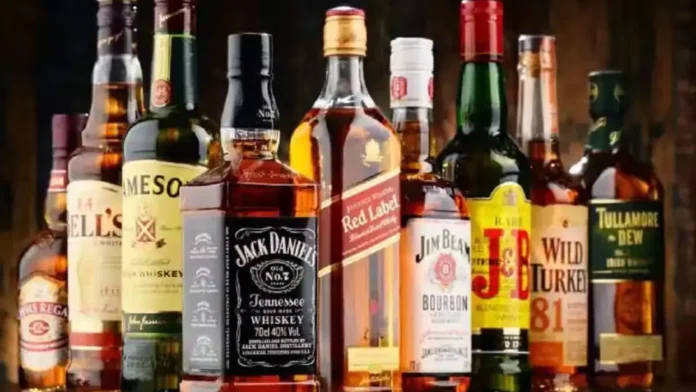
The Uttar Pradesh Government has announced the closure of liquor outlets across the state, including cities such as Noida and Greater Noida, on January 22 in honor of the ‘Pran Pratishtha’ ceremony of the Ram Temple in Ayodhya. Additionally, Chief Minister Yogi Adityanath has instructed the suspension of classes in all educational institutions statewide on that particular day.
In addition to this, two more dry days are scheduled for January. On January 14, liquor stores in the city will be closed to mark the celebration of Makar Sankranti, and on January 26, they will remain shut in observance of Republic Day.
A dry day signifies the prohibition of alcohol sales. As the sale of liquor falls under the jurisdiction of individual states, regulations regarding prohibition vary throughout the country.
India observes national dry days on significant occasions such as Republic Day (January 26), Independence Day (August 15), and Gandhi Jayanti (October 2). Additionally, there are restricted dry days that supplement the national dry days and can vary from state to state. These usually coincide with religious holidays and election days.
State-level dry days, such as the one declared on January 22, are specific to particular states and are marked on specific occasions. In some instances, states may enforce these dry days on the day of a state election.
Barista Coffee, the homegrown coffee chain, marked a significant milestone with the inauguration of its latest branch in New Delhi, bringing the total number of stores to 400, as announced on the company’s social media platform on Tuesday.
Presently, its coffee shops can be found in over 120 cities spanning India, Maldives, and Sri Lanka, establishing itself as the foremost coffee chain in the region with a network of more than 30 outlets.
“As we celebrate 23 years of our legacy, our 400th cafe stands as a testament to our incredible journey. From that first pour in 2000, shaping India’s early café culture, to now spreading warmth in over 120 cities, we’ve crafted more than just a cup of coffee,” said Barista Coffee in a LinkedIn post.
The 400th store is located in close proximity to the Rajiv Chowk Metro Station in New Delhi.
“Our journey has been marked by growth, innovation, and dedication to meeting the needs of our guests. With the opening of this 400th store, we are taking a giant leap forward in reaching more communities and making our products accessible to everyone,” stated Rajat Agrawal, chief executive officer of Barista Coffee on social media.
Barista Coffee’s Growth Vision: Targeting 500 Stores by 2024
According to Agrawal, the coffee retailer has set its sights on reaching the 500-store milestone by 2024.
Established in 2000 under the name Barista Coffee Company Ltd., the brand started its venture with the goal of delivering an international coffee experience to its customers.
The coffee chain’s network revenue for fiscal year (FY) 2023 stands at approximately INR 190 crore, according to Agarwal. Looking ahead to the end of FY24, the goal is to surpass the INR 250 crore mark, as outlined by Agarwal.
Zomato, the online food delivery platform, launched a new feature on Wednesday called “daily payouts” to offer support to its emerging restaurant partners.
Currently, the feature is accessible for restaurant partners managing 100 orders or fewer per month, as per the company’s announcement.
“Our discussions with various restaurant partners highlighted the financial challenges smaller eateries face, using the traditional weekly payout system. This feature is designed to address this critical need for more frequent access to earnings,” Zomato said in a blogpost.
The key features of daily payouts include no additional charges, improved cash flow, and increased flexibility in administration.
The ‘no extra cost’ feature allows for a seamless transition from weekly to daily payouts without additional fees; the ‘improved cash flow‘ facilitates daily settlement of transactions based on sales from three days prior, and the ‘flexibility in management’ provides a smooth switch between daily and weekly payouts through the Zomato Restaurant Partner App.
Availing Zomato’s Daily Payout Option:
Interested restaurant partners can avail themselves of the daily payout option by navigating to the Payout section in the Zomato Restaurant Partner App.
Meanwhile, Zomato has raised its mandatory platform fee from INR 3 to INR 4 per order in key markets. The updated rates came into effect on January 1.
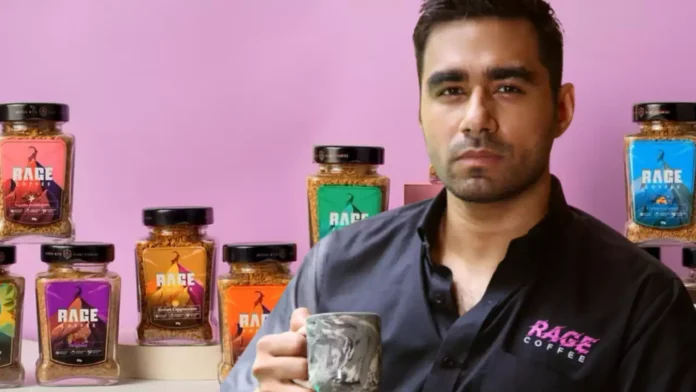
Bharat Sethi, the Founder and CEO of Rage Coffee, announced that the D2C coffee startup achieved INR 100 Crore in cumulative brand sales in December 2023.
Sethi shared the news on LinkedIn, stating, “I’m delighted to share that a new age coffee company that most wrote off before it started and many thought as taking on a battle ‘not worth fighting’ hit INR 100 Cr in cumulative brand sales in Dec 2023 towards the end of its 4th year of operations.”
“We achieved this figure before the beginning of our 5th year and let me tell you, a lot of it is mad hustle, execution capabilities, support of our investors and partners who’ve backed us with tremendous belief in us and most important our customers and team,” he added.
Sethi said that the startup successfully overcame several challenges to reach this milestone despite having only 5-7 SKUs.
More than 3.2 million customers have experienced the brand’s diverse range of products, spanning sachets to jars. This exposure occurred both directly and through collaborations with Horeca partners, with a substantial 80% engagement observed in the past 24 months, according to Sethi. Emphasizing the brand’s versatility, the CEO asserted that the coffee brand has successfully reached customers through a combination of online and offline channels, encompassing hyperlocal platforms and marketplaces. Notably, there is no reliance on a singular channel for customer acquisition.
Established in 2019, Rage Coffee is one of the world’s first plant-based vitamin coffee brands. The startup claims to use handpicked beans from Ethiopian and Indian plantations.
Beyond Instant Coffee: Diversification of Rage Coffee Products
It has diversified beyond instant coffee, now offering products such as cold coffee brew bags, frothers, and other merchandise. In 2022, the brand entered the realm of snack bars and cookies, introducing gluten-free snacks free of preservatives. Additionally, the company established a 30,000-square-foot manufacturing unit in Gurugram.
Rage Coffee experienced a revenue surge, achieving over a fivefold increase to INR 23.5 Cr in the fiscal year 2022, compared to INR 4.5 Cr in the fiscal year 2021.
Rage Coffee has set a revenue goal of INR 500 Cr for the year 2025.
The startup has secured investments from notable backers, including Sixth Sense Ventures, Refex Capital, and 9Unicorns.
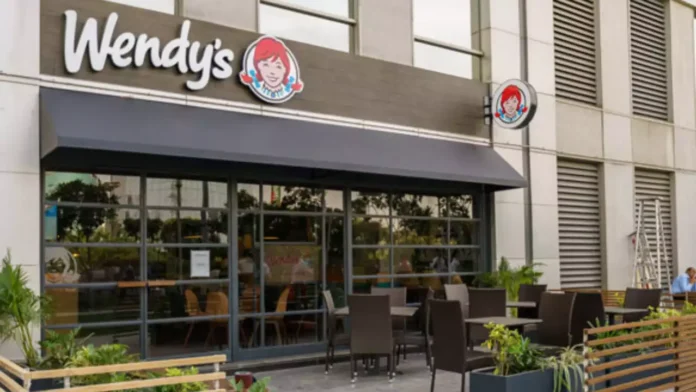
Rebel Foods, the world’s largest internet restaurant brand and the master franchise holder for Wendy’s in India, has just unveiled Wendy’s first airport dine-in store at Kempegowda International Airport in Bengaluru. In collaboration with Travel Food Services, this new establishment marks Wendy’s entry into the Indian airport retail sector.
The cloud kitchen enterprise exclusively manages Wendy’s cloud kitchen (delivery-only) and conventional restaurants throughout India, further solidifying its dedication to expanding the brand’s reach across various touchpoints. Presently, Wendy’s is established in over 100 locations across more than 20 cities in India, with a goal to extend its presence to 250+ locations within the next decade. This expansion is in response to Karnataka emerging as the second-largest market for Wendy’s in India, closely following New Delhi.
The newly inaugurated store is thoughtfully designed to cater to both take-away and dine-in patrons, operating 24×7 to accommodate the diverse schedules of travelers passing through the airport.
The new store will feature self-ordering kiosks to ensure a seamless and personalized experience. Patrons can indulge in Wendy’s signature and flavor-fresh range, along with globally renowned marquee products, including the iconic Frosty. The new store will also enable passengers to enjoy burgers on the go with easy takeaway options.
Ankush Grover, Co-founder and CEO – India and MENA, Rebel Foods, said “As we mark the launch of Wendy’s first airport dine-in store at Kempegowda International Airport in Bengaluru, we’re not just stepping into the Indian airport retail sector; we’re entering a new era of culinary convenience. Over the last few years, we have worked extensively on making Wendy’s accessible to wider audiences PAN-India, and the opening of this first store at the airport is a milestone in that journey. Our focus is on bringing the same taste and experience to 30+ million travellers who pass through Kempegowda International Airport, as Wendy’s is known worldwide”
Rebel Foods’ Digital Approach to Enhancing Wendy’s Brand
Rebel will continue to enhance the brand’s presence in India by leveraging digital expertise in delivery, automation, and innovation. Since its debut in India in 2020, Wendy’s has adeptly adapted its menu to cater to local tastes and preferences. This includes introducing favorites like the Spicy Aloo Crunch Burger, their crispiest fries, and the recently launched Flavor Fresh burger range, featuring distinctive and refreshing options such as the Firebolt Tandoori burger, Lord Cheesynator, and Nachoburg.
Cheesiano Group, a prominent player in the Quick Service Restaurant (QSR) sector, has achieved a significant milestone with over 10,000 repeated customers in the month of December 2023. This accomplishment stands as a testament to Cheesiano’s commitment to delivering fine taste, promising the best quality experiences, and building a loyal customer base.
Cheesiano Group: 3 Brands, 10 Crores in Sales
Since its establishment, Cheesiano Group has undergone extraordinary expansion, introducing three thriving brands and attaining a monthly gross sales figure surpassing 10 crores. Over the last 15 months, there has been an impressive 4x growth in both order volume and sales, highlighting the brand’s widespread popularity and strong acceptance among customers.
Niraj Bora, Co-Founder of Cheesiano Group, said, “We are thrilled to reach this milestone, and it reflects the trust and loyalty our customers place in us. Our continued focus on quality, innovation, and customer satisfaction has been the driving force behind Cheesiano’s success.”
The group remains committed to providing delectable culinary delights and aims to further elevate the customer experience in the coming years.
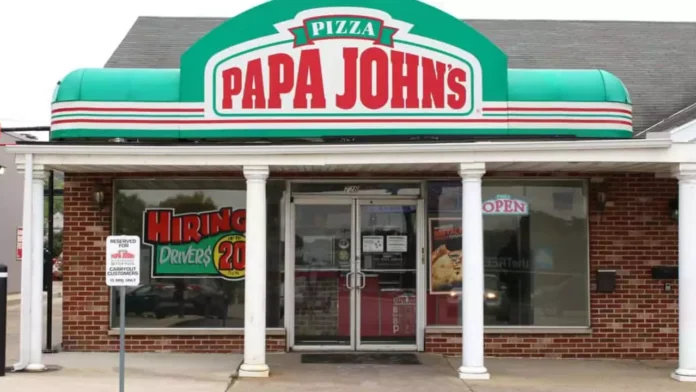
Papa John’s, a popular high street pizza chain, is gearing up to shutter several locations across the UK this year due to rising costs.
The global pizza chain, with 524 establishments in the UK, is reportedly set to close “dozens” of branches in the country, as indicated by reports from the Sun. According to statements from Papa John’s to investors, the company foresees “additional strategic restaurant closures of low-performing restaurants” as part of an effort to enhance its profitability.
Nevertheless, according to an insider, the closures might impact as many as 100 Papa John’s locations. Papa John’s has chosen not to disclose the precise number of stores that could be closed in the coming year.
Papa John’s Response: Operational Optimization Plan
A spokesperson for Papa John’s said, “As we work to fully optimize our restaurant operations and improve profitability across the market, we will continue evaluating the growth potential of our restaurants. This includes working collaboratively with our franchisees to strategically close low-performing locations when necessary, as well as continuing to invest in the right locations for the benefit of our customers. We will work to fully support team members through any transitions.”
Nevertheless, the spokesperson stated that “no definitive decisions have been reached at this point” regarding which locations, or how many, might eventually close.
Papa John’s stands as the second-largest pizza takeaway brand in the UK, trailing behind Domino’s. With 118 branches under its ownership and 406 franchise stores, Papa John’s made its debut in Essex in 1999, reaching a milestone in 2013 with the opening of its 200th UK store. Over the past year, Papa John closed 22 branches, but concurrently, it inaugurated 15 new sites.
It comes on the heels of the announcement that Revolution bars will be closing eight of their branches, a response to the financial challenges faced by their young target audience amid the cost-of-living crisis. The group has categorized these specific locations as “unprofitable.”
The company announced the closure of Revolution sites in Beaconsfield, Derby, Reading, St Peters Liverpool, and Wilmslow. Efforts are underway to redeploy staff from these locations. Additionally, two Revolucion de Cuba sites in Sheffield and Southampton, along with the Playhouse in Newcastle-Under-Lyme, will also be closed. The exact date of the closures has not been confirmed.
Research conducted by scientists at Columbia University has unveiled a startling revelation: an average liter of bottled water harbors approximately 240,000 detectable plastic fragments. This staggering amount, 10-100 times higher than previous estimates, poses significant health risks by infiltrating organs and the bloodstream.
Due to their exceptionally small size, nanoplastics have the capability to bypass the intestines and lungs, gaining access to the bloodstream and, subsequently, reaching vital organs like the heart and brain. Their minute scale facilitates infiltration into individual cells and allows them to cross the placenta, exerting potential impacts on the developing bodies of unborn babies.
Study co-author Beizhan Yan said, “Previously, this was just a dark area, uncharted. Toxicity studies were just guessing what’s in there. This opens a window where we can look into a world that was not exposed to us before.”
Utilizing stimulated Raman scattering microscopy, a method co-invented by study co-author Wei Min, a biophysicist at Columbia, the research employed two simultaneous lasers to induce resonance in specific molecules. The study focused on seven prevalent plastics and implemented a data-driven algorithm to analyze the obtained results.
Microplastics Found in Popular Bottled Water Brands
Researchers examined plastic particle levels, as small as 100 nanometers, in three undisclosed popular bottled water brands in the United States. Each liter was found to contain between 110,000 to 370,000 plastic fragments, with 90% classified as nanoplastics and the remaining 10% as microplastics.
Microplastics are fragments ranging in size from five millimeters down to one micrometer, which is equivalent to one-millionth of a meter. To provide context, a human hair is approximately 70 micrometers across.
The experts not only pinpointed the seven distinct types of plastics but also recorded their shapes, potentially providing valuable insights for biomedical research.
Polyethylene terephthalate (PET), commonly employed in the production of water bottles, emerged as a prevalent plastic among those identified. The study indicated that PET might find its way into the water through bottle squeezing or exposure to heat, with particle release potentially influenced by cap handling.
The study further revealed that polyamide, a form of nylon, exceeded PET in prevalence, with this occurrence linked to plastic filters utilized in the water purification process before bottling. Additionally, the researchers identified other common plastics such as polystyrene, polyvinyl chloride, and polymethyl methacrylate, all of which have diverse applications in various industrial processes.
The study emphasized that the seven sought-after plastic types constituted only 10% of the nanoparticles identified in their samples. The remaining 90% remained unidentified, suggesting the potential presence of tens of millions of unknown nanoplastics per liter.
Min said, “There is a huge world of nanoplastics to be studied…it’s not size that matters. It’s the numbers, because the smaller things are, the more easily they can get inside us.”
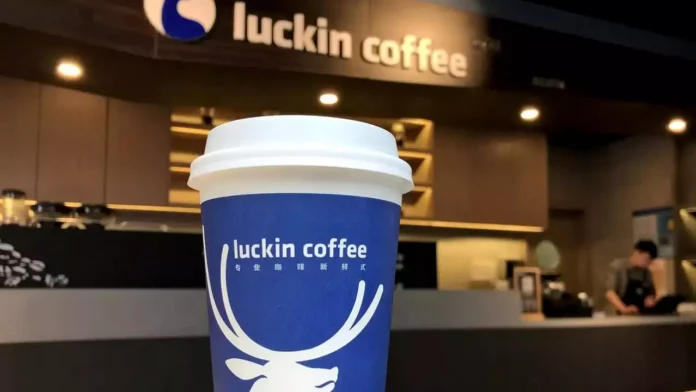
Luckin Coffee, the prominent Chinese coffee company, has entered into a multi-year collaboration with the Australian Open, establishing itself as the official coffee partner for China and South East Asia.
As the Official Coffee Partner of the Australian Open, Luckin Coffee will be joining numerous tennis enthusiasts over the next two years to witness the exciting moments of the matches.
Luckin Coffee’s Co-Branded Products and Giveaways:
Additionally, the brand intends to launch co-branded peripherals, including coffee cups and paper bags, inspired by the Australian Open theme in Singapore and China. Furthermore, there are plans for giveaways during the Australian Open 2024.
Luckin will also feature virtual signage at the Australian Open in both China and South East Asia.
“As one of the largest coffee chain brands in China, the partnership between Luckin Coffee and the Australian Open will bring great synergy as both are leading brands representing healthy, high-quality lifestyles and will help to promote our coffee to the world,” Yang Fei, co-founder and Chief Growth Officer of Luckin Coffee.
With a presence in over 300 cities across China, Luckin Coffee boasts a network of 13,000 outlets. Having expanded to Singapore in 2023, the brand currently manages 30 outlets in the market.
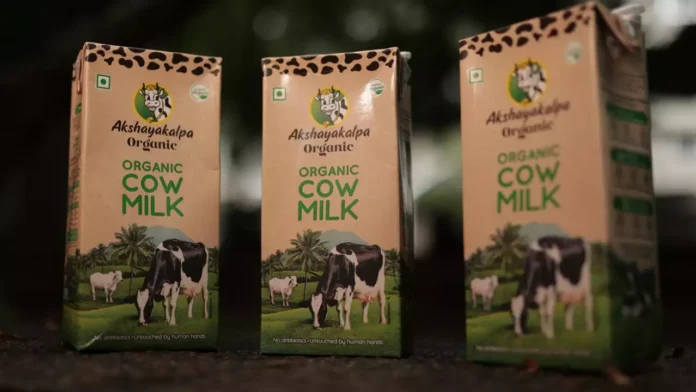
Akshayakalpa Organic, a startup specializing in organic dairy products, secured INR 100 crore (approximately $12 million) in its Series C funding round, with A91 Partners leading the investment. This funding marks a significant milestone for the Bengaluru-based company, as it comes after a hiatus of 16 months.
According to regulatory filings obtained from the Registrar of Companies (RoC), Akshayakalpa Organic’s board has approved a special resolution to raise INR 100 crore or $12 million by issuing 41,35,010 Series C CCPS at an issue price of INR 241.84 each.
In the funding round, A91 Partners took the lead by contributing INR 64.8 crore, while existing investors Rainmatter Capital and British International Investment, the UK’s development financial division, injected INR 18.6 crore and INR 16.6 crore respectively.
Established by GNS Reddy and Shashi Kumar, Akshayakalpa asserts that it delivers organic milk and associated products to more than 60,000 customers every day in Bengaluru, Hyderabad, and Chennai through its direct delivery platform. The company’s offerings are accessible at 2,000 retail outlets and on all major e-commerce and quick commerce platforms.
Valuation and Shareholding of Akshayakalpa Organic
According to TheKredible estimates, the company has been valued at around INR 590 crore or $72 million post-allotment.
This tranche appears to be a part of a larger round, and the shareholding pattern may vary after the completion of Series C.
The company also passed a separate resolution to increase the size of the ESOP pool by adding fresh options worth INR 5 crore. According to TheKredible estimates, the total ESOP size of Akshayakalpa Organic, after adding fresh options, is worth INR 22.6 crore or $2.75 million.
Akshayakalpa is reportedly in discussions to raise $25 million in its Series C funding. Back in September 2022, the company successfully secured $15 million in a Series B round, with notable contributions from British International Investment, Rainmatter Foundation, and other investors. Interestingly, just last week, Country Delight, a key competitor and a prominent player in the D2C dairy sector, reportedly raised $20 million from both new and existing investors.
Akshayakalpa witnessed a substantial 66% increase in revenue from operations, reaching INR 191 crore in the fiscal year ending March 2023, compared to INR 115 crore in FY22. However, according to TheKredible, its losses also rose by 89% to INR 36 crore in FY23.
We use cookies to ensure that we give you the best experience on our website. If you continue to use this site we will assume that you are happy with it.