Wednesday, February 25, 2026
Home Blog Page 699

Best Rooftop Cafes to Visit in 2024 in Delhi

0
Rooftop cafe

Delhi, the heart of India, is more than a metropolis; it’s an adventure. As an added bonus, the rooftop cafés provide a breathtaking vantage point from which to take in the lively ambience. An array of alluring alternatives, promising breathtaking views and a memorable culinary adventure, will grace the city’s skyline and, most importantly, the delicious food that these rooftop cafes have to offer in 2024. If you search for rooftop cafes near me on Google, you will find a number of rooftop cafes around you. Whether you’re a resident or just travelling through, I highly recommend Majnu ka Tila and CP as two of the greatest-known places for rooftop cafes in Delhi. Here are some more great options.

Delhi’s vibrant rooftop cafes:

TOS – Take Off Scarlet 

While you and your partner enjoy delicious meals on the patio, a sensual romantic song plays in the background. This charming cottage-style rooftop cafe has a lot of outdoor seating and serves delectable dishes, including paneer tikka, Shanghai rolls, tofu burgers, and tandoori stuffed mushrooms. Additional services include valet parking, DJ nights, and live sports screenings. It is suggested for evenings of wine and dining with friends to let loose on weekends. 

Location – Punjabi Bagh Extension, New Delhi

The Sky High 

New Delhi’s Sky High offers a unique rooftop dining experience high above the city. Gourmets really must dine at this state-of-the-art establishment for its exquisite vistas. At The Sky High rooftop cafe, you’ll feel at home thanks to the modern design and tasteful decor. Exquisite tastes from throughout the world come together in this inventive cuisine, sure to satisfy even the most finicky diners. Whether you’re just hanging out with friends or planning a romantic dinner for two, the rooftop will add a touch of elegance to any occasion. Rather than being just a restaurant, The Sky High offers an opulent and unforgettable dining experience. Take a break from the ordinary at this rooftop refuge, where you can savour gourmet food and carefully selected beverages while gazing down at the breathtaking vistas of New Delhi. 

Location – Ansal Plaza, New Delhi

Out of the Box Courtyard 

Located in the heart of Connaught Place, the Out of the Box Courtyard redefines rooftop dining in Delhi. This rooftop cafe is a secret gem that creates a one-of-a-kind and inviting ambience by expertly fusing contemporary design with bohemian charm. Thanks to its large patio, contemporary furnishings, and vibrant colours, this space is perfect for escaping the city. Indulge your taste buds in a gastronomic extravaganza that spans the globe. Whether you’re in the mood for creative cocktails under the stars or mouthwatering dishes from their extensive menu, Out of the Box Courtyard will surely provide an amazing dining experience. Every visit to this rooftop sanctuary in Connaught Place is an enchanting culinary journey filled with surprises and delights—it’s more than just a restaurant. 

Location – Connaught Place, New Delhi

AMA Cafe 

With our attention now turned to Majnu ka Tila, the culturally diverse and bohemian AMA Cafe takes centre stage. Majnu ka Tila has a number of rooftop cafes. Sitting high above the busy streets of this Tibetan community, AMA Cafe provides an unforgettable cultural experience in addition to its delicious cuisine. 

From this rooftop, you may take in the colourful scenery of Majnu ka Tila. Because it serves a wide variety of cuisines, from traditional Tibetan cuisine to international favourites, AMA Cafe is a popular rooftop eatery in this unique neighbourhood. 

Location – Majnu ka Tila, New Delhi

The Grammar Room 

As we left the city centre, we came to The Grammar Room, tucked away in the Mehrauli region, a historical district. This rooftop cafe is a hidden treasure. It is the perfect example of how to blend modern style with classic elements. For anyone looking for rooftop cafes near me, this is a great option because of the tranquil rooftop environment, which is a great way to escape the hustle and bustle of the city. 

A variety of mouth-watering delicacies are available at The Grammar Room, thanks to a menu that has been painstakingly crafted to satisfy even the most demanding customers. Indulge in a serene escape for foodies on the rooftop, surrounded by green surroundings.

Location – Mehrauli, New Delhi

Cafe 27 

Cafe 27 in Kailash Colony showcases the diverse cuisine of Delhi. Get away from it all at this rooftop retreat that expertly combines urban style with a relaxing atmosphere. As they savour the delectable fusion of flavours served in an outdoor setting, patrons may bask in the balmy Delhi breeze. Delectable appetisers and main courses highlight the culinary expertise on Cafe 27’s menu. Fairy lights illuminate the rooftop view, making it the perfect location for both casual get-togethers and special occasions. Those with more refined tastes may indulge in Cafe 27’s handcrafted cocktails and rare wines. Relax, indulge, and savour Delhi’s food under the stars at this hidden treasure of a rooftop café near me in Kailash Colony. 

Location – Kailash Colony, New Delhi

Read Other Articles: From Quirky to Classy: 10 Cafés in Delhi to Level Up Your BFF Coffee Dates!

Advertisement

Keeros Superfoods grabs spotlight as PM Modi lauds startup’s impact on lifestyle health

0
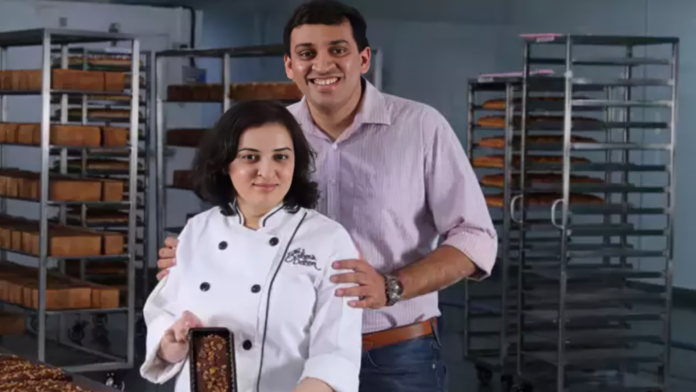
Simran and Sachin Sahni, Co-founders of Keeros Foods

Addressing the nation on the 108th episode of the popular program “Mann Ki Baat” on Akashvani on Sunday, Prime Minister Narendra Modi discussed the achievements of 2023. While discussing the International Year of Millets, he specifically highlighted the startups in Uttar Pradesh, mentioning it as a significant step towards lifestyle health innovation.

Speaking of the International Year of Millets, he praised several startups. PM Modi notably highlighted the ‘Keeros Superfoods’ startup during the radio broadcast.

Established in 2018 by Sachin Sahni and Simran Sahni, the Lucknow-based startup aims to address the snacking and nutritional needs of over 12 crore Indians suffering from diabetes by offering a range of tasty and diabetes-friendly super snacks, superfoods, and super drinks.

Keeros Superfoods Approach to Health-Conscious Snacking:

India has emerged as the diabetes capital of the world, with a simultaneous increase in obesity rates. A significant contributing factor is the prevalent consumption of mid-meal snacks, typically limited to fried and unhealthy options. Keeros addresses this issue with minimally processed products that boast a low glycemic index, high fiber, and protein content. Free from artificial preservatives, colours, or flavours, Keeros prioritizes health-conscious choices.

Operating from its manufacturing unit in Lucknow, Keeros has positioned its products on over a dozen e-commerce platforms, including Amazon, Flipkart, PharmEasy, Bigbasket, and others. Additionally, its distribution extends to major retail stores across northern India. With aspirations to become a household name in the FMCG space, Keeros aims for a turnover of over INR 200 crores.

Keeros has consistently followed a flourishing trajectory since its establishment, courtesy of its distinctive recipe designed to preserve the nutrition of seeds and grains. The appeal of its products is enhanced by premium packaging, resulting in substantial popularity across online and offline channels. This success owes much to the seasoned founding team, led by CEO and Founder Sachin Sahni, and Co-founder Simran Sahni. Sachin brings a wealth of experience in the FMCG & Health-Fitness industry, while Simran, a certified nutritionist, contributes over 15 years of expertise in the health and wellness sector.

Riding the wave of increasing popularity and extensive presence, it secured the esteemed “Startup of the Year” accolade in February 2018 from the Lucknow Management Association (an AIIMA body). Additionally, in September 2019, it was honored with the UP Brand Leadership award.

Read Other Articles: Actor Nayanthara and director Vignesh Shivan invest in superfoods brand, The Divine Foods

Advertisement

India’s apparel exports on the rise: CMAI forecasts 10-15% YoY growth in UAE market

0
Apparel
Apparel

Indian apparel exporters, known for their proficiency in white label manufacturing for global brands, are now redirecting their efforts towards promoting Indian national and local brands in the international arena. The Clothing Manufacturers’ Association of India (CMAI) believes that the growing strength of home-grown brands, along with their capacity to provide international standards at competitive rates compared to global counterparts, could significantly boost India’s share in the global apparel trade.

As part of its efforts to introduce Indian brands to international markets, CMAI recently hosted its first Brands of India exhibition in the UAE.

“We could showcase close to 350 Indian brands to the buyers in the Middle East and North Africa (MENA) region,” said Rajesh Masand, President of CMAI, adding, “We wanted to begin from a place which has a large number of Indian diasporas.”

As per CMAI, India annually exports approximately 1.1 billion USD worth of apparel to the UAE, with an anticipated annual growth rate of about 10-15%.

CEPA Impact: Opening Doors for Indian Apparel Exports

“The Comprehensive Economic Partnership Agreement (CEPA) is expected to give a boost to India’s apparel exports to the region,” said Jayesh Shah, Vice President of CMAI.

The CEPA, signed in May 2023, has removed the import duty on goods exported from India to the UAE. This move is expected to give a boost to Indian apparel exports. Bangladesh, a competitor of Indian apparel exporters, gains an advantage with duty waiver under the Least Developed Country (LDC) category.

The UAE-based retail chain, such as the Lulu Group, anticipates that the apparel segment will benefit the most from the CEPA agreement.

“The Brands of India exhibition helped Indian manufacturers establish trade relationships with buyers who cater to UAE, north Africa and parts of Europe,” said Shah.

India stands as the UAE’s second-largest apparel exporter, trailing only behind China. Indian apparel exporters highlight that their strength, compared to counterparts in China or Bangladesh, lies in their capacity to handle smaller, customizable orders. Unlike China and Bangladesh, known for mass production, Indian exporters assert their ability to accept orders as low as 150 pieces of a garment, offering greater flexibility to cater to the specific needs of buyers.

“We can customise the orders according to the prints, designs and show our creativity,” said Shah.

CMAI anticipates that events such as Brands of India exhibition will assist Indian manufacturers of branded clothing in comprehending the evolving global demands related to sustainability, design, and other aspects.

Browse More Articles: Flash sales take center stage as apparel retailers struggle with year-end demand slump

Advertisement

New rules in effect: All packaged items must now display ‘date of manufacturing’ and ‘unit sale price’

0
food label
(Representative Image)

Printing the ‘date of manufacturing’ and ‘unit sale price’ has become mandatory on all packaged commodities effective from Monday, according to Consumer Affairs Secretary Rohit Kumar Singh.

Earlier, companies had the choice to print either the ‘date of manufacturing,’ ‘date of import,’ or the date of packaging on packaged commodities.

Now, companies are obligated to print only the ‘date of manufacturing,’ along with the ‘unit sale price,’ according to the latest notification issued by the Consumer Affairs Ministry.

“Since packaged items are sold in different quantities, it is important that consumers are aware of the ‘unit sale price’ of what is packed and make an informed purchase decision,” stated the Consumer Affairs Secretary.

Empowering Consumers with Details on Packaged Items:

Including the manufacturing date on the packaging enables consumers to determine the age of the packaged item, aiding them in making informed and conscious purchase decisions.

Read Other Articles: Indian consumers make healthier choices with two-color front-of-pack labels, new study finds

Likewise, the inclusion of unit sale prices will simplify the process for consumers to determine the cost in unit terms.

For example, a packaged wheat flour of 2.5 kg will have a unit sale price per kg, along with the Maximum Retail Price (MRP).

Similarly, a packaged commodity of less than one kg quantity will have a sale price per gram, along with the total MRP of the product.

Advertisement

Meesho’s early investors explore new secondary share sales at valuation of $3-3.5 Billion

0
Meesho
Meesho

Angel investors and early institutional shareholders of the e-commerce firm Meesho are in talks with potential investors to sell off their shares, according to individuals familiar with the situation.

Discussions are underway for a transaction with a valuation ranging from $3 to $3.5 billion, though this figure is subject to change, as per individuals briefed on the matter.

According to sources, WestBridge Capital and Norwest Venture Partners are among the entities that have held talks with Meesho’s early investors.

The development underscores the growing trend of secondary share sales in late-stage firms. New investors are also looking at assets that have been able to withstand the funding drought and reduce operating burn over the last year or so.

Meesho’s early investor, Venture Highway, sold a portion of its stake in the company to WestBridge Capital in October. Nevertheless, it still holds a 1% share in the SoftBank and Meta-backed startup, which was last valued at nearly $5 billion in 2021.

“WestBridge has indicated it wants to buy more in Meesho and Norwest has also held talks,” a person briefed on the discussions said. “The conversations are largely around the pricing of the deal, as older investors want to make an exit now.”

Certainly, secondary transactions usually occur at a discount compared to the latest primary valuation. The magnitude of this discount, however, could influence the timing of the company’s pursuit of new primary capital.

A representative from Meesho opted not to provide a comment, citing adherence to the company’s policy.

Inquiries directed to Norwest Venture Partners and WestBridge Capital failed to elicit any response.

“There are additional investors expressing interest,” stated another individual familiar with the matter. The identities of these investors were not immediately available.

Sources added that Venture Highway intends to divest its remaining 1% stake in Meesho during this round. Notable early investors in Meesho include Maninder Gulati from Oyo and Arun Sarin, the former chief of the Vodafone group.

Meesho’s Financial Highlights:

On December 29, Meesho reported a 48% reduction in its loss for the fiscal year ending March 31, amounting to INR 1,675 crore. Simultaneously, the operating revenue experienced a substantial growth of 77%, reaching INR 5,735 crore.

For the first half of FY24, the online marketplace reported a 37% year-on-year increase in its operating revenue, reaching INR 3,521 crore, along with a substantial 90% reduction in loss to INR 141 crore.

Read Other Articles: Meesho’s FY23 revenue soars to INR 5,735 Crore, marking a 77% growth as losses narrow by 48%

The company announced its attainment of profitability for the September quarter but refrained from providing specific figures. Meesho’s Chief Executive, Vidit Aatrey, had previously mentioned in August that the firm had achieved its first after-tax profit for the month of July.

During the ongoing funding downturn, prominent startups have enabled investor exits through secondary investments. Simultaneously, they are bringing in new investors in anticipation of a potential initial public offering (IPO) in the next two to three years.

On December 25, it was reported that FirstCry underwent a secondary share sale exceeding INR 1,000 crore late last year, just before filing its draft IPO papers.

While 2023 witnessed a seven-year record low for primary funding for startups in India, totaling around $8.8 billion, investors and founders have conveyed their expectations of more secondary funding deals happening in 2024.

In a secondary share sale, the funds go to the investor selling the stake, while primary funding is injected into the company for various purposes. One of the most significant deals of this kind in 2023 was Lenskart’s $600 million funding, with approximately $450 million allocated to the secondary transaction. This occurred when ADIA (Abu Dhabi Investment Authority) and Chrys Capital invested in the Gurgaon-based omni-channel retailer.

Advertisement

New Year festivities propel Zomato, Swiggy, and Blinkit to record-breaking delivery figures in India

0
Zomato-swiggy

Zomato, Swiggy, and Blinkit experienced a substantial surge in orders throughout the New Year festivities. Deepinder Goyal, the CEO of Zomato, announced on his X.com (formerly Twitter) that the platform had achieved the highest daily deliveries.

Swiggy witnessed over one million active users on the app each hour, handling a higher volume of orders per minute compared to any other day. Rohit Kapoor, the CEO of Swiggy, mentioned that the New Year celebration resulted in 1.6 times more orders than the Cricket World Cup Final between India and Australia on November 19, 2023.

Read Other Articles: Swiggy, Blinkit, and Zepto hit highest daily sales amid cricket World Cup furor

Biryani Dominates Zomato Orders:

Zomato has witnessed a notable increase in orders since Christmas, delivering more than 140 orders per second. Interestingly, Biryani emerged as one of the most ordered food items on Zomato throughout India.

As per Goyal’s statement, Zomato fulfilled a greater number of orders during the 2023 New Year celebrations than the combined orders during NYE of 2015, 2016, 2017, 2018, 2019, and 2020. These figures underscore the platform’s success and the evolving preferences of Indian users in utilizing delivery apps for festive occasions. Goyal further mentioned that Zomato users generously tipped over INR 98 lakhs to delivery partners in a single day and expressed gratitude for their kind gesture.

The rapid-commerce and food-delivery platforms observed a substantial increase in orders on New Year’s Eve, with delivery workers, cloud kitchens, and restaurants gearing up for heightened customer activity. Zepto, for example, was projected to receive more than three times the number of orders compared to December 31, 2022, and approximately 15% to 20% higher than its previous peak day, which was the cricket World Cup final, as reported by co-founder and chief executive Aadit Palicha.

Both Swiggy and Zomato witnessed a surge in food orders during a recent event. According to Zomato’s CEO, Deepinder Goyal, the number of app openings on that day surpassed even Christmas Day.

Likewise, Blinkit and Zepto noted a boost in the sales of chips and beverages during the event. Zepto witnessed a 35% increase in chip sales compared to the preceding week, with a corresponding rise in soft drink sales. The company anticipated selling over 600,000 units of chips and soft drinks throughout the event.

Advertisement

PepsiCo eyes fresh leadership amidst intensifying competition in Indian snacks market

0
PepsiCo
PepsiCo

PepsiCo, the manufacturer of beverages and snacks, is contemplating multiple candidates for the position of President and Chief Executive Officer for its business in India. This includes a potential candidate from its global system, as indicated by executives with direct knowledge of the ongoing considerations.

Earlier, George Kovoor, the current Senior Vice President and General Manager of beverages at PepsiCo India, was believed to be taking over the top role to succeed Ahmed ElSheikh. The developments follow PepsiCo’s current president ElSheikh, who is expected to move to a global role within the company this year, making way for the leadership transition.

Read Other Articles: PepsiCo India set for major leadership transition; George Kovoor tipped as new president

Factors Guiding PepsiCo’s Leadership Transition:

Executives mentioned a blend of factors contributing to the recent developments. “Long-term and sustained profitability, and not just volume growth, for the snacks and beverages business is a core criterion. Another global mandate is the requirement for sharper marketing, with intensified competition,” stated one of the executives.

PepsiCo, the New York-based company, reported a mid-single-digit decline in its snacks business for the quarter ending September 2023, as disclosed during its earnings call.

In the past 12-15 months, the snacks sector, in particular, has witnessed heightened competition, marked by the entry of numerous new players and a robust resurgence of regional brands, leading to a shift in market share from national players.

An email requesting a comment from PepsiCo India went unanswered until the time of press.

Read Other Articles: PepsiCo invests $53.3 Million to expand snacks plant in Saudi Arabia

Advertisement

New Year, New Records: MSIL’s liquor sales skyrocket to INR 18.85 Crore in Karnataka

0
liquor world
(Representative Image)

Liquor outlets managed by the State-owned Mysore Sales International Limited (MSIL) recorded sales of alcoholic beverages amounting to INR 18.85 crore on Sunday, as reported by the Industries department.

MSIL manages a network of 1031 stores throughout Karnataka and achieved remarkable business performance on the final day of the year.

The sales witnessed an increase of approximately INR 10 crore, considering that on a regular day, MSIL outlets typically generate around INR 8 crore in business.

This signifies a rise of INR 4.34 crore in comparison to the sales of INR 14.51 crore on the corresponding day in 2022, as stated by MSIL Managing Director Manojkumar.

An establishment near Raichur railway station achieved the highest sales, amounting to INR 11.66 lakh, while another outlet on Gunj road in the same city generated a business of INR 9.96 lakh.

Bengaluru Urban Leads in Liquor Sales

Among the districts, Bengaluru Urban led the rankings with sales touching INR 1.82 crore. On the same day in the previous year, the district had sold liquor worth INR 1.35 crore.

The upgraded first-of-its-kind MSIL Boutique, which opened on Monday at Thimmaiah Road in Basaveshawaranagara, Bengaluru, sold beverages worth INR 3.5 lakh. The same outlet had recorded sales of INR 2.59 lakh on December 31 in the previous year.

Read Other Articles: Premiumization trend to fuel India’s soaring liquor industry, Crisil Report reveals

Advertisement

Fresh trouble for Zomato as tax authorities seek INR 4.2 Crore in unpaid GST

0
Zomato
Zomato

Zomato, the foodtech giant, is currently facing fresh tax trouble as tax authorities have slapped a notice of INR 4.2 crore on the startup for alleged short payment of goods and services tax (GST).

This development closely follows the Gurugram-based listed foodtech giant receiving a show cause notice of INR 401.7 crore from the Directorate General of GST Intelligence, Pune Zonal Unit. The notice pertains to unpaid tax on delivery charges collected from customers last week.

Read Other Articles: Zomato receives INR 401.7 Crore show cause notice from GST authority over unpaid taxes

Zomato has received three orders from the Sales Tax Officer, Ward 300, Delhi, and the Deputy Commissioner, DGSTO-4, Bengaluru, Karnataka. These orders allege short payment of GST, along with applicable interest and penalty under Section 73 of the Central Goods and Services Tax Act, 2017 (‘CGST Act, 2017’), Delhi Goods and Services Tax Act, 2017 (‘DGST Act, 2017’), and Karnataka Goods and Services Tax Act, 2017 (‘KGST Act, 2017’). The total amount specified in these orders is INR 4.24 crore, as mentioned in a company filing with the exchange.

“The authorities in Delhi and Karnataka seem to have issued the above orders dated December 30 and 31, 2023 without giving due consideration to our response submitted earlier. We believe that we have a strong case on merit and the company will be filing appeals against the orders before the appropriate appellate authorities,” Zomato said in the filing.

During Monday’s session, the company’s shares commenced trading at INR 124.65 each, reflecting a 0.77% increase from its previous closing price of INR 123.7.

GST Notices Hit Zomato and Swiggy

Earlier, reports surfaced that the food delivery giants Zomato and Swiggy reportedly received notices for a cumulative goods and services tax (GST) worth INR 1,000 Cr, as the tax authorities now view delivery charges collected by these platforms as their revenue.

Read Other Articles: Zomato and Swiggy grapple with INR 1,000 Cr GST notices as tax authorities include delivery charges in revenue assessment

It’s noteworthy that in January last year, the Centre included ‘restaurant services’ and cloud kitchens within the scope of Section 9(5) of the CGST Act, 2017. This resulted in platforms like Swiggy and Zomato being liable to pay 5% GST on the ‘restaurant services’ they provide.

However, the clarity on whether delivery services and the associated fees would also incur taxation remained uncertain.

The delivery fees imposed by both Swiggy and Zomato have consistently been a topic of discussion, sparking controversy from various perspectives.

In 2016, Swiggy started the practice of applying food delivery fees. Following suit, Zomato introduced its own delivery charges.

Having established a standard for delivery fees, Zomato subsequently introduced a loyalty programme, now recognised as Zomato Gold. Within this programme, customers can bypass delivery fees by subscribing to a monthly plan, which also provides additional perks.

Likewise, Swiggy introduced Swiggy One, embracing the idea of waiving delivery fees through a subscription model and complementing it with additional benefits.

Zomato and Swiggy fulfill 1.8 to 2 million orders daily nationwide. The introduction of a new Goods and Services Tax (GST) has the potential to disrupt their cash flow.

Meanwhile, both platforms have started imposing a platform fee on orders, with charges ranging from INR 2 to INR 5 per order. It is noteworthy that this fee is universally applicable to all customers, regardless of whether they are subscribed to any specific loyalty programme.

Zomato reported its second consecutive profitable quarter, with profit after tax surging to INR 36 crore during the September quarter of the financial year 2023-24 (FY24). This was an 18-fold jump from PAT of INR 2 crore in the preceding quarter.

Read Other Articles: Zomato reports remarkable surge in profit, achieving second consecutive profitable quarter in FY24

Advertisement

ITC ramps up cloud kitchen operations, targets major Indian cities

0
Cloud kitchen
(Representative Image)

ITC plans to scale up the cloud kitchen business it has been piloting in Bengaluru. The conglomerate, renowned for offering North Indian lunch and dinner as well as bakery products via food delivery apps, has now introduced this service in Chennai. Furthermore, there are intentions to expand into Mumbai, Delhi, and Kolkata. Executive Director Hemant Malik mentioned that the company is also considering the inclusion of breakfast and oriental cuisines.

The company refers to this business as food-tech, identifying it as one of the emerging vectors of growth. Currently, it operates three brands: ITC Aashirvaad Soul Creations for North Indian daily or comfort food, ITC Master Chef Creations for North Indian gourmet cuisines, and ITC Sunfeast Baked Creations for bakery products. In Bengaluru, there are 19 cloud kitchens, and in Chennai, there are four. Notably, these kitchens have already reached the break-even point.

“We have a winning formula, which includes having established brands that come with certain credibility, cuisine supported by ITC Hotels’ chefs, and capabilities of the packaged foods business,” said Malik.

ITC’s Operational Model: Central and Satellite Kitchens

“The tech-learning needed for the business comes from our focus on digitalisation. The model involves setting up of central kitchen and satellite kitchens in cities where we operate. We are already the market leader in Bengaluru in the premium space within two years of operation and will now scale up in other cities,” said Malik.

The model incorporates a central kitchen and several satellite kitchens, as per the preference of Swiggy and Zomato for kitchens every 2.5-3 km. ITC’s food tech central kitchen in Bengaluru has the capability to serve both Chennai and Hyderabad.

“Our strategy is to add new cuisines and meals apart from expansion into the metros,” said Malik.

The average order value for ITC’s cloud kitchens is INR 900, twice the industry average. A key distinction from ITC Hotels’ kitchens is the 5% Goods and Services Tax (GST) applied in this business, compared to the 18% GST for hotel restaurants. Additionally, these kitchens operate as quick-service establishments. ITC has successfully fulfilled over one million orders.

In a recent investor presentation, ITC highlighted the institutional synergies between its cloud kitchen business and various aspects of ITC, including the food business adhering to FSSAI regulations, packaging solutions for fresh food delivery, a digital-first approach to gather consumer feedback for upcoming FMCG products, the culinary expertise from the hotels business, and the production of industrial-ready-to-eat and frozen food products.

Approximately 90% of orders on food delivery platforms originate from dine-in restaurants, with the remaining 10% coming from cloud kitchens. The company, as mentioned in the presentation, pointed out that the scalability of North Indian cuisine poses a challenge due to its reliance on chef skills and the absence of standardization.

Read Other Articles: Cloud kitchen startup Kitchens@ secures $65 Million in Series C funding led by Finnest

Advertisement