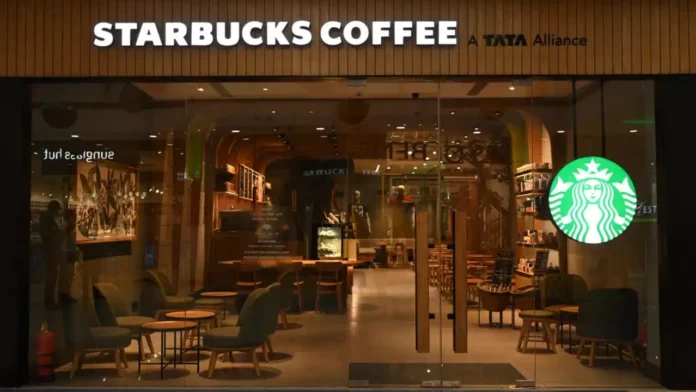
Tata Starbucks has reported a net loss of INR 24.97 crore from its operations in India for the financial year ending March 31, 2023, as per financial data obtained through the business intelligence platform Tofler.
However, its revenue from operations was at INR 1,086.89 crore for the said period, up 70 percent helped by the addition of more cafes and expansion of the network in more cities in India.
In India, Starbucks cafes are operated by Tata Starbucks Pvt Ltd.
It is a 50:50 joint venture between Tata Consumer Product Ltd (TCPL) and Emerald City CV, a wholly-owned entity of Starbucks Corporation, USA.
Tata Starbucks had reported a net loss of INR 94.84 crore in FY22 and its revenue from operations was at INR 636.11 crore.
Tata Starbucks Advertising Surge:
In FY23, Tata Starbucks’ Advertising promotional expenses increased 84.45 per cent to INR 34.05 crore. It was at INR 18.46 crore a year ago.
Besides, it has also paid a royalty of INR 76.83 crore in the financial year ended March 31, 2023.
Tata Starbucks Operations Expansion:
Tata Starbucks has expanded its store base. It was operating 333 Starbucks stores as on March 31, 2023 with the addition of 71 new stores. During the year, Tata Starbucks entered 15 new cities marking its presence in 41 cities.
In recent years, the culinary landscape has been shaped by a desire to rediscover our culinary heritage, emphasizing sustainability and the use of hyperlocal ingredients. Over the past few months, several of India’s indigenous culinary delights have been granted Geographical Indication (GI) tags. The latest addition to this list is the red ant chutney, a zesty delicacy from Odisha.
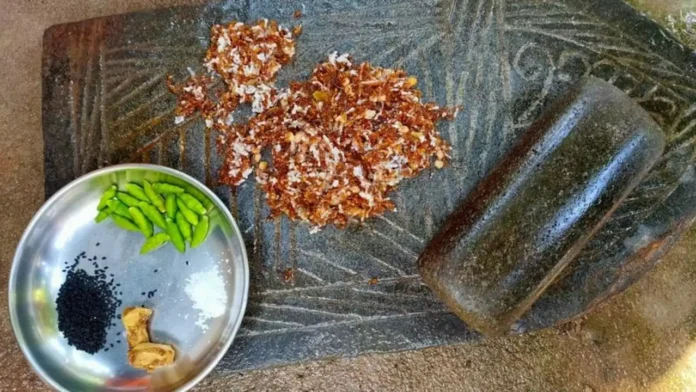
As reported, the chutney, also known as Similipal Kai Chutney, is skillfully crafted by the tribal people of Odisha’s Mayurbhanj district using red weaver ants. On January 2, 2024, it was granted the geographical identity tag, reflecting its deep-rooted connection to the region’s flavors and traditions. Notably, in 2018, renowned British chef Gordon Ramsay acknowledged its delectable taste, adding it to his menu.
Across different global communities, insects have been a traditional and nutritious food source, a practice referred to as entomophagy. From ants and crickets to silkworm larvae, these small creatures have become part of diverse diets. In India, the enjoyment of red ant chutney extends beyond Odisha; Chhattisgarh and Jharkhand also relish this delicacy, believed to be nutritious. During the pandemic, it was even considered a remedy for Covid.
Crafted by indigenous tribes in Mayurbhanj, the chutney involves gathering red weaver ants, also known as kai pimpudi, from the sal trees in the nearby Similipal biosphere reserve. The task is no simple feat; the male ants are notably fierce, and their bites can be painful. Hence, the majority of individuals prefer to hunt these ants at dawn when they are less active.
Nutritional Benefits of Red Ant Chutney:
Once captured, the ants undergo a process involving crushing, bag collection, washing, and drying before being cooked. This chutney is renowned as a potent source of protein, fiber, and minerals, with reputed abilities to alleviate coughs, body aches, and fever. Additionally, the tribal communities utilize these ants in the preparation of soups and medicinal ointments by incorporating them into oils.
Red Ant Chutney has garnered attention over the past few years. In India, certain restaurants have incorporated this tribal delicacy into their menus. The GI tag not only enhances its recognition but also safeguards its distinctive identity, preventing imitations from diluting its unique flavor profile.
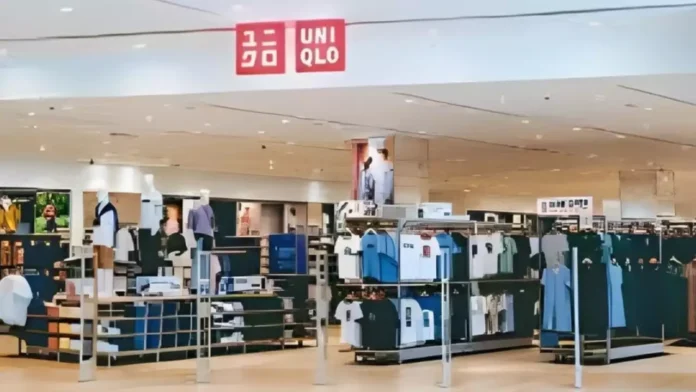
On Thursday, Japan’s Fast Retailing Co disclosed a 25% surge in first-quarter operating profit, propelled by robust overseas sales. The Uniqlo operator is set to achieve a third consecutive year of record earnings.
Earnings for the three months ending in November amounted to 146.7 billion yen ($1.01 billion), reflecting a notable increase from the 117.1 billion yen reported in the same period the previous year.
The consensus forecast was for 137.9 billion yen, according to the average estimate of five analysts surveyed by LSEG.
Fast Retailing maintained its full-year operating profit forecast at 450 billion yen, following record earnings of 381.1 billion yen in fiscal 2023.
Uniqlo noted a significant surge in revenue and profit for its operations in mainland China during the first quarter.
Founded and led by Japan’s richest man, the company secured successive record earnings over the past three years, driven by its aggressive growth strategy overseas.
In fiscal 2023, business in mainland China, its largest foreign market, experienced a revival after enduring over two years of slowdown due to the strict zero-COVID policy, which entailed city-wide lockdowns.
Uniqlo’s Expansion Plans: 20 New Stores in the US and Canada
During China’s economic downturn, the company intensified its efforts in North America, resulting in nearly doubling operating income last year. Fast Retailing aims to expand its presence by opening 20 new stores in the United States and Canada in 2024, in addition to the 72 stores already in operation as of the end of December.
Fast Retailing anticipates achieving another record profit in 2024, although the company, recognized for its rapid introduction of seasonal items like fleece jackets and thermal wear, could face challenges due to climate change.
Last year, deemed the hottest on record, analyst Mark Chadwick predicted a “sluggish beginning to the fiscal year” in a report on the Smartkarma platform before the results were announced, citing unusually warm conditions from September through December.
In October, Fast Retailing announced its intention to launch 80 new stores annually in Greater China, encompassing Hong Kong and Taiwan. With 931 Uniqlo outlets in mainland China, surpassing the count in Japan, the company stands as a key indicator for retailers operating in the world’s second-largest economy.
Fast Retailing’s shares surged by 32% in 2023, surpassing the 30% growth of the benchmark Nikkei index.
Fashion jewellery brand Salty has secured INR 5.4 crore in a recent funding round, with contributions from Anicut Capital, All in Capital, Suashish Diamonds, JK Group, and other investors.
The funds will be utilized for team expansion and the introduction of new product lines, aiming to offer consumers quality and affordable fashion accessories.
Established by Twishaa Gupta and Sonaal Goel, Salty presents an extensive range of accessories such as earrings, necklaces, bracelets, and more. Renowned for its use of quality materials and budget-friendly pricing, the brand also provides a diverse collection of trendy designs suitable for all occasions.
The brand has also earned accolades from multiple industry awards, including the India Design Council Award for Excellence in Fashion.
In the last year alone, the startup asserts that it has effectively fulfilled 60,000 orders for customers nationwide.
Bevvy, the whisky app, has announced the successful closure of a $1.5 million seed funding round, with the aim of supporting its expansion into new market regions.
The new investment primarily comes from angel investors based in Scotland, existing shareholders, and a family office in Denver, USA. The company is actively expanding its footprint in the United States, diversifying its collection of Bourbon bottles. A portion of the US investment is contingent upon the commitment to establishing a live and active presence in the US market by mid-2024.
Laurie Black, co-founder & head of whisky at Bevvy, commented, “Having already established the leading position in the digital whisky space; this new capital allows us to cement our market share and grow our consumer audience into new territories. We’re hugely excited to be heading Stateside in 2024.”
Bevvy’s Innovative App: Whisky Scanning and Insights
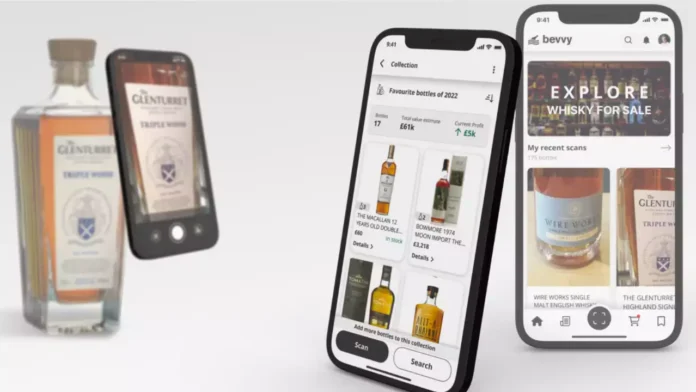
App users can leverage both the application and the camera on their mobile phones to scan the label of any whisky bottle, obtaining tasting notes and valuations. Central to this functionality is a robust database encompassing 200,000 whiskies released over the past 120 years. Upon scanning a bottle, the whisky’s “profile” is enriched with content from distilleries and bottlers, along with pricing data and expert tasting notes.
Greg Gormley, finance director for Bevvy, added, “In one of the most challenging fundraising environments I can recall, Bevvy’s successful raise underlines its dominant and growing position as a critical tool among whisky consumers and collectors. The interest and demand in whisky are growing at a pace not seen before. However, the market is fragmented and disjointed, with an absence of easy-to-access tools and information.”
He continued, “There is a considerable hole in the market for a value-add, information-led app that allows a bottle of whisky to be fully understood, in terms of taste, history and pricing. Bevvy is addressing this need and is finding its audience is both engaged and growing at a phenomenal pace.”
Bevvy has collaborated with bars and auctioneers, enabling bars to create a live menu and allowing auctioneers to provide potential sellers with estimated values for their whisky collections if they decide to auction their bottles.
Co-founder Black added, “This is an extraordinarily exciting time for us; we see thousands of bottle scans each and every week and we are gaining a fascinating insight into user taste preferences, price trends and industry strengths and weaknesses. Bevvy finds itself at the heart of a major shift in how consumers and collectors engage with this multi-billion-dollar market. 2024 is going to be a year of spectacular development and innovation.”
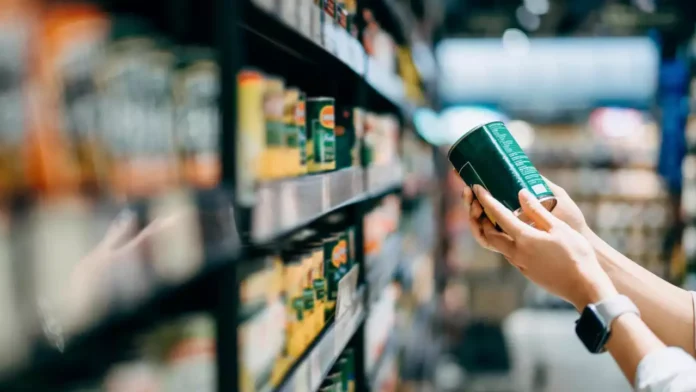
The Hungarian government will mandate larger food retailers to include labels indicating instances of “shrinkflation” on their products.
According to a statement from the country’s government, food retailers with a sales revenue larger than Ft1 billion ($2.9 million) will be required to display warnings on products that have shrunk in size while their prices have been maintained or increased.
Manufacturers are obligated to communicate any alterations in product size to retailers.
Shrinkflation Labeling Requirements
The labels must indicate any variations in weight or volume, with the measurements being compared to those of the same product between January 1, 2020, and July 1, 2023.
Retailers are required to furnish the information for a duration of two months from the date they commence selling the product in its reduced size.
The scheme is slated to roll out in the first half of February.
The Hungarian government has announced that the consumer protection authority will intervene in cases of non-compliance. Additionally, consumers will have access to a public database on the National Food Chain Safety Authority’s (NEBIH) website, which records changes related to the mandated labels indicating “shrinkflation” on products.
“In parallel with stagnant or rising prices of some produce, the size of packaging has been shrinking in many countries,” the statement said. “The result of this deceptive practice is that consumers get less for their money from the purchased products than before.”
The government stated that it is making every effort to safeguard families and is actively combating consumer deception in the face of challenging economic conditions.
Earlier this month, France also submitted plans to the EU for new rules to require the country’s retailers to alert shoppers about shrinkflation.
Paris has asked the European Commission to clear a move that would oblige grocers to tell consumers if a product has been reduced in size but its price has stayed the same.
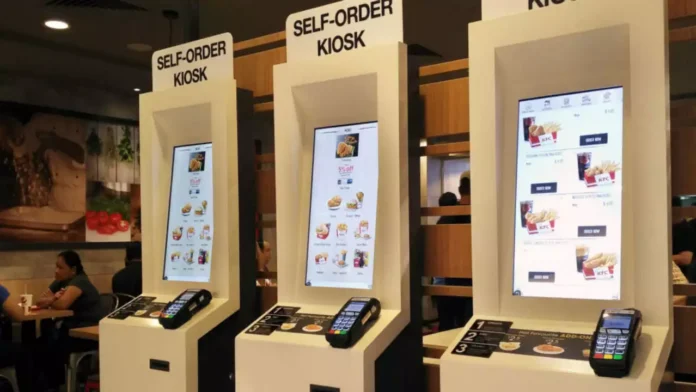
According to a study conducted by RBR Data Services, a division of Datos Insights, a research and consulting firm, the global installations of restaurant kiosks surged by 43% in the two years leading up to June 2023, reaching almost 350,000.
RBR Data Services predicts that the global installations of kiosks will reach almost 700,000 by the year 2028.
“With hospitality overheads continuing to skyrocket globally and minimum wage increases planned in many developed countries, restaurant chains of all sizes will introduce kiosks or expand existing rollouts as a way of rationalizing their operations and boosting transaction values,” Chris Allen, who led RBR Data Services’ Global Self-Ordering Kiosks 2024 research, said in a press release.
McDonald’s Dominance: Leading with Over 130,000 Kiosk Units
According to the report “Global Self-Ordering Kiosks 2024,” McDonald’s maintains its position as the leading global adopter of this technology, boasting over 130,000 units installed. However, both Burger King and KFC have significantly increased their international deployment of kiosks, extending their presence from Romania to the Philippines.
The report found a significant surge in restaurant kiosk installations in the Asia-Pacific region, primarily attributed to the substantial expansion of the Chinese chain Dicos, which more than doubled its estate. Additionally, several South Korean brands, including Lotteria, Mom’s Touch, and A Twosome Place, have extensively implemented kiosks throughout their store networks.
In Europe, the Middle East, and Africa, among these are local chains and global quick-service restaurant (QSR) brands pursuing a digital store model that includes kiosks. France’s BCHEF and Poland’s Pasibus, for instance, have rolled out the technology to all their restaurants.
North American chains are expanding their presence beyond their domestic markets into EMEA, establishing stores with kiosks as a standard feature. Notable examples include Taco Bell in the U.K., Dunkin’ Donuts in Germany, and Pizza Hut in Saudi Arabia.
The largest regional kiosk market is found in the Americas, where the U.S. stands out with over 110,000 installations. Not only are international quick-service restaurant (QSR) giants making their mark, but domestic chains like Shake Shack, Brazil’s Habibs, and Argentina’s Mostaza are also rapidly adopting and deploying this technology.
While major global chains like McDonald’s still prefer the largest-sized standing and double-sided models, there is a notable surge in the popularity of small and medium-sized kiosks, including tablet-based solutions, on a global scale. Kiosks featuring screen sizes between 19 and 30 inches currently constitute half of the global market.
Local Chains Embrace Kiosk Innovation: Countertop and Tablet Solutions
Countertop kiosks and tablets are gaining momentum among local restaurant chains such as Black Sheep Coffee in the U.K., Pokawa in France, and Arctic Circle Restaurants in the U.S., driven by space and budget constraints.
As food prices, labor costs, and supply chain vulnerabilities continue to escalate, restaurant chains are increasingly recognizing the compelling business case for implementing kiosk technology as an efficient way to cut costs. Fast-food operators are also noting a rise in average transaction values directly attributable to the installation of self-ordering kiosks.
Zomato, a leading player in the food delivery sector, saw its stock rise by up to 2.5% to reach a 52-week peak of INR 138 per share on the BSE during Thursday’s trading session.
This comes after the global brokerage firm HSBC, while upholding its ‘buy’ rating on Zomato, raised its target for the stock by INR 10 to INR 150 per share.
Despite projecting subdued growth in the calendar year 2024, HSBC analysts expressed a positive long-term outlook for Zomato, maintaining a constructive view.
Meanwhile, Elara Securities analysts have issued a “buy” recommendation on Zomato. This endorsement comes on the heels of the foodtech giant’s decision to increase its platform fee for food delivery services by 33%, moving it up from INR 3 to INR 4 per order. The analysts have set a target price of INR 150, signaling confidence in Zomato’s prospects.
“We believe the uptick in convenience fee per order will play an important role in improving adjusted Ebitda of Zomato’s food delivery, which stood at INR 2,040 Mn in Q2FY24. The total number of orders for the food delivery business stood at 650mn in FY23; we expect orders to reach 830 Mn in FY25E and 940 Mn in FY26E,” the brokerage firm said.
It further added that the company’s profitability in the food-delivery sector will be driven by increased convenience fees, advertising income, and restaurant commissions.
As of 12:23 PM on Thursday, Zomato’s stocks were being traded at INR 137 each on BSE, reflecting a slight increase from the previous close of INR 134.
The stock of the prominent foodtech company saw its value more than double last year. Starting in the INR 50-60 range in the initial month of 2023, it concluded the year at a value above INR 120.
Zomato’s Profitability Soars with Consecutive Profitable Quarters
Zomato has recently been prioritizing its profitability. The startup disclosed its second consecutive profitable quarter, witnessing a notable surge in profit after tax to INR 36 Cr in the September quarter of the financial year 2023-24 (FY24). This marked an 18-fold increase from the PAT of INR 2 Cr in the previous quarter.
Meanwhile, Zomato and Swiggy, the duo, have reportedly received notices for a cumulative Goods and Services Tax (GST) worth around INR 1,000 Cr. This tax is levied at 18% on the total amount collected by them as delivery fees since they commenced offering food delivery services.
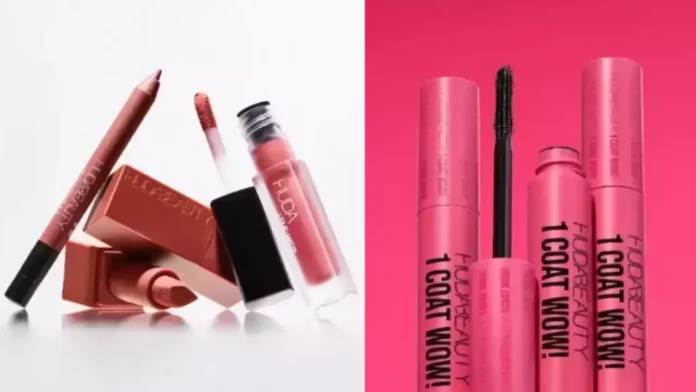
Myntra, the e-commerce marketplace, has added the renowned global beauty brand Huda Beauty to its selection, according to a recent press release. Alongside the beauty products, the launch will include skincare solutions from Huda’s Wishful line and fragrances from Kayali, a brand founded by Mona Kattan, the sister of Huda Kattan, the founder of Huda Beauty.
“In our endeavour to bring the best of fresh global fashion and beauty to our customers, we are thrilled to add the iconic Huda Beauty to our robust selection of international brands. On the back of Myntra’s cutting-edge tech, unmatched reach and a keen understanding of the needs of new age, trend-first India, we look forward to supercharging Huda Beauty’s vision of winning with India’s premium base of shoppers,” said Sharon Pais, chief business officer, Myntra.
Huda Kattan, the content creator turned beauty mogul, launched Huda Beauty in 2013. The brand offers a diverse range of products including lipstick, eyeshadow palettes, mascara, pressed powder, and concealer.
Multifaceted Marketing for Huda Beauty’s Debut on Myntra
Myntra’s introduction of Huda Beauty involved a multifaceted marketing approach as the brand debuted on the platform. The campaign commenced with a CGI film featuring life-sized Huda Beauty products soaring through the sky, seamlessly transitioning onto the Myntra app.
Furthermore, a 3D billboard was set up outdoors in Mumbai, and over 100 influencers captivated Myntra Beauty shoppers by showcasing looks created with Huda Beauty products.
“We are so excited to join forces with Myntra Beauty! We believe this collaboration will pave the way for much bigger opportunities with India’s growing base of premium beauty shoppers! This is such an important market for us, and we hope our products continue to be a success with our amazing Huda Beauty supporters in India,” said Huda Kattan, founder of Huda Beauty.
Bengaluru-based Myntra boasts a collection of over 6000 fashion and lifestyle brands, featuring well-known names such as H&M, Levis, Tommy Hilfiger, Louis Philippe, Jack & Jones, Mango, Forever 21, Marks & Spencer, Nike, Puma, Crocs, M.A.C, and Fossil. The platform’s services span across 19,000 pin codes in India.
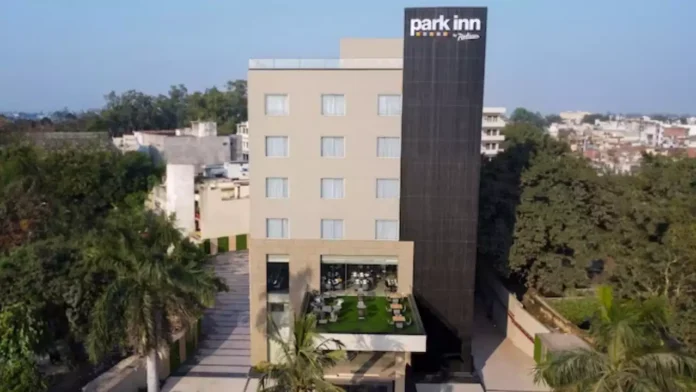
Radisson Hotel Group has announced the opening of its latest hotel in Ayodhya.
The Park Inn by Radisson Ayodhya is conveniently reachable by car or taxi from both Maharishi Valmiki International Airport and Ayodhya Cantt Railway Station, as stated by the company.
“We are pleased to have an early mover’s advantage with the opening of our newest hotel in the sacred city of Ayodhya,” said KB Kachru, chairman emeritus and principal advisor, South Asia at Radisson Hotel Group.
“With its rich cultural heritage and historical landmarks, Ayodhya holds a special place in the heart of our country. This expansion is a testament to our commitment to providing exceptional hospitality experiences across top tier 2 and tier 3 cities in India. Our presence in Ayodhya is yet another stride in our mission to spread the warmth of our brand across the nation,” he added.
Varun Gavri, managing director, Usharani Developers said the company is ‘honored’ to partner with Radisson Hotel Group.
“Through this association, we aim to leverage the Group’s world-class expertise and hospitality standards and deep understanding of the Indian market. Together, we are confident to deliver a unique blend of global standards and local sensibilities, ensuring an unforgettable experience for our guests,” he added.
Luxury Amenities at Radisson’s Park Inn in Ayodhya:
Radisson said guests can avail themselves of various amenities at the hotel, including a swimming pool, a fully equipped gym, and a banquet hall.
Vaibhav Kulkarni, General Manager of Park Inn by Radisson Ayodhya, expressed the hotel’s commitment to offering more than just accommodation, aiming to create a memorable experience for its guests.
We use cookies to ensure that we give you the best experience on our website. If you continue to use this site we will assume that you are happy with it.