Masala Chai has clinched the title of the second-best non-alcoholic beverage in 2023, as per the rankings from TasteAtlas, the online food guide. Impressively, it not only secured this position but also asserted its dominance by topping the “Best Foods and Drinks in India” list. This dual recognition highlights the paramount role that Masala Chai plays in both the culinary landscape and cultural fabric of India.
Announcing the win on Instagram, the food guide described the beverage in the caption, saying, “Chai masala is an aromatic beverage originating from India. It is made with a combination of sweetened black tea and milk that is spiced with a masala mix—which typically includes cardamom, ground ginger, cloves, cinnamon, and black peppercorns.”
Talking about its much-debated origin, the guide highlighted the link of the origin with British tea trade. “In the 19th century, the Chinese had a monopoly on the tea trade, and the British looked for other markets that would fulfill the high demand for black tea—which was a firm European favorite,” the post explained.
Masala Chai claimed the third spot in the global rankings, trailing behind Hong Kong-style Milk Tea and Aguas Frescas from Mexico.
On Tuesday, the Indian government announced a one-year extension of the reduced import duty on edible oil, effective until March 2025. The initially scheduled expiration of the lower import duty on crude palm oil, crude sunflower oil, and crude soy oil was set for March this year.
India is the largest global importer of vegetable oil. In 2021, the government took measures to alleviate the impact of soaring international prices by slashing the import duty on edible oils. This trend continued with further duty reductions in June 2023.
In another notification, the government imposed a 50% export duty on molasses, effective from Thursday, “This notification shall come into force on the 18th of January, 2024,” the gazette notification read.
Mumbai-based Nova Agritech Ltd has unveiled its Initial Public Offering (IPO), setting a price band of INR 39-41 per share. The IPO is scheduled to open for subscription on January 22 and will conclude on January 24, with the anchor book opening on January 19. Keynote Financial Services Ltd, Bajaj Capital, and Bigshare Services are the appointed lead managers for the IPO.
Nova Agritech’s IPO comprises a fresh issue of shares amounting to INR 112 crore and an offer-for-sale (OFS) of 77.58 lakh equity shares by Nutalapati Venkatasubbarao, currently holding an 11.97 percent stake in the company. At the upper end of the price band, the company aims to raise approximately INR 143.81 crore, establishing a valuation of INR 267.33 crore, with Nova Agritech retaining an 84.27 percent stake.
Focusing on soil health, crop nutrition, and protection products, Nova Agritech announced strong financial results for FY23. The company experienced a substantial 49.7 percent year-on-year (YoY) increase in consolidated net profit, reaching INR 20.5 crore, while revenue showed a growth of 13.4 percent, totaling INR 210.6 crore. The robust operational performance contributed to a 39.3 percent rise in EBITDA, reaching INR 38.7 crore. This led to a notable margin expansion of 342 basis points, bringing it to 18.4 percent for the quarter.
For the six months ending September FY24, Nova Agritech posted a consolidated net profit of INR 10.4 crore, supported by a revenue of INR 103.22 crore. The company holds 720 product registrations across various categories, with a notable 76 percent contribution from Telangana to its business in the first half of FY24.
The IPO allocation is structured with 50 percent designated for qualified institutional buyers, 15 percent for non-institutional investors, and 35 percent for retail investors. The finalization of the basis of allotment is expected by January 25, and trading is slated to kick off on January 30.
Online food delivery platform Swiggy’s Co-Founder and CEO Sriharsha Majety has said that all preparations are underway for its mega Initial Public Offering (IPO), through which it is likely to raise $1 billion later this year.
“We’ve been preparing for our IPO. We’ve added independent directors to the board and there are all kinds of preparations that are on,” Majety said.
For its IPO process, the company is likely to have enlisted seven investment banks, including Kotak Mahindra Capital, Citi, JPMorgan, BofA Securities, Jefferies, and others.
Swiggy is getting ready to go public after its competitor Zomato went public in 2021.
According to Majety, Zomato’s listing helped Swiggy gain a better understanding of retail investors and how they perceive the food delivery market.
“There is no denying that it (Zomato being listed) makes life easier for us. There’s much to learn in terms of how one manages communication as a public company, how one manages guidance as a public company, what gets more scrutiny and what doesn’t,” Majety said.
Meanwhile, according to a financial filing from Swiggy’s investor Prosus, the core food-delivery business of Swiggy experienced a 17% growth, achieving a gross merchandise value (GMV) of $1.43 billion in the first half of FY24.
Motilal Oswal Mutual Fund initiated an open market transaction on Monday, shedding 4.5 crore shares of the leading foodtech company Zomato.
According to data from the NSE, the mutual fund divested the shares at INR 138.15 per share in a block deal totaling INR 621.6 crore.
According to the shareholding information of the foodtech giant, Motilal Oswal Flexi Cap Fund possessed 15.94 crore shares, representing a 1.86% stake in Zomato as of the end of the December quarter in 2023.
The shares that inundated the market were acquired by BNP Paribas, Citigroup, Goldman Sachs, Morgan Stanley, and Societe Generale.
Societe Generale picked up 3.3 Cr shares at INR 138.15 apiece, while Goldman Sachs Investments (Mauritius) acquired 45 Lakh shares at the same price.
Morgan Stanley Asia (Singapore) acquired 39 Lakh shares, Citigroup Global Markets (Mauritius) bought 24 Lakh shares, and BNP Paribas Arbitrage obtained 12 Lakh shares, all priced at INR 138.15 each.
Amidst the block deal, Zomato shares saw a nearly 3% dip during early Monday trading. The stock eventually closed the session 4.44% lower at INR 133.40 on the BSE.
The development comes in the wake of brokerages HSBC, Goldman Sachs, and Jefferies raising their price targets (PTs) on Zomato. This adjustment is grounded in the anticipation of strong growth in Zomato’s food delivery and quick commerce verticals.
Goldman Sachs has adjusted its price target (PT) for Zomato, raising it to INR 160 from the previous INR 130. Similarly, Jefferies has increased its price target to INR 190 from INR 165, and HSBC has raised its target to INR 150 per share from the earlier INR 140.
Zomato achieved its first profitable quarter in Q1 FY24 and continued the trend with a profitable Q2. The company’s profit after tax (PAT) surged 18 times, reaching INR 36 crore in the September quarter, compared to INR 2 crore in the previous quarter.
The impressive financial figures have sparked a significant uptrend in the share price of the Deepinder Goyal-led startup. Over the past year, the stock has soared by 150.52%, and on a year-to-date (YTD) basis, it has registered a growth of 7.84%.
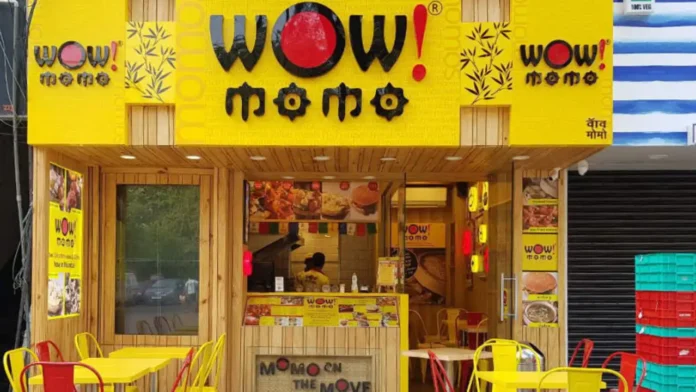
Wow! Momo Foods secured INR 350 crore in funding from Khazanah Nasional Berhad, Malaysia’s sovereign wealth fund. This represents the company’s most significant capital raise, coinciding with robust double-digit growth in the overall food services industry. The appeal of momos as a snack in India, coupled with competitive pricing, adds to the success of this fundraising effort.
The investment will involve both primary infusion and secondary purchase from early-stage investors, including the Indian Angel Network and Lighthouse Funds. Additionally, in this funding round, Oaks Asset Management, an existing investor, has injected an additional INR 60 crore.
Sagar Daryani, Co-Founder and CEO of Wow! Momo Foods, confirmed the development.
The round will provide an exit opportunity for angel investors associated with The Indian Angel Network (IAN) and enable series A investor Lighthouse Funds to partially divest, as stated by him. “We will strive to transform the food space,” he said.
Established in August 2008, Wow! Momo manages a network of 630 stores spread across over 35 cities. Approximately one-third of these stores are small-format or kiosk stores, situated in malls, tech parks, and hypermarkets. Wow! Momo has successfully created a distinctive presence for itself in a market with limited competition on a national scale, capitalizing on the widespread popularity of the cuisine in India. The company operates under three sub-brands: Wow! Momo, Wow! China, and Wow! Chicken.
The core fund will drive the brand’s growth and expansion, enhance distribution channels, and support research and development for its FMCG arm. The FMCG arm specializes in selling packaged frozen ready-to-eat momos through retail stores and e-commerce platforms.
Wow! Momo Foods Growth Strategy: 1,500 Stores in 100 New Cities
Daryani mentioned that the company is set to expand its reach to another 100 cities, with a target of establishing over 1,500 stores in the next three years.
Executives highlighted that the recent fundraising serves as evidence of renewed investor enthusiasm in the food services sector, despite increased competition and the entry of global brands into the Indian market.
According to Icra, India’s fast-food and quick-service restaurant companies are projected to add approximately 2,300 new stores between FY23 and FY25. This expansion plan is accompanied by an anticipated capital expenditure of around INR 5,800 crore, taking advantage of the growing affordability and heightened consumer demand for fast foods.
With a post-money valuation of over INR 2,400 crore, the company has garnered a total of INR 500 crore in funding to date, not including the ongoing round. The founders, promoters, and employees collectively retain a 45% ownership stake in the venture.
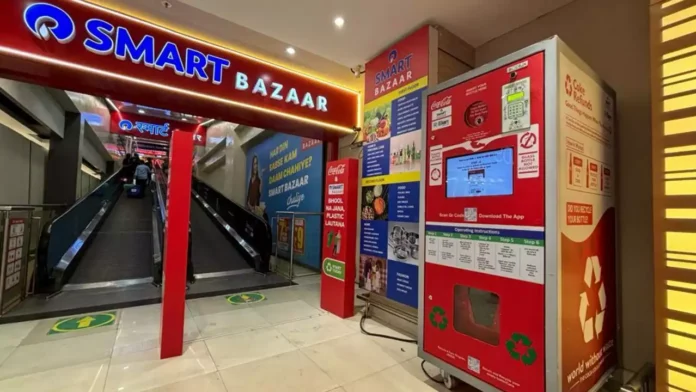
Coca Cola India and Reliance Retail unveiled a sustainability campaign named “Bhool Na Jana, Plastic Bottle Lautana,” according to a press release issued on Monday.
The focus of the initiative is on collecting post-consumption polyethylene terephthalate (PET) at Reliance Retail stores in Mumbai, utilizing Reverse Vending Machines (RVMs) and collection bins.
The launch of the initiative took place in the presence of Kazi Irfan, Officer on Special Duty (OSD) for Solid Waste Management at Brihanmumbai Municipal Corporation (BMC), at Reliance Retail’s Smart Bazaar store in Santa Cruz.
The initiative aligns with the central government’s Swachh Bharat Mission and has been launched in 36 Reliance Retail stores, including Smart Bazaar and Sahakari Bhandar stores in Mumbai and Delhi, as mentioned in the release.
Speaking on the launch, Damodar Mall, chief executive officer, Grocery Retail, Reliance Retail Limited, said, “Our pilot project with our store shoppers, and the support of Coca-Cola India and Reliance Industries, is an attempt to pursue with our wide network of stores.”
The sustainable project aims to reach 200 stores nationwide by 2025, targeting the collection of 500,000 PET bottles annually during the pilot phase.
“Through this partnership and platform, we are delighted that we can generate awareness and provide shoppers a convenient way to recycle their PET bottles while they are shopping at their Reliance store. Partnerships with retail, government, civic societies, and consumer-centric ideas like this one are a powerful multiplier for progress on collection, recycling, and reuse,” said Greishma Singh, vice president of Customer and Commercial Leadership, Coca Cola India (Southwest Asia).
Coca Cola India’s Previous Sustainability Initiatives
In October last year, Coca Cola India launched the Return And Recycle initiative with Zepto. It has seen the participation of 50,000 households in India and successful RVM installations across 75 cities in the country, collecting 1 tonne of PET waste.
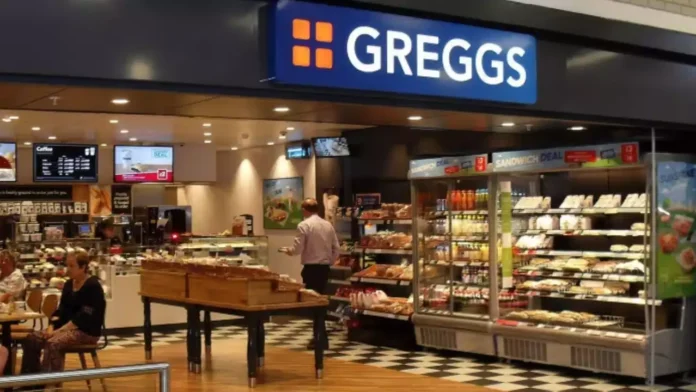
Greggs, the well-known high street bakery chain, has unveiled plans to open up to another 160 stores in the year ahead as it cheered a strong end to 2023.
In 2023, the group expanded its presence by inaugurating 220 new stores, while also closing 33 and relocating 42. This resulted in a net gain of 145 new locations, bringing its overall estate to 2,473.
In 2024, Greggs plans to open a net total of 140 to 160 new shops, aiming to enhance customer accessibility to its stores.
In the fourth quarter, it recorded a 9.4% increase in like-for-like sales in its self-managed shops, contributing to an overall comparable store growth of 13.7% for the year 2023.
The performance in the last quarter indicates a deceleration compared to the 14.2% growth observed in the preceding three months. Greggs attributed this slowdown to a reduced contribution from price inflation.
The company said cost pressures were continuing to ease back, with expectations for a “more stable cost base in the coming year”.
“Wage inflation remains, although higher rates of pay across the economy will also provide support to consumer incomes,” according to the group.
Roisin Currie, chief executive of Greggs added, “We enter 2024 with plans to continue to invest in our shops and expand supply chain capacity.”
Oyo, the budget hospitality chain, announced on Monday its ambitious plan to unveil 400 new properties in major spiritual hotspots across the country. This expansion is propelled by the upswing in domestic travel and a burgeoning interest in spiritual tourism.
Oyo said it is set to launch 400 properties in popular destinations such as Ayodhya, Puri, Shirdi, Varanasi, Amritsar, Tirupati, Haridwar, Katra-Vaishno Devi, and the Char Dham route by the end of this year.
This move is in response to a 350% increase in searches for Ayodhya on the Oyo platform over the past year, prompted by the upcoming opening of the Ram Mandir on January 22, as stated by the company.
Oyo said that Ayodhya has consistently held the top position in searches on the Oyo app over the past year. On New Year’s Eve, the city experienced a 70% surge in Oyo app users, surpassing popular leisure destinations such as Goa at 50% and Nainital at 60%.
Last year, the company announced the launch of 50 homestays in Ayodhya to accommodate the increasing number of pilgrims, providing a total of around 1,000 rooms.
Oyo mentioned that these properties are strategically positioned near significant landmarks, ensuring convenient access to prominent religious sites and tourist attractions.
Oyo stated that it anticipates a swift sell-out of these rooms, given the substantial increase in demand for the destination.
Oyo has collaborated with the Ayodhya Development Authority and the Uttar Pradesh State Tourism Development Corporation for the establishment of these homestays.
Ritesh Agarwal, the founder and group CEO of Oyo, remarked that spiritual tourism in India is on the verge of experiencing a significant surge, positioning itself as one of the most substantial growth drivers for the industry in the next five years.
“The opening of the Ram Mandir in Ayodhya stands as a testament to this, and witnessing the excitement firsthand as I join in the grand ceremony will be truly humbling. This renewed fervour for spiritual journeys extends far beyond Ayodhya, with destinations like Puri, Shirdi, and Varanasi experiencing similar excitement,” he said.
“By offering comfortable and affordable accommodation options across these sacred sites, we aim to ensure every spiritual journey finds a welcoming haven, allowing pilgrims to fully immerse themselves in the transformative power of religion and spirituality,” he added.
Consumer goods companies are intensifying their advertising and promotional spending in the next few quarters, aided by the improvement in gross margins over the past three to four quarters due to lower input costs.
Fast-moving consumer goods (FMCG) companies, including Dabur, Marico, and Godrej Consumer Products, highlighted in investor notes that advertising, promotion, and category development spending witnessed a surge in the December quarter. Additionally, some anticipate a further increase in these expenditures in the upcoming quarters.
This year is brimming with events, and companies will eagerly seize the opportunity, according to B. Krishna Rao, Senior Category Head at Parle Products.
“In the next 10 days advertising spending will go up for Ram Mandir, then Lok Sabha elections and multiple sport events such as IPL, T20 World Cup and Olympics. At the same time, spending will also be increased to try to improve demand,” he said.
According to a report from BNP Paribas this week, the trend of gross margin improvement is expected to continue due to lower input costs. However, the report notes that advertising expenditures will remain high. It mentioned that FMCG firms advertise during sports events where advertising costs are relatively expensive.
Competitive Ad Spending by Consumer Goods Companies
In a report earlier this month, Nuvama Institutional Equities stated that for certain FMCG companies, advertising expenditures had surpassed pre-pandemic levels. With margins on the rise and a strategic drive to outperform local competition, advertising spending is expected to stay competitive in 2024, according to the report.
In an investor note last week, Dabur India indicated that gross margins are expected to increase, driven by the moderation of inflation and cost-saving initiatives.
“A significant portion of gross margin expansion will be channelled into enhancing advertising and promotion spends. Consequently, operating profit is expected to grow slightly ahead of the revenue and post an improvement in year-on-year operating margins,” it said.
Consumer goods companies allocate 3-14% of their sales budget to advertising and promotions.
Last week, Marico also mentioned that it increased advertising and promotion expenditures as part of its strategy to enhance the long-term equity of both the core and new franchises.
We use cookies to ensure that we give you the best experience on our website. If you continue to use this site we will assume that you are happy with it.