Tuesday, February 24, 2026
Home Blog Page 688

Roll-up commerce startup 10club appoints Kavitha Rao as COO & Co-founder

0
Kavitha Rao
Kavitha Rao

10club, a direct-to-consumer (D2C) startup specializing in home and kitchen products, has appointed Kavitha Rao as its new Chief Operating Officer and Co-founder.

In October last year, the company shifted its focus from being a roll-up commerce company to transforming into a D2C brand. This decision was prompted by a noticeable deceleration in the growth rates of acquired brands within the domestic roll-up industry throughout the past year.

The company currently operates as a single brand, selling its own products through both online and offline channels, such as owned and third-party stores. In contrast, roll-up commerce companies acquire multiple online sellers and brands, often retaining their separate identities, with the aim of enhancing performance through improved management and shared expertise.

10club announced that Rao will lead its retail operations in both online and physical channels, guiding the firm’s category roadmap and overseeing day-to-day operations. Before joining 10club, Rao served as the Managing Director at Accenture’s retail division.

10club’s Retail Expansion Plans:

The company is now targeting the opening of its first physical store in the first half of FY25, as mentioned by Rao. Additionally, it is engaging in partnerships with fellow D2C brands like Wakefit to retail its products in their stores. Simultaneously, it is collaborating with distributors to extend the availability of its products in larger retail outlets such as supermarkets, she further explained.

According to Rao, 10club is on track to achieve an annualized revenue run rate of INR 100 crore by the end of March 2023. She emphasized the firm’s dedication to profitable sales growth, although specific details about the current profitability status were not disclosed.

In June 2022, it was reported that 10club was seeking to secure $30 million in a combination of equity and debt funding. Olive Tree Capital, a Boston-based fund, was leading the funding round, with participation from Fireside Ventures and Secocha Ventures. The company had mentioned back then that the funding round had not been finalized. Rao chose not to comment on the present status of the funding.

Established in 2020 by Bhavna Suresh, Deepak Nair, and Joel Ayala, the company secured $40 million in 2021, marking one of the most substantial seed funding rounds at that time. This funding was a combination of both debt and equity. Initially entering the roll-up sector, the firm operated alongside various players such as Goat Brand Labs, Mensa Brands, and FirstCry-backed GlobalBees, focusing on categories such as fashion, home, fitness, and food.

In addition to indications of a deceleration in the past year, the roll-up sector has witnessed consolidation. Goat Brand Labs, a competitor of Mensa, acquired Chumbak and four other direct-to-consumer (D2C) brands in January of the previous year. Furthermore, Hindustan Unilever Limited made investments in Zywie Ventures, the parent company of the plant-based supplement brand Oziva, and Nutritionlab in December 2022.

Roll-up brands have faced challenges not only in India but also globally. In November, The Wall Street Journal disclosed that Thrasio, a U.S.-based company and a trailblazer in roll-up ecommerce, initially known for acquiring third-party sellers on Amazon, was gearing up to file for bankruptcy.

Continue Exploring: Epigamia appoints Rahul Jain as CEO, charts new course for growth in the health snack market

Advertisement

Alt-dairy startup Perfect Day secures $90 Million in Pre-Series E funding, announces key leadership changes

0
Perfect Day

US-based alt-dairy start-up Perfect Day has announced the completion of a pre-Series E financing round, securing up to $90 million.

Led by internal investors, the company intends to leverage the funding to support its evolving strategic goals. Perfect Day states that it has successfully de-risked its technology and is now directing its focus towards executing the scaled manufacturing of its whey protein from fermentation, providing a clear path to profitability.

Leadership Shift at Perfect Day:

After securing the funding round, Perfect Day announced that the company’s founders, Ryan Pandya and Perumal Gandhi, will transition away from their operational management roles to focus on future opportunities. Its current president, TM Narayan, will assume the role of interim CEO, taking over from Pandya. Narayan will be supported by newly appointed co-chairmans of the board, Aftab Mathur and Patrick Zhang, of Temasek and Horizons Ventures respectively.

Pandya, Perfect Day co-founder and former CEO, said, “This has been a journey we could have only dreamed of when we first started this company in April of 2014. Because of the incredible people behind this business, we’ve de-risked world-changing technology, and we’ve brought it to life globally across over a dozen categories. Under TM’s interim leadership, Perfect Day is now in the right position for us to let the next chapter of leadership drive its path forward.”

Interim CEO TM Narayan commented, “It is an honour to be a part of leading Perfect Day into its next chapter of impact, and to continue building a kinder, greener tomorrow with this mission-driven team. Pandya and Ghandi achieved well beyond what anyone could have imagined possible when they founded Perfect Day in 2014, and we are now laser-focused on scaling that vision and securing a resilient future for the business and our planet.”

Patrick Zhang, Perfect Day co-chairman of the board and investor at Horizons Ventures, added, “It has been an incredible journey with Perfect Day to date, and I’m excited to work even more closely with the company as it grows into its next chapter of impact.”

Perfect Day said it plans to unveil a “major CPG partner launch” with its whey product in the coming weeks, as well as new molecules that will extend the impact of precision fermentation to more products and markets.

Continue Exploring: New Zealand dairy giants Synlait and A2 Milk Co. navigate rocky waters amidst fresh pricing dispute

Advertisement

Flex Catering expands global footprint, launches cloud-based platform in the US market

0
Flex Catering

Australian catering software company, Flex Catering, has launched its cloud-based catering management platform in the US market.

The company seeks to address industry gaps by providing a direct ordering and management system, enhancing and optimizing catering operations.

With its specialized online ordering features, the platform will assist restaurants and quick-service establishments in managing corporate catering requirements.

Seamless Integration: Flex Catering’s Point-of-Sale Compatibility

Flex Catering’s seamless integration with point-of-sale systems and local delivery services enhances its capability to handle complex events, making it a valuable tool for corporate catering planning.

Flex Catering CEO Renato Dayan stated, “Flex Catering is the ultimate catering solution for enterprise clients.

“Being an independent business, we are fully committed to exceeding the expectations of the catering industry. Our dedication to catering professionals sets it apart as a reliable and industry-focused partner.”

Flex Catering’s cloud-based solution provides flexibility and optimizes operations, guaranteeing that operators can effortlessly deliver high-quality corporate catering experiences.

Flex Catering chief operations officer Cris Matsunaga stated, “As experts in the catering software industry, Flex Catering is thrilled to bring our innovative cloud solution to the US market.

“We understand the challenges restaurants and operators face in the catering space, and our platform has been meticulously designed to empower them to excel in the restaurant, and catering segments.”

Last month, Olo, a restaurant technology business, introduced Catering+, an enterprise-level service aimed at helping restaurants increase income and automate bulk ordering.

The solution streamlines the ordering and payment processes for both restaurant operators and guests.

As a robust ordering engine, the new solution seamlessly integrates with customers’ current lunchtime ordering platforms.

With the use of this function, high-value guests can place orders using an extended credit limit rather than paying for each purchase individually.

Continue Exploring: Sodexo secures extension of catering contracts worth £34 Million with UK and Ireland authorities

Advertisement

Kabrita unveils first FDA-authorized goat milk infant formula in the US

0
Kabrita

Kabrita, a global producer of goat milk formula, has officially unveiled the first and only long-term FDA-authorized goat milk-based infant formula in the United States.

This milestone follows comprehensive clinical testing, affirming the safety and complete nutritional value of Kabrita’s infant formula for a baby’s growth in the first year. The long-term FDA authorization ensures consistent product availability, assuring parents of the long-lasting presence of the infant formula in the US market.

Late in 2023, the American Academy of Pediatrics formally approved goat milk infant formula as suitable nutrition for infants, whether breastfed or non-breastfed, requiring formula supplementation in their first year of life.

The unique benefits of goat milk proteins, closely mirroring those found in breast milk as opposed to cow milk proteins, enhance digestion. Moreover, goat milk is rich in natural oligosaccharides, constituting the third-largest component of breast milk.

Ari Brown, paediatrician and chief medical advisor for Kabrita USA, said, “As a paediatrician, I highly recommend Kabrita’s Goat Milk-Based Infant Formula as a safe and nourishing option for babies during the first year of life. Goat milk infant formula has been beloved by parents around the world, and finally, parents in the US can feed their babies with a trusted product, based on the highest quality Dutch goat milk that is legally imported to the US.”

Elieke Kearns, director of medical and scientific affairs at Kabrita USA, added, “Bringing Kabrita’s Goat Milk-Based Infant Formula to the U.S. was not a rushed decision. While goat milk infant formula was made available during the 2022 U.S. formula shortage via the FDA’s enforcement discretion, Kabrita chose to wait to make our product available until it received long-term FDA authorisation. We believe our product is the safest goat milk-based infant formula on the market, backed by years of clinical trials, peer-reviewed research and extensive FDA clearances.”

Advantages of Kabrita’s Infant Formula:

Kabrita’s infant formula provides various advantages, such as natural oligosaccharides for promoting healthy digestion and immunity, essential vitamins and minerals for optimal growth, a high-quality fat blend closely resembling the fat profile of breast milk, and DHA and ARA to support vision and brain development. Importantly, the formula is devoid of corn syrup, GMOs, glyphosate, and maltodextrin.

The company acquires its goat milk from over 100 family-owned farms in the Netherlands, subjecting it to a meticulous process involving more than ninety quality checks. With a legacy of over 75 years in formula expertise, Kabrita proudly holds the position as the leading global goat milk formula, providing nourishment to 1.5 million babies on a daily basis.

Continue Exploring: New Zealand dairy giants Synlait and A2 Milk Co. navigate rocky waters amidst fresh pricing dispute 

Advertisement

Zizzi unveils exclusive frozen lineup in collaboration with Morrisons across the UK

0
Zizzi

Zizzi, the Italian restaurant, has collaborated with Morrisons to introduce a range of frozen products under the Zizzi brand in the United Kingdom.

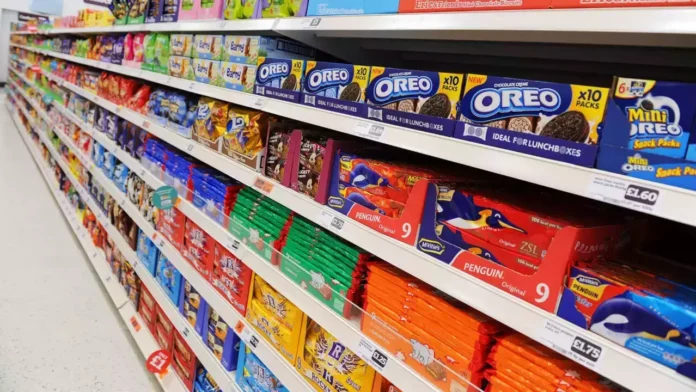
The collection, featuring 17 frozen items including pizzas, pastas, side dishes, and desserts, is now accessible in 208 Morrisons stores. These products are showcased collectively in a designated branded freezer section, streamlining the selection process for customers to easily pick their main courses, side dishes, and desserts.

Drawing inspiration from the well-loved dishes on the Zizzi menu, these items provide customers with the opportunity to savor the restaurant’s flavors in the comfort of their own homes.

Zizzi’s Innovative New Products:

The range comprises eight exclusive products available solely at Morrisons. Among the new additions are the Calzone Carne Piccante, Garlic Soul Breads, Chicken & Mushroom Risotto, and two Rustica pizzas.

The selection accommodates a variety of preferences, encompassing vegan choices. It includes five Rustica pizzas, each adorned with a drizzle of either chilli or basil oil, a hand-stretched Calzone, and seven pasta and risotto options, featuring Bucatini Meatballs.

Furthermore, the offering comprises two options: Garlic Soul Breads infused with garlic butter and two delectable desserts, featuring Salted Caramel Brownies.

Rachel Hendry, retail and grocery director at Zizzi, said, “Our ambition for Zizzi at home has always been to offer shoppers a full dine-in meal solution that gives them a choice of our premium restaurant-inspired dishes at an affordable price, so our launch into Morrisons brings this to life.”

“We have worked in partnership with Morrisons to deliver true innovation to its shoppers, so we’re excited to launch six completely new products within the 17-strong range. Our Garlic Soul Breads are so unequivocally Zizzi, and represent the little twists we bring to all our dishes.”

Tessa Ward, category director frozen at Morrisons, added, “We’re excited to partner with Zizzi to launch its frozen shop, which offers so much quality and choice for our customers. The 17-strong Zizzi range has something for everyone, with lots of innovation and at a price everyone will love. This is our biggest Frozen range change since 2019, and we’re sure it will be a hit with our customers.”

Continue Exploring: Finland’s Valio to enhance frozen product processing with €10 Million investment

Advertisement

Restaurant booking platform TheFork announces exit from Australian market

0
TheFork

TheFork, a global online restaurant booking and review platform, will close its operations in Australia at the end of March.

Announcing the decision on its website, the company explained that the choice to discontinue its Australian operations had been made after “careful consideration.”

The company blamed the ongoing impact of the Covid-19 pandemic for its imperative to explore cost-cutting measures.

“We understand that this decision may come as a surprise, and we want to assure you that this was not a choice made lightly.”

“Due to the significant impact the pandemic had on the global economy, particularly the hospitality industry, we therefore had to implement certain cost measures, which includes a reduction of TheFork’s geographical footprint.”

Booking and Gift Card Policies at TheFork:

From March 31, the company’s local website and app will no longer be accessible, and customers were advised to redeem their Yums – points accumulated through its loyalty program – by this date.

“Once this date passes, any unused points will automatically expire and will become inaccessible.”

TheFork will accept restaurant bookings in Australia until its closure on March 31, and its gift cards will retain their validity for three years from the date of purchase.

Operating in 12 countries globally, including the UK, France, and Spain, TheFork’s website highlights a membership of over 55,000 restaurants.

Established in Australia in 2009, the business initially known as Dimmi was launched by local tech entrepreneur Stevan Premutico.

In 2015, TripAdvisor, the global review and booking platform giant, acquired Dimmi, leading to its rebranding as The Fork in 2019.

Following the sale of the business to TripAdvisor, Mr. Premutico proceeded to introduce the QR code restaurant ordering app, me&u.

Continue Exploring: OhWaiter joins Toast Partner Ecosystem, revolutionizing restaurant ordering systems

Advertisement

Indian rice exporters face uphill battle in 2024 amid policy uncertainties and price challenges

0
Rice
Rice

Indian rice exporters are bracing for a challenging year ahead, marked by policy uncertainties and elevated local prices that hinder the normalization of rice exports from the country.

According to S&P Global Commodity Insights, the market continues to be influenced by the measures implemented by the Indian government in 2023, which include the prohibition of non-Basmati white rice exports, a 20 percent duty on parboiled rice exports, and a minimum export price of USD 950 per million tonnes (mt) for Basmati.

Despite global repercussions and multi-year high prices, indications suggest that restrictions are likely to persist at least until the first half of 2024.

The Indian government’s decision to curb rice exports was prompted by escalating domestic prices and the desire to ensure adequate supply for the country.

Continue Exploring: India prohibits non-basmati white rice exports amidst supply concerns

Most industry experts anticipate that the government won’t ease restrictions before the general election scheduled for April-May 2024.

El Nino’s Impact: Rice Production and Supply Complications

The fall in rice production during the 2023-24 kharif season, influenced by El Nino-induced dry weather conditions, further complicates the supply situation.

The US Department of Agriculture’s projection for total rice production in India for the October-September period is 128 million mt, down from 135.5 million mt the previous year.

Despite trade curbs, local rice prices have remained robust, leading the government to issue warnings to retailers. However, millers and exporters foresee a sustained high-price environment until the next kharif harvest season, driven by high procurement prices offered by certain state governments and strong demand from southern Indian states.

West Africa, a significant consumer of Indian rice, is expected to experience subdued demand due to price sensitivity. In 2023, anticipating export curbs, many buyers in West Africa imported large volumes of rice.

However, with restrictions now in place, buying has slowed, and high prices may further dampen India’s non-Basmati parboiled rice exports to the region.

While demand from Southeast Asia and some Gulf countries is expected to remain stable, exporters anticipate challenges in West Africa.

The steady demand for Basmati rice might face hurdles due to higher logistics costs and the minimum export price.

Despite shipping disruptions in the Red Sea, exporters believe that Basmati exports will adjust to the new reality without significant disruptions.

On a positive note, India’s rice stocks in the Food Corporation of India’s central pool stood at 56 million mt as of December 1, a 15 per cent YoY increase.

Despite concerns about sustained restrictions, the stock levels are well above the government’s buffer stock norm, providing hope for a potential relaxation of export constraints.

Exporters are optimistic that a slow start to procurement this season will eventually improve paddy availability for exports.

Advertisement

Domino’s Pizza expands its presence in India with new store launch at Guwahati Airport

0
Domino’s

US-based pizza restaurant chain Domino’s has launched a new store in Guwahati at the departure terminal of Lokpriya Gopinath Bordoloi International Airport, a company official said on Sunday.

“Extremely delighted to share the opening of Domino’s store at Guwahati airport- departure terminal. Looking forward to fly high enough to reach the clouds with all the pizza lovers visiting our Domino’s store,” said Jatin Rai, head – franchise expansion and operations at Jubilant FoodWorks Ltd in a LinkedIn post.

Headquartered in Michigan, the multinational pizza restaurant chain was founded in 1960 by brothers Tom and Jim Monaghan.

Since 1995, Jubilant FoodWorks, an Indian food service company, has held the franchise rights from Domino’s Pizza Inc. to expand and manage the Domino’s Pizza brand in India, Sri Lanka, Bangladesh, and Nepal. The first Domino’s Pizza outlet in India was opened in New Delhi in 1996.

Domino’s Pizza’s Nationwide Presence:

Presently, the QSR (quick service restaurant) chain operates over 1,900 Domino’s restaurants across the country.

Continue Exploring: Domino’s Pizza takes on upscale pizzerias in India with premium offerings and hyper-localized approach

Advertisement

Nykaa’s fashion vertical takes the lead with anticipated 40% YoY GMV growth in Q3 FY24

0
Nykaa
Nykaa

Nykaa, a prominent beauty and fashion ecommerce player, reported in its Q3 FY24 performance update that it experienced steady growth across all three of its business verticals throughout the quarter.

Nevertheless, the Falguni Nayar-led company also stated that, despite improvements in long-term macro indicators, discretionary consumption was impacted during the quarter due to short-term pressures.

After Nykaa’s exchange filing on Sunday (January 7), there was nearly a 5% surge in its shares, reaching INR 182 during Monday’s intraday trading hours. However, by 2.45 PM IST, the shares moderated their gains to trade 2.5% higher at INR 177.7 on the BSE.

Building on the positive momentum of the preceding quarter, the company reported robust growth for Nykaa Fashion in the current quarter.

The company projected that the gross merchandise value (GMV) of the fashion vertical in Q3 FY24 is anticipated to increase by approximately 40%, while the net sales value (NSV) is expected to exhibit year-on-year (YoY) growth in the low thirties.

The GMV for the fashion vertical in the previous year’s quarter, Q3 FY23, amounted to INR 724.4 Crores, while its net sales value (NSV) stood at INR 210 Crores.

Despite facing challenges in Q3 FY23, Nykaa Fashion has been gaining momentum since the previous quarter. In Q2 FY24, its GMV recorded a YoY growth of 27%, reaching INR 762.8 Crores, while the NSV surged by 32% YoY to INR 232.1 Crores.

In contrast, Nykaa’s beauty and personal care (BPC) business continued to face challenges. The company projected that the GMV growth for the BPC vertical in Q3 FY24 would be in the mid-twenties, with NSV growth expected to be around 20% on a year-on-year (YoY) basis.

In the corresponding period a year ago, during Q3 FY23, the GMV for the beauty and personal care (BPC) vertical amounted to INR 1,901.4 Crores, with the NSV reaching INR 1,151.3 Crores.

Against a backdrop of sluggish growth in this segment, Nykaa reported a GMV of INR 1,850.8 Crores and an NSV of INR 1,167.5 Crores for the beauty and personal care (BPC) segment in its most recent quarter, Q2 FY24.

“We believe Nykaa’s BPC growth for the quarter is ahead of industry growth. However, we believe current industry growth is below long-term trajectory and should revert to the median in the near to mid-term, given the strong macroeconomic and demographic outlook,” said Nykaa.

Continue Exploring: Nuvama analysts bullish on Mamaearth for MSCI Smallcap Index, Nykaa gaining momentum for Global Standard Index

Furthermore, the company mentioned that the variance in Gross Merchandise Value (GMV) and Net Sales Value (NSV) growth within the BPC business for the quarter was primarily due to brand-led pricing and discounting, especially in mass and masstige categories. The sustained and robust growth in underlying order volume reflects consistent and strong customer demand.

Anticipated Boost in Q3 FY24 Due to Festive Season for Nykaa

It’s important to highlight that Nykaa is anticipated to receive a boost in Q3 FY24, given that the festive season coincided with this quarter.

Meanwhile, the third vertical, Superstore By Nykaa, has experienced significant growth and currently commands a meaningful share in the company’s overall NSV, as stated by Nykaa.

“For Q3 FY24, at a consolidated level, we expect our NSV to grow in the mid-twenties and revenue to grow in the low twenties on a YoY basis,” the company added.

In Q3 FY23, Nykaa reported an overall Gross Merchandise Value (GMV) of INR 2,796.5 Cr and an operating revenue of INR 1,462.8 Cr. However, Nykaa’s consolidated net profit declined by 70.7% YoY to INR 8.5 Cr in the corresponding quarter of the previous year.

Nykaa’s profit in Q2 FY23 stood at INR 7.8 Cr.

Advertisement

Indian single malt whiskies outshine global brands in sales, achieving a landmark 53% market share in 2023

0
Whisky

In a noteworthy development, Indian single malt whiskies have surpassed well-known international brands like Glenlivet, Macallan, Lagavulin, and Talisker in terms of sales for the first time. According to estimates by the Confederation of Indian Alcoholic Beverage Companies (CIABC), Indian single malts accounted for approximately 53% of total sales in 2023. Out of the overall sales of around 675,000 cases (nine liters each) of single malts in India last year, Indian-origin makers sold around 345,000 cases, while Scottish and other international brands sold the remaining 330,000 cases.

“In our estimation, local brands experienced a growth of around 23% in 2023, while imported ones grew at a more conservative rate of 11%. This is a significant milestone,” said Vinod Giri, director-general of CIABC.

Referring to it as a significant achievement for Indian whisky producers, Thrivikram Nikam, Joint Managing Director of Amrut Distilleries, said, “It’s not every day that such a feat is achieved. Indian whisky makers have come a long way from being mocked just a decade-and-a-half ago. They are now second to none in terms of quality and refinement.”

‘Made in India’ Preference Boosts Single Malt Whiskies

The rising popularity of ‘Made in India’ brands has led major international players like Diageo and Pernod Ricard, traditionally reliant on Scottish single malts, to venture into the Indian market with their indigenous labels. Diageo unveiled Godawan in 2022, and Pernod recently introduced its inaugural Indian single malt, Longitude 77.

Continue Exploring: Pernod Ricard unveils its first made-in-India single malt, Longitude77

“India is a fast-growing and diverse market, and the younger audience is inclined towards experimenting with niche products. Consumers are seeking newer offerings, and there is great value in uniqueness,” said Kartik Mohindra, chief marketing officer at Pernod India.

Paul P John, the chairman of John Distilleries, responsible for crafting single malts in Goa, suggests that foreign brands are now experiencing heightened competition as Indian companies ascend in prominence.

“They were caught off guard and are now trying to catch up. Unfortunately, they are taking shortcuts and producing products here that they don’t fully understand. India has arrived.”

Indian single malt producers challenge the “arrogance of Scotch purists,” who emphasize the importance of “Scottish weather, Scottish water, and Scottish barley,” in favor of acknowledging the “irreplaceable quality” inherent in European brands. Prem Diwan, chairman and MD of Devans Modern Breweries, which distills whiskies in Jammu, said, “The quality of Indian single malts is absolutely fantastic, which is one of the main reasons driving their demand. While Scottish makers adhere to traditional processes, Indian makers love to experiment.”

According to Kartik Mohindra from Pernod India, there is sufficient demand for all participants in the market to sustain growth. The emergence of Indian single malts marks a new chapter for the country’s whisky industry, with indigenous brands gaining acknowledgment and engaging in competition with global giants.

Continue Exploring: Rising tide of Indian single malts disrupts Pernod and Diageo in booming spirits market

Advertisement