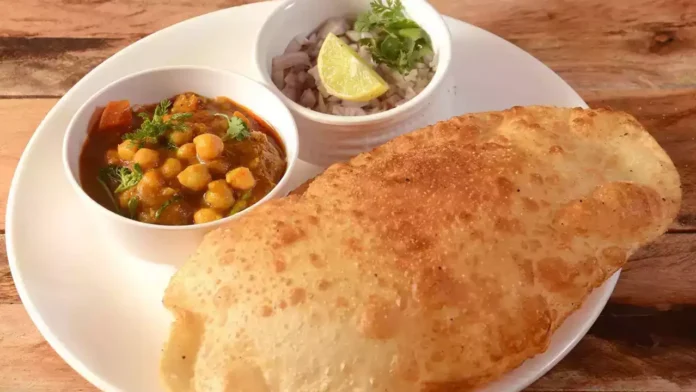
Amidst rising tensions between India and Maldives, Mr. Bhatura, a restaurant in Noida is enticing customers with a tempting promotion. Now, with every booking to Lakshadweep or any canceled trips to the Maldives, patrons can enjoy a complimentary plate of ‘chole bhature.’
“Through this, we want to promote tourism in Lakshadweep. We started this scheme on Saturday and the response has been very good. In the NCR region itself, 10 people have availed the scheme and they have appreciated it. We now plan to extend the scheme till the end of January,” Vijay Mishra, owner of the restaurant, was quoted as saying by India Today.
He added that the initiative goes beyond mere business transactions; it is also a gesture of solidarity with the country and its tourism sector.
Speaking about the unique ad, the restaurant chain owner revealed that the idea originated when Maldivian ministers began making derogatory remarks against Prime Minister Narendra Modi.
India-Maldives relations faced tension when President Mohamed Muizzu, perceived as a pro-China leader, asserted upon assuming the presidency in November last year that he intended to fulfill his election pledge of expelling Indian military personnel from his country.
The Maldives is one of India’s key maritime neighbors in the Indian Ocean Region, and the overall bilateral relationship, including in areas of defense and security, witnessed an upward trajectory under the previous government in Male.
Earlier, the Maldives media reported that Mohamed Muizzu had asked India to withdraw its troops from the island nation before March 15.
Muizzu’s latest move comes in the wake of a social media storm that erupted a week earlier, leading to the suspension of three island ministers over alleged derogatory comments against Indians and Prime Minister Narendra Modi. As a consequence, Indian leaders, celebrities, and tour companies responded by canceling trips to the island and expressing their commitment to enhancing tourism in domestic islands.
As India solidifies its position as the world’s third-largest startup ecosystem, the involvement of celebrities in startup investments has gained significant traction.
In recent years, celebrities have demonstrated growing support for F&B startups, either through investments or by venturing into entrepreneurial pursuits. Divas such as Deepika Padukone, Anushka Sharma, Kareena Kapoor, and Shilpa Shetty have delved into F&B startup investments, endorsing products, or launching their own initiatives.
Here is a list of celebrities who have made investments in F&B startups:
1. Deepika Padukone:
Deepika Padukone, a leading actress has not only achieved immense success on the silver screen but has also solidified her position as a savvy investor.
In 2017, Padukone established KA Enterprises LLP, a firm dedicated to overseeing her financial matters and engaging in investments in startup ventures.
She boasts an impressive net worth of approximately INR 500 Cr, attributed not only to her highly successful Bollywood career but also to a substantial portfolio of strategic investments in promising startups. Here are some of these emerging F&B ventures that have received her financial backing:
Blue Tokai Coffee Roasters:
Blue Tokai Co-Founders: Shivam Shahi, Namrata Asthana, Matt Chitharanjan
Established in 2013 by Matt Chitharanjan, Namrata Asthana, and Shivam Shahi, Blue Tokai, a specialty coffee brand, functions as a coffee roasting company in both India and Japan. With four roasteries and a presence in over 80 physical outlets across major Indian cities, the brand not only provides a variety of ready-to-drink products but also offers diverse gifting options.
Presently, Blue Tokai is located in Delhi-NCR, Mumbai, Bangalore, Hyderabad, Kolkata, Chandigarh, Mohali, Pune, and other cities in India. Additionally, the brand organizes frequent pop-ups in Tokyo.
In the realm of business-to-business (B2B) engagements, Blue Tokai has formed partnerships with various retail establishments throughout India, luxury hotels, restaurants, leading corporate entities, and co-working spaces, among other collaborators.
In September 2023, Deepika Padukone invested an undisclosed amount in Blue Tokai’s Series B funding round.
Commenting on the investment, Padukone said, “As someone who is immensely passionate about homegrown brands and deeply values authenticity and transparency, investing in Blue Tokai was an evident choice.”
Epigamia, established in 2015 by Mirchandani, Uday Thakker, Chef Ganesh Krishnamoorthy, and Rahul Jain, initially introduced itself as a Greek Yogurt brand. Over the years, the brand has diversified its offerings to include artisanal curd, snack packs, mishti doi (an Indian sweet curd), and smoothies. With a product range spanning 21 stock-keeping units, Epigamia has successfully penetrated 10,000 retail touchpoints, including major outlets such as Big Basket, and Amazon, as well as various general traders across key cities like Delhi-NCR, Mumbai, Bengaluru, Chennai, Hyderabad, Pune, Ahmedabad, and Kolkata.
In 2019, Deepika Padukone participated in a Series C funding round led by Belgium-based consumer-focused investment firm Verlinvest, DSG Consumer Partners, and Danone Manifesto Ventures, the venture investment arm of the French multinational food company Danone. While the exact investment amount remains undisclosed, Padukone also took on the role of a brand ambassador for the startup as part of the deal.
At the time, Deepika Padukone had said, “Not only do I love the products but also connect very strongly with the brand philosophy. The team has big plans for expansion and I am excited to be closely involved as we roll out new products and enter new cities.”
Supertails:
Vineet Khanna, Varun Sadana, Aman Tekriwal, Co-Founders of Supertails
Supertails, a pet care startup headquartered in Bangalore, was established by former Licious executives Vineet Khanna, Varun Sadana, and Aman Tekriwal. This digital platform is designed to meet the needs of pet owners in India by providing comprehensive services. Supertails offers veterinary care, serving as a one-stop solution for pet food and supplies. The platform operates as a fully digital telehealth consultation service and facilitates doorstep delivery of pet supplies nationwide.
In July 2021, Supertails secured $2.6 million in a Pre Series A funding round, spearheaded by Saama Capital and DSG Consumer Partners. Other notable contributors to the funding included Whiteboard Capital, Titan Capital, and Sauce VC.
During the same funding round, Deepika Padukone also made an undisclosed investment in the company.
2. Anushka Sharma:
Anushka Sharma, the acclaimed Bollywood actress, has garnered admiration for her exceptional talent and mesmerizing on-screen portrayals. In the year 2022, she expanded her endeavors into the realm of investments.
Blue Tribe Foods:
In February 2022, she along with her husband Virat Kohli made an undisclosed investment in plant-based meat startup Blue Tribe.
Established in 2017 by Sandeep Singh and Nikki Arora Singh, Blue Tribe is a startup specializing in meat alternatives. The company offers a range of plant-based meat products, including frozen minced chicken, chicken nuggets, keema, sausages, and momos. These products mimic the taste, appearance, texture, and cooking properties of meat while being entirely plant-based.
The startup’s offerings are primarily crafted from a blend of pea, soybean, lentils, grains, and various vegetarian ingredients, delivering a combination of proteins, vitamins, and other essential nutrients.
Blue Tribe has also partnered with the Indian arm of the Good Food Institute (GFI), a non-profit organization dedicated to promoting plant-based alternatives for meat, dairy, and eggs.
As per a Meticulous Research report, the global plant-based food market is anticipated to reach $74 billion by 2027.
Slurrp Farm:
Shauravi Malik and Meghana Narayan, Co-Founders, Slurrp Farm (Credits: Entrepreneur.com)
Established in 2016 by Meghana Narayan and Shauravi Malik, Slurrp Farm is a company dedicated to crafting wholesome snacks tailored for children. Their product lineup encompasses a variety of cereals, milk mixes, and snacks, featuring convenient options like ready-to-mix pancakes, cakes, dosas, noodles, and pastas.
Wholsum Foods, the parent company of Slurrp Farm, distributes its offerings via its official website and various online marketplaces. Currently, the company has successfully solidified its footprint in India, the UAE, the US, and the UK, extending its services to customers across these geographical regions.
In April 2022, Slurrp Farm secured an undisclosed investment from Anushka Sharma. Under the terms of the agreement, Sharma also assumed the role of a brand ambassador for Wholsum Foods.
In the fiscal year 2021-22, the company achieved an Annual Recurring Revenue (ARR) surpassing INR 50 crore, marking an impressive tenfold growth between June 2020 and December 2021. Moving forward, the company aims to attain a revenue milestone of INR 500 crore by the year 2025.
3. Kareena Kapoor Khan:
Kareena Kapoor Khan, renowned for her glittering Bollywood career, has expanded into investments in the food and beverage space. Despite acknowledging her lack of business acumen, she entered the food and beverage domain by investing in Pluckk, a direct-to-consumer fruits and vegetables brand.
Pluckk:
Established in 2021 by Prateek Gupta, this Mumbai-based startup provides a diverse range of over 400 products spanning 15+ categories, such as essentials, exotics, hydroponics, and cuts. With seed funding from Exponentia Ventures, Pluckk has established a robust presence in Mumbai, Delhi, Bengaluru, and Pune, and has ambitious plans for further geographical expansion.
Apart from Pluckk’s dedicated consumer-focused app, it distributes its products through various marketplaces and quick-commerce platforms. These include Amazon, Swiggy, Dunzo, Zepto, and Reliance Signature Stores, enabling them to connect with a broader customer base.
In August 2023, Kareena Kapoor invested an undisclosed amount in the brand and took on the role of its brand ambassador.
Shilpa Shetty Kundra, an actress, film producer, dancer, businesswoman, and author has diversified her portfolio beyond the realms of entertainment.
Having actively engaged in various ventures, Shetty has witnessed a consistent rise in her net worth over the years. As of 2023, her estimated net worth is $20 million, reflecting a continuous upward trend from $10 million in 2018 to $18 million in 2022.
WickedGud:
Mumbai-based WickedGud, a ready-to-cook D2C brand, specializes in products like pasta and noodles, ensuring they are crafted with wholesome ingredients. The startup asserts the use of innovative Steaming and Convection Air Drying (SCAD) technology in the manufacturing process of its products.
Established in 2021 by Bhuman Dani, Monish Debnath, and Soumalya Biswas, the startup gained widespread recognition when its founders appeared on Shark Tank India. Post that, the startup expanded into international markets, including the UAE, Singapore, Mauritius, and Nepal.
Bhuman Dani, Monish Debnath, and Soumalya Biswas, Co-Founders, WickedGud
In May 2023, Shilpa Shetty infused INR 2.25 Crores into the brand and concurrently assumed the role of its brand ambassador.
In August 2023, the company unveiled its ambitious goal of achieving a net revenue of INR 700 crores and an EBITDA of INR 100 crores over the next seven years.
Kisankonnect:
Kisankonnect, established in 2020 during the Covid pandemic by founders Vivek Nirmal and Nidhi Nirmal, is a fully integrated fresh produce agritech startup. Transforming the conventional supply chain, this Mumbai-based company has embraced a direct-to-consumer approach. Leveraging a network of 5,000 farmers and village-level collection centers, Kisankonnect directly sources food from these farmers, eliminating middlemen for a seamless and transparent supply chain. The harvested produce is efficiently delivered to consumers in Mumbai and Pune, granting them access to high-quality farm-to-fork products.
Furthermore, the startup manages the cultivation of around 1.75 lakh acres of land, allowing them to provide a diverse selection of over 200 varieties of vegetables and 100 types of fruits via their online platform.
In May 2023, Kisanconnect received undisclosed funding from the celebrity Shilpa Shetty as part of its angel round.
Speaking about her investment in the startup, she said, “Not only are they (Kisankonnect founders) solving the problem of safe-to-eat food, but they are also connecting thousands of farmers directly to the consumers, resonating with my thoughts about promoting health in my country, where agriculture is one of the major occupations.”
The startup recently secured INR 31 crore (approximately $3.75 million) in a pre-series A round, with Green Frontier Capital (GFC), a climate tech-focused fund, leading the investment.
Analysis indicates that Indian agritech startups have secured more than $2.4 billion in funding since 2014.
5. Samantha Ruth Prabhu:
Ruth Prabhu, one of the most highly paid actresses in South India, has expanded her portfolio into the food and beverage industry through her investment in the superfood brand ‘Nourish You’.
Established in 2015 by Rakesh Kilaru, Krishna Reddy, and Sowmya Reddy, Nourish You specializes in offering nutritious snacks and products based on quinoa and chia seeds through its website and various e-commerce platforms. The startup competes in multiple categories with other ventures like Slurrp Farm and The Whole Truth.
In March 2023, Samantha Prabhu made an undisclosed investment in the startup. Her investment was a part of Nourish You’s $2 million seed funding round that occurred in January, featuring participation from angel investors such as Y Janardhana Rao from Triumph Group, Rohit Chennamaneni, co-founder of Darwinbox, and Nikhil Kamath from Zerodha, among others.
Speaking on the investment, Samantha said, “Investing in Nourish You was a natural progression since I have been consuming their products for a while… I believe that Nourish You can create value while making a positive impact on the health of consumers as well as the planet. I’m excited to partake in their innovative and sustainable approach to business.”
As per a report, the market size of the Indian healthy foods segment is projected to reach $30 billion by 2026.
6. Nayanthara:
Known as the Lady Superstar, Nayanthara holds the title of the highest-paid female actor in the South. Alongside her filmmaker husband Vignesh Shivan, the actress has infused an undisclosed amount into The Divine Foods, a Chennai-based venture.
Established in 2019 by Kiru Maikkapillai, The Divine Foods specializes in crafting products using traditional superfoods like turmeric, moringa, millet, and more. The company’s offerings encompass a diverse range, including turmeric oil, turmeric golden milk, masks, turmeric drinks, turmeric powder, honey, and various other products.
The direct-to-consumer (D2C) startup, having secured a grant from the Tamil Nadu government through its flagship seed funding initiative TANSEED 4.0, aimed to utilize the funds for building brand awareness among the general public. Additionally, the company sought to inspire other celebrities to lend their support to local businesses.
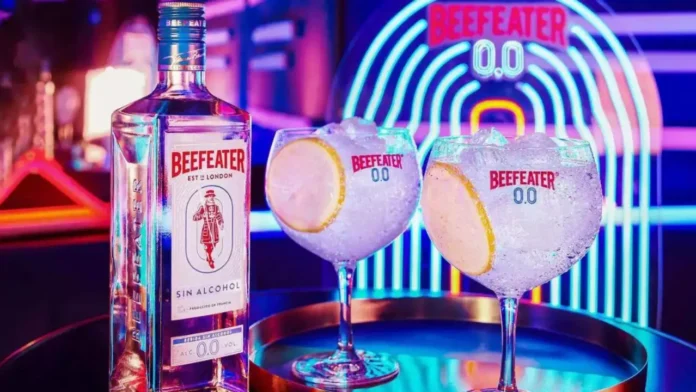
Pernod Ricard has introduced a new addition to its alcohol-free brand lineup, unveiling the latest innovation, Beefeater 0.0%.
Drawing inspiration from the classic Beefeater London Dry Gin, the recently launched 0% alcohol spirit retains the distinctive citric and juniper-driven characteristics. The brand ensures a well-balanced and refreshing drinking experience, despite the absence of alcohol.
Beefeater 0.0% is crafted using the timeless recipe of Beefeater London Dry Gin as its foundation, incorporating natural flavors to achieve the botanical profile.
The recently introduced transparent spirit is defined by citrus fragrances, particularly those of orange and lemon, complemented by underlying botanicals like juniper, coriander, and angelica.
Murielle Dessenis, global VP marketing gins for The Absolut Group, said, “Over the last few years, we have seen the trend toward more mindful consumption increasing, as consumers become more health conscious. As a consequence, they are changing the way in which they drink or socialise with others.”
She continued, “We truly believe in conviviality, whether you choose to drink alcohol or not, and we are proud to be bringing to the no-alcohol category an elevated option, removing the need to compromise or miss out on the occasion. Beefeater 0.0% is our very first zero alcohol expression, which captures the energy of our timeless London classic but without the alcohol.”
Beefeater 0.0% will initially launch in Spain for an RRP of €13.50.
New Zealand’s food prices have seen a modest 4.8 percent year-on-year increase, as announced by the statistics department Stats NZ on Thursday. This marks the lowest annual rise since December 2021.
According to the department, price hikes in all measured food categories contributed to the annual increase in December 2023, as reported by Xinhua news agency.
Restaurant meals and ready-to-eat food prices increased 7.1 per cent; grocery food prices increased 5.4 per cent; non-alcoholic beverage prices increased 5.5 per cent; meat, poultry, and fish prices increased 2.3 per cent; fruit and vegetable prices increased 1.5 per cent, it said.
“The largest contribution to the annual change was restaurant meals and ready-to-eat food, mainly driven by higher prices for dine-in meals and takeaways,” Stats NZ consumers prices manager James Mitchell said.
Food prices experienced a 0.1% decrease in December 2023 compared to November 2023, marking the fourth consecutive monthly decline, according to Mitchell.
The primary factor behind this decline was non-alcoholic beverages, with prices of carbonated drinks and energy drinks being the main drivers.
He mentioned that additional items contributing to the monthly decline include tomatoes, nectarines, and lamb.
In December 2023, 45 per cent of items fell in price, while in December 2022, 39 per cent of items fell in price, statistics show.
“We are continuing to see more food items fall in price than a year ago,” Mitchell said.
“In the last year, five months have shown a price fall,” Mitchell said, adding the changes in food prices for the last few months are comparable to those before 2020.
According to a Bloomberg report, Turmoil in the Red Sea is beginning to impact the transportation of various commodities, ranging from coffee to fruit. This upheaval poses a threat to the recent easing of food inflation, providing some respite to burdened consumers.
Ships carrying food supplies are steering clear of Houthi attacks in the key waterway by opting for a longer and more expensive route around Africa. However, unlike gas, oil, and consumer goods shipments, the extended shipping times for perishable foods raise the concern of rendering them unsellable.
This is causing concern in the industry. Italian exporters are apprehensive that kiwi and citrus fruits might spoil during transportation, Chinese ginger prices are rising, and certain African coffee shipments faced brief delays. Grain is being redirected away from the Suez Canal, and a livestock carrier en route to the Middle East has altered its course.
Though the impact is currently confined, it serves as a reminder of the vulnerability of food supply chains. If disruptions intensify, there is the potential to halt the decline in food commodity costs that had begun to translate into lower grocery bills.
Nitin Agrawal, the managing director of Euro Fruits, a major Indian grape exporter, commented, “Everyone is adversely affected here.” Typically, the company exports to Europe through the Red Sea, but is currently compelled to take the longer route, resulting in more than a quadrupling of freight costs and doubling transit times.
This implies a decline in grape quality, and as per Agrawal, most European importers have consented to elevated prices for Indian grapes. This will result in increased costs for consumers. The European Union typically depends on India for approximately one-seventh of its table grapes, with the proportion rising to over 35% during the crop’s peak in March-April, as reported by the European fresh produce association Freshfel.
Shipping Challenges Affecting Meat and Agricultural Exports
Concerns are growing among Italian exporters, who annually sell approximately $4.4 billion worth of agricultural produce to Asia. Massimiliano Giansanti, the president of the farm group Confagricoltura, expresses worry that opting for the longer route around Africa may compromise the freshness of fruits such as apples, kiwi, and citrus, leading to increased costs. Additionally, there are similar concerns for meat shipments, particularly India’s buffalo-meat exports bound for regions like North Africa, which are experiencing delays, according to Fauzan Alavi, spokesperson for the All India Buffalo and Sheep Meat Exporters Association.
Farmers may find themselves in a challenging situation, contemplating the need to reduce their prices to offset the increased shipping costs.
“We have to sell even if prices fall as we can’t prolong the harvesting period,” said Sandeep Dagu Sandhan, a grape grower in India’s state of Maharashtra, where harvesting has started in some areas. “Exporters always manage to cover their costs. It will be our losses if prices crash.”
Tesco Warns of Inflation, Sainsbury Addresses Delays
The shipping challenges are causing apprehension for Europe’s exports, including products such as pork, dairy, and wine, as well as imports like tea, spices, and poultry. The exact extent of the impact remains uncertain, according to CELCAA, representing agri-food traders. Intelligence firm Kpler reported that approximately 1.6 million tons of grain destined for the Suez Canal have been redirected to alternative routes in recent weeks. The majority of these shipments are grains headed for China and Southeast Asia.
UK grocery giant Tesco Plc has issued a warning about potential inflation on certain goods due to shipping disruptions. In response to the challenges, J Sainsbury Plc is actively working with the government to address and manage potential delays in their operations.
Fresh ginger prices at East London’s New Spitalfields Market have surged by over a third since December. Muhammed Patel from the wholesaler Amer Superfresh Ltd., which typically procures from China, noted that suppliers are increasing costs to accommodate the extended transportation distances.
“Every now and then we have delays, but nothing like this,” Patel said.
Certain traders have gone as far as postponing the loading of cargoes. Mercanta, a UK-based coffee importer, temporarily suspended loading operations in East Africa as it awaited clarification on the chosen route by carriers. Although they have resumed loading, any persisting delays could impede sales to Europe. This comes at a time when shipments in the Americas are also encountering limitations, including issues at the Panama Canal.
If a cargo heads south, “it’ll have to go on a very, very long transit and probably be more expensive,” Mercanta founder and managing director Stephen Hurst said.
Coffee Importers Navigate Challenges in Supply Chains
Countries such as Uganda and Vietnam play a substantial role in Europe’s coffee imports, with the Red Sea serving as a crucial artery for this trade.
The Vietnam Coffee Cocoa Association notes a shift in some companies opting for bulk carriers to transport coffee, despite the conventional use of containers for perishable foods. This transition can complicate handling at locations such as ports and increase susceptibility to damage from environmental factors.
Importers are actively pursuing increased supplies of robusta, the beans utilized in instant coffee, from Brazil, disrupting the usual patterns of trade.
Pink salt from Pakistan is another example of the challenges in the market. According to Majid Mahboob Paracha, the manager of international trade at Shahpur Industries, buyers are shrinking their customer base. This is primarily because they are unwilling to bear the higher transport rates, with the costs of shipping a container to Europe currently quadrupling the norm.
“We have the product, but if they are not comfortable with the freight charges, we cannot force them,” he said.
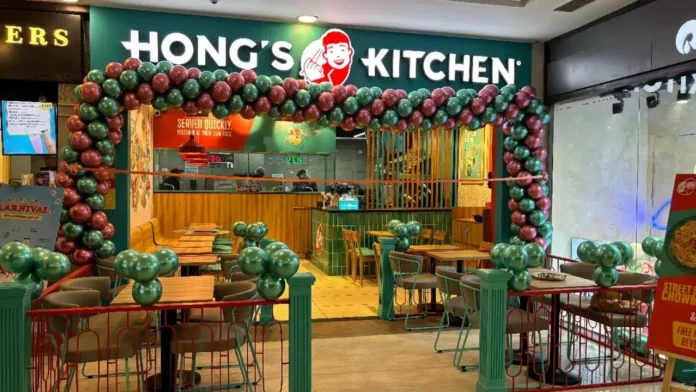
Jubilant Foodworks Ltd (JFL) recently inaugurated the 23rd branch of Hong’s Kitchen, a Chinese food chain, in Delhi. The new outlet is situated at Unity One Mall, CBD Shahdara, as announced in a social media post.
As per its website, Hong’s Kitchen currently operates 11 outlets in Delhi, six in Gurugram, two in Noida, one in Greater Noida, and two in Faridabad.
“Glad to announce the opening of our Hong’s Kitchen – 23rd store at Unity One Mall, CBD Shahdara (Near Karkardooma Court),” posted Prem Chhabra, Deputy Manager- Business Development at Jubilant FoodWorks on LinkedIn.
Jubilant FoodWorks Limited (JFL) is the proprietor of Hong’s Kitchen and operates popular fast-food establishments such as Domino’s Pizza, McDonald’s, and Dunkin’ Donuts. The debut of Hong’s Kitchen in India took place in Gurugram in 2019, with the inaugural outlet situated at Eros Mall, Gurugram.
Chinese cuisine ranks as the second most popularly consumed food outside the home in India.
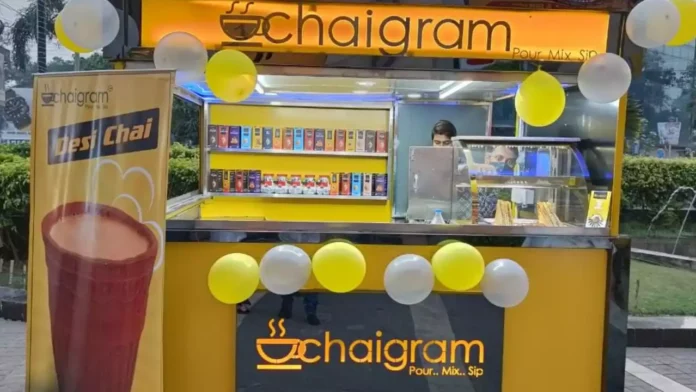
Kolkata-based tea chain Chaigram has recently expanded its presence, unveiling a total of 14 company-owned and company-operated (COCO) stores in Calcutta, as revealed in a social media post by a company official.
“It’s just been like 22 months and it’s been one heck of a journey. We have hit the milestone of 10 stores. In fact, we have launched 14 stores to date,” said Arun Kumar Mukherjee, co-founder, Chaigram in a LinkedIn post.
“All the stores are based out of Calcutta and each of them is in close proximity to one another, helping each other through proper alignment,” added Mukherjee.
The post further details the company’s expansion strategy, outlining plans to launch an additional six to eight stores within the current calendar year.
As per the information provided on the company’s official website, it has catered to more than 5,000 customers and boasts a diverse selection of over 800 curated products spanning across 40 different categories. The online shopping platform features a range of offerings, including unique blends like masala milk tea, tandoori chai, lemongrass milk tea, cardamom milk tea, and various others. Additionally, the company extends its product line to include gift items and grocery products. Mukherjee further notes that the company is currently operating with profitability.
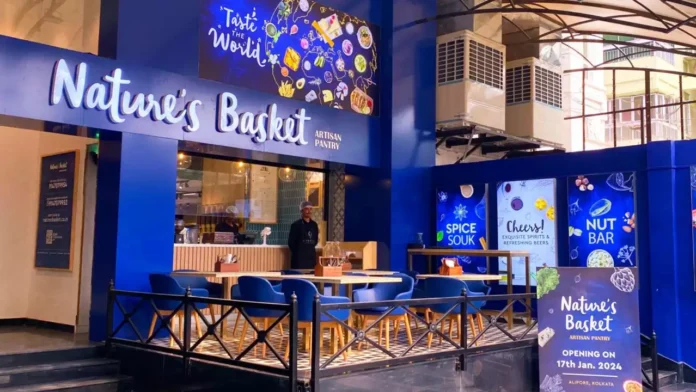
Nature’s Basket, a gourmet retail subsidiary of Spencer’s Retail, strategically unveiled its flagship store in Kolkata on Thursday. Positioned to harness the rising demand for gourmet food products, the company shared the exciting news on social media.
Spanning across an expansive 7,000 square feet of retail space, the new outlet finds its home on Judges Court Road in Alipore, Kolkata.
“Nomoskar Kolkata, we just opened our exquisite Nature’s Basket Artisan Pantry at Judges Court Road, Alipore! This 7,000 sq. ft. flagship store is a foodie’s dream – with exquisite breads, global cheeses, custom chocolates, a truffle bar, and loads of other gourmet delights,” said Nature’s Basket in a LinkedIn post.
The new outlet marks the second entry under the ‘Artisan Pantry’ brand, following the debut of its first outlet at Phoenix Palladium, Lower Parel, Mumbai. Spanning an impressive 12,000 square feet, it proudly holds the title of the largest Nature’s Basket store in India.
Nature’s Basket, established in 2005 as a single store in Mumbai, is a fully owned subsidiary of Spencer’s Retail and a member of the RP-Sanjiv Goenka group, with its headquarters located in Kolkata, West Bengal.
Today, the brand has transitioned into an omni-channel retail business, operating over 32 stores across cities like Mumbai, Pune, Bangalore, NCR, and Kolkata.
Spencer’s Retail, a multi-format retailer, offers a diverse array of products spanning categories such as food, personal care, fashion, home essentials, and electronics. Presently, the company operates more than 158 stores, which include 48 hyper stores, across over 35 cities in India, as indicated on its official LinkedIn page.
Hindustan Unilever, a leading player in consumer goods, expressed cautious optimism during the announcement of its third-quarter results. The company anticipates a sustained recovery in market demand in the near term.
Following the release of the results, the company conveyed in a conference call that premium products outperformed mass products. Additionally, it highlighted the ongoing subdued growth in rural areas. The company acknowledged the persistently challenging operating conditions faced by the FMCG industry during the third quarter.
“Looking forward we expect a gradual recovery in market demand to continue aided by increased Government spending, recovery in winter crop sowing and better crop realization. Rural income growths and winter crop yields are key factors that will determine the pace of recovery,” Rohit Jawa, CEO and Managing Director, HUL said in its investor presentation.
In the third quarter of the current fiscal year, the company experienced a 0.6 percent year-on-year increase in net profit, reaching INR 2,519 crore. Meanwhile, the revenue from operations saw a 0.3 percent decline compared to the previous year, amounting to INR 15,188 crore.
“Our focus remains on driving competitive volume growth whilst stepping up investment behind our brands and long-term strategic priorities. We remain confident of the mid to long term potential of Indian FMCG sector and HUL remains well positioned to unlock this opportunity whilst navigating the short-term challenges,” Jawa said.
HUL disclosed a 2 percent underlying volume growth, with its home care and beauty & personal care segments experiencing mid-single-digit UVG.
The foods & refreshments segment achieved low-single-digit UVG following the company’s implementation of pricing measures to counter increased commodity and input costs.
“HUL has delivered another quarter of resilient performance with strong operating fundamentals amidst a challenging operating environment. Our focus on providing the right consumer value, excellence in execution, increased investments behind brands and capabilities, premiumisation and market development continues to serve us well,” Jawa said.
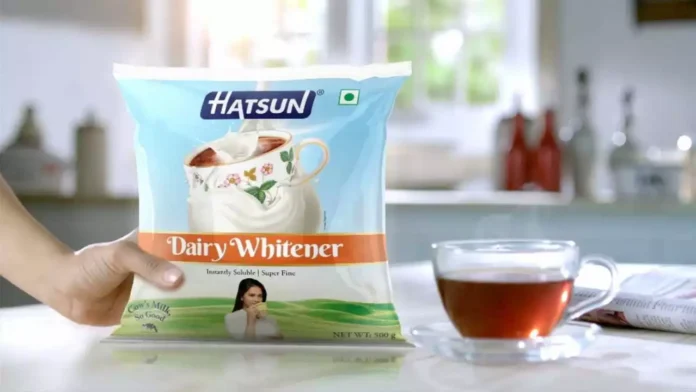
Hatsun Agro Product, known for its brands like Arun IceCreams and Arokya Milk, reported its slowest quarterly profit growth in three quarters, impacted by heavy floods in its home state of Tamil Nadu.
Last month, cyclone Michaung flooded a large part of the southern Indian state of Tamil Nadu, which is home to 13 of Hatsun’s 20 milk processing plants and, according to ICICI Securities, accounts for over half of the company’s revenue.
In the three months ending on December 31, the Chennai-based company saw a 23.6% increase in its profit after tax, reaching 574 million rupees ($6.91 million). This marks its most sluggish growth since the March quarter of 2023.
Driven by increased raw material costs, total expenses surged by 11.2 percent, offsetting Hatsun’s notable 11.3 percent rise in revenue. This represents the company’s highest revenue growth since the March quarter of 2023, attributed to a productive flush season.
The flush season, spanning from October to February, is characterized by heightened milk production resulting from lower temperatures. It serves as a strategic period for dairies to accumulate and strengthen their supply for the upcoming lean season.
Competitors Heritage Foods and Dodla Dairy are scheduled to announce their third-quarter results later this month.
Hatsun Agro’s shares climbed to a four-month peak, increasing by as much as 3.7 percent after the results. However, they later surrendered all the gains and were trading 2.1 percent lower.
We use cookies to ensure that we give you the best experience on our website. If you continue to use this site we will assume that you are happy with it.