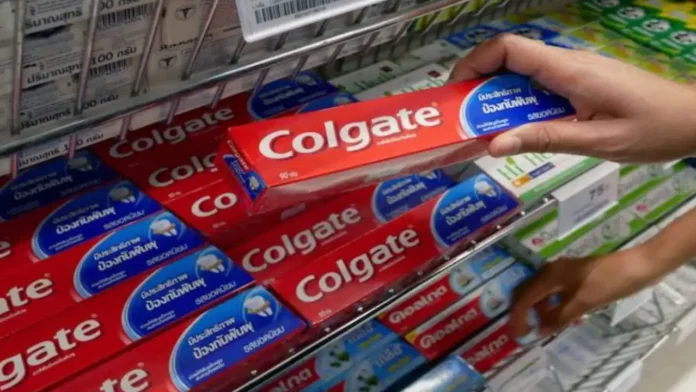
In a regulatory filing on Monday, Colgate-Palmolive (India) announced a notable 35.7% increase in net profit after tax (PAT), reaching INR 330.11 crore for the quarter concluding on December 31, 2023. This marks a significant growth from the net PAT of INR 243.24 crore recorded for the corresponding quarter in the previous fiscal year.
As per the BSE filing, the company’s net sales for Q3 FY24 rose by 8.2% to INR 1,386 crore, contrasting with INR 1,281.21 crore reported in the corresponding period of the previous fiscal year.
Prabha Narasimhan, managing director and CEO of Colgate Palmolive said, “We are pleased with top-line growth for the quarter supported by the strong performance of our core equities. Profitability indicators are on an upward trend and we continue to enhance the investment support behind our brands.”
He further added, “Our current performance underscores the effectiveness of our strategy, focus on technology, securing the right talent, and efforts in governance and cost management. These initiatives have yielded consistent growth for the company, with our toothpaste segment achieving double-digit growth and positive volume expansion.”
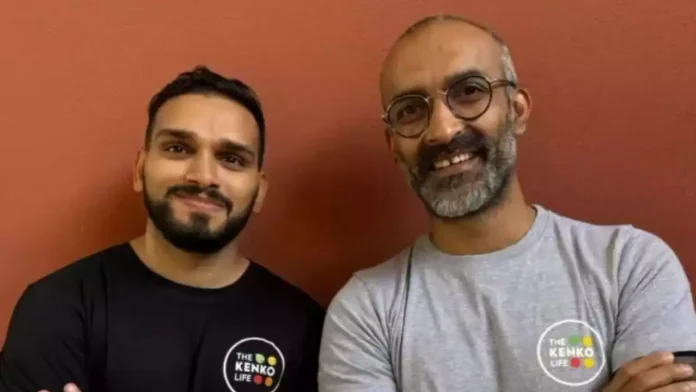
Neeraj Kumar & Vivek Chandran, Co-Founders, The Kenko Life
The Kenko Life, a food delivery platform focusing on health and macro-counted meals, has successfully concluded an angel funding round. The funding was led by R Raghunathan, the Co-Founder of Prizm Payment Services (now known as Hitachi Payment Services Private Limited) and OPC Asset Solutions.
The Kenko Life sets itself apart by delivering customized meals that prioritize individual protein, calorie, and macro requirements, all while emphasizing an exceptional taste experience.
Expert nutritionists at the startup curate personalized meal plans tailored to align with each customer’s health goals, offering continuous support throughout the journey. Kenko provides a variety of dietary options, such as carb-conscious, diabetes-friendly, vegetarian, non-vegetarian, multi-cuisine, and paleo plans, with durations spanning from one week to a month.
Established in 2020 by Neeraj Kumar and Vivek Chandran, The Kenko Life is currently exclusively available in Bangalore. The platform offers a varied menu featuring 100 delightful meal options from diverse cuisines. Customers have the flexibility to choose from lunch, dinner, or both, ensuring a month-long experience without repetition. The startup, operating on a subscription model through its website, serves over 200 meals daily in Bangalore. Additionally, it is accessible on-demand through Swiggy and Zomato.
Expressing enthusiasm about the recent investment, Co-Founder Vivek Chandran stated, “We are thrilled to announce that R Raghunathan, co-founder of Prizm Payment Services and OPC Asset Solutions, with a proven track record in building successful startups, has decided to invest in our company. Raghu brings over 30 years of experience in building and scaling both manufacturing and service-centric businesses. His involvement in our business is a testament to his belief in our vision and potential. We are excited to leverage his wisdom, network, and resources to propel our growth and achieve new milestones.”
Founder Neeraj Kumar added, “The Kenko Life envisions launching an app, securing funds, and expanding to Gurgaon and Hyderabad, leveraging our existing client base and local support. We currently serve around 200 plus meals a day across 100 pin codes in the city; plans also include establishing healthy cafes in two upcoming fitness clubs and at some corporate establishments.”
Udaan, the B2Be-commerce platform, announced senior-level organizational changes on Monday. As part of this restructuring, Kiran Thadimarri, previously the Group Finance Controller, has been elevated to the executive management team. His expanded role includes overseeing treasury, corporate finance, and corporate audit functions.
The company informed that Aditya Pande has decided to pursue opportunities outside of udaan, after a successful stint of over three years as Group CFO.
Also, Vishnu Menon, Head of Corporate Strategy and investor relations, will take on the additional responsibility of business finance, as part of the organisational changes.
The two executives — Menon and Thadimarri — will work towards further strengthening the financial and governance practices at udaan with the objective of enabling the company to achieve operational profitability and public market readiness in the next 12-18 months, according to a company release.
Announcing the organisational changes, udaan said these are in line with the company’s commitment to drive profitable growth and continue strengthening core capabilities.
As part of the organisational changes, Kiran Thadimarri, Group Finance Controller, will be elevated to be a part of the executive management team with additional responsibility of handling treasury operations, corporate finance and corporate audit, in addition to his existing responsibility of financial controller.
In his enhanced role, Thadimarri will report to the CEO.
The release mentioned that Thadimarri, a qualified Chartered Accountant, has been associated with udaan for close to three years.
In a career spanning two decades, Kiran graduated from GE’s premier leadership programmes, was CFO of GE Water, South Asia, has worked closely with Aditya Pande (outgoing Group CFO, udaan) at GE Healthcare during his 14-year stint at GE, and subsequently co-founded a healthcare technology distribution company.
Vishnu Menon, Head – Corporate Strategy & IR, takes on the additional responsibility of business finance, and will continue to report to the CEO.
Menon has been associated with udaan for the past four years. An MBA from IIM Calcutta with a degree in Engineering from the Kerala University, Menon in the past has worked as a management consultant with Bain & Co and was also the Founder & CEO of Wandertrails, an experiential travel startup.
Informing about Aditya Pande’s exit, after a successful stint of over three years as Group CFO, the company said as he transitions, the solid foundation laid during his tenure will enable udaan to tap future growth opportunities, capitalise on scale, and leverage cost synergies.
“During his tenure, Aditya played a pivotal role in shaping udaan’s financial strategy marked by strategic financial decision-making, implementation of resilient financial systems, successful fund raising and a razor-sharp focus on fiscal management,” the release said.
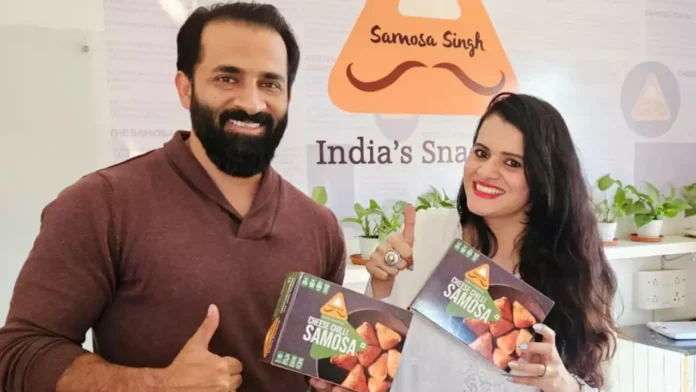
Samosa Singh, a renowned Indian snack brand, has unveiled its innovative “Ready-to-Cook” samosa packs as part of its diverse lineup. Committed to extending the global allure of India’s cherished snacks, the brand is set to introduce an enticing range of Guilt-Free Samosas, adding a flavorful dimension to its traditional samosas and Indian street snacks lineup.
These samosas feature a distinctive encrusted design meticulously developed through hours of rigorous research and development by Samosa Singh. The result is a delectable fusion of pleasure with minimal fat—reduced by up to 50%. With a diverse array of over 20 flavors, including paneer tikka samosa, soya keema samosa, cheese and corn samosa, onion kachori, Punjabi aloo samosa, and more, the brand ensures a delicious variety to cater to diverse palates.
Revolutionizing the iconic samosa into a guilt-free delight, Samosa Singh’s latest creation redefines snacking by harmonizing authentic flavors with health-conscious choices. The Guilt-Free Range ensures a complete absence of cholesterol, trans fat, preservatives, or additives, presenting an outstanding option for consumers prioritizing their health.
The ready-to-cook samosas provide a range of cooking options, including baking, deep-frying, or air-frying, carefully curated to allow consumers to savor these delightful treats in accordance with their preferences.
Speaking on the launch, Shikhar Veer Singh, Founder, Samosa Singh said, “We are excited to extend our product portfolio with the launch of ready-to-cook samosas, now available for a global audience. With over 100,000 hours dedicated to research and development, we are delighted to provide guilt-free enjoyment that flawlessly blends traditional flavors with a modern twist. Samosa Singh is taking the experience of India’s famous samosas to new and larger heights.”
Nidhi Singh, Co-Founder of Samosa Singh, said, “We have entered this space with the intention to provide healthier yet indulgent alternatives, revolutionizing the way people view cooking snacks. Recognizing the broad demand for ready-to-cook products in India and around the world, our mission is to redefine efficiency and inspire more people to cook at home daily. Our varied selection includes alternatives for baking, deep-frying, and air frying, appealing to various tastes. With this unique range, we hope to make meal preparation a seamless and joyful experience for our consumers.”
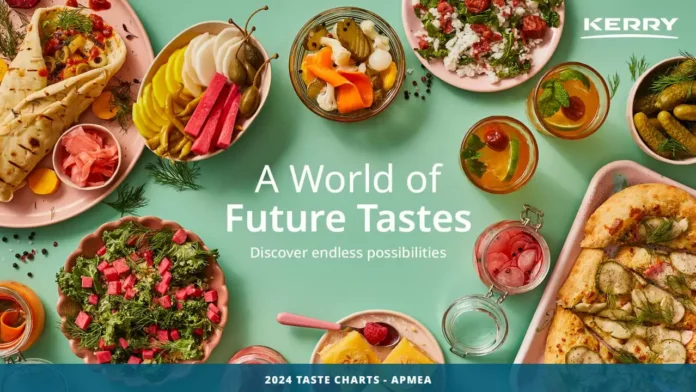
Kerry, a leading presence in taste and nutrition, has unveiled its 2024 Taste Charts, A World of Future Tastes, to the global food and beverage community. The culmination of Kerry’s year-long research is a series of incisive charts created separately for 13 individual regional markets, including 30 countries in Asia Pacific, Middle East & Africa (APMEA).
The charts categorize mainstream, key, up-and-coming, and emerging tastes within five food and beverage segments. They offer a thorough analysis of flavors, ingredients, and trends that are poised to influence innovation in the food and beverage sector in the coming year, serving as inspiration for product and menu developers globally.
Highlighting the remarkable pace of today’s innovation, Kerry researchers delved deeply into the lifecycles of two enduringly popular flavors—orange and chocolate. The study explored how these widely embraced ingredients are transforming into a myriad of inventive and delightful product offerings across the globe. These case studies exemplify the convergence of popular and traditional tastes on a global scale, showcasing how brands are creatively sourcing, combining, and recombining flavors and ingredients to generate new and innovative applications.
In the evolving Indian market, a surge in indulgence and premiumization is evident as consumers develop a preference for flavors such as sea salt, salted caramel, truffle mushrooms, sun-dried tomatoes, and peanut butter.
Other top insights for 2024 flavour innovation in South Asia:
K-Cuisine flavors, such as gochujang and kimchi, are gaining popularity in savory categories.
Chilli gochujang chicken
Cheese+: While cheese remains a popular choice, the current market trend is leaning towards specific types of cheese and pairings that are sure to delight consumers. Notably, parmesan, cheddar, and cream cheese are gaining prominence.
Love for Chili: Various chili varieties with their unique and specific flavors play a crucial role in numerous culinary genres. In India, consumers are increasingly discovering the diverse tastes of green chili, chipotle, peri-peri, sriracha, ghost chili, and more.
Fruits such as Yuzu are gaining popularity across various markets and applications. Recent launches include Yuzu Gose beers in South Africa, Yuzu and pepper mayonnaise in China, and Yuzu low ABV wines and alcoholic beverages in Australia.
In South Africa, authentic local flavors such as Chicken Dust, inventive combinations like chili lemon/lime, and international culinary influences such as jalapeno atchar reflect the nation’s cultural diversity. Additionally, there is a growing trend in the popularity of sweet flavor pairings, ranging from sweet & salty, sweet & spicy, to sweet & smoky.
In India, traditional spices and cooking techniques are taking on a modern twist, resulting in innovative dishes like turmeric latte macarons and other culinary delights. Similarly, in Thailand, this culinary evolution is evident in creations such as charcoal-grilled skewers with fermented chili paste.
Driven by the influence of social media and a quest for novelty, young consumers are seeking bold and unconventional flavor combinations. This trend creates opportunities for unique sweet-savory pairings, such as bacon milkshakes, coffee infused with black garlic, and chocolate bars with wasabi.
The surge in the plant-based revolution is sparking a demand for inventive flavor solutions in meat and dairy alternatives. Examples include jackfruit rendang in Indonesia, mushroom jerky in Australia, and chickpea falafel with a Middle Eastern twist.
Passionfruit, typically regarded as a specialty fruit, has emerged as a prevalent flavor in all 13 distinct global regions according to chart analyses. While it holds mainstream status in New Zealand, it remains an early-stage and developing flavor in the Middle East.
Across wider Asia Pacific, the flavour scene remains vibrant. Commenting on the 2024 Asia Pacific (APAC) Taste Charts, Avinash Lal, Market Research & Consumer Insights Director, Kerry Asia Pacific, Middle East & Africa, stated, “APAC is a colourful flavour tapestry, constantly evolving and influenced by diverse cultural traditions, emerging trends, and evolving consumer preferences. Consumers are rediscovering the magic of their own culinary heritage, seeking out unique regional ingredients and flavour profiles. Traditional spices and cooking techniques are also getting a modern twist, leading to innovative dishes like turmeric latte macarons in India and charcoal-grilled skewers with fermented chilli paste in Thailand.”
Lal added, “Young consumers are craving bold and unusual flavour combinations, driven by social media’s influence and a desire for novelty. This opens opportunities for sweet-savoury pairings like bacon milkshakes, coffee infused with black garlic, and chocolate bars with wasabi.”
Soumya Nair, Global Consumer Research and Insights Director at Kerry, said, “Consumers want tasty new innovations or flavours they may have experienced while traveling. We are seeing many unique flavour intersections in foods and beverages. Although rapidly changing times can present great challenges, they also provide an unparalleled opportunity for brands to catch a trend on the rise. The Kerry 2024 Taste Charts are a valuable tool for the food and beverage industry to navigate the new taste environment for products.”
Procter & Gamble (P&G), the world’s largest consumer goods manufacturer, has enlisted the expertise of management consultancy firm McKinsey & Co to initiate a significant reorganization of its operations. The objective is to enhance agility and expedite growth, with India being one of the initial pilot markets for this strategic plan, as reported by ET.
In India, P&G’s operations are presently structured into four entities: P&G Health, Gillette (focused on shaving products), P&G Health & Hygiene, and P&G Home Products.
The company is considering the potential adoption of a streamlined operating structure that merges portfolios and integrates the robustness of the supply chain with a more efficient cost structure. This internal decision was communicated last Thursday.
P&G’s global CEO, Joe Moeller, has been actively working to reshape the company’s organizational structure in alignment with an “integrated growth strategy.” The restructuring aims to streamline daily decision-making processes, with a focus on embracing constructive disruption—a global theme that executives have emphasized as a top priority.
The restructuring initiative will include evaluating technology to enhance operational efficiency, particularly within the supply chain and technology domains. As an example, the company may explore the democratization of data, enabling broader access across functions and organizations rather than limiting it to specific teams and departments.
“Learning and exploring ways to deliver better outcomes is something we do every day at P&G. This effort is no different. We are squarely focused on accelerating growth and value creation in service to consumers, customers, employees, society and shareholders,” said a P&G spokesperson.
The manufacturer of well-known brands like Whisper, Vicks, Gillette, Oral-B, Tide, and Pantene has recently heightened its dedication. This strategy involves upholding a strong brand portfolio and fostering excellence, efficiency, and positive disruption across the entire value chain. On a global scale, P&G has streamlined its involvement, narrowing down to 10 product categories from 16 and reducing the number of brands from 170 to 65.
In the fiscal year 2022-23, the consumer goods manufacturer based in Cincinnati, USA, touched the $2-billion sales mark in India, more than three decades after its entry into the country. According to two executives familiar with the development, the goal is to explore how technology and human resources can facilitate growth and expedite reaching the next billion marks, aligning with the mandates for both the parent firm and its Indian business.
In the Indian market, P&G competes primarily with Hindustan Unilever (HUL), the local unit of Unilever, which is nearly four times its size. Despite being the market leader, HUL dominates over half of the market share in sanitary napkins and shaving razors, consistently expanding its presence in these segments. The company disclosed sales amounting to INR 16,089 crore and a net profit of INR 1,682 crore across its four Indian entities.
Over the last two decades, P&G has invested approximately INR 20,000 crore in its operations in the country, solidifying its position as one of the top ten global markets for the company. McKinsey has been enlisted to oversee its worldwide operations, focusing on fostering synergies and charting growth trajectories across various countries.
Rohit Jawa, the managing director of Hindustan Unilever (HUL), emphasized that the company’s foremost focus is on developing beauty and digital capabilities, considering them pivotal for its future success in the country.
HUL, a key player in the beauty market featuring popular brands such as Lakme and Ponds, is slated to split its beauty and personal care division from April. A new leader will be appointed for the beauty segment, alongside the creation of a fresh role dedicated to advancing its digital agenda.
“The beauty care market will grow exponentially and create way more value in the decades to come if its per capita consumption is anywhere near even Southeast Asia, forget China. So the primary motive for doing this is to create the focus and specialisation for different competitive sets. Some of them are indeed digital, but digitalisation is more secural and more pervasive, not just to do with a specific segment of players,” Jawa told investors on an earnings call.
“And, of course, because it’s margin accretive, this higher growth would be actually good for the company. The beauty mandate is to increase the level of growth, grow the portfolio, go to faster growth, (create) new demand spaces and essentially be the best in class beauty company or beauty unit in the country,” he said.
Analysts suggest that the decision is also influenced by escalating competition, particularly from direct-to-consumer players who have recently penetrated the beauty sector. Currently, specialized beauty brands like L’Oreal, Mamaearth, Nivea, and Nykaa hold a 33% market share, projected to increase to 42% in the next five years. In contrast, established companies like HUL and Procter & Gamble, constituting two-thirds of the market, are anticipated to experience a 9-percentage-point decline, resulting in a 58% share by 2027, as outlined in a collaborative report by Redseer Strategy Consultants and Peak XV.
Currently, HUL’s beauty and personal care division contributes to 37% of its total sales and constitutes 43% of its operating profit. Five key brands, including Lux and Pond’s, generate annual revenues surpassing INR 2,000 crore. Additionally, the company boasts nearly half a dozen digital-first brands such as Simple, Love Beauty & Planet, Baby Dove, Acne Beauty, and Find Your Happy Place. Notably, the beauty category holds a more premium position in comparison to HUL’s other segments. In the last two years, the mass segment within the fast-moving consumer goods industry witnessed a 2% growth, whereas premium products experienced a substantial 9% expansion.
HUL mentioned that its beauty business is expected to grow at a faster pace than the personal care segment.
“The shape and profile of the personal care growth will be more balanced between top and bottom line and probably not be as fast as beauty because of the sheer tailwind across these 2 different businesses,” he said.
In recent years, HUL has implemented innovations throughout its value chains to enhance agility, flexibility, and efficiency. Notably, the establishment of nano factories has enabled the production of smaller batches in kilograms instead of tonnes, facilitating quicker product launches. This successful approach is being extended to other Unilever markets, aiming to reduce innovation lead times and costs. Moreover, HUL’s digitized sales, spanning various platforms such as e-commerce channels and the internal ordering app Shikhar, now contribute to over 40% of its total sales.
The popularity of Spicy Ramen from South Korea is rapidly increasing in India, surpassing the demand for instant noodles. Following the success of South Korean dramas, beauty products, cars, and electronic goods, these noodles have now emerged as the latest trend to penetrate the Indian market.
What began as a fad during the pandemic has now evolved into a lasting trend that is here to stay.
Recognizing this trend, Indian fast-moving consumer goods (FMCG) companies are diversifying their instant noodles portfolios to meet the increasing demand for K-noodles.
In November 2023, Nestle India expanded its Maggi brand by introducing Maggi Korean noodles in two flavors – BBQ chicken and BBQ veg.
In a similar vein, Hindustan Unilever has also broadened its product range by introducing the Knorr Korean Meal Pot, further tapping into the growing demand for Korean-inspired food options in India.
Nissin, renowned for producing Top Ramen instant noodles, introduced its K-noodles variant called Gekki three years ago.
Korean Noodles Market Soars to INR 65 Crore
According to the latest data shared by consumer intelligence firm NielsenIQ, the size of the Korean noodles market surged from INR 2 crore in 2021 to over INR 65 crore in 2023.
“In terms of value, this segment has experienced a 4X growth compared to last year. It surpassed the 10 per cent growth in instant noodles,” said Roosevelt D’souza, head of customer success – India – at NielsenIQ (NIQ).
“With over a dozen major players in this segment, and in response to the increased demand, we anticipate key players in the instant noodles category expanding their portfolio to include this variant,” D’souza added.
In a report from May 2023, quick-commerce platform Zepto highlighted that the growth is being propelled by demand from Delhi-NCR, Bengaluru, Mumbai, Chennai, and Hyderabad.
“The recent wave of K-Pop (Korean pop music) and K-Dramas has not only brought Korean culture to India, but also influenced various lifestyle choices cutting across age groups and regions in India. This is particularly seen in new Korean food experiences. It has been fascinating to see the impact of new Korean instant food brands, and an increasing number of restaurants serving the cuisine,” Saurabh Maheshwari, senior vice-president, category and buying, Zepto, stated in the report.
The report additionally indicated that brands offering Korean and Asian products on the platform observed a 400 percent increase in sales in the six months leading up to May 2023.
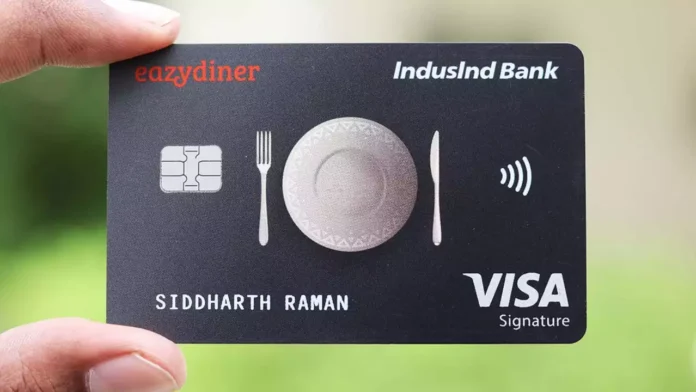
IndusInd Bank has collaborated with EazyDiner to unveil the ‘EazyDiner IndusInd Bank Platinum Credit Card.’ With no joining fees and an array of benefits, this card sets itself apart as an entry-level variant from the existing EazyDiner credit card partnership between IndusInd Bank and EazyDiner.
Positioned to revolutionize the dining scene for cardholders who savor diverse restaurant experiences, this credit card offers an extra INR 500 discount when using the EazyDiner App through PayEazy, applicable to both dine-in and take-away at selected restaurants. The co-branded card also includes a complimentary three-month EazyDiner Prime membership, ensuring guaranteed discounts ranging from 25% to 50% at over 2,000 premium restaurants, all without any joining or annual fees. Moreover, cardholders have the opportunity to renew their Prime membership by spending INR 30,000 every 90 days.
The card provides a reward of up to two points for every INR 100 spent. In addition to the discounts, these earned reward points can be instantly redeemed against dining bills through the EazyDiner app.
Furthermore, cardholders have the opportunity to accrue 2,000 reward points by making expenditures of INR 30,000 every 90 days.
Speaking about the launch, Soumitra Sen, Head – Consumer Banking and Marketing, IndusInd Bank, said, “According to industry data, the Indian Foodservice Market size is estimated at USD 69.78 billion in 2023, and is expected to reach USD 125.06 billion by 2029, growing at a CAGR of 10.21%, implying immense possibilities in the food service market in India, both in dining and take-away. In alignment with this trend and to enable benefit to our customers, we are excited to unveil a fresh and compelling credit card proposition in collaboration with EazyDiner that offers customers an enhanced dining experience. At IndusInd Bank, it’s been our constant endeavour to provide cutting-edge solutions, thereby empowering our customers with banking offerings that redefine convenience and elevate their overall banking experience. Together with EazyDiner, we look forward to setting new benchmarks in the realm of seamless and rewarding financial services.”
Kapil Chopra, Founder, EazyDiner, further added, “EazyDiner’s core mission is to make eating out simple, accessible, fun, and yet rewarding for our customers. Imagine getting an extra discount up to INR 1,500 in a month when you eat out. That’s how rewarding it is going to be. In line with this vision, we’re proud to introduce a Credit Card product in India that offers our broad customer base a new level of freedom. We have brought this very accessible card as the second edition of our partnership with IndusInd Bank which is lifetime free, ie. there is no annual fee. We launched our signature variant last year which was a super success.”
“We want spending to be about the joy of experiences with powerful savings. Giving customers a headstart on savings, the card comes with a joining bonus of 500 EazyPoints with a three-month EazyDiner Prime membership that would enable up to 50% discount everytime you eat out. This will encourage customers to experience the culinary heartbeat of their city, and country like never before with restaurants, the EazyDiner IndusInd Bank Platinum Credit Card allows for that and more like never before,” he added.
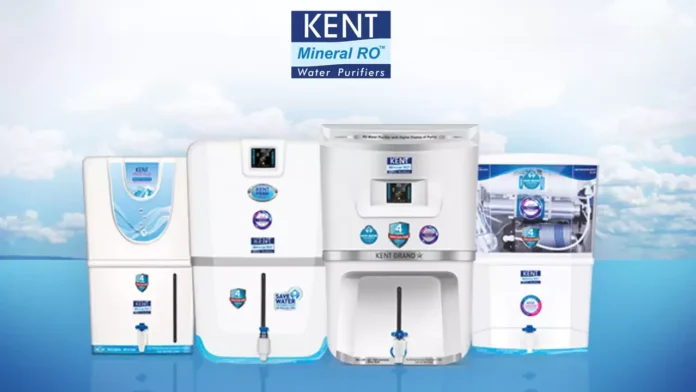
Kent RO System, a home-grown water purifier manufacturer, has set its sights on entering the US market in the next fiscal year. Chairman & Managing Director Mahesh Gupta has outlined the company’s ambitious plans to expand its appliances portfolio with the aim of reaching a turnover of INR 2,000 crore in the next three years.
Besides, Kent RO Systems, which has invested INR 500 crore on expansion in the last three years, has plans to invest INR 300 crore more to set up a new fan manufacturing unit at Yamuna Expressway in Uttar Pradesh, he said.
The company, previously recognized for its water purifiers, is broadening its product range and strengthening its position in the appliances sector, with a particular focus on small kitchen appliances. Gupta anticipates that revenue from these new categories will account for half of the total revenue in the coming years.
Regarding its expansion into the US market, Gupta stated that Kent RO System has established a brand licensing agreement with Black & Decker. Under this agreement, the company will produce and deliver its line of water purifiers using the brand name of the Maryland-based manufacturer in the United States.
“We will be going to the US market. We have signed the licence agreement with Black & Decker,” Gupta said.
Kent RO Systems would manufacture its water purifiers in India under the Black and Decker brand and ship to the US market.
The company will enter the US market in the next six months, as Kent RO is looking for a threefold increase in its exports to INR 200 crore in the next three years.
The Noida-headquartered company had a revenue of around INR 1,200 crore for the financial year that ended on March 31, 2023, in which its water purifier business contributed nearly 80 per cent, Gupta said.
Besides water purifiers, Kent RO also operates in segments such as kitchen appliances, air purifiers, vacuum cleaners, cookware, and some other segments.
When asked about the projected growth for Kent RO Systems, Gupta said, “We are looking to touch INR 2,000 crore in the next three years (FY27).”
As part of the expansion, Kent RO has plans to consolidate its offering in the field of energy conservation products. It has invested around INR 500 crore in the last two to three years to augment its manufacturing capacity at its existing plants at Roorkee and Noida.
The company, which has entered into fan segments as part of its expansion, is now planning to invest INR 300 crore to set up a plant at Yamuna Expressway, where it plans to manufacture five star-rated energy-conserving BLDC (brushless DC motors) based fans.
“We have signed an MOU with the UP government for an investment of INR 300 crores in Yamuna expressway, where we have been allotted land,” said Gupta, adding that the said investment will help it expand Kent into the fan market.
According to Gupta, he is very “optimistic” about its entry into the INR 10,000 crore fan market.
“This is going to be a INR 15,000 crore market in the next three years, and in that, we want to have 4-5 per cent market share,” he said adding that the segment offers a huge replacement opportunity as people may shift to energy-efficient BLDC motors based 5 star rated fans.
Over the funding of investment, Gupta said it would be funded internally as Kent RO is a “zero debt” company.
Gupta also ruled out any plans for Kent RO Systems to go for an IPO and get the company listed on stock exchanges.
Over the expansion of new segments, Gupta said Kent RO has plans to enter kitchen chimneys and hobs. As the company is expanding its offering and diversifying successfully beyond its key business of water purifiers, Gupta now expects contributions from other segments to increase in the coming years.
We use cookies to ensure that we give you the best experience on our website. If you continue to use this site we will assume that you are happy with it.