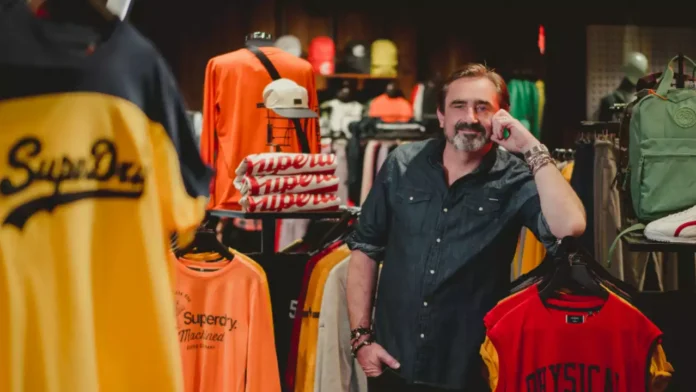
Superdry, the embattled British fashion retailer, disclosed on Friday that its CEO and major shareholder, Julian Dunkerton, is contemplating various options, including making a cash offer for the shares he does not currently hold.
Earlier on Friday, Superdry shares experienced a notable surge, reaching heights not observed since October. This surge followed a report in The Times newspaper, indicating that U.S. private equity firm Sycamore Partners and Authentic Brands Group, the owner of Ted Baker, have expressed interest in having Superdry as a potential target.
The share price also received a boost on Wednesday, driven by the news that Norwegian alternative investment fund First Seagull acquired a 5.3% stake in the company.
Superdry, in its statement, made no mention of external takeover speculation, focusing solely on the possibility of a cash offer by Dunkerton, potentially with support from financing partners.
“These discussions are at a preliminary stage and no decisions have been made,” Superdry said in a statement.
Dunkerton possesses a 26% ownership stake in the company, which has seen its stock price decline significantly in the past few months due to the retailer facing challenges with subdued demand and a financial squeeze.
The shares, part of the FTSE small cap index, surged by up to 127% to reach 48 pence on Friday. However, they remain significantly below their peak of over 2,000 pence in 2018.
Last week, Superdry conveyed its outlook, indicating a lack of anticipation for an improvement in market conditions in the near term following a challenging Christmas season. Alongside this announcement, the company disclosed that its Chief Financial Officer, Shaun Wills, is set to step down by the end of March.
The producer of jackets and apparel inspired by American vintage styles and Japanese-influenced graphics is collaborating with advisors to explore different options aimed at cost-saving measures.
According to Sky News, the company was exploring a radical restructuring that could involve significant numbers of store closures and job cuts.
“We are not surprised that these blend into options such as a possible offer from the founder/CEO, given he is the group’s largest shareholder and instrumental in the roadmap to recovery,” said Matthew McEachran, senior analyst at Singer Capital Markets.
“The sooner any cost restructuring can be the done the better. But this would need to be funded.”
Diageo India (United Spirits), a major player in the alcoholic beverage industry, has launched a micro-enterprise program to empower women farmers with small holdings in Nashik. The program aims to support 100 such farmers initially, providing them with essential skills and resources to address challenges such as crop loss and food waste, ensuring a sustainable livelihood.
In collaboration with Savitribai Phule Ekatma Samaj Mandal (SPMESM) as the implementing partner and S4S Technologies as the technical partner, Diageo India has launched this initiative to offer training, financial assistance, and equipment to empower these women farmers. The primary goal is to enable them to sun dry surplus produce and establish last-mile connectivity to consumers through the food supply chain.
Diageo’s micro-enterprise program
This initiative aligns with Diageo’s Society 2030: Spirit of Progress plan, which supports local sourcing communities in building economic and environmental resilience. Moreover, it contributes to the United Nations’ Sustainable Development Goal 12.3, aiming to halve per capita global food waste and reduce losses along production and supply chains, including post-harvest losses. The program will concentrate on equipping women with the necessary skills to cut, air-dry, and solar-dry vegetables such as tomatoes, onions, and ginger. The resulting produce will be supplied to hotels, restaurants, and ingredient manufacturers, establishing a complete value chain that ensures a consistent food industry supply and stable income for these women micro-entrepreneurs.
Jagbir Singh Sidhu, corporate relations director at Diageo India, said, “At Diageo India, our commitment to Pioneering Grain-to-Glass Sustainability is integral to our Society 2030: Spirit of Progress ESG plan. This collaboration with SPMESM and S4S technologies exemplifies our unwavering commitment to empowering our communities while working with industries and stakeholders in agricultural supply chain to create tangible and lasting solutions. This initiative marks the inception of India’s contribution to our global commitment of supporting small-holder farmers by enabling them with opportunities to secure their livelihood.”
Dr. Pratibha Phatak, founder trustee, SPMESM, remarked on the collaboration, expressing, “We are delighted to partner with Diageo India on this transformative initiative to empower women while devising sustainable solutions to address food and crop wastage issue in Maharashtra. The potential for positive impact is immense, and we look forward to making a meaningful difference together.”
Additionally, Diageo India has implemented several water replenishment projects, including the construction of check dams, desilting ponds, and enhancing sanitation and hygiene by installing toilets in schools. The company continues to create a positive impact on the environment, having influenced over 59,000 individuals across 23 villages in Maharashtra.
In 2024, the number of discounted Nike sneakers doubled compared to two years prior, posing a threat to the sportswear giant’s traditionally robust pricing influence amidst intense competition from competing sneaker brands, as reported by analytics firm Vertical Knowledge.
Examining online pricing information from a selection of eight national chains, including Foot Locker, Dick’s Sporting Goods, and Macy’s, researchers discovered that, on average, these retailers reduced prices on 44% of their Nike sneakers in 2024. This marks a significant increase from the 19.4% observed during the corresponding period in 2022, according to data from Vertical Knowledge.
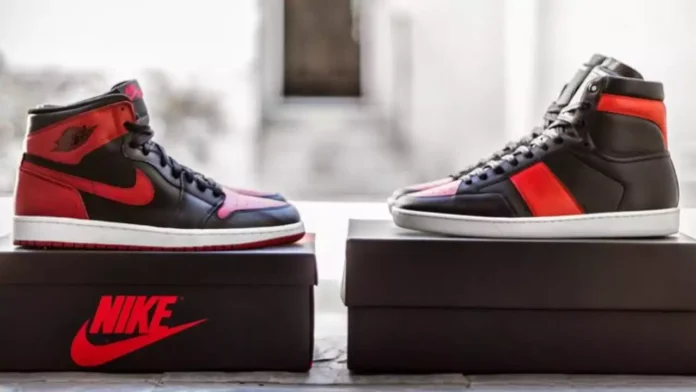
This shift in trend deviates from the historical pattern, where Nike retailers could consistently sell their Nike inventory at the full retail price, especially for lifestyle shoes like the Nike Air Jordan 1 Retro High. Nike’s complete retail pricing spans from around $50 for basic running shoes to $200 or beyond for exclusive-release Nike sneakers.
Reducing prices on Nike sneakers by certain retailers might pose a challenge for Nike, the global frontrunner in sportswear. “They’re a company that’s been masterful at charging premium prices to the mass market,” said Brian Yacktman, president of YCG Investments, which owns Nike shares.
On Wednesday, a selection of discounted Nike shoes took center stage at a Foot Locker in New York City. Among the offerings were the Lebron 20 basketball sneakers, which saw a price drop from $170 to $129.99. The sale also included various Nike Air Max styles. Meanwhile, at Macy’s flagship store in Herald Square, shoppers could find several discounted Nike Air sneakers, including the sought-after Air VaporMax and Air Huarache models.
The average price of Nike sneakers at major retailers like Macy’s decreased to $79.92 in early 2024, compared to $103.61 in the first quarter of 2022, as reported by the data. According to Nike’s most recent annual report, the company engages in wholesale distribution, supplying its products to “thousands of retail accounts.”
According to a Nike spokesperson, the company maintains “a highly diversified wholesale portfolio, with no single partner accounting for a disproportionately large share of total wholesale revenue.” Dick’s Sporting Goods did not provide a comment in response to the inquiry. Foot Locker and Macy’s, on the other hand, opted not to comment. The data indicates that the same eight major retail chains are retailing sneakers from both On Running and Hoka, owned by Deckers, which are emerging as formidable rivals to Nike due to their emphasis on cushioned running shoes. The average price for these sneakers is approximately $148 per pair.
In a recent interview, Yacktman, an investor in Nike, voiced apprehensions about the regularity of discounts. “The thing I’m laser focused on with Nike is when they’re going to quit the promotional pricing and get back down to brass tacks.” His company also holds stocks in Amazon and LVMH.
Two years ago, Nike withdrew from certain wholesale distributors to concentrate on direct-to-consumer sales. However, in June, the company revealed its decision to re-engage with retailers like DSW, owned by Designer Brands, indicating that such chains remain a crucial avenue for Nike to connect with consumers.
In a surprising move in late December, Nike revised down its annual sales forecast for 2024, catching investors off guard. Chief Financial Officer Matthew Friend attributed the adjustment to a “highly promotional marketplace,” especially in the online sector. To address uncertainties in consumer demand, the company also announced an accelerated plan to trim the supply of “key franchises.”
Nike has long marketed its shoes as sought-after, premium products. In December, Friend also told investors that Nike anticipates an expansion in gross margins this year, in part because of “strategic” price increases.
However, according to footwear industry analyst Matt Powell, Nike has been saturating the market with bestsellers such as its retro lifestyle sneakers and various versions of its Jordan brand. This involves releasing an excessive number of styles to retailers, despite indications that consumers are becoming fatigued with Nike shoes.
Vertical Knowledge monitored the pricing of eight retailers, revealing that the sale of Nike sneakers at a discounted rate exceeded that of Hoka sneakers (4.5%), Adidas shoes (18.9%), ON Running shoes from Switzerland (23.1%), or Puma styles (37.4%).
Reducing prices could jeopardize Nike’s appeal to consumers. According to Powell, if shoppers observe more frequent discounts on Nike styles, there is a risk of Nike being perceived as just another ordinary shoe brand in their eyes.
Further evidence of diminishing consumer demand is evident in the declining prices of Nike styles, including the Nike Dunk Low Retro, on the sneaker resale market. In 2023, Nike introduced 116 new iterations of the shoe, a significant increase from the 31 released in 2019, as reported by Dylan Dittrich, the head of research at Altan Insights, specializing in the study of the collectible sneaker market.
At the end of 2021, some releases of the shoe sold for up to $340 on resale platforms like StockX—nearly triple Nike’s retail price of $115. However, most Dunk Low styles are now available for close to or less than the original list price.
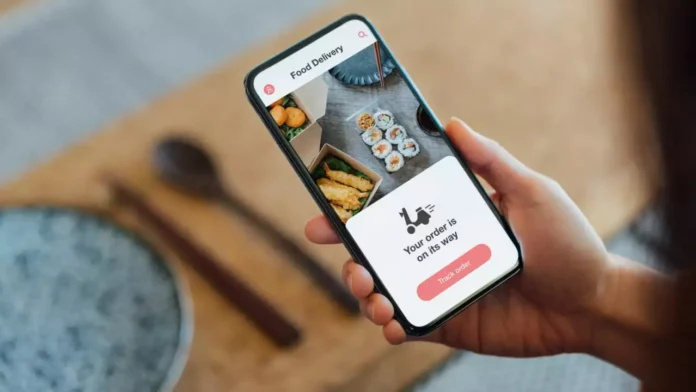
Tech giant Google has revamped its Order with Google feature, transforming it into a redirecting tool rather than a direct ordering channel, as reported by Restaurant Business.
By the end of June 2024, users will find themselves redirected to third-party ordering platforms or the official website of the restaurant when attempting to place orders through Google Search or Maps.
Google spokesperson said in an email to Restaurant Business, “Over time, we’ve found that people generally prefer to complete their food orders on partner and merchant websites.
“So we’re now transitioning Order with Google to focus on linking directly to partners, allowing people to complete their transactions with the partner and merchant of their choice.”
Launched in 2018, the tech giant’s initiative provided distinctive benefits for both consumers and restaurants.
It simplified the process of ordering food for consumers while aiding restaurants in enhancing their online visibility.
It also facilitated a seamless search-to-order experience for users, allowing restaurants to retain all customer data from orders without incurring fees from Google.
This service proved especially advantageous, considering Google’s role as a primary search destination for restaurant-goers.
Nevertheless, starting from June 30, 2024, selecting the Order button on a restaurant’s Google listing will display a variety of third-party services like DoorDash, Grubhub, Uber Eats, and Toast. Alternatively, it will redirect users to the restaurant’s own ordering system, allowing customers to complete their purchases.
In June 2023, pizza chain Domino’s announced its intention to utilize Google Maps technology for delivering pizzas to places with no addresses, as reported by The Insider.
The delivery service, named Pinpoint Delivery, will enable deliveries to locations like parks, beaches, and baseball fields. It enables customers to pinpoint their location by dropping a pin within the pizza chain’s app.
Starbucks, the renowned American coffeehouse chain, is gearing up to launch two new drinks to celebrate Valentine’s Day 2024.
The exclusive beverages, Cupid Cream Shaken Tea Strawberry and Hibiscus, and Cupid Frappuccino Strawberry and Mint, are scheduled to be offered from February 9th to 15th.
The Cupid Cream Shaken Tea Strawberry and Hibiscus features a shaken tea lemonade infused with strawberry puree and dragon fruit, topped off with a layer of vanilla sweet cream.
The drink was created through a collaborative effort involving Starbucks International Airport store employees in Medellin, Colombia.
The second drink, Cupid Frappuccino Strawberry and Mint, blends white chocolate mocha with strawberries, milk, and a touch of mint, crowned with a generous dollop of whipped cream.
This innovative creation is the result of the collaborative effort of 15 employees at the Starbucks Bosques de Aragón store in Mexico City, Mexico.
Inspired by the base of white chocolate mocha, the drink underwent a meticulous development process spanning two and a half weeks.
Starbucks Bosques de Aragón store manager Estefanía said, “In our team, creativity flows like coffee. We’re the alchemists of inspiration, brewing fresh ideas with every espresso and serving innovation in each cup.
“Our connection is the magic that fuels this creative process, weaving an environment where ideas emerge naturally, nourishing our team.”
In November 2023, Starbucks introduced four new cold foam flavors in the US and Canada to celebrate the 2023 holiday season: Peppermint Chocolate Cream, Sugar Cookie Cream, Chestnut Praline Cream, and Caramel Brulée Cream – all infused with the brand’s signature vanilla sweet cream.
Nestlé is in talks with the Paris-based private equity firm FNB regarding the potential sale of its infant nutrition division in France.
In an official statement, the French branch of the Swiss multinational confirmed its plans to transfer its range of infant products manufactured in France and distributed worldwide.
These include the NaturNes baby pots, flavored cereal powders such as Babicao and Babivanille, and P’tit yogurt pots. Notably, the sale will exclude the infant formula line.
The manufacturer of Chocopic cereal stated that the sale would enable it to allocate additional resources to its infant formulas, emphasizing them as a “strategic and historical pillar for the group.”
The deal is expected to close by the first half of 2024, subject to “a mandatory consultation period with staff representatives, regulatory approval, and the negotiation of sale agreements.”
Around 230 individuals are involved in the production and marketing of the affected baby food brands, with operations taking place at locations in Issy-les-Moulineaux and Arches.
The company asserted that the transaction would “have no impact on the concerned jobs.”
“It also would not change the company’s relationship with its customers, partners or local suppliers.”
Jobs at the baby food plants in Issy-les-Moulineaux and Arches will continue to operate fully as part of the Nestlé Group until FnB and Nestlé France have finalized an agreement.
The sale would represent FnB’s second acquisition of a Nestlé France business. In 2022, the investment group successfully obtained the mashed potato brand Mousline for an undisclosed amount.
In June last year, the private equity fund also entered the drinks market, securing a majority stake in coffee supplier Cafés Legal.
FnB refrained from providing comments on the news.
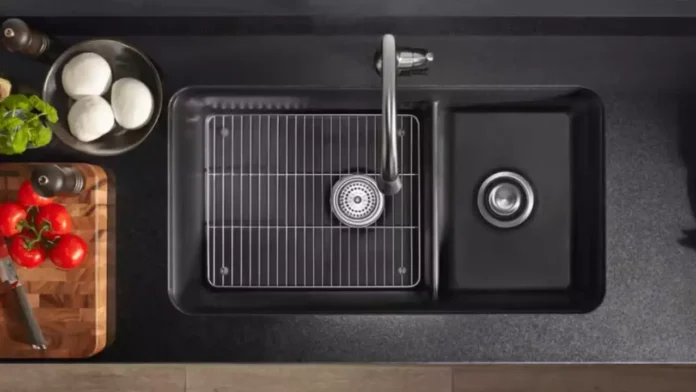
Marking a strategic leap in innovation, Kohler, the global leader in kitchen and bath design, has launched the Cairn Kitchen Sinks in India. This introduction into the vibrant Indian kitchen sinks market brings forth a range that not only exudes unmatched beauty but also boasts robust durability, reshaping the kitchen experience for discerning consumers.
Crafted from Neoroc, Kohler’s proprietary matte composite sink material, the Cairn Kitchen Sinks are engineered to withstand daily use challenges. These sinks boast a rich matte color palette, straight bowl walls featuring soft French curves, and an impressive depth of 9½ inches, crafted to complement diverse countertop styles. Each sink comes equipped with an included sink rack, enhancing both functionality and aesthetics, and providing added protection to preserve a newer look over time.
The distinctive blend of natural stone and resin in Neoroc produces an exceptionally sturdy composite, delivering twice the impact resistance, 1.4 times the heat resistance, and superior stain resistance compared to rival products. This exclusive material presents a matte finish that effortlessly harmonizes with various kitchen aesthetics, underscoring Kohler’s dedication to both durability and design.
Kohler’s introduction of the Cairn Range into the Indian kitchen sinks market seamlessly extends its legacy as a frontrunner in bath and kitchen solutions. This collection not only highlights the brand’s adaptability but also strengthens its standing as a trailblazer in providing high-end, innovative solutions for modern living spaces. This strategic move underscores Kohler’s dedication to excellence in both bath space and kitchen solutions, leaving a notable imprint on the retail landscape for kitchen products in India.
Salil Sadanandan, President – South Asia and Asia Pacific at Kohler Co said, “Our entry into the Indian kitchen sinks market reflects our commitment to providing cutting-edge solutions. The Cairn Kitchen Sinks are a testament to Kohler’s dedication to elevating everyday experiences with functional and stylish products. With Neoroc, we have not only met industry standards but surpassed them, offering a sink material that is not just extremely durable but also stunningly beautiful. With an unparalleled combination of strength, resilience, and timeless design, we are sure that Kohler’s Cairn Kitchen Sinks are set to redefine and elevate the kitchen experience for Indian consumer.”
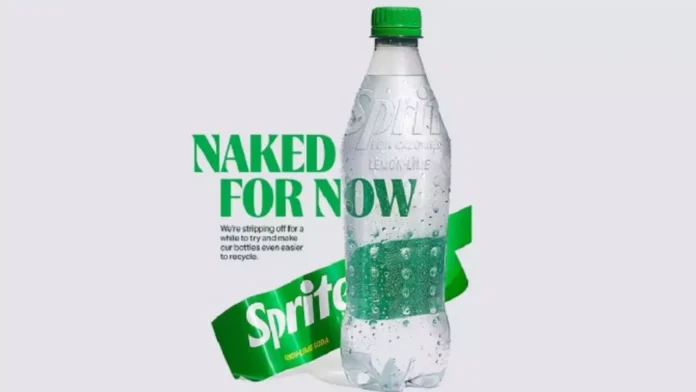
Coca-Cola will temporarily remove labels from its Sprite and Sprite Zero on-the-go bottles in the UK this month as part of a limited trial, exploring the concept of label-free packaging.
In the pilot program, labels on individual 500ml Sprite and Sprite Zero bottles will be taken off and replaced with an embossed logo on the front of the packaging. The product and nutritional information will be laser-engraved on the back of the bottles.
The new limited design will be available for consumers at eight Tesco Express stores in Brighton and Hove, Bristol, London, and Manchester from January to March 2024.
Although the current labels are entirely recyclable, their removal streamlines the process for consumers by eliminating the necessity to separate them from the bottles during recycling. This not only simplifies the recycling procedure but also reduces the overall amount of packaging used.
Similar to the current Sprite packaging, the bottles are crafted from recycled PET and showcase attached caps in green and transparent colors, distinguishing them as either Sprite or Sprite Zero, respectively.
Dusan Stojankic, VP of franchise operations, Great Britain and Ireland at Coca-Cola Great Britain, commented, “We want to help create a future where plastic drink packaging will always have more than one life. Labels contain valuable information for consumers, but with the help of technology we can now trial other ways to share this information while reducing the amount of packaging we use.”
He emphasized that although adopting a labelless approach may seem like a “small step,” it is just one of the various methods the company is investigating to reduce the environmental impact of its packaging.
Coca-Cola has implemented additional design modifications in recent years to address packaging waste. These changes include transitioning Sprite bottles from green to clear plastic to enhance recyclability and introducing attached caps that remain connected to the bottle post-opening. This initiative aims to minimize the potential for littering.
Javier Meza, Vice President of Marketing at Coca-Cola Europe, characterized the trial as a significant “milestone” for the industry. He expressed that it has the potential to bring about a substantial shift in the realm of marketing, with the possibility of influencing longer-term changes in how brands engage with their consumers.
Jeff Bezos, the founder of Amazon.com, is set to sell 50 million shares in the online retail and cloud services firm over the next year, as reported by Reuters.
The securities are valued at $8.6 billion with a current share price of $172.13. According to the company’s latest annual report, the sale plan, adopted on November 8 last year, is slated to conclude by January 31 next year.
On Friday, Amazon shares surged by 8% following the e-commerce giant’s announcement of sales surpassing expectations in the holiday quarter. Additionally, its lucrative cloud business indicated early successes derived from AI-powered features.
Bezos founded Amazon in 1994 as a bookseller, later stepping down from the chief executive role and assuming the position of executive chairman in 2021.
According to the Bloomberg Billionaires Index, he presently holds the rank of the world’s third-wealthiest individual, boasting a net worth of $185 billion.
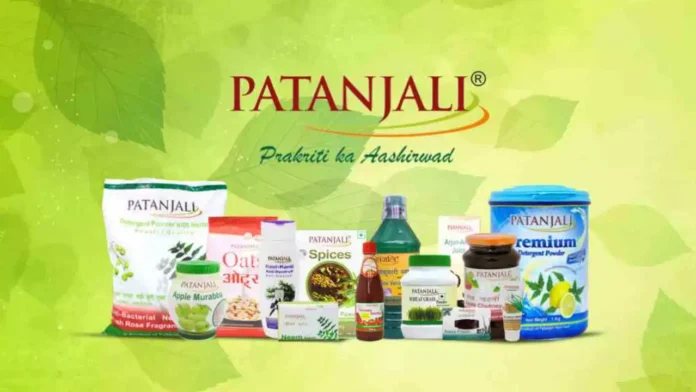
Patanjali Ayurved has entered the competition to acquire the financially troubled Rolta India with a belated all-cash bid of approximately INR 830 crore. This move comes shortly after Ashdan Properties from Pune was declared the leading bidder by banks last week.
Earlier this week, it petitioned the Mumbai bench of the National Company Law Tribunal to instruct lenders to review its bid. During a Thursday hearing, in response to Ashdan Properties’ objection, the bench delegated the responsibility to the committee of creditors to determine whether the offer should be considered, given that it was submitted after the conclusion of the bidding process.
“The offer is between INR 820 crore and INR 830 crore and is much better than what lenders had in hand so far because it is all upfront and comes from a cash-rich company. This is a happy problem for lenders to have but they have to now decide how to proceed further,” a person familiar with the matter said on condition of anonymity.
Lenders are currently evaluating the option of starting a new process, seeking legal opinions, as the plans were submitted last month and the highest bidder has already been determined, according to insiders.
“This is a strong bid and will have to be considered since it offers better value. Since the plans have not been voted on, lenders are within their rights to call for fresh interest and seek plans from all bidders in a new process to give all an equal opportunity,” said a second person.
Patanjali Ayurved spokesperson SK Tijarawala said, “We have approached the competent authorities and will submit a plan when permitted. We have evaluated the options and have made the decision after due consideration.”
He declined to provide reasons for the consumer company’s interest in a technology firm.
Kamal Singh-promoted Rolta India, a defense-focused software company, entered the bankruptcy process in January 2023. The company owes INR 7,100 crore to banks, primarily led by Union Bank of India (UBI), and an additional INR 6,699 crore to unsecured foreign bondholders, primarily led by Citigroup, resulting in a total debt of close to INR 14,000 crore.
According to a report on January 29, Ashdan Properties had proposed INR 760 crore on a net present value (NPV) basis, amounting to less than 6% recovery on the total debt. This would result in approximately 11% recovery for secured financial creditors, led by Union Bank of India.
Unlike Ashdan Properties’ bid, Patanjali Ayurved’s offer is entirely upfront and does not involve any deferred payment, potentially leading to a higher valuation. Priced at INR 830 crore, it provides nearly 12% recovery for secured creditors.
“Patanjali, like others, could be looking at Rolta’s real estate, especially in Mumbai, or maybe also the tax gain this acquisition brings because Rolta’s accumulated losses will give it a straight gain,” said a third person privy to the discussions. “But Patanjali Ayurved is also building a mobile application called OrderMe for home delivery which could also be a reason it is looking for a software company.”
Emails seeking comment from resolution professional Mamta Binani and process advisor BOB Capital Markets went unanswered.
The committee of creditors is set to meet next week to decide its next course of action after seeking legal opinion.
We use cookies to ensure that we give you the best experience on our website. If you continue to use this site we will assume that you are happy with it.