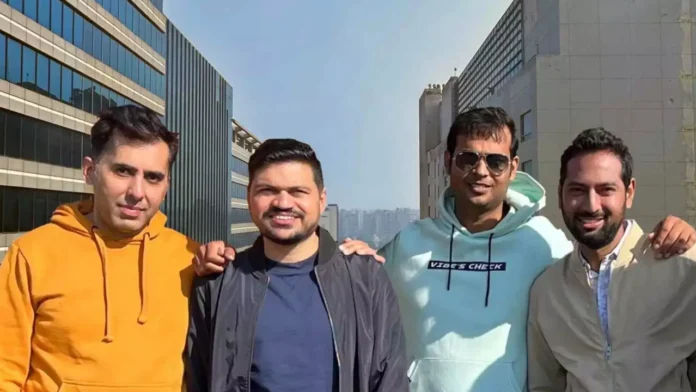
Dhaval Radia, Gourav Gupta, Akshay Gupta, and Palash Lunia, Co-Founders of Rupyz
Rupyz, a B2B SaaS startup, has secured $1.2 million (INR 9.9 crore) in its seed funding round, with Merak Ventures leading the investment, along with a group of angel investors.
The newly acquired funds will be employed by the startup to fortify its core technological offerings, ensuring the provision of robust and scalable solutions that address the evolving needs of small and medium-sized businesses, as stated in a released statement.
Established by Dhaval Radia, Gourav Gupta, Akshay Gupta, and Palash Lunia, Rupyz operates as an omnichannel distribution platform for FMCG and consumer brands. The startup provides an integrated SaaS solution catering to distribution-led B2B businesses, automating and expanding their offline and online distribution processes to enhance sales and fulfillment channels.
It empowers its customers to chart the complete supply chain, aiding them in optimizing and simplifying their supply chain operations.
Rupyz predominantly collaborates with businesses in the FMCG, personal care, and lifestyle sectors. The company asserts that it presently manages a network that encompasses 85 brands, surpassing 6,500 distributors, and servicing over 250,000 retailers.
Radia stated that Rupyz’s objective is to empower the first brands within the FMCG sector to entirely redefine operational efficiencies in the way distributors and retailers establish connections, communicate, and conduct their business.
“Our commitment is to unlock the full potential of India’s B2B e-commerce and supply chain,” he added.
Presently, the startup has set its sights on bringing aboard more than 3000 businesses within the next 12 to 15 months.
Rupyz asserts collaboration with more than 85 brands, 6,500 distributors, and 250,000 retailers across the nation. The startup maintains that its solution provides clients with a 20% to 30% improvement in return on investment (ROI).
Recently, Wiz Freight, a supply chain management startup, secured INR 125 Crores for growth, expansion, and general corporate activities, as per filings.
As indicated by a market study, the anticipated compound annual growth rate (CAGR) for the supply chain management market size in India is 10.01%, with a projected reach of $405 million by the year 2028.
Identifying the ongoing preference of Indians for incumbent brands, the report notes that the prevalence of general trade in the country enables national brands to maintain their dominance. The limited penetration of e-commerce in the nation also aids larger brands.
The report, named “Resilience Amid Disruption: How Certain Incumbents in the Asia Pacific Region Outmaneuver Insurgents,” examined 23 categories of consumer goods, including beverages, food items, beauty and personal care, and home care, across 11 Asia-Pacific markets from 2018 to 2022.
It employed Euromonitor’s database to monitor the performance of what it defined as “large incumbent brands” – the leading 10 brands based on market share in each category and country as of 2018. The analysis covered performance until 2022, excluding brands that no longer existed by that year. The evaluation gauged the success of large incumbents in each category and country by determining whether their combined market share experienced a shift exceeding 1 percentage point from 2018 to 2022.
Singapore and China stand out as highly favorable environments for new entrants, thanks to the robust presence of e-commerce and the well-established networks of third-party suppliers.
Unlike the mentioned geographies, the report noted that Malaysia, the Philippines, and India stand out as the most advantageous markets for incumbents. The report attributes this phenomenon to the prevalence of traditional trade, particularly in the Philippines and India, and the comparatively limited reach of e-commerce. Additionally, the report highlights that the intricate channel dynamics in these markets pose a formidable challenge for new entrants.
According to Ravi Swarup, a partner at Bain & Company, domestic incumbent brands in the country have thrived due to their deep understanding of the Indian consumer. He also mentioned that foreign brands, which have adapted to local preferences in the country, have experienced success as well.
“Understanding the consumer and creating a product price proposition that is actually giving disproportionate value to consumers, and winning in the general trade are really important,” Swarup said.
Over the past three quarters, FMCG companies in the country have consistently faced intense competition from regional brands. These companies have noted an influx of regional brands specifically targeting the mass market segment.
The incumbents hold a significant advantage with their robust distribution networks, allowing them to reach and stock products in kirana (mom-and-pop) stores, a strength not easily matched by new brands attempting to enter the category. The report also highlighted that, apart from India, local incumbent brands were demonstrating notable growth momentum in the Philippines and Indonesia.
“However, in India, the Philippines, and Indonesia, while foreign incumbents also lead in market share across most categories, it is the local incumbents that exhibit a stronger ability to gain share in the winning categories,” it said in its report.
Bain & Company noted that the Covid-19 pandemic worked to the advantage of incumbent brands, as consumers leaned towards well-established and familiar names during this period. Additionally, larger companies demonstrated their superior ability to navigate supply-chain disruptions.
The report highlighted that Tata Sampann in India has successfully maintained a compound annual growth rate of around 20 percent over the last five years. This achievement is attributed to the brand’s commitment to meeting consumer demands for top-notch, wholesome, and nutritious basic food items. Pioneering the branded pulses market in India, Tata Sampann has progressively broadened its presence to include categories like spices, poha, and dry fruits.
In a notable development, the Prime Minister’s Office (PMO) has instructed the Ministry of Ayush to take “necessary measures” in response to a complaint regarding Patanjali Ayurved, led by Baba Ramdev. The complaint alleges repeated violations of an Act related to deceptive advertising of Ayush products.
Following the directive from the PMO on January 24, the Ministry of Ayush has subsequently called upon the Uttarakhand Ayush department to “take appropriate action” regarding a matter that has remained pending since February 2022.
Both the Ayush Ministry and the Uttarakhand State Licensing Authority (SLA) had been lethargic in addressing the matter of Patanjali Ayurved’s deceptive advertisements for drugs related to diabetes, obesity, thyroid, and heart diseases, despite numerous RTIs filed on the issue.
In a letter to the Director of Ayurvedic and Unani Services in Dehradun, Uttarakhand, the Ayush Ministry emphasized that the continuous violations of the Drugs and Magic Remedies (Objectionable Advertisements) Act, 1954 by Divya Pharmacy fall under the jurisdiction of the State Licensing Authority, Uttarakhand.
“Therefore, it is requested to examine the matter and take the necessary action as deemed appropriate and inform your response to the applicant under intimation to this ministry,” the February 2 letter said.
The Uttarakhand State Licensing Authority (SLA) received instructions following a complaint by RTI activist Dr. K V Babu to the Prime Minister’s Office (PMO) on January 15, highlighting Patanjali Ayurved’s persistent violations of the Drugs and Magic Remedies (Objectionable Advertisements) Act, 1954.
“I am thankful to the PMO for the prompt intervention and hope this will end the illegal advertisements by Patanjali Ayurved,” Babu said.
Babu mentioned that his grievances, submitted in February 2022, are still awaiting resolution from the Drugs Controller General of India (DCGI), Union Ayush Ministry, and SLA of Uttarakhand.
“The Ayush Ministry and SLA have been dragging the issue based on an unrelated Rule 170 of the Cosmetic Act and a Madras High Court judgement of 2020. The SLA is not taking any action even after repeated communications and the numerous contravention of the Magic Remedies Act by Patanjali Ayurveda,” said Babu, adding that the Ayush ministry has written at least four times to the Uttarakhand SLA for action against Patanjali, but nothing was done.
Babu had brought up the matter with Union Ayush Minister Sarbannanda Sonowal on multiple occasions as well.
Last year, the matter was also raised by two parliamentarians, Dr. V Sivadasan and Karti P Chidambaram. The Ayush minister had assured them and even directed the Uttarakhand government to take action against Patanjali Ayurved for its misleading advertisements.
In a written answer on March 28 last year, Sonowal said that in 2022, the Ayush ministry had forwarded advertisements of Divya Madhugrit (15 violations), Divya Lipidom (7 violations), Divya Eyegrit Gold (10 violations), and Divya BPgrit (18 violations) to Ayurveda and Unani Services, Uttarakhand to examine the matter for withdrawal of advertisements.
Babu also communicated with the Ayush ministry, notifying them that Patanjali had disseminated deceptive advertisements in two widely circulated regional newspapers.
The DMR (OA) 1954 prohibits the advertisement of certain drugs to treat certain diseases and disorders. It states that “no person shall take any part in the publication of any advertisement referring to any drug in terms which suggest or are calculated to lead to the use of that drug for the diagnosis, cure, mitigation, treatment or prevention of any diseases, disorder or condition.”
Indian Hotels Company (IHCL) is set to achieve a milestone in its portfolio expansion, with plans to reach 300 hotels in the next three to four months, as stated by IHCL MD and CEO Puneet Chhatwal.
“Under our Ahvaan 2025 strategy, we had previously set the target of reaching the 300 hotels mark by 2025-2026. We are signing about 2.5 contracts a month besides opening 2 hotels a month. That is accelerated. In aspiration 2022, we had said we will open 15 hotels a year,” he said.
In January, IHCL stated that its portfolio of 285 hotels includes an additional 85 hotels in the pipeline.
Tata Group backed IHCL has recorded a revenue from operations of INR 1964 crore for the quarter ended December 31, 2023, reflecting an 18% growth compared to the corresponding period in the previous fiscal.
The hospitality chain announced a profit after tax of INR 477 crore, registering an 18% increase compared to the quarter ending December 31, 2022.
“Our management fee income should close at around INR 450 crore by the end of this fiscal year. It wasn’t even INR 200 crore five to six years ago,” said Chhatwal.
“Between, 2009-2017, the chain clocked an average of 13.6% EBITDA margin, and our guidance now is 33%. That is a big increase. So, the reason is the change in the business model. We’re driving strong operating leverage through asset management in existing hotels and through management contracts, and innovation in new businesses,” he added.
He mentioned that Indian Hotels is a debt-free company with robust cash reserves, strategically positioned for both organic and inorganic expansion.
“The cash flow that we have created was INR 1000 crore last year. Given the trends that are seeing, that should be more this year,” he said.
“Undoubtedly, we will maintain our leadership. We have 85 hotels in the pipeline, so even if we stop signing any new contracts today, we will still end up opening two hotels a month for the next three years,” he added.
The company has inked deals for properties in Ayodhya under its Vivanta, Ginger, and SeleQtions brands. Additionally, Chhatwal mentioned that there are ongoing considerations for a Taj property in the same destination.
“Nobody covers spiritual destinations like we do and our focus will only grow stronger. Out of the 285 hotels in our portfolio, 66 are in spiritual destinations,” he added.
He stated that India is experiencing economic growth, emphasizing a direct link between the expansion of GDP and various consumer sectors, including hospitality, airlines, and restaurants.
“Venues such as Bharat Mandapam, Yashobhoomi and the Jio World Centre will keep having events The government spends on infrastructure, and schemes such as UDAAN scheme and PRASHAD are also opening up new opportunities,” he said.
“There has also been a change in consumer behaviour since Covid. People are taking off on long weekends and we didn’t have this concept of a drivecation before. We never saw such a strong ability to be able to charge more in the domestic market before Covid. We used to rely on the foreign customers before,” he added.
Chhatwal, who serves as the President of the Hotel Association of India (HAI), anticipates that rates will remain elevated, and hotel occupancies are expected to stabilize at high levels from 2024 to 2035.
“There’ll always be some headwinds, some dips. But the sector is very well positioned to cope up with difficult situations. When you come from zero revenue during the lockdown to this far, it shows the ability of the sector to prove its resilience and resurgence at the same time,” he said.
During the December quarter, Fast-moving consumer goods (FMCG) firms experienced single-digit volume growth and enhanced margins across various segments. This positive trend was facilitated by a slowdown in commodity inflation, despite the persistent challenges in the operating environment. Some companies observed a decrease in their overall revenue figures, attributing it to passing on the advantages of reduced commodity prices to consumers through price reductions. Consequently, this adjustment had an impact on their gross sales numbers.
HUL, ITC, Marico, Dabur, and Godrej Consumer Products have noted that urban markets sustained a modest growth trajectory, while consumer demand in rural India remained subdued. Despite this, they anticipate an improvement in the upcoming quarters.
Additionally, the delayed onset of winter affected the demand for related products like lotions, oils, and creams.
Hindustan Unilever (HUL) posted a subdued increase in consolidated net profit, amounting to INR 2,508 crore, while its sales experienced a marginal decline to INR 15,259 crore.
“Overall, FMCG demand trends have largely remained stable and similar to what we saw last quarter. While market volumes grew at high single digits year-on-year, this came on a base period where volumes declined in mid-single digit,” said HUL CEO & MD Rohit Jawa in his latest earnings call.
Similar to previous quarters, modern trade channels are thriving and consistently surpassing general trade. Likewise, premium products are exhibiting a notable lead in volume growth compared to mass products in the market.
Echoing the view, Marico said, “General trade continued to drag as it grappled with liquidity and profitability constraints, while alternate channels grew healthily.”
In the third quarter, Marico’s India business recorded a 2% year-on-year growth in volume, while its turnover experienced a 3% decline to INR 1,793 crore.
“During the quarter, demand trends were stable with no visible improvement from the preceding quarter. Rural demand remained soft, while urban demand steadied its moderate growth trajectory,” said the earnings statement from Marico which owns brands like Saffola, Parachute, and Livon, among others.
The report highlighted that within the sector, mass home and personal care categories closely followed the trajectory of rural demand, whereas packaged foods took the lead in the sector due to increased urban salience and growth driven by penetration.
ITC, which owns brands such as Aashirvaad, Sunfeast, Fiama etc, said it had a resilient performance in FMCG segment amidst subdued demand conditions. Its revenue in the FMCG business was up 7.6 per cent.
“While certain commodity prices declined on a YoY basis, the cost table remains elevated compared to pre-pandemic levels; commodities such as wheat, maida, sugar etc. witnessed sequential uptick in prices,” it said.
Godrej Consumer Products Ltd (GCPL)’s India sales in the December quarter grew by 9 per cent to INR 2,160 crore, while the volume grew by 12 per cent.
“We continue to deliver steady performance in Q3FY24 despite challenging market conditions. Our quality of profit continues to improve consistently on the back of superior growth in higher margin countries and categories,” said GCPL CEO and Managing Director Sudhir Sitapati.
However, Dabur India said its rural demand grew 200 basis points ahead of urban in the December quarter. Its India business ended the third quarter with a volume growth of 6 per cent.
“Moderating inflation coupled with buoyant consumer sentiments and our focussed investment in distribution footprint expansion in rural India helped demand from the hinterland bounce back for Dabur,” said Dabur India CEO Mohit Malhotra.
The company, which owns brands such as Dabur Chyawanprash, Dabur Honey, Dabur PudinHara and Dabur Amla, reported a 6.2 per cent increase in consolidated net profit at INR 506.44 crore and its revenue from operation went up 7 per cent to INR 3,255.06 crore.
Jyothy Labs which owns brands such as Ujala, Pril, Margo and Exo reported a a 35 per cent increase in its consolidated net profit.
“The input prices have normalised and have helped in sustaining the margins with a higher level of A&P spend to grow market share across our portfolio,” the company said in an earnings statement.
As the general elections are approaching, the makers expect a gradual recovery of demand from rural markets aided by increased government spending, recovery in winter crop sowing and better crop realisation.
“With macro indicators signalling positivity, continued government spending and more favourable consumer pricing across FMCG categories, we remain optimistic of a gradual uptick in consumption trends over the course of the next 4-5 quarters,” said Marico, adding, “Our consolidated revenue growth is expected to move into the positive territory in the last quarter of the year as the base catches up.”
Rural India contributes around 35 to 38 per cent of the total FMCG sales.
Lite Bite Foods, the operator of Asia7 and Street Foods, aims to double its current count of 200 outlets in the next three to five years, with a strategic emphasis on four core brands. The primary focus will be on renowned Indian and Asian cuisine brands such as Punjab Grill, Street Foods, YouMee, and Asia 7, according to company executives.
Rohit Aggarwal, Director of Lite Bite Foods, said, “The kind of growth that is expected in food services – we are trying to maximise that opportunity.”
He mentioned that India’s young population has significantly contributed to the industry’s growth. The increasing trend of dining out or ordering in among the younger population, coupled with many of them entering the workforce soon, has played a crucial role.
“Younger people are eating out far more. Dinner rooms and timings are becoming individualised and kitchens are smaller with nuclear families,” he said.
At the group level, Lite Bite operates 200 outlets, including those situated at airports. The chain aims to concentrate on expanding in tier 1 and 2 markets.
Aggarwal mentioned that Lite Bite has experienced a threefold increase in revenue growth over the past two years when considering both dine-ins and deliveries.
“Our focus is to make sure we give returns to shareholder value,” he said.
As per a report from consulting firm Wazir Advisors, the organized food services sector in India is experiencing a faster growth rate compared to the unorganized sector. This growth is attributed to the entry of domestic players and increased interest from international businesses. The report predicts that India’s organized food service market will reach $78.8 billion by 2026, up from the current $57.2 billion. The report highlights factors driving this growth, including a higher frequency of dining out, increasing disposable incomes and urbanization, a trend of dining out without specific occasions, and a growing demand for a diverse range of food varieties and cuisines.
“Millennials today exhibit more adventurous eating habits. This trend has been motivating both domestic and international food establishments to expand their menus and reach,” the report said.
The growth is further propelled by factors such as the busy schedules of working individuals, a rising presence of women in the workforce, and an increasing dependence on pre-prepared food.
“This shift is also driving innovations in food service distribution channels, with companies increasingly forming partnerships with online foods service providers to broaden their reach,” according to the report.
Blue Tokai Co-Founders: Shivam Shahi, Namrata Asthana, Matt Chitharanjan
Blue Tokai, the specialty coffee brand backed by A91 Partners and actor Deepika Padukone‘s Ka Enterprises, reported a noteworthy surge in operating revenue during FY23, jumping over 70% to INR 127 crore compared to the previous year.
In the fiscal year ending March 2023, the Gurugram-based company experienced a 3.5-fold increase in net losses, reaching INR 43 crore. This uptick in losses can be attributed to the company’s substantial expansion efforts in a competitive market, where it contends with venture-backed players like Third Wave Coffee and established giants such as Starbucks India and Cafe Coffee Day.
According to regulatory filings obtained from Tofler, Blue Tokai saw a significant rise in total expenses, surging from INR 90 crore in the preceding fiscal year to INR 166 crore in FY23. This increase was predominantly driven by elevated costs associated with raw materials, employee salaries, and rents.
Over the past year, the company has expanded its operations by opening over 30 stores, bringing the current total to approximately 92 outlets. Cafes contribute to almost two-thirds of Blue Tokai’s revenue.
Blue Tokai functions across three domains: brick-and-mortar café establishments, online retail and marketplace platforms, and business-to-business (B2B) offerings.
The firm has a presence in both India and Japan, boasting four roasteries and a chain of physical stores across cities like Delhi-NCR, Mumbai, Bengaluru, Hyderabad, Kolkata, Chandigarh, Mohali, and Pune. Additionally, it hosts periodic pop-ups in Tokyo.
In fiscal year 2023, the company experienced raw material costs amounting to INR 50 crore, nearly doubling the INR 26 crore reported in FY22. This increase aligned with the upward trend in input costs observed across the food and beverage sector, driven by persistent high inflation rates.
Blue Tokai’s employee benefit expenses nearly doubled in FY23, reaching INR 43 crore from INR 22 crore a year earlier. Concurrently, the company’s rent costs also increased at a similar rate, climbing to INR 17 crore in FY23 from INR 9 crore in FY22.
In January last year, Blue Tokai announced a $30 million fundraise led by A91 Partners. At the time, the company had said it planned to add 200 stores over a three-year time frame. The fundraise took Blue Tokai’s total amount raised in external capital to $46 million.
Third Wave Coffee, a competitor of the company, secured a $35 million funding round led by the private equity firm Creaegis in September. During that period, it was reported that the Bengaluru-based quick-service restaurant (QSR) chain was achieving an annualized revenue run rate of INR 300 crore. However, in December, the company implemented workforce reductions, affecting at least 10% of its employees across different verticals.
In September, Abcoffee, a tech-enabled specialty coffee chain, successfully raised $2 million in a seed funding round with Tanglin Venture Partners as the lead investor. Competitors in this sector include Slay Coffee, supported by Fireside Ventures, Alteria Capital, and Rebel Foods (the parent company of Faasos), along with Sleepy Owl Coffee, Hatti Kaapi, and Rage Coffee.
Traditional participants like Starbucks India and Cafe Coffee Day have experienced growth in a sector that analysts suggest is undergoing heightened consumption. During the first half of fiscal year 2023-24, Coffee Day Enterprises, the parent company of Cafe Coffee Day, disclosed an 18% year-on-year surge in its operating revenue, reaching INR 481 crore, along with a net profit of INR 31 crore during the same period.
In January, SnackFax reported that Starbucks CEO Laxman Narasimhan stated the company’s intention to open a new cafe every third day in India, with the goal of reaching 1,000 stores by 2028.
The Indian arm of the US-based company, operating as a joint venture with Tata Consumer, manages approximately 400 cafes across India. In the fiscal year 2022-23, Tata Starbucks achieved a revenue surpassing INR 1,000 crore, marking the first time it has crossed this milestone since its establishment in 2012.
India also witnessed the entry of other global players into the coffee quick-service restaurant (QSR) segment, including Canada’s Tim Hortons and the British brand Pret A Manger.
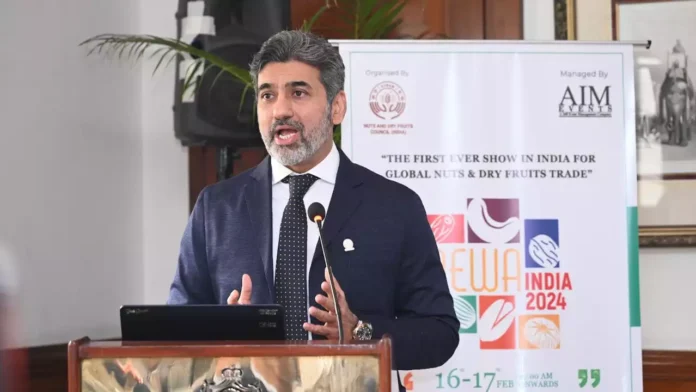
MEWA 2024, a first-of-its-kind exposition in India, is set to host a two-day trade meet on the 16th and 17th of February. Organized under the aegis of India’s recently established Nuts & Dryfruit Council of India, this event will feature the largest-ever representation from the Nuts & Dryfruit Trade of India. The two-day showcase aims to highlight the immense potential of India’s vibrant, highly diversified, and the world’s fastest-growing Nut & Dryfruits market.
The significant participation confirmation from delegates, including key figures in the international trade scene, underscores India’s increasing prominence in the global trade of Nuts & Dryfruits. This event provides a platform for interaction between Indian Buyers, Sellers, and Industry Leaders with the international trade community.
Historically, similar events have taken place in globally renowned locations with limited involvement from Indian participants. Aligned with the Prime Minister’s “Make in India” vision and the objective of bolstering and advancing India’s food processing infrastructure, these endeavors aim to shift the focus towards India. In the upcoming years, this initiative will bring the nuts & dryfruit industry to Indian shores, providing a platform to exhibit the burgeoning potential of the evolving Indian market.
MEWA 2024, spearheaded by NDFCI, endeavors to unite India’s Nut & Dryfruit Trade, a significant portion of which remains unorganized. The objective is to create a unified voice and harness the collective strength of its members, ultimately tapping into the full potential of India’s rapidly expanding market to benefit all stakeholders.
Gunjan Jain, the President of NDFCI, expressed excitement about the anticipated higher growth prospects in the coming years. She envisions India’s market expanding to nearly one lakh crores in the next five years, a substantial increase from the current level of about fifty-six thousand crores. India holds a prominent position as one of the largest importers and consumers of cashews, dates, peanuts, and almonds, closely followed by raisins, dried figs, and walnuts. The consumption of dry fruits witnessed a remarkable 20% increase in 2023, marking the most significant surge in the past five years. This noteworthy upswing is attributed to heightened health consciousness among consumers in the post-pandemic period.
Speaking during the press conference, Sameer Bhanushali, Chairperson of MEWA 2024, said, “As a passionate proponent of India First, India Foremost, MEWA India 2024 is not just a trade show; it is a celebration of innovation, collaboration, and the remarkable potential within the nuts and dry fruits industry. The event, slated for two impactful days, offers a golden opportunity to connect with industry leaders, buyers, sellers, and international delegates, showcasing the dynamic landscape of the Indian nuts industry.”
MEWA 2024 presents a unique opportunity for participants to gain valuable insights through engaging panel discussions, enlightening fireside chats, and informative product-led seminars. The trade show also serves as a networking platform, facilitating connections with service providers and exporters and fostering meaningful relationships within the industry. With participants from over 20 countries, MEWA 2024 is set to host 200+ exhibitors and 3000+ attendees, promising to advance the industry by promoting research, innovation, production, trade, and consumption. Positioned as a global platform, MEWA 2024 is on track to redefine standards and promote collaborative growth in the nuts and dried fruits sector.
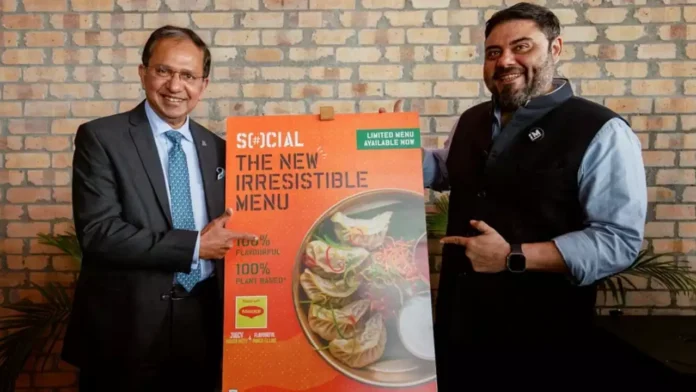
Nestlé India has collaborated with restaurant chains SOCIAL and BOSS Burger to launch a test phase for MAGGI Professional’s plant-based product range. This lineup includes a burger patty and alternatives to traditional meat-based mince, now featured in The New Irresistible Menu. The menu is available for a limited three-month period at 42 SOCIAL and 40 BOSS Burger outlets across Delhi (NCR), Mumbai, Bengaluru, Pune, Dehradun, and Chandigarh, starting January 27, 2024.
Designed for culinary professionals, the plant-based collection mimics the sensory qualities of chicken, delivering a recognizable bounce and juiciness. These alternatives are abundant in protein and fiber, and naturally devoid of cholesterol, appealing to the tastes of a youthful demographic with international cultural influences and conscientious consumption habits.
SOCIAL’s new menu showcases plant-based offerings such as the Sensational Seekh #NotGuilty; Chilli #NotChicken; and Garden Club Sandwich.
BOSS Burger’s new menu includes options like The ImBOSSible Cheeseburger and the Crumb De La Avo Burger.
Expressing joy in the collaborations, Suresh Narayanan, the chairman and managing director of Nestlé India, underscored the company’s dedication to offering a wide array of food choices for consumers.
“We are confident that the chefs would enjoy cooking with this range and create novel dishes for their consumers,” he said.
Riyaaz Amlani, the founder and managing director of Impresario Entertainment and Hospitality Pvt. Ltd., characterized the partnership as a noteworthy stride towards a dining approach that is more sustainable, conscious, and innovative.
Starting January 27th, 2024, patrons can enjoy The New Irresistible Menu at designated SOCIAL outlets and conveniently place orders for delivery through BOSS Burger using DotPe, Swiggy, and Zomato.
As per a Good Food Institute (GFI) report, the rapidly growing smart protein industry in India is expected to experience significant expansion, reaching an estimated value of USD 4.2 billion by 2030. The surge is driven by the involvement of more than 113 startups, actively contributing to the growth of plant-based, fermentation, and cultivated proteins within the sector.
India’s entry into the smart protein industry holds significance not only at a national level but also aligns with the global trends set in motion by the FMCG giant.
In December 2023, Nestlé introduced Maggi Soya Chunks on a global scale, presenting a plant-based meat alternative specifically designed for Central and West Africa. Crafted from soy, the product aims to address the issue of protein deficiency, providing an affordable option fortified with essential elements like iron and zinc.
Céline Worth, R&D program manager for affordable nutrition at Nestlé, emphasized the company’s dedication to providing economical and nutritious products while addressing the protein gap with the use of plant-based ingredients.
Additionally, in December, Nestlé’s Garden Gourmet reintroduced Voie Gras, its foie gras alternative, for a limited time in Belgium, Spain, and The Netherlands.
The animal-friendly alternative was originally introduced in Spain and Switzerland in 2022.
Marjolijn Niggebrugge, European business head of plant-based meal solutions at Nestlé, said, “Voie Gras is a great-tasting seasonal option to delight consumers who continue to look for plant-based alternatives while paying attention to the environment and animal welfare.”
Aman Gupta, Co-Founder and CMO of boAt & Priyasha Saluja, Founder, The Cinnamon Kitchen
In the recent episode of ‘Shark Tank India 3,’ The Cinnamon Kitchen, a Delhi-based bakery, secured a substantial investment of INR 60 lakh from Aman Gupta, Co-Founder, and CMO of boAt, a well-known electronics brand. As part of the deal, Gupta acquired a five percent equity stake in the business, marking a significant milestone for The Cinnamon Kitchen, known for its plant-based, organic, and gluten-free treats.
Established in 2018 by Priyasha Saluja, The Cinnamon Kitchen aims to redefine guilt-free indulgence with its range of spreads, snacks, cookies, cakes, and breads. The bakery, with a focus on creating nourishing delights that are both wholesome and irresistible, has garnered attention from Bollywood celebrities like Sonam Kapoor, Arjun Kapoor, and Malaika Arora.
Stepping into the Shark Tank with an initial request of INR 60 lakh for a two percent equity stake, Priyasha presented her tempting offerings to the sharks. Among them, Aman Gupta showed particular interest in the flourless almond butter cookies, fudge, apple crumble cake, and vegan cheese chips.
She mentioned, “Our products are free from gluten and dairy.” Aman inquired if it’s akin to home kitchen setups, to which she responded, “We operate from a factory in Noida sector 63. Our products are accessible online and at select retail stores. They are also stocked on Amazon and Blinkit.”
However, Anupam Mittal of Shaadi.com and Vineeta Singh of Sugar Cosmetics expressed concerns about the packaging and labeling of the products.
Undeterred, Priyasha underscored the emphasis on packaged goods, pointing out the rising customer repeat percentage and average order value. When asked about scaling, she detailed plans for expanding distribution, extending shelf life, and securing deals with airports.
Fueled by Priyasha’s personal struggle with PCOS and a dedication to healthy living, The Cinnamon Kitchen’s journey has been truly remarkable.
Having started with an initial investment of INR 50,000 in September 2019, the bakery has showcased an impressive sales trajectory, reaching INR 6 crore for the current fiscal year. Aman Gupta initially proposed INR 10 lakh for a two percent equity share along with INR 50 lakh in debt at 12 percent interest for two years. However, he later revised his offer to INR 60 lakh for a five percent equity stake, ultimately sealing the deal.
Reflecting on the ‘Shark Tank India’ experience, Priyasha conveyed gratitude for the invaluable insights and guidance provided by the sharks. She sees the show as a turning point for The Cinnamon Kitchen, anticipating a promising future for the brand.
Priyasha said, “Participating in Shark Tank India proved to be a significant turning point for my brand, ‘The Cinnamon Kitchen’. Beyond gaining exposure and securing investment, the valuable insights shared by the sharks on optimising business operations and propelling it to new heights were truly priceless.”
“Their kindness and empathy towards the challenges faced by early-stage entrepreneurs resonated deeply. I thoroughly enjoyed every aspect of the Shark Tank India experience and eagerly anticipate the promising future ahead for the brand,” she added.
We use cookies to ensure that we give you the best experience on our website. If you continue to use this site we will assume that you are happy with it.