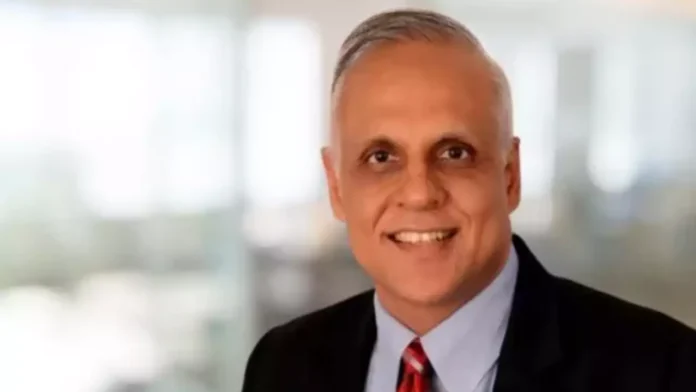
Tata Digital, the digital subsidiary of the diversified conglomerate Tata Group, has named Naveen Tahilyani as its new Chief Executive Officer (CEO) and Managing Director (MD).
Tahilyani is scheduled to assume his new role on February 19th. Before this appointment, he held the position of CEO and MD at Tata AIA Life Insurance, as stated by the company.
Tata Digital hosts the Tata Group’s superapp, Tata Neu. Tahilyani will assume responsibility from Pratik Pal, who led the launch of Tata Neu.
“I am delighted to welcome Naveen to Tata Digital. Naveen brings in (a) strong understanding of (the) consumer domain and a very successful track record of leadership. I wish Naveen success in his new role,” said Tata Sons Chairman N Chandrasekaran.
As an alumnus of both IIT Madras and IIM-Ahmedabad, Tahilyani brings over twenty years of experience, having previously worked with Axis Bank, McKinsey, and other notable organizations.
Meanwhile, the company announced that Pal will stay with Tata Digital to ensure continuity and contribute his extensive experience to the organization. However, there is no clarity on Pal’s specific new role within the company.
“Pratik has been successfully leading the company since its inception and led Tata Group’s foray into digital commerce. I would like to thank Pratik for his significant contribution to Tata Digital,” Chandrasekaran said in the statement.
The development comes at a time when Tata Digital has been witnessing a series of exits at the top level. Recently, it was reported that Tata Digital’s chief software architect Pavan Podila and Samir Aksekar, chief information security officer, were on their way out.
In October 2023, Rajiv Subramanian, who was overseeing Tata Neu’s travel division at the time, also resigned from his role. Before that, several other senior executives, such as Prateek Mehta and Sharath Bulusu, had also left the company.
Nevertheless, the conglomerate is reportedly strategizing for a new billion-dollar fund injection into Tata Digital, despite the latter experiencing a 5.6X year-on-year surge in its consolidated net loss to INR 3,052 Cr in FY22.
Retail sales in India experienced a sudden halt in 2023, with the growth rate in sectors like apparel, footwear, beauty, and quick-service restaurants (QSR) dropping by half to a mere 9% following two years of pandemic-induced surges. This downturn underscores a subdued consumer sentiment, although expenditure on big-ticket items such as automobiles and electronics remained steady, buoyed by accessible loans.
Analysts and industry executives anticipate a prolonged market slump, with a recovery expected only after two to three quarters.
The Retailers Association of India (RAI) reported that within the apparel and footwear sectors, the value category catering to budget-conscious consumers suffered the most severe impact.
Last year, the organised retail sector experienced a same-store sales growth (SSG) of 2-3%, indicating a slowdown in demand for clothing, footwear, cosmetics, and fast food, despite three-fourths of its annual sales growth being attributed to network expansion.
Furthermore, a report by RAI indicates that the traditionally bustling October to December period, characterized by festivals, witnessed only a modest sales growth of 6%, with like-to-like sales declining compared to 2022.
The report conducted a survey of the top 100 retailers across various segments of modern retail in the country. Same-store sales growth (SSG) serves as a gauge of customer demand and assesses revenue generated from stores operational for at least a year.
“Like-for-like growth has been quite muted throughout the year. Most of the brands have expanded to new geographies and whatever the growth we are seeing is due to that. We were expecting things to recover after January but the way things are looking, the slowdown seems slightly prolonged,” said Devarajan Iyer, chief executive of department store chain Lifestyle International.
In 2022, the majority of apparel and lifestyle retailers hiked prices across various categories, particularly following a spike in cotton prices attributed to increased shipment costs and depreciation of the rupee.
However, last year witnessed companies either reducing prices or providing significant discounts to liquidate unsold inventory following price hikes in the preceding year.
“We have seen slowdown across consumer segments but were expecting a retail recovery during October-December quarter which has not happened so far. Unless interest rates are lowered, companies, especially tech firms, give decent salary hikes and there are no further job losses, we do not see a recovery for another 2-3 quarters,” said Abneesh Roy, executive director at Nuvama Institutional Equities.
During the pandemic, there was a surge in sales of athleisure wear, followed by apparel and lifestyle products, which defied the overall sluggish trend due to pent-up demand and consumers upgrading their wardrobes after the reopening of offices. However, this momentum has now stabilized.
“Revenge shopping that we saw during the pandemic was never sustainable. While people are buying higher priced products including cars and electronics with finance options, the increasing EMI every month is forcing them to cut back on lifestyle products like clothing and accessories,” said Kumar Rajagopalan, chief executive officer of RAI.
In 2023, the fashion retail segment grappled with a slowdown in demand due to inflationary pressures. According to RAI’s report, the value category experienced a greater impact compared to premium products and has not yet reached its pre-pandemic level of average sales per square feet.
In terms of segments, apparel and clothing experienced the slowest growth rate at 8%, whereas QSR expanded by 13% in 2023. Sales of furniture, sporting goods, and jewellery saw a 12% rise, while beauty, electronics, and food and grocery each recorded an 11% growth.
Meanwhile, during a recent investors’ call, Shoppers Stop reported a post-Christmas recovery in its retail chain. However, it noted that the recovery is still inconsistent and highlighted that the market remains muted despite some signs of improvement.
“The entire non-apparel piece, whether it’s beauty or non-apparel, is doing really well. We also foresee that going forward, the premium brands and the premiumisation journey will keep on becoming stronger and stronger. For us, those are the reasons why the revival in demand will happen,” said Kavindra Mishra, chief executive of Shoppers Stop, which reported a 9% sales increase in the December quarter.
Others like Metro Brands experienced a 6% revenue growth in the fiscal third quarter, while Bata India’s revenue remained almost flat. Meanwhile, McDonald’s India franchisee Westlife Foodworld saw sales fall 2%, with SSG declining 9%.
Competitor Restaurant Brands Asia, which operates Burger King, reported a 20% rise in revenue. However, Same Store Sales Growth (SSG) decelerated significantly to 2.6% from 28% in the same quarter of the previous year.
“On the macro side, demand conditions remained tough with lower levels of eating out frequency. The festive season saw a slight uptick, but the demand pressure continued thereafter. The softness in general consumption trends is quite visible across the retail space and several other macro indicators,” Akshay Jatia, executive director at Westlife Foodworld told investors recently.
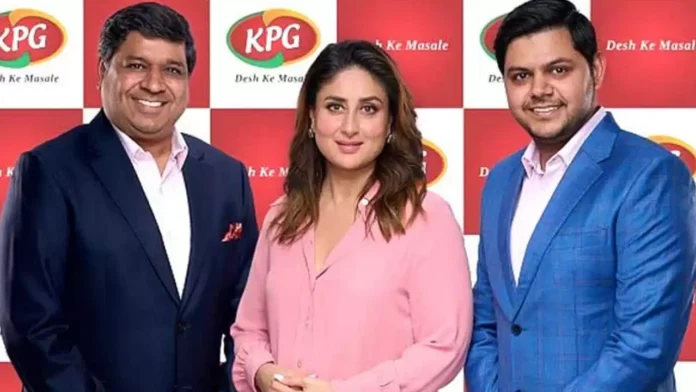
KPG Spices, the Indian spice segment of Marvel Group, renowned for its range of grounded and blended spices, has appointed Bollywood actress Kareena Kapoor Khan as its brand ambassador.
Announcing the association with Kareena Kapoor Khan, Gourav Jain, managing director, Marvel King, said, “We are pleased to onboard Kareena Kapoor Khan as the brand ambassador of KPG Spices. Kareena Kapoor Khan is a greatly praised actor, fearless, believes in quality and now a mother of two, she has set high standards for mothers in all avenues of child upbringing along with an excellent example of work life balance. Her association with KPG Spices is not just as a celebrity but also as a storyteller of spices, adding a touch of Bollywood magic to every Indian household kitchen. We look forward to her refreshing ideas and are confident of a successful partnership that would take KPG Spices to new heights and reach millions.”
On being announced as the brand ambassador of KPG Spices, Kareena Kapoor Khan, said, “I’m looking forward to this synergistic association. The range of products are the epitome of purity and authenticity which is quite evident with their focus on hygiene, health, and of course amazing taste which never falls short in turning everyday meals into extraordinary culinary experiences through the production of fresh and chemical-free spices sourced from every corner of India like Haldi from Selam, Lal Mirch from Guntur etc. commending on KPG masale, desh ke masale. Together we will embark on a beautiful and tasteful journey which will bring flavor and inspiration to food enthusiasts worldwide.”
KPG stands at the forefront of the spice manufacturing industry, embodying a pioneering spirit and unwavering commitment to quality and purity. The brand’s exceptional standing is underscored by its hand-curated team, possessing deep expertise and industrial knowledge to select superior raw materials, conduct industry-leading quality checks, and establish world-class packaging setups. Equipped with state-of-the-art infrastructure, the production facility ensures the manufacture and processing of premium-quality products.
With three decades of experience in the FMCG industry and a forward-thinking vision, Chairman Parveen Jain of Marvel King is dedicated to delighting customers and bringing smiles to faces. Utilizing integrated sales and distribution tracking methods, the company is forging a brand renowned for unwavering quality and pioneering retail spaces. Positioned for global expansion, Marvel King is committed to excellence in every aspect of its operations.
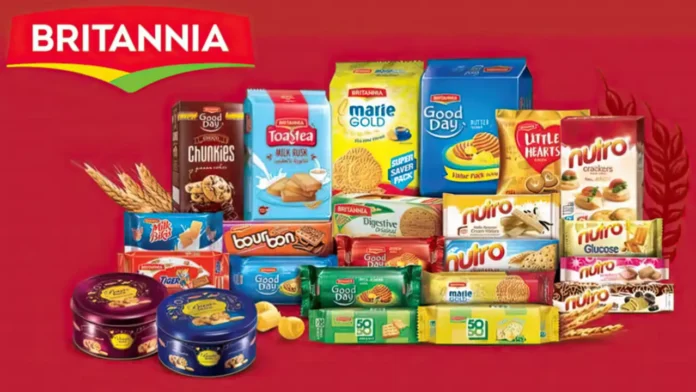
Britannia Industries, a renowned bakery food company, reported a 40.40% decrease in consolidated net profit to INR 555.66 crore for the third quarter ended December 2023, according to a filing with the Bombay Stock Exchange (BSE). This contrasts with the consolidated net profit of INR 932.40 crore reported in the same period a year earlier.
Nevertheless, its revenue from operations saw a 1.41% uptick, reaching INR 4,256.33 crore in Q3 FY24, compared to INR 4,196.80 crore in Q3 FY23.
According to a regulatory filing, its total expenses rose to INR 3,544.42 crore in Q3 FY24, compared to INR 3,475.31 crore in the corresponding period of the previous fiscal year.
Varun Berry, vice chairman and managing director of the company said, “In a progressively recovering demand environment with heightened competition, our performance this quarter reflects our resilience and competitiveness. Over the last 24 months, we achieved a robust 19% growth in revenue, coupled with a commendable 52% increase in operating profit. We capitalized on the power of our brands with requisite investments, and actioned judicious price corrections, which helped us maintain competitiveness and gain market share.”
Berry further said, “We continued to expand our direct reach and accelerate our rural journey, partnering with more than 29,000 rural distributors during the quarter. As a result, our focus states outperformed other regions in terms of growth, despite a generally subdued rural demand.”
“Our international business performed extremely well with robust double-digit growths across key markets,” he added.
Sharing thoughts on cost and profitability, he said, “We will stay vigilant of the commodity prices and evolving geopolitical situation. We will continue to invest behind our brands and stay price competitive with a clear objective of driving market share while sustaining profitability. We remain committed to the ESG framework of People, Growth, Governance and Resources to build a sustainable and profitable business.”
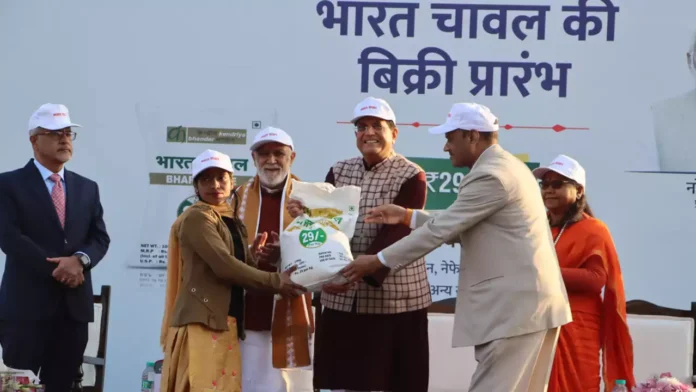
Union Minister of Consumer Affairs, Food & Public Distribution, Textiles and Commerce and Industry, Piyush Goyal launched a Bharat Rice at Kartavya Path, in the capital on Tuesday.
The Union government on February 6 rolled out ‘Bharat rice’ at a subsidised rate of INR 29 per kilogram (kg) to provide relief to consumers from rising food prices. The subsidised rice will be available for consumption in 5 kg and 10 kg packs.
During the launch of subsidized rice, Food and Consumer Affairs Minister Piyush Goyal emphasized Prime Minister Narendra Modi‘s responsiveness to the nation. Goyal highlighted Modi’s vigilance in regulating the prices of essential commodities, ensuring they remain affordable for all.
Goyal also launched 100 mobile vans dedicated to selling Bharat rice.
Prior to the introduction of Bharat rice, the government rolled out Bharat atta, available in 5 kg and 10 kg packs at INR 27.50 per kg. Additionally, Bharat dal (chana dal) is being marketed at INR 60 per kg.
The Union minister said that the government of India is committed towards the welfare of farmers as well as the people of the country. The Union government purchases essential commodities from farmers and sells them to consumers at subsidized rates whenever in need.
Despite restrictions on exports and a bumper production in 2023-24, retail prices of rice are still not under control.
The government has asked retailers, wholesalers, processors, and large retail chains to reveal their stocks in order to prevent hoarding.
Ministers of State for Consumer Affairs Sadhvi Niranjan Jyoti and Ashwini Choubey, Food Secretary Sanjeev Chopra, Consumer Affairs Secretary Rohit Kumar Singh and Food Corporation of India (FCI) CMD Ashok K Meena, among others, were present at the event to launch the rice.
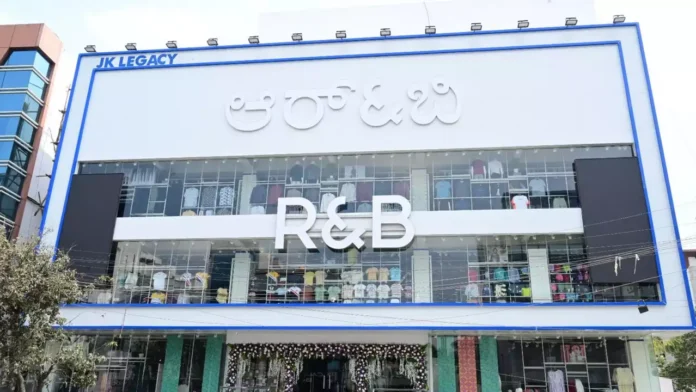
Fashion brand Rare and Basics (R&B) under the ownership of Apparel Group India has unveiled its latest store in Bengaluru, as announced by the retail conglomerate on social media. Located at HSR Layout, this standalone store signifies the 18th retail outlet of R&B in India.
“Presenting Apparel Group brand R&B’s new store at HSR Layout, Bengaluru! The newly opened store is the brand’s 18th in India and 6th in Bengaluru,” Apparel Group India wrote on LinkedIn.
R&B stores offer a variety of Western wear options catering to men, women, and children alike.
Apparel Group launched R&B in October 2012, debuting its first retail store at Muscat Grand Mall in Oman. According to a press release from the company, R&B currently operates over 70 stores across seven countries, including India, Oman, UAE, Qatar, Bahrain, Kuwait, and Saudi Arabia.
In India, R&B has established its presence in Kozhikode (Kerala), Kochi, Ahmedabad, Hyderabad, Bengaluru, Mangalore, and Mysore.
The UAE-headquartered Apparel Group manages a network of over 2,025 retail stores, showcasing a portfolio of over 80 brands across various platforms. With a diverse workforce of over 20,000 employees, the company represents renowned brands such as Aldo, Bath & Body Works, Tim Hortons, Tommy Hilfiger, Nine West, it Spring, Charles & Keith, Inglot, La Senza, Beverly Hills Polo Club, and Victoria’s Secret.
The company has established a strong presence in the GCC region and has successfully expanded into key markets including India, South Africa, Singapore, Indonesia, Thailand, Malaysia, and Egypt. Furthermore, it has developed strategies to penetrate emerging markets such as Hungary and the Philippines.
Amcor, a prominent developer and producer of sustainable packaging solutions, has entered into an agreement with Mondelēz International. Under this deal, Amcor will supply 1,000 tons of post-consumer recycled plastic for wrapping Mondelēz’s flagship Cadbury chocolate products. This collaboration signifies a significant step towards Cadbury’s goal of minimizing its reliance on virgin plastic materials.
In 2022, Cadbury announced that it had sourced 30% of the plastic required to wrap its 160g to 185g Cadbury Dairy Milk family blocks produced in Australia from recycled sources, on a mass balance basis. With its recent procurement, Cadbury is striving to increase its usage of recycled plastic to 50% across its range of chocolate blocks, bars, and pieces produced in Australia, also on a mass balance basis. This initiative is aimed at effectively halving the company’s reliance on virgin plastic for packaging these products.
The rollout of recycled material is slated to commence in the first quarter of 2024, kicking off with blocks and then expanding to encompass beloved bar lines like Cherry Ripe, Crunchie, and Twirl, as well as wrappers for Roses and Favourites assortments.
This comes shortly after Mondelēz International, the custodian of Cadbury, unveiled its longer-term vision to recycle plastic waste domestically. Partnering with Amcor, they have announced plans to invest in Licella to fund the construction of one of Australia’s first soft plastic advanced recycling facilities. Managed by Advanced Recycling Victoria (ARV), the new facility in Melbourne is slated for completion in 2025. Initially, it will process around 20,000 tons per annum of end-of-life plastic, with aspirations to scale up to approximately 120,000 tons per annum.
Mike Cash, President of Amcor Flexibles Asia Pacific stated that he’s proud to continue to support Mondelēz International as they strive to be the most sustainable snacking company in Australia and New Zealand. “We partnered with Mondelēz when they made the first step to move to recycled content for their Cadbury Dairy Milk family blocks packaging, now we’re helping them elevate this ambition by sourcing ~1,000 tons of recycled plastic to help reduce virgin material across more of the Cadbury chocolate portfolio.”
Adding further, Mike Cash stated, “Being able to source this significant volume of recycled material for Mondelēz gives them the opportunity to differentiate and grow, and demonstrates the collective commitment of Mondelez’s leadership.”
According to Darren O’Brien, President – Mondelēz International Australia, New Zealand and Japan, “Reducing virgin plastic use and supporting a circular packaging economy is a focus for our business and this latest deal to purchase recycled plastic is another important step in our journey. By creating confidence in the market for recycled material, we’re helping to build a future for plastic recycling in this country.”
“Chocolate lovers love Cadbury Dairy Milk for its generous ‘glass and a half’ slogan, but when it comes to virgin plastic in our packaging, less is more. By halving our virgin plastic needs in our Cadbury chocolate blocks, bars and pieces portfolio, we are on a path to better packaging.”
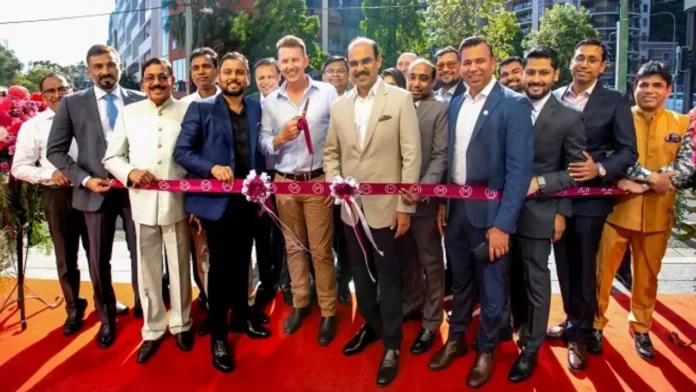
Kerala-based jewellery retailer Malabar Gold & Diamonds has ventured into Australia with the opening of its new showroom in Sydney. This marks the expansion of the company into its 13th country of operations, according to a press release issued on Tuesday.
The retailer asserts its position as the first Indian international jewellery brand to begin operations in Australia.
Located at 109 Wigram Street in Harris Park within the Little India Precinct, the new outlet is poised to be the largest jewellery showroom in Sydney. It was inaugurated by former Australian cricketer Brett Lee, adding a touch of prestige to the occasion.
“This is a proud moment for us as the first Indian International jewellery retailer to begin operations in Australia. We have been a strong proponent of ‘Make in India; Market to the World’, showcasing the artistry of Indian jewellery on a global stage and expanding into Australia is another testimony of our commitment to this initiative,” said M.P Ahammed, chairman of Malabar Gold & Diamonds.
“This is also a great success story leveraging the strong trade relationship and recent bi-lateral free trade agreement between Australia and India. Our growth plan in Australia will lead to significant investments into jobs and local economy in Australia over the next few years,” added Ahammed.
Featuring a diverse range of jewellery crafted in 18K and 22K gold, as well as diamonds, the showroom will display a stunning array of over 30,000 designs spanning bridal wear, daily wear, and occasional wear. Additionally, the store offers a bespoke jewellery design service supported by skilled designers and craftsmen.
“With a large diaspora of immigrants from the Indian sub-continent, the jewellery sector in Australia remains a largely untapped one. Marking a significant shift in the country’s jewellery landscape, we aim to leverage our experience of over 30 years to bring forth an exceptional array of gold, diamond & precious gem jewellery,” said Shamlal Ahamed, managing director – international operations at Malabar Gold & Diamonds.
Presently, the brand boasts a retail network comprising more than 340 showrooms across various regions including India, the United Arab Emirates, Qatar, Kuwait, Oman, the Kingdom of Saudi Arabia (KSA), Bahrain, Singapore, Malaysia, the USA, the UK, Canada, and Australia. Furthermore, it is actively pursuing expansion into emerging markets such as South Africa, Egypt, Bangladesh, Turkey, and New Zealand.
“Malabar Gold & Diamonds is making remarkable progress in both the international and Indian jewelry sectors, gaining substantial momentum. The brand’s strategic global expansion into new countries and within Indian states such as Rajasthan, Puducherry, Uttarakhand, Jharkhand, Goa, Assam, Tripura, and Jammu & Kashmir is poised to elevate it to the coveted No. 1 position” said Asher O, managing director – India operations at Malabar Gold & Diamonds.
Founded in 1993, the jewellery retailer stands as the cornerstone of the Malabar Group. Boasting an impressive annual turnover of $5.2 billion, the brand has established a presence in 12 countries, complemented by numerous offices, design centers, procurement centers, and factories.
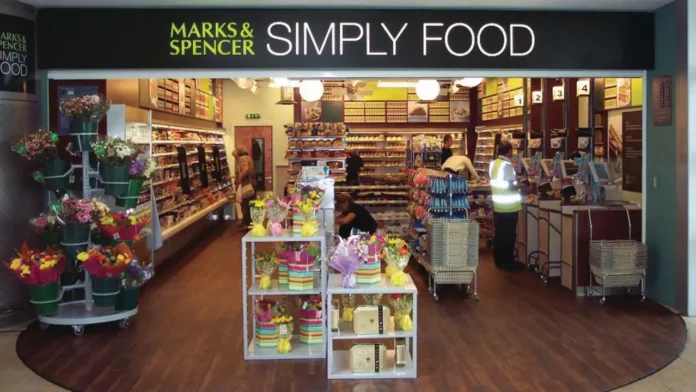
UK industry data released on Tuesday indicated that Marks & Spencer’s food retail arm continued to capitalize on the strong sales momentum of 2023, carrying it into the early weeks of the new year.
According to market researcher NIQ, Marks & Spencer’s grocery sales surged by 11.6% year-on-year in the 12 weeks leading up to January 27, placing it second only to Lidl, a German-owned discounter, which experienced a 13.2% increase and is hailed as Britain’s fastest-growing grocer.
The leading market player, Tesco, recorded a sales growth of 6.9%, whereas Sainsbury’s, holding the second position, achieved a growth of 8.4%.
Asda and Morrisons were once again among the laggards, with sales growth of 2.7% and 3.4% respectively, as shown by the data.
During the four-week period ending on January 27, UK supermarkets experienced a 6.6% year-on-year increase in total sales, as reported by NIQ. Meanwhile, food inflation stood at 6.1%, marking its lowest rate since June 2022.
Echoing the data from rival market researcher Kantar last week, NIQ stated that promotional activity accounted for 23% of sales, down from 26% over Christmas.
Furthermore, it noted that online grocery retained its share of 11.2% of the total grocery expenditure.
On a separate note, Tuesday’s data from the British Retail Consortium revealed that retailers experienced sluggish overall sales in January, reflecting consumer caution towards spending. This underscores the impact of high inflation and borrowing costs, which are placing pressure on households.
The salt-to-steel conglomerate is gearing up for closed-user group trials in the next few days, as reported. However, it may take another month or longer before the feature is available to the public.
According to reports, Gaurav Porwal, Senior Vice President at Tata Digital, is leading the ONDC project.
In April 2022, Tata Neu was introduced as the digital platform encompassing Tata Group’s range of consumer brands, including BigBasket for online groceries, Croma for electronics, Tata CliQ for fashion, 1MG for e-pharmacy, Starbucks for coffee, and the group’s budget airline, formerly AirAsia, now rebranded as AIX Connect.
The 155-year-old conglomerate is poised to enter into competition with the new-age foodtech unicorns Zomato and Swiggy, reportedly dominating 95% of the online food delivery market. The objective is to establish a ‘high-frequency use case,’ encouraging consumers to engage with the app regularly, according to reports.
Several major super apps, such as China’s WeChat or Gojek, have a central offering, such as instant messaging or ride-hailing, around which additional services are integrated.
Following the introduction of ONDC, numerous players like the hyperlocal commerce platform Magicpin and PhonePe’s Pincode have begun offering food delivery services. In May last year, Magicpin announced that it was handling up to 20,000 orders daily.
ONDC facilitates interactions among various participants in the e-commerce ecosystem, such as buyers, sellers, service providers, and intermediaries, enabling them to collaborate in fulfilling business needs.
Tata Neu will function as the business-to-consumer interface within ONDC, serving as a buyer-side application. This approach eliminates the necessity of managing a fleet of delivery riders or negotiating with restaurants to join the platform.
We use cookies to ensure that we give you the best experience on our website. If you continue to use this site we will assume that you are happy with it.