Hindustan Unilever Limited (HUL), a leading FMCG manufacturer, has announced top-level changes in its management committee, which oversees the company’s operations. As per a statement by the company, Shiva Krishnamurthy (49) will join the HUL Management Committee as Executive Director, Foods and Refreshment. HUL owns brands such as Rin, Surf Excel, and Dove.
According to the announcement, Srinandan Sundaram, currently serving as Executive Director of Foods and Refreshment, will transition to the role of Executive Director for Homecare at HUL.
Deepak Subramanian, the current Executive Director of Homecare at HUL, will be assuming a new position abroad. “The changes will be effective April 1, 2024,” it added.
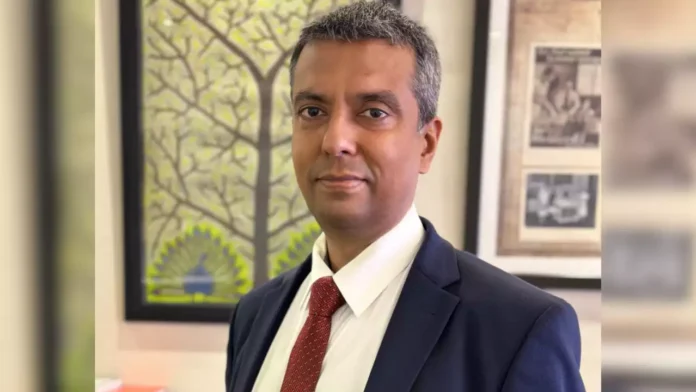
HUL CEO and Managing Director Rohit Jawa said, “Krishnamurthy is an astute marketeer with strong business acumen and is known to craft great brands. I am glad to welcome him to the HUL leadership team and truly believe that his rich experience in foods and beverages will be of immense help to the business.”
Krishnamurthy, presently serving as the Vice President of Foods and Beverages for South Asia, has been with HUL since 2000. According to the company, he has held various leadership roles across multiple sectors and has been overseeing the tea business in South Asia since 2015.
Sundaram holds the position of Executive Director for Foods and Refreshment at HUL, as stated.
Kartik Chandrasekhar, who was set to join the HUL management committee as executive director, personal care, from April 1, has decided to move on from Unilever.
“The appointment for Executive Director, Personal Care, HUL will be announced in due course. Madhusudhan Rao, currently Executive Director, BPC, HUL, will continue to oversee the business in the interim,” the company said.
Moët Hennessy, the wines and spirits division of luxury giant LVMH, is expanding its product offerings in India to cater to the strong demand in one of its fastest-growing markets in Asia, as stated by CEO Philippe Schaus in a recent interview.
“Currently, we are focusing in India on Hennessy Cognac, Glenmorangie whisky and Chandon Sparkling wine, and to a lesser degree, on our champagnes which are purchased more outside India than within India,” Schaus said.
“However, we are introducing new categories as we speak. India is one of our five biggest markets for Glenmorangie single malt whiskey. We have about 27 in all Maisons in our global portfolio, as we call them because they are more than brands, which include wine brands, champagne brands, and some spirit brands. In India, we will focus on about 12 brands out of 27,” he said.
“We have become the leader in a very interesting category, which is Provence Rose, which is Rose wine from the south of France. We are also making inroads with some of our new spirits, such as our Volcan tequila and Belvedere Vodka which has been in the portfolio for many years. Not all of our portfolio is currently introduced to India, but we are progressively going to introduce more and more,” he added.
Schaus highlighted that one of the most notable investments the company has made in India, and continues to pursue, is in its Chandon winery located in Nashik.
“We have been developing and improving it, with ongoing investments such as the elimination of herbicides, the installation of a solar energy system providing 60% of our energy needs, and the implementation of a new water treatment system,” he said.
“Additionally, we are consistently working on expanding our production capabilities. This investment serves as a testament to our belief in the Indian market and the belief that India deserves its own high-quality sparkling wine,” he added.
The funding round propelled the startup’s valuation to INR 143 Cr, as stated by Upliance in a statement.
Upliance plans to utilize the fresh proceeds to ramp up the production of its first product, the AI-powered cooking assistant “Upliance,” to 20,000 units per annum in the next six months. The startup also aims to utilize the capital to scale up its revenue to INR 150 Cr by the end of 2024.
Upliance was also recently showcased on Season 3 of Shark Tank India.
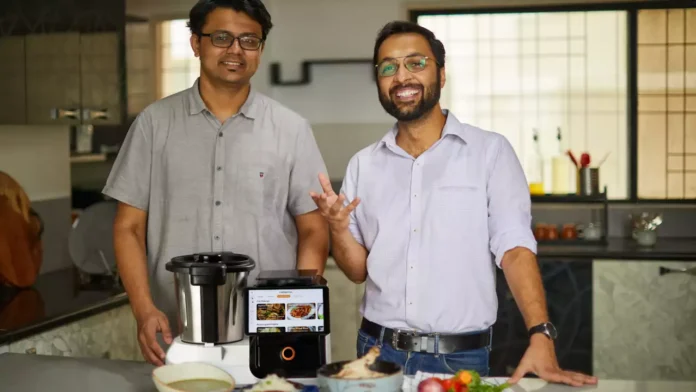
Established in 2021 by Mahek Mody and Mohit Sharma, upliance.ai markets an AI-driven ‘Smart Jar’ capable of handling numerous cooking functions, including chopping, sautéing, blending, heating, and steaming.
Equipped with a touchscreen interface, the product utilizes machine learning and AI technologies to streamline cooking processes.
“We are extremely excited about having Khosla Ventures as partners. Their investment is a validation of both the potential of upliance.ai and the traction we have seen in the market,” said upliance.ai chief executive officer (CEO) Mahek Mody.
Commenting on the fundraise, Khosla Ventures partner Rajesh Swaminathan said, “Mahek and his team have built a product that early consumers love and has the potential to significantly change people’s daily eating routines. We are also excited about the health benefits and AI integration capabilities possible with upliance.ai. These are the bold bets we like to take.”
Earlier, the Bengaluru-based startup secured $1.5 million in its pre-seed round from Nikhil Kamath-led Rainmatter Fund, Draper Associates, Rukam Capital, Stanford Angels and Entrepreneurs India, as well as undisclosed cofounders of Ather Energy and Unacademy.
According to upliance.ai, they have recorded a revenue of INR 1.5 Cr as of January 2024 and have sold 750 units since the product launch in January of the previous year. The startup has announced its intention to sell 1,500 units by March 2024 and aims to increase its active community members to 10,000 by the end of 2024.
This comes at a time when deeptech startups have increasingly captivated investors’ attention. Despite the significant time investment required before product launches and the need for extensive research and development, the deeptech sector saw hefty capital inflow in 2023, defying the challenges posed by funding winters.
According to data, funding for Indian deeptech startups surged to over $496 million in 2023, a significant increase from $397 million in 2022. To date, the sector has amassed over $1.5 billion in capital, with notable mega deals, such as GreyOrange’s $100 million+ round, occurring last year.
The sector was notably highlighted in the interim Budget 2024. The government allocated a substantial INR 1 lakh crore corpus to support Indian startups, aimed at fostering research and development within burgeoning industries. Additionally, a new scheme was proposed to promote the adoption of deeptech technologies within the defense sector.
KFC has launched a new initiative dubbed KFC Rewards, aimed at offering points to American customers for each transaction conducted through its app or website.
The program enables customers to gather points that can be traded for free menu items from KFC’s Secret Recipe Vault.
Customers enrolled in the KFC Rewards program will earn ten points for every eligible dollar spent.
Customers have the option to redeem their points for various complimentary food rewards, such as an eight-piece Kentucky Fried Chicken Nuggets, a chicken sandwich, or a free side.
The Rewards program showcases a rotating assortment of items, guaranteeing members access to a diverse array of fresh and appealing choices.
Members of KFC Rewards will also enjoy personalized offers, potentially including discounts or complimentary items.
Additionally, the program introduces rotating challenges where members can earn extra points and exclusive offers by ordering particular menu items.
Members can access their options at any time by visiting the Rewards page on the KFC app.
KFC US chief marketing officer Nick Chavez said, “Through our new loyalty programme, we will serve even more joy to our guests with incentives and special experiences that are only for our rewards members.”
Last month, KFC introduced its new Smash’d Potato Bowls in the US.
The dish features mashed potatoes alongside crispy Secret Recipe Fries, cheese sauce, bacon crumbles, and a three-cheese blend.
With a price tag of $3.49, these bowls join KFC’s menu after a successful trial in Pittsburgh last year.
India, the world’s leading rice shipper, may consider extending an export tax on the parboiled variety as part of efforts to ease food inflation ahead of national elections. This move could potentially maintain tight global supply and drive prices to new peaks, as reported by Bloomberg.
According to sources familiar with the situation, the administration led by Prime Minister Narendra Modi, who is vying for a third term in the upcoming elections in the first half of this year, is contemplating maintaining the export levy at 20%. These individuals, requesting anonymity due to the confidential nature of the discussions, mentioned that there is presently no immediate plan to prohibit the export of parboiled rice. The current tax is set to expire on March 31.
Such a decision could contribute to the surge in benchmark Asian rice prices, which have remained close to a 15-year peak since India initiated limitations on the sale of crucial varieties in 2023. This development would pose challenges for certain nations in West Africa and the Middle East, as they heavily depend on India to fulfill most of their essential food staple needs.
A spokesperson representing both the food and commerce ministries declined to provide immediate comments.
Extending the levy would form a component of the government’s proactive strategies to manage food inflation, which surged to nearly 10% in December compared to the previous year. India has already restricted exports of wheat, sugar, and the majority of rice varieties, while also implementing measures to combat hoarding. Additionally, it has prolonged the period of low import duties on edible oils for another year.
However, rice retail prices in Delhi remain approximately 11% higher than they were a year ago. Food Minister Piyush Goyal launched a program on Tuesday to provide subsidized rice to retail customers across the country. The government is already selling wheat flour and chickpeas at rates cheaper than those in the market.
Before the restrictions, parboiled rice constituted roughly 30% of India’s total exports. This variety undergoes a process involving partial boiling of paddy prior to milling, enhancing its nutritional content and altering the texture of the cooked rice. In the 2022-23 period, India held a share of approximately 40% in the global rice trade.
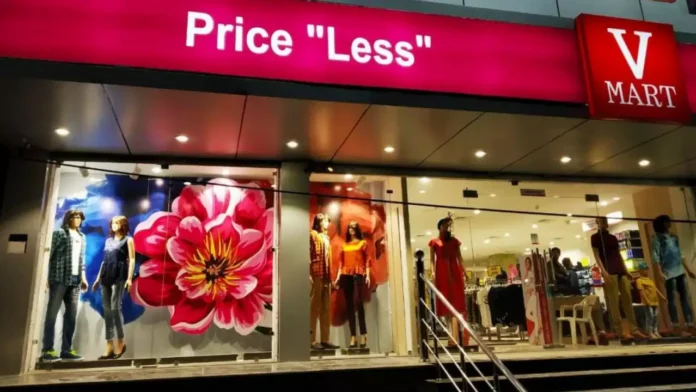
V-Mart Retail Ltd, a value retail chain, reported a 41.36% surge in net profit to INR 28.23 crore for the third quarter ending in December 2023, aided by the festive season, according to a regulatory filing. This represents a significant increase from the INR 19.97 crore net profit reported in the same period of the previous year, spanning October to December.
During the quarter under review, its revenue from operations increased by 14.43% to INR 889.05 crore, compared to INR 776.88 crore in the corresponding quarter.
“Good festive demand in the quarter helped increase footfalls by 23 per cent reflecting an improved consumer sentiment. Winter season was delayed and remained muted during the quarter. Working capital improved with a decrease in inventory by 12 per cent from last quarter,” said an earning statement from the company.
In the December quarter of FY24, V Mart’s total expenses rose by 15.18% to INR 865.20 crore.
Parag Milk Foods Limited (PMFL), an Indian manufacturer and marketer of dairy-based branded products, has reported a significant increase of 268.8 percent year-on-year (YoY) in consolidated profit after tax (PAT) to INR 34.16 crore for the third quarter ending December 2023. This marks a substantial rise from the consolidated PAT of INR 9.26 crore reported in the corresponding period of the previous fiscal year, as stated by the company in a filing with the Bombay Stock Exchange (BSE).
In the third quarter of FY24, Parag Milk Foods Limited saw an 8.8 percent year-on-year increase in its consolidated revenue from operations, reaching INR 800.84 crore, driven by robust growth in the ghee and protein categories. This compares to the company’s consolidated revenue from operations of INR 735.89 crore in the third quarter of FY23.
The company’s earnings before interest, taxes, depreciation, and amortization (EBITDA) grew by 80.5% year-on-year, reaching an EBITDA margin of 8.6% in Q3 FY24, a notable improvement from the 5.2% margin in Q3 FY23.
The company witnessed a significant increase in its gross profit margin due to lower milk prices and enhancements in the product mix. The gross profit margin surged by 520 basis points year-on-year, soaring from 21.1% in Q3 FY23 to 26.5% in Q3 FY24.
PMFL is continuously investing in strengthening its brand through an innovative mix of marketing strategies. The company is actively expanding its distribution network, with the goal of tripling its reach to over 1.5 million retail outlets.
Commenting on the results Devendra Shah, Chairman, PMFL said, “Over the last two quarters, the milk procurement prices have been benign and we expect it to remain stable ahead. Improving consumer sentiments coupled with our continuous focus on the value-added products and the health and nutrition segment is expected to drive healthy performance in the future.”
Shah further said, “We are in the midst of a transformation journey aimed at driving efficiency across the value chain. With an ensuing expansion and acceleration of the distribution footprint, we are confident to show robust growth in our revenues and profitability.”
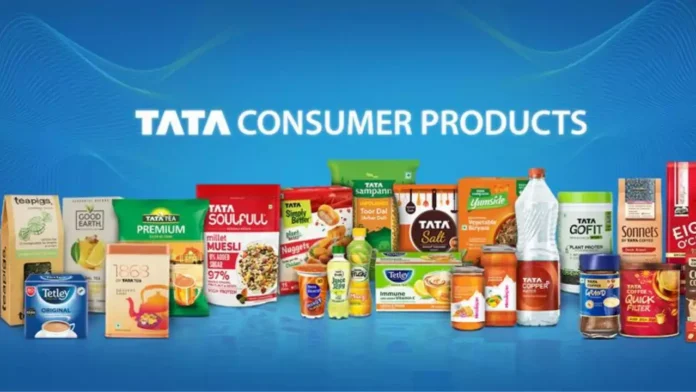
Tata Consumer Products Ltd recorded a consolidated net profit of INR 301.5 crore in the quarter ending December 2023, marking a 17 percent decrease from the INR 364 crore in the year-ago period.
The company’s net profit for the period is also lower compared to the previous quarter in September 2023, which was recorded at INR 363.9 crore.
During the quarter under review, the company’s revenue from operations totaled INR 3,804 crore, marking a 9 percent increase from the INR 3,475 crore reported in the same period last year.
The FMCG giant’s third-quarter revenue has surpassed expectations, as brokerages anticipated it to reach INR 3,731 crore.
The revenue is also slightly higher compared to the INR 3,734 crore recorded in the quarter ended September 2023.
Tata Consumer stated in a media release that the consolidated earnings before interest, taxes, depreciation, and amortization (EBITDA) for Q3 FY24 reached INR 576 crore, representing a 26 percent growth. The margin grew by 200 basis points to 15.1 percent.
“We delivered strong operating performance with a revenue growth of 9 percent and EBITDA growth of 26 percent…Our sales and distribution buildout is progressing well, our total reach has expanded to 3.9 million outlets as of December ’23. We have been focused on driving depth in existing geographies and widening our distribution in lower population strata towns and urban areas and will now focus on rural areas as well,” Tata Consumer’s managing director and CEO Sunil D’Souza said.
In the trading session on February 7, the company’s scrip settled at INR 2,160.00 apiece on the BSE, higher by 1.34 percent as compared to the previous day’s close.
FMCG major Nestle India reported a 4.38% rise in net profit to INR 655.61 crore for the fourth quarter ended December 2023, compared to INR 628.06 crore in the same period of the previous fiscal year, as per a BSE filing.
The company’s total revenue from operations rose to INR 4,600.42 crore in Q4 CY24 from INR 4,256.79 crore in the corresponding period of the previous fiscal year.
The company attributed its 8.9% domestic sales growth to pricing and mix improvements, highlighting robust momentum in e-commerce and out-of-home channels.
According to the regulatory filing, Nestle India’s total expenses increased to INR 3,636.94 crore in Q4 CY24 from INR 3,427.27 crore in Q4 CY23.
Suresh Narayanan, chairman and managing director of Nestle India said, “The quarter was marked by an increase in brand investments across all product groups. I am also pleased to note that during the year 2023, our total sales grew by over 13.3 per cent and we crossed INR 19,000 crore mark.”
“All key brands and product groups have contributed to Nestle India’s consistent growth trajectory,” he shared.
The beverages segment of the company experienced double-digit growth, with Nescafe notably gaining substantial market share. Additionally, the milk and nutrition product group recorded double-digit growth. Prepared dishes and cooking aids maintained commendable growth this quarter, while confectionery also showed strong performance.
Narayanan added that the company’s out-of-home business experienced rapid acceleration this quarter, driven by a focus on pertinent innovations, targeted geographical expansion, and strong penetration into emerging channels, including the opening of new kiosks in strategic locations.
“E-commerce delivered strong growth contributing to 7% of domestic sales in this quarter. Organized trade also witnessed strong growth backed by festive walk-ins and new product launches. The teams excelled in rolling our shopper resonant activities across our large portfolio in both legacy platforms and the fast growing ‘quick commerce,” the company said in a statement.
Sharing about the rural-urban market growth, Narayanan said, “We are very pleased with an uptick in sales in our RUrban markets which has sustained despite the challenging environment. Our RUrban strategies of creating portfolio, infrastructure analytic platforms, activation has supported deeper penetration and distribution expansion that we have witnessed.”
During this quarter, the company expanded its direct coverage and added 5,300 villages, reaching a total of over 196,000 villages, close to 200,000 villages. The FMCG major shared that its customer ordering app in RUrban markets, NesMitra, has resulted in boosting engagement and gaining significant business traction. NesMitra app has over 7,500 active users which is increasing steadily, and it has been recognized in the Nestle world for driving efficiency and speed.
“Service excellence and partnership with our retail and distributor partners is our consistent cornerstone of achieving strong results. Innovation and renovation are key components of our business strategy,” the company said.
Nestle India’s board of directors has declared a third interim dividend for the financial year 2023-24 of INR 7 per equity share (face value of INR 1 each) amounting to INR 674.91 crore, which will be paid on and from 5th March 2024.
According to the filing, this dividend is supplementary to the initial interim dividend of INR 27 per equity share (face value of INR 10/- each) and the subsequent interim dividend of INR 140 per equity share (face value of INR 10 each), disbursed on May 8th, 2023, and November 16th, 2023, respectively.
The face value of the equity share has changed from INR 10 each to INR 1 each.
According to a report released on Wednesday, the price of a typical home-cooked vegetarianthali rose by 5 percent compared to last year in January, whereas the cost of a non-vegetarian thali decreased by 13 percent.
As per Crisil Market Intelligence and Analytics (MI&A) Research ‘Rice Roti Rate’ estimates, the rise in prices of ingredients like pulses, rice, onion, and tomato made home-cooked veg thali costlier in January, while the decline in poultry rates helped in the fall in non-veg thali rates.
The report stated that the price of the vegetable thali rose as a result of a year-on-year surge of 35% and 20% in the prices of onions and tomatoes, respectively.
The report further mentioned that the prices of rice, which constitute 12% of the vegetable thali cost, and pulses, making up 9%, also experienced year-on-year increases of 14% and 21%, respectively.
The drop in the price of the non-vegetarian thali, meanwhile, was attributed to a 26 percent decrease in broiler prices in January compared to the previous year, driven by increased production, according to the report.
Yet, in a sequential manner, the prices of the vegetarian and non-vegetarian thalis dropped by 6 percent and 8 percent, respectively.
The reduction in expenses was attributed to a 26 percent decrease in onion prices and a 16 percent decrease in tomato prices month-on-month, driven by increased domestic onion supply due to export restrictions and the arrival of fresh tomatoes from northern and eastern states, as outlined in the report.
The drop in the price of the non-vegetarian thali accelerated due to an 8-10 percent decrease in broiler prices month-on-month, which constitute 50 percent of the total cost, as stated.
We use cookies to ensure that we give you the best experience on our website. If you continue to use this site we will assume that you are happy with it.