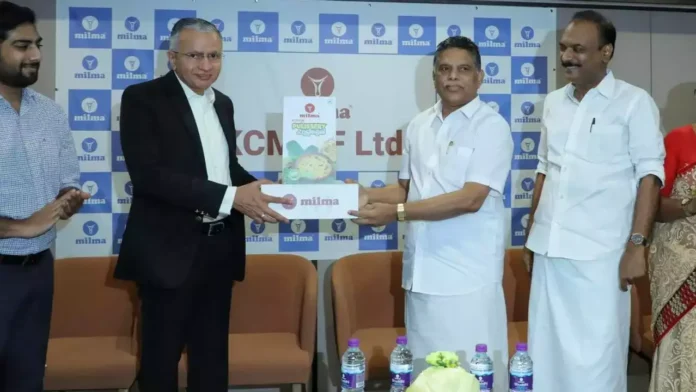
The debut of the product took place in Kochi, where KS Mani, the chairman of KCMMF, presented the inaugural packet of ‘Instant Pulissery Mix’ to Kishore M Jwala, advisor at the National Dairy Development Board (NDDB).
The mix, free from any chemicals harmful to the human body, is available for INR 80 per 100-gram packet.
The Pulissery mix retains the traditional flavor of Kerala curry while also appealing to the tastes of the younger generation. As part of its ‘Repositioning Milma 2023’ initiative, the federation is launching new products that have been well-received in the market.
Milma chairman KS Mani said, “It is boosting our market expansion and product diversification.”
Milma’s Ernakulam Regional Cooperative Milk Producers’ Union Chairman M.T. Jayan said the face of Milma has been changed now. “We are now capable of competing with the products of multinational companies”.
In November last year, Milma introduced the Deliza brand of dark chocolates and the Chocofull snack bar as a response to emerging trends and consumer demand for both delicious and nutritious snacks.
The launch marked KCMMF’s entry into this premium segment and was a key aspect of the ‘Repositioning Milma’ initiative, contributing to the federation’s growing popularity.
Milma is planning to launch more instant mix products to promote the state’s vintage culinary tastes among the youngsters, he said.
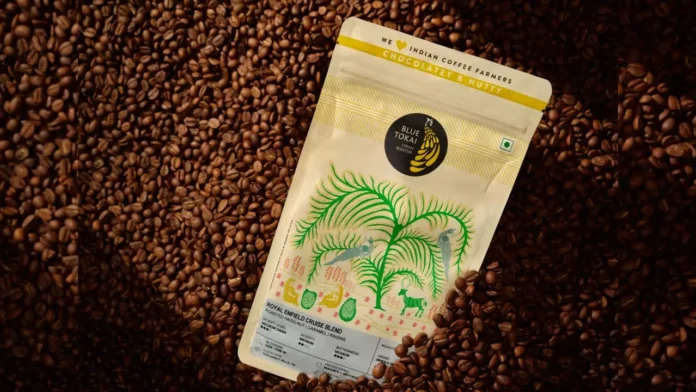
Setting off on a motorcycle road trip isn’t just about the excitement of the journey; it’s a unique experience that transcends the mundane, encouraging riders to establish a deep connection with the open road and the pulse of their machines. Bringing this experience to life in a cup of coffee, Blue Tokai Coffee Roasters has collaborated with Royal Enfield to introduce a distinctive blend – the Royal Enfield Cruise Blend.
Whether cruising along sun-drenched highways or tackling rugged terrains, this specialty coffee blend harmoniously combines flavors sourced from coffee estates in Southern India. With a rich, chocolatey, and nutty profile accentuated by hints of roasted hazelnut, caramel, and raisins, this aromatic blend aims to power the journey while enhancing the synergy of the open road and a leisurely cruise.
To kickstart the collaboration, Royal Enfield led 12 avid explorers and coffee enthusiasts on a ride through the lush terrain of the Eastern Ghats, offering an immersive experience of coffee’s journey from crop to cup at the MSP Gowri Estate. Beginning from Bangalore, the expedition delved into coffee’s storied heritage, unraveling its origins and captivating tales of cultivation.
The ‘Royal Enfield Cruise Blend’ is available at select Blue Tokai outlets and their corresponding Swiggy and Zomato pages.
Gurugram-based specialty coffee brand Blue Tokai Coffee was established in 2013 as a roastery. It has since become India’s largest in its category, dedicated to making high-quality Indian coffee more accessible across various formats.
At present, the brand boasts 4 roasteries and more than 90 physical outlets spanning major Indian cities and regions such as Delhi-NCR, Mumbai, Bangalore, Hyderabad, Kolkata, Chandigarh, Mohali, and Pune. Additionally, Blue Tokai extends its reach internationally with operations in Japan. Beyond these establishments, the company has forged partnerships with prominent retail outlets, luxury hotels, restaurants, leading corporates, and co-working spaces, among others.
BigBasket, the Tata Group-owned online retailer, is expecting a 300 per cent increase in overall sales for Valentine’s week compared to the previous year, indicating a substantial boost in consumer spending and demand for Valentine’s Day-related products, it shared.
The e-grocer reported a significant uptick in sales across various categories, including teddy and heart soft toys, chocolates, makeup and fragrances, roses, and decor and gift sets compared to the previous year. Notably, sales of teddy and heart soft toys have witnessed a four-digit growth rate, highlighting a remarkable surge in demand for these particular items.
Likewise, there has been a remarkable surge in demand for roses, with sales experiencing a growth of 200 times compared to last year.
According to BigBasket’s data, items in the home and decor category such as candle lights, heart LED lights, balloons, and danglers have experienced a substantial growth rate of over 1,500 per cent. This surge underscores the heightened demand for Valentine’s Day-themed home decor.
Furthermore, chocolates have witnessed a significant rise of 100 per cent in sales compared to the previous year’s figures for the week. The company also disclosed a twofold increase in sales of special Valentine chocolates.
Amway India, a prominent FMCG direct selling enterprise, has named Rajneesh Chopra as its newest Chief Executive for India. Chopra transitions from his role as Chief Commercial Officer at Immunotec, a wellness company based in Texas, where he oversaw operations across 14 global markets, focusing on digital innovation, sales, and marketing. He succeeds the former Amway chief, Anshu Budhraja, who departed from the company several months ago.
Before joining Immunotec, Chopra has had affiliations with Amway North America and the cosmetics giant, Revlon.
Amway’s primary offerings in India encompass Nutrilite nutrition and Artistry cosmetics.
According to the annual report of the Indian Direct Selling Association (IDSA), the direct selling industry in India was estimated to be worth INR 19,020 crore in the financial year ’22, marking a 5.3 percent year-on-year growth.
In India, direct selling companies distribute their products directly to consumers through direct-seller members rather than traditional retailers. The IDSA reports that India currently boasts 8.9 million direct sellers.
Reputable enterprises like Amway, Oriflame, and Herbalife, functioning as direct sellers, have been advocating for increased government oversight and clear guidelines to distinguish themselves from transient multi-level marketing pyramid schemes.
Last year in June, the Ministry of Consumer Affairs revised the Consumer Protection (Direct Selling) Rules, 2021, through a notification, aiming to differentiate between illicit pyramid and money-circulation schemes and credible direct-selling entities. However, executives from the IDSA have highlighted the necessity for additional clarification in defining a network of sellers.
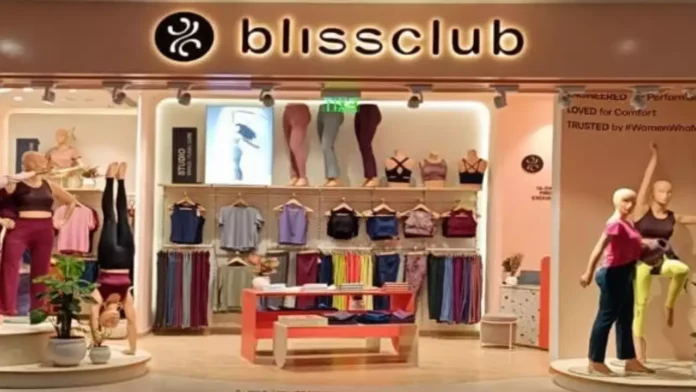
Blissclub, a Bengaluru-based fashion apparel startup, reportedly laid off around 21 employees, or 18% of its workforce, in the second week of January, according to sources.
According to sources, during a town hall meeting on January 11, the startup’s founder and CEO, Minu Margeret, notified the employees of the decision to lay off 21 employees as part of a restructuring effort.
Nonetheless, multiple sources indicated that the number of employees impacted by the restructuring could potentially reach as high as 30.
“In the town hall, Margaret said the restructuring exercise was a pure business decision to move forward. Post this, impacted employees received invites for meetings within 10 minutes. They were informed about the layoffs in these meetings with their respective team heads,” one of the sources said.
The sources added that employees were instructed to voluntarily resign, or else face termination of their services.
Teams across various verticals, such as sales, marketing, growth, and product, were affected by the layoffs. However, the creative team suffered the most significant blow as it was entirely disbanded.
The startup is paying a severance package of two months’ salary to the impacted employees.
Confirming the restructuring exercise, Margaret, said, “We had a one time restructuring done in Jan 2024 which impacted 21 employees of Blissclub. Come 2024, with some changes in strategy, our new direction meant these roles were impacted. In December 2023 we had our highest ever month in terms of topline for Blissclub.”
According to sources, the primary reason for the layoffs was the startup’s inability to raise fresh capital amid high cash burn. Blissclub last raised $15 million in its Series A funding round from Eight Road Ventures and Elevation Capital in May 2022.
Established in 2020, Blissclub initially operated as an online platform specializing in activewear products for women. Over time, it diversified its product offerings and ventured into opening several brick-and-mortar stores.
The company’s net loss surged 305.6% to INR 35.7 Cr in the financial year 2022-23 (FY23) from INR 8.89 Cr in the previous fiscal year. Operating revenue jumped 361.4% to INR 68.3 Cr from INR 14.8 Cr in FY22.
Meanwhile, total expenditure saw a significant increase, growing by 354% to INR 107.8 Cr from INR 23.7 Cr in FY22.
Following the layoffs, Blissclub has become another addition to the expanding roster of Indian startups engaging in restructuring efforts to reduce costs amid the funding downturn that began in 2022. Reports indicate that Indian startups have collectively laid off more than 34.7K employees since the start of 2022.
United Breweries, a renowned beer manufacturer, reported a consolidated net profit of INR 85.34 crore for the December quarter of FY24, marking a significant turnaround from the loss of INR 1.97 crore in the same quarter of the previous financial year.
The company stated in a regulatory filing that its total revenue stands at INR 4,154.98 crore, marking a 12.28 percent increase from the INR 3,700.49 crore recorded in the corresponding quarter of the previous year.
The company reported an 8 percent volume growth in Q3, primarily led by the South and East regions, although this was partly offset by the North. Additionally, the premium segment experienced a growth of 14 percent.
“Within the (premium) segment, we see strong double digit growth for Kingfisher Ultra Max and we continue to drive premium volume growth,” said the company in a release.
On a year-to-date basis, the company’s gross profit margin was lower compared to the previous year, experiencing a decline of 142 basis points. However, in Q3, there was an improvement of 215 basis points.
“We continue to invest behind our brands to drive topline growth and further improve margins by revenue management and cost initiatives,” the company said.
During the first 9 months of the year, investments in capital expenditure amounted to INR 134 crore, mainly directed towards supply chain initiatives to accommodate future growth. The company noted that despite observing some inflationary softening since Q2, volatility is expected to persist.
“We remain optimistic about the long-term growth potential of the industry, driven by increasing disposable income, favorable demographics and premiumisation,” it added.
Meanwhile, the Board of Directors has appointed Anand Kripalu as the Chairman of the Company, effective immediately. Kripalu currently holds positions as a Non-Executive Independent Director, Chairperson of the Stakeholders Relationship/Share Transfer Committee, and Member of the Audit Committee within the Company.
Anand currently serves as the Managing Director and Global CEO of EPL Limited, a company backed by Blackstone (formerly known as Essel Propack Ltd). Until recently, he held the position of Managing Director and CEO at United Spirits Ltd (Diageo India), also serving as a member of Diageo’s Global Executive team.
Earlier, he served as President for India and South East Asia at Mondelez International, President for Asia and Managing Director of Cadbury India, and was a member of Cadbury’s global leadership team. Prior to that, he spent 22 years at Unilever.
In a groundbreaking step towards environmental sustainability, Wahter, a trailblazer in packaged water, and Scrapbuddy, an innovator in PET recycling, have partnered to address plastic pollution in Delhi-NCR. Their shared objective is both ambitious and impactful: to recycle 10 million PET bottles within the next three months, transforming waste into valuable products such as fabrics and paver blocks.
Armed with certifications from industry authorities such as FSSAI and ISO, Wahter is taking a significant stride in environmental responsibility by providing PET scrap to Scrapbuddy for its large-scale recycling initiative. Scrapbuddy, boasting a commendable history of recycling over 1,000,000 kilograms of PET scrap, demonstrates a steadfast dedication to decreasing carbon emissions and promoting sustainable waste management practices.
Scrapbuddy Founder Sachin Garg expresses excitement about the partnership, stating, “Our collaboration with Wahter is a significant stride towards a greener and more sustainable future. Scrapbuddy aims to make a lasting impact on plastic waste reduction in Delhi-NCR.”
Wahter Co-Founder Amitt Nenwani echoes this sentiment, saying, “We are thrilled to collaborate with Scrapbuddy in this impactful venture. Together, we aim to set new standards in PET recycling, fostering environmental responsibility and community engagement.”
Beyond mere business collaboration, this initiative mirrors a shared dedication to community-centric sustainability. The recycled PET materials generated by Scrapbuddy play a pivotal role in environmental preservation and community advancement, resonating with the shared vision of both companies for a greener and more sustainable Delhi-NCR region. Through their partnership, these two entities aspire to establish pioneering standards in PET recycling, nurturing environmental consciousness and community involvement.
Wahter will additionally serve as a distribution partner, facilitating the provision of clean and safe drinking water to the public and communities throughout Delhi NCR on behalf of boAt, a premier consumer electronics brand in India. This arrangement is established through boAt’s collaboration with the Shoobhi Foundation, a reputable NGO committed to social initiatives.
Wahter, a subdivision of the renowned Shiva Group, embodies a pioneering vision in marketing spearheaded by Amitt Nenwani and Kashiish A Nenwani. Employing a groundbreaking strategy, Wahter endeavors to revolutionize the marketing landscape by leveraging its bottles as dynamic platforms. It dedicates 80% of the space for brand advertisements, while reserving 20% to showcase its own identity, thereby advocating for affordability and transparency. Additionally, Wahter offers premium-quality drinking water at an unparalleled rate of just INR 1 per bottle.
PepsiCo, a major player in the global beverage and food industry, reported on Friday a “mid-single-digit” growth in the Indian market for 2023. Globally, PepsiCo achieved a net revenue of USD 91.47 billion in 2023, marking a growth of 5.9 percent, according to the latest earnings report.
For the full year, developing and emerging markets such as “China and India each delivered mid-single-digit growth”, PepsiCo said.
However, PepsiCo’s net revenue in the Africa, Middle East, South Asia (AMESA) division, including India, stood at USD 6.14 billion, reflecting a decline of 4.64 percent.
This “primarily reflected a 21-percentage-point impact of unfavourable foreign exchange, driven primarily by the weakening of the Egyptian pound, and a net organic volume decline, partially offset by effective net pricing,” it said.
Within the region, PepsiCo noted a 2 percent increase in beverage unit volumes, with notable growth driven by double-digit expansion in India and low-single-digit growth in the Middle East.
Nevertheless, the volume of its convenient foods unit experienced a decrease of 3.5 percent. This decline was predominantly driven by a high-single-digit decrease in South Africa, partially counterbalanced by high-single-digit growth in the Middle East and low-single-digit growth in Pakistan.
“Additionally, India experienced a low-single-digit decline,” it said.
However, its operating profit in AMESA grew 21 per cent, it added.
For the December quarter, PepsiCo’s net revenue in AMESA declined by 3.72 percent to USD 1.93 billion.
PepsiCo said it is expecting “at least 4 per cent organic revenue growth” in 2024.
“We are confident that our businesses will perform well in 2024 in the context of changing marketplace conditions. Category growth rates are normalising as consumer behaviours largely revert to pre-pandemic norms and net revenue realisation moderates as inflationary pressures are expected to abate,” said Chairman and CEO Ramon Laguarta.
Brokerage firms such as Jefferies, Nuvama, and Kotak have increased their price targets (PT) for Zomato stock following the foodtech giant’s announcement of a consolidated profit after tax (PAT) of INR 138 Cr in the December quarter (Q3) of the financial year 2023-24 (FY24). This surge was attributed to a significant expansion in its quick commerce business.
A large majority of brokerage firms have assigned a “buy” rating to the stock, anticipating a total return of 15% or higher within the span of a year.
While JM Financial, an investment banking firm, maintained its price target (PT) for the stock at INR 200, Jefferies revised its forecast upward to INR 205 from its earlier INR 190.
Similarly, Nuvama institutional equities raised its previous price target forecast of INR 140 to INR 180. Conversely, Kotak increased the number to INR 190 from INR 160.
Zomato’s shares closed at INR 149.45 on Friday, marking a 3.78% increase from the previous day’s closing price.
“Zomato continues to be one of our preferred picks in the listed Internet space as we believe it is well positioned to benefit from robust industry tailwinds for the hyperlocal delivery businesses. Its balance sheet also remains strong with net cash of INR 120 Bn as of December 2023,” JM Financials said.
The brokerage’s response follows the foodtech major’s third consecutive profitable quarter. Its net profit soared by 283% from INR 36 Cr in Q2 FY24. The startup earned INR 3,288 Cr from its operations during the quarter, marking a 69% increase from INR 1,948 Cr in the corresponding quarter of last year.
The company’s rapid growth has been driven by its quick commerce vertical, Blinkit. Due to increased festive demand, its revenue surged to INR 644 Cr, more than doubling from the INR 301 Cr it made in Q3 FY23.
“Blinkit is the market leader in the fast-growing quick-commerce space and is set to see sharp margin improvements,” Jefferies said.
Zomato has indicated that it is on track to achieve adjusted EBITDA break-even for Blinkit on or before the June quarter of the financial year 2025. JM Financial identifies take-rate expansion, store operating leverage, and corporate-level operating leverage as key drivers for near-term margin expansion to reach break-even for Blinkit.
Furthermore, Kotak’s upgrade primarily stems from the strong indication of revenue growth in the Blinkit business.
“We believe that the margins of the business can also improve in tandem with the core business,” the brokerage said.
Nevertheless, the lion’s share of the total operating revenue was still generated by its food delivery vertical. Although the vertical’s revenue increased by 29% year-over-year to INR 2,205 Cr, the sequential growth failed to meet the company’s expectations.
According to Kotak, the demand environment was subdued during the quarter, resulting in lower-than-expected growth of 6.3% quarter-on-quarter in food delivery gross order value (GOV). Nevertheless, it highlighted that this growth surpassed that of some other players in the restaurant industry space.
Nuvama anticipates that the expansion of Zomato’s food delivery vertical will be fueled by enhancements in order frequency, the addition of restaurants, and a boost in market share.
“Based on SOTP [sum of the parts valuation], we are valuing the food delivery business at 60x Q4FY26 EBITDA deriving value of INR122/share ($ 12.1 Bn),” the brokerage said.
Another notable surge in the company’s operations came from its B2B arm, Hyperpure, which saw its revenue double to INR 859 Cr from INR 421 Cr a year earlier. The company is currently in the midst of establishing a plant to process value-added food supplies, aiming to further expand this vertical.
Kotal anticipates that the capital expenditure incurred by Zomato will not significantly impact the overall size of the business. Consequently, the expected payback on this investment is deemed attractive. The brokerage also stated that Zomato intends to start with one facility and may consider expansion in the future.
Reliance Consumer Products (RCPL) has acquired the trademarks, recipes, and all intellectual property rights of sugar-boiled confectionery maker Ravalgaon for INR 27 crore, as per a stock market disclosure by Ravalgaon Sugar Farm Ltd.
RCPL’s strategy of acquiring old Indian brands in distress and relaunching them aligns well with its recent acquisition of Ravalgaon, which boasts nine confectionery brands including Pan Pasand and Coffee Break. This mirrors its previous success with brands like Campa soft drink.
The agreement was signed by both parties on Friday. It excludes the slump sale of all assets and liabilities of Ravalgaon.
“It is clarified that while 100% of the revenue of the company (Ravalgaon) is ascribed to the intellectual property being sold, the company will continue to hold all other assets such as property, land, plant, building, equipment, machinery, etc. post completion of the proposed transaction,” as per the disclosure.
Although the agreement includes a non-compete clause for Ravalgaon, the company clarified that it retains the option to engage in third-party manufacturing for other firms, including RCPL.
Ravalgaon generated a revenue of INR 9.66 crore in the fiscal year 2022-23.
This move will bolster RCPL’s competitive position against major players like ITC, Parle Products, and DS Group in the confectionery segment, where it already operates with two acquired brands – Lotus Chocolate and Toffeeman. Ravalgaon revealed in its disclosure that it has struggled to maintain its sugar boiled confectionery business in recent years, resulting in a decline in market share due to intensified competition from both organized and unorganized competitors.
“At the same time, profitability has been affected by the sustained increase in raw material, energy and labour prices, without the ability to effectively pass on the input price increases to its customers beyond the INR 1- price point,” it said in the disclosures.
Additionally, Ravalgaon stated that as the company’s factory, machinery, and equipment have aged, the cost of production and associated wastage have also risen.
“The financial position of the company was exacerbated by the COVID-19 pandemic as schools and offices remained closed for physical attendance over a prolonged period, resulting in the reduction of movement of the company’s largest demographics of consumers. Being an impulse product, the absence of physical movement translated into weak demand,” it said.
We use cookies to ensure that we give you the best experience on our website. If you continue to use this site we will assume that you are happy with it.