Friday, February 20, 2026
Home Blog Page 656

Iconic restaurant chain Moti Mahal set to spice up the European market this year

0
Moti Mahal Delux

Moti Mahal, a culinary brand with a rich 104-year history, announced its plan to enter the European market this year, as stated in a press release on Wednesday. The expansion strategy involves launching its restaurants in Europe, with the goal of introducing its celebrated tandoori cuisine to the region.

The company already boasts a presence in the USA, Africa, New Zealand, the Maldives, Colombo, and the Middle East.

Established in 1920 by Kundan Lal Gujral in Peshawar, undivided India, Moti Mahal underwent a significant transition following the partition of India in 1947. Subsequently, the restaurant relocated and established its new presence in Delhi.

Currently, the legacy of Moti Mahal is overseen by Gujral’s grandson, Monish Gujral, who manages its operations. The brand has extended its reach to encompass over 150 locations globally.

Continue Exploring: Delhi’s iconic restaurants engage in legal tussle over ‘Butter Chicken’ and ‘Dal Makhani’ origins

Advertisement

Flipkart revives same-day delivery service across 20 cities, taking on Amazon’s Prime model

0
Flipkart
Flipkart

The same-day ecommerce delivery service, pioneered by Amazon through its Prime subscription model in 2017, has recently witnessed a revival. Joining the fray on Thursday, is its rival Flipkart.

Flipkart has introduced same-day delivery services across 20 cities for a range of products, encompassing mobiles, fashion, beauty products, lifestyle items, books, home appliances, electronics, and more.

Among the cities covered are Ahmedabad, Bangalore, Bhubaneshwar, Coimbatore, Chennai, Delhi, Guwahati, Hyderabad, and Indore.

It’s worth noting that the company backed by Walmart initiated its same-day delivery service in 2014, covering 10 cities. However, it eventually discontinued the service. During that period, users were charged a shipping fee of INR 200.

With the new service, customers can have their orders delivered before midnight if placed by 1 PM, as stated by the company. The firm also announced plans to extend this feature to other cities in the upcoming months.

Last year, Flipkart announced investments in multiple fulfillment centers and advanced technological capabilities to improve the sorting of products, all geared towards enabling same-day delivery.

Months of meticulous planning were undertaken to ensure orders are fulfilled from the closest fulfillment center, thereby reducing transit times and optimizing the overall efficiency of the delivery process, as stated in the announcement.

“Considering that customers not just from metro cities but non-metros cities love to shop on Flipkart, we are working to provide same-day delivery to 20 cities, reinforcing our commitment to staying at the forefront of customer satisfaction. We will further scale it in the months to come, to include more cities and more categories including large appliances, to delight the customers,” said Hemant Badri, SVP, group head of supply chain, customer experience and recommerce business at Flipkart Group.

This development follows closely on the heels of Flipkart introducing its Unified Payments Interface (UPI) offering to an initial group of users, marking another stride in fortifying its foothold in the fintech sector.

Continue Exploring: Flipkart nears profitability amidst cost reduction measures and fintech expansion

In the midst of its business expansion, the company is anticipated to implement employee layoffs in the upcoming months.

According to a report from Moneycontrol, the company is reducing approximately 1,000 positions as part of its annual performance review process. This move is anticipated to result in a 5% reduction in the team size. Contrary to this, a previous report indicated that the layoffs would affect around 5-7% of the total workforce.

The company currently has a workforce of approximately 22,000 employees.

However, according to a source knowledgeable about the situation, the reported layoff figures are speculative. The source mentioned that the company regularly conducts performance reviews, and the results will only be revealed by the end of March-April.

Continue Exploring: Walmart-owned Flipkart initiates annual job cuts, targets 5-7% workforce reduction by April

In October last year, Flipkart introduced “Flipkart VIP” at an annual fee of INR 499, which is INR 500 lower than the cost of Amazon Prime membership. The membership entails complimentary same-day/next-day deliveries for VIP members in specific areas. However, the company did not specify whether one-day delivery is exclusively reserved for VIP members.

It is worth mentioning that with the rising prevalence of smartphones, the utilization of UPI and the broader digital payments infrastructure has surged in the country. Notably, in the most recent developments, Zomato, a major player in the foodtech industry, and the Indian arm of global digital payments startup Stripe have obtained approval from the RBI to operate as online payment aggregators.

Continue Exploring: Zomato’s ZPPL gets green light from RBI to operate as online payment aggregator

In FY23, Flipkart Internet Private Limited’s B2C segment allocated INR 6,571.2 Crores towards transportation expenses, marking a 30% rise from the previous fiscal year’s INR 5,045.6 Crores. The operating revenue for the year reached INR 14,845.8 Crores, reflecting a 42% increase compared to the INR 10,477.4 Crores generated in FY22. Kalyan Krishnamurthy, the group’s chief executive, expressed optimism about the company’s approach to profitability, citing a substantial reduction in monthly cash burn.

Advertisement

ITC sees untapped market potential for YiPPee! Noodles, aims for further growth in the North region

0
Yippee noodles

ITC, a diversified conglomerate, believes that there is additional potential to increase the market share of its Noodles segment under the YiPPee! brand in the North, particularly in regions where it currently has a relatively smaller presence.

YiPPee! holds the second position among noodle brands across India. The conglomerate’s Foods business remains dedicated to expanding in regions where there is still room for increasing market shares. Nestle India’s Maggi currently leads the Noodles segment.

“There are large regions of the North where we are still relatively smaller (in Noodles). So, we want to grow there going forward,” said Suresh Chand, Vice president & Head of Marketing, snacks, noodles & pasta, ITC Foods.

Chand emphasized that the company’s primary focus is on “product augmentation” to further enhance market share in the Noodles segment.

Continue Exploring: ITC launches new YiPPee! Wow Masala Noodles at INR 10 to rival Nestle’s Maggi

“Over the years we have done a very strong entry into this category. We have come up with a completely different proposition and we stand for long non-sticky noodles and there are veggies also that we have provided in the product. And it has given us extremely good results over the years. And very recently what we have done that along with Orange bucket (with differentiated taste), we have also come up with a product Wow Masala which is into the Yellow bucket. It has a better masala and even the quantity of the masala is more,” Chand said on Wednesday.

He made these remarks during an event where ITC’s “Sunfeast YiPPee!” and “Bingo!” revealed a strategic partnership with the Argentine Football Association (AFA) as their official regional sponsor.

Bingo! holds the top position in the Bridges segment of Snack Foods. Bingo! earlier had collaborations with Kerala Blasters Football Club and East Bengal FC.

According to Chand, Noodles and Snacks are sizable categories at the industry level.

“Because there is a lot of play by local and regional players also, these growths (for the company) need to now be further enhanced. And that is where these partnerships and your products would be important going forward,” he said.

As part of the collaboration with the Argentine Football Association (AFA), the respective brands have introduced packaging showcasing star players such as Lionel Messi, Ángel Di María, Julián Álvarez, and Emiliano Martínez.

“YiPPee! and “Bingo! are the categories where there is a lot of headroom still to grow in terms of penetration and average consumptions. There are a lot of avenues to grow. We have to continue to work on our brand building, consumer connect and distribution. I am quite hopeful that the growth will continue and we keep accelerating in these categories,” Chand said.

He added that Snacks, noodles, and pasta form a “significant portion” of ITC’s Food business.

Significantly, the conglomerate’s non-cigarette FMCG business experienced a 7.59 percent year-on-year growth in revenue, reaching INR 5,209.05 crore in the third quarter of this fiscal year. During the same period, the segment exhibited a 24 percent year-on-year growth in operating profit, totaling INR 431.82 crore. In its media statement following the announcement of results on Monday, the company noted that its non-cigarette FMCG business demonstrated resilience in performance amid a slowdown in consumer demand. Additionally, the segment’s EBITDA margins expanded by 100 basis points year on year, reaching 11 percent.

Advertisement

Diageo and AB InBev gear up to navigate liquor sales disruptions during general elections

0
Liquor
Liquor

Diageo, the leading distiller, and Anheuser-Busch InBev, the largest brewer globally, have asserted their readiness to manage sales and supply chain disruptions anticipated during the upcoming general elections in India. This period typically involves a prohibition on the sale and consumption of liquor on and around the voting days.

“Generally, during elections in India, what we have seen in the past is that there are temporary restrictions imposed by various states like the sale of alcohol. So, I think that would be something that we would anticipate. We know the team in India knows how to manage through that. And I am sure that they will continue to do a good job on that,” Lavanya Chandrashekar, Diageo’s global chief financial officer, told investors, adding that the trend on regulations has been moving in the right direction in India.

During elections, several excise officials assigned to liquor factories are enlisted for election duty, in addition to the increase in dry days.

AB InBev, the producer of Budweiser and Hoegaarden, anticipates minimal disruptions amid elections and is making preparations to counterbalance any brewing and distribution alterations throughout the peak summer season. This period constitutes more than a third of beer sales.

“We are actively monitoring this to proactively address any production or supply challenges. Summer being the peak season for beer consumption in India, we remain committed to ensuring an uninterrupted and robust supply to meet the existing consumer demand,” said Anasuya Ray, vice-president-corporate affairs, AB InBev India.

Continue Exploring: Indigenous spirits shine: India’s liquor exports soar, set to break $1 Billion barrier

Many firms have expressed their intention to proactively address and mitigate the potential impact on their business throughout the entire value chain. This includes retailers stocking up on additional inventory and factories producing more unfinished goods in advance. While there has been a historical surge in sales for lower-priced products during elections, this trend has diminished over the past decade.

Potential disruptions might occur during a period when the demand for spirits is already hindered by reduced sales of lower-priced products, elevated taxes, and a high sales base. In India, several state governments exert control over either liquor retailing, wholesale distribution, or both, with taxes serving as a significant revenue source for them. Nevertheless, businesses have noted a trend towards a more progressive approach by the government.

“Several of the larger states have reduced their import duties or excise duties on alcohol products over the last 18 to 24 months. We are still hopeful around the FTA. With regulations moving in the right direction, I think this all bodes really well for Diageo,” Lavanya said.

Continue Exploring: Noida administration urges residents to report cross-border liquor purchases; unveils fines for offenders

Advertisement

Post-pandemic resurgence: India’s food services sector thrives with M&A, investments, and IPOs as younger consumers drive growth

0
Food Services Sector
(Representative Image)

After a pause of over two years due to the pandemic, the food services sector is abuzz with mergers and acquisitions (M&A) as well as increased investments and funding. Industry executives note a resurgence of new players, including global brands, and a revived investor interest driven by younger consumers with higher spending.

Speciality Restaurants, the operator of Mainland China and Oh! Calcutta, is in advanced negotiations for its initial set of acquisitions, with Chairman Anjan Chatterjee revealing that the listed company has earmarked INR 125 crore for mergers and acquisitions this calendar year. Meanwhile, Rebel Foods, the proprietor of Faasos and Mandarin Oak, is gearing up for its first initial public offering early next year, making it the first cloud kitchen company to go public.

“India’s young population is a key growth driver for food services now – that’s going in our favour; data says younger people are dining out or ordering in a lot more,” said Rohit Aggarwal, director at Lite Bite Foods, which operates Asia7 and Street Foods of India restaurants. “Many of these people will soon enter the earning bracket as well, which would also contribute to the growth story,” he said, adding Lite Bites is looking to double its network of restaurants from the current 200 over the next 3-5 years.

Despite worries about inflation and increased competitive pressure, there is a positive outlook for consumption.

Continue Exploring: A-Listers Spice Up Their Portfolios with Bold Bets on India’s Booming F&B Startups

“Food services is a high growth potential sector, with socio-economic reasons such as significant increase in the numbers of nuclear families with more incomes, as well as people preferring established brands over unorganised ones – a trend that took off during the pandemic and has since stayed,” Chatterjee said.

Sagar Kochhar, Co-Founder of Peak XV-backed Rebel Foods, leading both the food court format EatSure and a vast cloud kitchen network, has announced the company’s intensified expansion strategy across all its brands.

“We expect our category-leading brands to continue growing 20-25% in 2024. This trajectory points to innovation and adaptation, setting the stage for multiple, successive S-curves as we expand,” he said.

Within the next two years, EatSure aims to open 100 brick-and-mortar stores as part of its expansion strategy.

Kochhar further mentioned that Rebel Foods achieved its most outstanding performance this New Year’s Eve, witnessing a remarkable increase of over 30% in same-store volume growth compared to the previous year.

Other prominent chains, such as the operator of Social, Impressario Handmade Restaurants, and Massive Restaurants led by Zorawar Kalra, have stated that they are currently either in the stages of going public or expanding their operations.

Last month, Wow! Momo Foods achieved its most substantial fundraising success, securing INR 350 crore from Khazanah Nasional Berhad, the sovereign wealth fund of Malaysia. Co-founder Sagar Daryani disclosed that the newly acquired capital would fuel the chain’s expansion into an additional 100 cities, with the ambitious target of establishing over 1,500 stores within the next three years. This expansion initiative comes as the company already operates in 35 cities with 630 stores.

Continue Exploring: Wow! Momo Foods secures INR 350 Crore funding led by Malaysia’s Khazanah Nasional Berhad, eyes aggressive expansion 

According to a report from Wazir Advisors in January, the organized food services sector in India is surpassing the growth of the unorganized sector, driven by the emergence of new brands and heightened investor interest.

Advertisement

Former Swiggy executive Kedar Gokhale launches agritech venture ‘Orbit Farming’ targeting mid-sized Indian farmers

0
Kedar Gokhale

Kedar Gokhale, the former vice president of operations at Swiggy, has announced the launch of his new agritech venture, Orbit Farming.

With this move, Gokhale aims to establish a platform offering agricultural solutions specifically tailored for mid-sized Indian farmers who own 2 to 10 hectares of farmland.

The Swiggy executive has partnered with Aishwarya Ramakrishnan, former head of strategy, growth, and operations at Krish-e, to initiate the project. Krish-e, established in 2020, serves as an omnichannel marketplace catering to various agricultural requirements.

Taking to LinkedIn, the erstwhile Swiggy executive announced, “After an enriching 6 year journey at Swiggy, I am starting up again in a sector that has always fascinated me -> agriculture! Happy to partner with Aishwarya Ramakrishnan in this journey as we zero in on an idea and launch Orbit Farming.”

With the new venture, the duo endeavors to support mid-sized farmers in enhancing their farm income.

“We are building India’s largest farming mechanisation solutions platform enabling mid-sized farms to achieve higher profitability,” Gokhale added in his post.

Meanwhile, as per Orbit Farming’s LinkedIn page, the startup seeks to close the divide between conventional farming methods and contemporary, technology-driven solutions.

Continue Exploring: Shilpa Shetty-backed agritech startup KisanKonnect secures INR 31 Crore in pre-series A funding led by Green Frontier Capital

Presently, Gokhale and Ramakrishnan are actively recruiting to assemble a founding team aligned with their mission of empowering mid-sized farms.

During his tenure at Swiggy, Gokhale spearheaded recruitment, retention, engagement, and fleet (delivery partners) sufficiency at the hyperlocal level for Swiggy Food and Instamart.

Before joining Swiggy in 2017, the IIT Bombay alumnus had founded Truce-True Price, an agritech startup, in 2015.

On the flip side, Ramakrishnan had been involved with Mahindra’s agritech business, Krish-e, for a duration of three and a half years before ultimately resigning in 2022.

With this, the co-founders have become part of a growing trend among Indian executives, leaving their existing company roles to launch new ventures.

Last week, Gautam Sinha, the former chief executive of Times Internet, launched a new artificial intelligence (AI) venture called SimpleO.ai.

More recently, Karthik Gurumurthy, the mastermind behind Swiggy Instamart, successfully raised $3 million (approximately INR 25 crore) for his latest offline retail venture, Convenio. The new platform is set to operate in the offline domain and will emulate the model of Swiggy.

Continue Exploring: Karthik Gurumurthy secures $3 Million funding led by Matrix Partners India for innovative fresh produce retail venture ‘Convenio’

Advertisement

Dairy tech startup Stellapps in advanced talks for $20 Million Series C funding, eyes expansion and IPO in next 3-4 years
0
Ranjith Mukundan
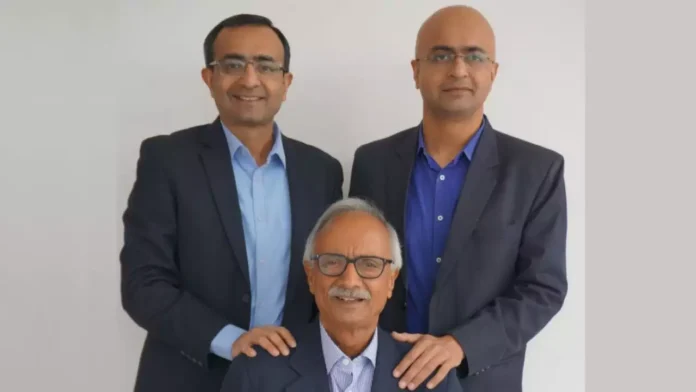
Ranjith Mukundan, the CEO and Co-Founder of Stellapps

Stellapps, a Bengaluru-based dairy tech startup, is in advanced discussions to secure around $20 million in its Series C funding round.

Nearly 70% of the funding will be raised from existing investors, including Celesta Capital, Omnivore, Gates Foundation, IDH Farmfit Fund, Blume Ventures, and Qualcomm Ventures.

Ranjith Mukundan, the CEO and Co-Founder of Stellapps, mentioned that a few new investors are expected to join the funding round. However, he did not reveal the identities of these new investors or the valuation sought by the startup in the fundraising process.

The startup plans to use the new capital for its expansion initiatives, particularly emphasizing the development of value-added dairy products.

Established in 2011 by IIT alumni and former Wipro employees, including Mukundan, Ravi Shiroor, Ramakrishna Adukuri, Praveen Nale, and Venkatesh Seshasayee, Stellapps offers a full-stack Internet of Things (IoT) platform. This platform is designed to digitize and enhance the efficiency of the entire milk supply chain, spanning from production to procurement and storage. Additionally, the platform facilitates connections between farmers and financial institutions, insurance providers, cattle nutrition suppliers, and agro-input providers.

Around July last year, the startup also began processing milk to supply value-added dairy products to B2B companies.

Continue Exploring: Dairy brand Epigamia focuses on profitability, targets 25% year-on-year growth in FY24

The startup currently supplies curd, ghee, paneer, buttermilk, double-toned milk, and other products to FMCG brands. With processing plants in Uttar Pradesh and Bengaluru, it aims to expand further by adding two more facilities.

“We are also considering making ice-cream and selling it under a private label to other businesses,” Mukundan added.

Addressing a query regarding the selection of the B2B approach for its dairy products, Mukundan explained that B2C businesses demand substantial capital for brand creation and customer acquisition.

According to the CEO, the dairy tech startup is considering an initial public offering within the next 36-48 months.

“We’re building our brand towards IPO and (want to) provide our investors a 5X return. We are working towards listing our company at around $450 Mn-$500 Mn valuation during the IPO,” Mukundan added.

The startup is set to conclude the current financial year with a revenue of INR 400 Cr and aims to achieve INR 2,000 Cr in the upcoming three to four years.

Stellapps secured an undisclosed amount of funding from IDH FarmFit in 2022, following its Pre-Series C funding round where it raised $18 Mn from Nutreco, a global animal nutrition and aquaculture company, a few months earlier.

Advertisement

Dabur announces INR 135 Crore investment for new greenfield facility in South India

0
Dabur
Dabur

Consumer goods manufacturer Dabur announced on Wednesday its plans to establish a new manufacturing unit in south India, with a slated investment of INR 135 crore for the project. This facility is set to produce a variety of Dabur’s Ayurvedic Healthcare, personal care, and home care products, encompassing popular items like Dabur Honey, Dabur Red Paste, and Odonil air fresheners, according to a statement from Dabur India.

In a meeting held on Wednesday, the board of the indigenous FMCG and Ayurvedic products manufacturer sanctioned an investment of INR 135 crore for the establishment of a greenfield facility in southern India, as per the company’s statement.

“Our business has scaled up in south India and today accounts for 18-20 per cent of Dabur’s domestic business. With south India’s contribution increasing, we have decided to establish a new manufacturing facility there to better cater to the local demand,” Dabur India CEO Mohit Malhotra said.

This marks the company’s 14th domestic manufacturing site, adding to its portfolio of brands including Dabur Amla, Dabur Vatika, and the juice brand Real.

“This is not only an opportunity to bring more jobs to the region, but also allows us to further expand our manufacturing capabilities and meet the growing need for Dabur products in south India,” he added.

Continue Exploring: Dabur India’s Q3 profit rises 6.2% to INR 506.44 Cr, records 7% revenue growth at INR 3,255.06 Cr

Advertisement

PharmEasy hits INR 6,000 Cr in sales in FY23, records notable growth despite INR 5,211 Cr net loss

0
PharmEasy

PharmEasy, the Mumbai-based ePharmacy startup, marked a significant milestone as its operating revenue surpassed the INR 6,000 Crore mark in the financial year concluding on March 31, 2023. This unicorn reported a substantial 16% surge, reaching an operating revenue of INR 6,643.9 Crores in FY23, demonstrating notable growth from INR 5,728.8 Crores in the preceding fiscal year.

Established in 2015 by Dharmil Sheth, Dhaval Shah, Harsh Parekh, Siddharth Shah, and Hardik Dedhia, PharmEasy operates as an online platform for the sale of medicines and provides diagnostic test services through its subsidiary entities.

The startup predominantly derives its revenue from the sales of medicines on its marketplace. In the fiscal year 2022-23, it achieved a total revenue of INR 5,925.3 Crores from the sale of pharmaceutical and cosmetic products, and an additional INR 701.2 Crores from diagnostic and other services. In the preceding fiscal year (FY22), the earnings from medicine sales amounted to INR 5,229.9 Crores, while the revenue from diagnostic and other services reached INR 417.8 Crores.

Taking into account other sources of income, the total revenue for the startup reached INR 6,699.7 Crores, reflecting a 15% growth compared to the INR 5,781 Crores reported in the preceding fiscal year.

Nevertheless, there was a notable surge in net loss, rising by over 31% to INR 5,211.7 Crores in FY23 from INR 3,992.4 Crores in FY22, primarily attributed to an impairment loss of INR 2,921.9 Crores incurred during the review period. When excluding the impact of the impairment loss, PharmEasy’s net loss exhibited a 16% decrease, amounting to INR 2,289.8 Crores in the year under review as opposed to INR 2,731.7 Crores in FY22.

The startup witnessed a modest 6% growth in total expenditure, reaching INR 8,974 Crores from INR 8,491.5 Crores in FY22.

PharmEasy’s Revenue Breakdown in FY23:

The startup’s procurement cost constituted about 63% of the total expenditure. In FY23, there was a 12% increase in PharmEasy’s procurement cost, amounting to INR 5,730.8 Crores, compared to INR 5,113 Crores in the previous year.

The startup successfully reduced its employee cost by 12%, achieving INR 1,283.3 Crores in FY23 compared to INR 1,458.9 Crores in the preceding fiscal year. It’s worth noting that the startup implemented several rounds of layoffs in both 2022 and 2023.

With the aim of limiting its expenditure, the startup reduced its marketing cost by more than 50% to INR 235 Crores in FY23, down from INR 494 Crores in FY22.

Having abandoned its IPO plans in 2022, PharmEasy encountered a significant cash shortage last year. However, it recently successfully secured INR 3,500 Crores (approximately $424 million) through a rights issue.

Continue Exploring: B2C ecommerce startup DealShare’s FY23 loss crosses INR 500 Cr mark, while sales see a 5% upturn

The startup announced its intention to use a portion of the proceeds from the rights issue to settle some of its outstanding debt.

Similar to the edtech startup BYJU’S, PharmEasy has been making efforts to repay the debt it acquired from Goldman Sachs. Previously, the startup violated its loan covenant terms with Goldman Sachs within a year of securing the high-cost debt.

According to the loan terms, the startup was obligated to secure an equity round of approximately INR 1,000 Crores ($120 million) but did not fulfill this requirement. The company had initially raised the debt to settle a prior obligation incurred for the acquisition of Thyrocare.

In the midst of these developments, PharmEasy appointed Yatharth Bhargova as the new Group CFO for its parent entity, API Holdings Private Limited, last year. With a capital raised of approximately $1 billion to date, PharmEasy competes with notable backers such as B Capital, Temasek, Eight Roads Ventures, Prosus, and Bessemer Venture Partners. The company competes with rivals like Tata 1mg, MediBuddy, and Practo in the online pharmacy market.

Advertisement

Havmor unveils new ‘Havefunn’ ice cream parlour in Nadiad, Gujarat, adding sweet bliss to the state’s taste buds

0
Havmor

Ice cream brand Havmor has opened its ice cream parlour, Havefunn, in Nadiad, Gujarat, according to a statement released by the company on Tuesday.

This brings the total count of Havfunn ice cream parlours to 54 in Gujarat and 234 across India, as mentioned in the release.

The Havfunn Parlours offers a variety of scoops, cakes, sundaes, and shakes. The recently opened parlour has a store size of 495 square feet.

The launch of this Havfunn Parlour aligns with the brand’s growth plans for 2024, opening avenues for both consumers and potential franchisees. Havmor serves consumers across more than 21 states and union territories.

Continue Exploring: Zimero to tantalize tastebuds in Bangalore and Hyderabad with unique ice cream flavors

With over 80 years in existence, Havmor Ice Cream, a division of LOTTE Wellfood Co. Ltd., presents a diverse range of flavors. These span from the indigenous ‘paan ice cream’ and ‘laddoo ice cream’ to options like Mocha, Nutty Belgian dark chocolate, and Ice Cream Cakes.

Advertisement