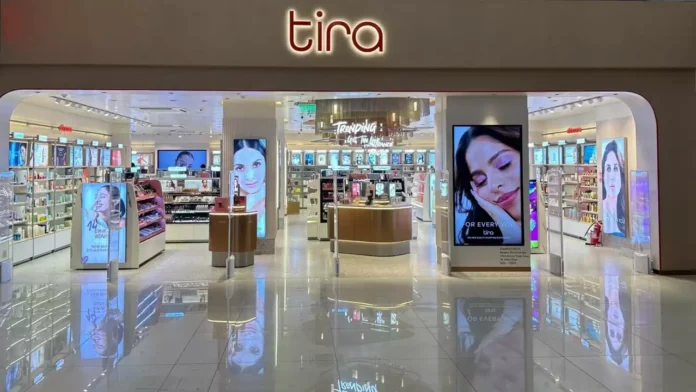
Reliance Retail‘s omni-channel beauty retail platform Tira has entered North India with its newest store in New Delhi, as announced by an industry official on social media. Situated within the DLF Avenue Mall in Saket, this outlet marks the 10th store for Tira across the country.
“It’s official, Delhi beauty buffs! Tira Beauty has arrived in DLF Avenue, Saket, marking its 10th store and bringing its tech-powered beauty magic to the capital,” wrote Nirant Khedkar, executive director of The Othr Lab in a LinkedIn post.
The store offers a carefully curated selection of brands, covering makeup, skincare, fragrance, and bath products. It features state-of-the-art amenities like artificial intelligence (AI) fragrance finders, smart mirrors, and personalized beauty and skincare consultations.
In February 2023, Reliance Industries Ltd’s (RIL) retail arm, Reliance Retail, launched Tira as an e-commerce platform. Following this, in April, it inaugurated its flagship store situated at Jio World Drive in the Bandra Kurla Complex in Mumbai.
Currently, Tira offers over 150 Indian and international brands in its stores.
Reliance Retail Ltd. (RRL) operates as a subsidiary of Reliance Retail Ventures Ltd. (RRVL), the holding entity for all retail businesses within RIL. With an integrated omni-channel network spanning across grocery, consumer electronics, fashion, lifestyle, and pharmaceutical consumption categories, the company manages over 18,650 stores and digital commerce platforms.
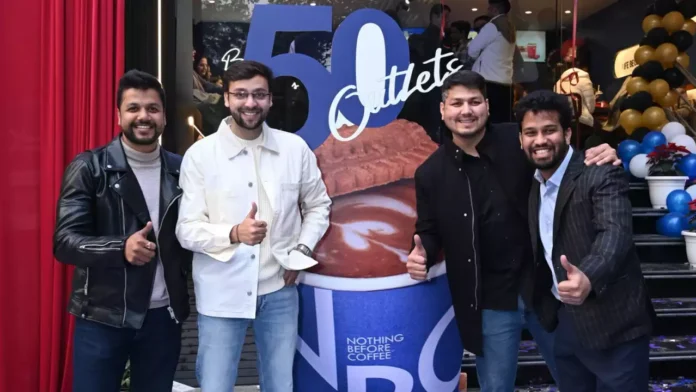
Akshay Kedia, Ankesh Jain, Anand Jain and Shubham Bhandari, Co-Founders, Nothing Before Coffee
Nothing Before Coffee (NBC), a rapidly expanding coffee chain, has opened its 50th store at Malviya Nagar in New Delhi as per a release by the company on Wednesday.
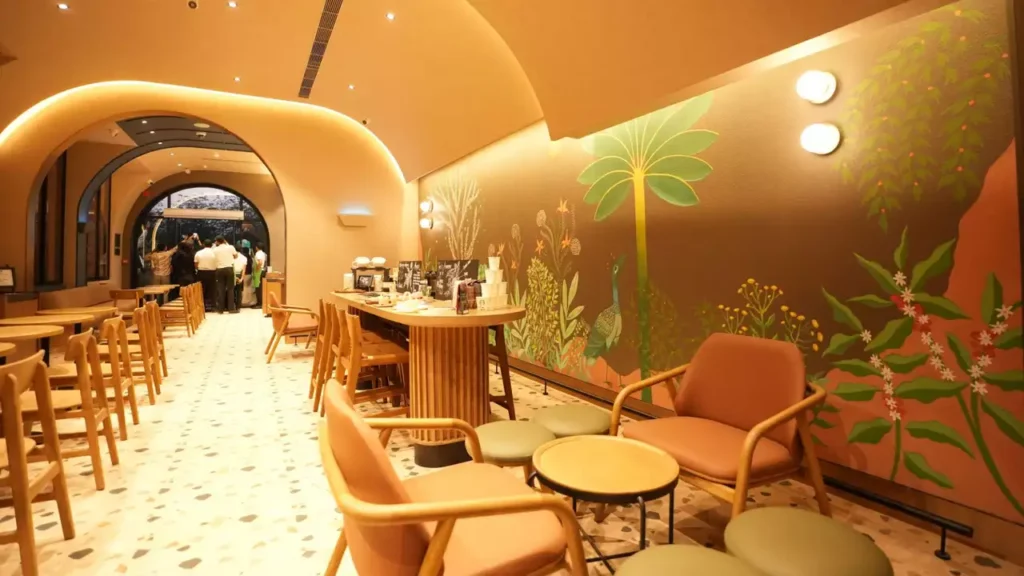
Spanning 550-600 square feet of retail space, the store presents a diverse menu featuring 100% vegetarian options. Additionally, it offers an extensive selection of over 100 handcrafted beverages, with its standout being the popular ‘Shrappe’—a unique fusion of frappe and shake.
“The launch of our 50th outlet is not just a numerical achievement; it’s a testament to our commitment to crafting exceptional coffee experiences,” said Akshay Kedia, Founder of NBC.
“Our vision is to become the household name for coffee and beverage cafes in Tier 1 & Tier 2 cities of India and beyond, offering a convenient and delicious coffee experience,” Kedia added.
Founded in 2017 by childhood friends Akshay Kedia, Anand Jain, Ankesh Jain, and Shubham Bhandari, NBC has established its presence in 10 states and 26 cities. As of the current financial year 2023-24, the company has expanded with 25 new outlets in 8 additional cities. NBC is actively pursuing nationwide expansion, aiming to reach more regions across the country.
Jaipur-headquartered NBC has teamed up with Building Brands for Tomorrow (BBFT), a consultancy specializing in restaurant franchising and startup growth, to expedite its expansion efforts.
“The market is experiencing a significant demand for reasonably priced coffee, with very few brands catering to this segment on a nationwide scale. It fills me with great joy and pride to witness and support NBC’s transformation from nonexistence to prominence,” said Rohit Singh, Founder of Building Brands for Tomorrow (BBFT).
“Moving forward, the aim is to expand and enhance NBC’s presence across the entire Indian landscape,” Singh added.
US-based coffee giant Starbucks has opened its first store in Jodhpur, as confirmed by a company official on social media. The new outlet is located on Airport Road, Park Plaza, Jodhpur, Rajasthan.
“Hello Jodhpur! We are thrilled to announce the opening of our very first store in your city,” said Udit Shah, manager- business development at Tata Starbucks Pvt. Ltd. in a LinkedIn post.
This signifies the launch of Starbucks’ 11th store in Rajasthan, adding to its presence across Jaipur, Ajmer, Udaipur, and Behror.
“As we unveil our first store in this majestic city, we invite you to immerse yourself in a symphony of flavors and culture. Join us on a journey where tradition meets innovation, where every sip of our handcrafted beverages is a tribute to the timeless beauty of Rajasthan,” said Hemant Yadav, shift supervisor at Tata Starbucks in a social media post.
The Starbucks-branded coffee chain in India operates as a 50:50 joint venture between Seattle-based Starbucks Coffee Co. and Tata Consumer Products Ltd. Since 2012, Tata Starbucks has expanded its presence, boasting over 390 stores across 54 cities in India, with an approximate workforce of 4,300 employees.
The company aims to have 1,000 stores in operation in India by 2028, with the target of opening one new store every three days.
Arvind Fashions Ltd, a leading player in the casual and denim segment, on Tuesday reported a multifold rise in consolidated net profit at INR 51.08 crore for the December quarter FY24, helped by gains from sales of Sephora business.
During the quarter, AFL sold its Sephora business to Reliance Retail, resulting in a gain of INR 94.28 crore. Additionally, Arvind Beauty Brands Retail Ltd (ABBRL) no longer functions as a subsidiary.
AFL recorded a net profit of INR 30.12 crore from continuing operations, compared to INR 26.39 crore in the third quarter of the previous fiscal year.
Revenue from operations stood at INR 1,125.05 crore, up from INR 1,072.78 crore in the corresponding period last year.
“Growth was primarily led by retail and MBO channel,” said an earning statement from the company.
The company’s total expenses in the December quarter stood at INR 1,081.71 crore, reflecting a 3% year-on-year increase.
In the quarter, the combination of revenue growth and an expansion in gross margin led to an 18% increase in EBITDA to INR 150 crore, up from INR 127 crore in Q3 FY23, the company stated.
Total income stood at INR 1,131.96 crore, representing a 4% year-on-year increase.
“Strong financial performance in this quarter reflects the focus on profitable growth with 150 basis points improvement in EBITDA, a growth of 18% over Q3 last year,” MD & CEO Shailesh Chaturvedi said.
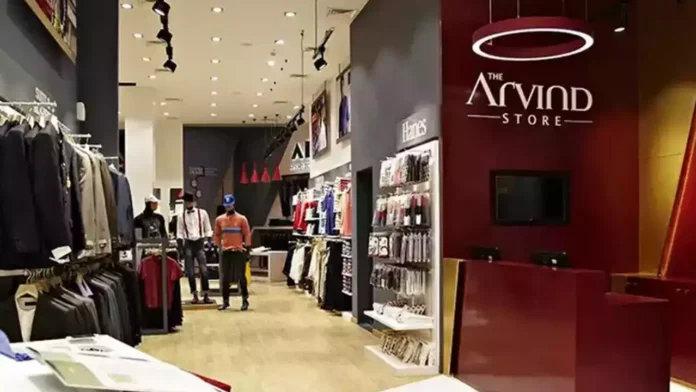
AFL manages retail stores of renowned international brands such as U.S. Polo Assn., Arrow, Tommy Hilfiger, Calvin Klein, and Flying Machine.
Shares of Arvind Fashions on Tuesday settled at INR 453.55 apiece on BSE, down 2.5%.
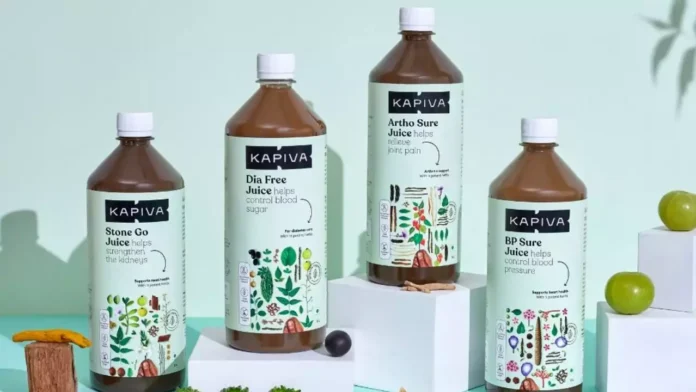
Kapiva, a direct-to-consumer Ayurvedic nutrition brand, saw its losses increase by 34% to INR 64.6 Cr in FY23 compared to INR 48.2 Cr in the preceding fiscal year. This expansion in losses was attributed to the startup’s rising expenses, which aligned with its expanding business operations.
Despite a nearly 94% surge in operating revenue to INR 114.5 Cr in the fiscal year under review from INR 59.1 Cr in FY22, its bottom line suffered.
Established in 2016, Kapiva specializes in Ayurvedic nutrition offerings such as juices, consumables, gummies, capsules, hair oil, and shampoos, boasting a portfolio of over 100 SKUs. Additionally, the startup facilitates consultations with Ayurvedic doctors.
In FY23, the company’s total revenue, including interest income, reached INR 116.5 Cr, marking a significant increase from INR 62.4 Cr in the preceding year.
Kapiva’s Breakdown of Expenses:
In the reported fiscal year, Kapiva’s total expenses surged by 64% to INR 181.1 Cr from INR 110.5 Cr in FY22, with purchases of stock-in-trade contributing a majority of 52.4% to the total spending.
In FY23, spending within the “Purchases Of Stock-in-Trade” category for the D2C band surged by nearly 55%, reaching INR 42.3 Cr compared to INR 27.3 Cr in the preceding fiscal year.
The startup’s employee benefit expenses witnessed almost a 46% rise to INR 32.8 Cr in FY23 from INR 22.5 Cr in the previous year.
In that regard, the startup allocated INR 25.7 Cr towards salaries and wages, marking a year-on-year (YoY) increase of more than 23%.
Conversely, Kapiva’s expenditure on ESOPs rose to INR 5.7 Cr in FY23 from INR 73.5 Lakh in the previous year.
During FY23, the D2C brand allocated INR 64.3 Cr towards marketing. However, the company did not disclose its spending in this area for FY22 in its FY23 financial filing.
Kapiva attributed the rise in its loss during the reported fiscal to increased investment in team expansion and marketing expenses, driven by business growth.
The company’s expenditure on Freight Cost amounted to INR 17.3 Cr in the fiscal year, up from INR 12.3 Cr in FY22.
Backed by Vertex Ventures, Fireside Ventures, and 3one4 Capital, Kapiva has raised $15.77 million across multiple rounds thus far. According to its FY23 financial filing, the D2C brand anticipates strong business performance and promising returns in the future.
PepsiCo‘s fiscal year results reveal a 5.9% increase in net revenue, indicating the effectiveness of investments made to fortify the company’s operations.
However, the beverage titan saw a 0.5% decline in net revenue, totaling $27.85 billion, with organic revenue growth of 4.5%, down from 10.6% in the year-ago period. This marks the first drop in 14 quarters.
PepsiCo executives highlighted that high borrowing costs and reduced personal savings are constraining consumers’ budgets. The company observed a decrease in demand, particularly in the US, where consumers are resisting higher prices for sodas and snacks. This resistance comes after two years during which PepsiCo absorbed higher production costs to maintain its profit margins.
In January, Carrefour, Europe’s largest food retailer, announced its decision not to carry PepsiCo’s products, citing “unacceptable price increases.”
The owner of brands such as Doritos, SodaStream, and Lay’s reported $1.3 billion in net income for the fourth quarter, up from $518 million in the same period the prior year. PepsiCo was negatively affected by impairment charges related to some of its brands, including SodaStream and Goodwill.
In the fourth quarter, PepsiCo’s Latin America division showed the sole increase in net revenue, with a rise of 18%, whereas the Quaker Foods North America segment experienced the most significant decline, dropping by 16%.
PepsiCo attributed the quarter’s net revenue decline to several factors, including product returns due to the voluntary recall of specific bars and cereals within its Quaker Foods North America division, discontinued sales of products resulting from the recall, and a slower growth rate in the overall category.
In the quarter, PepsiCo Beverages North America saw a 27% drop in profit, a sharp contrast to its 122% growth in the same period last year, while net revenue for its Europe unit fell by 1%.
PepsiCo’s Latin America division saw an 18% increase in Q4 net revenue. Meanwhile, the Africa, Middle East, and South Asia unit witnessed a 4% decrease in net revenue, and the company’s Asia Pacific, Australia, New Zealand, and China Region segment faced a 2% decline in revenue.
PepsiCo CEO, Ramon Laguarta, expressed satisfaction with the 2023 results, noting that the company had effectively managed through another year marked by high inflation, macroeconomic fluctuations, geopolitical tensions, and international conflicts.
He stated that he is confident that the businesses will perform well in 2024, “Category growth rates are normalising as consumer behaviours largely revert to pre-pandemic norms and net revenue realisation moderates as inflationary pressures are expected to abate.”
Looking ahead, Laguarta stated that PepsiCo will “vigorously control” its costs to enhance productivity and increase investments in its brands, innovation, channel expansion, and its PepsiCo Positive ESG transformation strategy.
For 2024, the beverage giant now expects organic revenue to increase by at least 4% and core constant currency earnings per share to rise by at least 8%. Previously, the company had forecasted organic revenue growth at the upper end of 4% to 6% and core constant currency earnings per share growth in the high single digits.
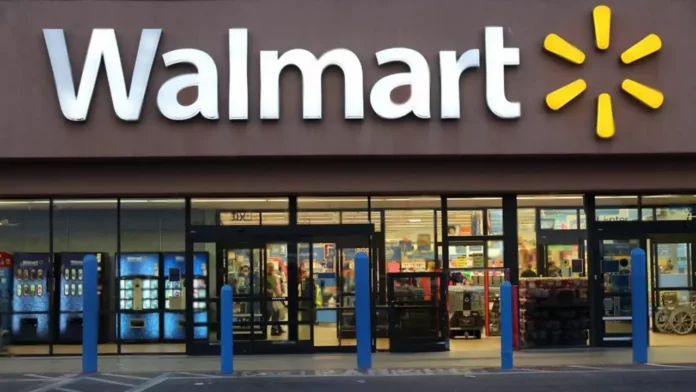
Walmart, the multinational retail hypermarket, said that it has procured goods worth over $30 billion from the Indian market for its global operations in the last 25 years. The company aims to triple its sourcing of these goods from India to $10 billion annually by 2027.
Andrea Albright, Walmart’s executive vice president of sourcing, explained that through its Walmart Vriddhi initiative, introduced in 2019, the company is providing free training to Micro, Small, and Medium Enterprises (MSMEs) to help them “acquire new skills, expand, and achieve their business goals.” During its Growth Summit, the company declared that they have surpassed their goal ahead of schedule and have already trained over 50,000 MSMEs.
Jason Fremstad, Walmart’s senior vice president, supplier development and sourcing, said, “What we are aiming to do this week is to continue finding new suppliers to source in categories- home, apparels, foods, health and wellness, toys… this week is focused on expanding those opportunities and finding new suppliers that we can export in an effort to achieve the goal that we have set out for sourcing $10 billion by the end of 2027.”
The retailer, boasting 2.1 million associates worldwide, describes itself as a “people-led, tech-powered, omni-channel” entity, emphasizing its commitment to saving customers’ money and enhancing their quality of life. The summit aimed to facilitate collaboration between buyers and suppliers, with the goal of expediting exports nationwide.
“Our focus is to recruit and train new suppliers to fulfil our purchase orders around the world. These orders often lead to the creation of new jobs. It also allows our suppliers to invest back in their local communities,” Albright said.
Doug McMillion, CEO of Walmart in a joint video with Walmart international president and CEO, Kathryn McLay, said, “Other than the US, India is the only market where we have set a sourcing objective. And that is because we see so much opportunity.”
Walmart also aimed to explore potential solutions for supply chain challenges by partnering with innovative companies and startups.
Albright said, “Some of the challenges could range from circularity- how do we continue to find ways to be more sustainable inside of our product. Other challenges might be- how we might use Gen-AI or AI to continue to forecast better and get better data to our suppliers. So, there’s a range of problems that I think the entire industry is trying to solve. And we’re trying to find those right entrepreneurs to learn more from and maybe can create some type of partnerships.”
London-based hotel management chain Yotel is in advanced discussions and evaluating opportunities to sign its maiden hotel project in India this year, according to its chief executive Hubert Viriot.
During an interview, he expressed, “The population density, the growth in domestic and international travel are factors that are conducive for us to be successful in India. Apart from looking at specific projects, we are also in advanced discussions with a number of groups for potential partnerships here. I am quite confident that we should succeed this year, and that we should be able to announce our first partnership here this year.”
Yotel operates hotels in prime locations including airports and city centers in various markets such as Singapore, London, New York, Istanbul, San Francisco, Washington DC, and Paris. Supported by the Al-Bahar Group and Starwood Capital Group, it collaborates with private equity funds, pension funds, and real estate developers to construct hotels designed for ‘Generation Go,’ targeting the needs of young professionals on the move.
Among its prominent corporate clients are FIFA, Adidas, IBM, Amazon, and Google. The company’s portfolio comprises three brands: Yotel, situated in city centers and urban locales; YotelPad, catering to extended stays; and YotelAir, designed for airports and transit hubs.
“We are doing well. We have a lot of institutional investors investing in Yotels. We have one million loyal customers and we have a competitive advantage in the sense that we know how to operate hotels around the airports very well,” said Viriot.
“So, we are evaluating if we could potentially be around the Delhi airport, for instance. We could also consider super high density markets such as Mumbai, as our hotel concept allows us to create value in such markets because of its efficiency in optimising real estate and from an operating point of view,” he said.
At present, Yotel operates 23 hotels worldwide, with an additional 13 hotels under construction.
“Our first airport hotel came up in London in 2008 and our first city hotel opened in New York in 2011. We will open hotels in Thailand and Japan this year, besides expanding into Malaysia and Indonesia next year,” said Viriot.
Viriot stated that the chain began with an ambitious vision, recognizing that the traditional paradigm of hospitality did not align with the needs of today’s or tomorrow’s consumer.
“Our target consumers are young and nomadic who are travelling for work as well as leisure. Our consumers are looking for value. So they could be customers that fly with IndiGo and want a fine experience at the right price,” he said. “They could probably be customers who say we want the same equivalent in a hotel with a great location, great room and good service but without the luxury price.”
Yotel’s rooms are efficient and smaller in size, but the fitouts, the design, the shower experience or the beds are all of high standard, he said, adding, “We would like to think of ourselves as operating in the affordable luxury segment.”
Viriot mentioned that to compensate for the smaller rooms, Yotel offers lounges where customers can work, play, or dine. “Basics are important. Customers want to stay healthy so we also provide a fitness centre. For our young customers, we want to make the entire experience very simple and flexible. So from the very beginning we embraced digitisation, and from booking and getting their key to communicating with the hotel, and from our marketing to CRM (customer relationship management), everything is digital,” he said.
Viriot said the way people travel has changed a lot. “In the old days, people would expect that because you pay a lot, you should have a big room, or you should have people waiting for you when you arrive at the hotel who can carry your bag. But that’s changing in other markets and in India,” he said.
“You have a very young generation of consumers in India, who are extremely well informed, active on social media and they are changing the same way young Americans or the young Chinese are changing. Some traditional consumers may not like it, and that’s fine. We are talking to this huge generation of consumers who are looking for flexibility, transparency and the right value at a good price,” he added.
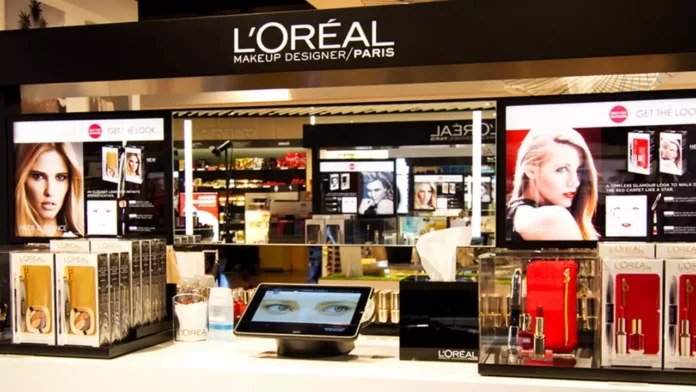
L’Oreal SA and Shiseido, two global giants in the cosmetics industry, have said that India is rapidly emerging as a cornerstone of their growth trajectory. This trend is fueled by India’s expanding population and growing penchant for beauty products.
L’Oreal noted that India ranks as its fifth-largest market within the professional products division, which primarily caters to salon-based sales.
“In India, with 50,000 salons, we are covering 400 cities out of 800. We still have a strong untapped potential across the country. We firmly believe that India will soon become our third country worldwide,” Omar Hajeri, president, professional products division at L’Oreal, told investors.
“India and Indonesia alone will see an incremental 250 million people join the global middle class by 2030. And they are very quickly becoming very beauty-savvy, looking for increasingly sophisticated beauty routines. And we have what it takes to continue to outperform. Our well-established local footprint enables us to better understand and cater to consumers’ needs,” he added.
According to a report by Redseer Strategy Consultants and Peak XV, India’s beauty and personal care market is set to undergo the fastest expansion among comparable countries in terms of size. The compounded growth rate is projected to reach 10% between 2022 and 2027, reaching $30 billion. In contrast, China’s market is expected to grow by 7%, and Indonesia’s by 8% during the same period. Despite India’s significant growth potential, per capita spending in this category remains lower at $14, compared to $38 in China and a fraction of the $313 seen in the US.
In India, the beauty and personal care market is experiencing growth at twice the rate of fast-moving consumer goods-led brands, highlighting the importance of specialized players focused on beauty and personal care. Recently, Shoppers Stop joined forces with Japanese company Shiseido to introduce its premium beauty brand Nars Cosmetics to the Indian market.
“We have entered into India with the Nars makeup products and it is showing much better sales than we had expected. And we expect that Nars cosmetics in India will be another growth driver. So we would like to take a bold challenge in Asia-Pacific regions as well,” chief financial officer Takayuki Yokota said during an earnings call.
Even for Shoppers Stop, the beauty segment reached its highest quarterly sales ever last quarter, representing 18% of its total sales.
According to the report, specialized beauty brands like L’Oreal, Mamaearth, Nivea, and Nykaa currently hold a 33% market share, a figure projected to rise to 42% over the next five years. Meanwhile, established companies like Hindustan Unilever Limited (HUL) and Procter & Gamble, which currently dominate two-thirds of the market, are expected to experience a decline in their share by 9 percentage points, down to 58% by 2027.
Last month, HUL’s Managing Director, Rohit Jawa, emphasized that prioritizing the development of beauty and digital capabilities is crucial and holds disproportionate significance for the company’s future in the country.
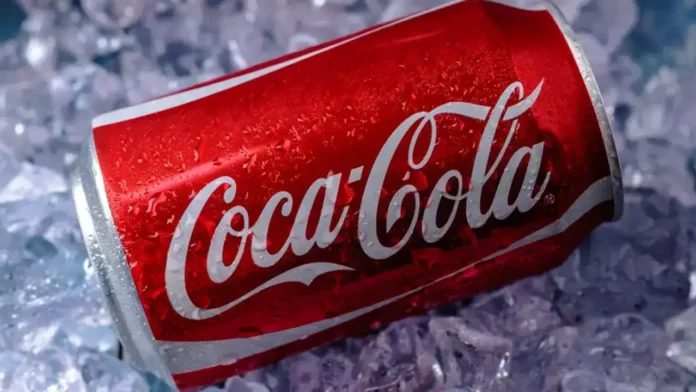
Coca-Cola, a leading player in the beverage industry, announced on Tuesday that its business in India experienced strong growth throughout 2023. Additionally, the company disclosed plans to boost investments aimed at expanding capacity to meet the demands of the Indian market.
The beverage giant said that growth in developing and emerging markets was led by India and Brazil for the December quarter and for the full year of 2023.
Speaking at the investor call, the company’s management said, “A significant portion of our expected capital investment increase is to build capacity for Fairlife and for our India business, both of which experienced robust growth in 2023.”
In its earnings release, the company noted that, “Consolidated unit volume grew 2 per cent for the quarter. Developing and emerging markets grew 4 per cent , driven by growth in Brazil and India. For the full year, unit case volume grew 2 per cent. Developing and emerging markets grew 2 per cent, driven by growth in India and Brazil.”
Regarding performance in the Asia-Pacific region, the company noted a 2% increase in unit case volume for the December quarter, driven primarily by growth in India and China.
The company also noted an increase in its market share within the beverage segment, particularly in regions like India, throughout the year 2023.
In January, Hindustan Coca-Cola Beverages, the bottling arm of the company, transferred its bottling operations in Rajasthan, Bihar, the North-East, and certain areas of West Bengal to its established independent bottlers.
India ranks as the fifth largest market globally for the beverage giant. Currently, Coca-Cola operates with 11 bottling partners in India, which includes the company-owned HCCB.
We use cookies to ensure that we give you the best experience on our website. If you continue to use this site we will assume that you are happy with it.