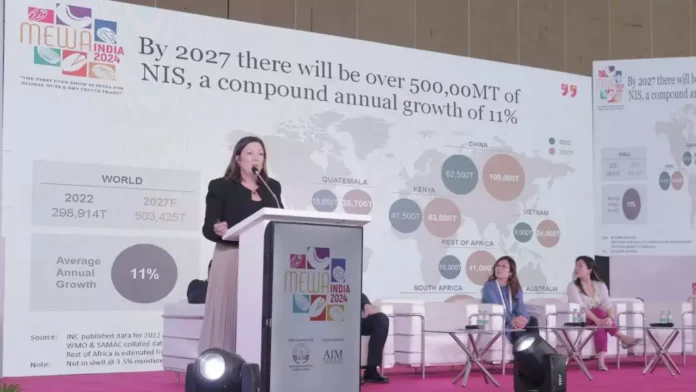
World Macadamia Organization (WMO), a leading name in the dry fruits and nuts industry, took part in MEWA India 2024, a prestigious event organized by the Nut and Dry Fruit Council of India. The event, held on the 16th and 17th of February, showcased the finest offerings in the global dry fruits and nuts sector, bringing together industry leaders, experts, and enthusiasts.
Jillian Laing, the CEO of WMO, honored the event with her esteemed presence and played an active role in a panel discussion focused on exotic nuts. Her participation provided invaluable insights into the industry’s trends, challenges, and prospects.
WMO’s involvement in the event was notably marked by an exclusive high tea session led by the esteemed Chef Rakhee Vaswani. The focus of this session was on promoting healthy culinary practices, particularly highlighting the nutritional advantages and imaginative applications of incorporating macadamia nuts into daily recipes. Additionally, attendees were treated to a live cooking demonstration, where innovative methods of incorporating macadamia nuts into various dishes were showcased, showcasing the nuts’ versatility and delectable flavor to great acclaim.
The event attracted a large number of industry professionals from the nut and dry fruit sector worldwide, alongside enthusiastic participation from various media outlets, further amplifying the exposure and significance of WMO’s presence at MEWA India 2024. The company remains dedicated to delivering superior quality products and fostering innovation in the industry.
A senior official stated on Tuesday that the government will uphold the ban on onion exports until its originally set deadline of March 31. This decision is driven by the government’s commitment to stabilizing prices and ensuring an ample domestic supply. The export of onions was initially prohibited on December 8, 2023, with the deadline set for March 31.
“Ban on onion exports has not been lifted. It is in force and there is no change in the status,” Consumer Affairs Secretary Rohit Kumar Singh told.
He further emphasized that the government’s utmost priority is to guarantee sufficient domestic availability of onions at affordable prices for consumers.
Following reports of the export ban being lifted on the commodity, wholesale onion prices surged by 40.62% to INR 1,800 per quintal on February 19 in Lasalgaon, the nation’s largest wholesale onion market, compared to INR 1,280 per quintal on February 17.
Sources indicate that the ban is unlikely to be lifted even after March 31, especially with the general elections looming ahead. This is due to projections of lower rabi (winter) onion production, attributed to reduced coverage of cultivation areas, particularly in Maharashtra.
During the 2023 rabi season, onion production was estimated to reach 22.7 million tonnes.
The Agriculture Ministry officials will assess the rabi onion coverage in key growing states of Maharsthra, Madhya Pradesh and Gujarat in the coming days.
Meanwhile, the export of onion to friendly countries is allowed on a case-to-case basis after approval from the inter-ministerial group.
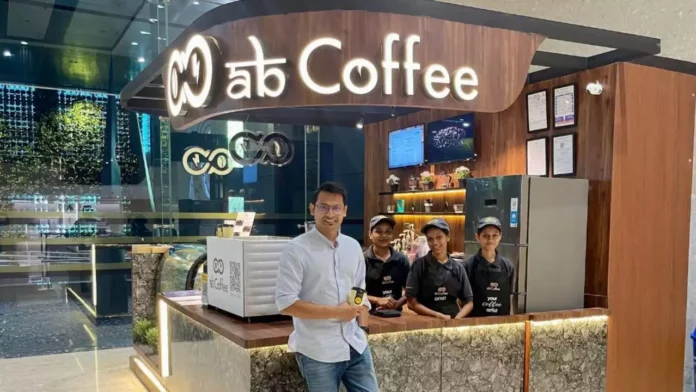
The brand aims to have 150 stores by the end of the 2024 financial year. Currently, 25 outlets are operational, with an additional 25 in the pipeline. The remaining 25 are scheduled to open by April 2024.
Abhijeet Anand, Founder and CEO of abCoffee, said, “This rapid expansion underscores our unwavering commitment to delivering exceptional coffee experiences at honest prices, coupled with a dedication to building strong community connections.”
With a 4.6-star rating across customer ordering platforms and a commendable 61% customer loyalty rate, AbCoffee fosters local connections through strategically positioned outlets across Mumbai and Delhi, spanning corporate parks, residential areas, and vibrant high streets.
Founded in 2022 by IIT Dhanbad graduate Abhijeet Anand, the company has successfully raised a seed fund of $2 million.
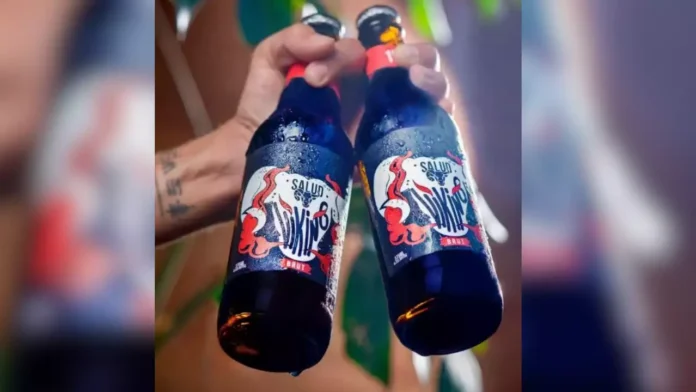
Salud, a beverage startup, is gearing up for the release of its latest lineup of ready-to-drink (RTD) offerings, known as Salud Viking. According to a statement from the company, this RTD treat combines pure honey with natural ingredients, presenting consumers with an innovative carbonated beverage reminiscent of ancient mead, all packaged in a convenient pint-sized format.
The beverage comes in a 375ml bottle containing 15% alcohol content and is currently accessible in the markets of Kerala and Goa.
In 2022, the worldwide RTD market held a valuation of USD 1.22 billion, with projections indicating a rise to USD 2.57 billion by 2030. Furthermore, the Indian market is anticipated to hit USD 1.2 billion by 2027, as reported by Market Research Future and Mordor Intelligence.
Ajay Shetty, CEO and Founder of Salud, said, “Tourism plays a significant role in Kerala’s economy, and tourists have their own drinking habits. It has created pockets of increased alcohol consumption in the Kerala market. Our team has been working behind the scenes all year to develop a unique range of products to add to its catalogue of traditional and sparkling meads and honey. Salud Viking is our thoughtful response to the growing trend of celebrating everyday moments. Crafted as a unique celebration in a bottle, it embodies the changing preferences of our consumers.”
Salud stands as a global urban lifestyle brand specializing in products within the spirit-based ready-to-drink (RTD) category, offering not only quality beverages but also embodying a chic and fashionable lifestyle.
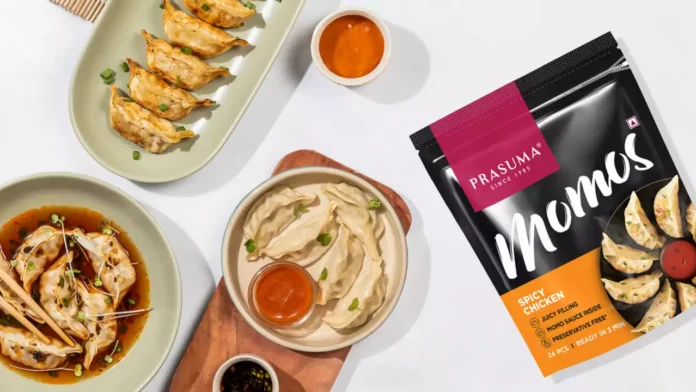
Prasuma, India’s leading frozen foods brand, has achieved a significant milestone by becoming the first and only Indian food brand to win an International Taste Award. Recognized for its commitment to quality and taste, Prasuma’s Spicy Chicken Momos and BBQ Chicken Bao Buns have both been awarded 2 stars out of 3 for the Superior Taste Award 2024 by the prestigious International Taste Institute in Brussels.
Lisa Suwal, CEO, Prasuma, expressed her excitement, stating, “This is a thrilling recognition. For a quintessentially Indian street snack, the humble Momo, in this case by an Indian brand to be recognised on the World’s stage, we’re elated!”
“We put a lot of effort and love into ensuring every item on our menu tastes fresh and mouthwateringly tasty. As fresh as if it were made by you at your home from scratch. The best quality of vegetables, spices and flour that are sourced straight from farms or from parts where they are found in their best natural state. All the ingredients are perfected and detailed out to mimic what an expert hand would do at home or in a Chef’s kitchen. Our commitment to using the best quality ingredients, sourced directly from farms or regions where they are found in their best natural state, is what sets Prasuma apart,” she added.
The judging criteria, emphasizing parameters like first impression, vision, olfaction, taste, and texture, acknowledged Prasuma’s commitment to excellence across all aspects of their culinary creations. These products were independently tasted by renowned chefs from over 20 countries, including those from Michelin Star restaurants and chefs who have catered to Presidents, Prime Ministers, and Royalty.
Prasuma’s commitment to perfection shines through their meticulous focus on every detail, from sourcing the freshest ingredients to refining their recipes. With over 38 years of experience, Prasuma has established itself as a symbol of quality and excellence in the food industry. Pioneering the Fresh & Chilled Deli Meats and Ready to Cook Momos segment in India, Prasuma has earned widespread acclaim for its exceptional products and service among leading modern retail outlets, restaurants, chefs, and consumers across the nation.
In a bid to enhance the quality of organic food available in the domestic market and ensure better pricing for farmers, the Centre plans to invest about INR 105 crore to add organic food testing capabilities to two dozen central and state-owned testing labs, as reported by Mint, citing two people aware of the development.
According to the sources, India’s food regulator plans to upgrade an additional 66 government-owned labs to facilitate organic food testing.
The move comes as India’s organic food market rapidly expands, prompted by the current limited capacity for testing organic products, as stated by one of the individuals mentioned on condition of anonymity.
As of January 1st, approximately 67 laboratories are capable of conducting testing and certification for organic food. These laboratories are predominantly privately owned and associated with APEDA (Agricultural & Processed Food Products Export Development Authority). However, both APEDA and the government express dissatisfaction with the testing results from private labs, leading to the decision to enhance government-owned laboratories.
The Bureau of Indian Standards (BIS), the country’s apex certification body for testing standards under the Ministry of Consumer Affairs, plans to provide funding to state and central government institutes for the enhancement of their food testing laboratories.
The initiative will be carried out in collaboration with the Food Safety and Standards Authority of India (FSSAI). The other person, who also preferred not to be named, mentioned that over 90 laboratories are anticipated to be operational for testing organic products within the next three months.
Financial and technological assistance will be provided to food laboratories within research institutes, including those associated with the BIS, the Council of Scientific & Industrial Research (CSIR), the Indian Council of Agricultural Research (ICAR), the Defence Research and Development Organisation (DRDO), the National Test House (NTH), and other relevant entities.
Financial support will be allocated to laboratories located in Kerala, Karnataka, Maharashtra, Uttar Pradesh, Rajasthan, and Haryana, covering a total of 12 state labs and 12 central research institute labs. Additionally, the remaining 66 labs will undergo upgrades facilitated by FSSAI.
The BIS has approved the proposal to procure advanced equipment for these labs, as stated by the first person cited above.
Queries directed to the Director General and Secretary of BIS, the spokesperson of the Consumer Affairs Ministry, and the Chief Executive of FSSAI remained unanswered as of press time.
“Recently, APEDA banned some private agencies for their involvement in unethical practices,” said Siraj Hussain, former agriculture secretary. “So, it will be a good move by BIS and FSSAI for setting up their own labs for organic products. This will increase consumer confidence in organic products.”
According to the Economic Survey 2022-23, India boasts the largest count of farmers engaged in organic farming globally, with 4.43 million practitioners. In the same period, Indian farmers yielded 2.9 million tonnes of certified organic produce, encompassing food grains, oilseeds, perishables, cotton, and tea.
In 2022-23, India exported INR 5,525 crore worth of organic produce, significantly surpassing domestic sales estimates. However, domestic consumption of organic food products remains constrained by high prices, primarily influenced by retailers seeking substantial margins and expenses associated with certification.
India’s primary exporting destinations for organic food products include the US, the EU, Canada, the UK, Switzerland, and several other countries.
According to APEDA, India had a total area of 10.17 million hectares under organic produce in 2022-23. Among states, Madhya Pradesh leads as the largest producer of organic food products, followed by Maharashtra, Rajasthan, Karnataka, and Odisha.
Globally, Australia holds the largest area under organic agriculture, spanning 36 million hectares, according to the World of Organic Agriculture report 2021.
Radisson Hotel Group on Tuesday announced its plans for a 150-room Radisson Blu Hotel in Ayodhya. Teaming up with EaseMyTrip and Jeewani Group, the hotel is slated to be operational by 2027.
The move comes just weeks after Radisson announced its debut in Ayodhya with Park Inn.
In the announcement, the company said, “The hotel is strategically located within two kilometres of Shri Ram Mandir, Ayodhya. It is at a convenient distance from the Maharishi Valmiki International Airport, Ayodhya Railway Station and further enjoys excellent road connectivity via National Highway-27.”
KB Kachru, chairman emeritus and principal advisor (South Asia) at Radisson Hotel Group, stated that the decision to open another hotel in Ayodhya was driven by “robust guest demand and positive feedback, highlighting the attractiveness of this holy city.”
“Ayodhya stands strong as a promising market for Radisson Hotel Group, occupying a significant position in our expansion plans in 2024 and beyond,” he said.
Guests will have the opportunity to explore revered religious sites within 2-5 kilometers, including Hanuman Ghari, Kanak Bhawan, Nageshwarnath Temple, and Treta Ke Thakur.
“Through this collaboration, we aim to provide a world-class hospitality experience for guests visiting Ayodhya with a blend of our expertise in the region,” said Dhruv Jeewani, director at Jeewani Hospitality.
“This collaboration reflects our commitment to enhancing hospitality offerings in the city and providing exceptional experiences to travellers,” added Nishant Pitti, chief executive officer and co-founder at EaseMyTrip.
Earlier, Radisson had announced plans to introduce branded hotels in Vrindavan, Uttar Pradesh, and Ujjain, Madhya Pradesh.
The Department of Fisheries on Monday signed a Memorandum of Understanding (MoU) with the Open Network for Digital Commerce (ONDC) platform to improve market access for the fisheries sector.
The MoU was signed in the presence of Union Minister of Fisheries, Animal Husbandry, and Dairying Parshottam Rupala, Minister of State L Murugan, Fisheries Secretary Abhilaksh Likhi, ONDC Managing Director T Koshy, and other officials.
“This is a historical MoU,” Rupala said adding that the collaboration will unlock the potential of digital commerce for the Indian fisheries sector, an official statement said.
Rupala also mentioned that the collaboration would bring numerous benefits to fisheries industries, such as reduced transaction costs, increased market reach, improved transparency, increased competition and competitiveness, innovation, and employment generation.
The collaboration aims to empower all stakeholders, including traditional fishermen, fish farmer producer organizations, and entrepreneurs from the fisheries sector, enabling them to buy and sell their products through ONDC in a structured manner, as stated in the announcement.
Malabar Gold & Diamonds, along with four other jewellery firms and fashion accessory maker Titan, have entered the global top-100 luxury brands list. Leading the domestic contingent, Malabar Gold claimed the 19th rank as the top Indian international jewellery brand, followed by Titan Company, a Tata group entity, which secured the 24th position.
In the Deloitte global luxury goods list of 2023, Kalyan Jewellers and Joy Alukkas secured the 46th and 47th positions, respectively.
The other two jewellery makers, Senco Gold & Diamonds and Thangamayil Jewellery, ranked 78th and 98th, respectively.
Diversified French luxury major LVMH topped the list.
For Kozhikode-based Malabar, this is the maiden entry to the list with a value of over USD 4 billion in terms of revenue in 2023, while Titan had a turnover of USD 3.67 billion.
The rise of domestic luxury brands underscores the evolving dynamics of the luxury goods market. As the domestic economy continues to grow and consumer preferences evolve, the country’s luxury market is witnessing significant growth, contributing to the global recognition of these brands, Deloitte said in the report released on Monday.
The report indicated that the demand for luxury goods is projected to surge even more, presenting abundant opportunities for domestic brands to excel on the global stage.
In 2023, the top-100 luxury goods sellers collectively achieved a turnover of USD 347 billion, marking a notable increase of 13.4 percent compared to the previous year.
Of the total turnover, as much as 31 per cent were contributed by LVMH alone, according to the report.
Besides, the top-10 of them controlled 63 per cent of the market, and their sales grew 23 per cent on-year in the reporting year, and they also controlled 76.4 per cent of the combined net profit of the top-100 luxury goods companies.
Richemont regained its third place while PVH Corp ranked second on the list.
According to a report by ET, Flipkart, a major player in e-commerce, is currently trimming its workforce in a bid to enhance profitability. Multiple sources familiar with the matter have disclosed that at least four senior vice presidents (SVPs) will be departing, adding to the list of CXO-level exits at the company.
Ayyappan R, head of travel booking website Cleartrip, along with Amitesh Jha, who oversees marketplace and categories, Dheeraj A, in charge of fintech and payments, and Bharath Ram, leading growth and retention at the web retailer, are reportedly among the SVPs expected to depart. Jha has been with Flipkart since 2010, while Ayyappan has been a part of the etailer since 2013, making them among the executives with the longest tenure at the Bengaluru-based firm, as reported.
The development assumes importance against the backdrop of Flipkart group CEO Kalyan Krishnamurthy‘s campaign to strengthen agility and efficiency.
“Krishnamurthy wants to send a message by tightening the ship,” said one of the people cited above. “Many are comparing this to the 2016 era when he came back to Flipkart for a second innings. Amazon at the time was snapping at his heels and the company went through its toughest few years then. One of the key areas the company wants to address is Flipkart’s bloated, top-heavy structure and bring in agility.”
Dheeraj A transitioned to Flipkart from Mobikwik in October 2021, whereas Ram joined from Instagram in March 2020.
Insiders familiar with the situation revealed that Flipkart collaborated with a leading consulting firm to streamline its organizational structure across various levels, with the outcomes currently being put into action.
According to people briefed on the matter, Flipkart is also filling some of the positions left vacant by departing executives. Meanwhile, Sandeep Karwa, formerly the vice president heading the fashion vertical, has moved to the advertisement vertical. Flipkart Fashion is now headed by Arief Mohamad.
The move comes at a time when Flipkart has initiated performance-based trimming across all verticals, including vice presidents in engineering and product, as reported by individuals familiar with the matter. Overall, the layoffs will impact approximately 5-7% of the company’s employees.
“The mandate is clear– perform and become nimble as a company,” said another person familiar with the developments. “While, over the years, Flipkart would see 5-7% employees leave as part of its performance-linked (reviews), these were largely at the junior level… What has changed this year is senior and CXO-level exits as long-time, senior executives have come under pressure.”
According to another source, the majority of departures are tied to performance, although a few executives have chosen to leave voluntarily.
“What’s important to note is that a bunch of these (people) were at the company for over a decade across various functions,” the person said.
A spokesperson from Flipkart stated that the company boasts a robust and diverse leadership pool, comprising numerous skilled executives who have served in various capacities within the organization.
“With a stable and strong leadership team, we provide our executives with different roles and responsibilities to meet their personal aspirations and also develop well-rounded experience. We will be unable to comment on our internal operations and specifics,” the spokesperson added.
According to sources familiar with the matter, the Senior Vice President (SVP) cohort, consisting of approximately 20 executives, has experienced consistent turnover over the past year or so, with nearly 30% of leaders departing for various reasons.
“From a pool of 23 SVPs, at its peak, around 30% have left over the last one year or so, including Adarsh Menon, Ravish Sinha, Saroj Panigrahy and most recently Krishna Raghavan in October last year… among others,” said one of the persons.
As Flipkart gears up for a new phase of growth, marked by talks of securing fresh funding to the tune of $1 billion, the e-commerce giant is concurrently implementing belt-tightening measures. Out of this anticipated investment, $600 million has already been committed by its US parent Walmart. Notably, a significant portion of these funds is earmarked to fuel endeavors in financial services post the separation of PhonePe.
Flipkart is in the final stages of testing its Unified Payments Interface (UPI) payment service, set to go live early next month on its platform. Additionally, Flipkart has backed senior executive Prakash Sikaria’s fintech venture Super.money after he abandoned plans to leave the company and incubated the venture internally.
During a town hall meeting last month, Krishnamurthy informed employees that Flipkart is nearing profitability by reducing its monthly cash burn. He emphasized the company’s commitment to expanding its grocery services and travel business through Cleartrip.
Reports suggest that Cleartrip has achieved a gross merchandise value ranging between $1.5 billion to $1.7 billion. During the town hall, Krishnamurthy highlighted the grocery business’s impressive growth of 50% over the past year. Additionally, Flipkart intends to further expand its low-price focused commerce vertical, Shopsy, alongside core businesses including smartphones, electronics & appliances, and fashion. Notably, the company recently unveiled same-day delivery options for select products across 20 cities in India.
According to regulatory filings, Flipkart Internet, the entity managing the marketplace, recorded a 42% increase in operating revenue for FY23, reaching INR 14,845 crore, while its total loss decreased by 9% to INR 4,026 crore. Additionally, in January, Flipkart co-founder Binny Bansal departed from the board, officially ending his ties with the ecommerce firm.
We use cookies to ensure that we give you the best experience on our website. If you continue to use this site we will assume that you are happy with it.