Thursday, January 29, 2026
Home Blog Page 645

Zomato launches ‘Plastic-Free Orders Packathon’ in partnership with Startup India to drive innovation in sustainable food packaging

0
Zomato

Food delivery platform Zomato has launched the ‘Plastic-Free Orders Packathon’ in collaboration with Startup India to foster innovation in sustainable packaging for food delivery orders. This Packathon serves as a competition for startups to present inventive solutions for eco-friendly packaging, specifically catering to restaurants handling online food orders.

Zomato chief sustainability officer Anjalli Ravi Kumar said, “Zomato is deeply committed to reducing the environmental impact of food deliveries. In September 2023, we began to recognise restaurants that have adopted sustainable packaging materials for food deliveries via a ‘Plastic-Free Orders’ banner. The programme is live in eight cities and 3.6 million orders have been recognised as plastic-free till December 31st, 2023. The program surfaced the fact that many national restaurant chains have adopted paper-based or bagasse-based packaging.”

She further added, “Standalone, mid-tier and budget restaurants, especially those outside metro cities, are struggling with the availability of affordable and functional alternatives to plastic packaging for their deliveries. The problem is particularly acute for restaurants specializing in gravy-based cuisines with multiple condiments and accompaniments. We believe focussed innovations hold the answer to this problem and the Packathon is a way to surface and recognise Indian innovators.”

Continue Exploring: Zomato aims for 100% electric delivery fleet by 2033, unveils comprehensive sustainability goals

Startup India VP Aastha Grover said, “The launch of Zomato Plastic-Free Packathon is a testament to our shared commitment helping Indian businesses and citizens transition to sustainable practices. Given the burgeoning issue of plastic pollution, this initiative is a clarion call to all Indian startups to innovate and devise sustainable packaging solutions for food delivery that can significantly reduce plastic usage. This challenge presents a unique opportunity for Indian startups to showcase their ingenuity and contribute to a new era of sustainable consumption. As part of Startup India’s mission, we are excited to facilitate and support innovative solutions that will preserve our planet for future generations.”

Open to all DPIIT-recognized startups, the deadline for submitting applications to the Packathon is on February 29th. The top three winners will be awarded prizes of 10 Lakhs, 5 Lakhs, and 3 Lakhs, respectively. Additionally, they will have the chance to showcase their solutions to Zomato’s network of restaurant partners.

Recently, Zomato revealed its 2030 sustainability goals, which include ensuring 100% plastic-neutral food delivery orders through voluntary recycling. Additionally, the company is committed to facilitating the delivery of 100 million plastic-free food orders by 2025. Over the years, Zomato has implemented various initiatives to diminish the environmental impact of food deliveries, following its 3Rs approach of ‘reduce, recycle, and reward.’

Continue Exploring: Zomato’s eco-friendly fleet expands: BLive deploys 30 Ather EVs in Ahmedabad

In 2021, the company changed the default option on its food ordering and delivery app to ‘Do not send cutlery,’ allowing customers to request cutlery only when needed. This straightforward initiative has reduced cutlery waste by 1,000 metric tons (1 million kilos) over the past two years. In the fiscal year 2023, Zomato recycled 20,000 metric tons of plastic waste, which is more than twice the weight of plastic used by restaurant partners for packaging orders received through Zomato. Additionally, in 2023, the company introduced a recognition program for restaurant partners who transition to plastic-free alternatives for their Zomato deliveries.

Advertisement

Cash-strapped Dunzo promises to settle outstanding payments to former employees by March-end

0
Dunzo
Dunzo

Google-backed delivery startup, Dunzo, plans to settle outstanding payments to former employees by 30 March. This decision comes after a challenging year marked by profitability issues and a liquidity crunch, as conveyed in an email to its staff this week.

“We confirm that we are on course to clear the dues by 30 March 2024. We acknowledge that we were not able to keep our committed timeline in the past; however, we assure you that there will not be any further delay,” stated the email.

The acknowledgment comes amidst financial troubles faced by Dunzo, including the inability to disburse November salaries and the implementation of layoffs affecting more than 30% of its workforce as part of cost-reduction initiatives. The Bengaluru-based startup has deferred payments to its laid-off staff, creditors, and vendors.

Continue Exploring: Dunzo to lay off 150-200 employees despite fresh $35 Million funding: Reports

“We are confident in meeting this timeline based on the progress we have made in the funding process, and we will ensure that we keep our commitment,” the company said in the memo. “We completely understand that dues have not been settled in the ideal time, and this delay must have been exhausting for you emotionally and financially.”

Yourstory was the first to cover this development. The company did not reply to the request for comment.

Over the past year, the company has implemented various cost-saving measures. This includes transitioning all employee accounts from Google to Zoho workspace, resulting in a cost reduction of at least a third. Furthermore, the company has vacated its Bengaluru office and closed a significant portion of its dark stores.

Additionally, the company experienced high-profile departures of key executives, including co-founders and its finance head. In a regulatory filing, the company’s auditor, Deloitte, expressed skepticism about the company’s ability to continue as a going concern following the disclosure of increased losses.

Continue Exploring: Dunzo Co-Founder Dalvir Suri announces departure after six years of service

Dunzo, which was on its way to achieving unicorn status with a valuation of a billion dollars in 2022, reported a substantial net loss of INR 1,802 crore in FY23. As of January 2022, it was valued at over $775 million.

The quick commerce industry is highly competitive, currently dominated by five major players. Instamart, supported by Swiggy, BBNow from BigBasket, Blinkit and Zepto, both backed by Zomato, are actively pursuing avenues to achieve profitability. These players are focused on enhancing dark store efficiencies to optimize margins.

Founded in 2014 by Kabeer Biswas along with Ankur Aggarwal, Dalvir Suri, and Mukund Jha, Dunzo’s investors include Reliance Retail Ventures, Lightbox Ventures, and Blume Ventures, among others.

Advertisement

Popeyes sets sights on Italian market expansion, inks master franchise deal with RB Iberia

0
Popeyes
Popeyes

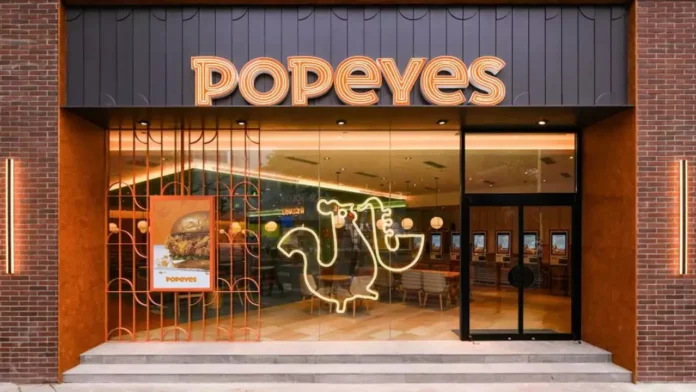
Popeyes, the American quick-service restaurant brand, has entered into a master franchise and development agreement with Restaurant Brands Iberia (RB Iberia) for the expansion of its presence in Italy.

The first Italian Popeyes restaurant is expected to open its doors later this year, marking a significant step in the brand’s European expansion strategy.

In Europe, the company is already established in the Czech Republic, France, Poland, Romania, Spain, Switzerland, and the UK.

Restaurant Brands International president David Shear stated, “We’re very excited about growing the brand in Italy with RB Iberia, a long-term partner and strong operator.

“We have set ambitious expansion plans for our iconic brand, and today’s news highlights our commitment to serving Popeyes’ bold Louisiana flavours to more guests around the world.”

Popeyes is a subsidiary of Restaurant Brands International.

The newly established site in Italy will offer customers the company’s renowned chicken sandwich, spicy chicken, chicken tenders, fried shrimp, and other locally inspired menu items.

Continue Exploring: Jubilant FoodWorks bets big on Popeyes, targets INR 1,000 Crore revenue in the next five years

Restaurant Brands Iberia is the parent company for the master franchisees of Burger King Spain, Burger King Portugal, Popeyes Spain, and Tim Hortons Spain.

Restaurant Brands Iberia chairman Gregorio Jiménez said, “We are thrilled to spearhead the launch of Popeyes in Italy. It is an iconic brand that has been well-received in Spain, and we are fully committed to its success within the group.

“Our company excels in managing master franchises, so we have a great business opportunity ahead of us, which will contribute to job creation in Italy and diversify the QSR market for our Mediterranean neighbour.”

In December 2023, Popeyes announced its plan to double its UK footprint by opening an additional 30 outlets in 2024.

The brand, which made its UK debut in November 2021, currently has 36 locations, including five drive-throughs and seven delivery kitchens.

By December 2024, Popeyes aims to have more than 60 total restaurants in the UK.

Continue Exploring: TH International opens tenth Popeyes store in Shanghai, marking continued expansion

Advertisement

Gokaldas to acquire Matrix Design in INR 489 Crore deal, marking strategic entry into knitwear market

0
Gokaldas

Gokaldas Exports, a leading apparel manufacturer based in Bengaluru, has recently inked a deal with Gurugram’s Matrix Clothing. The agreement entails Gokaldas Exports acquiring 100% equity in Matrix Design & Industries for a total sum of INR 489 crore. To facilitate this transaction, Gokaldas will engage in a share swap, with shares valued at INR 247.5 crore, along with a cash payment of INR 86.48 crore.

The combined share swap and cash arrangement values the company at INR 489 crore in terms of enterprise value. The equity value, after deducting debt, is estimated at INR 333.98 crore. Following the completion of the acquisition, Matrix will retain a 4.31% equity stake in the apparel exporting company.

This marks the second acquisition announced by Gokaldas in the present financial year. In August, the company unveiled its acquisition of Atraco, a UAE-based apparel maker.

Matrix, a lucrative enterprise, produces knitwear apparel for men, women, and children, catering to renowned global brands with a presence in Europe, the UK, and North America. The company efficiently runs four units in Gurugram and one in Ranchi.

According to the company’s vice-chairman, Siva Ganapathi, the agreement would enable Gokaldas to enter the knit apparel business segments, tap into an exclusive global customer base, enhance its presence in European and UK markets, achieve geographical diversification, and unlock potential for low-cost capacity expansion in the future.

Continue Exploring: India’s apparel exports on the rise: CMAI forecasts 10-15% YoY growth in UAE market

“While we are into woven fabric and more US-centric, Matrix makes premium embellished knitwear and Europe-focussed,” he said.

“The acquisition of Matrix is an important step for us as it is strategically relevant, possesses a good complementary customer base, operationally strong, and above all, it is a leader in its own sphere,” Ganapathi said.

“The acquisition will give us cross-selling opportunities. We are building our own modern knit mill at Erode in Tamil Nadu which we hope to commission in the next quarter. We will supply raw material from here to Gurugram and Rachi,” he added.

He expressed satisfaction as his company experienced a 6% year-on-year growth in export business during the December quarter, contrasting with a 12% decline in India’s apparel exports over the same period.

“We are bucking the trend though the overseas market is not that great. But we are seeing signs of buying sentiments picking up as the inventory in the US market is depleting.”

Gokaldas concluded the December quarter with a revenue of INR 559.8 crore, showcasing a 6% growth over the same period last year. However, the net profit for this quarter stood at INR 30.4 crore, indicating a year-on-year decline of 25%.

“Our performance reflects a good recovery, both on a YoY and sequential basis, as we have overcome most of the business headwinds prevalent in the previous quarters. We intend to build on the revival and continue the growth momentum. We will stay focused on improving operating parameters and remain confident in the medium to long- term prospects of the company,” Ganapathi said.

The company wrapped up the December quarter with a headcount of 32,000 people in India and 11,000 employees in Kenya and Ethiopia.

Continue Exploring: Apparel retailers revamp inventory management strategies to counter unsold merchandise and minimize obsolescence impact

Advertisement

Govt to sell Bharat brand rice on major e-commerce platforms, targets hoarding with mandatory stock disclosure

0
Basmati Rice
Basmati Rice (Representative Image)

On Friday, Sanjeev Chopra, the food secretary, announced that the government plans to introduce the sale of rice under the Bharat brand in the retail market. This initiative will be carried out through major e-commerce platforms such as Amazon, Flipkart, ONDC, and government-owned agencies. Additionally, to combat hoarding, retailers, wholesalers, and processors will be required to disclose their stock on the government’s website.

He further mentioned that the Bharat rice will be available in 5kg and 10kg packs, priced at INR 29 per kilo. The distribution will be facilitated through NAFED, NCCF, Kendriya Bhandar, in addition to the online platforms.

Chopra also affirmed that the government currently has no intentions to relax export restrictions on any rice varieties until prices are brought under control.

Continue Exploring: Govt considers franchise route to boost Bharat-branded product sales, plans 50 outlets in Delhi

Despite the government’s efforts to regulate the export of most food products, the cost of rice remains elevated, with a 14.5% increase in the retail market and a 15% surge in the wholesale market compared to the previous year.

To address the upcoming general elections and manage soaring prices, the government has implemented restrictions on various commodities, including wheat, rice, sugar, and onions.

In the first phase, the Food Ministry has allocated 5 lakh tonnes of rice from the Food Corporation of India’s stocks for Bharat rice.

The food ministry will also separate broken rice from the FCI stock allocated for Bharat rice, thereby reducing the percentage of broken rice in retail sales from 25% to less than 5%. Chopra mentioned that this separated broken rice will be utilized for ethanol production.

In July last year, the government stopped providing surplus broken rice from FCI to distilleries for ethanol production.

Advertisement

Bikaji Foods International delivers strong Q3 performance with 15% net profit surge, reaching INR 46 Crore

0
Bikaji Foods

Bikaji Foods International Limited (Bikaji), a manufacturer of ethnic snacks, announced a 15% increase in consolidated net profit, reaching INR 45.99 crore for the quarter ending on September 30, 2023. This marks a growth from the previous fiscal period’s profit after tax (PAT) of INR 39.99 crore, as stated in the company’s filing with the Bombay Stock Exchange (BSE) on Friday.

The company experienced a 22.9% year-on-year growth in total revenue from operations, reaching INR 624.15 crore in the third quarter of the fiscal year 2024, compared to the revenue of INR 507.68 crore in the third quarter of the fiscal year 2023.

According to the regulatory filing, Bikaji Foods recorded a significant increase in total expenses to INR 567.78 crore during the second quarter of FY24, compared to INR 468.36 crore in the corresponding period of the preceding fiscal year.

Driven by robust festive demand and favorable raw material prices, the company’s EBITDA witnessed a year-on-year growth of 36.1%, reaching INR 75 crore. The margin also saw an increase of 116 basis points year-on-year, standing at 12%.

Deepak Agarwal, managing director, Bikaji Foods International said, “This quarter, we experienced a robust demand driven by festive celebrations, marking it as our most successful period for packaged sweets. The surge in growth and demand within this segment can be attributed to a combination of factors. The festive season played a significant role, alongside improvements in our operational efficiencies and advantageous pricing of raw materials. Looking ahead, we are optimistic about maintaining this growth momentum and anticipate further enhancements in our profitability.”

Continue Exploring: Bikaji Foods acquires 49% stake in BhujiaLalji, bolstering their snacks market dominance

Advertisement

Agritech startup Grow Indigo secures $8 Million in funding to fuel sustainable agriculture innovation

0
Grow Indigo

Agritech startup Grow Indigo has recently secured $8 million (INR 67 crore) in a strategic funding round, with contributions from key stakeholders including Indigo Ag and Mahyco (Maharashtra Hybrid Seeds Co).

The funding round also witnessed the involvement of several angel investors, bringing the total funds raised by the startup to $23 million so far.

Without specifying what the fresh proceeds will be utilized for, the company has emphasized that the capital will be deployed to drive the future of sustainable agriculture.

“With sustainability at its core, we have now demonstrated adoption of biological inputs and carbon solutions at scale by farmers,” said Grow Indigo’s executive chairman Usha Barwale Zehr.

This comes after more than a year since Grow Indigo raised $6 million in funding from Indigo Ag, Mahyco, and other high-net-worth individuals (HNIs) in December 2022.

Established in 2018 as a joint venture between Indigo Ag and Mahyco, Grow Indigo operates an agri-marketplace connecting retailers and farmer producer organizations (FPOs) with agricultural brands. The platform also offers carbon farming solutions for small-scale farmers and sells various biological products.

The Mumbai-based agritech company asserts that it has served over 1 crore farmers and over 1 lakh retailers and farmer producer organizations (FPOs) to date. Having enrolled over 8 lakh acres of land in its carbon farming program, the company aims to expand this figure to 35 lakh acres in the next two years.

Continue Exploring: Shilpa Shetty-backed agritech startup KisanKonnect secures INR 31 Crore in pre-series A funding led by Green Frontier Capital

At present, Grow Indigo asserts its presence in 12 Indian states and maintains a team of 200 employees, including agronomists, data scientists, and researchers.

This comes at a time when Indian agritech startups are experiencing a renewed interest from investors. Despite being the backbone of the country’s economy, Indian agriculture is still plagued by archaic practices and lower yields.

Indian agritech players aim to bridge this gap by leveraging technology to address these challenges. Consequently, the funding raised by these startups has experienced a significant surge in recent years.

In 2023, as many as 10 funds were dedicated to supporting Indian startups, specifically focusing on the agritech sector. Notable participants in this space include CropIn, Waycool, and DeHaat.

However, the funding winter has impacted the agritech sector. According to available data, Indian agritech startups raised more than $208 million in 2023, compared to the $817 million raised in 2022.

Continue Exploring: Agritech startup Fasal secures $12 Million in funding round led by TDK Ventures, British International Investment

Advertisement

Wow! Momo’s rapid expansion continues with a buzzing new outlet at GMR Hyderabad International Airport

0
Wow! Momo

Wow! Momo, a Kolkata-based QSR, has expanded its presence by launching a new outlet at the GMR Hyderabad International Airport, as announced in a social media post by a GMR official.

“A brand which started in 2008 by four founders with a vision to create a desi QSR brand with the concept of desi Momo chain “Wow Momo” is now open at GMR Hyderabad International Airport Ltd,” said Prem Khatri, Business Development Manager, GMR Group in a LinkedIn post.

“The brand is located on the ground floor at the much-happening place of Hyderabad- Aero Plaza a place envisaged within the Airport for people to enjoy with your friends & family whether you are a passenger or non-passenger. Welcome Wow! Momo to Hyderabad Airport,” added Khatri.

The newly opened outlet is situated on the ground floor of Hyderabad Aero Plaza.

Since its establishment in 2008, Wow! Momo has experienced significant growth, boasting a presence of over 650 stores throughout India. The brand operates across three formats: Wow! Chicken with 42 stores, Wow! China with 153 stores, and Wow! Momo with a remarkable presence of over 460 stores in 32 cities nationwide. These establishments are strategically located in various states, including Bihar, Delhi, Goa, Gujarat, Haryana, Jharkhand, Karnataka, Kerala, Madhya Pradesh, Maharashtra, Odisha, Punjab, Rajasthan, Tamil Nadu, Telangana, Uttar Pradesh, Uttarakhand, and West Bengal.

Established by Sagar Daryani and Binod Homagai, Wow! Momo witnessed a remarkable 2X surge in revenue from operations, reaching INR 219.8 crore in FY21-22. This marked a substantial increase from the INR 106 crore recorded in the preceding year.

Continue Exploring: Wow! Momo reports massive 2x revenue surge in FY2021-22, reaches INR 219.8 Crores

Last month, Wow! Momo secured over INR 350 crore in funding from Khazanah Nasional Berhad, the sovereign wealth fund of Malaysia. This financial infusion involves both primary capital injection and a secondary purchase from early-stage investors, including the Indian Angel Network and Lighthouse Funds.

Looking ahead, Wow! Momo has strategic visions for its next phase of evolution, which involve plans for an IPO, global expansion, and venturing into the packaged foods market.

Continue Exploring: Wow! Momo Foods secures INR 350 Crore funding led by Malaysia’s Khazanah Nasional Berhad, eyes aggressive expansion

Advertisement

Bata reports 31% drop in net profit due to muted demand for footwear

0
Bata
Bata

Footwear brand Bata India Ltd reported a 31.04% decrease in its net profit and a 0.7% upturn in total income for the third quarter ending in December. This shift was attributable to weakened demand, notably in premium categories.

The net profit for the third quarter of this year dropped from INR 83.11 crore to INR 57.31 crore, while the total income increased from INR 907.72 crore to INR 914.26 crore compared to the same period last year.

Continue Exploring: Bata enhances customer experience through Easyrewardz’s Zence CRM for ‘BataClub’

Gunjan Shah, MD and CEO of Bata India Limited, said, “Despite persistent market headwinds accentuated in discretionary spending, we continued to invest in new product launches, enhancing customer experience and expanding our reach across channels & markets.”

During the quarter, Bata enhanced its presence by incorporating 54 new stores through a blend of franchise and company-owned operations. Additionally, 36 existing stores underwent renovation.

Shares of Bata India Ltd concluded the trading day on the BSE at INR 1459.6 apiece, reflecting a 1.93% decline.

Advertisement

FSSAI revises order allowing regional names on curd labels amidst political controversy in Tamil Nadu

0
label
(Representative Image)

On Thursday, the Food Safety and Standards Authority of India (FSSAI) revised its order, permitting the use of regional names on printed labels of curd packets amidst political controversy in Tamil Nadu.

Food Business Operators (FBOs) are now permitted to include the term ‘curd’ along with any other widely used regional common name in brackets on the label. For instance, ‘Curd (Dahi)’ or ‘Curd (Mosaru),’ ‘Curd (Zaamutdaud),’ ‘Curd (Thayir),’ ‘Curd (Perugu)’ can be utilized, as stated by the Food Safety Standards Authority of India (FSSAI).

The revision of the order was prompted by several recent representations highlighting concerns about the exclusion of the term ‘curd’ from the Standards of Fermented Milk Products, with only the word ‘Dahi’ being specified.

The controversy erupted when the Tamil Nadu Cooperative Milk Producers Federation, known for selling dairy products under the brand name Aavin, declined to use the Hindi term ‘Dahi’ in its printed sachets as directed by FSSAI. Instead, the federation insisted on exclusively using the Tamil word ‘Thayir’.

Continue Exploring: Amul vs Aavin: Fresh controversy erupts as dairy giant faces Tamil Nadu firefight, following recent Karnataka row

On Wednesday, Tamil Nadu Chief Minister M K Stalin decried the move as an attempt to ”impose Hindi”. Dairy Development Minister SM Nasar said the government had received a letter asking it to implement the directive before August.

“The unabashed insistences of #HindiImposition have come to the extent of directing us to label even a curd packet in Hindi, relegating Tamil & Kannada in our own states. Such brazen disregard to our mother tongues will make sure those responsible are banished from South forever,” Stalin said in a tweet.

BJP state unit chief K Annamalai has said the notification was not in tandem with the Centre’s policy of promoting regional languages.

Continue Exploring: Akshayakalpa invests INR 15 Crore to establish state-of-the-art dairy ecosystem in Tamil Nadu

Advertisement