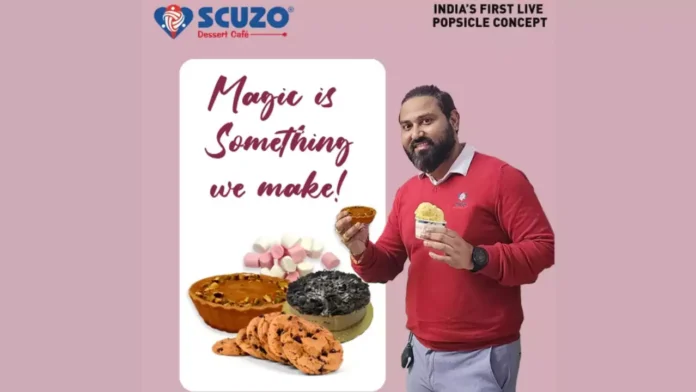
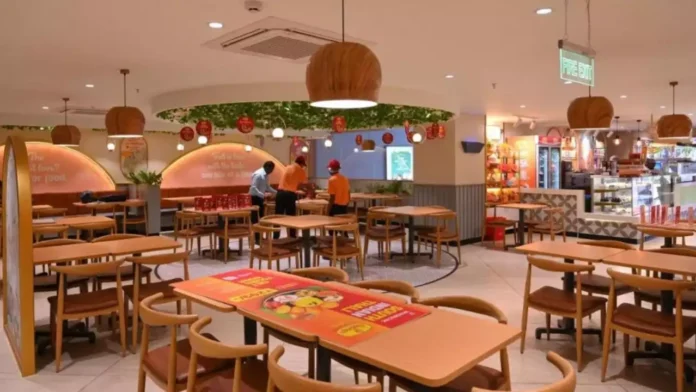
Witnessing remarkable growth, Scuzo Ice ‘O’ Magic, India’s First Live Popsicle Concept and Dessert Café, is now breaking new ground by expanding its menu and venturing into the confectionery market. This move promises to uphold the same level of quality, innovation, and taste that has become synonymous with the Scuzo Ice ‘O’ Magic brand.
Scuzo Ice ‘O’ Magic’s latest menu features a delightful variety of treats, including marshmallows, cookies, cheesecake, and tarts – all poised to become your new on-the-go favorites. Crafted with Scuzo’s dedication to natural ingredients, these delectable offerings are just the beginning. And here’s the exciting news: there’s even more deliciousness in store! Scuzo is gearing up to introduce additional tasty options, ensuring they remain your top choice for convenient and flavorful bites.
Gagan Anand, Founder, Scuzo Ice ‘O’ Magic, said, We’re stepping into the confectionery market with a menu that reflects our commitment to natural indulgence. The Indian market provides various opportunities and tremendous growth potential, provided that the product gives true value for money. We have a well-equipped manufacturing unit that is continuously working on delivering the products according to the customer’s requirements. Marshmallows, cookies, cheesecake, and tarts are just the first taste of what’s to come. Scuzo has always been about more than just desserts; it’s a flavor-filled experience. As we expand, covering 20% of our menu with a variety of new treats, we’re ready to redefine convenience with a dash of delight. We have invested over 1 crore in our plant in the first phase of operations. Join us on this exciting adventure as we introduce a world of flavors that’s both easy and delicious!”
Haldiram’s, one of the most trusted and renowned brands in the Indian culinary landscape, has further solidified its presence in Hyderabad with the inauguration of a new Quick Service Restaurant (QSR) in the vibrant locale of Begumpet. Positioned strategically at Plot no. 6, S.P. Road circle in Sindhi colony, the newly-launched QSR opened its doors to the public following a grand inaugural ceremony.
The inauguration of the new restaurant represents a significant achievement for Haldiram’s as it extends its reach in Hyderabad, now boasting a total of 10 QSRs across the city. With the debut of its first QSR in the upscale Begumpet neighborhood, Haldiram’s has made its diverse culinary offerings more accessible to residents and office-goers in the vicinity. Among these offerings, the restaurant’s standout dish – the South Indian Thali, takes center stage. Priced at INR 299, this exclusive thali presents a tantalizing assortment of flavors, featuring Veg Korma, Beans Poriyal, Lemon Rice, Minute Made Rasam, South Indian Dahi Vada, Appalam, Poori, Curd Rice, and Gulab Jamun. Designed to entice the discerning tastes of the city’s diverse populace, this exquisite thali is sure to leave a lasting impression.
Neeraj Agrawal, Director of Haldiram Foods International Pvt Ltd, said, “Hyderabad remains a key market for Haldiram’s. It’s a city with a rich cultural heritage that combines influences from various parts of India and beyond. The city has a unique blend of traditions and culture that can be seen in its festivals, music, and cuisine. With that in mind, we bring together an experience that is a paradise for foodies and a cuisine that is as diverse as its culture. With a touch of the South in our traditional menu, we bring to our customers a specially curated ‘South Indian Thali’ to entice food enthusiasts in the city. This new QSR, our 10th in Hyderabad, not only caters to the diverse needs of our customers by elevating their dining experience but also strengthens our brand position across India and abroad.”
Renowned for its unwavering dedication to quality and flavor, Haldiram’s has been a beloved household name for generations, delivering an outstanding selection of snacks and delightful dishes. Remaining true to tradition while embracing innovation to cater to evolving consumer tastes, the brand continually endeavors to delight customers. This commitment to excellence and culinary delight echoes through its latest venture, the Begumpet QSR. Positioned as a premier destination for food connoisseurs in search of authentic flavors and unparalleled dining encounters, this establishment promises to set a new standard in gastronomic excellence.
The newly acquired funds will be used to enhance the brand’s visibility, expand its distribution network, and build production capacity toward increasing market presence and operational efficiency.
Established by Kaustubh Khare and Prajakta Khare, Indic Wisdom is a manufacturer of food staples, with a core focus on wood-pressed oils. It asserts its commitment to utilizing traditional methods of food preparation while consistently innovating and adhering to modern quality standards.
Inflection Point Ventures’ investment comes at a time when the global market for wood-pressed oil is anticipated to witness significant growth, with projections indicating an increase from $9.63 billion in 2022 to $18.61 billion by 2030, reflecting a compound annual growth rate (CAGR) of 8.57%.
“Conventional oils encounter issues concerning their quality, safety, nutrient content, and environmental impact. Choosing wood-pressed oils gives a healthier and more sustainable choice for both manufacturers and consumers,” said Rahul Wagh, Managing Director, Inflection Point Ventures.
“With the global wood-pressed oil market expected to grow from USD 9.63 billion in 2022 to USD 18.61 billion by 2030, at a compound annual growth rate (CAGR) of 8.57%, there’s a clear shift towards the healthier alternatives. This, with increasing awareness about the health concerns related to conventional oils, brings us here, to the right path that our ancestors paved,” Wagh added.
Indic Wisdom emphasized its unique positioning in the market, attributing it to its internal manufacturing capabilities, stringent quality control protocols, and financial robustness, underscored by its positive Profit After Tax (PAT) status maintained over the last four years.
The company’s diverse array of oils and extensive presence across multiple channels highlight its distinctive standing within the industry. Indic Wisdom, operating on a notable scale, extracts 70 thousand liters of oil per month, demonstrating its considerable production capacity, as stated by the company.
Prajakta Khare, Founder and Director of Indic Wisdom said that company aims to blend ancient wisdom and food production practices with modern production best practices and quality standards. With India’s stature on the rise globally and its manufacturing sector promising great potential, Indic Wisdom aspires to represent the best of India’s traditions, focusing on purity, accessibility, and sustainable growth.
“In an era when India is rising in stature in the world and our manufacturing is being looked at with great promise, we believe we can be the embodiment of India’s best traditions, promoting purity and accessibility of food, sustainable growth for ecosystems, and responsible conduct in society,” said Khare.
With estimates suggesting that the Cold Pressed Oil market in India will potentially reach an estimated INR 40,000 crores by 2030, and the global market projected to approach $30 billion by 2028, the company strategically aligns itself to address the rising consumer demand for healthier and more sustainable oil products.
The startup plans to utilize the new funds to expand its business operations and venture into retail stores for both its existing and upcoming brands. Additionally, the proceeds will be allocated towards enhancing the partner program and expanding the presence of company-owned and operated cloud kitchens and Quick Service Restaurants (QSR) stores.
Established in 2019 by Karan Tanna, Ghost Kitchens is a platform that provides a virtual restaurant network for food businesses. The platform aims to enhance incremental sales and improve margins by offering affordable, low-risk expansion opportunities. Additionally, it provides a complimentary tech platform to monitor sales and operational metrics, facilitating organic order growth.
The platform features various food brands such as Wakka Makka, SpeakBurgers By Chef Vicky Ratnani, New York Waffles, and Starboy Pizza.
Presently, it operates more than 15 self-owned and operated cloud kitchens in Mumbai and Ahmedabad, along with partnering with over 1,200 restaurants across 40 cities in India.
The startup’s food brands are available on food delivery apps Swiggy and Zomato, as stated by founder and CEO Tanna.
With a focus on expanding both its in-house and partnership footprint, the startup aims to achieve an annualized revenue of around INR 200 Cr in the next two years.
Tanna said, “We have created 10X value for our earlier investors and we are sure to continue with this performance for new backers. We are excited for the coming years where we will focus on building iconic brands through customer loyalty and love for our food.”
In 2022, Ghost Kitchens India acquired the technology company WTF to develop proprietary technology for streamlined operations. Utilizing this in-house SaaS platform, the company aims to achieve profitability within the next 12-15 months by focusing on strengthening its flagship brands and forging new partnerships with celebrities.
Last year, it acquired SpeakBurgers for an undisclosed amount. With the acquisition, the startup plans to grow the partnership through 25 offline retail stores in the next 18-24 months.
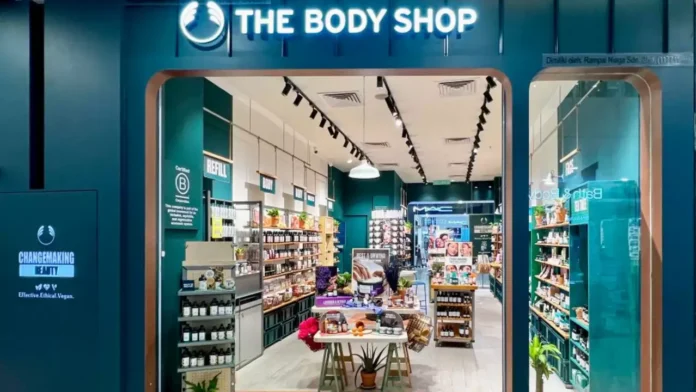
The Indian operations of cosmetics firm The Body Shop will remain unaffected by the restructuring in the UK, as affirmed by the company’s partner Quest Retail Pvt Ltd. Last week, the UK arm of the cosmetics company, grappling with financial crisis, entered administration, with experts from FRP Advisory appointed to oversee the process.
“This administration process does not impact The Body Shop India as it is a head franchise market. All our stores are open as usual,” Quest Retail Group CEO Shriti Malhotra said in a statement.
She mentioned that all stores in India are operating under normal hours, with customers able to shop both in-store and online. Furthermore, she highlighted that The Body Shop boasts nearly 200 stores across the nation, extending its reach to over 1,500 cities through its online platform.
“India is one of the top markets for The Body Shop globally, and our consistent growth reflects the popularity of The Body Shop and the immense opportunities we are tapping into,” Malhotra said.
Further, she said The Body Shop India will continue to scale up and focus on omni-channel expansion while leveraging newer opportunities in retail, quick commerce and high convenience formats so that the strong brand affinity built in India is well supported by easy and expansive access to customers.
The Body Shop India was launched in 2006 and is under the umbrella of Quest Retail Pvt Ltd, a beauty specialty company for marketing, retailing and distribution of global brands in India.
Last week, the Directors of The Body Shop International Ltd appointed Tony Wright, Geoff Rowley, and Alastair Massey of business advisory firm FRP as Joint Administrators of the company, which operates The Body Shop’s UK business.
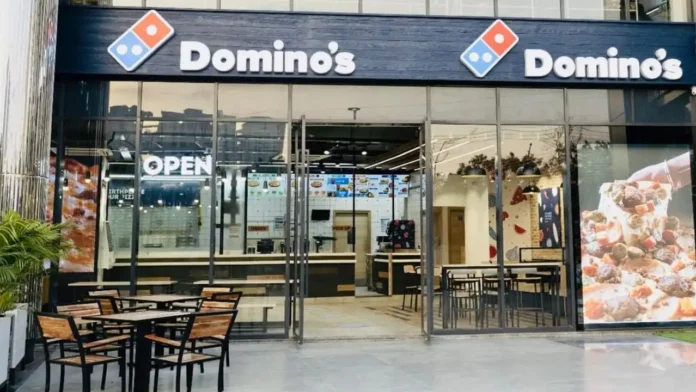
Jubilant FoodWorks is looking to ramp up its focus on Domino’s value offerings as the QSR sector experiences sluggishness in the dine-in segment. As the leading food services company that introduced Popeyes to the National Capital Region, it expects the brand to emerge as the fastest QSR chain to cross the INR 1,000 crore-mark in the next 4-5 years.
Sameer Khetarpal, CEO & MD, Jubilant FoodWorks Ltd, said, “I think it is a time where we need to pass more value to consumers. In high-inflation environment, consumer tighten their purse strings and conserve cash. For Domino’s delivery is growing faster than we expected and delivery is positive in terms of like-for-like. We are bringing in some better value propositions for our dine-in customers.”
He further stated that the emphasis will be on introducing “more value-conscious meals and combos” for Domino’s dine-in patrons in the current quarter.
This comes at a time when delivery sales growth have been outpacing dine-in sales for the QSR sector.
“India has the cheapest price per delivery and so it is very economical to order at home. With rapid urbanisation and people having less time, it is convenient to order food at home. With the emergence of the aggregators, delivery has been more democratised. Therefore one is seeing compression in dine-in, which is consistent with trends being seen globally,” Khetarpal explained. He added whenever there are festival occasions consumers do come out and loosen their purse strings but otherwise they have been focusing on conserving cash.
The company inaugurated its 33rd Popeyes store on Wednesday. We want to get to about 250 Popeyes stores in the next 4-5 years. We want it to be the fastest QSR to get to INR 1,000 crore in India in that timeframe,” Khetarpal added.
The company plans to add four more stores in the Delhi-NCR region.
Responding to a query on inflationary pressures, he said, “Inflation has been on a decadal high especially for the ingredients that we buy for Domino’s. But we do see softening in inflation as government has taken measures to keep it benign.”
He further mentioned that the company’s gross margins have grown year-on-year due to several cost-saving measures.
ITC is currently evaluating the acquisition of a 47% stake previously held by Peak XV Partners (formerly Sequoia Capital) in the publicly traded Prataap Snacks, as reported by ET. This comes after unsuccessful talks with Haldiram’s due to a valuation mismatch. Prataap Snacks, renowned for its Yellow Diamond chips and traditional Indian namkeen under the Avadh brand, has piqued the interest of ITC. Additionally, negotiations with listed Bikaji Foods, another major player in the snacks industry, also failed to materialize, according to sources familiar with the matter.
Other buyout funds such as KKR, TA Associates, and Apax have been engaged following Peak XV’s decision to fully divest its nearly 13-year-old investment in Prataap. Peak XV enlisted Deutsche Bank to manage the sale of the company.
If the transaction succeeds, it will trigger an open offer for an additional 26% of the Indore-based company. Since its stock market debut in 2017, during which it listed at a 33% premium, the company has been underperforming. Prataap closed 1% lower at INR 1,174.45, with a market value of INR 2,802.19 crore on Wednesday.
ITC, renowned for its sale of Bingo chips and namkeen alongside other products, finds Prataap offering substantial leverage in specific regional markets. This is particularly evident where ITC’s own brands struggle to gain traction against formidable local competitors.
An ITC spokesperson said, “We do not comment on market speculation.”
Amit Kumar, the managing director of Prataap Snacks, did not provide any responses to inquiries, nor did TA Associates. KKR opted not to comment.
An email query sent to Peak XV remained unanswered.
As per the FY23 annual report, Prataap Snacks operates a total of 15 manufacturing facilities, with seven being owned by the company itself and eight operated by contract manufacturers.
According to a report from market research firm IMARC Group, the Indian snacks market was estimated at INR 42,694.9 crore last year, with projections indicating it will more than double to INR 95,521.8 crore by 2032. Despite this rapid growth, the snacking industry remains fragmented and fiercely competitive.
Among the national players are PepsiCo, renowned for marketing Lay’s, Doritos, and Kurkure, alongside ITC, Haldiram’s, Bikaji Foods, Balaji Wafers, Too Yum, and the recent entrant Reliance Consumer Products, which has collaborated with General Mills to distribute Alan’s Bugles snacks.
Private equity funds, on the other hand, are reportedly showing tepid interest due to the company’s lack of growth in the premium segment.
“It operates in the INR 5 segment where the margins are wafer thin. Unless you hit the sweet spot, INR 10 per packet and above, there is not much juice left for a fund to buy a listed company and transform it,” said a PE executive who has been approached. “It’s losing market share and distribution too and it’s an unhealthy category for a PE to bite into.”
In the quarter ended December 2023, Prataap Snacks reported standalone net sales of INR 408.31 crore, up 8% from INR 377.79 crore in the year-ago quarter. The snack maker’s quarterly net profit more than trebled to INR 10.79 crore from INR 3.42 crore. It clocked sales of INR 1,652.93 crore in FY23 and net profit of INR 20.26 crore.
Executives citing NielsenIQ data stated that ITC Foods overtook Britannia, Parle Products, and Britannia to become the country’s largest foods maker in the nine months to September 2023. It clocked food FMCG sales of Rs 17,100 crore in the duration, ahead of Britannia, Adani Wilmar, Parle Products, and Mondelez.
ITC’s portfolio of foods and staples encompasses popular brands such as Yippee noodles, Sunfeast biscuits, Bingo chips, Aashirvaad atta, and MasterChef frozen foods. Similar to Tata Consumer, ITC has also been exploring acquisitions, having acquired Yoga Bar last year.
Chairman Sanjiv Puri’s ITC Next strategy emphasizes a portfolio of products tailored to meet evolving consumer demands. According to insiders, while Yoga Bar represented one aspect of this strategy, ITC is poised to leverage its robust distribution network to promote Prataap’s brand portfolio.
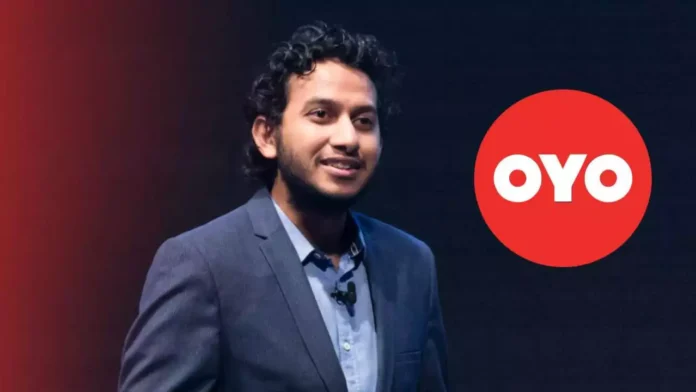
On Wednesday, Oyo announced the introduction of Wizard Shark, a novel ‘limited-edition’ loyalty program. This initiative comes on the heels of its founder and group CEO, Ritesh Agarwal‘s appearance on the reality series Shark Tank India.
Priced at INR 1, the program offers various benefits such as assured discounts, upgrades, and rewards, the company highlighted.
Customers can avail a free night’s stay after seven room nights, along with an additional 5% discount on Oyo’s network of over 3,800 Wizard hotels in India, as well as other rewards in the form of Oyo money under Wizard Shark. Valid for three months, the programme offers free membership renewal.
Originally introduced in August 2018, Oyo’s Wizard program, with more than 4.4 million active members, is touted by the company as one of the largest loyalty programs in the Indian hospitality industry.
“Customer-centricity has always been at the heart of Oyo’s endeavours. Our Wizard programme has emerged as a major pull for customers, and Wizard Shark, with its attractive pricing and wide range of benefits, will hopefully prove to be equally appealing to our loyal customers,” said Ritesh Agarwal.
“Designed especially for business travellers, Wizard Shark is a smarter, more efficient way to book your stays at the best prices. We take great pride in a majority of our guests being repeat customers and Wizard Shark is yet another initiative to offer them the best-in-class experience,” he added.
Agarwal made his debut on Shark Tank India for its third season, earning the distinction of being the youngest-ever judge on the show.
Apart from Wizard Shark, the program extends to three other tiers: Blue, Silver, and Gold. Gold members earn one complimentary stay annually after staying for five nights at Oyo. Meanwhile, Wizard Blue and Silver customers can redeem a reward stay after their eighth and seventh nights, respectively.
Gold members also enjoy the perk of unlimited ‘Pay at Hotel’ bookings, eliminating the need for prepayment. Additionally, they receive exclusive benefits such as priority customer support.
Wizard Blue membership is priced at INR 99, while Silver and Gold memberships are available for INR 199 and INR 399, respectively.
Mumbai-based luxury beauty brand Baccarose has expanded its fragrance portfolio by introducing Alexandre.J, a prestigious French luxury perfume brand, to the Indian market.
“We are thrilled to launch Alexandre.J Perfumes in India, offering a perfect blend of artistry and accessibility in niche perfumery. This collaboration resonates with the increasing demand for luxury fragrances in India,” said Kadambari Lakhani, director, Baccarose Perfumes & Beauty Products Pvt. Ltd.
As part of this collaboration, Baccarose will present Alexandre.J’s unique collections, including The Collector, Art Deco, and Art Nouveau, to consumers in India.
“Entering the vibrant and diverse Indian market is an exhilarating moment for Alexandre.J. Our partnership with Baccarose showcases our unwavering dedication to delivering an unparalleled olfactory experience to the Indian consumer,” said Amelie Jabban, visionary Global Brand Director of Alexandre.J.
Launched in France in 2012, Alexandre.J boasts a 100% made-in-France production. Perfumes are meticulously crafted in Honfleur, Normandy, while oil fabrication occurs in Grasse. With a footprint in more than 85 countries, the brand’s reach is extensive.
Founded in 1984 by Hemansu Kotecha, Baccarose asserts its position as a premier distributor of international luxury beauty brands in India. As per the company’s website, it manages a multi-tier distribution network spanning 16 warehouses across the country. Collaborating with prominent retailers such as Sephora, Nykaa, Shopper Stop, and Lifestyle, Baccarose maintains a significant presence in the market.
Baccarose oversees over 5,000 points of sale and handles a portfolio of over 65 brands on prominent e-commerce platforms.
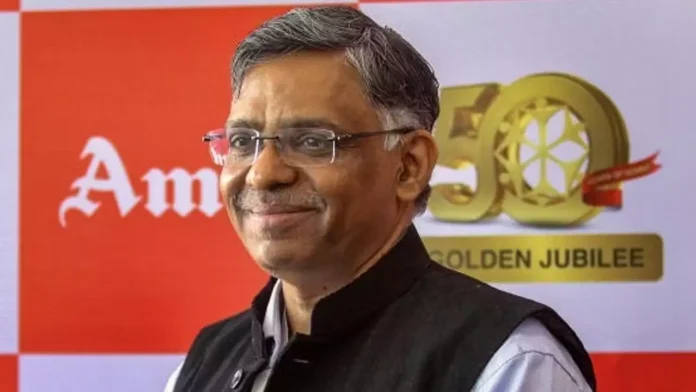
On Thursday, Prime Minister Narendra Modi will participate in the golden jubilee festivities of the Gujarat Cooperative Milk Marketing Federation (GCMMF), renowned for its ‘Amul‘ brand. As per an official statement by a representative of the dairy giant, the Prime Minister will also unveil five projects amounting to INR 1,200 crore. Jayen Mehta, the managing director of GCMMF, mentioned that the federation will deliberate on its vision for the forthcoming 25 years during the event.
More than 1.25 lakh dairy farmers, including representatives from approximately 18,600 villages in Gujarat, are expected to attend the event at the Narendra Modi Stadium in the Motera area of Ahmedabad. Mehta mentioned that 40-45 percent of the dairy farmers in attendance will be women.
Mehta said that the federation was established in 1973, with an annual turnover of INR 20 crore.
“In the last 50 years, it has emerged as the country’s number one FMCG (fast-moving consumer goods) organisation, with the Amul brand set to achieve a turnover of INR 80,000 crore, and Amul Federation a turnover of INR 61,000 crore this financial year,” he said.
Apart from PM Modi, Union Home and Cooperation Minister Amit Shah, Union Animal Husbandry Minister Parshottam Rupala and Chief Minister Bhupendra Patel will also remain present during the golden jubilee celebrations, he said.
During his visit, Modi will inaugurate five new dairy projects, including a modern cheese plant of Sabar Dairy, which has come up with an investment of INR 600 crore, a long-life tetra pak milk plant of Amul Dairy at Anand and the expansion of its chocolate plant, he said.
The PM will also inaugurate a 50,000-litre ice cream plant of Sarhad Dairy in Kutch, a unit of Bharuch Dairy coming up in Mumbai, along with various dairy development works under government schemes in the state’s Saurashtra-Kutch region.
“The total investment of the projects is INR 1,000-1,200 crore. On February 23, during his Varanasi visit, Modi will inaugurate a plant of Banas Dairy which has come up there with an investment of INR 600-700 crore,” he said.
Amul’s vision for the next 25 years will also be discussed on Thursday, he said.
Even as each of GCMMF’s 18 milk cooperative members takes the initiative to raise its milk handling capacity, they are expanding by setting up new plants in the state and other parts of the country, Mehta said.
Amul plans to invest INR 11,500 crore in the next 2-2.5 years as part of the MoUs (memorandums of undertaking) signed at the World Food India event organised in New Delhi in November last year, Mehta said.
“At the event, organisations from different countries made investments of INR 33,000 crore, out of which MoUs for investment of INR 11,500 crore were signed by Amul alone. We will make investments in the dairy processing and collection system as well as setting up ultra modern processing plants, among others,” Mehta said.
He said the investments will largely be made in Gujarat. Member cooperatives will also invest in Varanasi, Rohtak, Ujjain, Mumbai, Goa, Pune, and Kolkata, he added.
We use cookies to ensure that we give you the best experience on our website. If you continue to use this site we will assume that you are happy with it.