Aditya Birla Group‘s jewellery business, operating under the brand name ‘Novel Jewels Ltd’, will begin its operations this July, as reported by ET Now citing its sources.
Last June, the company announced its plans to enter the retail jewellery sector with an investment of approximately INR 5000 crore.
At that time, the company stated that under Novel Jewels, it would establish large-format exclusive jewellery retail stores across India, showcasing in-house jewellery brands.
Novel Jewels, it said, ‘aims to transform the customer experience by creating an aspirational national brand with unique designs and a strong regional flavour’.
“The branded jewellery retail venture will be operated by a newly recruited leadership team with deep retail and category expertise,” the Aditya Birla Group had announced in June 2023.
In a statement Kumar Mangalam Birla, Chairman, Aditya Birla Group then said, “Aditya Birla Group’s foray into branded jewellery retail marks a pivotal moment in our storied legacy of building businesses underpinned on trust. This foray is a strategic portfolio choice that allows us to tap into new growth engines and expand our presence in the vibrant Indian consumer landscape. With rising disposable income, discerning and aspirational consumers are leaning more towards design-led, bespoke, and high-quality jewellery. This venture will capitalise on Aditya Birla Group’s deep expertise in lifestyle retail and nuanced understanding of consumer preferences.”
“IRCTC has tied up with M/s. Bundl Technologies Pvt. Ltd. (Swiggy Foods) for supply & delivery of pre-ordered meals through IRCTC e-catering portal as a PoC (Proof of Concept) in the first phase at four Railway stations — Bengaluru, Bhubaneswar, Vijayawada & Visakhapatnam,” said IRCTC in a statement to the stock exchange on Thursday.
This development comes four months after Zomato partnered with the IRCTC for the supply and delivery of pre-ordered meals on a pilot basis in October last year. The service was then announced for five railway stations – New Delhi, Prayagraj, Kanpur, Lucknow, and Varanasi, in its first phase.
Meanwhile, as per its statement, IRCTC indicated that the e-catering service through Swiggy might be available soon.
Presently, the Indian food delivery market is dominated by Zomato and Swiggy, with the Deepinder Goyal-led startup holding the lead with approximately 54% market share.
As per an analysis, between January and November 2023, Zomato also led the total number of app downloads (47.5 Mn) while Swiggy’s count stood at 36 Mn.
Swiggy, meanwhile, is gearing up for its IPO and aiming to achieve an INR 10K revenue in FY24, along with profitability ahead of its listing.
However, in FY23, Swiggy’s net loss widened by 51% to INR 4,179.3 Cr from INR 3,628.9 Cr in the previous fiscal year. Despite this, its operating revenue experienced a notable 40% year-on-year (YoY) increase, reaching INR 8,264.4 Cr, driven by the growth of its quick commerce vertical.
Meanwhile, amidst a vast pool of railway traffic, IRCTC continues to experience a surge in its catering business. Its revenue from catering services increased by almost 30% year-over-year to INR 507.8 Cr in the last reported quarter – Q3 FY24.
Uber Eats is gearing up to roll out autonomous food delivery robots on the bustling streets of Tokyo. This marks its first international expansion into robotic food delivery. The initiative, scheduled to begin by the end of March, is the result of a collaboration between Uber Eats, robotics startup Cartken, and Japanese industrial giant Mitsubishi Electric.
Located in Silicon Valley, Cartken has created delivery robots called Model C. These robots feature artificial intelligence and sophisticated sensors, allowing them to maneuver sidewalks and detect obstacles. Sporting six wheels and capable of carrying up to 27 litres of cargo, these robots can travel at a pedestrian-friendly pace of up to 3.3 miles per hour.
One of the key functionalities of Cartken’s technology is its capability for remote monitoring and guidance of the robots in case they encounter unforeseen obstacles during delivery.
Customers within the designated delivery zone in Tokyo will be able to order food through the Uber Eats app and choose autonomous robot delivery. The robot will autonomously travel to the restaurant for pickup and then to the customer’s location. Additionally, customers have the option to have their meal left at the door without requiring a hand-off.
Mitsubishi Electric will oversee the operations and training of the delivery robots in Tokyo. Shoji Tanaka, Senior General Manager of Mitsubishi Electric’s Advanced Application Development Center, expressed optimism that the initiative would spur the adoption of robot delivery services in Japan. He highlighted robots as an effective solution to Japan’s persistent logistics labor shortage.
The autonomous delivery program, initially introduced by Uber Eats in Miami in early 2022 in collaboration with Cartken, later expanded to Fairfax, Virginia. The expansion into Tokyo signifies the first deployment of delivery robots beyond the United States.
Qingrong “Gary” Xiao, CEO and co-founder of Cartken, emphasized Tokyo as a logical progression for the company, considering Japan’s historical embrace of robotics and automation. Xiao expressed enthusiasm about collaborating with Uber Eats and Mitsubishi Electric to deliver exceptional delivery experiences to Tokyo residents.
Specifics regarding the Tokyo restaurants joining the autonomous delivery program and the neighborhoods gaining access to the service remain undisclosed. Further details are anticipated to be unveiled closer to the late March launch date.
Praveen Nagamalla and Rahat Achanta, Co-Founders, Fruitoholic
Fruitoholic, the renowned fresh fruit brand, has secured a total of INR 25 Crores in a recent fundraising round comprising both equity and debt financing. This milestone marks a significant step forward for the Hyderbad-based company as it continues its journey towards expansion and growth in the market.
The seed round investment, which contributed to the overall fundraising amount, was led by prominent industry leaders including CXOs of KFC, investment bankers, and other senior corporate professionals. Additionally, public institutions also participated in the fundraiser, demonstrating widespread support and confidence in Fruitoholic’s vision and potential.
Notably, RightRoad Ventures spearheaded the last round of fundraising, reaffirming their commitment to Fruitoholic’s growth trajectory. The investment will primarily fuel the brand’s expansion plans, facilitating its entry into two new cities while bolstering its presence in existing markets.
Reflecting on the successful fundraising endeavor, the Founders extended their gratitude to investors and stakeholders for their steadfast support. They stated, “We are thrilled to have received such overwhelming support from investors who share our vision for Fruitoholic. This funding will enable us to accelerate our expansion plans and further enhance our product offerings, thereby solidifying our position as a market leader in the fresh fruit segment.”
Founded in 2021 by Praveen Nagamalla and Rahat Achanta, Fruitoholic has rapidly become a leading brand in the fresh fruit category, earning widespread acclaim for its quality products and customer-centric approach. With a remarkable track record of generating close to 30,000 orders every month, the company has experienced exponential growth, recording a staggering INR 65 Crores in revenue over the past three years.
In addition to its impressive revenue generation, Fruitoholic has attained profitability, showcasing the strength of its sustainable business model and strategic operational prowess. Moreover, the company is set to expand into Bangalore and Chennai this year, alongside the introduction of a range of new products.
As Fruitoholic enters its next phase of expansion, the company remains steadfast in its dedication to providing exceptional value to its customers, all while upholding its mission of advocating for health and wellness through the consumption of fresh and nutritious fruits.
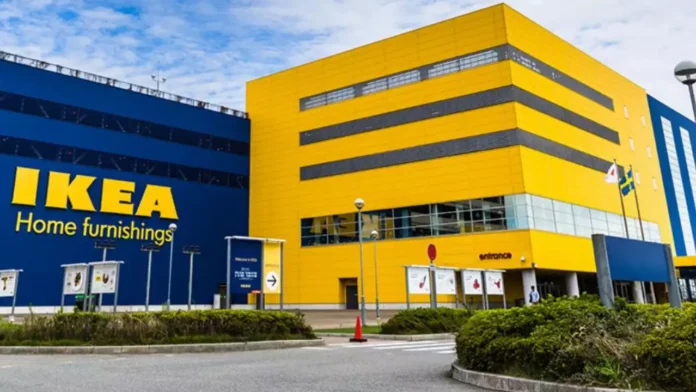
Ikea India has decided to discontinue operations at its R-City Mall store in Mumbai by the middle of this year. This move will see the Swedish retail giant consolidating its Mumbai operations to Ikea Worli and Ikea Navi Mumbai, alongside its e-commerce operations.
Opened in 2022 as part of the company’s strategy to experiment with smaller format concepts in India, this store faced challenges in delivering the complete brand experience due to layout and design-related constraints.
Employees at the R-City store will not be impacted and will be given opportunities to work at other stores operated by the retailer.
“This strategic decision is at the back of the learnings we have had in terms of customer experience and aligned to our vision of creating a leaner and faster retail business in the country. It further allows us to consolidate our Mumbai operations to Ikea Worli, Ikea Navi Mumbai and online presence, while exploring newer opportunities for future growth,” Ikea India said in a statement.
“The focus on growing Mumbai remains robust as we explore newer omni-channel formats for the city, further develop the existing IKEA Navi Mumbai site into a retail destination, expand our physical presence in Pune, and become even accessible through our online presence across Maharashtra. India is a long-term priority for IKEA, and we will continue to invest in more growth avenues and job opportunities,” the company added.
“Taking care of our dedicated co-workers is our highest priority. We are committed to supporting them with equal growth opportunities and a seamless transition and have them continue to be a part of the IKEA family,” Ikea India added.
Earlier this month, the Swedish furniture retailer extended its doorstep delivery services to 62 additional districts across four states, encompassing 14 districts in Maharashtra as well as areas in Karnataka, Telangana, and Andhra Pradesh.
Additionally, it plans to commence e-commerce operations in Delhi within one year ahead of the store launch in the region. Ingka Centres, Ikea’s parent Ingka Group’s shopping centre division, will open Lykli Gurugram meeting center in late 2025, while another meeting place is being developed in Noida.
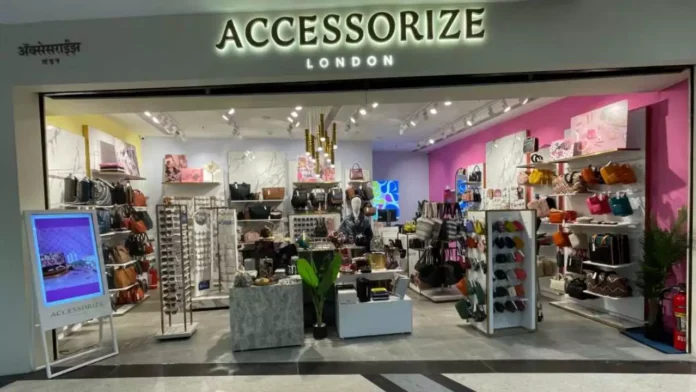
Accessorize London, the fashion accessories brand, has teamed up with Gurugram-based e-commerce enablement SaaS platform Unicommerce, as stated in a joint release on Thursday.
Accessorize London has adopted Unicommerce’s multi-channel order management and warehouse management system. This technology is poised to optimize warehouse operations by assigning orders to the nearest facility, ultimately leading to faster deliveries for customers. Additionally, the Unicommerce platform will assist in returns management, reducing return orders and enhancing the post-purchase experience for Accessorize London’s customers.
Exclusively dedicated to e-commerce and retail, Accessorize London intends to integrate Unicommerce’s omnichannel retail management system, enabling the seamless processing of orders across both physical and digital channels. Presently, the fashion brand handles an average of over 20,000 orders per month.
Accessorize London, a subsidiary of Planet Retail Holdings Pvt. Ltd., maintains stores across various cities including Mumbai, Bengaluru, Haryana, Kolkata, Hyderabad, Punjab, Delhi, Goa, Nagpur, Ahmedabad, and Pune, with over 25 stores according to the company’s official website.
“We are presently in the phase of creating a collection tailored specifically for India, collaborating closely with our design team in the UK. As we expect e-commerce to take a larger share of our revenue in the coming years, our partnership with Unicommerce is another step towards building our operational strength and our focus on providing a seamless shopping experience to our customers,” said Kumar Saurabh, CEO of Planet Retail Holdings.
It aims to onboard more than 1300 stores onto the network through magicpin within the next 45 days. Presently, it is operational in Delhi-NCR and Bengaluru, boasting a network of over 550 outlets.
Magicpin recently hit a milestone by fulfilling 50,000 food orders in a single day under the ONDC umbrella, the largest aggregator/supplier on the ONDC network.
“Pizza is one of the top food items ordered across 5 lakh SKUs on our platform. The ONDC model breaks down the e-commerce value chain, offering a user-friendly platform for customers to explore and order. We have rapidly scaled to nearly 50,000 orders a day,” said Anshoo Sharma, CEO & co-founder at magicpin.
By leveraging the ONDC via magicpin, Domino’s aims to enhance customer accessibility, streamline the ordering process, and diversify its online sales channels.
Presently, food chains such as Rebel Food brands (Faasos, Oven Story, Behrouz Biryani), McDonald’s, Burger King, WowMomo, Pizza Hut, Nirula’s, Krispy Kreme, Taco Bell, Barbeque Nation, and Barista are actively operating on the ONDC network through magicpin, accessible via other buyer apps like Paytm, Phonepe’s Pincode, and Ola.
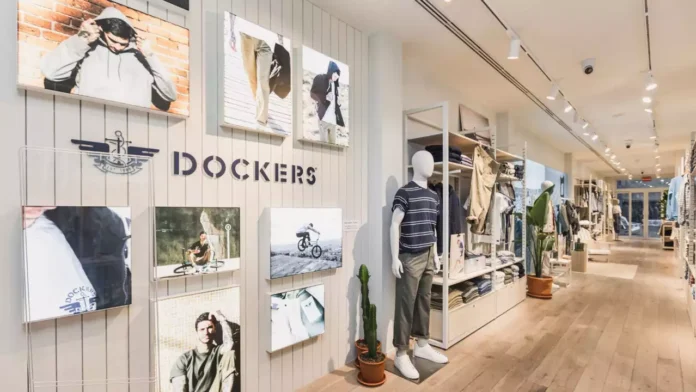
Dockers, the California-based lifestyle apparel brand, is betting big on India’s physical retail growth and has planned to open five stores in the first year of its entry into India, in addition to entering 14 cities through Shoppers Stop.
Natalie MacLennan, the Chief Executive Officer of Dockers, disclosed that over 50% of the company’s sales originate from countries beyond the borders of the United States. Additionally, she emphasized the brand’s ambition to expand its presence in the Asian market.
“We are big in Europe, but Asia is an area that we are really looking to grow in. And I would say India, for us, is one of the most exciting countries within that region just given the scale, given the growth, given the dynamics going on in the country,” said Natalie MacLennan.
Dockers has forged a partnership with the retail technology firm Ace Turtle to make its entry into the Indian market.
Ace Turtle, licensed to retail fashion and lifestyle brands like Lee, Wrangler, Toys ‘R’ Us, and Babies ‘R’ Us in India, will bolster Dockers’ presence both in physical stores and online platforms.
“We are opening our first store, and after going live in Delhi, we are also coming up with four more stores. There is an exclusive partnership which we have done for offline on our department store side with Shoppers’ Stop. They go live this week as well, and then with Myntra, which for online third-party marketplace, which also goes live this week,” said Nitin Chhabra, CEO, ace turtle.
Dockers, a division under Levi Strauss & Co., enjoys a global presence spanning across 50 countries.
MacLennan stated that India holds the potential to emerge as one of Dockers’ largest markets outside the US, with the India team prepared with an ambitious expansion strategy.
For Dockers, omni-channel is important and post Covid, the consumer is looking for an experience at the store.
The majority of the products will be manufactured in India, with additional quantities sourced from Dockers’ global supply chain.
“But with each passing season the local component is going to increase. Close to 65% of the inventory will be locally produced while 35% will be imported and as we keep going deeper each season, the India components are going to increase,” said Chhabra.
Ace Turtle is targeting Delhi, Mumbai, and Bangalore as the initial locations to establish stores before expanding to other cities.
Ace Turtle, having recently secured $34 million (around INR 293 crore), intends to allocate a portion of the capital towards the expansion of Dockers.
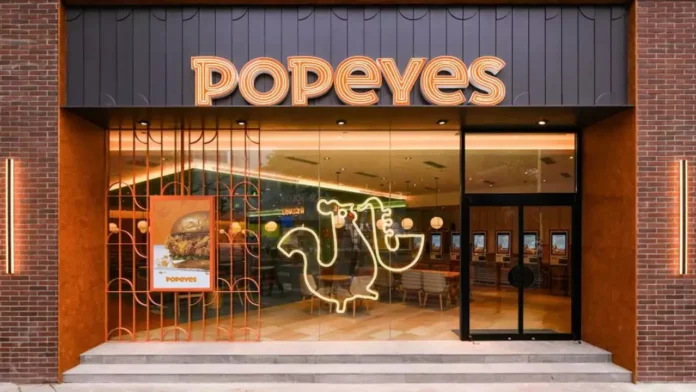
Jubilant FoodWorks Limited (JFL), the food service giant, delighted customers with the grand opening of Popeyes, the renowned Louisiana Chicken brand, at Chandni Chowk in Delhi.
This marks the highly anticipated debut of the iconic Louisiana-style chicken giant in the national capital region, located at the Omaxe Chowk mall.
Popeyes, celebrated worldwide for its bold, Louisiana-style fried chicken and the globally famous Chicken Sandwich, which took the internet by storm in August 2019 in the USA, is now all set to enamour the taste buds of Delhi’s chicken aficionados.
Accessible globally and across southern India, Popeyes will now bring its legendary fried chicken, renowned for its crispy texture and distinctive blend of spices, to the national capital.
In addition to its Chicken Sandwich and renowned Hot & Messy Range, the menu will showcase Cajun-flavored Chicken Tenders, Popcorn Chicken, Rice Bowls, Wraps, and more.
For vegetarian diners, Popeyes offers tantalizing choices such as Cajun Veg Burgers, Veg Wraps, Cajun Fries, and Onion Rings.
Sameer Khetarpal, CEO and MD of Jubilant FoodWorks Limited, shared his excitement as the globally renowned fried chicken brand, Popeyes, enters the consumer market of the national capital.
“Since our launch in India two years ago, we have been humbled by the overwhelming response to the brand. We aspire to recreate the same fan following in Delhi that we have received in other cities by generating the same excitement and loyalty for Popeyes and its signature dishes. The unique, delicious, and wholesome Cajun flavours of Popeyes are certain to appeal to the Indian audience,” he added.
The brand is set to further captivate the city with plans for additional store openings in strategic locations, including Pacific Mall, Jasola, Pacific Mall Faridabad, and DLF Epitome, Gurgaon, all while championing sustainability with a zero-emission delivery fleet.
Gaurav Pande, Executive Vice President & Business Head of Popeyes, India, said that Popeyes stands out for its authentic Cajun flavour and a rich legacy dating back to 1972. “Globally, long queues of chicken-loving enthusiasts are witnessed outside each new store, and a similar reaction is being seen in India as well,” he noted.
He further said that consumers in Delhi can now enjoy a variety of flavourful dishes like the world-famous Chicken Sandwich and newer innovations like the Hot & Messy range alongside vegetarian options. “The lip-smacking menu offerings will be backed by exceptional service, making for a memorable dining experience,” he said.
Rafael Odorizzi, President of Restaurant Brands International (RBI)’s Asia-Pacific region stated, “This first restaurant in Delhi will show guests our commitment and passion to serve only the best chicken. We can’t wait for guests at Popeyes to try the mouth-watering crunch of our juicy fried chicken.”
Additionally, he expressed confidence that the brand’s unique menu offerings catered to the local taste profiles will help build unforgettable memories that will make people fall in love with Popeyes over and over again.
JFL boasts a robust and expansive network comprising 1,928 Domino’s outlets spanning 407 cities. Additionally, the food service giant holds exclusive rights for Popeyes establishments in India, Bangladesh, Nepal, and Bhutan, as well as Dunkin’ eateries in India.
On January 31, JFL reported a standalone net profit of INR 65.8 crore for the December quarter, marking a decrease of 18.2 percent from INR 80.4 crore in the corresponding period of the previous year.
Yum Restaurants India on Wednesday sold its entire 4.4% stake in Devyani International for INR 871 crore through an open market transaction.
Devyani International, the Quick Service Restaurant (QSR) operator, is the franchisee for Yum Brands, which operates KFC, Pizza Hut and Taco Bell in India.
SBI Mutual Fund (MF), Axis MF, Franklin Templeton MF, Nippon India MF, HDFC Standard Life Insurance, Ghisallo Master Fund LP, the Singapore Government, Societe Generale, Goldman Sachs, and Morgan Stanley Asia Singapore were among the buyers of shares in Devyani International.
According to the block deal data available on the National Stock Exchange (NSE), Yum Restaurants India offloaded 5,30,83,330 shares, amounting to its 4.4% stake in Devyani International.
The shares were offloaded at an average price of INR 164.10 apiece, taking the transaction value to INR 871 crore.
At the end of December 2023, Yum Restaurants held over 5.30 crore shares, representing a 4.40% stake in Devyani International.
On Wednesday, shares of Devyani International rose by 1.24%, ending the day at INR 167.80 apiece on the NSE.
We use cookies to ensure that we give you the best experience on our website. If you continue to use this site we will assume that you are happy with it.