Thursday, February 12, 2026
Home Blog Page 641

Mamaearth parent Honasa Consumer sees 250% YoY surge in net profit to INR 26.1 Crore in Q3FY24

0
Mamaearth

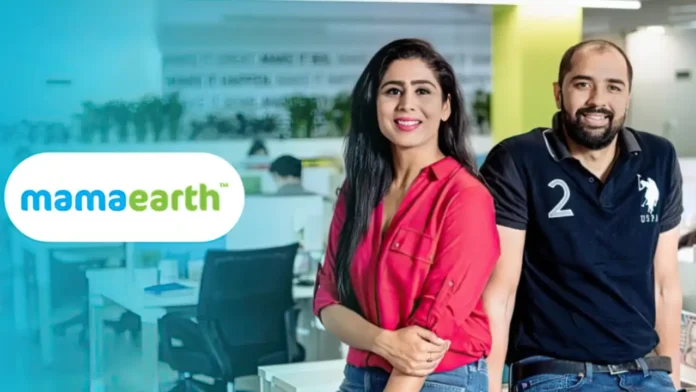
Honasa Consumer Ltd, the parent company of the D2C unicorn Mamaearth, reported a 250 percent year-on-year increase in net profit, reaching INR 26.1 crore in Q3FY24. This surge was fueled by strong demand during the period, as reflected on a consolidated basis. Notably, the company had reported a net profit of INR 7.4 crore in the same quarter of the previous fiscal year.

The Gurugram-based startup, which entered the market in 2023, reported an operating revenue of INR 488.2 crore, marking a 28 percent increase from the previous year. In Q3FY23, Honasa had reported an operating revenue of INR 382.2 crore.

Continue Exploring: Mamaearth marks its entry on NSE with nearly 2% premium debut

In comparison to the previous quarter, the company managing Mamaearth experienced a 2 percent decline in operating revenue, dropping from INR 496.1 crore. Additionally, its net profit decreased by 12 percent from INR 29.8 crore on a quarter-on-quarter (QoQ) basis.

During an analyst call, Mamaearth CEO Alagh highlighted that the first half (H1) typically represents a stronger period for the company compared to the second half (H2), emphasizing that products such as facewash, sunscreen, creams, and shampoos constitute some of its core offerings.

In the said quarter, the company witnessed a sales growth of 28% year-on-year.

In terms of the portfolio, the company sold approximately 10 lakh color care units, reaching an Annual Recurring Revenue (ARR) of INR 150 crore. Meanwhile, The Derma Co. attained a positive EBITDA status year-to-date.

“Four out of six brands from our portfolio are already in the INR 150 crore ARR club and we see this as a testimony of our capabilities. Having built colorcare with Mamaearth showcases our ability to build new categories and versatility of the brand. As we move forward, focus continues to be on purpose-based brand building, innovation and distribution expansion,” said Varun Alagh, Chairman and CEO, HCL.

According to filings, employees of the holding firm exercised 3,695,191 stock options during the quarter, while the promoters of Momspresso exited.

“During the current quarter, the promoters of Momspresso resigned from their employment and the vesting conditions of the employee stock option were not fulfilled. Accordingly, the group has reversed the share based payment expense of INR 47.47 million during the current quarter,” it added.

The stock closed the day at INR 432.75 per share, marking a 3.54 percent increase from its previous close on the BSE.

Continue Exploring: Nuvama analysts bullish on Mamaearth for MSCI Smallcap Index, Nykaa gaining momentum for Global Standard Index

Advertisement

IPO-bound OYO’s Q3 FY24 profit doubles QoQ to INR 30 Cr

0
OYO
OYO (Representative Image)

OYO, the IPO-bound hospitality unicorn, achieved its second consecutive profitable quarter in Q3 of the financial year 2023-24 (FY24), doubling its profit after tax to INR 30 Cr, Founder and CEO Ritesh Agarwal said.

At a town hall meeting on Friday, Agarwal announced that the startup’s first profitable quarter was in September, with a net profit after tax of over INR 16 crore.

“In the upcoming quarters, we anticipate a consistent rise in PAT, driven by enhanced patron confidence, improved customer experience, and favourable market conditions conducive to sustained growth,” Agarwal said.

According to sources, Agarwal stated that OYO experienced a nearly 10% year-on-year revenue growth in the third quarter of FY24. Additionally, the company managed to reduce its operating costs by 15% compared to the same quarter last year through optimization efforts.

He mentioned that the platform’s hotel count surged by almost 27%, reaching 17,000 over the past year.

It’s worth noting that OYO witnessed a 34% decrease in its net loss, dropping to INR 1,286.5 Cr in FY23 from INR 1,941.5 Cr in FY22. Additionally, operating revenue increased by 14% to INR 5,463.9 Cr in FY23 from INR 4,781.3 Cr in the preceding fiscal year.

Agarwal announced during the town hall that the startup’s adjusted EBITDA reached INR 275 Cr in FY23 and is projected to increase to approximately INR 1,000 Cr in the current fiscal year.

Recently, OYO also repaid INR 1,620 Cr of its outstanding Term Loan B (TLB), accounting for about 30% of its TLB, which has a term until June 2026.

Continue Exploring: OYO initiates INR 1,620 Cr debt repurchase, aims to proactively settle one-third of Term Loan B

Last month, it was reported that the startup was in talks with Malaysian sovereign wealth fund Khazanah Nasional Berhad to raise close to $400 Mn in a fresh funding round at a valuation of $6 Bn.

Continue Exploring: Oyo Hotels in advanced talks with Khazanah Nasional Berhad for $400 Million funding boost

Established in 2012 by Ritesh Agarwal, OYO provides a range of accommodations including holiday homes, casino hotels, coworking spaces, budget hotels, and corporate stays, among others.

Last year, the SoftBank-backed startup filed its draft red herring document (DRHP) for its initial public offering (IPO) via a confidential route. Additionally, it reduced the IPO size to $400-$600 Mn from the initial plan of raising INR 8,430 Cr ($1.2 Bn) when it first filed the DRHP in 2021.

Advertisement

Govt infrastructure spending, elections to drive consumption growth, says Nestle CMD

0
Nestle
Suresh Narayanan, chairman and managing director of Nestle India

Nestle India’s Chairman and Managing Director, Suresh Narayanan, said that the government’s infrastructure spending, moderating inflation, and the upcoming elections are likely to boost consumption and lessen the polarities in consumer trends where premiumisation has been booming amid tepid mainstream demand.

Narayanan stated that the government’s commitment to invest INR 11 trillion in infrastructure in the recent vote-on-account budget will drive job creation and increase household incomes. He emphasized that a significant portion of these incomes will be directed towards the consumption of essential goods.

Highlighting the polarisation in consumer demand, he said, “If you are a mainstream product, you are facing the vagaries of a combination of job losses and food inflation which continues to be choppy.”

He said there are some stress points and “the Diwali festival demand wasn’t as buoyant as expected”.

“Many people bought more cars and more luxury items but the (demand) for the common man’s products was relatively muted.”

Continue Exploring: Nestle India ramps up investments, sets sights on robust growth with INR 6,000-6,500 Crore expansion plan

However, Narayanan added that the long-term growth outlook remains positive, and the company aims to achieve revenue growth of 11-12% in 2024, building upon a strong base.

“The underlying growth fundamentals continue to be strong… You can have short-term wobbliness but the long-term sustainability of the trajectory is what we are confident about,” Narayanan said. He said the demand outlook is “fairly positive despite some slog overs”.

The maker of Maggi noodles and KitKat chocolates is investing INR 6,500 crore on capacity expansion over five years – its highest investment in such a timeframe, he said.

Continue Exploring: Nestlé India collaborates with SOCIAL and BOSS Burger to debut MAGGI’s plant-based menu across major cities

Erratic monsoon rains, an extended rural slowdown, and food inflation have contributed to a slowdown in sales across FMCG categories in the October-December 2023 quarter.

In a report released on Tuesday, researcher NielsenIQ predicted that following two years of expansion, the FMCG sector’s value growth could decrease by half to 4.5-6.5% this year, compared to 9.3% in 2023 and 8.4% in 2022.

Narayanan said that despite the general decrease in inflation levels compared to 2022, the stability in commodity prices should result in an uptick in consumption.

“We also have a lot of hope for economic activity to pick up around the elections,” he said.

For the December quarter, Nestle India reported a 4.4% year-on-year rise in net profit at INR 655.6 crore impacted by one-time service costs, while domestic sales grew 8.9% on the back of pricing and strong momentum in ecommerce and out-of-home channels.

Continue Exploring: Nestle India sees 4.3% increase in Q4 net profit, reaching INR 655.61 Crore

Advertisement

India’s hospitality sector records 15.8% year-on-year RevPAR growth in Q4 2023: JLL Report

0
SAMHI hotel
(Representative Image)

According to JLL’s Hotel Momentum India (HMI) Q4 2023 report released on Friday, the Indian hospitality sector saw continued year-on-year growth in performance in the fourth quarter of 2023. This growth was primarily attributed to a significant increase in the Average Daily Rate (ADR) of 14.6% compared to Q4 2022.

The report indicates that the sector experienced a notable increase of 31% in revenue per available room in Q4 2023 compared to Q3 2023. It further states that the fourth quarter witnessed steady growth in average daily rates, attributed to various factors including weddings, corporate and social MICE events, leisure travel, and year-end festivities.

“Amid stable occupancy levels, the six markets have demonstrated strong ADR performance, benefiting from sustained corporate demand and international events such as the ICC Cricket World Cup, as well as the wedding season. Hyderabad led in terms of ADR growth with 24.7%, followed by Delhi and Mumbai at 20.3% and 16%, respectively,” the report stated.

According to JLL, the momentum from the previous quarter is anticipated to continue into 2024, bolstered by the wedding industry, corporate and social MICE demand, and the increasing importance of specialized tourism sectors such as religious tourism.

Continue Exploring: Indian hospitality industry set for a record-breaking 2024: Surge in new hotel rooms expected

Business travel is also expected to bounce back by the end of the first quarter of 2024 as companies hold their year-end meetings. The industry shall remain robust, driven by ADR growth, strong domestic demand fueled by higher disposable incomes, and targeted government initiatives.

In Q4 2023, contracts were signed for a total of 82 hotels, encompassing 8,741 keys. Among these, 15 hotels were conversions of existing properties, representing 14% of the total signed inventory for that quarter.

In Q4 2023, Bengaluru took the lead in RevPAR growth, boasting an impressive increase of 31.9% compared to Q4 2022. Following closely behind were Delhi and Hyderabad, with year-on-year growth rates of 26.3% and 23.5%, respectively.

“As 2023 ends on a high note, the hotels industry is at the precipice of a fundamental shift in its growth trajectory. With the rising relevance of key trends such as pilgrimage tourism, airport and complementary developments, and infrastructural upgrades, we are witnessing an increased interest from hotel developers and investors who wish to participate in this growth story. We expect the sector to continue witnessing strong ADR levels on the back of softening of supply pressure, rising disposable incomes and increased air connectivity”, said Jaideep Dang, Managing Director, Hotels and Hospitality Group, India, JLL.

Advertisement

Meat retailer Licious lays off 80 employees in bid for enhanced efficiency

0
Licious
Licious

Licious, the omnichannel meat retailer, has laid off 80 employees, representing 3% of its total employee base. The firm said the layoffs were part of an “operational reset to sharpen growth focus”.

It employs 650 corporate staff members and 2,350 employees dedicated to production and supply chain operations.

In a statement, the company said that the impacted employees are being offered two months’ salaries as compensation, along with the variable payment for FY24.

The company stands as the sole unicorn in its sector, which has experienced a gradual slowdown over the past eighteen months.

The company’s revenue for FY23 stood at INR 748 crore, marking a 9% growth compared to the previously projected revenue of INR 1,500 crore.

Continue Exploring: Licious records INR 748 Cr in meat sales for FY23 as growth plateaus

The meat and seafood firm has been working to expand its range of ready-to-eat products. Late last year, it also came out with its own plant-based meat brand, UnCrave, as it tried to tackle the seasonal nature of the business—a large number of Indians do not consume meat during festivals.

Advertisement

Unilever eyes competitive volume growth in India, anticipates price reduction amid commodity trends

0
Unilever
Unilever

Unilever, the multinational FMCG firm, is focusing on driving competitive volume growth in the Indian market and expects a price reduction in its products “if current commodity prices persist.”

In its earnings statement on Thursday, Unilever reported that its India business, Hindustan Unilever Limited (HUL), experienced mid-single digit growth in the December quarter. This growth, driven by volume, was facilitated by reduced input costs, leading to negative pricing during the fourth quarter.

“We are focused on driving competitive volume growth while pricing is expected to remain marginally negative if current commodity prices persist,” it said.

In the Indian market, Unilever’s sales were flat in the fourth quarter as pricing turned negative, mainly driven by price reductions in fabric cleaning and skin cleansing bars due to commodity movements.

This also impacted Unilever’s overall fabric cleaning segment, which was negative in the December quarter, as the “pricing reflects commodity deflation, particularly in India,” it added.

Additionally, in 2023, the company received a tax refund of 0.4 billion euros from India.

The company adheres to a fiscal year running from January to December.

In terms of volume, India stands as the largest market for the Anglo-Dutch FMCG major firm.

Continue Exploring: Unilever CEO Hein Schumacher lauds Hindustan Unilever as strongest and largest operation globally

In 2023, the company recorded a turnover of 59.6 billion euros. Its underlying sales growth for the full year reached 7%, driven by a 0.2% increase in volume and a 6.8% rise in prices.

During the December quarter, Unilever’s turnover reached 14.2 billion euros, marking a 4.7% increase.

Its Asia Pacific Africa Zone, which consists of large markets such as India and China, contributed 44% of the group turnover in 2023. It posted an underlying sales growth of 6.5% with price growth of 5.3% and volume growth of 1.1%.

China grew low single-digit in a deflationary market with low consumer confidence.

In the fourth quarter, sales in Indonesia experienced a double-digit decline as consumers steered clear of multinational company brands due to the geopolitical tensions in the Middle East.

Unilever CEO Hein Schumacher said, “Today’s results show an improving financial performance, with the return to volume growth and margins rebuilding. However, our competitiveness remains disappointing and overall performance needs to improve. We are working to address this by improving our execution to unlock Unilever’s full potential.”

Regarding the outlook, Unilever stated that it anticipates underlying sales growth (USG) for 2024 to fall within their multi-year range of 3-5%, with a focus on achieving a more balanced distribution between volume and price.

Continue Exploring: Unilever named official sponsor of UEFA EURO 2024, bringing favourite brands to the pitch

“We anticipate a modest improvement in underlying operating margin for the full year. We will deliver this through gross margin expansion, driven by a step-up in productivity and net material inflation back to more normal levels,” it said.

Last month, HUL reported a marginal increase of 1.08% in its consolidated net profit, amounting to INR 2,508 crore for the December quarter.

During the quarter, its revenue from product sales saw a slight decrease, amounting to INR 15,259 crore, compared to INR 15,314 crore in the corresponding period last year.

Advertisement

Tata Digital to receive $1 Billion investment from Tata Sons

0
Tata Digital
Tata Digital

Tata Sons, a diversified conglomerate, is planning to infuse around $1 billion into its digital arm Tata Digital over the next few years.

This development comes days after the parent company of the Tata Group decided to pause external fundraising for Tata Neu, the ecommerce entity housing the superapp.

In October last year, Tata Group deliberated on an additional investment of $1 billion in its super app Tata Neu.

Tata Sons has invested more than $2 billion in Neu so far and has board approvals for further capital infusion over five years, as reported by ET, citing sources familiar with the matter.

In 2022, Tata Digital increased its authorized share capital from INR 15,000 crore to INR 20,000 crore with the objective of obtaining additional funds from Tata Sons. During the same year, Tata Sons injected INR 5,882 crore into Tata Digital.

The move coincides with the company’s review of its digital strategy following the recent appointment of a new CEO earlier this week. As per the report, Tata Digital will only tap external investors after the new CEO sets down to focus on execution and scale.

This development occurs against the backdrop of a series of departures at the senior level within Tata Digital. Recently, the company witnessed the resignations of Pavan Podila, its chief software architect, and Samir Aksekar, the chief information security officer.

Meanwhile, Naveen Tahilyani has been appointed as the new CEO and MD of Tata Digital.

Continue Exploring: Tata Digital appoints Naveen Tahilyani as new CEO and MD amidst top-level reshuffle

In October 2023, Rajiv Subramanian, the head of Tata Neu’s travel division at the time, resigned from his role. Preceding his departure, other senior executives such as Prateek Mehta and Sharath Bulusu also left the company.

This development also comes as Tata Neu prepares to enter the online food ordering service through the open network for digital commerce (ONDC) route.

Continue Exploring: Tata Neu joins online food delivery race through ONDC integration, posing competition to Zomato and Swiggy

Introduced in April 2022, Tata Neu draws inspiration from China’s Alipay and WeChat by consolidating various services, including hotel and flight reservations, grocery and electronics shopping, and pharmaceuticals, under one umbrella.

Nevertheless, the app’s launch was marred by numerous glitches, poor user experience, and various challenges. Since then, it has failed to gain significant momentum and has yet to establish a noteworthy presence in the market.

In the meantime, Tata Digital saw its consolidated net loss soar by 5.6 times year-over-year to INR 3,052 Cr in FY22, despite a tripled year-over-year income of INR 16,201 Cr during the same period.

Advertisement

Warburg Pincus offloads 8.4% stake in Kalyan Jewellers for INR 2,937 Crore

0
Kalyan Jewellers
Kalyan Jewellers

Private equity major Warburg Pincus divested an 8.4% stake in Kalyan Jewellers India for INR 2,937 crore through open market transactions on Thursday.

The US-based Warburg Pincus through its arm Highdell Investment Ltd sold shares of Kalyan Jewellers India on the National Stock Exchange (NSE) and the BSE.

Kalyan Jewellers India specializes in the manufacturing and sale of gems and jewellery.

As per bulk and block deal data available on the exchanges, Highdell Investment disposed of 1.80 crore shares on the BSE. Similarly, Highdell Investment also offloaded more than 6.87 crore shares in three tranches on the NSE.

Around 8.67 crore shares sold represent an 8.42 per cent stake in Kalyan Jewellers India.

The shares were sold at an average price of INR 344.42 each on the BSE. On the NSE, they were disposed of within the price range of INR 334 to INR 339.59 each, resulting in a combined deal size of INR 2,936.96 crore.

After the latest transaction, Highdell Investment’s shareholding in Kalyan Jewellers has declined to 9.17 percent from its previous stake of 17.59 percent (as of the December quarter).

Motilal Oswal Mutual Fund bought around 1.1 crore shares on the BSE. Details of other buyers could not be ascertained on the BSE.

Invesco Mutual Fund (MF), Motilal Oswal MF, Sundaram MF, Franklin Templeton MF, Goldman Sachs, The Master Trust Bank of Japan Ltd AC Nomura India Investment Fund Mother Fund, and Nomura Funds Ireland were among the buyers on the NSE.

Shares of Kalyan Jewellers India surged by 5.89%, closing at INR 357.10 each. On the BSE, the stock saw a 1.84% increase, closing at INR 345.10 per share.

Continue Exploring: Kalyan Jewellers expands global footprint with new Oman subsidiary

Last month, Kalyan Jewellers reported a 21.51% growth in consolidated Profit After Tax (PAT), amounting to INR 180.37 crore for the December quarter.

During the corresponding period last year, the company’s PAT was INR 148.43 crore.

The Thrissur-based company’s revenue from operations surged by 34.47% in the third quarter of the current fiscal, reaching INR 5,223.07 crore, compared to INR 3,884.09 crore in the corresponding period of the previous year.

Last year in June, Warburg Pincus divested a 6.2 per cent stake in Kalyan Jewellers India Ltd for INR 725 crore.

Advertisement

Zomato bolsters operations with its largest warehouse yet in India, secures prime space in Bengaluru’s Sumadhura Logistics Park

0
Zomato
Zomato

Zomato, the online food delivery company, has secured its largest warehouse in India to date at the Sumadhura Logistics Park in Bengaluru’s Hoskote area. Covering an impressive 300,000 square feet, this warehouse marks a significant expansion for Zomato’s logistical operations.

In an announcement, the Sumadhura Group said it aims to invest INR 600 crore in the first phase of the Sumadhura Logistics Park, which will be spread across 100 acres. It will offer 2.5 million sq ft of commercial warehouse space to companies.

“This collaboration with Zomato marks a significant milestone in our journey as we work towards expanding our clientele in the logistics and warehousing space,” said Madhusudhan G, chairman and managing director (CMD) at Sumadhura Group.

“Our new facility is equipped with the latest amenities to meet the diverse requirements of industries such as e-commerce, pharmaceuticals, manufacturing, automobile, logistics, FMCG, retail, and electronics.”

Subsequently, the logistics park is slated for expansion, encompassing a total area of 6 million square feet.

“This is a strategic move for our group, driven by the increasing demand for warehousing solutions in Bengaluru, particularly in East Bengaluru and surrounding areas,” he added.

Meanwhile, Zomato, in a regulatory filing, announced a consolidated net profit of INR 138 crore in the December quarter. This contrasts sharply with the consolidated net loss of INR 347 crore recorded in the same quarter of the previous fiscal year.

Continue Exploring: Zomato reports third consecutive profitable quarter with INR 138 Cr PAT in Q3 FY24

The company’s consolidated revenue from operations in the third quarter of the ongoing year stood at INR 3,288 crore as against INR 1,948 crore a year ago. Total expenses were higher at INR 3,383 crore compared to INR 2,485 crore in the corresponding period a year ago, the company said. On Thursday, the shares of the company ended 2.42 per cent in the green at INR 144 on BSE.

Advertisement

India slashes wheat stock limits to bolster availability and stabilize prices

0
Wheat
Wheat

India has lowered the stock limit of wheat that traders, processors, and retailers can hold to increase the grain’s availability and moderate prices, as stated by the food ministry on Thursday.

The restriction on wheat stocks held by traders and wholesalers has been reduced to 500 metric tonnes from the previous limit of 1,000 tonnes. Similarly, major chain retailers can now hold 500 metric tonnes of grain at their depot, down from the previous allowance of 1,000 tonnes. Processors, on the other hand, are now permitted to retain 60% of their monthly installed capacity multiplied by the remaining months until April 2024, a decrease from the earlier allowance of 70%.

After a severe heatwave diminished yields and drove prices up in May 2022, India, the world’s second-largest producer of wheat, imposed restrictions on cereal exports. Subsequently, in the following year, untimely rainfall further affected yields, prompting the government to maintain the ban.

Continue Exploring: India’s wheat prices soar to 8-month peak amid tight supply and high demand

Despite export restrictions, prices remained high, prompting the food ministry to release wheat from its reserves even during the harvest season, a practice ongoing to this day. With general elections looming this year, the government is exerting considerable effort to curb inflation, particularly in food prices, to maintain public support.

Additionally, the government is distributing wheat in the retail market via Central Co-operative organizations such as NAFED, NCCF, and Kendriya Bhandar, branded as ‘Bharat Atta’, at a subsidized rate of INR 27.50 per kilogram through both physical and mobile outlets.

Continue Exploring: Govt considers franchise route to boost Bharat-branded product sales, plans 50 outlets in Delhi

“Areas where prices are reigning higher have been identified, and the agencies are undertaking targeted sales in these areas. 7.5 LMT of wheat has been allocated for converting into Atta and sale under ‘Bharat Atta’ brand,” the food ministry said in a statement.

This year, the government anticipates a bumper wheat harvest in at least three states – Punjab, Haryana, and Madhya Pradesh – with a projected record yield of 114 million tonnes.

Advertisement