Monday, February 23, 2026
Home Blog Page 638

Walmart aims to triple sourcing from India to $10 Billion annually by 2027, focuses on expansion and collaboration

0
Walmart
Walmart

Walmart, the multinational retail hypermarket, said that it has procured goods worth over $30 billion from the Indian market for its global operations in the last 25 years. The company aims to triple its sourcing of these goods from India to $10 billion annually by 2027.

Andrea Albright, Walmart’s executive vice president of sourcing, explained that through its Walmart Vriddhi initiative, introduced in 2019, the company is providing free training to Micro, Small, and Medium Enterprises (MSMEs) to help them “acquire new skills, expand, and achieve their business goals.” During its Growth Summit, the company declared that they have surpassed their goal ahead of schedule and have already trained over 50,000 MSMEs.

Continue Exploring: Walmart ramps up exports from India to reduce dependence on China

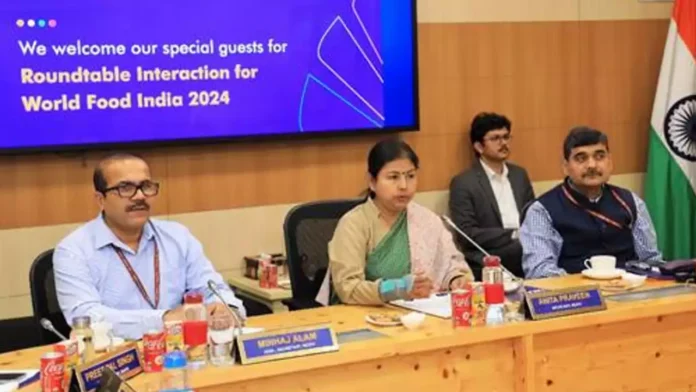
Jason Fremstad, Walmart’s senior vice president, supplier development and sourcing, said, “What we are aiming to do this week is to continue finding new suppliers to source in categories- home, apparels, foods, health and wellness, toys… this week is focused on expanding those opportunities and finding new suppliers that we can export in an effort to achieve the goal that we have set out for sourcing $10 billion by the end of 2027.”

The retailer, boasting 2.1 million associates worldwide, describes itself as a “people-led, tech-powered, omni-channel” entity, emphasizing its commitment to saving customers’ money and enhancing their quality of life. The summit aimed to facilitate collaboration between buyers and suppliers, with the goal of expediting exports nationwide.

“Our focus is to recruit and train new suppliers to fulfil our purchase orders around the world. These orders often lead to the creation of new jobs. It also allows our suppliers to invest back in their local communities,” Albright said.

Doug McMillion, CEO of Walmart in a joint video with Walmart international president and CEO, Kathryn McLay, said, “Other than the US, India is the only market where we have set a sourcing objective. And that is because we see so much opportunity.”

Continue Exploring: Govt pushes for Indian toy sector expansion with Snapdeal, Walmart collaborations

Walmart also aimed to explore potential solutions for supply chain challenges by partnering with innovative companies and startups.

Albright said, “Some of the challenges could range from circularity- how do we continue to find ways to be more sustainable inside of our product. Other challenges might be- how we might use Gen-AI or AI to continue to forecast better and get better data to our suppliers. So, there’s a range of problems that I think the entire industry is trying to solve. And we’re trying to find those right entrepreneurs to learn more from and maybe can create some type of partnerships.”

Advertisement

Yotel eyes entry into Indian market, CEO Hubert Viriot confirms advanced talks for maiden hotel project

0
Yotel
CEO Hubert Viriot

London-based hotel management chain Yotel is in advanced discussions and evaluating opportunities to sign its maiden hotel project in India this year, according to its chief executive Hubert Viriot.

During an interview, he expressed, “The population density, the growth in domestic and international travel are factors that are conducive for us to be successful in India. Apart from looking at specific projects, we are also in advanced discussions with a number of groups for potential partnerships here. I am quite confident that we should succeed this year, and that we should be able to announce our first partnership here this year.”

Yotel operates hotels in prime locations including airports and city centers in various markets such as Singapore, London, New York, Istanbul, San Francisco, Washington DC, and Paris. Supported by the Al-Bahar Group and Starwood Capital Group, it collaborates with private equity funds, pension funds, and real estate developers to construct hotels designed for ‘Generation Go,’ targeting the needs of young professionals on the move.

Among its prominent corporate clients are FIFA, Adidas, IBM, Amazon, and Google. The company’s portfolio comprises three brands: Yotel, situated in city centers and urban locales; YotelPad, catering to extended stays; and YotelAir, designed for airports and transit hubs.

“We are doing well. We have a lot of institutional investors investing in Yotels. We have one million loyal customers and we have a competitive advantage in the sense that we know how to operate hotels around the airports very well,” said Viriot.

Continue Exploring: India’s hospitality industry toasts to 2024 with high hopes and record-breaking revenue growth

“So, we are evaluating if we could potentially be around the Delhi airport, for instance. We could also consider super high density markets such as Mumbai, as our hotel concept allows us to create value in such markets because of its efficiency in optimising real estate and from an operating point of view,” he said.

At present, Yotel operates 23 hotels worldwide, with an additional 13 hotels under construction.

“Our first airport hotel came up in London in 2008 and our first city hotel opened in New York in 2011. We will open hotels in Thailand and Japan this year, besides expanding into Malaysia and Indonesia next year,” said Viriot.

Viriot stated that the chain began with an ambitious vision, recognizing that the traditional paradigm of hospitality did not align with the needs of today’s or tomorrow’s consumer.

“Our target consumers are young and nomadic who are travelling for work as well as leisure. Our consumers are looking for value. So they could be customers that fly with IndiGo and want a fine experience at the right price,” he said. “They could probably be customers who say we want the same equivalent in a hotel with a great location, great room and good service but without the luxury price.”

Yotel’s rooms are efficient and smaller in size, but the fitouts, the design, the shower experience or the beds are all of high standard, he said, adding, “We would like to think of ourselves as operating in the affordable luxury segment.”

Viriot mentioned that to compensate for the smaller rooms, Yotel offers lounges where customers can work, play, or dine. “Basics are important. Customers want to stay healthy so we also provide a fitness centre. For our young customers, we want to make the entire experience very simple and flexible. So from the very beginning we embraced digitisation, and from booking and getting their key to communicating with the hotel, and from our marketing to CRM (customer relationship management), everything is digital,” he said.

Continue Exploring: Oyo Hotels in advanced talks with Khazanah Nasional Berhad for $400 Million funding boost

Viriot said the way people travel has changed a lot. “In the old days, people would expect that because you pay a lot, you should have a big room, or you should have people waiting for you when you arrive at the hotel who can carry your bag. But that’s changing in other markets and in India,” he said.

“You have a very young generation of consumers in India, who are extremely well informed, active on social media and they are changing the same way young Americans or the young Chinese are changing. Some traditional consumers may not like it, and that’s fine. We are talking to this huge generation of consumers who are looking for flexibility, transparency and the right value at a good price,” he added.

Advertisement

India’s beauty market booms: L’Oreal and Shiseido set sights on rapid expansion amid growing consumer demand

0
L'Oreal
L'Oreal

L’Oreal SA and Shiseido, two global giants in the cosmetics industry, have said that India is rapidly emerging as a cornerstone of their growth trajectory. This trend is fueled by India’s expanding population and growing penchant for beauty products.

L’Oreal noted that India ranks as its fifth-largest market within the professional products division, which primarily caters to salon-based sales.

“In India, with 50,000 salons, we are covering 400 cities out of 800. We still have a strong untapped potential across the country. We firmly believe that India will soon become our third country worldwide,” Omar Hajeri, president, professional products division at L’Oreal, told investors.

“India and Indonesia alone will see an incremental 250 million people join the global middle class by 2030. And they are very quickly becoming very beauty-savvy, looking for increasingly sophisticated beauty routines. And we have what it takes to continue to outperform. Our well-established local footprint enables us to better understand and cater to consumers’ needs,” he added.

Continue Exploring: SHISEIDO appoints Bollywood star Tamannaah Bhatia as its first brand ambassador for skincare range in India

According to a report by Redseer Strategy Consultants and Peak XV, India’s beauty and personal care market is set to undergo the fastest expansion among comparable countries in terms of size. The compounded growth rate is projected to reach 10% between 2022 and 2027, reaching $30 billion. In contrast, China’s market is expected to grow by 7%, and Indonesia’s by 8% during the same period. Despite India’s significant growth potential, per capita spending in this category remains lower at $14, compared to $38 in China and a fraction of the $313 seen in the US.

In India, the beauty and personal care market is experiencing growth at twice the rate of fast-moving consumer goods-led brands, highlighting the importance of specialized players focused on beauty and personal care. Recently, Shoppers Stop joined forces with Japanese company Shiseido to introduce its premium beauty brand Nars Cosmetics to the Indian market.

“We have entered into India with the Nars makeup products and it is showing much better sales than we had expected. And we expect that Nars cosmetics in India will be another growth driver. So we would like to take a bold challenge in Asia-Pacific regions as well,” chief financial officer Takayuki Yokota said during an earnings call.

Even for Shoppers Stop, the beauty segment reached its highest quarterly sales ever last quarter, representing 18% of its total sales.

Continue Exploring: Shoppers Stop betting big on beauty segment, targets to open 100 stores

According to the report, specialized beauty brands like L’Oreal, Mamaearth, Nivea, and Nykaa currently hold a 33% market share, a figure projected to rise to 42% over the next five years. Meanwhile, established companies like Hindustan Unilever Limited (HUL) and Procter & Gamble, which currently dominate two-thirds of the market, are expected to experience a decline in their share by 9 percentage points, down to 58% by 2027.

Last month, HUL’s Managing Director, Rohit Jawa, emphasized that prioritizing the development of beauty and digital capabilities is crucial and holds disproportionate significance for the company’s future in the country.

Continue Exploring: Hindustan Unilever prioritizes beauty and digital capabilities in strategic restructuring for future growth

Advertisement

Coca-Cola reports robust growth in India in 2023, plans increased investments for expansion

0
Coca-Cola
Coca-Cola

Coca-Cola, a leading player in the beverage industry, announced on Tuesday that its business in India experienced strong growth throughout 2023. Additionally, the company disclosed plans to boost investments aimed at expanding capacity to meet the demands of the Indian market.

The beverage giant said that growth in developing and emerging markets was led by India and Brazil for the December quarter and for the full year of 2023.

Speaking at the investor call, the company’s management said, “A significant portion of our expected capital investment increase is to build capacity for Fairlife and for our India business, both of which experienced robust growth in 2023.”

In its earnings release, the company noted that, “Consolidated unit volume grew 2 per cent for the quarter. Developing and emerging markets grew 4 per cent , driven by growth in Brazil and India. For the full year, unit case volume grew 2 per cent. Developing and emerging markets grew 2 per cent, driven by growth in India and Brazil.”

Continue Exploring: Coca-Cola bottler SLMG Beverages set to invest INR 100 Crore in sustainable solutions this year

Regarding performance in the Asia-Pacific region, the company noted a 2% increase in unit case volume for the December quarter, driven primarily by growth in India and China.

The company also noted an increase in its market share within the beverage segment, particularly in regions like India, throughout the year 2023.

In January, Hindustan Coca-Cola Beverages, the bottling arm of the company, transferred its bottling operations in Rajasthan, Bihar, the North-East, and certain areas of West Bengal to its established independent bottlers.

Continue Exploring: Coca-Cola undertakes major refranchising move in India, shifting bottling operations to independent partners

India ranks as the fifth largest market globally for the beverage giant. Currently, Coca-Cola operates with 11 bottling partners in India, which includes the company-owned HCCB.

Advertisement

Sula Vineyards reports 9% profit surge in Q3, driven by premium label demand and wine tourism growth

0
Sula Vineyards
Sula Vineyards

Sula Vineyards, the largest wine producer in India, announced a profit surge of over 9% in the third quarter, attributed to growing demand for its premium labels and wine tourism ventures.

The Mumbai-based firm stated that its combined net profit increased to 429.8 million rupees ($5.2 million) from 392.8 million rupees in the previous year.

The wine segment, encompassing prestigious brands like Dindori and Rasa, witnessed a nearly 4% rise in revenue for the quarter. This segment constitutes Sula’s largest share, contributing 89% to the total revenue.

The wine tourism segment, though smaller, saw a notable 16% rise in revenue as more people visited the company’s vineyards in Nashik and Bengaluru, especially during the Christmas weekend.

Continue Exploring: Pune-based Ronin Wines raises $675k in funding to drive growth of Moonshine Honey Project

The company reported a 4% increase in total revenue, reaching 2.18 billion rupees.

The company’s Earnings Before Interest, Taxes, Depreciation, and Amortization (EBITDA) margins grew to 33.7%, up from 31% compared to the previous year.

Furthermore, Sula announced an interim dividend of 4 rupees per share for the fiscal year 2024.

Sula’s shares, which saw a more than 7% increase in the December quarter, concluded trading with a nearly 5% gain prior to the announcement of the results.

Continue Exploring: Diageo and AB InBev gear up to navigate liquor sales disruptions during general elections

Advertisement

Skincare brand Conscious Chemist secures INR 1 Crore debt capital from Recur Club to fuel growth and expansion

0
Conscious Chemist
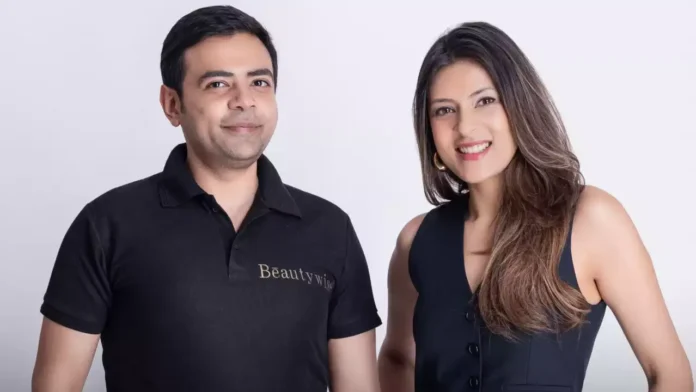
Robin Gupta, CEO & Prakher Mathur, COO & Co-Founders, Conscious Chemist

Shark Tank featured skincare brand Conscious Chemist has secured INR 1 crore in debt capital from Recur Club, as announced in a press release.

The company plans to utilize the funds to enhance its marketing initiatives, broaden its product categories, and establish offline retail outlets.

Founded in 2019 by Robin Gupta and Prakher Mathur, the brand operates in the B2C sector, offering a range of skincare products. Its catalog includes cleansers, moisturizers, sunscreens, face masks, serums, and more.

Continue Exploring: Beauty brand Conscious Chemist secures Bridge round funding from Inflection Point Ventures to accelerate growth and diversification

Robin Gupta, CEO and Co-Founder, Conscious Chemist, said, “Capital from Recur Club will enable us to execute our business plan, achieving over 50% quarter-on-quarter (Q-o-Q) growth with healthy EBITDA levels, all while retaining equity.”

The Gurugram-based company sells over 25,000 units monthly and boasts a customer base exceeding 400,000 on its platform. It is available nationwide through retail chains like Health & Glow and Shoppers Stop. Conscious Chemist also intends to bolster its online market penetration to expand its digital footprint while optimizing retail outlets.

Other significant contenders in this domain include Mamaearth, SUGAR Cosmetics, mCaffeine, Color Bar, Kay Beauty, and several others.

Continue Exploring: Mamaearth parent Honasa Consumer’s shares rally 10% on strong Q3 earnings

Advertisement

Luxury brand Michael Kors expands presence with first store in Gujarat

0
Michael Kors
Michael Kors

New York-based fashion and apparel brand Michael Kors has unveiled its first store in Gujarat, as announced in a social media post by an industry professional. The new store is situated within the Palladium Ahemadabad Mall, managed by Phoenix Mills Ltd.

“Hello #Ahmedabad … Delighted to announce the launch of Gujarat’s 1st store of American Luxury brand Michael Kors at city’s newest shopping destination – #PalladiumAhmedabad,” wrote Monil Gheewala, AVP – Leasing at The Phoenix Mills Ltd in a LinkedIn post.

The brand currently operates three stores in Mumbai, two in Delhi, and one each in Bengaluru, Chennai, and Kolkata. The latest opening brings the total number of stores to nine in India.

Continue Exploring: French fashion brand Maison Margiela marks its Indian debut in collaboration with Shoppers Stop and L’Oréal International Distribution

Established in 1981 by designer Michael Kors, the brand offers a variety of products under the Michael Kors Collection, MICHAEL Michael Kors, and Michael Kors Men’s labels. These include accessories, ready-to-wear garments, footwear, wearable technology, watches, jewellery, and a comprehensive line of fragrance products.

In addition to digital flagships across North America, Europe, and Asia, the brand has stores worldwide.

Continue Exploring: Smart clothing brand TURMS makes waves on Shark Tank India Season 3, secures INR 1.2 Crore investment for innovative apparel line

Advertisement

Masaba Gupta’s LoveChild brand makes offline debut with Mumbai kiosk launch

0
LoveChild
LoveChild

LoveChild, the beauty brand by Indian fashion designer and actress Masaba Gupta, has entered offline retailing with the launch of its first brand kiosk in Mumbai, as announced by an industry official on social media. This new outlet is situated at Nexus Seawoods Mall, Navi Mumbai, Maharashtra.

“Delighted to share that after a year of incredible online success, LoveChild by Masaba is making its offline debut with the opening of our first brand kiosk at Nexus Seawoods, Mumbai,” said Karishma Bangera, zonal head – West and Central India – business development for Aditya Birla Group’s ethnic wear brand Tasva, in a LinkedIn post.

“We’re thrilled to embark on this journey, offering a diverse range of high-performing products for people of all ages, skin tones, and cultures. LoveChild is all about celebrating the unique expression of self-love in each of us,” added Bangera.

Continue Exploring: Portuguese brand Parfois enters Indian market with over 250 fashion products via Myntra

In August 2022, House of Masaba, the fashion and lifestyle brand by Gupta, introduced its own makeup line called Lovechild. This line featured a variety of vibrant shades of lipsticks, lip glosses, and nail polishes, all available through its dedicated e-commerce store.

Lovechild is currently owned by the Aditya Birla Group as part of the House of Masaba franchise.

Since January 2022, House of Masaba has been engaged in a strategic partnership with The Aditya Birla Fashion and Retail Ltd (ABFRL), which holds a 51% stake in House of Masaba. The partnership was aimed at facilitating ABFRL’s venture into the beauty and personal care market in India.

The House of Masaba brand was introduced in 2009. It currently operates a total of 15 stores across India, with four in Delhi, four in Mumbai, two in Bengaluru, and one each in Ahmedabad, Hyderabad, Gurugram, Kolkata, and Ludhiana.

Continue Exploring: Fashion startup Absolute Brands raises $2.5M in seed funding, plans to open 500 stores in India

Advertisement

Kalyan Jewellers unveils first Ayodhya showroom, inaugurated by Amitabh Bachchan

0
Kalyan Jewellers
Kalyan Jewellers' Ayodhya showroom inauguration ceremony

Kalyan Jewellers has announced the opening of its first showroom in Ayodhya, with the inauguration ceremony conducted by the brand’s ambassador, Amitabh Bachchan.

The launch marked the company’s 250th showroom globally. T S Kalyanaraman, Managing Director of Kalyan Jewellers, alongside Executive Directors Rajesh Kalyanaraman and Ramesh Kalyanaraman, attended the inauguration. The brand-new showroom offers an extensive array of exquisite jewellery designs.

Continue Exploring: Kalyan Jewellers unveils ambitious expansion plan, targets 250th showroom in Ayodhya

Amitabh Bachchan said, “I am thrilled and honoured to be part of the grand celebrations marking the launch of Kalyan Jewellers’ 250th showroom globally. With a rich legacy spanning over three decades, Kalyan Jewellers has consistently redefined India’s jewellery industry through pioneering initiatives.”

The Kalyanaraman family presented a polki neck-piece adorned with uncut rubies, pearls, and emerald stones as a token of reverence at the Ram Mandir. Ramesh Kalyanaraman highlighted that, considering the prominence of Ayodhya, the company has introduced curated designs as part of its temple jewellery collection – Nimah.

Kalyan Jewellers has announced a special promotion featuring zero per cent making charges for half the purchase value, applicable on a minimum purchase of INR 1 lakh. Furthermore, customers will benefit from the Kalyan Special Gold Board Rate, the most competitive in the market and consistent across all company showrooms. These offers are available for a limited time only. Additionally, the company announced the introduction of a pre-booking facility for patrons planning to purchase jewellery for the upcoming occasion of Akshaya Tritiya.

Continue Exploring: Warburg Pincus offloads 8.4% stake in Kalyan Jewellers for INR 2,937 Crore

Advertisement

The Burger Company launches first express outlet in New Delhi, sets sights on opening 50 more across Mumbai and NCR

0
The Burger Company
Neelam Singh, Founder, The Burger Company

The Burger Company, a rapidly expanding burger brand, has announced the opening of its first express outlet in the vibrant center of New Delhi.

This strategic move is intended to cater to the dynamic and fast-paced lifestyle of today’s generation.

Establishing over 100 locations throughout India and Nepal, The Burger Company has firmly established its presence in the market.

Continue Exploring: The Burger Company makes grand entrance into Nepal, aiming for 10 outlets in next 2 years

The brand proudly upholds female leadership, setting a unique and inspiring standard within the culinary sphere.

Neelam Singh, CEO, The Burger Company, said, “We aim to reach out to a broader audience, particularly the youth, by introducing our express concept. The idea is to offer on-the-go quality burgers, allowing our customers to savor the delightful taste of The Burger Company even amidst their busy and high-travel schedules.”

The Burger Company Express prioritizes rapid service and convenience, all while maintaining the exceptional flavor for which the brand is celebrated.

Singh expanded on the matter, explaining, “Our express outlet showcases a thoughtfully curated menu comprising TBC’s beloved items, enabling customers to swiftly make their choices. We’ve streamlined the ordering process to enhance customer convenience, eliminating the need to wait in line. In fact, customers can effortlessly place their orders with just a tap on their mobile devices.”

Looking ahead, the brand has ambitions for expansion, targeting the opening of an extra 50 express outlets in the National Capital Region (NCR) and Mumbai within the current calendar year.

Currently, the company operates in more than 50 cities with 100 outlets nationwide and plans to expand this figure by adding an impressive 75+ TBC stores in the coming year, solidifying its position as the preferred choice for burger enthusiasts across the subcontinent.

Advertisement