Chumbak, a Bengaluru-based home decor brand, has opened a new store in Gurugram, as announced by the company on Monday.
The latest Chumbak outlet is situated at Good Earth City Centre Mall on Vikas Marg, Pocket H, Nirvana Country, Sector 50, Gurugram, Fatehpur, Haryana.
“We are excited to expand in Gurgaon to cater to our growing Chumbak community in the city. Like every Chumbak store, the store will bring to its shoppers all things that make them smile from souvenirs, homeware, and accessories to stuff they would love to gift,” said Shubhra Chadda, co-founder & director of product & design, Chumbak.
The brand is offering shoppers an exclusive launch offer of 20% off for one month at the new store in Gurgaon. Additionally, the store will showcase art-deco pieces and souvenirs.
According to its official website, the company operates in numerous cities including Ahmedabad, Bhopal, Bengaluru, Bhubaneshwar, Calicut, Chandigarh, Chennai, Delhi, Gurugram, Guwahati, Hyderabad, Indore, Kochi, Kolkata, Lucknow, Mumbai, Nashik, Noida, and Pune, boasting a network of over 30 stores.
In January 2023, Goat Brands acquired Chumbak. Goat Brands Labs possesses a range of D2C brands.
The brand provides a vibrant and distinctive array of India-themed collectibles, décor items, art deco showpieces, dinnerware, kitchen accessories, thoughtfully crafted furnishings, and various other designer lifestyle products. Each item is meticulously designed with unwavering attention to detail and unique aesthetics.
According to information obtained from its official LinkedIn profile, the company recently secured $10.1 million in its latest Series D funding round.
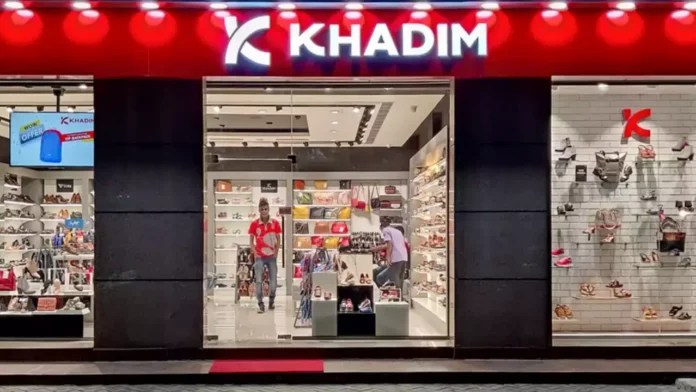
Khadim India Ltd, a leading footwear company, is expecting to complete the demerger of its distribution business by September this year, as stated by an official on Monday. The company is hopeful that its margins will expand by 100-200 basis points by FY’26.
This strategic move is poised to unlock substantial value for its core retail business comprising approximately 848 stores under Khadim’s brand, which commands nearly 67% of the total revenue, he said.
Khadim’s Chief Financial Officer, Indrajit Chaudhuri, stated, “We are already in the process of demerger. Now, it is pending before the stock exchanges and then it will be placed before NCLT for its approval. We expect that the process will be completed by September. The demerger will be effected after the approvals are in place.”
In an effort to enhance market focus and operational efficiency, KIL had previously announced its decision to separate its distribution business and manufacturing activities into KSR Footwear Ltd (KFL).
Chaudhuri projected that post-demerger, Khadim India‘s EBITDA margin would witness a substantial improvement, possibly by 100-200 basis points (bps) in its first full year of operation in FY’25-26.
“Now the EBITDA margin in retail is 17% and after demerger, we will be able to put greater focus, which will be reflected in the improvement of margins. We expect the retail business, which is currently at INR 500 crore, to surpass INR 600 crore by 2025-26,” he said.
Chaudhuri emphasised that the priorities of both businesses are distinct and cannot be adequately addressed within a single entity.
The distribution business is facing pressure, following the GST hike from 5% to 12% on footwear below MRP of INR 1,000 since January 2022.
“Owing to the GST structure change, the distribution business had become a drag on KIL, and its (retail) true value was not reflecting,” the official said.
This business, encompassing a vast network of 732 distributors, predominantly serves lower and middle-income consumers across India’s multi-brand outlets.
Accounting for 33% of the total turnover, it specialises in providing branded and affordable footwear across Tier I to Tier III cities and 96% of its products are manufactured in-house.
The retail business relies on Khadim’s outsourcing division to meet the dynamic demands of the market.
Chaudhuri acknowledged that demand remains subdued, particularly in rural areas, attributed to premiumisation trends.
However, he remains optimistic about an improvement in the demand scenario in the next one to two quarters.
Fausto, the D2C online footwear brand, announced on Monday its entry into the UAE market through e-commerce giant Amazon with the introduction of a plus-size collection tailored to the preferences of UAE customers.
As part of its growth strategy in the new market, the company emphasized its dedication to men’s ethnic and formal wear.
The company stated that this strategic maneuver underscores Fausto’s dedication to global expansion and providing high-quality footwear choices to a broad spectrum of consumers worldwide.
The expansion into the UAE represents the first phase of its broader international expansion strategy, it said and added that the company has set goals to achieve 10 per cent of its total revenue by the next financial year.
Fausto’s said its decision to enter the UAE market via Amazon.ae is based on a deep understanding of the evolving online retail landscape in the region.
The UAE market exhibits a burgeoning demand for quality footwear, coupled with a growing trend towards online shopping, especially post-pandemic, it said.
Noting that the company recognises this transition as an opportunity to introduce its offerings to UAE consumers, the company said it aims to carve a distinctive niche in the UAE market with a diverse range of footwear options tailored to the specific preferences of the region.
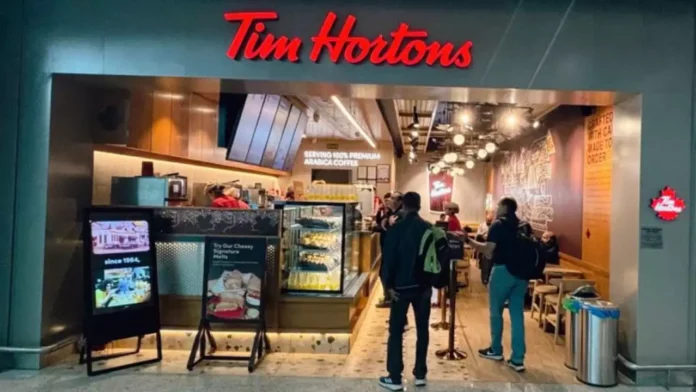
Tim Hortons, the renowned international coffee house and restaurant chain, has opened its third airport store at Terminal 1 of the Indira Gandhi International Airport in New Delhi, as per a social media post by a company official.
“We are proud and joyous to announce the opening of our 3rd airport store in India at #NewTerminal1 at NewDelhi IGIAirport and now opened 28th Stores in India,” said Davesh Mehra, North Lead – Projects, Tim Hortons India said in a LinkedIn post.
“A coffee on the go, a quick email to be shot out from our very comfortable seating space, a neatly packed sandwich, a small bite when you’re hungry but not so sure, a box of doughnuts to take to your loved ones, or simply, finding some genuine warmth and care in a hectic environment: we have it all!. So the next time you’re flying out of New Delhi, check us out,” added Mehra.
This marks the coffee chain’s 28th store in India.
In August 2022, the cafe chain made its first appearance in India by launching two outlets in the National Capital Region (NCR). Its entry into the Indian market was facilitated through an exclusive master franchise agreement with AG Café, a joint venture entity co-owned by the retail conglomerate Apparel Group and Gateway Partners, an emerging markets alternative investment manager.
Presently, the coffee retailer operates in various cities including Bengaluru, New Delhi, Chandigarh, Pune, Gurugram, Noida, Ludhiana, and Mumbai.
Established in 1964 by Canadian hockey players Tim Horton and Jim Charade, Tim Hortons is managed globally by Restaurant Brands International Inc., boasting a network of over 5,100 restaurants spanning across 15 countries.
After the discovery of misleading claims regarding the substitution of real cheese with alternatives in burgers and nuggets at a McDonald’s outlet last week, the state of Maharashtra will be inspecting outlets of all global fast-food chains for food regulation violations, as reported by Reuters citing an official source.
Following McDonald’s crackdown, Maharashtra will intensify its inspection efforts by checking for misleading promotion of non-cheese items falsely advertised as containing cheese. All McDonald’s outlets in Maharashtra will be inspected by the state’s Food and Drug Administration (FDA) as part of this heightened oversight initiative.
“We are planning to check all outlets of McDonald’s,” Abhimanyu Kale, the FDA chief told Reuters. “We will also take action on other well-known and frequently visited global fast-food chain outlets,” he added, but declined to identify the brands being targeted.
Saurabh Kalra, Managing Director of Westlife Development, the company operating McDonald’s in western and southern India, expressed readiness for any inspections and affirmed their commitment to maintaining the “highest standards”.
The company’s shares dropped to INR 762 when the news surfaced, but later regained ground.
The FDA had temporarily suspended the license of a McDonald’s outlet in Ahmednagar, prompting the chain to remove the term “cheese” from several items. However, the license was subsequently reinstated.
The regulator accused McDonald’s of using cheese analogs without adequate disclosure, leading consumers to believe they were consuming real cheese. The state FDA has also urged the chain to implement corrective measures across the state and potentially nationwide.
Following the crackdown, Westlife Foodworld issued a clarification last week, stating that it is actively communicating with the relevant authorities regarding this matter and awaiting their final clarification.
“We have always been adhering to stringent food standards and are fully compliant with all applicable food laws. Our commitment to transparency in our ingredients and dedication to providing delicious, high-quality meals to our customers remains unwavering,” the company said.
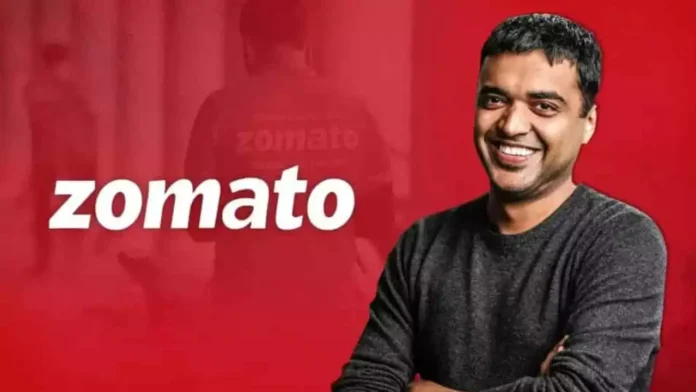
On Tuesday, Deepinder Goyal, the founder and CEO of Zomato, emphasized the importance for established businesses to support and foster startups without the aim of acquiring them.
“I think established businesses need to nurture startups…and I don’t think we have that kind of a culture yet, and larger businesses also need to start funding startups but not with an intention to own them but with an intention to help them become bigger,” Goyal said, at the curtain raiser event of the Startup Mahakumbh, which is slated to happen on March 18-20.
Adding to the comments of the Zomato chief executive, Sanjeev Bikhchandani, Vice Chairman of Info Edge India, stated that investing in startups was one of the key strategic areas for Info Edge. Notably, the Noida-based company is an investor in Zomato.
Zomato has investments in various consumer tech startups, such as the hyperlocal commerce platform Magicpin, ecommerce enablement startup Shiprocket, and the health and fitness firm Cultfit.
The central government is hosting the Startup Mahakumbh event, bringing together over 1,000 startups and a diverse array of investors, including angel investors, high-net-worth individuals, venture capitalists, and family offices.
Bikhchandani is part of the organizing committee of the Startup Mahakumbh event alongside Prashanth Prakash, a partner at Accel, Sanjay Nayar, founder and chairman of Sorin Investments, and Archana Jahagirdar, managing partner at Rukam Capital.
“Today, India is the third largest startup ecosystem in the world…and the goal, as laid by the minister, is to make it the largest startup ecosystem in the world. We are going to have startups from different states and districts in India, and also a bit of an international touch. The whole Mahakumbh has been broken into 10 verticals…from climate and D2C to B2B and SaaS,” Nayar, who is also the former CEO of KKR India, said.
Meanwhile, the government has also launched the Bharat Startup Ecosystem Registry to establish a single-platform database of startups, investors, incubators, and other stakeholders.
“Today, the Indian startup is growing on all fronts with tremendous support from enablers across the country. To match the pace of the ecosystem, we are unveiling the Bharat Startup Ecosystem Registry. We should have data-supported figures of the entire ecosystem and the aim is to unify all stakeholders under a cohesive framework for seamless coordination and facilitating networking opportunities,” said Sanjiv, joint secretary, department for promotion of industry and internal trade.
The startup plans to utilize the fresh capital to scale up its operations, primarily by expanding its supply arm, enhancing its technological infrastructure, and bolstering its supply chain through outreach to more farmers. This approach aims to ensure a robust and sustainable source of produce.
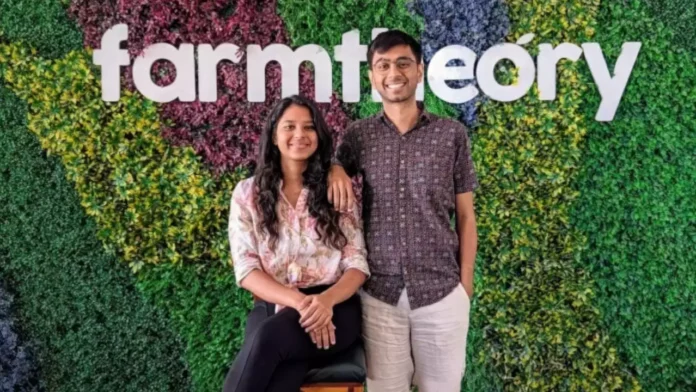
Established in 2019 by Arpit Agarwal and Sakshi Agarwal, Farmtheory aims to minimize food waste at its source, increase farm yields, and deliver quality ingredients to commercial kitchens.
Farmtheory labels the unsold produce as ‘freeform’ and procures it directly from farmers, supplying it to various buyers including cloud kitchens, catering companies, food processors, and restaurants. This produce can be utilized by buyers in the same manner as conventionally shaped produce.
The Bengaluru-based startup aims to boost farmer incomes, mitigate food loss, and combat climate change by redirecting edible produce to new markets rather than letting it go to waste.
Farmtheory asserts that it has enlisted 3000 partner farmers to date and has catered to over 1500 kitchens. Moreover, the company intends to substantially expand its network of partners and geographical reach, moving forward to extend the benefits of its innovative model to more farmer communities across the nation.
“Farmtheory embodies a vision where every connection between farmer and consumer signifies more than just a transaction — it represents a commitment to enriching lives and fostering sustainability. Through our platform, we empower farmers to share their harvests with the world, creating meaningful connections that sustain communities and promote environmental responsibility,” said Arpit Agarwal.
Sheetal Bahl, Partner at Merak Ventures, expressed that Farmtheory is not only tackling the issues of food waste, farmer income, and climate change but also envisioning innovative solutions with the capacity to revolutionize the agricultural and food industry.
According to market research, the Indian agritech startup ecosystem is projected to have a total market opportunity worth $24 billion by 2025. Analysis shows that these startups have already secured more than $2.4 billion since 2014.
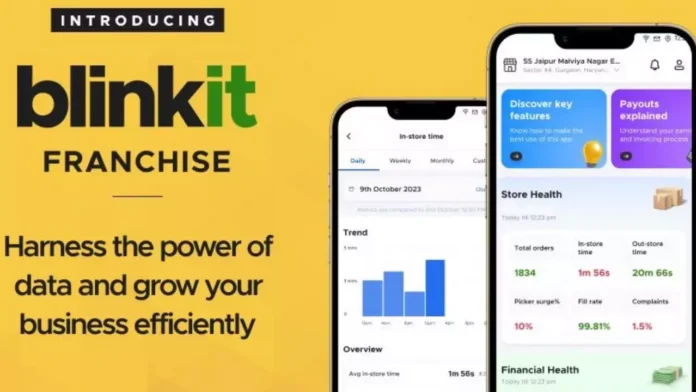
Blinkit, the quick commerce marketplace, has launched the Blinkit Franchise App aimed at assisting its franchise owners across the country, as announced by a company official on social media on Monday.
Blinkit anticipates that this initiative will foster better communication between franchise owners and their customers, enabling them to efficiently streamline business operations.
“Nothing beats the satisfaction of helping franchise owners grow their businesses and serve their community! I’m thrilled to share a brand new app we’ve built for this very purpose,” said Albinder Dhindsa, founder of Blinkit in a LinkedIn post.
“The app is a first-of-its-kind in the quick commerce space—it improves the way our franchise owners connect with their customers while enabling them to build their business more efficiently,” he added.
At present, hundreds of Blinkit franchise stores are operational across 27 cities in India, managed and operated by emerging local entrepreneurs.
The app offers real-time, weekly, and monthly insights into crucial business metrics and customer concerns, along with visibility into store team attendance and performance. Moreover, it provides a transparent system to guarantee accurate and timely payouts.
The app can be downloaded from both the Google Play Store and the Apple App Store.
Blinkit, based in Gurgaon and previously known as Grofers India, was founded in 2013. In 2022, Zomato acquired the company in an all-stock deal worth INR 4,447 crore.
Do you have Lay’s? Well, this apparently simple question could lead to surprising rewards, at unexpected moments, and sometimes from unexpected sources. Lay’s, the world’s top chip brand and official snack partner of the UEFA Champions League (UCL), has launched No Lay’s, No Game 2024, rewarding fans who are ready for game day with Lay’s throughout the tournament. Through an ambitious “Chip Cam” stunt featuring football superstars David Beckham and Thierry Henry, as well as an immersive digital experience with the Lay’s Detector, Lay’s is bringing joy to football fans worldwide who watch the beautiful game with Lay’s in hand.
“We’ve heard from football fans from all over the world and they tell us the same thing: whether watching with a group of friends or at home solo, the experience is always better when sharing a bag of Lay’s,” said Ciara Dilley, vice president of marketing, Global Foods Group at PepsiCo.
“This year, No Lay’s, No Game is giving fans even more reasons to have Lay’s in hand. For those who do, something truly remarkable might happen. And those who don’t? They may be left missing out,” she added.
This year, Lay’s embraced an adventurous approach for its campaign, enlisting Beckham and Henry to pose the question, “Do you have Lay’s?” to a crowd of 75,000 cheering fans at San Siro during one of the most anticipated matches of the UEFA Champions League season between AC Milan and PSG. Just before kick-off, Beckham discovered, and couldn’t believe, that Henry had eaten all of his Lay’s chips. To resolve it in just five minutes, the two put out a call through the Lay’s “Chip Cam” – an unexpected spin on the traditional kiss cam.
In a thrilling yet amusing quest to locate Lay’s, the Chip Cam sweeps through the crowd. Beckham and Henry observe as spectators offer various items on the jumbotron – from pizzas to empty Lay’s bags, even a couple engaged in a kiss – all eager to catch attention. Finally, much to Beckham and Henry’s delight, two fortunate fans, a father and daughter, are spotted with Lay’s and are invited to enjoy the game alongside the iconic football stars. This demonstrates that having Lay’s can unlock an extraordinary football viewing experience. This epic pursuit to discover fans with Lay’s, leading to an unparalleled viewing opportunity for the fortunate winners, serves as the highlight of this year’s No Lay’s, No Game commercial and will be broadcast throughout the UCL tournament season.
“We had a great day filming at the San Siro stadium for No Lay’s, No Game. Whenever Thierry and I get together it’s always a lot of fun – and it was fantastic being able to surprise 75,000 fans,” said Beckham.
“Last year, I teamed up with Lay’s to surprise some of football’s biggest fans by literally going to their doors to see if they had Lay’s – and if they did, I stayed and watched the match with them,” said Henry. “This year, we really upped the ante with the Lay’s Chip Cam, and it was truly an exhilarating experience being back in the stadium with David. We spent a lot of our careers playing against each other on the pitch, so there’s something special about coming together with Lay’s in a whole new way to offer a once in a lifetime experience for fans.”
The collaboration for the campaign involved Slap Global and was directed by the award-winning commercial and television director, Andrew Lane.
While not everyone can attend the San Siro, Lay’s is bringing No Lay’s No Game to your home. In collaboration with Meta and Simone, Lay’s has introduced the Lay’s Detector, a distinctive digital experience offering football fans in select countries around the globe the opportunity to win exciting prizes throughout the UCL tournament. How does it work? Fans need to demonstrate they have Lay’s with them while watching a match. To utilize the Lay’s Detector, simply scan the QR code found on Lay’s social channels or the No Lay’s, No Game commercial to activate the effect. Subsequently, fans will be prompted to confirm their Lay’s possession – and if confirmed, they’ll be eligible to win exclusive prizes, content, and even tickets to the UCL Men’s Finals at Wembley Stadium in London. And if they don’t have Lay’s handy? Not to worry, fans will still have additional opportunities to showcase their Lay’s bag for a chance to win epic prizes throughout the remainder of the season.
With the exponential surge of food delivery apps like Zomato and Swiggy, quick service restaurant operators are grappling with significant challenges, as outlined in a report by French brokerage BNP Paribas. The report emphasizes that both revenue and margins are under severe strain, with the journey to recovery proving longer than initially estimated. It points out that the increasing popularity of food aggregators has adversely impacted dine-in sales for quick service restaurants (QSRs) and has also fragmented delivery sales.
Additionally, as more restaurants collaborate with food delivery platforms, consumers now enjoy a broader array of options, resulting in fragmented sales. This factor is likely contributing to the decline in average daily sales within the quick service restaurant (QSR) industry, alongside the overall weakness in demand due to heightened inflation, as emphasized in the report.
Pizza, the most delivery-friendly option, is facing intense competition as more cuisine options have become available to consumers.
“While inflation may also be hurting demand, there are other factors at play, and we think the road to recovery could be longer than what the market estimates,” the report said.
The report noted that Zomato and Swiggy have experienced over a threefold increase in restaurant onboarding, soaring from 278,000 in FY2020-21 to surpassing 700,000 in FY2022-23.
Zomato’s average monthly active restaurant partners jumped from 61,000 in FY19 to 2,54,000 as of third quarter FY24, while Swiggy had 2,72,000 active restaurants as of FY23, French brokerage BNP Paribas said in a report.
The report highlighted that the overall scale of food delivery companies has undergone substantial growth, enhancing customer reach, particularly benefiting smaller restaurants. It further noted that the increasing popularity of food aggregators has adversely affected dine-in sales and led to the fragmentation of delivery sales.
In light of this context, concerning Quick Service Restaurants (QSRs), the report stated that contrary to expectations of a potential recovery in the third quarter of the current fiscal year, the top-line growth was notably weaker than anticipated by consensus.
In the third quarter of the current fiscal year, industry revenue growth declined to 7 percent year-on-year, down from 20 percent in the third quarter of FY23. This drop occurred despite a 15 percent increase in store count year-on-year; however, average daily sales decreased. Although gross margins expanded due to lower raw material prices, operating margins decreased for most Quick Service Restaurant (QSR) firms due to increased employee and store-related costs, according to the report.
We use cookies to ensure that we give you the best experience on our website. If you continue to use this site we will assume that you are happy with it.