According to the report by market intelligence firm Redseer, the overall food service market in India is projected to surpass $100 billion by 2028, with a compound annual growth rate (CAGR) of 8-12 percent.
Driven by evolving consumer behavior, the Indian organized food services market is anticipated to double from $30 billion to $60 billion by 2028.
The report highlights that the growth of the organized sector is anticipated to surpass that of the unorganized segment by threefold.
For metro and tier 1 consumers, dining out has transitioned from a luxury to a habitual practice. This shift is evident in the increased frequency of outside eating, which has risen by 30 percent among students and young adults, and 20 percent among mid-lifers, compared to 2018.
“The Indian food market will need a lot more of mid-sized brands than fewer mega brands owing to the diversity it brings,” said Rohan Agarwal, Partner at Redseer.
In this scenario, House of Brands (HoBs) has surfaced as the most efficient strategy for expanding food brands in the country.
The sharing of resources within the HoB strategy also facilitates increased kitchen utilisation and enables better operating leverage such as lower cost of goods sold (COGS), further solidifying their competitive advantage in the market, the report noted.
The demand for spirits across various segments slowed to 4% in the previous calendar year, marking a significant decline from the 12% growth seen in 2022. This slowdown was attributed to factors such as increased taxes, a high comparative base, and a reduction in consumption among drinkers. According to industry executives referencing the most recent data from the excise department, whiskey, which constitutes two-thirds of the segment, experienced a volume growth of 5.3%, followed by brandy at 2.7% and rum at 1.1%. Vodka and gin showed notable growth rates of 18.8% and 15.3%, respectively, from a smaller initial base.
“The demand environment has remained subdued – people are still experimenting,” stated Hina Nagarajan, Managing Director of United Spirits, during a recent investor call.
“They are drinking more out of home and out-of-home prices are higher than sort of buying from off-trade and drinking at home. So, there is a little bit of impact on volume there.”
United Spirits expects the environment to persist over the next few quarters. “I think the real pressure on the wallet is on the lower side, where we do see upgrades are not happening from country liquor to popular or popular to the lower end of prestige,” she had said.
In the period from January to December last year, the nation’s spirits market experienced an increase in sales volume, reaching 409 million cases, up from 392 million cases in 2022. Experts noted that the overall spirits industry, which had previously seen growth rates of 12-15% in the post-Covid era, has now stabilized. Nevertheless, premiumization remains a driving force across various categories, contributing to value growth despite volume pressures. Notably, sales of scotch have surpassed the annual milestone of 9 million cases and are projected to double by 2024 if current trends persist.
The liquor industry echoed the consumer discretionary segment, experiencing a slowdown in sales similar to products like apparel, footwear, and beauty in India during 2023, following two years of pandemic-driven growth. Additionally, the spirits segment had encountered a significant increase in the prices of raw materials such as extra neutral alcohol, glass, and packaging materials a year earlier, but these pressures have since eased. Nevertheless, grain prices have surged in the past two quarters, putting pressure on margins.
Furthermore, Karnataka, the largest consumer of spirits, implemented a 20% increase in additional excise duty (AED) on Indian-made liquor (IML) from August, which had an impact on volume.
In states that account for over 65% of the total market share, the state government holds sway over retail, wholesale, and pricing, thus complicating companies’ ability to promptly raise prices.
“The states which have given the price increases are weighted average bases in the range of 180-basis points to 185-basis point,” Radico Khaitan chief financial officer Dilip Banthiya told investors recently, implying that these didn’t cover the rise in input costs. “The states include Telangana, Haryana, Assam, Maharashtra, Rajasthan, Delhi, Karnataka, Uttar Pradesh – all these big states.”
While India harbors a population of nearly 1.4 billion, the drinking populace is estimated at 300 million, with nearly half of them capable of affording only cheap unbranded liquor. Within this demographic, approximately 150 million individuals belong to the rapidly growing middle-class segment, capable of affording premium and above options. To earn higher margins, most companies, including homegrown players, have launched products in the pricier segments. For instance, Allied Blenders introduced several brands, including Iconiq White Whisky, Srishti Premium Whisky, and X&O Premium World grain whisky, while Tilaknagar Industries launched premium flavored brandy Mansion House Flandy and Chambers.
In December, Pernod Ricard, renowned for brands such as Chivas Regal, Glenlivet, and Absolut, mentioned that India is set to overtake the United States as its largest global market, though no specific timeframe was provided.
“The macroeconomics in India is extremely solid,” Pernod Ricard India managing director Jean Touboul said. “We are growing faster than many other affiliates in the group and hopefully because we do a good job, but I don’t want to undermine my colleagues’ jobs in other countries. It’s a market where the gross potential is much higher.”
Continuing its upward momentum following the strong Q3 FY24 earnings, shares of the foodtech giant Zomato surged by as much as 4.59% during Thursday’s intraday trading session, reaching a fresh 52-week high at INR 159.20 on the BSE.
Zomato’s stock has been on the rise since the start of the week. On Monday, its shares experienced a significant surge of 6.2% during intraday trading, reaching a new 52-week high at INR 158.7 on the BSE.
Over the past one year, Zomato has seen its shares rally over 200%, with the stocks valued at around INR 50 at the same time last year.
At 11:51 AM IST on Thursday, Zomato’s stocks were being traded at INR 157.45.
Last week, the company marked its third consecutive profitable quarter. Its consolidated profit after tax (PAT) surged nearly fourfold to INR 138 Cr, driven by robust growth in its quick commerce business, Blinkit.
During Q3, Zomato’s food delivery segment witnessed a 6.3% sequential rise in gross order value (GOV) to INR 8,486 Cr. Conversely, Blinkit saw a notable 28% quarter-on-quarter (QoQ) surge in GOV, reaching INR 3,542 Cr over the same period.
Although food delivery and, more recently, quick commerce have been Zomato’s main areas of focus for several years, another vertical that the company has been steadily nurturing for nearly five years is Hyperpure. Zomato aims to boost the growth of Hyperpure by venturing into food processing and supplying semi-finished perishables.
In Q3 FY24 (as of December 2023), Zomato’s Hyperpure vertical achieved more than double the revenue growth compared to the previous year, reaching INR 859 Cr.
Meanwhile, according to reports, a Delhi court had summoned Zomato in a civil suit seeking a restraining order against the foodtech giant for allegedly continuing to allow users to order “hot and authentic food” from “iconic restaurants” across the national capital.
Dr. Dre and Snoop Dogg have teamed up to introduce a fresh line of alcoholic beverages named Gin & Juice.
“The beverage selection honors the 1994 track, ‘Gin and Juice’, from Snoop Dogg’s first album ‘Doggystyle’, which was produced by Dr. Dre. These pre-mixed cocktails come in four distinct flavors – Citrus, Melon, Passionfruit, and Apricot – and are now hitting shelves in stores nationwide.”
The Gin & Juice range marks the debut product from the hip-hop duo’s freshly established premium spirits company, with further announcements anticipated down the road.
“Together, we always try to create magic, we’re having fun being creative, and everything about this product is really us,” Dr. Dre said in a press statement.
A lot of times people have been in a relationship for thirty years and can’t talk to each other, can’t hang out, so it’s just fun to be in a partnership with people that you actually love,” Snoop added.
In addition to their entrepreneurial pursuits, Dr. Dre and Snoop Dogg have teamed up on a plethora of tracks, such as ‘Still D.R.E.’ from 1999, ‘Nuthin’ but a ‘G’ Thang’ in 1992, and ‘Kush’ from 2010, among numerous others.
The rapper duo revealed plans for a sequel album to ‘Doggystyle’ titled ‘Missionary.’ Despite the anticipated release in November 2022, the project did not materialize. ‘Missionary’ is rumored to feature Dr. Dre as a producer, marking the pair’s first collaboration in nearly three decades.
“I’ve been working on a record with Dr. Dre for the past eight months,” Snoop Dogg said of the project earlier this month. “We’re about ready to drop a single in a couple weeks, so that’s what I’ve been cooking up.”
Gin & Juice marks Snoop Dogg’s latest foray into the culinary world, joining his array of offerings under the Broadus Foods label, which he co-owns with Master P. Recently, the rappers initiated legal action against Walmart, alleging that the retail behemoth undermined their cereal brand, Snoop Cereals, by purposefully obscuring it on store shelves.
The UK division of The Body Shop, the esteemed cosmetics brand with nearly 50 years of history in ethical hair and skincare products, has filed for bankruptcy, administrators announced on Tuesday, placing thousands of jobs at risk.
The retailer has enlisted experts from FRP Advisory to manage administration – a UK procedure involving financial experts brought in to save aspects of a company.
“The directors of The Body Shop International Limited have appointed Tony Wright, Geoff Rowley, and Alastair Massey of business advisory firm FRP as joint administrators of the company, which operates The Body Shop’s UK business,” said an FRP statement.
“Taking this approach provides the stability, flexibility and security to find the best means of securing the future of The Body Shop and revitalising this iconic British brand.”
Administrators will provide updates to creditors and employees as appropriate.
In November, the German private equity firm Aurelius acquired The Body Shop. However, the retailer encountered difficulties during the key Christmas trading period amidst a challenging economic climate.
Established in 1976 by Anita Roddick, The Body Shop has evolved into a cornerstone of the British high street. However, since Roddick’s sale to the French cosmetics giant L’Oreal in 2006, it has changed hands multiple times.
The Body Shop has about 200 shops in the UK, or around seven percent of its worldwide total of some 3,000 stores in more than 70 countries.
The company has a direct workforce of approximately 10,000 employees, with an additional 12,000 individuals employed through franchise arrangements.
Since taking over, Aurelius had already sold The Body Shop business in most of mainland Europe and parts of Asia to an unnamed buyer.
“The Body Shop has faced an extended period of financial challenges under past owners, coinciding with a difficult trading environment for the wider retail sector,” administrators added in a statement.
“Having taken swift action in the last month, including closing down The Body Shop At Home and selling its business across most of Europe and in parts of Asia, focusing on the UK business is the next important step in The Body Shop’s restructuring.”
Roddick, who passed away in 2007 due to a brain hemorrhage, had swiftly expanded the business from modest beginnings with a steadfast commitment to providing products that were not tested on animals.
She also aimed to make her business environmentally friendly, promoting a refill scheme where customers could return empty containers for refilling at the original shop in Brighton, on England’s southern coast.
Brazil’s Natura Cosmeticos, having previously acquired The Body Shop from L’Oreal, sold it at the end of last year to Aurelius for £207 million, a price considerably lower than what the former owners had paid.
Kiabi, the French budget-friendly fashion label, is set to make its debut in Asia, starting with India. The announcement came via a collaborative press release from both Kiabi and the e-commerce giant Myntra, who will serve as its local online partner in the region.
Partnering with Myntra presents Kiabi with the opportunity to connect with discerning fashion enthusiasts nationwide. Through this collaboration, Kiabi can showcase its diverse collection of more than 500 products spanning various categories such as co-ord sets, dresses, and t-shirts, thereby reaching a wider audience in the premium fashion segment.
“True to our international development strategy, which aims to provide all families with a reimagined fashion that combines quality, price, style, and sustainability, we are proud to connect with Indian families in this symbolic country as a longstanding partner in the production of our collections. Thanks to the strength and prowess of a key player like Myntra, we simplify the access to fashion for everyone, accessible to all,” said François Haimez, international leader at Kiabi.
Kiabi will have a dedicated online brand store on the Myntra app, along with extensive visibility via the platform’s snackable video content offering, Myntra Minis, which receives 1 million visits a day.
Last year, Kiabi had plans to enter India through brick-and-mortar stores, with a team from France visiting various malls in the country. However, Kiabi later changed its approach and decided to debut in India through online platforms, holding discussions with Myntra and Ajio.
“We are thrilled to welcome Kiabi to India and be their platform of choice for their much-awaited Asia foray. Kiabi is poised to have a successful run in India on the back of our shared values of a customer-first mindset and being the go-to fashion destination for the entire family. We are confident about building Kiabi into a household name with our huge base of premium shoppers, robust delivery network and keen understanding of India’s fashion needs,” said Jayanti Ganguly, vice president – business at Myntra.
Established in 1978 with a store in Roncq, France, Kiabi now operates in over 25 countries across Europe, the Middle East, Africa, and South America.
The ready-to-wear clothing brand is under the ownership of The Association Familiale Mulliez (AFM), which also possesses the sportswear label Decathlon and the supermarket chain Auchan, alongside various other retail brands.
Currently, it collaborates with a variety of partners, including 34 factories, 16 suppliers, and 41 Kiabers, facilitating the creation of over 37 million pieces in 2022. Leveraging the expertise of 58 in-house stylists, the brand designs collections of responsible and budget-friendly fashion for the entire family globally.
Bengaluru-based Myntra currently hosts over 400 international brands, with around 50 being added in 2023.
Reliance Retail‘s omni-channel beauty retail platform Tira has entered North India with its newest store in New Delhi, as announced by an industry official on social media. Situated within the DLF Avenue Mall in Saket, this outlet marks the 10th store for Tira across the country.
“It’s official, Delhi beauty buffs! Tira Beauty has arrived in DLF Avenue, Saket, marking its 10th store and bringing its tech-powered beauty magic to the capital,” wrote Nirant Khedkar, executive director of The Othr Lab in a LinkedIn post.
The store offers a carefully curated selection of brands, covering makeup, skincare, fragrance, and bath products. It features state-of-the-art amenities like artificial intelligence (AI) fragrance finders, smart mirrors, and personalized beauty and skincare consultations.
In February 2023, Reliance Industries Ltd’s (RIL) retail arm, Reliance Retail, launched Tira as an e-commerce platform. Following this, in April, it inaugurated its flagship store situated at Jio World Drive in the Bandra Kurla Complex in Mumbai.
Currently, Tira offers over 150 Indian and international brands in its stores.
Reliance Retail Ltd. (RRL) operates as a subsidiary of Reliance Retail Ventures Ltd. (RRVL), the holding entity for all retail businesses within RIL. With an integrated omni-channel network spanning across grocery, consumer electronics, fashion, lifestyle, and pharmaceutical consumption categories, the company manages over 18,650 stores and digital commerce platforms.
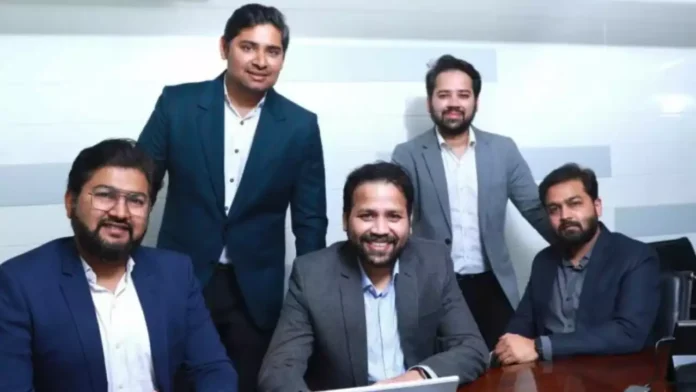
Akshay Kedia, Ankesh Jain, Anand Jain and Shubham Bhandari, Co-Founders, Nothing Before Coffee
Nothing Before Coffee (NBC), a rapidly expanding coffee chain, has opened its 50th store at Malviya Nagar in New Delhi as per a release by the company on Wednesday.
Spanning 550-600 square feet of retail space, the store presents a diverse menu featuring 100% vegetarian options. Additionally, it offers an extensive selection of over 100 handcrafted beverages, with its standout being the popular ‘Shrappe’—a unique fusion of frappe and shake.
“The launch of our 50th outlet is not just a numerical achievement; it’s a testament to our commitment to crafting exceptional coffee experiences,” said Akshay Kedia, Founder of NBC.
“Our vision is to become the household name for coffee and beverage cafes in Tier 1 & Tier 2 cities of India and beyond, offering a convenient and delicious coffee experience,” Kedia added.
Founded in 2017 by childhood friends Akshay Kedia, Anand Jain, Ankesh Jain, and Shubham Bhandari, NBC has established its presence in 10 states and 26 cities. As of the current financial year 2023-24, the company has expanded with 25 new outlets in 8 additional cities. NBC is actively pursuing nationwide expansion, aiming to reach more regions across the country.
Jaipur-headquartered NBC has teamed up with Building Brands for Tomorrow (BBFT), a consultancy specializing in restaurant franchising and startup growth, to expedite its expansion efforts.
“The market is experiencing a significant demand for reasonably priced coffee, with very few brands catering to this segment on a nationwide scale. It fills me with great joy and pride to witness and support NBC’s transformation from nonexistence to prominence,” said Rohit Singh, Founder of Building Brands for Tomorrow (BBFT).
“Moving forward, the aim is to expand and enhance NBC’s presence across the entire Indian landscape,” Singh added.
US-based coffee giant Starbucks has opened its first store in Jodhpur, as confirmed by a company official on social media. The new outlet is located on Airport Road, Park Plaza, Jodhpur, Rajasthan.
“Hello Jodhpur! We are thrilled to announce the opening of our very first store in your city,” said Udit Shah, manager- business development at Tata Starbucks Pvt. Ltd. in a LinkedIn post.
This signifies the launch of Starbucks’ 11th store in Rajasthan, adding to its presence across Jaipur, Ajmer, Udaipur, and Behror.
“As we unveil our first store in this majestic city, we invite you to immerse yourself in a symphony of flavors and culture. Join us on a journey where tradition meets innovation, where every sip of our handcrafted beverages is a tribute to the timeless beauty of Rajasthan,” said Hemant Yadav, shift supervisor at Tata Starbucks in a social media post.
The Starbucks-branded coffee chain in India operates as a 50:50 joint venture between Seattle-based Starbucks Coffee Co. and Tata Consumer Products Ltd. Since 2012, Tata Starbucks has expanded its presence, boasting over 390 stores across 54 cities in India, with an approximate workforce of 4,300 employees.
The company aims to have 1,000 stores in operation in India by 2028, with the target of opening one new store every three days.
Arvind Fashions Ltd, a leading player in the casual and denim segment, on Tuesday reported a multifold rise in consolidated net profit at INR 51.08 crore for the December quarter FY24, helped by gains from sales of Sephora business.
During the quarter, AFL sold its Sephora business to Reliance Retail, resulting in a gain of INR 94.28 crore. Additionally, Arvind Beauty Brands Retail Ltd (ABBRL) no longer functions as a subsidiary.
AFL recorded a net profit of INR 30.12 crore from continuing operations, compared to INR 26.39 crore in the third quarter of the previous fiscal year.
Revenue from operations stood at INR 1,125.05 crore, up from INR 1,072.78 crore in the corresponding period last year.
“Growth was primarily led by retail and MBO channel,” said an earning statement from the company.
The company’s total expenses in the December quarter stood at INR 1,081.71 crore, reflecting a 3% year-on-year increase.
In the quarter, the combination of revenue growth and an expansion in gross margin led to an 18% increase in EBITDA to INR 150 crore, up from INR 127 crore in Q3 FY23, the company stated.
Total income stood at INR 1,131.96 crore, representing a 4% year-on-year increase.
“Strong financial performance in this quarter reflects the focus on profitable growth with 150 basis points improvement in EBITDA, a growth of 18% over Q3 last year,” MD & CEO Shailesh Chaturvedi said.
AFL manages retail stores of renowned international brands such as U.S. Polo Assn., Arrow, Tommy Hilfiger, Calvin Klein, and Flying Machine.
Shares of Arvind Fashions on Tuesday settled at INR 453.55 apiece on BSE, down 2.5%.
We use cookies to ensure that we give you the best experience on our website. If you continue to use this site we will assume that you are happy with it.