Saturday, February 14, 2026
Home Blog Page 634

IHCL expands brand portfolio with Ambuja Neotia Group’s Tree of Life Resorts & Hotels acquisition

IHCL
IHCL

Tata Group backed Indian Hotels Company Limited (IHCL) has expanded its brand portfolio through a ‘strategic alliance’ with Kolkata’s Ambuja Neotia Group for Tree of Life Resorts & Hotels, acquired by the latter.

In November of last year, the Kolkata-based Ambuja Neotia Group announced its acquisition of the Gurgaon-based boutique hotel chain Tree of Life Resorts & Hotels for an undisclosed sum.

The Ambuja Neotia Group currently possesses over 750 keys within its portfolio, managed by IHCL, with an additional 200 keys set to be added.

“In the first phase, we are solely providing Tree of Life with sales, marketing, distribution, training, loyalty and branding support. As things progress, we will assess further contributions and determine the number of properties to integrate onto the platform,” IHCL MD and CEO Puneet Chhatwal said.

“Whether and when we assume management responsibilities will also be decided over time. Initially, the hospitality brand will operate under the SeleQtions platform,” he added.

He said the ‘strategic’ move will facilitate the hospitality chain’s expansion into tier one and tier two cities.

“We intend to incorporate additional properties into the new platform that align with our brand rationale,” he added.

Continue Exploring: IHCL accelerates portfolio expansion, aims for 300 hotels in the next 3-4 months

Harshavardhan Neotia, Chairman of the Ambuja Neotia Group, stated that the group acquired the chain last year due to recognizing a ‘burgeoning’ demand for boutique experiential luxury hotels post the Covid-19 pandemic.

“People began seeking out boutique accommodations, willing to pay a premium for luxury, privacy, and unique experiences, a trend less prevalent before the pandemic when larger hotels dominated. This shift in consumer preferences prompted us to see the potential in this space,” he said.

“The opportunity presented itself when the previous owner sought to divest. Upon discussions with IHCL, we found mutual resonance with the idea. Combining forces made sense as it complemented both our portfolios. Embarking on this venture alone would have been more challenging and time-consuming,” he added.

In November, Neotia mentioned that the group had identified several “stunning and bespoke” destinations like Jawai, Ranthambore, and Ayodhya, with plans to expand the Tree of Life collection in the coming days.

“We believe that achieving a portfolio of 100 properties within the next five to six years is feasible. These properties may include those owned by us, managed properties, as well as those under various arrangements,” said Neotia. “With IHCL’s support, our footprint suddenly expands significantly,” he added.

Chhatwal expressed confidence that reaching the milestone of 25 hotels by the end of 2026 should be achievable for the brand.

Continue Exploring: India’s hospitality industry toasts to 2024 with high hopes and record-breaking revenue growth

“There will be a fee structure in place, covering the top line, as well as fee payments to Taj. In the future the arrangement might change when all approvals are in place. In that case the company will be board managed and we will have our separate roles to play,” said Neotia.

IHCL mentioned that it is pacing ahead of its market guidance, having achieved a portfolio of over 300 hotels, with 90 hotels under development.

Advertisement

FMCG market growth set to rebound next fiscal year, says Godrej Consumer Products CEO

0
FMCG
Sudhir Sitapati, Managing Director and Chief Executive Officer of Godrej Consumer Products

The FMCG market growth rate is expected to improve next fiscal year, according to Sudhir Sitapati, Managing Director and Chief Executive Officer of Godrej Consumer Products. This improvement will be led by a rebound in value growth, which was impacted this fiscal year due to a steep fall in commodity prices.

This year, the increase in volume has outpaced the increase in value, as most FMCG product prices have declined, according to the manufacturers of Good Knight mosquito repellent and Cinthol soaps.

Sitapati mentioned that commodity prices are currently stable to slightly positive, whereas wage inflation is on the rise. This will result in product prices being slightly higher than before in the coming quarters, ultimately contributing to a high single-digit value growth for the industry this calendar year.

Continue Exploring: NielsenIQ forecasts 4.5-6.5% growth for FMCG sector in FY24; volume surges by 6.4% in Q4 2023 as urban-rural gap narrows

“The water has found its own level as far as commodity prices. Unless there is a big geo-political factor, prices of palm oil and crude which are the biggest inputs for FMCG are expected to remain stable in 2024. This will improve overall industry growth rates next fiscal,” he said.

Godrej, the market leader in hair color in India and globally, boasts a complete portfolio in the hair care range. Sitapati mentioned that the company is evaluating options to expand its presence in the domestic market in this segment with newer categories like hair conditioners, treatment, and straighteners.

He mentioned that the company is currently gauging the market as it already offers these products through the salon channel under the brand name Godrej Professional. Depending on their success, a separate lineup may be introduced in retail stores. However, the company is not particularly interested in crowded categories such as shampoos and hair oils.

Continue Exploring: FMCG firms optimistic about rural recovery amid macroeconomic improvements

“Globally, we have a big hair care portfolio accounting for almost a third of our consolidated business. There are no definitive plans yet to launch those in India, but the potential remains,” said Sitapati.

The hair care market in India is valued at around INR 35,000 crore, encompassing products like shampoos, conditioners, hair colors, hair oils, and straighteners.

In its December quarter earnings, Godrej announced that India volumes grew by 12%, while revenue surged by 9%. However, despite this growth, revenue continued to trail volume expansion, primarily due to price declines in personal wash products. The company, positioned as the second-largest soap manufacturer, had previously raised prices of most soap packs by up to 25% during the peak of inflation in 2022. Yet, it has now opted to slash prices by up to 20%.

Advertisement

Irish Distillers chairman eyes India as next big market, anticipates second-highest global standing

0
Irish Distillers
Irish Distillers Chairman Nodjame Fouad

Irish Distillers chairman Nodjame Fouad expects India to become its second-largest market globally, driven by premiumisation and consumers experimenting across spirits after the Covid-19 pandemic.

Over the past three years, India has surpassed more than a dozen countries to become the third-largest market for the producer of Jameson whiskey, up from 17th place in 2020.

“India is a strategic market for us. It has quickly emerged to be one of our top markets. It has been, over the last number of years, growing in a way that it has outranked other markets. And we hope in the future for it to be our number two market. Our second-largest market is currently South Africa and our number one market is the United States. We will hopefully get there in the coming years,” Fouad said.

“India is a strategic market for us. There’s a massive consumer base. It’s a large whisky market, so we look at it as an important market for the strategic development of Jameson,” she added.

In 2023, India emerged as the leading market for whisky, with 400 million cases sold, constituting two-thirds of the country’s total liquor sales. While there’s been downward pressure on mass-market brands, premium spirits across various segments have shown resilience against the overall consumer slowdown. This resilience is fueled by increased consumption among millennials and a burgeoning middle class, which is increasingly opting for higher-priced beverages.

Continue Exploring: Premiumization trend to fuel India’s soaring liquor industry, Crisil Report reveals

For instance, Scotch sales in India nearly doubled to 7.5 million cases (nine litres each) in 2022 from 3.9 million cases in 2020. However, the focus on Scotch sales can overshadow the significant progress made by other imported whiskies. For example, in 2015, sales of US whisky were under 50,000 nine-litre cases. By the end of 2022, however, sales had quadrupled, with a surge of 70% in that year alone, according to an IWSR report. Nevertheless, the performance of US whisky was eclipsed by Irish whisky, particularly Pernod Ricard’s Jameson, underscoring the importance of distribution and availability in driving sales.

“In 2015, annual sales of Irish whisky were less than 10,000 nine-litre cases. There were still only 50,000 cases in 2019, a level that US whisky had already achieved by 2015. But by 2021, Irish whisky outsold US whisky by 50,000 nine-litre cases, rising to 100,000 cases a year later,” said the IWSR report. “Between 2018 and 2022, Irish whisky sales have risen almost tenfold and growth was 80% in 2022 alone. Lockdowns were a key driver of growth for both US and Irish whisky, stimulating investigation, experimentation and repeat purchase.”

Continue Exploring: Pernod Ricard anticipates a threefold increase in India sales, expects to topple US market

In India, Jameson dominates its segment, commanding approximately 95% market share. Additionally, it ranks among the top ten best-selling whisky brands globally. Irish Distillers, a subsidiary of the French spirits company Pernod Ricard, has witnessed Jameson achieve a remarkable compounded annual growth rate of 76% between 2017 and 2022, making it the fastest-growing whisky in its portfolio. The brand’s ability to appeal to consumers across various segments and age groups has been a key factor in its success, according to the company.

Advertisement

Agri-fintech startup Ayekart raises $6.5M from Omnivore, Siana Capital, and Unleash Capital

0
Ayekart
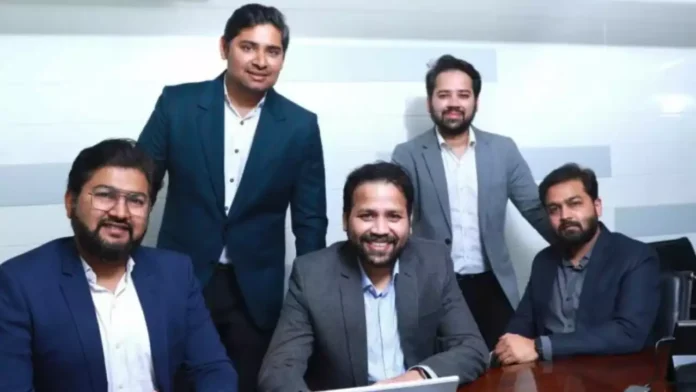
Ayekart Co-Founders

Ayekart, an agri-fintech startup, has secured $6.5 million (INR 53 crore) in Series A funding from Omnivore, Siana Capital, and Unleash Capital.

Unitus Capital served as the sole financial advisor to the company for the transaction.

The startup plans to utilize the newly acquired funds to broaden its operations across the nation and serve a larger customer base, including FPOs (Farmer Producer Organizations), food manufacturers, distributors, and retailers.

Established in 2020 by Debarshi Dutta, Ashutosh Singh, and Milind Borgikar, Ayekart offers fintech and supply chain solutions tailored for traditional businesses operating within the agrifood value chain.

Commenting on the funding, Co-Founder and CEO Debarshi Dutta said, “We understand the critical pain points that agrifood MSMEs face – the need for market linkages, access to finance, and an efficient technology ecosystem to enhance their businesses. To address these challenges, we have developed innovative fintech solutions tailored to empower FPOs and agrifood MSMEs.”

Ayekart operates in 18 states with over 9,000 active merchants on its platform. It claims to have facilitated more than 2.5 lakh transactions worth over INR 2.1 crore in lifetime GTV (Gross Traded Value) and has been profitable since its inception.

Continue Exploring: Agritech startup BigHaat secures $8.4M in Series C funding, co-led by Ashish Kacholia and RBA Finance and Investment Company

In 2022, the startup secured $5.5 million in a combination of debt and equity funding. This capital infusion aimed to offer financial and technological support to traditional businesses within the food and agriculture sector, facilitating their expansion.

Back then it said that it had plans to expand its services to 15 countries in the next five years.

In the agritech sector, KisanKonect recently secured $3.7 million in funding to expand its efforts in climate-smart agriculture initiatives, benefitting its network of 5,000 farmers.

Also, last year, Waycool was reported to be in talks with multiple investors, including sovereign funds, impact funds, and family offices, to raise funding in the range of $50 million to $70 million.

Continue Exploring: Shilpa Shetty-backed agritech startup KisanKonnect secures INR 31 Crore in pre-series A funding led by Green Frontier Capital

Advertisement

B2B seafood startup Captain Fresh secures $25M in funding Led by UK Govt-backed BII and Nekkanti Seafoods Group, eyes international expansion

0
Captain Fresh
Utham Gowda, Founder, Captain Fresh

B2B seafood startup Captain Fresh has raised $25 million in a funding round led by UK government-backed British International Investment (BII) and Andhra Pradesh-based Nekkanti Seafoods Group.

The funding was part of a larger $48 million extended funding round at a $500 million valuation, out of which $20 million had already been raised by the firm in September last year. That round had been led by Japan-based SBI Investment and Evolvence Capital, and had also seen participation from existing investors like Tiger Global, Prosus, Accel and Matrix Partners India.

The company is currently in discussions to secure an additional $3 million in funding from SBI Investment, as revealed by its Founder and CEO, Utham Gowda.

“By supporting Captain Fresh, we are delighted to be able to reach and support more fishermen with improved economic opportunities, as well as to promote sustainable production and reduce wastage. We are also keen to support India’s food exports as a way to support global food security,” Abhinav Sinha, managing director and head of technology and telecoms at BII, said in a statement.

Both BII and SBI Investment are making their debut investments in the firm. Following this fundraising, Gowda will maintain a 19% ownership stake in the company. Matrix Partners will hold approximately 12.5%, while Accel and Ankur Capital will each have around 11 to 12%. Prosus and Tiger Global will each hold about 10%, as per Gowda’s statement.

Continue Exploring: Bengaluru-based B2B marketplace Captain Fresh raises $13.25 Million in Series C extension

The funds will primarily be directed towards expanding Captain Fresh’s operations in the US and European markets.

“We expect to become fully vertically integrated in these markets and evolve from being just an exporter to also distributing on our own (sic),” Gowda said.

Additionally, the company plans to invest in enhancing its supply chain in Southeast Asia, sourcing products from nations such as Indonesia and Malaysia.

The firm recently completed the acquisition of Paris-based shrimp cooker and distributor Senecrus as part of its European expansion strategy, as stated in a release.

Operating in a business-to-business (B2B) model, Captain Fresh supplies fish and seafood to sellers. According to Gowda, over the next two to three months, the company anticipates that more than 50% of its business will originate from the US market, compared to the previous range of 25-30%. Additionally, he mentioned that approximately 80-85% of the total business will be generated from the European and US markets.

Continue Exploring: B2B seafood startup Captain Fresh raises $20 Million in Series C funding for European and US expansion

Captain Fresh collaborates with retailers such as Metro, Auchan, and Carrefour, operating across France, Germany, and Poland, as well as in the Middle East. Approximately 2-3% of its business originates from India.

Gowda mentioned that the company had opted to shift its focus from India to international exports, as the latter offered a greater potential for profitability. He further stated that the company had already achieved profitability on a monthly basis and projected to attain full profitability in FY25, although specific figures were not disclosed.

Back in September, Gowda had said that international markets enabled the company to achieve Earnings Before Interest, Taxes, Depreciation, and Amortization (EBITDA) margins of over 15-20%, compared to a 3% EBITDA margin in India.

Advertisement

Orkla India Appoints Murali S as CEO of Eastern spice and masala brand

Orkla India
Eastern masala (Representative Image)

Orkla India, a subsidiary of the Norwegian industrial investment company Orkla ASA, has appointed Murali S as the CEO of Eastern, a key player in Kerala’s market for pure spices and masalas.

This leadership addition is in line with Orkla India’s recent announcement of restructuring into three business units: Eastern, MTR, and international business.

“With his proven track record and strategic acumen, we are confident that he will lead Eastern to new heights of success in the Kerala market,” Sanjay Sharma, CEO of Orkla India, said in a statement.

Continue Exploring: KPG Spices enlists Kareena Kapoor Khan as brand ambassador

Murali will operate from Cochin, where he will guide the team in fortifying Orkla India’s presence in the Kerala market and driving forward the Eastern business unit.

Currently serving as CEO designate, Murali will assume full responsibility from Navas Meeran on April 1st.

“I am committed to leveraging Eastern’s strong market position and driving innovation to further enhance our brand presence in our core geographies,” said Murali.

With a career spanning more than thirty years, Murali has amassed extensive experience in the telecommunications and consumer goods industries. In previous positions, he held leadership roles at companies like Blow Plast and Vodafone Idea, serving as Operations Director and Senior Vice President, respectively.

Continue Exploring: Chukde Spices announces Karisma Kapoor as brand ambassador in exclusive 2-year partnership

Advertisement

OYO ventures into sports hospitality business, shortlists 100 hotels across 12 cities

OYO
OYO (Representative Image)

Hospitality and travel-tech firm OYO on Thursday announced its foray into sports hospitality business shortlisting 100 hotels across 12 key cities, including Delhi, Chennai, and Bangalore, to cater to large sports events. The sports hospitality business aims to meet the unique needs of large sports events with a focus on providing end-to-end solutions, including providing accommodation to athletes and sports officials participating in various sports events, the company said in a statement.

Under the vertical, a wide array of accommodation options, ranging from budget-friendly to premium hotels, will be offered to ensure a comfortable and convenient stay to participants and attendees throughout the event, it added.

“The launch of our sports event management unit aligns with OYO’s commitment to continuous innovation and customer-centric solutions. With a focus on delivering quality hospitality, OYO plans to offer athletes a conducive and comfortable environment, ensuring they can fully concentrate on their training and competitions,” OYO Head, Government and Sports Hospitality Business, Pankaj Kumar said.

The company said it has identified 100 hotels in different categories across 12 cities, including Delhi, Chennai, Bangalore, Pune, Lucknow, Jaipur, Chandigarh, and Bhopal for the accommodation of athletes and sports officials.

Continue Exploring: Oyo Hotels in advanced talks with Khazanah Nasional Berhad for $400 Million funding boost

Specialised packages and group booking options will be available to accommodate the unique needs of sports teams and large groups, it added.

OYO said it will engage with third-party agencies for catering to a diverse range of food options to suit the preferences and dietary requirements of athletes and attendees, and also transportation-related services.

Besides, it will also set up control rooms across all sports event venues to ensure seamless coordination and 24×7 emergency assistance.

Continue Exploring: OYO executives hold talks with SEBI to expedite IPO approval process

The company said it has provided these services in more than 10 large-scale sports tournaments in 2023, including Khelo India Youth Games, Khelo India University Games, and 36th National Games, to assess its capabilities before launching the new initiative.

“As part of this initiative, OYO will also offer accommodation, catering, and transportation services for differently-abled sports person to create a more inclusive environment,” the company said, adding it has recently partnered with Khelo India Para Games, Para Kabaddi Impact Tournament, and Sardar Patel National Divyang Cricket Tournament and provided assistance to all the participants.

Continue Exploring: OYO collaborates with Khelo India and others to support differently-abled talent across the country

Advertisement

Uttarakhand introduces new excise policy: Allows bottling of foreign liquor, targets INR 4,440 Crore revenue in FY 2024-25

0
Liquor
(Representative Image)

The Uttarakhand government has, for the first time, allowed the bottling of foreign liquor within the state under its new excise policy for the fiscal year 2024-25. This move is aimed at boosting excise revenue and attracting investment. A revenue target of INR 4,440 crore has been set for the financial year 2024-2025, representing an 11 percent increase over the target of INR 4,000 crore for the current financial year 2023-24.

Under the new excise policy, the hilly state has also introduced provisions for the first time for bulk license FL-2 (O) for the supply of overseas liquor. This measure aims to control the trade of overseas liquor coming through custom bond in the interest of revenue. Additionally, provisions have been made for setting up micro distillation units to encourage innovation and investment in the hilly areas of the state.

In the upcoming fiscal year, Uttarakhand aims to position itself as a leading center for the production of high-quality aromatic liquors and wines/malts akin to those from Scotland and Italy. To support local farmers engaged in agriculture and horticulture, the new excise policy permits the processing of indigenous fruits such as tangerine, malta, apple, pear, and peach for the production of country liquor in Uttarakhand.

Continue Exploring: Haryana takes bold step as first state to prohibit plastic bottles for locally produced liquor

Under the new excise policy, the state government has outlined provisions for license renewal, including eligibility criteria. Additionally, a two-stage lottery system has been introduced to allocate liquor shops in the state. Renewal of liquor shop licenses will only be considered for holders who have cleared all past due liabilities and secured their securities. As per the new excise policy, applicants must submit their Income Tax Returns (ITR) for the past two years along with their application for liquor shop allotment in Uttarakhand. Furthermore, under this policy, an applicant can be allocated a maximum of three liquor shops in the state.

The new policy introduces provisions for the supply of spiced liquor with 36 percent v/v strength, as well as spicy and plain liquor with 25 percent v/v strength, and special grade metro liquor in country liquor shops. Additionally, the transfer of foreign/country liquor quota will now be permitted up to 10 percent of the quota surcharge. Unlike the previous year, the bar license fee in Uttarakhand is now determined based on the star category, and the new excise policy includes provisions for seasonal bar license fees. These measures have the potential to enhance tourism in Uttarakhand.

Continue Exploring: New excise policy maintains liquor prices except for country-made; premium outlets at transit hubs approved

Advertisement

Karnataka hotels and restaurants lobby for industry status and streamlined licensing procedures ahead of state budget

Restaurant
(Representative Image)

As the state Congress regime prepares to unveil its second budget on Friday, hotels and restaurants are lobbying the government for industry status and streamlined licensing procedures. This status, similar to the one enjoyed by restaurants in Gujarat and neighboring Maharashtra, would provide them with benefits such as reduced property taxes and electricity tariffs.

According to Shyama Raju, President of the South India Hotel Association, only a handful of five-star hotels in Karnataka have been granted this status thus far.

“Hotels in Maharashtra got this status a few years ago…we hope that if the Karnataka government comes through, the rest of the south Indian states would follow suit,” Raju, who is the MD of Bengaluru’s Hotel Maurya said.

Continue Exploring: Mixed sentiments in food industry as Interim Budget unveils plans for economic growth

According to PC Rao, president of the Bruhat Bengaluru Hotel Association, the Congress had promised in its manifesto before the assembly polls to grant industry status to hospitality establishments with more than 20 employees. However, not even all of those establishments have been covered yet.

“Hotels in other states have this status and they can operate more efficiently, cost-wise. Right now, our application is on hold with the industries department,” he said.

He mentioned that irrespective of their status, all restaurants and hotels encounter the same bureaucratic hurdles concerning pollution control matters, as well as obtaining shop and trade licenses.

“It’s not fair to have different status but the same rules,” he said.

According to Arun Adiga, owner of Vidyarthi Bhavan in Bengaluru, while an industry status might alleviate some costs for establishments, restaurants and hotels face a significant hurdle each year due to the lengthy bureaucratic processes involved in renewing their civic body-issued trade licenses.

He added that both trade licenses and the FSSAI license, which also require annual renewal, essentially entail similar information.

He mentioned that a simple, non-air-conditioned restaurant must allocate INR 10,000 annually for renewing the license.

“It is a long, convoluted process to undergo every year, and it is even harder for eateries from Mangaluru or Hubli where the system has not been digitised yet,” he said.

Continue Exploring: Interim Budget 2024 sets the tone for inclusive development, FMCG executives optimistic

He suggested that civic bodies should issue perpetual trade licenses to restaurants and hotels instead of requiring them to renew their licenses annually.

Last year, the BBHA reached out to the Union Health Ministry, urging for the FSSAI license to be made perpetual as well, aiming to enhance the ease of doing business.

Adiga suggested that if that wasn’t possible, the government should at least contemplate simplifying the process, with a nominal fee of INR 100, irrespective of the type of establishment.

Advertisement

Celebrity Chef Ajay Chopra’s Plaka sets foot in South India, unveils Bengaluru outlet

0
Plaka
Plaka

Delhi-based restaurant brand Plaka by Chef Ajay Chopra has entered the South Indian market with the launch of its latest outlet in Bengaluru, as shared by a company official on social media.

The latest establishment is situated on the third floor of Phoenix Mall of Asia, Yelahanka, where it joins a vibrant dining scene featuring over 50 restaurants like Perch, Dobaraa, You Mee, Ishaaraa, and Badmash.

“Another fabulous addition to the existing list of star F&B brands. Plaka opens door to the foodies across South India with their first restaurant in the region at Mall of Asia, Bengaluru,” said Foram Saiya, senior leasing manager at The Phoenix Mills Ltd. in a LinkedIn post.

This marks the brand’s second outlet, following the launch of its first at DLF Cyber City, Gurugram in 2023.

Continue Exploring: Chef Harpal Singh Sokhi’s Karigari makes debut in South India with Bengaluru launch

Advertisement