Tuesday, February 10, 2026
Home Blog Page 632

Orkla India Appoints Murali S as CEO of Eastern spice and masala brand

Orkla India
Eastern masala (Representative Image)

Orkla India, a subsidiary of the Norwegian industrial investment company Orkla ASA, has appointed Murali S as the CEO of Eastern, a key player in Kerala’s market for pure spices and masalas.

This leadership addition is in line with Orkla India’s recent announcement of restructuring into three business units: Eastern, MTR, and international business.

“With his proven track record and strategic acumen, we are confident that he will lead Eastern to new heights of success in the Kerala market,” Sanjay Sharma, CEO of Orkla India, said in a statement.

Continue Exploring: KPG Spices enlists Kareena Kapoor Khan as brand ambassador

Murali will operate from Cochin, where he will guide the team in fortifying Orkla India’s presence in the Kerala market and driving forward the Eastern business unit.

Currently serving as CEO designate, Murali will assume full responsibility from Navas Meeran on April 1st.

“I am committed to leveraging Eastern’s strong market position and driving innovation to further enhance our brand presence in our core geographies,” said Murali.

With a career spanning more than thirty years, Murali has amassed extensive experience in the telecommunications and consumer goods industries. In previous positions, he held leadership roles at companies like Blow Plast and Vodafone Idea, serving as Operations Director and Senior Vice President, respectively.

Continue Exploring: Chukde Spices announces Karisma Kapoor as brand ambassador in exclusive 2-year partnership

Advertisement

OYO ventures into sports hospitality business, shortlists 100 hotels across 12 cities

OYO
OYO (Representative Image)

Hospitality and travel-tech firm OYO on Thursday announced its foray into sports hospitality business shortlisting 100 hotels across 12 key cities, including Delhi, Chennai, and Bangalore, to cater to large sports events. The sports hospitality business aims to meet the unique needs of large sports events with a focus on providing end-to-end solutions, including providing accommodation to athletes and sports officials participating in various sports events, the company said in a statement.

Under the vertical, a wide array of accommodation options, ranging from budget-friendly to premium hotels, will be offered to ensure a comfortable and convenient stay to participants and attendees throughout the event, it added.

“The launch of our sports event management unit aligns with OYO’s commitment to continuous innovation and customer-centric solutions. With a focus on delivering quality hospitality, OYO plans to offer athletes a conducive and comfortable environment, ensuring they can fully concentrate on their training and competitions,” OYO Head, Government and Sports Hospitality Business, Pankaj Kumar said.

The company said it has identified 100 hotels in different categories across 12 cities, including Delhi, Chennai, Bangalore, Pune, Lucknow, Jaipur, Chandigarh, and Bhopal for the accommodation of athletes and sports officials.

Continue Exploring: Oyo Hotels in advanced talks with Khazanah Nasional Berhad for $400 Million funding boost

Specialised packages and group booking options will be available to accommodate the unique needs of sports teams and large groups, it added.

OYO said it will engage with third-party agencies for catering to a diverse range of food options to suit the preferences and dietary requirements of athletes and attendees, and also transportation-related services.

Besides, it will also set up control rooms across all sports event venues to ensure seamless coordination and 24×7 emergency assistance.

Continue Exploring: OYO executives hold talks with SEBI to expedite IPO approval process

The company said it has provided these services in more than 10 large-scale sports tournaments in 2023, including Khelo India Youth Games, Khelo India University Games, and 36th National Games, to assess its capabilities before launching the new initiative.

“As part of this initiative, OYO will also offer accommodation, catering, and transportation services for differently-abled sports person to create a more inclusive environment,” the company said, adding it has recently partnered with Khelo India Para Games, Para Kabaddi Impact Tournament, and Sardar Patel National Divyang Cricket Tournament and provided assistance to all the participants.

Continue Exploring: OYO collaborates with Khelo India and others to support differently-abled talent across the country

Advertisement

Uttarakhand introduces new excise policy: Allows bottling of foreign liquor, targets INR 4,440 Crore revenue in FY 2024-25

0
Liquor
(Representative Image)

The Uttarakhand government has, for the first time, allowed the bottling of foreign liquor within the state under its new excise policy for the fiscal year 2024-25. This move is aimed at boosting excise revenue and attracting investment. A revenue target of INR 4,440 crore has been set for the financial year 2024-2025, representing an 11 percent increase over the target of INR 4,000 crore for the current financial year 2023-24.

Under the new excise policy, the hilly state has also introduced provisions for the first time for bulk license FL-2 (O) for the supply of overseas liquor. This measure aims to control the trade of overseas liquor coming through custom bond in the interest of revenue. Additionally, provisions have been made for setting up micro distillation units to encourage innovation and investment in the hilly areas of the state.

In the upcoming fiscal year, Uttarakhand aims to position itself as a leading center for the production of high-quality aromatic liquors and wines/malts akin to those from Scotland and Italy. To support local farmers engaged in agriculture and horticulture, the new excise policy permits the processing of indigenous fruits such as tangerine, malta, apple, pear, and peach for the production of country liquor in Uttarakhand.

Continue Exploring: Haryana takes bold step as first state to prohibit plastic bottles for locally produced liquor

Under the new excise policy, the state government has outlined provisions for license renewal, including eligibility criteria. Additionally, a two-stage lottery system has been introduced to allocate liquor shops in the state. Renewal of liquor shop licenses will only be considered for holders who have cleared all past due liabilities and secured their securities. As per the new excise policy, applicants must submit their Income Tax Returns (ITR) for the past two years along with their application for liquor shop allotment in Uttarakhand. Furthermore, under this policy, an applicant can be allocated a maximum of three liquor shops in the state.

The new policy introduces provisions for the supply of spiced liquor with 36 percent v/v strength, as well as spicy and plain liquor with 25 percent v/v strength, and special grade metro liquor in country liquor shops. Additionally, the transfer of foreign/country liquor quota will now be permitted up to 10 percent of the quota surcharge. Unlike the previous year, the bar license fee in Uttarakhand is now determined based on the star category, and the new excise policy includes provisions for seasonal bar license fees. These measures have the potential to enhance tourism in Uttarakhand.

Continue Exploring: New excise policy maintains liquor prices except for country-made; premium outlets at transit hubs approved

Advertisement

Karnataka hotels and restaurants lobby for industry status and streamlined licensing procedures ahead of state budget

Restaurant
(Representative Image)

As the state Congress regime prepares to unveil its second budget on Friday, hotels and restaurants are lobbying the government for industry status and streamlined licensing procedures. This status, similar to the one enjoyed by restaurants in Gujarat and neighboring Maharashtra, would provide them with benefits such as reduced property taxes and electricity tariffs.

According to Shyama Raju, President of the South India Hotel Association, only a handful of five-star hotels in Karnataka have been granted this status thus far.

“Hotels in Maharashtra got this status a few years ago…we hope that if the Karnataka government comes through, the rest of the south Indian states would follow suit,” Raju, who is the MD of Bengaluru’s Hotel Maurya said.

Continue Exploring: Mixed sentiments in food industry as Interim Budget unveils plans for economic growth

According to PC Rao, president of the Bruhat Bengaluru Hotel Association, the Congress had promised in its manifesto before the assembly polls to grant industry status to hospitality establishments with more than 20 employees. However, not even all of those establishments have been covered yet.

“Hotels in other states have this status and they can operate more efficiently, cost-wise. Right now, our application is on hold with the industries department,” he said.

He mentioned that irrespective of their status, all restaurants and hotels encounter the same bureaucratic hurdles concerning pollution control matters, as well as obtaining shop and trade licenses.

“It’s not fair to have different status but the same rules,” he said.

According to Arun Adiga, owner of Vidyarthi Bhavan in Bengaluru, while an industry status might alleviate some costs for establishments, restaurants and hotels face a significant hurdle each year due to the lengthy bureaucratic processes involved in renewing their civic body-issued trade licenses.

He added that both trade licenses and the FSSAI license, which also require annual renewal, essentially entail similar information.

He mentioned that a simple, non-air-conditioned restaurant must allocate INR 10,000 annually for renewing the license.

“It is a long, convoluted process to undergo every year, and it is even harder for eateries from Mangaluru or Hubli where the system has not been digitised yet,” he said.

Continue Exploring: Interim Budget 2024 sets the tone for inclusive development, FMCG executives optimistic

He suggested that civic bodies should issue perpetual trade licenses to restaurants and hotels instead of requiring them to renew their licenses annually.

Last year, the BBHA reached out to the Union Health Ministry, urging for the FSSAI license to be made perpetual as well, aiming to enhance the ease of doing business.

Adiga suggested that if that wasn’t possible, the government should at least contemplate simplifying the process, with a nominal fee of INR 100, irrespective of the type of establishment.

Advertisement

Celebrity Chef Ajay Chopra’s Plaka sets foot in South India, unveils Bengaluru outlet

0
Plaka
Plaka

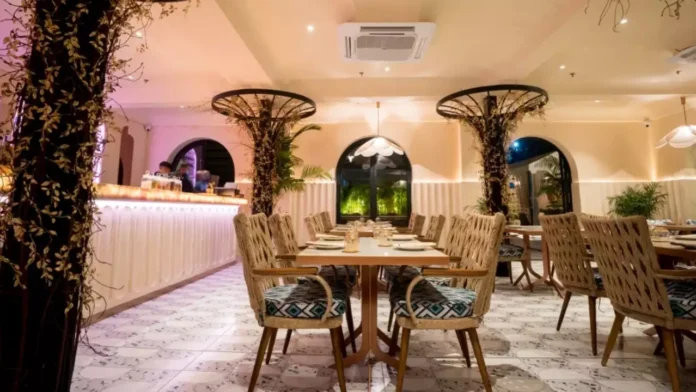
Delhi-based restaurant brand Plaka by Chef Ajay Chopra has entered the South Indian market with the launch of its latest outlet in Bengaluru, as shared by a company official on social media.

The latest establishment is situated on the third floor of Phoenix Mall of Asia, Yelahanka, where it joins a vibrant dining scene featuring over 50 restaurants like Perch, Dobaraa, You Mee, Ishaaraa, and Badmash.

“Another fabulous addition to the existing list of star F&B brands. Plaka opens door to the foodies across South India with their first restaurant in the region at Mall of Asia, Bengaluru,” said Foram Saiya, senior leasing manager at The Phoenix Mills Ltd. in a LinkedIn post.

This marks the brand’s second outlet, following the launch of its first at DLF Cyber City, Gurugram in 2023.

Continue Exploring: Chef Harpal Singh Sokhi’s Karigari makes debut in South India with Bengaluru launch

Advertisement

Scandalous Foods successfully completes pre-seed funding, secures INR 3 Crore

0
Scandalous Foods
Sanket S, Founder, Scandalous Foods

Scandalous Foods, a rapidly growing B2B sweets startup, has announced the successful completion of its pre-seed funding round, securing a total of INR 3 crore. The latest infusion of INR 1.4 crore came from the Indian Angel Network (IAN), led by KRS Jamwal and Mrunal Jhaveri, along with notable angel investors Arjun Vaidya of V3 Ventures, Ajay Mariwala, MD of VKL and FSIPL, and Sushma Gupta.

The startup had raised INR 1.6 crore in the first tranche of the pre-seed funding round in December last year.

Continue Exploring: Scandalous Food bags INR 1.6 Cr in pre-seed funding round for expansion

The newly acquired funds will be utilized by the company to establish a larger production facility and expand its operations. Scandalous Foods aims to broaden its footprint across the food service industry and build a robust HoReCa (Hotel, Restaurant, and Catering) base in key markets, including Mumbai and Nashik.

Founder of Scandalous Foods, Sanket S, expressed his excitement about the additional funding, stating, “With the additional INR 1.4 crore, we are better equipped than ever to innovate, expand, and cater to the growing demands of our diverse clientele. Our journey from a nascent startup to a trailblazer in the industry has been exhilarating, and this is just the beginning.”

Established in August 2022, Scandalous Foods is a B2B company focused on revolutionizing the sweets industry for the restaurant sector. Offering preservative-free sweets with a six-month shelf life, the company presently operates solely within the B2B domain. However, it aims to penetrate the B2B2C and B2C markets. Additionally, Scandalous Foods is set to introduce mithai bars and sachets in the near future, enhancing its product range.

“Scandalous Foods stands out with its unique proposition in the Indian sweets segment, especially in the B2B space. Their approach to combining tradition with innovation is precisely what the industry needs. We are excited to support Scandalous in their journey towards becoming a leader in the food service industry. Their vision aligns with our commitment to backing businesses that have the potential to scale and make a significant impact,” added Mrunal Jhaveri, founding partner at Ice.vc and leading the round at Ian with KRS Jamal.

Advertisement

South Indian QSR chain IDC Kitchen raises INR 1.5 Crore in debt funding from Peter Thiel-backed Velocity

0
IDC Kitchen
Abhishek Baldota, Director of IDC - Idli Dosa Coffee

IDC Kitchen, a quick service restaurant chain, has secured INR 1.5 crore in a debt fund from Peter Thiel’s Valar Ventures-backed financing platform, Velocity.

The newly acquired funds will be allocated towards marketing initiatives and other inventory-related expenses, with the aim of enhancing outreach and sustaining the commitment to delivering an authentic South Indian culinary experience.

Abhishek Baldota, Director of IDC – Idli Dosa Coffee, said, “As we embark on the next phase of our journey, IDC Kitchen signifies more than just a culinary service; it’s a transformative culinary journey. With the support of Velocity and the unwavering love of our patrons, we are thrilled to bring the essence of South India to doorsteps across the nation. This new chapter, fueled by the recent funding from Velocity, allows us to not only maintain our high standards but also elevate the IDC experience for our valued customers.”

Established in 2012, IDC Kitchen is a chain of vegetarian South Indian self-service restaurants, dedicated to offering affordable dining options. The company’s menu is accessible through all leading food delivery platforms and also accommodates catering and party orders.

The Bengaluru-based company aims to empower the Indian quick-service restaurant landscape, asserting its presence with 11 locations in Bengaluru, two in Mumbai, and one in Raichur.

Continue Exploring: A-Listers Spice Up Their Portfolios with Bold Bets on India’s Booming F&B Startups

Atul Khichariya, COO & Co-Founder of Velocity adds, “At Velocity, we are thrilled to contribute to the growth and success of IDC through our recent funding of INR 1.5 Crore. This partnership opens up new avenues in the dynamic landscape of restaurants and QSR chains, and we believe that IDC’s commitment to authenticity and innovation aligns seamlessly with our vision. I am confident that this infusion of funds will not only fuel IDC’s brand growth but also set new benchmarks in the restaurant and QSR industry. We look forward to witnessing the continued success of IDC as it persistently redefines the culinary experience for patrons across India.”

Velocity serves as a cash-flow-based financing platform catering to modern businesses. It has provided funding to various restaurants and cloud kitchens, such as Caters Point, Brahma Brews, BurgerRama, Jamie Oliver’s Pizzeria, Oven Fresh, Crave by Leena, and Smoor. Collaborating with over 4,000 brands, Velocity has disbursed over INR 750 crore and established partnerships with 26 marketplaces.

According to Mordor Intelligence, the QSR Restaurant market is projected to reach 38.71 billion USD by 2029, compared to its current 25.46 billion USD. The rise of online food ordering and factors such as low start-up costs, ease of operations, and localized menus are expected to drive further growth in the coming years. Given the favorable demand outlook, the domestic QSR industry is looking at aggressive store capex over the medium term.

Continue Exploring: Indian food service market to surpass $100 Billion by 2028: Redseer Report

Advertisement

Indian food service market to surpass $100 Billion by 2028: Redseer Report

0
Indian Food Service
(Representative Image)

According to the report by market intelligence firm Redseer, the overall food service market in India is projected to surpass $100 billion by 2028, with a compound annual growth rate (CAGR) of 8-12 percent.

Driven by evolving consumer behavior, the Indian organized food services market is anticipated to double from $30 billion to $60 billion by 2028.

The report highlights that the growth of the organized sector is anticipated to surpass that of the unorganized segment by threefold.

For metro and tier 1 consumers, dining out has transitioned from a luxury to a habitual practice. This shift is evident in the increased frequency of outside eating, which has risen by 30 percent among students and young adults, and 20 percent among mid-lifers, compared to 2018.

Continue Exploring: Post-pandemic resurgence: India’s food services sector thrives with M&A, investments, and IPOs as younger consumers drive growth

“The Indian food market will need a lot more of mid-sized brands than fewer mega brands owing to the diversity it brings,” said Rohan Agarwal, Partner at Redseer.

In this scenario, House of Brands (HoBs) has surfaced as the most efficient strategy for expanding food brands in the country.

Continue Exploring: A-Listers Spice Up Their Portfolios with Bold Bets on India’s Booming F&B Startups

The sharing of resources within the HoB strategy also facilitates increased kitchen utilisation and enables better operating leverage such as lower cost of goods sold (COGS), further solidifying their competitive advantage in the market, the report noted.

Continue Exploring: Mixed sentiments in food industry as Interim Budget unveils plans for economic growth

Advertisement

Indian spirits market sees slowed growth at 4% in 2023: Tax hikes and shifting consumption trends impact industry dynamics

0
Liquor
Liquor

The demand for spirits across various segments slowed to 4% in the previous calendar year, marking a significant decline from the 12% growth seen in 2022. This slowdown was attributed to factors such as increased taxes, a high comparative base, and a reduction in consumption among drinkers. According to industry executives referencing the most recent data from the excise department, whiskey, which constitutes two-thirds of the segment, experienced a volume growth of 5.3%, followed by brandy at 2.7% and rum at 1.1%. Vodka and gin showed notable growth rates of 18.8% and 15.3%, respectively, from a smaller initial base.

“The demand environment has remained subdued – people are still experimenting,” stated Hina Nagarajan, Managing Director of United Spirits, during a recent investor call.

“They are drinking more out of home and out-of-home prices are higher than sort of buying from off-trade and drinking at home. So, there is a little bit of impact on volume there.”

United Spirits expects the environment to persist over the next few quarters. “I think the real pressure on the wallet is on the lower side, where we do see upgrades are not happening from country liquor to popular or popular to the lower end of prestige,” she had said.

In the period from January to December last year, the nation’s spirits market experienced an increase in sales volume, reaching 409 million cases, up from 392 million cases in 2022. Experts noted that the overall spirits industry, which had previously seen growth rates of 12-15% in the post-Covid era, has now stabilized. Nevertheless, premiumization remains a driving force across various categories, contributing to value growth despite volume pressures. Notably, sales of scotch have surpassed the annual milestone of 9 million cases and are projected to double by 2024 if current trends persist.

Continue Exploring: Premiumization trend to fuel India’s soaring liquor industry, Crisil Report reveals

The liquor industry echoed the consumer discretionary segment, experiencing a slowdown in sales similar to products like apparel, footwear, and beauty in India during 2023, following two years of pandemic-driven growth. Additionally, the spirits segment had encountered a significant increase in the prices of raw materials such as extra neutral alcohol, glass, and packaging materials a year earlier, but these pressures have since eased. Nevertheless, grain prices have surged in the past two quarters, putting pressure on margins.

Furthermore, Karnataka, the largest consumer of spirits, implemented a 20% increase in additional excise duty (AED) on Indian-made liquor (IML) from August, which had an impact on volume.

In states that account for over 65% of the total market share, the state government holds sway over retail, wholesale, and pricing, thus complicating companies’ ability to promptly raise prices.

“The states which have given the price increases are weighted average bases in the range of 180-basis points to 185-basis point,” Radico Khaitan chief financial officer Dilip Banthiya told investors recently, implying that these didn’t cover the rise in input costs. “The states include Telangana, Haryana, Assam, Maharashtra, Rajasthan, Delhi, Karnataka, Uttar Pradesh – all these big states.”

Continue Exploring: Diageo and AB InBev gear up to navigate liquor sales disruptions during general elections

While India harbors a population of nearly 1.4 billion, the drinking populace is estimated at 300 million, with nearly half of them capable of affording only cheap unbranded liquor. Within this demographic, approximately 150 million individuals belong to the rapidly growing middle-class segment, capable of affording premium and above options. To earn higher margins, most companies, including homegrown players, have launched products in the pricier segments. For instance, Allied Blenders introduced several brands, including Iconiq White Whisky, Srishti Premium Whisky, and X&O Premium World grain whisky, while Tilaknagar Industries launched premium flavored brandy Mansion House Flandy and Chambers.

In December, Pernod Ricard, renowned for brands such as Chivas Regal, Glenlivet, and Absolut, mentioned that India is set to overtake the United States as its largest global market, though no specific timeframe was provided.

“The macroeconomics in India is extremely solid,” Pernod Ricard India managing director Jean Touboul said. “We are growing faster than many other affiliates in the group and hopefully because we do a good job, but I don’t want to undermine my colleagues’ jobs in other countries. It’s a market where the gross potential is much higher.”

Continue Exploring: Pernod Ricard anticipates a threefold increase in India sales, expects to topple US market

Advertisement

Zomato hits new 52-week high with over 4% surge in shares

0
Zomato
Zomato

Continuing its upward momentum following the strong Q3 FY24 earnings, shares of the foodtech giant Zomato surged by as much as 4.59% during Thursday’s intraday trading session, reaching a fresh 52-week high at INR 159.20 on the BSE.

Zomato’s stock has been on the rise since the start of the week. On Monday, its shares experienced a significant surge of 6.2% during intraday trading, reaching a new 52-week high at INR 158.7 on the BSE.

Continue Exploring: Zomato shares surge 6.2% after robust Q3 earnings; touches fresh 52-week high

Over the past one year, Zomato has seen its shares rally over 200%, with the stocks valued at around INR 50 at the same time last year.

At 11:51 AM IST on Thursday, Zomato’s stocks were being traded at INR 157.45.

Last week, the company marked its third consecutive profitable quarter. Its consolidated profit after tax (PAT) surged nearly fourfold to INR 138 Cr, driven by robust growth in its quick commerce business, Blinkit.

Continue Exploring: Zomato reports third consecutive profitable quarter with INR 138 Cr PAT in Q3 FY24

During Q3, Zomato’s food delivery segment witnessed a 6.3% sequential rise in gross order value (GOV) to INR 8,486 Cr. Conversely, Blinkit saw a notable 28% quarter-on-quarter (QoQ) surge in GOV, reaching INR 3,542 Cr over the same period.

Although food delivery and, more recently, quick commerce have been Zomato’s main areas of focus for several years, another vertical that the company has been steadily nurturing for nearly five years is Hyperpure. Zomato aims to boost the growth of Hyperpure by venturing into food processing and supplying semi-finished perishables.

In Q3 FY24 (as of December 2023), Zomato’s Hyperpure vertical achieved more than double the revenue growth compared to the previous year, reaching INR 859 Cr.

Continue Exploring: Zomato’s B2B vertical Hyperpure sees exponential growth in Q3 FY24, revenue inches closer to INR 1,000 Cr

Meanwhile, according to reports, a Delhi court had summoned Zomato in a civil suit seeking a restraining order against the foodtech giant for allegedly continuing to allow users to order “hot and authentic food” from “iconic restaurants” across the national capital.

Continue Exploring: Delhi court summons Zomato over alleged fraudulent practices in food delivery operations

Advertisement