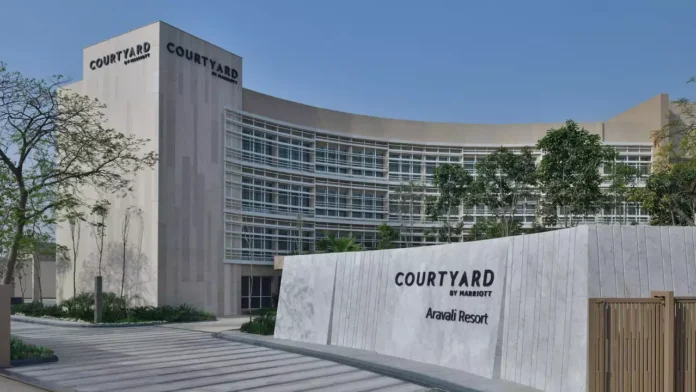
Chalet Hotels Limited has announced the execution of definitive agreements for the acquisition of the ‘Courtyard by Marriott Aravali Resort, NCR’. The resort boasts 158 rooms and occupies 14 acres of land. CHL has executed the definitive agreement for admission into the partnership with ‘Ayushi and Poonam Estates LLP’, the owner of CYMA. The Enterprise Value for this transaction amounts to INR 315 crore.
The company stated that since its establishment in June 2022, the resort has become the top choice for leisure travelers, MICE events, and destination weddings. Situated within a 1.5-hour radius from New Delhi, Gurgaon, and Noida, it offers convenient access to the Indira Gandhi International Airport in New Delhi.
The company additionally revealed that CYMA boasts an all-day dining restaurant, a bar & lounge, a pool bar, and a pan-Asian restaurant. Alongside these amenities, CYMA provides a gym, spa, pool, and a children’s play area, as well as activities such as ziplining, quad biking, automated paintball, artificial climbing, horse riding, and camel cart rides.
Sanjay Sethi, MD & CEO at Chalet Hotels Limited, stated, “Courtyard by Marriott Aravali Resort aligns seamlessly with our stated growth strategy to expand into the leisure space at a drivable distance from the National Capital Region. This strategic acquisition accentuates the company’s adaptability and growth prospects to capitalise on emerging opportunities and solidify its position as an industry leader.”
Nevertheless, the shares experienced a 0.78 percent decline, reaching INR 804.10 at 10:54 am on the BSE.
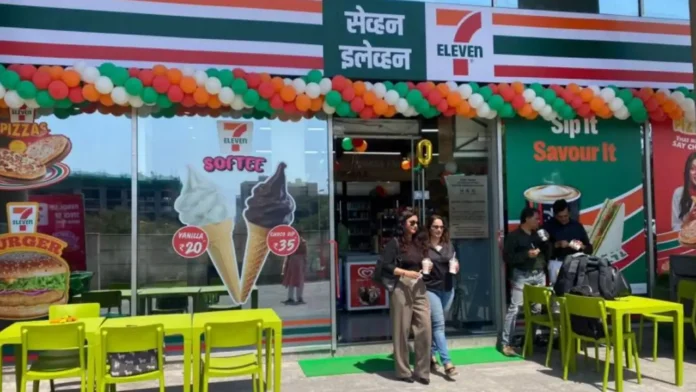
7-Eleven, the Texas-based convenience store chain, has marked a significant milestone by reaching 50 stores in India. According to a company official’s social media post on Thursday, the latest outlet opened in Pune at the World Trade Center in Kharadi.
“50 is not just a number, it’s a milestone for the brand 7-Eleven India as we opened doors to our 50th store today at World Trade Center in Kharadi, Pune,” said Hardeep Singh, chief executive officer of 7-Eleven India in a LinkedIn post.
“The team’s laser sharp focus and hardwork has ensured we are able to achieve our business goal of rapid expansion. As our footprint grows, our commitment to delight every customer stays at the center of what we do,” Singh added.
7-Eleven offers a one-stop convenience to customers who are always on the go, providing instant solutions through ready-to-eat food, beverages, and daily essentials.
Established as a storefront icehouse in Dallas, Texas in 1927, the Japanese-owned brand now runs over 84,000 convenience stores spanning across more than 20 countries worldwide. Nearly a third of its revenue stems from Asian markets.
According to the brand’s official website, the store chain is currently under complete ownership of Japan-based Seven and I Holdings Co. Ltd.
In India, Reliance Retail oversees the operations of 7-Eleven. The brand made its debut in the country with the opening of its first store in Mumbai in 2021. Prior to this, 7-Eleven had struck a deal with Kishore Biyani’s Future Group to enter the Indian market, but the agreement was terminated mutually by the two groups in 2021.
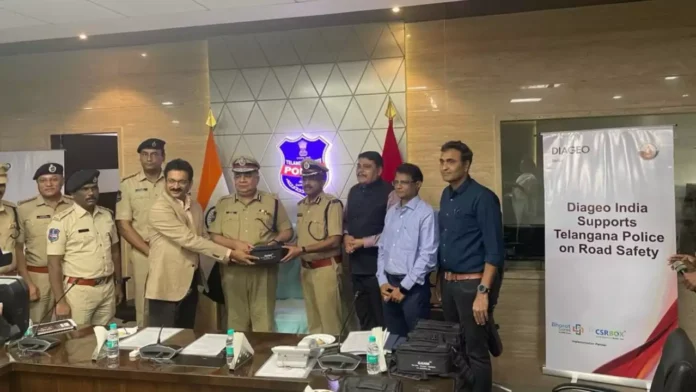
Diageo India, one of the prominent alcohol and beverage companies in the country, has reinforced its commitment to combating drink driving by furnishing Telangana Police with 50 state-of-the-art Alcohol Breath Analysers.
The event was held in Hyderabad in the presence of Director General police Ravi Gupta, Additional DGP Railways and road safety Mahesh M Bhagwat along with senior dignitaries and members from the Diageo India team. Road Safety SP Gone Sandeep, LB Nagar Traffic DCP Srinivasulu, Cyberabad Traffic Additional DCPs Venugopal Reddy and Shivakumar and others were also present at the event.
Diageo India leads initiatives to promote anti-drink driving, notably through its flagship campaign, ‘Wrong Side Of The Road.’ This program employs a range of real-life scenarios to raise awareness among adults.
Addressing the gathering, Director General of Police Ravi Gupta extended his appreciation to Diageo Company and the NGO CSR Box for their collaboration in supplying high-quality breath analyzers to the Telangana State Police Department. He emphasized the department’s pioneering role in several areas nationwide. Gupta underscored that this social responsibility initiative would bolster the capabilities of police personnel and contribute to curbing drunk driving. He expressed optimism that even saving a few lives with these devices would be a significant achievement.
Jagbir Singh Sidhu, Corporate Relations Director, Diageo India, said, “Promoting responsible consumption is one of the key pillars of Diageo India’s Society 2030: Spirit of Progress ESG plan.We stay committed to championing road safety in Indiaand promoting responsible consumption through focussed initiatives to curb underage drinking, drink driving, and binge drinking. Aligned to our ‘Wrong Side Of The Road’ program, these advanced alcohol breath analysers will support the TelanganaPolice Department in addressing the issue of drink driving and promoting road safety in the region.”
Moreover, Diageo India has partnered with over 25 Regional Transport Offices and set up tab labs to advocate awareness through the “Wrong Side of the Road” program.
Last year, over 230,000 adults engaged in this educational anti-drink driving campaign.
In the coming years, the Indian retail industry is set for significant growth, as emphasized by Mohit Malhotra, CEO of Dabur. He anticipates its potential to reach a $2 trillion market, creating employment opportunities for 25 million individuals. Malhotra underscores that this surge will play a pivotal role in contributing to India’s GDP and overall economic advancement.
During his address at the Great India Retail Summit 2024, he highlighted that the primary catalysts reshaping India’s growth trajectory include the rise of the affluent demographic, the emergence of Bharat, and the widespread adoption of technology.
“India is changing at a fast pace in demographics, psychographics, usage behavior, and purchase behavior as the consumer is changing, and along with this, their buying patterns are also changing. Mom-and-pop stores were taken over by the modern trade, and it is now replaced by e-commerce,” he said.
Currently, e-commerce penetration in the nation stands at 7-9 percent, a significant increase from less than 1 percent five years ago.
“At Dabur, e-commerce contributes to 10 per cent of the business. It’s amazing, the way technology is changing the retail landscape,” he said.
He added that credit card penetration in India is at 6 percent, while UPI penetration is around 30-40 percent.
“Indian consumer is becoming richer as per capita income in the last 12 years has risen to double from $1,400 to $2,500 and is projected to be going at $4,000,” he said.
“Going ahead, India will have higher disposable income as 50 per cent of the population of this country will be earning around INR 3 lakh plus every month. So, one in every four households will belong to the upper middle class and this leads to premiumisation and personalisation,” he further added.
Talking about shifts in consumer behavior, he observed that India’s population is younger. This younger demographic favors brands, retail environments, and ecosystems that prioritize responsibility, sustainability, social improvement, respectfulness, and transparency. He stressed that clean labeling signifies the future of the country.
“Going ahead, consumers will embrace only those brands who believe in not marketing but in transparency, trust, and genuineness,” he stated.
In India, the growth is going to come from the nine metro cities, and 30-plus boom towns, along with 50, 000 plus villages in Bharat, he said.
“The consumption in rural is going to be 4.3X as compared to urban growth, which is going to be 3.5 X. So Bharat becomes as important as urban,” he asserted.
“Going ahead, rural shrinkage will happen because the economic power will move up in the country and India will also become urban and that’s what we call Viksit Bharat,” he further added.
The growth in rural India will be led by increased penetration and a transition from unbranded to branded products.
Additionally, there is a rise of new-age channels entering the country such as modern trade, quick commerce, e-commerce, and O2O. However, each channel operates with a distinct approach and caters to a unique consumer base, he remarked.
“This retail change is leading to the birth of digital-first brands and paving the way for premiumisation and personalisation,” he said.
“Apart from this, the path to purchase is also changing now. Instead of TV commercials, mobile has become the path to purchase. Social media has become an important tool. So, almost 30 percent of our spending today is on digital media or social media,” he further added.
Wrapping up the session, he mentioned that currently, 70 percent of the business still occurs through traditional trade. To keep pace with the evolving retail landscape, there’s a need to adapt and readjust; otherwise, profit margins may dwindle, potentially hastening the decline of traditional trade.
“Mom-and-pop will have to reconfigure them to self-service stores or standalone modern trade stores. They will have to adopt technology and install a POS and billing software,” he said.
“Every retailer has to become relevant. Retailers will have to gear up to be on ONDC, and become more technology savvy. Retailers will have to increase relevant assortments and channel financing will become important,” he further added.
He concluded by stating that physical stores will increasingly transform into experiential centers where customers can interact with and experience products firsthand, although ultimately, purchases may occur online.
According to some participants, Pai Platforms is already among the largest buyer apps on ONDC, and the acquisition of Bitsila will expand its presence significantly on the seller apps side as well. However, both ONDC and sources within Pai Platforms stated that there is no justification for these concerns.
While seller apps enroll merchants, buyer apps are customer-facing platforms where customers can place orders.
Girish Pai, CEO of the seller app GrowthFalcons, remarked that if a buyer app transitions into a seller app, it will indeed raise significant concerns. However, he emphasized the need to intensify seller engagement and carve out a distinctive niche in response.
Sameer Sharma, chief executive of UEngage, which helps restaurants save aggregator commission, said, “With Paytm’s acquisition of Bitsila, it might say merchants will have more benefits if onboarded to ONDC via the Bitsila seller app. That may be their strategy. As of now, Magicpin is present both on the buyer side and the seller side. After this acquisition, even Paytm will be present both on the buyer side and the seller side, and this is problematic.”
Queries directed at Pai Platforms and Magicpin went unanswered.
Sources within Pai Platforms revealed that one of the primary challenges currently faced by ONDC is the expansion of its supplier base. As the third-largest seller app on ONDC, Pai Platforms is actively engaged in efforts to enhance this aspect of the network, with the goal of delivering benefits throughout the platform, according to the sources.
They mentioned a notable scarcity of suppliers, a situation that ONDC is eager to rectify. Additionally, they noted that many sellers commonly found on popular platforms such as Swiggy, Zomato, or Amazon have not yet joined ONDC.
Incorporating more significant players with extensive reach is seen as a beneficial move, sources said. Pai is focused on diversifying its array of offerings, including top restaurants similar to those on Swiggy and Zomato, to attract more users, they said.
Girish Pai cautioned that if buyer apps also enter as seller apps, there will likely be duplication of sellers or, specifically in the food and beverage sector, duplication of restaurants.
However, sources at Pai Platforms said, “If Pai is able to onboard a restaurant at a lower commission compared to other seller apps, it is not duplication; Pai is adding value to the network at a lower price.”
T. Koshy, the chief executive of ONDC, stated that worries regarding the network becoming monolithic on both the buyer and seller sides due to the presence of the same players operating on both sides were unfounded.
People are increasingly getting influenced by what he called “a platform strategy”. “Platforms which have end-to-end control are successful. It is not possible for one entity to have expertise in everything,” he said.
“A major percentage of sales of established platforms come from a handful of sellers. The rest are long tail businesses that are costly for them. While some players may become large in the network, it is not possible for a few large players alone to corner all the business on ONDC,” Koshy said.
“In ecommerce, it is not just technological capabilities but operational capabilities too that matter. Regional players may have better operational efficiency compared to big players. They may be able to draw on SaaS solutions offered by large engineering companies. Magicpin alone cannot establish itself as the only service provider. There are other players like UEngage and Growth Falcon, too, who have established themselves because of their product offerings,” he said.
“One acquisition cannot corner every part of the market. One entity cannot acquire every seller, of every product, of every domain,” Koshy explained.
A gazette notification issued by the ministry last week also said that at least 50 per cent of other grades of tea – orthodox and the granular CTC (crush, tear and curl) – should reach the markets through the auction route.
“Every registered tea manufacturer shall, on and from the date of commencement of the Tea (Marketing) Control (Amendment) Order, 2024, sell (i) not less than 50 per cent of total tea manufactured in a calendar year… and (ii) 100 per cent of dust grades tea manufactured in a calendar year in its manufacturing units through public tea auctions, held under the control of the organiser of the tea auction licensed to do so under this order,” read the notification issued by the Commerce Ministry.
Except mini tea factories, the ministry order is applicable for tea manufacturing units in seven northeastern states — Assam, Tripura, Arunachal Pradesh, Meghalaya, Mizoram, Nagaland, Sikkim — along with Bihar, Himachal Pradesh, Uttarakhand and West Bengal.
The Tea Association of India (TAI), one of the key bodies of tea planters and producers, said that it has been advocating the adoption of the public auction route as a single sales channel to ensure “fair price discovery” as the tea industry is “facing unprecedented challenges and is on the verge of collapse”.
Several tea estates bypass the tea auction centres and choose to go for direct selling, where the buyers dominate the prices.
Thanking the Commerce Ministry, TAI President Sandeep Singhania said that in response to the challenges facing the tea industry, the proposal for 100 per cent auction commencing with only dust grades has been put forward.
Dust grades constitute approximately 20 per cent of the total tea production in North India.
“We understand that implementing such changes comes with certain uncertainties and challenges. However, given the urgency of the situation, we believe it is necessary to test innovative solutions with full support for one season, and assess their effectiveness and potential impact,” Singhania said.
“The proposed 100 per cent dust auction signifies a bold move forward, and we encourage all the stakeholders to approach this trial with an open mind and spirit of collaboration,” he added.
Assam, which produces roughly 55 per cent of India’s tea, has more than 10 lakh tea workers in the organised sector, working in about 850 big estates. Besides, there are lakhs of small tea gardens owned by individuals.
The tea belts of the Brahmaputra and Barak valleys are home to more than 60 lakh people.
After Assam, Tripura is the second largest producer of tea in the northeastern region, producing around 10 million kg of tea annually.
Addressing an event organised by industry body Assocham, Rao said, “the nutraceutical industry is not just growing but flourishing at a rapid rate, surpassing all expectations.”
The focus on nutritional and food security has intensified due to rise in demand and supply, he said, adding that the regulatory role becomes paramount to ensure safety and efficacy of products amid tinkering in the genetics of food grains like wheat and rice.
Speaking on the occasion, advisor in the Ayush Ministry Manoj Nesari said both neutraceuticals and ayurveda sectors are growing rapidly amid heightened regulatory focus, innovative breakthroughs and a symbiotic relationship between the two sectors.
He said the Harmonized System (HS) Codes for export of these products, though smaller in digit, are being implemented.
The Harmonized System is a standardised numerical method of classifying traded products.
Assocham National Wellness Council co-chair and Aroma Magic chairperson Blossom Kochhar, Zeon Lifesciences Ltd chairman and managing director Suresh Garg, Shefexil chairman Lal Hingorani and Tech Sci Research vice president Alwin Samuel were also present at the event.
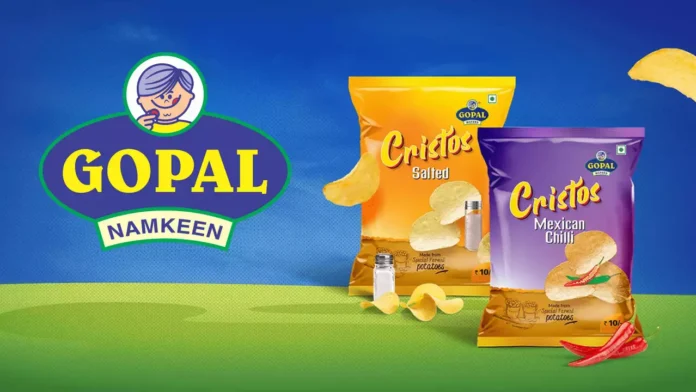
Gopal Snacks has announced the price band for its upcoming initial public offering (IPO) at INR 381-401 per equity share. Subscription for the offering will begin on March 6 and end on March 11. The IPO comprises an offer for sale of INR 650 crore.
The floor price is set at 381 times the face value of shares, which are priced at INR 1 each, while the cap price stands at 401 times.
Bids can be made for a minimum of 1 lot or 37 shares and in multiples thereafter.
Since the IPO is structured as an Offer for Sale (OFS), the company will not receive any proceeds; instead, all funds will be directed to the selling shareholders, namely Bipinbhai Vithalbhai, Gopal Agriproducts, and Harsh Sureshkumar.
Approximately 50% of the offer will be reserved for qualified institutional investors, 35% for retail investors, and 15% for non-institutional investors.
Gopal Snacks, an Indian fast-moving consumer goods (FMCG) company, holds a significant market presence in Gujarat. It offers a diverse range of savory products under the brand ‘Gopal’, encompassing ethnic snacks like namkeen and gathiya, as well as western snacks such as wafers, snack pellets, and extruder snacks.
As of September 2023, the company’s product portfolio consisted of 84 products with 276 SKUs spanning various product categories. Operating across India, it manages six manufacturing facilities, including three primary manufacturing sites and three ancillary facilities.
The three main manufacturing facilities are situated in Nagpur, Rajkot, and Modasa. These sites primarily specialize in the production of the company’s finished products.
The three supplementary manufacturing facilities primarily specialize in the production of besan (gram flour), raw snack pellets, and seasoning and spices. These items are mainly intended for internal consumption in the manufacturing of finished products.
For the six months ended September 2023, revenue from operations experienced a 3% year-on-year decline, amounting to INR 676 crore. However, profit after tax for the same period saw a slight increase, rising to INR 55.5 crore from INR 51.9 crore in the corresponding period of the previous year.
Moglix, a B2Becommerce platform, is reportedly planning to relocate its base to India. This potential move comes on the back of its plans to make a public market debut in the next two years.
“I think we will continue to evaluate 2026-27 as the sweet spot for going public,” Moglix’s founder and CEO Rahul Garg told Livemint. He added that the startup will become “publicly ready” within 12 months.
With this move, Moglix joins a growing number of Indian startups looking to relocate their bases to India. Among these are Razorpay, Groww, Pine Labs, Meesho, and Udaan.
These companies are seeking to return to India as they compete for a share of the domestic capital markets and aim for improved business conditions.
However, the decision to flip back entails significant tax implications, as exemplified by PhonePe, which faced an $800 million tax bill and extensive paperwork.
Commenting on tax implications, Garg reportedly stated that there was no definitive information on this aspect as the process is still underway.
He further mentioned that while the unicorn is considering opportunities in other markets, India stands out as a more favorable destination for listing due to Moglix’s “strongest brand presence in the country.”
Noting that there is sufficient capital available in the country, Garg said the Indian public market has become substantially larger compared to what it was a decade ago.
Meanwhile, the CEO emphasized Moglix’s intentions to strengthen its presence in other international markets. Garg confirmed that non-India markets would account for 10-15% of the unicorn’s total revenue over the next two to three years.
In the financial year 2022-23 (FY23), more than 98% of the company’s revenue came just from India, while the remaining 2% came from Singapore and the UAE.
Established in 2015 by Garg, Moglix specializes in selling a diverse array of industrial tools and equipment on its B2B marketplace. The company focuses on serving sectors including automotive, cement, chemicals, consumer durables, FMCG, and metals, among others.
The Tiger Global-backed startup saw an operating revenue of INR 4,664.7 Cr in FY23, soaring nearly 83% from INR 2,554.6 Cr in the preceding year. Nevertheless, losses climbed by 12% year-on-year (YoY) to INR 193 Cr in FY23.
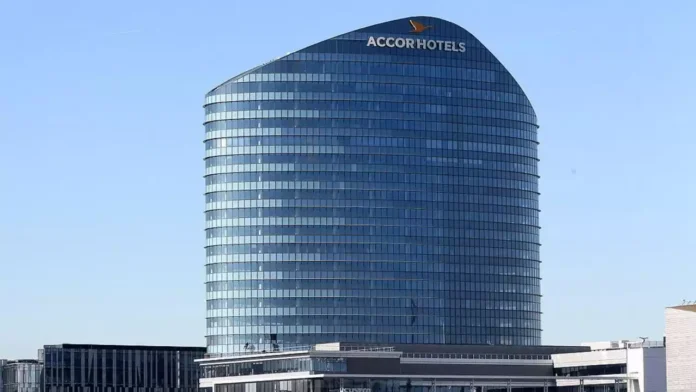
Accor aims to increase its number of rooms in India by twofold over the next three years across premium, midscale, and economy segments (PME). A senior executive revealed that the company plans to inaugurate one hotel per week in Asia (excluding China) this year within these segments. This expansion strategy is driven by various factors, including the rising number of outbound Indian travelers in Asia.
“The demograhics and the booming middle class will drive business for us and others in a major way in India, but a big part of our growth story is also the outbound travel coming out of India,” said Garth Simmons, chief operating officer, Asia PME division at Accor.
“Because China has been so closed. It hasn’t opened to previous levels, India has taken the lead in some of those Asian markets and it will grow further. So, the reliance that we had on the Chinese travellers for markets like Vietnam for instance. Indians will replace them,” he said.
“The demograhics and the booming middle class will drive business for us and others in a major way in India, but a big part of our growth story is also the outbound travel coming out of India,” said Garth Simmons.
“Because China has been so closed. It hasn’t opened to previous levels, India has taken the lead in some of those Asian markets and it will grow further. So, the reliance that we had on the Chinese travellers for markets like Vietnam for instance. Indians will replace them,” he said.
Accor identifies itself as the third-largest foreign hotel group in India, boasting 61 operational hotels (over 11,000 rooms) and an additional 30 hotels (5453 rooms) in the pipeline.
This year, Accor plans to unveil 674 rooms in the PME segment across various locations in India, including Panjim, Candolim, New Delhi, Bhubaneswar, Mysuru, and Chandigarh.
“The pent-up demand has been enormous. India has had a wonderful 2023. Singapore, Thailand, Japan have been extremely strong markets for us too and the majority of the markets in the region have been above 2019 numbers,” said Simmons.
Simmons mentioned that Accor experienced a record-breaking year with 11 signings in India last year and anticipates that 2024 will be another significant milestone year.
“Doubling our room count over the next three years in the PME segment is an ambitious target but not impossible,” he said.
Accor manages 10 hospitality brands in India and South Asia, spanning across luxury and lifestyle, as well as PME segments. Within the luxury segment, it features brands like Fairmont, Raffles, and Sofitel. In the premium sector, Accor offers Pullman, Mövenpick, and Grand Mercure, while Novotel and Mercure represent its midscale offerings. In the economy category, Accor operates brands such as ibis and ibis Styles. The majority of its portfolio in India and South Asia falls within the midscale and economy segments.
We use cookies to ensure that we give you the best experience on our website. If you continue to use this site we will assume that you are happy with it.