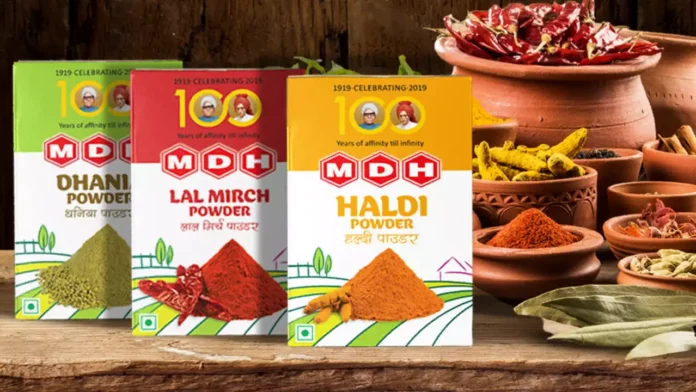
MDH Spices, a leading spice manufacturer, has announced its intention to establish a new manufacturing facility in Ujjain, with an investment of INR 150 crore. Additionally, the company aims to invest INR 2,000 crore in expanding its operations across India in the forthcoming years.
The company has acquired a 16-acre plot in Ujjain.
The company has already allocated INR 5 crore towards its Indore plant investment.
Rajeev Gulati, CMD, MDH Spices, said, “We have taken 16 acre in Ujjain and intend to invest almost INR 150 crore in the coming 2 years. This will be our third largest unit after Faridabad and Nagaur in Rajastha. MP happens to be the center of India and this makes procurement and processing of spices easy. Here we will be producing more because logistically well placed and sending it across MP is easy.”
Gulati mentioned that the increasing demand for Indian spices is creating opportunities for export expansion. He further stated that he is considering the establishment of an export-oriented unit in the state.
“Within India also we are improving and innovating. We are bringing in new blends suitable for different markets,” said Gulati.
Leisure Hotels Group, which is home to 23 operational properties in its portfolio including the Taj Corbett Resort & Spa and Pilibhit House in Haridwar in partnership with IHCL alongside its own brands, is aiming to expand to 100 properties by 2030, as disclosed by Vibhas Prasad, the director of Leisure Hotels Group.
The company, which possesses and operates establishments and ventures like Aloha on the Ganges in Rishikesh, The Riverview Retreat in Corbett National Park, The Earl’s Court in Nainital, and The Manor properties in Bareilly and Kashipur, is contemplating expansion into various markets. These include Udaipur, Jodhpur, Chittorgarh, Kanha, Khajuraho, Vizag, Pondicherry, Kanyakumari, Thekkady, and Kodaikanal.
Prasad emphasized that the chain’s primary expansion focus lies on Madhya Pradesh and Rajasthan. Additionally, there are plans to convert current properties like Naini Retreat and The Hideaway Waterfront in Naukuchiatal into IHCL SeleQtions properties.
Over the next two years, the company plans to recruit 1000 individuals, supplementing its existing workforce of 1200. Expansion for the chain will be financed through a combination of debt and internal accruals. Prasad stated that the chain will employ a mixed strategy for expansion, noting that the current pipeline appears strong.
“Our plan by 2030 is to have 100 properties. We are working with IHCL in the luxury space and we have boutique concepts under our own brands. We have also created a concept called Bedzzz for young at heart customers who are willing to come and stay at a INR 5,000 a night kind of a property, but they want modern amenities and a social vibe,” said Prasad.
“Bedzzz has an interesting concept from a return-on-investment perspective. We could do a greenfield project, buy land, build a property, we could do a brownfield acquisition through a lease. Or we could have a franchised operation. In our portfolio, we also have holiday homes in locations such as Corbett, Rishikesh, wherein some investors or leisure seekers have apartments or villas which they lease back to us, and we operate that entire estate asset as a resort. They get some returns, maintenance is taken care of, and they have room nights. This is also a space that we are expanding,” he added.
This month, the company is set to introduce Bedzzz Xclusiv in Morjim, Goa, alongside upcoming launches of Bedzzz properties in destinations like Ayodhya, Nainital, and Shimla, expected by the end of the upcoming financial year. Additionally, Leisure Hotels Group possesses the 72-room Ginger hotel in Greater Noida, as well as a Mahindra Corbett property.
Prasad mentioned that since its establishment 30 years ago, the chain has maintained a focus on domestic travelers. Its portfolio has consistently catered to the leisure segment in Uttarakhand.
“We realised that Himachal Pradesh also has some synergies. We have also looked at boutique resorts and the accessibility from Delhi NCR, Western UP and Punjab to other weekend destinations,” he added.
He mentioned that the portfolio operates through various legal entities, sometimes partnering for assets as well.
“But, the assets give the management right back to our parent company so when we don’t have capital, we look at a new special purpose vehicle. That’s been the route to our growth so far,” he added. The chain has played a key role over the years in bringing destinations such as Rishikesh, Corbett, Nainital, and Haridwar to the forefront in the domestic traveller market, said Prasad. “We also operated the Char Dham Camps in Badrinath, Kedarnath, Gangotri, and Yamunotri for about twenty years- from 2001, till the Covid-19 pandemic struck. We will also come back in a new avatar in this market and will do this differently in future,” he added.
Flipkart on Sunday announced the launch of its UPI (Unified Payments Interface) handle, aiming to enhance digital payment offerings to all users, including the e-commerce major’s over 500 million customers, and boost India’s digital evolution.
Initially accessible to Android users, Flipkart UPI, supported by Axis Bank, enables customers to register with the @fkaxis handle. Through the Flipkart app, users can conduct fund transfers and complete checkout payments seamlessly.
Following the UPI launch, customers can anticipate a unique and enhanced experience, with access to loyalty features such as Supercoins, cashbacks, Milestone benefits, and brand vouchers.
“Flipkart UPI underscores our dedication to shaping a digitally-empowered society and reaffirms our role as a leading catalyst in India’s digital evolution,” said Dheeraj Aneja, Senior Vice President – Fintech and Payments Group at Flipkart.
The introduction of UPI will empower users to conveniently utilize this feature for both online and offline merchant transactions, both within and beyond the Flipkart marketplace. Additionally, it introduces one-click and quick functionalities for recharges and bill payments, significantly enhancing overall payment efficiency for users.
In 2023, UPI facilitated more than 117 billion transactions valued at INR 182.84 trillion. Flipkart highlighted this as evidence of a vibrant landscape, with active involvement from banks, payment service providers, and fintech companies.
“We continue to scale our growth in UPI with partnerships and innovations. Our partnership with Flipkart has come a long way from launching one of India’s most successful co-branded credit cards to now launching the Flipkart UPI service,” said Sanjeev Moghe, President & Head – Cards & Payments, Axis Bank.
Two major quick commerce platforms, Blinkit owned by Zomato and Mumbai-based newcomer Zepto, are rapidly expanding into the realm of e-commerce. They are set to introduce a wide range of categories including fashion, beauty, electronics, toys, home, and kitchen, among others.
Zepto, which became the first unicorn of 2023, has reportedly achieved $1 billion in annualized gross sales according to insiders. Over the next two months, these platforms plan to add thousands of new SKUs, bringing the total to over 10,000, as they anticipate increased consumer engagement driving commerce through their platforms. This expansion beyond grocery and staples is expected to significantly elevate the scale of quick commerce, impacting established e-commerce rivals like Flipkart and Amazon, as well as local kirana stores, as per sources familiar with the plans.
Additionally, these platforms are strengthening their logistics networks to accommodate a diverse array of products and ensure seamless connectivity with dark stores for efficient deliveries. This represents a substantial strategic expansion from two years ago when quick commerce was emerging in India, involving a significant increase in the number of SKUs to facilitate faster delivery timelines.
Blinkit and Zepto have entered the fashion arena by collaborating with apparel companies and sellers to list brands such as Adidas, Pepe Jeans, Jockey, Manyavar, XYXX, and Mad Over Print. Although their venture into apparel is still in its infancy, insiders suggest that these companies could potentially emerge as preferred destinations for shoppers in specific scenarios. Zepto, based in Mumbai, is promoting its apparel offerings to potential users, emphasizing the demand for clothing and garments required on short notice.
Zepto’s cofounder and CEO Aadit Palicha confirmed hitting $1 billion gross sale run-rate.
“We will be expanding our assortment into new categories like apparel, beauty, home and kitchen as consumer demand for these products is increasing on our platform,” Palicha said. “We are consistently seeing more frequent commerce taking place on the platform and the average user spend is increasing over a period of time. With new brands and categories, the ability to drive higher output per order within the same cost increases.”
He further mentioned that the company has been dedicated to this project since last year, recognizing that the potential total addressable market (TAM) for quick commerce is significantly larger than originally anticipated.
Albinder Dhindsa, the CEO of Blinkit, stated that the Gurugram-based company is currently in the experimental phase with the category and has not yet formulated a definitive strategy for this segment.
“We plan from the point of view of what the customer needs. On fashion, we’ve started some experiments but we don’t have a gameplan yet. Adidas started selling recently… they came onboard as a brand,” Dhindsa said. “It takes us about a year’s worth of work to have a thesis on what a category is. What you’re seeing in beauty today… work has been happening on that for the last 1-1.5 years… At any time we’re experimenting with five or six (categories).”
During the first nine months of FY24, Blinkit recorded a Gross Merchandise Value (GMV) surpassing $1 billion. Swiggy witnessed a 63% increase in Instamart gross sales in the first half of FY24, as reported in a filing by Prosus.
BigBasket’s BB Now is another competitor in this segment but entered the market later and is now striving to catch up with its larger rivals. Dunzo, backed by Reliance Retail, effectively exited this market due to its own financial constraints.
That being said, it won’t be a simple task for quick commerce players to compete with established horizontal e-commerce giants. Success will largely hinge on execution across crucial stages, from sourcing to delivery.
“It won’t be easy at all. There are sectoral issues, for example in fashion with returns. Other segments too will have challenges but a lot of work is being put in place to find a solution because there is a consumer demand,” one of the top industry executives said.
“Offering width is challenging for ecommerce itself. Large products (by size) and value will still be driven by ecommerce but it would be interesting to see if quick commerce players can challenge ecommerce in a meaningful manner,” another senior ecommerce industry executive said.
Regarding price points, a senior executive in the quick-commerce sector mentioned that the cost of selling on quick commerce platforms may also become more rationalized for brands at a larger scale. Similarly, addressing product returns would be necessary, as it is not typically included in the framework when selling grocery and other daily items.
“We’ve seen brands sell the same products cheaper on Amazon because the cost of doing business with quick-commerce may be higher. But as we scale up, we are seeing them bring quick-commerce to parity…or in a few cases, go more aggressive on quick-commerce. But that’s their journey,” this person said, adding the same occurred with FMCG companies like HUL, Nestle, Mondelez. “But now that there’s a lot of buying on these platforms… and quick-commerce has become an important channel, they’re putting a lot more focus.”
After a low-intensity bomb blast at a popular city eatery left 10 people injured, the Bruhath Bangalore Hotels Association announced on Saturday its commitment to devising a plan to enhance security systems at all hotels across the city. They also intend to discuss preventive measures to ensure the safety of public places.
On Friday afternoon, the Rameshwaram Cafe witnessed a bomb blast at its Brookefield branch following which security has been tightened across the State and its capital city. According to the Association, it will be convening a meeting with police officials, hotels owners and other stakeholders to discuss the Standard Operating Procedures (SOPs) to maintain vigil in hotels.
They would also discuss the dos and don’ts in hotels, review the SOPs and step up security measures to avert any such untoward incidents in the near future. It will also discuss having in place an enhanced security system in place and work towards having a zero tolerance approach against movement of any “suspicious individuals” and those “loitering” in the hotels henceforth.
President of Bruhath Bangalore Hotels Association, PC Rao said that once the police investigation is concluded, they would soon call up a meeting with the police department, cafe and hotel owners as well as other stakeholders to discuss and chalk out a detailed plan to enhance the security system at the eateries so as to avoid such unfortunate incident in future.
“We are working on ways to enhance the security system and ensure safety of people at public places but for now we are waiting for the formal report from the police department on how it (blast) happened. Once the investigation is over, we will take up the matter and chalk a detailed plan. Our discussions are on and we are definitely calling for a meeting next week with police officials and other members in the hospitality business,” he said.
Emphasizing that such incidents have occurred in public places like hotels, railway stations, bus stands, he said, such people can target any public place and so we as citizens of Karnataka and Bengaluru should be careful and do the needful as a responsible citizen to keep our city safe and secure. “We need to know and analyse what actually happened and how it happened..and take preventive measures accordingly. Instead of putting blame on police or the government, It’s our responsibility as well as our duty as a citizen to secure our places,” he said.
Kadamba, a renowned single-malt whisky hailing from Goa, has accomplished an outstanding feat by claiming the title of “Best Indian Single-Malt Whisky” at the Icons of Whisky awards, presented by Whisky Magazine in the UK. This remarkable achievement on the international stage is a significant milestone for Kadamba Whisky, solidifying its standing among esteemed global whisky brands such as Suntory, Red Breast, JP Wiser, and Johnny Walker.
Kadamba’s Signature Expression, the winning whisky, undergoes a double-distillation and is aged in a blend of bourbon, sherry, and virgin American oak casks. This unique aging process results in a complex and full-bodied flavor profile that sets Kadamba apart.
Renowned as one of the globe’s most esteemed whisky contests, The World Whiskies Awards conducts blind tastings of around 6,000 whiskies hailing from the top 60 distilleries across the globe. Kadamba’s triumph highlights its outstanding quality and meticulous craftsmanship.
Crafted in limited batches to preserve its exclusivity and outstanding quality, Kadamba’s vintage single malt whisky commands a price of INR 2,200 per 750ml bottle. Encased in a stunning 3D cut-glass effect decanter, it has become a sought-after collector’s piece. Its distribution is restricted to exclusive wine outlets and upscale bars in Goa.
The Cheers Group is a globally recognized conglomerate in the beverage alcohol industry, renowned for its inventive range spanning Wine, Spirits, and Ready-to-Drink (RTD) beverages. Among its standout offerings are Indian Single Malts and Scotch whiskies, serving as the group’s flagship products.
Imperial Distillers and Vintners Pvt. Ltd., a division of the Cheers Group situated in Goa, features a cutting-edge production facility dedicated to crafting exquisite malt spirits. This distillery houses a modern plant equipped with top-of-the-line copper stills employing the latest design and technology. With a capacity to produce up to one million liters of premium Indian malt spirit annually, it stands as a testament to excellence in distillation.
The acknowledgment of Kadamba single-malt whisky at the Icons of Whisky awards underscores its outstanding quality and craftsmanship. This accolade cements its status as a top-tier whisky, showcasing India’s rising prominence in the global whisky scene.
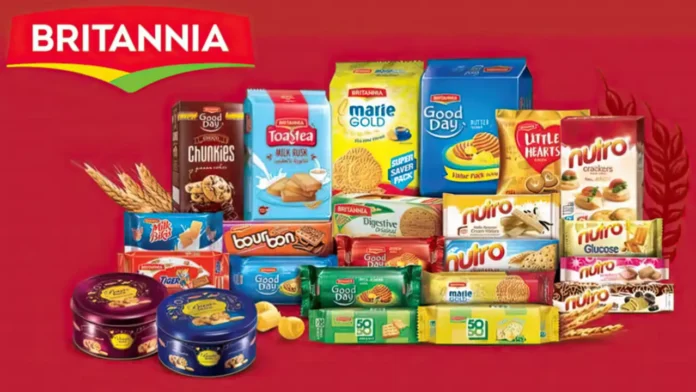
Britannia Industries, India’s renowned biscuit maker, is currently exploring potential joint ventures to enter high-margin categories such as chocolates, fresh dairy, and salty snacks, as revealed by Varun Berry, the company’s vice-chairman and managing director.
The maker of Marie Gold and Good Day biscuit brands has enlisted the global consulting firm Bain & Co to prepare an aggressive ‘go-to-market’ project by leveraging data-driven strategies, as informed by Berry.
The Nusli Wadia-owned company is looking to map its target market segments closely for mounting an effective challenge to existing players in the new categories. It will also hire talent to build the sales team, Berry said.
“While our current focus is to pause and consolidate, we remain vigilant for opportunities to fuel portfolio growth,” said Berry, credited with Britannia’s transformation from a biscuit-centric entity to one with a broader product range. He assumed the role of vice-chairman in 2022, after Rajneet Kohli of Domino’s Restaurants was appointed as CEO.
“Chocolates is a big market but difficult to penetrate and therefore, it will only be through a JV if and when it is possible,” he said. “We are present in multiple categories and want to get them larger before going to others. The go-to-market strategy with the help of Bain will help identify blank spaces more precisely to ensure improved distribution of its products across markets,” he added.
Meanwhile, dismissing market rumours of a stake sale in Britannia to large players or private equity firms, Berry said, “There is no truth to this and absolutely no chance of that happening.”
While aspiring to evolve into a comprehensive food company, Britannia’s current focus lies in expanding its existing categories, including biscuits, cakes, rusks, croissants, energy bars, protein bars, cheese, milkshakes, and yogurt.
“Pause and consolidate is all about ensuring better focus. We are currently going to do that better with scale; about scaling up, for example, cheese is now a INR 100 crore business,” he said.
Britannia’s leading biscuit brands encompass Marie Gold, Tiger, NutriChoice, 50-50, Treat, Pure Magic, Milk Bikis, Bourbon, Nice Time, and Little Hearts.
Samara Capital, a private equity firm, in collaboration with a group of investors including Convergent Finance, is setting up a roll-up platform for packaged foods with a dedicated investment of $150 million. According to insiders familiar with the initiative, the strategy involves pursuing mergers and acquisitions in the mid-sized packaged foods sector through bolt-on or tuck-in acquisitions, as well as fostering organic growth. Additionally, the firm intends to secure licensing agreements to introduce international food brands to the Indian market.
The platform will be similar to Sapphire Foods, a venture previously established by Samara Capital for food services. Sapphire Foods currently manages KFC and Pizza Hut, two quick-service restaurant (QSR) chains under Yum! Brands, within the Indian market.
The Samara Capital-backed platform, to be called Agro Tech Foods, has begun with Sundrop edible oil, peanut butter and ACT II popcorn as its first brands.
Last week, Samara and Convergent Finance announced their agreement to collectively acquire a 51.8% stake in the listed food manufacturer Agro Tech Foods (ATFL) from its Chicago-based parent company, Conagra Brands Inc, for INR 650 crore.
“Samara sees Agro Tech as a base on which to build growth in packaged foods, with more mid-sized brands housed under the Agro Tech Foods umbrella. The platform will explore M&As in adjacent categories which are synergistic to the core business of ATFL,” one of the executives said.
The platform will prioritize organic growth in scalable western-style convenience food categories and majority investments, with a focus on areas like capex and distribution. Conversely, less emphasis will be placed on categories such as chocolates and breakfast cereals, which are already saturated.
“The platform will also look at licensing more global brands into ATFL and is already in conversation with some global brands that are looking to enter India,” according to the executives mentioned above.
Samara Capital declined to comment on specific plans for its new platform.
“We intend to create a large and unique branded food platform in the country with this acquisition,” Manish Mehta, managing director and co-chief investment officer at Samara Capital, said in a statement while announcing the deal with Conagra Brands last week.
Agro Tech Foods currently boasts a distribution network spanning 4.6 lakh outlets and operates six plants throughout India. Nonetheless, the company has experienced a decline in performance in its core categories of popcorn, spreads, and edible oils in recent years, which has deterred investors. Conagra attempted to sell the company two years ago, conducting a thorough process through an investment bank, but failed to find any buyers due to stagnant growth and declining margins.
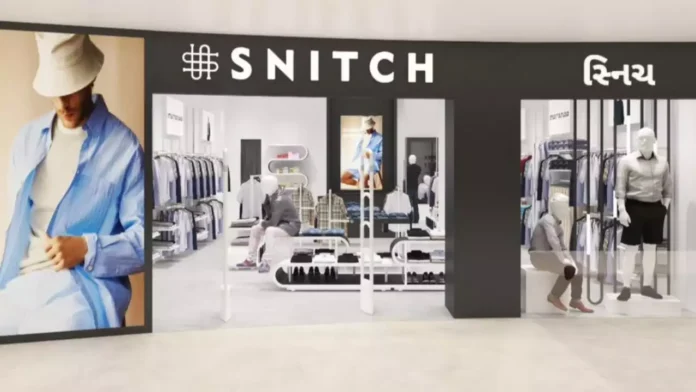
Snitch, the men’s fashion brand, has made its mark in Surat, one of India’s fastest-growing cities, with the grand inauguration of its premier megastore at VR Mall. Located at the heart of the city, VR Mall stands as a quintessential community-oriented lifestyle destination. The newly launched Snitch outlet at VR Mall is set to redefine men’s fashion, offering an extensive range of apparel tailored to meet the diverse preferences of the local clientele. This significant expansion marks Snitch’s commitment to enhancing the shopping experience for residents and visitors alike in Surat.
Siddharth Dungarwal, Founder of Snitch said, “We are thrilled to introduce our latest retail store to the vibrant community of Surat. At Snitch, we are dedicated to providing unparalleled quality, innovation, and customer service, and our new store is a testament to that commitment. We believe Surat is one of the highly potential markets for the brand, and therefore, we have made our presence in the city with a commitment to serving customers with niche designs and quality.”
Snitch is disrupting the men’s fast fashion market in India by offering products aligned with the latest trends across various categories such as apparel, fragrances, shoes, sunglasses, and accessories.
The latest store from the brand in Surat is poised to captivate fashion aficionados with its distinctive collection, meticulously planned layout, inventive displays, and immersive interactive encounters. Specializing in youthful, sporty, and casual attire, Snitch also presents a curated assortment of women’s wear and gender-neutral designs.
Having opened its first retail store in Bangalore last year to facilitate a seamless online-to-offline customer experience, Snitch has extensive plans over the next two years to launch more stores across prime locations in prominent Indian markets.
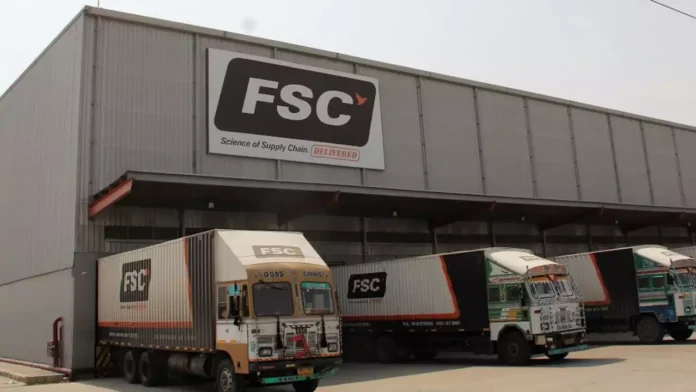
Lenders backing Kishore Biyani‘s Future Supply Chain Solutions have been granted a 45-day extension to finalize the corporate insolvency resolution process (CIRP), allowing them to review bids from Reliance Retail Ventures and Tatkal Loan India.
On Friday, the resolution professional of the BSE-listed Future Supply Chain Solutions, Rajan Rawat, sought an extension of 45 days, pleading that two prospective resolution applicants have submitted their bids and lenders have already requested them to increase the value of their plans.
“These plans are under active consideration and lenders are already in talks with the bidders to maximise the value,” the resolution professional argued through his lawyer.
The division bench of judicial member Lakshmi Gurung and technical member Charanjeet Singh Gulati allowed the request in an oral order. The detailed order was awaited.
Initially, besides Reliance Retail Ventures and Tatkal Loan India, additional bidders including One City Infrastructure, Globe Ecologistics, Shanti G.D. Ispat & Power, Camions Logistics Solutions, and Sugna Metals had expressed interest in acquiring the company through the bankruptcy proceedings.
“The Insolvency and Bankruptcy Code provides for an overall time limit of 330 days for completion of CIRP,” said Himanshu Vidhani, partner at law firm Chandhiok & Mahajan. “However, the courts, in exceptional circumstances, have extended the time limit beyond 330 days also.”
On January 5th of last year, the company entered into the Corporate Insolvency Resolution Process (CIRP) after an application was filed by its operational creditor, DHL E-Commerce (India) Pvt Ltd, due to a default on dues amounting to approximately INR 7.26 crore. The total admitted liabilities of the company stand at INR 885 crore. Major creditors of the bankrupt company include Azim Premji Trust (INR 274 crore), DFC First Bank (INR 158 crore), JC Flowers Asset Reconstruction (INR 63 crore), and State Bank of India (INR 45 crore).
We use cookies to ensure that we give you the best experience on our website. If you continue to use this site we will assume that you are happy with it.