Monday, February 9, 2026
Home Blog Page 624

Baccarose partners with Alexandre.J to bring French perfume elegance to Indian consumers

0
Baccarose
Alexandre.J

Mumbai-based luxury beauty brand Baccarose has expanded its fragrance portfolio by introducing Alexandre.J, a prestigious French luxury perfume brand, to the Indian market.

“We are thrilled to launch Alexandre.J Perfumes in India, offering a perfect blend of artistry and accessibility in niche perfumery. This collaboration resonates with the increasing demand for luxury fragrances in India,” said Kadambari Lakhani, director, Baccarose Perfumes & Beauty Products Pvt. Ltd.

As part of this collaboration, Baccarose will present Alexandre.J’s unique collections, including The Collector, Art Deco, and Art Nouveau, to consumers in India.

Continue Exploring: French apparel brand Kiabi partners with Myntra for Indian debut

“Entering the vibrant and diverse Indian market is an exhilarating moment for Alexandre.J. Our partnership with Baccarose showcases our unwavering dedication to delivering an unparalleled olfactory experience to the Indian consumer,” said Amelie Jabban, visionary Global Brand Director of Alexandre.J.

Launched in France in 2012, Alexandre.J boasts a 100% made-in-France production. Perfumes are meticulously crafted in Honfleur, Normandy, while oil fabrication occurs in Grasse. With a footprint in more than 85 countries, the brand’s reach is extensive.

Founded in 1984 by Hemansu Kotecha, Baccarose asserts its position as a premier distributor of international luxury beauty brands in India. As per the company’s website, it manages a multi-tier distribution network spanning 16 warehouses across the country. Collaborating with prominent retailers such as Sephora, Nykaa, Shopper Stop, and Lifestyle, Baccarose maintains a significant presence in the market.

Baccarose oversees over 5,000 points of sale and handles a portfolio of over 65 brands on prominent e-commerce platforms.

Continue Exploring: French fashion brand Maison Margiela marks its Indian debut in collaboration with Shoppers Stop and L’Oréal International Distribution

Advertisement

Amul to celebrate golden jubilee on Thursday, discuss vision for next 25 years: GCMMF Chief

0
Amul
Jayen Mehta, the managing director of GCMMF

On Thursday, Prime Minister Narendra Modi will participate in the golden jubilee festivities of the Gujarat Cooperative Milk Marketing Federation (GCMMF), renowned for its ‘Amul‘ brand. As per an official statement by a representative of the dairy giant, the Prime Minister will also unveil five projects amounting to INR 1,200 crore. Jayen Mehta, the managing director of GCMMF, mentioned that the federation will deliberate on its vision for the forthcoming 25 years during the event.

More than 1.25 lakh dairy farmers, including representatives from approximately 18,600 villages in Gujarat, are expected to attend the event at the Narendra Modi Stadium in the Motera area of Ahmedabad. Mehta mentioned that 40-45 percent of the dairy farmers in attendance will be women.

Mehta said that the federation was established in 1973, with an annual turnover of INR 20 crore.

Continue Exploring: Amul secures top spot as world’s strongest dairy brand and second strongest food brand globally

“In the last 50 years, it has emerged as the country’s number one FMCG (fast-moving consumer goods) organisation, with the Amul brand set to achieve a turnover of INR 80,000 crore, and Amul Federation a turnover of INR 61,000 crore this financial year,” he said.

Apart from PM Modi, Union Home and Cooperation Minister Amit Shah, Union Animal Husbandry Minister Parshottam Rupala and Chief Minister Bhupendra Patel will also remain present during the golden jubilee celebrations, he said.

During his visit, Modi will inaugurate five new dairy projects, including a modern cheese plant of Sabar Dairy, which has come up with an investment of INR 600 crore, a long-life tetra pak milk plant of Amul Dairy at Anand and the expansion of its chocolate plant, he said.

The PM will also inaugurate a 50,000-litre ice cream plant of Sarhad Dairy in Kutch, a unit of Bharuch Dairy coming up in Mumbai, along with various dairy development works under government schemes in the state’s Saurashtra-Kutch region.

“The total investment of the projects is INR 1,000-1,200 crore. On February 23, during his Varanasi visit, Modi will inaugurate a plant of Banas Dairy which has come up there with an investment of INR 600-700 crore,” he said.

Amul’s vision for the next 25 years will also be discussed on Thursday, he said.

Even as each of GCMMF’s 18 milk cooperative members takes the initiative to raise its milk handling capacity, they are expanding by setting up new plants in the state and other parts of the country, Mehta said.

Amul plans to invest INR 11,500 crore in the next 2-2.5 years as part of the MoUs (memorandums of undertaking) signed at the World Food India event organised in New Delhi in November last year, Mehta said.

Continue Exploring: Amul forecasts 20% rise in revenue for FY24; No immediate plans to increase milk prices

“At the event, organisations from different countries made investments of INR 33,000 crore, out of which MoUs for investment of INR 11,500 crore were signed by Amul alone. We will make investments in the dairy processing and collection system as well as setting up ultra modern processing plants, among others,” Mehta said.

He said the investments will largely be made in Gujarat. Member cooperatives will also invest in Varanasi, Rohtak, Ujjain, Mumbai, Goa, Pune, and Kolkata, he added.

Advertisement

Jubilant Foods expects Popeyes to hit INR 1,000 Crore sales mark in 3-4 years, plans rapid expansion

0
Popeyes
(Representative Image)

QSR chain operator Jubilant Foods Ltd (JFL) expects its fried chicken brand Popeyes to reach INR 1,000 crore in sales within the next 3-4 years, as mentioned by its CEO and MD Sameer Khetarpal on Wednesday. Additionally, JFL, which is also a master franchisor of Domino’s, is expanding its reach and is expected to have around 3,000 outlets in the medium term.

The company plans to “swiftly broaden its presence” across its QSR brands, placing particular emphasis on Domino’s, given India’s status as a “rapidly expanding market” characterized by increasing discretionary income and urbanization spurred by its growing economy.

When asked about its latest addition Popeyes, Khetarpal said, “We have got an outstanding response from Popeyes as a brand here.”

JFL, which opened its first store in Delhi on Wednesday and its 33rd store pan-India, has plans to add four more stores in the national capital region next week.

“We are rapidly expanding and Popeyes will be the fastest QSR chain to get INR 1,000 crore in sales,” Khetarpal said.

He further stated that on average, a QSR chain typically requires 11-15 years to achieve such a scale.

“We are opening stores very rapidly. We will do 30 to 50 stores this financial year they’re already there,” Khetarpal said, adding that the company will continue to expand rapidly next year as well.

On the timeframe for Popeyes reaching INR 1,000 crore in sales, Khetarpal said, “It will take 3 to 4 years. By FY28, it would absolutely reach there.”

Continue Exploring: Domino’s Pizza takes on upscale pizzerias in India with premium offerings and hyper-localized approach

JFL plans to expand Popeyes’ presence to the National Capital Region (NCR) and other prominent cities in North India.

Launched by JFL in January 2022, the brand is presently operational in 10 cities across South India, with Delhi marking the eleventh city.

For the current fiscal year, the company has plans to invest similarly around INR 750 crore on expansion and opening of new stores, he added.

JFL is also in the process of expanding its food factories. Presently, there are two factories in operation: the first located in Noida and the second recently inaugurated in Bangalore. Additionally, work is underway for the establishment of a third factory.

The recently commissioned Jubilant Food Park Bangalore is the largest food processing unit. This facility is designed to serve 750-plus Domino’s stores, and 300 stores of Popeyes, Hong’s Kitchen, and Dunkin’, according to the company.

About the expansion of Domino’s, the largest brand in its kitty, Khetarpal said it is expanding rapidly both in metro and smaller towns and gaining market shares from the competitors.

Continue Exploring: Jubilant FoodWorks launches aggressive 360-degree rebranding for Domino’s

“When we started…Domino’s 27 years ago, we would have not imagined we would get to 2,000 stores. Our medium-term outlook remains 3,000 outlets in the next 4 years,” he said.

The potential is far greater than 3,000 stores, with over 1,000 colleges having more than 5,000 students, yet Domino’s is not present.

“There are so many metro stations and airports that are being built, where we are not present. Opportunities are for beyond 3,000 outlets, but our medium-term outlook is to open 250 stores every year…” Khetarpal added.

Besides Domino’s, JFL which is part of the Jubilant Bhartia Group, also has franchise rights to Dunkin’ and Hong’s Kitchen!

“Expansion is on the way for all the brands,” he added.

The expansion would be through company-owned stores but it is also trying for a franchise model, Khetarpal said.

As of December 30, 2023, JFL was operating 1,928 Domino’s stores, 25 stores of Dunkin’ and 22 stores of Hong’s Kitchen.

Continue Exploring: Popeyes sets sights on Italian market expansion, inks master franchise deal with RB Iberia

Advertisement

BigBasket rebrands slotted delivery to ‘bigbasket supersaver’, targets 1-hour service for faster deliveries

0
BigBasket
BigBasket

BigBasket, the Tata Group-owned online retailer, has revamped and rebranded its slotted delivery business, which contributes the largest chunk to its overall revenues. It has decided to rebrand it as “bigbasket supersaver“ with a sharper focus on faster deliveries made within two hours.

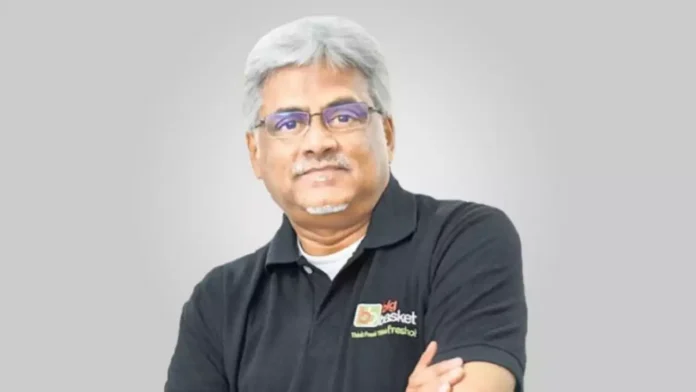
“This is not just a rebranding, but we have also made the slotted delivery business faster and more efficient. It contributes significantly to the overall business. It already has a strong customer base, who are essentially buying large orders of groceries, which were being typically delivered on the same or the next day. We have done re-engineering of our systems and processes to be able to offer extensive assortment of groceries at the same kind of value pricing within two hours,” said Hari Menon, Co-Founder and CEO, bigbasket.

He further mentioned that over the next three to six months, the primary emphasis will be on achieving even faster product deliveries within a one-hour timeframe.

Apart from its slotted delivery service, India’s earliest grocery delivery company is renowned for its instant grocery service, bbnow, and its subscription-based service, bbdaily. The slotted delivery business contributes to around 60-65 percent of the e-grocery player’s revenue.

The bigbasket supersaver program has already rolled out in more than 40 of the 70-odd cities where the platform operates and will expand to encompass all these cities by mid-March. Additionally, it will provide an extra 5 percent savings on various products. Customers will still have the choice to select their preferred delivery slot.

“With the launch of the new model, we expect to see quarter-on-quarter growth of about 35 per cent for this business,” he added.

Menon stated that the range of products available via the slotted delivery service is three to four times broader and more economical compared to those offered through its quick commerce delivery services.

Earlier, the assortment of products was stored in dark stores and warehouses. Elaborating on the re-engineering of processes, he added, “We now carry the entire range of 25,000-30,000 products in dark stores. We are also delivering all the orders through bikes and are doing away with van-based deliveries. We have tested the new model for consistently being able to deliver within two hours, while maintaining the average order value, which is a critical piece. It has tested well for all these parameters. We have also ensured we maintain the value pricing.”

The average order value for the slotted delivery business is estimated to be around INR 1,250-1,300, whereas for quick commerce, it typically ranges between INR 400-500.

Continue Exploring: Bigbasket joins ONDC as a seller, expanding the platform’s reach in the grocery retail space

Advertisement

Devyani International surges 6% amid reports of block deal; Yum Restaurants likely seller

0
Devyani International

On February 21, Devyani International Ltd, the largest domestic franchisee for Yum Brands (including KFC & Pizza Hut) and the sole franchisee for Costa Coffee, saw its shares surge by 6%. This uptick came as 5.3 crore shares, representing a 4.4 percent stake in the quick service restaurant operator, changed hands in a block deal.

The stake was divested at a floor price of INR 164 each, representing a slight discount of 1.2 percent compared to the previous closing price.

Although the buyers and sellers couldn’t be confirmed, a CNBC-TV18 report suggests that Yum Restaurant India Private Ltd is likely divesting its entire 4.4 percent stake in the KFC operator. Citigroup Global Markets India is the sole book-running lead manager in this transaction.

Continue Exploring: Devyani International set to operate KFC outlets in Thailand after $128.9 Million deal

The report came at a time when the QSR industry is experiencing weak unit economics, across both dine-in and delivery formats. Despite these industry-wide difficulties, KFC has shown resilience in managing the crisis effectively, as noted by Motilal Oswal Securities in a recent statement.

“On the other hand, PH has been struggling, partly attributed to intense competition in the market. Store expansion plans remain buoyant for Devyani despite near-term industry challenges. The overall guidance of reaching 2,000 stores by FY24 remains on track. We maintain a cautious stance due to the ongoing demand challenges in the near term. The recent correction in the stock partially covers up the near-term pressure,” it said. We reiterate our BUY rating on the stock with a target of INR 195,” it said.

Continue Exploring: Indian appetite for pizzas and burgers wanes: Domino’s and McDonald’s franchisee results reflect decline in dining out trends

The Yum stake sale is reportedly valued at INR 814.80 crore, with Citigroup Global Markets India presumed to be the sole book-running lead manager (BRLM).

According to a recent report by Elara Securities, Devyani International was actively focused on improving its delivery performance and strengthening ties between its stores and delivery services. The company aimed to broaden the presence of Pizza Hut and KFC outlets with a specific emphasis on delivery. This strategy involved extensive collaboration with delivery aggregators to capitalize on the rapidly expanding online delivery segment.

“In case of Pizza Hut India, it has shifted focus toward a delivery-centric model while maintaining strategically located dine-in and flagship stores. The accelerated expansion of delivery-focused stores has resulted in significantly improved delivery times, which, in turn, has enhanced overall consumer experience. This transition from large dining-oriented stores to smaller, delivery-focused formats has not only positively affected unit-level performance but also has facilitated a faster nationwide expansion,” it said.

Advertisement

Cash-on-Delivery remains top choice for Indian online shoppers, IIM-A survey finds

0
online shopping
(Representative Image)

Despite the rapid shift towards digital payments in India after Covid-19, a recent online consumer behavior survey conducted by the Indian Institute of Management-Ahmedabad (IIM-A) revealed that cash-on-delivery (CoD) remains the top choice for online purchases. The survey findings suggest that concerns about trust may be influencing consumers’ payment preferences.

“Nearly 65 per cent of consumers used cash to make payments in their last online transactions. In particular, consumers use cash more to buy fashion and clothing products exclusively. Cash is also the preferred payment mode for consumers from low-income groups having annual household income less than INR 3.6 lakh,” states the findings from a survey of 35,000 consumers conducted by IIM-A across 25 States.

The survey, titled ‘Digital Retail Channels and Consumers: The Indian Perspective’, utilizes consumers’ most recent online shopping transactions to evaluate their behaviors and perspectives regarding online shopping.

Continue Exploring: Amazon to challenge Meesho with budget-friendly fashion vertical ‘Bazaar’

“While our survey did not ascertain the reasons why consumers prefer CoD, trust may be an issue. However, one needs to think about trust more broadly, say factors that create doubt across product categories. For example, consumers looking to buy fashion and clothing may be concerned about the size and fit of the clothing, and consumers buying electronic products may be wary about the product being a used product. However, more research is required to ascertain these facts, and our data may not speak much regarding whether these are leading to greater use of CoD,” said Pankaj Setia, IIMA Chair Professor, Professor of Information Systems.

Professor Setia collaborated with Professor Swanand Deodhar and Ujjwal Dadhich from the Centre for Digital Transformation of the institute to co-author the survey report.

When asked which cities in India reported greater use of CoD, Setia stated, “Compared to others we do see greater use of CoD in cities such as Kolkata, Patna, Agra, Amritsar, Bhiwandi, Arrah, Ranaghat, Phulia, Bokaro Steel City and Puruliya.”

According to the findings of the IIM-A survey, fashion, clothing, and electronic items emerged as the primary product categories for online purchases. Remarkably, 87 percent of consumers opted for cash-on-delivery (CoD) exclusively for purchasing fashion and clothing products, whereas 75 percent exclusively used CoD for buying electronic products.

“For Indian consumers, CoD is the most preferred payment method for online shopping. It provides consumers the convenience to pay when the correct order is received. Initially, CoD was started to encourage online shopping and gain the trust of consumers in E-commerce. With time, several payment methods, including digital payment systems, have evolved, but consumers still prefer CoD for online shopping,” states the survey where Flipkart was the principal partner of the retail tech consortium that funded it.

Continue Exploring: Flipkart revives same-day delivery service across 20 cities, taking on Amazon’s Prime model

The consortium included Croma, Fabindia, Flipkart, Kotak Mahindra Bank, Nykaa, OYO, Patanjali, P&G, Snapdeal, StarQuik, and Unilever as additional partners.

“However, for retail channels, CoD is not as efficient as the logistic partners handle the transactions. In this process, the retail firms receive the payment a little later compared to other payment methods. For the CoD-based return, the process is even more complicated. At the time of initiating a return, consumers have to fill out the return form and share their bank details. Once the refund team validates the credentials and approves the refund status, the refund is transferred to the bank account. This entire process takes around 5 to 7 days to complete. As the turnaround time for CoD is longer, E-commerce firms usually promote other payment methods by giving discounts and cashback offers to consumers,” it added.

The survey findings also indicate that male consumers tended to spend more in online shopping transactions compared to women. “While this spending pattern needs further examination, it aligns with the gender gap in economic participation and opportunity in the country, wherein females lag behind males.”

The survey also indicated that a higher proportion of female consumers purchased fashion and clothing products, while a larger proportion of male consumers bought electronic products. Additionally, online consumers from smaller cities spent more than those in Tier 1 cities.

Continue Exploring: E-commerce firms boost efforts for gender diversity in supply chain roles

Advertisement

Delhi HC upholds Registrar of Companies’ decision to deny Reebok India’s conversion to Limited Liability Company

0
Reebok
Reebok

The Delhi High Court has upheld the decision of the Registrar of Companies to deny the conversion of Reebok India Company from an ‘Unlimited Liability Company’ to a ‘Limited Liability Company’.

Dismissing Reebok India’s petition, Justice Subramonium Prasad said that the reasons given by the RoC in rejecting the Reebok’s application on the ground that various prosecutions have been filed by the Serious Fraud Investigation Office against it for offences under the Companies Act and the Indian Penal Code cannot said to be so perverse, especially keeping in mind the interest of shareholders and the interest of creditors.

Continue Exploring: Indian footwear industry set for exponential growth, projected to reach $90 Billion by 2030: GTRI Report

“The anxiety on the part of the RoC that the creditors and stakeholder should not be left high and dry cannot be said to be completely unjustified,” Justice Prasad said.

“The registrar was also not provided with an NoC or undertaking from all the shareholders to support the conversion application and the petitioner(Reebok) did not even issue a public advertisement inviting objections from various creditors/stakeholders on the issue of conversion,” the HC said.

The Registrar of Companies (RoC) noted that Reebok experienced significant financial losses, with current liabilities surpassing assets by over INR 2100 crore. Additionally, the registrar highlighted that Reebok failed to furnish a no-objection certificate or undertaking from all shareholders to support its conversion application. Furthermore, Reebok did not issue a public advertisement inviting objections from creditors or stakeholders regarding the conversion, as stated in the High Court order.

Continue Exploring: Reebok unveils new flagship store in Bengaluru, boosting brand’s retail presence

Advertisement

Turkish jewellery brand Zen Diamond set to enter Indian markets with metro store rollout and online debut

0
Zen Diamond
Zen Diamond

Zen Diamond, a Turkey-based diamond jewellery brand, has announced its plans to establish a chain of stores in top Indian metros like Mumbai, Delhi, and Bangalore. Additionally, it aims to establish an online presence in the initial phase. Targeting aspirational young and mid-age consumers in India, the brand also plans to expand into tier 2 and tier 3 markets in subsequent phases.

The Zen Diamond group’s Chairman, Emil Guzelis, has joined forces with Neil Sonawala to spearhead the Zen Diamond business in India. Neil boasts extensive experience in developing jewellery distribution networks across Hong Kong, China, and Southeast Asia. Additionally, he has held a significant advisory position with the De Beers group and prominent retail chains throughout Southeast Asia, as stated by the company.

Continue Exploring: Jewellery consumption set for 10-12% value growth in FY24, driven by soaring gold prices: ICRA

“Given India’s anticipated status as the fastest-growing market for diamond jewellery over the next few decades, Zen Diamond aims to capitalize on this opportunity by becoming the preferred diamond jewellery brand for Indians,” Emil Guzelis said.

“For the growing number of online buyers who are tech-savvy and globally well-traveled, Zen Diamond aims to offer affordable access to international jewellery trends, redefining the Indian diamond jewellery experience through unparalleled customer service and in-store experiences,” added Neil Sonawala.

Established in Istanbul in 2000 by Emil Guzelis, Zen Diamond is a Turkish diamond jewellery brand with nearly 400 stores worldwide.

Continue Exploring: Fashion jewellery brand salty secures INR 5.4 Crore for team expansion and product innovation

Advertisement

Amazon to challenge Meesho with budget-friendly fashion vertical ‘Bazaar’

0
Amazon
Amazon

Amazon, the ecommerce major, is reportedly gearing up to launch its new vertical, Bazaar, showcasing budget-friendly, unbranded fashion and lifestyle products.

As per ET’s report, Amazon Bazaar is presently onboarding sellers and encouraging them to list unbranded products, including apparel, watches, shoes, jewellery, and luggage, all priced under INR 600.

According to sources familiar with the matter, the company is actively seeking to attract Indian value customers, especially as demand for mass-market products slows down and its growth rate decelerates.

“Bazaar is a new store on Amazon where you can sell your fashion and lifestyle products online at no extra charges, thus making it more profitable to run your business,” as per a document revealed by ET.

Continue Exploring: Meesho fastest growing e-commerce player; GMV tops $5 Billion: Alliance Bernstein Report

The delivery timelines for Amazon Bazaar products are expected to be two to three days, contrasting with its usual fast delivery for Prime members.

“Consumer cohorts at the lower end of the market typically do not prioritise faster deliveries… They (Amazon India) have lost out on the segment so far and essentially want to tap the typical Meesho customer,” the report said.

The market segment has already been explored by Meesho, supported by SoftBank, and Flipkart‘s Shopsy (accessible through a separate app). Reliance Industries, led by Mukesh Ambani, is also in the process of creating a budget-friendly platform called Ajio Street.

Continue Exploring: Meesho diversifies strategy, set to launch financial services and expand grocery delivery for enhanced profitability

Amazon proposes eliminating referral fees for merchants, a particularly significant move for products with a low average selling price (ASP). Meesho, boasting an ASP ranging from INR 300 to 350, operates under a commission-free model, instead generating revenue through advertising and offering logistics services to sellers.

It’s worth noting that Meesho, unlike e-commerce behemoths Amazon and Flipkart, does not possess or manage warehouses and logistics operations.

Continue Exploring: Amazon India charts new course: Partners with IWAI to utilize inland waterways for package shipping

The recent development follows closely behind Amazon’s venture into the logistics sector in India, marked by the introduction of a new division named Amazon Shipping. Initially, the company will focus on managing non-Amazon orders as it steps into this domain. Amazon has commenced partnerships with direct-to-consumer (D2C) brands, logistics aggregators, and other enterprises directly serving consumers to launch this innovative initiative.

This comes at a time when Amazon Seller Services, the marketplace business of Amazon India, has received INR 830 Cr from its US parent. As part of this capital injection, the company has allocated 830 Mn equity shares to Amazon Corporate Holdings Ltd and Amazon.com.inc.

Continue Exploring: Amazon India’s marketplace division sees INR 830 Cr investment from US parent

This recent investment comes after Amazon injected INR 350 Cr into its fintech arm, Amazon Pay, on January 19. With this, Amazon’s cumulative investment in its Indian ventures for the year surpasses INR 1,000 Cr.

Advertisement

Retailers report modest 5% year-on-year growth in January sales: RAI Survey

0
FMCG
(Representative Image)

According to a survey conducted by the Retailers Association of India (RAI), retail sales in January 2024 saw a modest increase of 5% compared to January 2023 levels.

Despite the festive season, October and November saw only a 7% growth, while December experienced a 4% growth, rendering the October to December quarter sluggish for retailers.

In contrast to January 2023, retail establishments have exhibited a disheartening pattern this January. Although the wedding season bolstered the jewellery, food, and grocery sectors, the majority of other categories experienced only marginal growth.

Continue Exploring: Retail sales in India plunge as consumer sentiment remains subdued; recovery expected after two to three quarters

Many retailers have reported experiencing declining sales on a like-for-like basis. Although there has been growth in the northern region of India, areas in the east and south have seen negative growth due to subdued consumer demand for non-essential products.

“Even CDIT (consumer durables and IT) retailers have found the month of January to be challenged for growth. Many garment retailers have found growth challenging in spite of it being discount season for non-occasion wear garments,” said Kumar Rajagopalan, CEO, Retailers Association of India (RAI).

Retail establishments in various regions have shown an increase in sales compared to January 2023 levels, with West India leading at 6% growth, followed by North and South India at 5% each, and East India lagging behind with only a 3% growth rate.

Across different categories, Quick Service Restaurants (QSR), food & grocery, and jewellery witnessed a 9% growth each, while sports goods saw an 8% increase, and beauty products experienced a 6% rise compared to sales figures from January 2023.

Continue Exploring: Indian retail giants scale back store expansion amidst slowing consumption trends

Advertisement