Wednesday, February 11, 2026
Home Blog Page 622

FMCG giants roll out budget-friendly digital packs, targeting mass market

0
shopping

FMCG companies are now introducing digital or e-commerce-centric product packages at more affordable prices, aiming at the mass market with tailored offerings. This marks a shift from their earlier focus on premium or niche segments for such releases.

Executives from various companies recognize a significant shift towards prioritizing mass-market digital products, driven by the booming e-commerce sector, which has consistently shown rapid growth over several quarters. The aim is to boost sales volume and reduce the operational costs associated with online platforms.

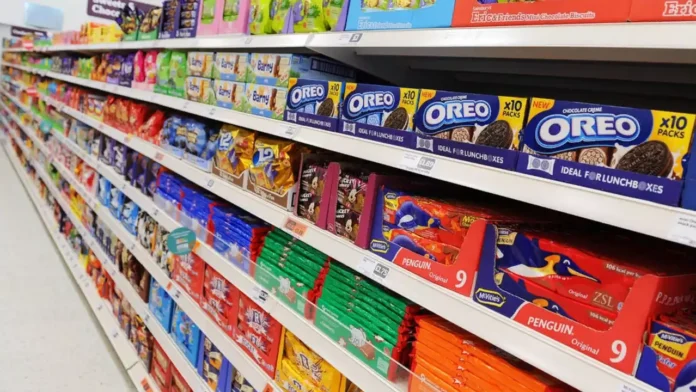
Parle Products, known for its biscuits, is introducing its online packages priced between INR 70-90, down from the previous range of INR 120 and above, or by offering bundled smaller packs. Emami has recently entered the mainstream toothpaste market via digital platforms. Dabur is also adopting a more affordable pricing strategy for its direct-to-consumer (D2C) offerings in segments like baby care and food, contrasting with competitors focusing on premium products. Hindustan Unilever (HUL), India’s largest FMCG manufacturer, has also hinted at a similar transition.

Continue Exploring: FMCG demand in India faces continued decline, Kantar predicts further downturn

“This was bound to happen since volumes for digital first or digital products will only come when prices come down or there are new products targeting mass segment,” said Parle Products senior category head Mayank Shah. “The cost of servicing ecommerce orders will reduce when order ticket size improves. Companies are trying to grow the basket.”

Last month, Rohit Jawa, the managing director of HUL, informed analysts that the company is refining its strategy for online-only brands, currently concentrated in the premium beauty care sector. HUL aims to expand this model into food, other product categories, and also into the mass market segment.

“And that is what’s going to be also a very important outcome of our experience in the last three years, apart from the fact that we have now two beautiful brands, maybe a third one that would definitely go mass,” said Jawa.

According to industry executives, the expenses associated with fulfilling online orders are considerably higher compared to those of modern or general trade. Delivery costs typically range from INR 50-60 per order for two-wheeler deliveries, but can escalate to INR 160-180 per order for four-wheeler deliveries. These elevated costs render the operation financially unsustainable unless there is a significant total bill value achieved through a combination of premium, mid-segment, and mass products.

The contribution of e-commerce to total sales has seen a significant increase for most FMCG companies, now reaching 12-14%, inclusive of any D2C segment. With the addition of modern trade, this figure has surged past 20%, with companies such as ITC reaching as high as 31%. In its latest investor presentation, ITC emphasized the development of channel-specific assortments in response to the strong growth in alternative channels.

Certain companies have devised strategies to gradually introduce their digital-exclusive or digital-first products into mainstream channels like general trade to expand their reach. For example, Marico has initiated this process with its Beardo brand and intends to extend it to other products. Similarly, Emami plans to introduce its toothpaste to kiranas as part of this approach.

According to Mohit Malhotra, CEO of Dabur, the competition from high-end urban markets and Direct-to-Consumer (D2C) brands hasn’t affected Dabur significantly. This is because Dabur primarily operates within the mass market price range, whereas these competing brands typically have significantly higher price points.

“And because of which they can circumvent or make profits, despite freight costs being very high in D2C. The real battle will be fought with them when they become offline and every startup would want to go offline because that’s where the muscle is,” he said.

Continue Exploring: Consumer goods giants scale back B2B sales to ensure fair play for distributors

Advertisement

McDonald’s engages with authorities amid controversy over cheese substitutes

0
McDonald's
McDonald's

Fast food major McDonald’s franchise for west and south India on Friday said it is engaging with the “competent authorities” amid reports of Maharashtra Food and Drug Administration taking action against it for using cheese substitutes in its products.

Hardcastle Restaurant, a subsidiary of Westlife Foodworld Ltd, has the franchisee rights to own and operate McDonald’s restaurants in west and south markets in India.

“We are actively engaging with the competent authorities on this issue and awaiting their final clarification. We have always been adhering to stringent food standards and are fully compliant with all applicable food laws,” said a statement from McDonald’s India (West & South) shared on BSE by Westlife Foodworld.

According to media reports, the Maharashtra FDA has accused McDonald’s of deception using cheese substitutes in burgers and nuggets instead of real cheese and the licence of an outlet in Ahmednagar has been suspended.

Continue Exploring: McDonald’s faces regulatory heat: Maharashtra FDA revokes license amid cheese substitution allegations

The reports further said the action has resulted in McDonald’s removing the word cheese from their menu in several locations, with the Maharashtra FDA asking the fast food chain to remove the usage of word cheese from its menu across India.

“Amid recent reports about the removal of ‘Cheese’ from our menu at McDonald’s locations in Maharashtra, we want to assure our valued customers that only genuine, high-quality cheese is used in all our cheese-containing products,” the statement said.

It further said, “Collaborating with suppliers adhering to global standards ensures top-quality cheese in our product offerings and not cheese analogues or any substitute.”

McDonald’s India (West & South) said, “Our commitment to transparency in our ingredients and dedication to providing delicious, high-quality meals to our customers remain unwavering.”

Continue Exploring: McDonald’s India launches McSaver Meals, offering budget-friendly options

Advertisement

Pernod Ricard set to invest $200 Million in building its biggest Asian distillery in Maharashtra

0
Pernod Ricard
Pernod Ricard (Representative Image)

French distiller Pernod Ricard is planning to invest $200 million to construct its largest Asian distillery in Nagpur, Maharashtra, as part of a broader strategy to reduce dependence on malt and scotch imports for the Indian market.

According to the producer of Chivas Regal, Glenlivet, and Absolut spirit brands, the distillery will be capable of producing up to 13 million litres of Indian malt annually. The investment will be distributed over the next decade.

“This investment is the opportunity for us to produce our own malt and not be dependent on any external sourcing for the Indian malt. It is part of our long-term plan and we always look at the development of our business; how much we can procure from our sister company Chivas Brothers, and what is the perception of the local Indian malt thatsome of our competitors have started to do the job of producing quality malt in India,” said Jean Touboul, managing director at Pernod Ricard India.

“It doesn’t mean that we are going to stop importing and we will continue to import Scotch whisky but given the strength of our business, the development of our business, this will be an additional part of our business,” he added.

Continue Exploring: Irish Distillers chairman eyes India as next big market, anticipates second-highest global standing

The company has entered into a Memorandum of Understanding (MoU) with the Maharashtra government for the construction of the distillery. Additionally, it aims to source up to 50,000 tonnes of barley annually from farmers throughout India and collaborate with the state government to enhance barley cultivation, thereby augmenting farmers’ income, as per the company’s statement.

Pernod Ricard presently runs a single distillery in India, located in Nashik, Maharashtra, alongside 24 bottling facilities across the nation. The company noted that it typically invests around 35 million euros annually in India.

Despite having minimal representation in the mass market segment, the company maintains a significant foothold in the Indian market, commanding approximately one-fourth of the total whisky market share. Its substantial portion of business stems from premium and semi-premium brands, notably Blenders Pride, Royal Stag, and Imperial Blue.

Pernod Ricard also owns India’s highest-selling scotch brand, 100 Pipers, with annual sales of 1.5 million cases. Last year, the company launched an Indian single malt, Longitude 77, joining the league of companies such as Diageo and Radico Khaitan that have debuted high-end local brands such as Epitome Reserve and Rampur.

Continue Exploring: Pernod Ricard reports 4% sales growth in Indian market during first half of FY24

“For our Indian single malt, it is just a fraction of that as we have just launched the product a few months ago. But it’s not only for this brand, it’s for our entire business. It’s also to capture for a possible export. Our Indian whisky is already exported to more than 50 markets. With this additional supply, we will be able to expand the number of countries we export to. So, we are catering for our long-term needs,” Touboul said.

Pernod Ricard considers India one of its top three “must-win” countries globally, alongside the US and China. Presently, India contributes over 10% of the company’s global revenue, totaling 12.1 billion euros, and nearly a third of its global volume. In terms of profit, India ranks as the third-largest market, being the largest in terms of volume. In the fiscal year that ended in March 2023, the company witnessed a 10% increase in its revenue in India, reaching INR 25,142 crore, although net profit declined by 8% to INR 1,343 crore due to higher taxes and promotional expenses.

Continue Exploring: Pernod Ricard expands its no-alcohol offering with Beefeater 0.0%

Advertisement

Citi Research bullish on Mamaearth, projects 24% upside potential with ‘buy’ rating

0
Mamaearth

Brokerage firm Citi Research has started covering Honasa Consumer Ltd, the parent company of D2C unicorn Mamaearth, giving it a ‘buy’ rating. The firm anticipates strong growth driven by the company’s brand positioning and the expansive market opportunity.

Citi has additionally established a price target (PT) of INR 550 for the stock, suggesting a potential increase of nearly 24% from its recent closing price on the BSE.

“We expect growth outperformance led by company-specific initiatives and masstige positioning (business less impacted by demand slowdown),” said Citi analyst Vismaya Agarwal in the research note.

The analyst pointed out that Honasa’s strengthening market position through innovation, accelerating growth by extending distribution reach, entering new sub-categories, and gradually expanding margins are key long-term advantages.

It’s worth mentioning that Mamaearth had a subdued debut at INR 324 on the BSE in November last year. Since then, its shares have risen by 37% and are presently trading at INR 444.

During its most recent quarter, Q3 FY24, Mamaearth witnessed a significant 264% surge in its consolidated net profit, climbing from INR 7.1 Cr in the corresponding period last year to INR 25.9 Cr. Additionally, its operating revenue rose by 28% year-on-year to reach INR 488.2 Cr for the quarter.

Continue Exploring: Mamaearth parent Honasa Consumer sees 250% YoY surge in net profit to INR 26.1 Crore in Q3FY24

Despite experiencing a marginal sequential decline in PAT during Q3, Citi pointed out that the startup’s financial performance is on an upward trajectory as it scales up.

The brokerage projects that Honasa’s consolidated revenue will experience a 25% Compound Annual Growth Rate (CAGR) from FY24 to FY26, surpassing the growth projections of its FMCG counterparts. This growth will be propelled by Mamaearth’s offline expansion and robust growth in other brands.

It’s important to highlight that Honasa, the parent company of Mamaearth, also possesses other beauty and personal care brands such as The Derma Co., Ayuga, Aqualogica, and Dr. Sheth’s.

Analyst Agarwal anticipates that Honasa’s EBITDA will accelerate at a rate of 55% CAGR, propelled by its rationalization of ad spending, enhancement of channel mix, and operational leverage.

“We also expect return metrics to improve gradually driven by improving profitability, a lean balance sheet (asset-light contract manufacturing model, limited capex requirement for company EBOs) and prudent working capital management,” Citi’s Agarwal said.

Continue Exploring: Nuvama analysts bullish on Mamaearth for MSCI Smallcap Index, Nykaa gaining momentum for Global Standard Index

Nevertheless, the brokerage highlighted that the startup, founded in 2016, remains a relatively young company, with its largest brand, Mamaearth, yet to achieve a stable level of profitability.

In fact, Citi has pointed out that one of the key risks to its thesis is Mamaearth’s reliance on contract manufacturers.

It’s worth noting that during its IPO last year, Honasa collaborated with 37 contract manufacturers, a fact that raised concerns for many.

Nevertheless, during that time, Mamaearth founders Ghazal and Varun Alagh explained that manufacturing required significant capital investment, which could potentially limit the company’s resources. They further stated that outsourcing manufacturing would enable the company to swiftly navigate this growth stage.

Additionally, there are other risks to consider, such as increased discounting and competitive intensity, as well as the potential for pre-IPO shareholders of the startup to sell off shares once lock-ins expire.

The six-month lock-in period for Honasa’s pre-IPO shareholders is set to expire in May. Nevertheless, certain shareholders were granted exemptions from this lock-in period based on their percentage of holding.

Continue Exploring: Honasa Consumer sets sights on outpacing industry growth by 2 to 2.5 times; CFO unveils growth strategy for next year

In December last year, Fireside Ventures sold 60.89 lakh shares, equivalent to a 1.89% stake in a bulk deal. Similarly, last month, Stellaris Venture Partners disposed of more than 32 lakh shares, representing 1% of its stake in the company, in a bulk deal.

Peak XV Partners currently holds the largest stake in Honasa, accounting for 18.84% of the company’s shares. Notably, Sequoia Capital Global Growth Fund holds a 4.38% stake in the D2C unicorn, which is separate from Peak XV Partners’ holdings.

“We note pre-IPO private equity players were holding stake in Honasa. After the promoters, Peak XV/Sequoia is the largest shareholder, with 23% stake in the company. The other PE players together own about 19% and have all sold partially in the IPO. We note the risk of excess supply of Honasa shares coming to the market once the lock-ins for these players expire,” the Citi analyst said.

Nevertheless, Citi anticipates additional upside potential for the stock going forward, driven by the possibility of outperforming its peer group.

In fact, the brokerage also pointed out that while some market segments compare Honasa to Nykaa due to similarities in their operations, target audience, and digital-first approach, direct benchmarking might not be suitable. This is because they have distinct business models—Honasa operates more as a brand while Nykaa functions as a marketplace.

Jefferies brokerage also maintains a ‘buy’ rating on Mamaearth shares with a price target of INR 590.

Advertisement

Zara expands presence in Gujarat with grand opening of flagship store in Ahmedabad’s Palladium Mall

0
Zara
Zara

Global fashion brand Zara has unveiled its first store in Ahmedabad, Gujarat, located at Palladium Ahmedabad.

Covering 27,000 square feet, this marks the brand’s second establishment in Gujarat. It presents collections for women, men, and kids across three floors—ground, first, and second—and is furnished with cutting-edge technological amenities.

The brand’s app is seamlessly integrated with various services, such as reserving fitting rooms, accessing a designated area for online order pickups, browsing store inventory online, ordering items for pickup within two hours, and checking stock availability. Additionally, the store features two self-checkout zones for added convenience.

Continue Exploring: Zara’s parent company Inditex strengthens Lefties brand to compete with Shein

Regarding sustainability, the establishment has been meticulously designed, constructed, and operated to minimize energy and water consumption. Furthermore, the wood utilized in the store, along with paper goods such as bags and labels, bear PEFC or FSC certifications, ensuring responsible and sustainable sourcing practices.

Zara operates under the Inditex Group, an international fashion conglomerate that oversees various retail brands including Pull & Bear, Massimo Dutti, Bershka, Stradivarius, Oysho, and Zara Home.

Inditex manages a comprehensive network of both brick-and-mortar and online stores across more than 200 markets and aims to achieve climate neutrality by 2040. Presently, Inditex operates 23 Zara outlets in India, including the one mentioned.

According to information on Trent Limited’s official website, the company holds two distinct associations with the Spanish Inditex group. One involves a 51% shareholding by Inditex and 49% by Trent, dedicated to operating Zara stores in India. The other association is similarly structured for the operation of Massimo Dutti stores in the country.

Continue Exploring: Retail boom in tier-2 Indian cities: Global brands and local players invest heavily as economic growth spurs consumption hubs

Advertisement

Victoria’s Secret continues Indian expansion, opens stores in Gurugram and Mumbai

0
Victoria's Secret
Victoria's Secret

Victoria’s Secret, the renowned American specialty retailer, has recently launched new outlets in Gurugram and Mumbai.

The newly opened stores can be found at Ambience Mall in Gurugram and Phoenix Marketcity in Kurla, Mumbai.

The brand is unveiling the “Store of the Future” concept to provide an immersive shopping experience. Both of the new stores feature the complete range of Victoria’s Secret beauty products and accessories, including the newly launched Bare Rose collection.

“These additions align seamlessly with our vision of offering unparalleled luxury and style to our customers. As we continue to grow and strengthen our presence, we look forward to creating immersive shopping experiences that showcase the iconic allure of Victoria’s Secret. This expansion is a testament to our dedication to curating diverse, trendsetting collections that resonate with the dynamic tastes of our patrons across the country,” said Tushar Ved, President of Apparel Group India.

In 2021, Victoria’s Secret made its debut in the Indian market via a partnership with Apparel Group India. Initially, the international brand launched its presence in India through an e-commerce platform, providing a variety of products such as fragrances, beauty, and personal care items.

During the third quarter of the Financial Year (FY) 2023-24, Victoria’s Secret inaugurated more than four stores, with two located in Pune, and one each in Hyderabad and Bengaluru. Furthermore, the brand launched its inaugural beauty store in Mumbai last month.

Continue Exploring: Victoria’s Secret unveils its first beauty store in Mumbai

In 2022, Victoria’s Secret broadened its presence in India with the opening of its maiden physical store at Palladium Mall in Mumbai. Subsequently, another store was established at Ambience Mall in Vasant Kunj, New Delhi. Continuing its growth trajectory, the brand introduced its first store in Pune at Phoenix Mall of the Millennium in November 2023.

Established in 1977 by siblings Roy and Gaye Raymond, Victoria’s Secret has evolved into a leading American retailer specializing in lingerie, clothing, and beauty products. As per its official website, the company currently operates globally, boasting approximately 1,360 retail outlets across 70 countries.

Apparel Group boasts an extensive network of more than 2,025 stores spanning across 14 countries. They represent and promote over 80 brands, which include renowned names such as Beverly Hills Polo Club, Bath & Body Works, Tim Hortons, Tommy Hilfiger, Nine West, Call it Spring, Charles & Keith, Inglot, La Senza, and R&B Fashion.

Continue Exploring: Myntra expands international brand portfolio with Victoria’s Secret Beauty, teams up with Apparel Group for exclusive collaboration

Advertisement

Karnataka Legislative Assembly passes bill to ban hookah bars and tighten tobacco regulations

0
Hookah
Hookah

The Karnataka Legislative Assembly on Wednesday passed a bill that prohibits hookah bars in the state, and carries a penal provision of imprisonment of one-to-three years and fines of up to INR 1 lakh for violations.

Additionally, the bill mandates the prohibition of tobacco product consumption in public spaces and restricts the sale of cigarettes and other tobacco items in proximity to educational institutions and to individuals under 21 years of age.

The bill titled the Cigarettes and Other Tobacco Products (Prohibition of Advertisement and Regulation of Trade and Commerce, Production, Supply and Distribution) (Karnataka Amendment) Bill, 2024, amends the central act of 2003 in its application to the state of Karnataka. No person shall either on his own or on behalf of any other person open or run any hookah bar in any place, including the eating house or pub or bar or restaurant by whatever name it is called, the bill said.

Continue Exploring: Haryana Govt announces statewide ban on hookahs in commercial establishments

Hookah bar means “an establishment or place where people gather to smoke tobacco from a communal hookah or narghile, which is provided individually,” according to the text of the bill. Piloting the bill for the consideration of the House, Health Minister Dinesh Gundu Rao said the main intention is to safeguard the health of citizens, especially the youth, and to stem the tide of tobacco-related diseases.

Youth today consider the hookah a “fashion statement or fashionable”, he said. “It not only affects those consuming it, but also people around — passive smokers.” The state government has already issued a notification prohibiting hookah bars, against which their owners have gone to the courts, he said.

“Courts also have not given any stay, so if we bring amendments and make a law, there wont we any objections further,” minister said. Noting that hookah bars have been opened at restaurants and bars, Rao said, “Considering that smoking cigarettes is harmful to health, it is already prohibited in public places.

In the case of hookah, tobacco and nicotine are used along with other substances like narcotics, and to prohibit it this amendment has been brought. Punishment for running hookah bars has newly been introduced in the bill, he said, adding that violators of section 4A will be imprisoned for a term between one and three years, and be fined an amount between INR 50,000 to INR 1 lakh.

Further noting that the bill prohibits the sale of cigarettes and other tobacco products to persons below the age of 21 years, the minister said, “As per law, it is 18 years, but we have now increased it to 21 years. It cannot be sold within the radius of 100 metres from educational institutions. The fine for violation has been increased to INR 1,000 from INR 200.”

The bill that prohibits the use of tobacco products in public places, says no person shall use tobacco products in any public place, and “use” means and includes smoking and spitting of tobacco.

The exceptions are in a hotel having 30 rooms or a restaurant with a seating capacity of 30 persons or more, and in airports, where, the bill says, a separate provision for smoking area or space may be made.

Continue Exploring: Bombay high court bars restaurants from serving hookahs under eating house licenses

Advertisement

Kerala’s food tech sector takes center stage at Dubai Investor Meet

0
Dubai Investor Meet

Kerala showcased its potential in the food, ready-to-eat, and food tech sectors to investors and entrepreneurs at the ‘Investor Conclave’ organized by the Kerala State Industrial Corporation (KSIDC) in Dubai on Wednesday, coinciding with Gulfood 2024.

The Kerala Pavilion at Gulfood 2024, one of the world’s largest food and beverage events, is attracting global policymakers and industry leaders during the five-day expo held at the World Trade Centre, which began on Monday.

The “Invest Kerala” event held at the Ritz Carlton Dubai highlighted the strengths and opportunities within the state’s food and food technology sector. These sectors have been prioritized by the Kerala government for increased inward investments and development.

Suman Billa IAS, Principal Secretary (Industries and NORKA), provided a comprehensive overview of the state’s food ecosystem.

“Today, Kerala has an impressive infrastructure dedicated to food processing, including five state-of-the-art food processing parks, two mega food parks & upcoming mini food parks. The state is also home to a spices park, underscoring its rich heritage in spice cultivation,” he said.

“These facilities serve as hubs of innovation and efficiency, facilitating seamless transformation of raw materials into value-added products. With its fertile land and conducive climate, the state is a powerhouse of agricultural production. We are encouraged by the response to the Investor Conclave and will support investors in their entrepreneurial journey in Kerala’s food and food tech sector.”

Continue Exploring: Indian food service market to surpass $100 Billion by 2028: Redseer Report

Welcoming the investors, S Harikishore, Managing Director of KSIDC and Director of the Department of Industries & Commerce, expressed the aim of the Investor Conclave to attract foreign investment into Kerala’s rapidly growing food sector. Additionally, it seeks to inspire entrepreneurs from the Gulf region to establish flourishing businesses within the state.

“The Kerala state government is committed to creating an enabling environment for both domestic and foreign investors to engage in the food-based ecosystem,” he said.

“From easy access to raw materials to a well-established network of manufacturing facilities, the state offers an ecosystem ripe for investment. Further, the state’s cosmopolitan outlook and extensive international market provide ample opportunities for growth and expansion,” he added.

Sunjay Sudhir, Ambassador of India to the UAE, and Saleh Abdullah Lootah, Chairman of the Food & Beverage Manufacturing Business Group in the UAE, also addressed the guests.

The Kerala co-exhibitors at the Kerala pavilion at Gulfood 2024, including Beecraft Honey, Cremberie Yoghurt, Foo Foods, Glenview Tea, Global Natural Food Processing Company, Harrisons Malayalam, Malabar Natural Foods, Manjilas Food Tech, Nasfood Exim, Pavizham Rice, Protech Organo, and Veliyath Food Products, were given the chance to engage with potential investors who attended the Investors Conclave.

Leveraging a set of reforms complementing the Kerala State Industrial Policy 2023, Kerala’s food ecosystem has experienced substantial growth in its sunrise sectors. Presently, Kerala plays a pivotal role in India’s agricultural landscape, boasting a dominant position in various sectors. It holds sway over 97 percent of India’s pepper production, 70 percent of cocoa output, and holds substantial shares in coffee, cashew, coconut, and seafood processing industries.

Furthermore, Kerala boasts a strong ecosystem of research and development institutions focused on the food sector. Institutions like the Central Institute of Fisheries Technology, Central Tuber Crops Research Institute, and Kerala Agricultural University are instrumental in nurturing innovation and achieving excellence in the field.

With these established systems, the state is positioned to emerge as a prominent player in the food processing sector, both domestically and globally.

Continue Exploring: Post-pandemic resurgence: India’s food services sector thrives with M&A, investments, and IPOs as younger consumers drive growth

Advertisement

KRBL reports highest ever quarterly revenue in Q3FY24, reinforces commitment to domestic market growth

0
KRBL
India Gate basmati rice

Riding on robust support from its domestic business, KRBL Limited, the world’s largest rice millers and basmati rice exporters, and parent company of the renowned basmati rice brand India Gate, achieved its highest ever revenue from the Indian market in the period October-December 2023, crossing revenues of INR 1000 crore.

Over the past few quarters, KRBL Ltd. has intensified its efforts to expand its business in India, resulting in a 14% year-on-year revenue growth. This expansion is chiefly driven by a notable rise in sales of branded basmati rice, coupled with a remarkable 158% increase in non-basmati rice sales. With strong growth witnessed across both consumer and bulk pack segments within the Indian market, the company achieved a consolidated revenue of INR 1465 crore for the quarter.

Continue Exploring: From basmati to chicken: Indian products in high demand as the UAE seeks to expand imports

Ayush Gupta, Business Head for India Market, KRBL Limited said, “We have been witnessing steady growth in our domestic business through the last few quarters, with Q3FY24 being the highest ever. We also see our domestic business show a 9-month volume growth of 13% which is significantly higher than the FMCG volume growth of 5-7%.”

During the quarter, KRBL expanded its distribution network by 52,665 outlets, reaching a total of 385,970 retail points. The company achieved a market share of 35.9% in traditional trade, marking its highest historical figure.

Likewise, KRBL’s regional rice portfolio, which includes Sona Masuri, Kolam, and Gobindobhog, has been experiencing positive momentum, contributing nearly INR 159 crore year-to-date to domestic revenue. In the last quarter alone, this portfolio accounted for 5.62% of the overall revenue in India and is poised to surpass INR 200 crore by the end of the fiscal year.

Gupta added, “Our performance has come on the back of unwavering focus on brand-building, driven by consumer insights and sustained media investments. Furthermore, our portfolio expansion and significant improvements in our supply chain capabilities have empowered us to achieve our highest-ever quarterly revenue.”

“Regional rice has huge potential to grow and we will be aggressively pursuing this segment. Over the next 9-12 months, we anticipate doubling of revenues in the portfolio alone. There is a huge untapped market, and the opportunity to grow remains constant. As we continue to grow in this area, we’re also actively exploring opportunities to expand into new categories in the upcoming fiscal year,” Gupta said.

KRBL recently expanded its product range by venturing into the realm of spices with the introduction of the India Gate Classic BiryMasala Range. This new line assures an authentic biryani experience at home and is available in three variants: Hyderabadi, Lucknowi, and Kolkata Biryani Masala. The range was launched in Modern Trade stores and on various e-commerce platforms.

Continue Exploring: Daawat earns top spot in Canstar Blue’s dry rice ratings in Australia

Advertisement

Amazon India partners with GAME to empower women entrepreneurs nationwide

0
Amazon India GAME

E-commerce platform Amazon India has forged a Memorandum of Understanding (MoU) with the Global Alliance for Mass Entrepreneurship (GAME), aiming to bolster the digital growth of women entrepreneurs in India, spanning tier 1, 2, 3, and beyond cities.

Through this collaboration, the platform seeks to nurture the expansion of MSMEs while providing assistance to approximately 25,000 women entrepreneurs and artisans.

“It is truly inspiring to witness women entrepreneurs nationwide harnessing the power of e-commerce to build and grow their business. Through innovative products, they are catering to customer preferences and establishing scalable enterprises that contribute significantly to societal well-being and economy,” said Gaurav Bhatnagar, head of seller acquisition and development, Amazon India.

Continue Exploring: E-commerce firms boost efforts for gender diversity in supply chain roles

Through this collaboration, Amazon Karigar and Saheli will offer workshops, training, onboarding, and AM support for sellers involved in this entrepreneurship without any financial investment.

Amazon introduced its specialized program, Amazon Saheli, tailored for women entrepreneurs in 2017.

“Through this partnership, Women Economic Empowerment (WEE) at GAME is supporting Amazon in solving large-scale ecosystem challenges to women’s economic empowerment with access to training in the digital marketplace as well as research and data about access to new markets,” said Ketul Acharya, president, Global Alliance for Mass Entrepreneurship.

Continue Exploring: Ecommerce to be the driving force for Indian MSMEs, says ministry of MSME

Advertisement