Saturday, December 20, 2025
Home Blog Page 62

McDonald’s Eyes India in AI-Powered Expansion Drive by 2027

0
McDonald’s Eyes India in AI-Powered Expansion Drive by 2027

McDonald’s is gearing up for a major push into artificial intelligence, with big plans to expand its digital capabilities and lean on India as a core technology hub over the next few years. By 2027, the global fast-food chain wants to significantly deepen its investment in AI, using it to enhance everything from order accuracy to pricing and sales forecasts.

The company has already started testing AI tools across 400 restaurants to reduce errors during order handoffs. The goal is to roll out these systems to over 40,000 outlets worldwide within the next two years. “We’re still in the early stages, so it’s hard to pin down the exact investment,” said Deshant Kaila, McDonald’s Head of Global Business Services Operations, during a visit to the company’s newly established Hyderabad office.

This expansion into AI isn’t just about making smarter decisions. It’s also about placing the right talent in the right places. And for McDonald’s, India is becoming central to that effort. Hyderabad, where the company recently opened a major global office, is set to become its largest tech base outside the United States. The focus will be on building out the company’s AI capabilities—particularly in areas like data management, platform design, and systems engineering.

Kaila noted that the emphasis will be on investing in tools and technology rather than growing headcount dramatically. The idea is to build a strong, agile foundation in India that can support McDonald’s global AI strategy.

Durga Prakash, the company’s Global Offices Head of Technology, explained how AI is being used behind the scenes to forecast demand, set dynamic prices, and evaluate how well products are performing. McDonald’s is also working on a fully personalized app experience that would work seamlessly across international markets. “The idea is to make tech work smarter for both customers and the business,” Prakash said.

Hyderabad is already shaping up to be a critical part of that vision. Earlier this year, the Telangana state government announced that McDonald’s would be setting up a global capability center in the city. The center is expected to employ around 2,000 people and will play a key role in everything from tech development to operations support.

While India has long been a destination for IT and back-office operations, global firms like McDonald’s are increasingly looking to their Indian centers for more strategic roles. These hubs are no longer just about saving costs—they’re becoming engines of innovation and business transformation.

Alongside its India investment, McDonald’s is also exploring the possibility of opening a global office in Poland, similar to the ones it already has in Hyderabad and Mexico.

As the company continues to evolve beyond burgers and fries into a more tech-forward business, its bets on AI and the talent hubs powering it are likely to shape its next phase of growth.

Advertisement

FSSAI Mandates Allergen Disclosure on Menus and Packaging by August 31

0
FSSAI Mandates Allergen Disclosure on Menus and Packaging by August 31

The Food Safety and Standards Authority of India (FSSAI) has issued a new directive requiring all food businesses to prominently declare the top eight allergens on menus, product packaging, and online delivery platforms. The regulation will come into force on August 31, 2025, and applies to restaurants, cloud kitchens, food manufacturers, and e-commerce listings.

Under the new rule, businesses must clearly mention the presence of the following allergens: milk, eggs, peanuts, tree nuts, soy, wheat, fish, and shellfish. The labeling must be easily visible and legible, both in physical formats—such as printed menus and packaging—and digital platforms like Zomato, Swiggy, and grocery delivery apps.

The move is part of FSSAI’s broader effort to improve food safety and protect consumers with dietary sensitivities. Officials say the regulation brings India closer to international food labeling standards and addresses a growing public health concern.

“Consumers have the right to know what’s in their food. This regulation ensures transparency and safety for people with food allergies,” a senior FSSAI official said, requesting anonymity as the circular is yet to be publicly detailed.

Food businesses that fail to comply by the deadline could face penalties, including warnings, fines, or suspension of licenses, according to sources familiar with the matter.

Industry stakeholders are expected to begin updating packaging, digital listings, and staff training in preparation for the rollout. Several large QSR chains and FMCG brands have already begun implementing allergen labels voluntarily, anticipating the regulation.

The FSSAI is expected to release detailed implementation guidelines and provide support to small and medium enterprises in the coming weeks.

Advertisement

Unilever Doubles Down on India and US to Power Next Phase of Growth

0
Unilever Doubles Down on India and US to Power Next Phase of Growth

Unilever is doubling down on India and the United States, its two biggest markets, in a move aimed at reigniting growth and staying ahead of global headwinds. The company’s CEO, Fernando Fernandez, recently confirmed that these countries will receive a larger share of investment, resources, and strategic attention, as Unilever looks to grow volumes faster than the company average.

India currently makes up around 12% of Unilever’s total global sales, placing it just behind the US in importance. But after a couple of years of slowing momentum—largely because rising prices forced Indian households to cut back—Unilever is ready to hit refresh.

Steering this new phase of growth in India is Priya Nair, who steps in as the new CEO of Hindustan Unilever (HUL), the company’s India arm. Her appointment marks a significant change in leadership, following a brief tenure by her predecessor, Rohit Jawa.

“Momentum is building in India where we have recently appointed a new head of the business, Priya Nair, who takes over after having successfully led our global beauty and wellbeing business,” said Fernandez during the company’s latest earnings call.

He praised Nair’s blend of local and global experience, describing her as someone who deeply understands the Indian market while also having a strong grasp on international consumer trends. “Priya combines a deep understanding of our home and personal care business in India that she successfully ran for many years with the knowledge of international markets that is necessary to keep our portfolio in tune with the significant consumer needs and channel shifts already visible in the market.”

Nair’s leadership comes at a pivotal moment. Globally, Unilever is undergoing a major reset. The sudden exit of former CEO Hein Schumacher earlier this year signaled urgency at the top, and Fernandez—then the CFO—was quickly appointed to drive a turnaround.

Meanwhile, India’s standing within Unilever has only grown stronger. As the Chinese market stumbles, multinational firms have turned their gaze back to India. And Unilever is no exception. The company believes India offers a unique mix of resilience, demand potential, and emerging retail channels that make it a long-term growth engine.

Fernandez is particularly optimistic about recent shifts in the Indian market, especially with the rise of online and rapid delivery platforms. He noted that Unilever is gaining share and expanding its reach through newer, faster channels. “If you actually see the market growth in the last 12 weeks, we see an improvement. There’s also been a lot of work which has happened in terms of the portfolio transformation, where we are actually investing behind the market makers beyond the core portfolio,” said Srinivas Phatak, Unilever’s acting CFO. “When we add up all of this, we’ve started to see a step up in volume.”

Phatak added that e-commerce sales have been growing in double digits and that quick commerce has become a game changer, doubling Unilever’s business in that space over the past year.

Unilever’s approach isn’t just about pushing existing products harder. The company has been putting money into transforming its portfolio—investing in newer categories, future-forward formats, and products that are more aligned with changing lifestyles and consumption patterns in India.

“With the acceleration we’re seeing, we feel quite confident and comfortable with the India growth trajectory; we will expect this to do well,” Phatak said.

As 2025 enters its second half, Unilever appears set on making India not just a major market in terms of numbers, but a strategic hub for innovation and expansion. And with Priya Nair now at the helm, the company is hoping to blend deep local insights with global ambitions—putting India front and center in Unilever’s next chapter.

Advertisement

How Small Brands Are Reshaping India’s FMCG Industry

0
How Small Brands Are Reshaping India’s FMCG Industry

India’s fast-moving consumer goods (FMCG) space is going through a quiet revolution. For decades, the sector was largely steered by corporate giants like Hindustan Unilever, Nestlé India, ITC, and Tata Consumer Products. Their sheer scale, brand legacy, and distribution networks gave them the upper hand. But now, smaller regional players are rewriting the rules. And what’s interesting? They’re not just surviving—they’re thriving, often outpacing the big names in growth.

These up-and-coming brands are connecting with consumers on a more local and personal level. They’re not trying to win over the entire country at once. Instead, they’re going hyper-local—focusing on a handful of neighbourhoods, a few pin codes, or even a single town. This sharp focus is allowing them to create products that truly resonate with local tastes, traditions, and expectations.

Suresh Narayanan, Nestlé India’s outgoing MD, recently acknowledged this shift. He said that smaller players are actually helping the industry grow by expanding choices for consumers and pushing larger companies to improve and evolve. According to him, the younger generation—especially Gen Z and Gen Alpha—isn’t too concerned about brand legacies. What matters to them is relevance. “Just because their parents consumed a brand doesn’t mean they will too,” he pointed out. “Maggi still has to earn its place on the plate.”

Brands like Balaji Wafers, Rungta Tea, Mario Biscuits, and 1to3 Noodles are great examples. They’re giving stiff competition to well-established names in categories like snacks, noodles, and beverages. Their secret? Deep local knowledge, quick adaptability, and affordable pricing without compromising on quality.

Why Small Brands Are Winning

India’s diversity is a tough challenge for national brands to crack. A product that works in Mumbai might flop in Mangalore. That’s where smaller players have an edge. They know their customers, often quite literally. They understand local ingredients, flavours, festivals, buying habits, and price sensitivities. And unlike large conglomerates, they can launch new products quickly, test them in small markets, tweak them if needed, and scale gradually.

These companies also keep their operations lean. Their supply chains are mostly local, and they don’t spend billions on advertising. This means they can offer products at competitive prices—something that matters in a price-sensitive market like India.

They’re also innovating in ways the big brands can’t. Many small snack and beverage brands are reviving traditional recipes, using regional ingredients, or bringing in fresh formats that reflect local culinary trends. Their products feel more ‘homegrown’ and often strike an emotional chord with consumers.

The rise of quick commerce platforms like Blinkit and Instamart, along with the increasing dominance of e-commerce, has levelled the playing field. Small brands now have direct access to customers without having to fight for shelf space in retail stores dominated by the big guys.

Investor Attention Is Shifting Too

With sluggish growth in metro cities and the big players struggling to maintain pace, investors are increasingly betting on nimble, emerging FMCG businesses. Brands like Moi Soi (noodles and condiments), Iscon Balaji (frozen food), Dermabay (skincare), and Bindu Jeera (beverages) have all attracted funding or interest from private equity firms.

Recent funding rounds for brands like Lahori Zeera and Country Delight (each raising over Rs 200 crore) show how investor appetite is tilting toward regional stories with national potential. These brands are proving that premium doesn’t have to mean elite—it can come from a small town and still find eager buyers.

As Kannan Sitaram from Fireside Ventures put it, “We assumed premium products were only for metros. But that’s no longer true. Smaller cities are ready for better products, and platforms like e-commerce and q-commerce are making them more accessible.”

Big Brands Are Taking Notes—and Action

The dominance of smaller brands has been a wake-up call for the larger players. Some, like Nestlé India, are no longer seeing them as mere competitors. They’re exploring ways to collaborate, learn, and co-create. Nestlé’s accelerator program is one such initiative aimed at working closely with startups and learning from their agility.

Larger FMCG companies are also investing more in digital transformation, D2C models, and product customisation. The idea is simple: stay relevant or risk becoming obsolete. That means faster go-to-market strategies, better engagement with younger consumers, and a sharper focus on local preferences.

Big companies are also pushing for premiumisation in categories where it makes sense—think artisanal chocolates, specialty coffee, nutrition, and pet care. But they’re walking a tightrope. They have to offer premium value while keeping affordability in mind. If they miss that balance, they risk losing more ground to local upstarts.

Narayanan summed it up well when he said that smaller brands are good for the ecosystem. They keep the big players on their toes and prevent stagnation. “Sure, there’s a pricing war,” he admitted. “But we have other strengths to offer. We just have to keep evolving.”

What Lies Ahead

India’s FMCG space is clearly in transition. The days of one-size-fits-all are fading. Instead, brands—big and small—must think small to grow big. Success will come to those who are willing to listen to the consumer, act fast, experiment fearlessly, and stay grounded in regional insights.

In this new normal, the story isn’t about David versus Goliath. It’s about collaboration, adaptation, and co-existence. And for the Indian consumer, it’s the best of both worlds.

Advertisement

Lo Foods Raises ₹30 Crore From Rainmatter, Capital Code & Mount Judi Ventures To Reinvent Indian Staples With A Healthy Twist

0
Lo Foods Raises ₹30 Crore From Rainmatter, Capital Code & Mount Judi Ventures To Reinvent Indian Staples With A Healthy Twist

Lo Foods Just Bagged 30 Crores — and We’re Just Getting Started

We’ve got some big news, and no, we’re not dropping it with a boring old press release.

Lo Foods has officially raised 30 crore in funding. That’s right — the mission to reimagine Indian staples just found some serious backers in Rainmatter (by Zerodha), Capital Code, and Mount Judi Ventures.

What started as a kitchen experiment to make low-carb roti actually tasty has now grown into a full-blown movement. From protein-packed flours to diabetic-friendly snacks, we’ve been busy reshaping what healthy eating looks like for Indian households. And it turns out, we’re not the only ones who think this is worth betting on.

To every early customer who tried our first mixes, to those who stocked up without knowing who we were, and to the ones who told friends, family and even their local grocers — this win is yours too.

We’re not just building a food company. We’re building a future where choosing health doesn’t mean giving up on taste, tradition or convenience.

This is just chapter one. Let’s keep cooking up change.

Advertisement

If It’s Not Spicy, It’s Not Selling: Why Nestle, KFC, ITC & Burger King Are Turning Up the Heat

0
If It’s Not Spicy, It’s Not Selling: Why Nestle, KFC, ITC & Burger King Are Turning Up the Heat

The chilli craze in India isn’t just a passing food fad. It’s officially a full-blown flavour takeover. From your evening pack of chips to that late-night momo binge or even a scoop of ice cream—brands are spicing things up like never before.

Driven by a younger audience that’s chasing bolder bites, brands across categories are bringing the heat. Think Korean hot sauce in burgers, chilli-sprinkled ice creams, pepper-loaded noodles and masala-heavy snacks. Companies like Nestle, McDonald’s, PepsiCo and Tata Consumer are reworking their product lines to keep up with what many in the industry are calling India’s ‘chilli moment’.

“Spice is now a lifestyle choice. People aren’t just eating it—they’re searching for new ways to enjoy it,” says Saakshi Verma Menon, CMO of PepsiCo India Foods. Lay’s and Kurkure, two of its biggest brands, have quietly rolled out spicier, region-specific flavours that pack a much harder punch than before.

Meanwhile, Natural’s has gone bold with a spicy guava ice cream, and Tata Consumer has pushed its Ching’s Secret line with loud-and-proud ‘spice bombs’. McDonald’s has added a Korean range with extra zing to its Indian menu and is calling it their way of “flavouring things up for local tastes”.

Nestle, perhaps unsurprisingly, is all in. Under its Maggi Spice Plan, the company has added garlic, manchurian, cheese and pepper twists to its classic instant noodles, while also claiming to track spice origins—black pepper, cardamom, nutmeg, red chilli—for greater authenticity. “Everyone wants more heat. From tier-one cities to rural towns, the craving is real,” says Suresh Narayanan, Nestle India’s outgoing MD.

Over at Wow! Momo, spicy variants are not just popular—they’re dominating. Spicy momos, Korean meatballs and saucy wings now make up close to 30% of total sales, according to cofounder Sagar Daryani. “We used to treat spice like a flavour option. Now, it’s the main event,” he says.

ZOFF Foods, a spice and ready-to-cook company, says Indian buyers are no longer settling for just ‘masala’. They want layers—tangy, smoky, peppery, regional-specific—and all in easy-to-cook formats.

KFC, Burger King, HUL and ITC have also turned up the heat in their kitchens, knowing full well that plain won’t sell in today’s spice-charged market. With rising competition from nimble regional brands and a consumer base that’s more daring with its food, going bland isn’t an option anymore.

Simply put, if your product isn’t spicy enough for Instagram, it’s not making it to the plate.

Advertisement

Monika Alcobev Makes a Toast to the Stock Market, Raises ₹165 Cr in Oversubscribed IPO

0
Monika Alcobev Makes a Toast to the Stock Market, Raises ₹165 Cr in Oversubscribed IPO

Monika Alcobev Limited, one of India’s biggest names in premium wine and spirits distribution, just popped a milestone of its own — it’s officially listed on the Bombay Stock Exchange. And with its IPO oversubscribed by more than four times, the buzz isn’t just in the bottle.

The company raised ₹165.63 crore through its public debut, a strong signal that investors are getting serious about the country’s fast-evolving taste for high-end alcohol. As consumers lean into quality over quantity, especially across metros and Tier 1 cities, Monika Alcobev seems to be right where the demand is.

With operations already spread across 24 states and over 170 cities, and with a portfolio of more than 100 global brands, the company is no stranger to scale. Managing Director Kunal Patel pointed out North India as a key engine of growth moving forward, where premiumisation is catching on fast.

But this listing isn’t just about capital — it’s about setting a benchmark. In an industry often dominated by legacy giants and old-school models, Monika Alcobev’s successful IPO paves the way for a more modern, agile alcobev narrative to take shape in India.

The funding is expected to fuel a deeper national expansion and help the company stay in step with changing consumer behaviour. And if this investor appetite is anything to go by, the sector might just be warming up for its own kind of revolution.

Advertisement

Reliance Poised to Buy Majority in Shunya, Betting Big on Health-First Drinks

0
Reliance Poised to Buy Majority in Shunya, Betting Big on Health-First Drinks

Reliance Consumer Products is reportedly in the final stretch of negotiations to acquire a controlling stake in Shunya, a zero-sugar, herb-infused beverage brand from Naturedge Beverages. If the deal is sealed, it will mark Reliance’s fourth foray into the beverage sector, adding to its growing portfolio that already includes Campa, Sosyo, and RasKik.

Shunya, launched in 2018 by Siddhesh Sharma—descendant of the family behind the century-old Baidyanath Group—is known for its functional drinks that blend herbal ingredients with fruit flavours like zesty orange and apple. Naturedge is a relatively young player but has carved a niche by offering alternatives to sugar-heavy drinks, targeting the health-aware urban consumer.

The acquisition is expected to give Reliance a stronger footing in the growing category of wellness-focused beverages. While exact numbers around the deal remain confidential, those familiar with the matter say it’s a strategic move aimed at capitalising on India’s increasing tilt toward healthier drink options.

Interest in zero-sugar drinks has exploded in recent years. Though still small compared to traditional fizzy sodas, this segment is seeing some of the fastest growth, especially in metro cities. With major names like Coca-Cola, PepsiCo, Tata Consumer, and Dabur ramping up their own efforts in the space, Reliance seems to be moving quickly to establish its presence.

“This move could allow Reliance to create a whole new vertical around plant-based and functional hydration products, which is a smart shift considering changing consumer preferences,” said a senior executive tracking the space.

So far, neither Reliance Consumer nor Naturedge’s parent, Baidyanath Group, has made any formal announcements regarding the talks.

This is part of a broader pattern for Reliance, which has been scooping up mid-sized Indian brands across multiple fast-moving consumer categories. Apart from its beverage buys, the company also owns confectionery labels like Toffeeman and Ravalgaon, has acquired Lotus in the chocolate segment, and picked up Sil Foods, which is known for its sauces and spreads.

Sources say Reliance has committed nearly ₹8,000 crore toward scaling up its beverage production footprint over the next year or so. Its plans include launching new plants and expanding co-manufacturing partnerships to support nationwide distribution. The company’s FMCG unit only kicked off in 2022 but is rapidly positioning itself as a serious player.

According to internal estimates and data from NielsenIQ, the market for low- and no-sugar drinks saw a dramatic jump in 2024, with sales doubling compared to the previous year. The shift is being driven largely by young, urban consumers who are actively seeking healthier lifestyle choices.

If the Shunya deal goes through, Reliance won’t just be adding another name to its roster—it will be stepping further into the evolving health beverage scene, right as competition in the category starts heating up.

Advertisement

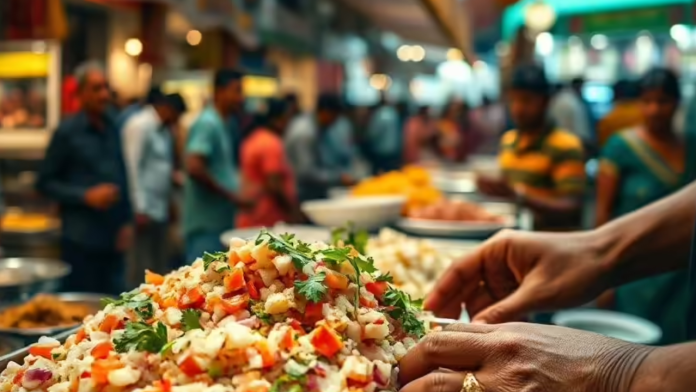
Wah! Puchka Wah! Litti Raises $230K To Clean Up India’s Street Food Game

0
Wah! Puchka Wah! Litti Raises $230K To Clean Up India’s Street Food Game

Wah! Puchka Wah! Litti, a Kolkata-born quick service restaurant brand putting a clean and modern spin on desi street food, has just scooped up \$230,000 in fresh funding. The round saw participation from big names like Wow! Momo co-founder Sagar Daryani, Dot & Key co-founder Abhishek Rungta, and a clutch of global angels.

Founded by Deepak Kumar, the brand is on a mission to serve street staples like puchka and litti-chokha in a format that’s scalable, hygienic, and still true to its roots. What started as a local favourite has now grown to 18 buzzing outlets across Kolkata, with over 2 lakh customers served and strong ratings on Swiggy and Zomato to show for it. The company recently launched its own ordering platform, wahfoods.com, promising doorstep delivery of freshly made puchkas and litti in under 30 minutes.

With this new round of funding, Wah! Puchka Wah! Litti plans to open 19 more outlets in the city, while also laying the groundwork to hit 100 locations across six major metros in the next two years. The capital will be used to hire key talent and build the backend systems needed to manage scale without compromising on flavour or quality.

Sagar Daryani, who has built Wow! Momo into one of India’s largest homegrown QSR chains, said he was drawn to the brand’s mission of making India’s most beloved roadside snacks clean, consistent, and widely available. “They’re bringing structure to a segment that’s massive but still wildly underorganised,” he noted.

India’s food delivery market is poised to hit \$8 billion soon, but organised QSRs are still just a slice of the pie. Street food, on the other hand, is a \$20 billion-plus category that remains largely informal. Wah! Puchka Wah! Litti wants to change that, taking cues from success stories like Haldiram’s while keeping the flavours firmly rooted in Indian streets.

The company is already in talks for its next strategic raise, eyeing larger institutional capital to take its vision nationwide.

Advertisement

HYPHEN by Kriti Sanon Crosses ₹400 Cr Sales Mark, With 60% Repeat Rate and a Million-Strong Fanbase

0
Image of hyphen.
HYPHEN by Kriti Sanon Crosses ₹400 Cr Sales Mark, With 60% Repeat Rate and a Million-Strong Fanbase

Kriti Sanon is blowing out birthday candles this week with more than just film accolades to her name. Her skincare label, HYPHEN, has quietly crossed a massive ₹400 crore in gross sales becoming one of the few celebrity-backed brands in India to actually walk the talk.

Launched just two years ago, HYPHEN didn’t ride in on red carpets or rely on glam. It scaled through strategy, consistency, and a co-founding team of engineers, including Kriti herself. That’s right—before she was walking runways and film sets, she was solving equations. Now, she’s built one of the country’s fastest-growing D2C brands, reaching over 19,000 pin codes and growing its customer base from 1 million to 4 million in just a year.

What’s even more telling? Nearly 60% of those customers are coming back. In an industry where retention is a blood sport, that kind of loyalty speaks volumes.

Kriti doesn’t just endorse the brand—she lives it. She’s been involved in product ideation, branding decisions, and even community feedback loops. “Watching HYPHEN evolve from a ‘what if’ to a household name has been surreal,” she shared in a note celebrating the brand’s second anniversary. “It’s deeply personal. Every little win feels like home.”

Built on the promise of science-meets-nature, HYPHEN has managed to keep its formulas clean, its prices friendly, and its audience wide. It’s not a luxury line hiding behind celebrity status—it’s skincare that’s clear about what it offers and who it serves.

While celebrity ventures often fade as quickly as they trend, Kriti Sanon’s story reads differently. She’s not here for the novelty of it. She’s building a brand that’s doing the work. And judging by the numbers, HYPHEN’s just getting started.

Advertisement