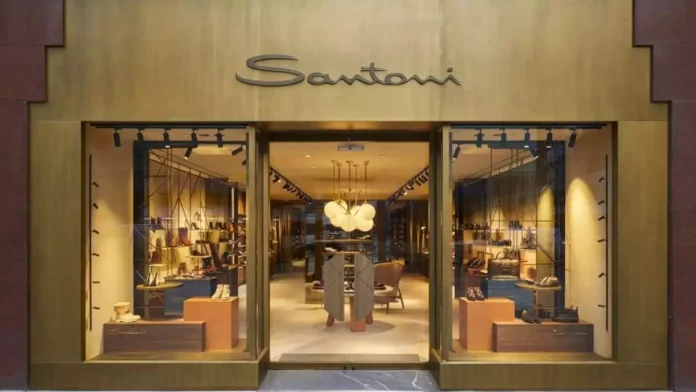
Santoni, the high-end footwear label that made its debut in India through a collaboration with Luxerati Retail Pvt Ltd. in 2018, is gearing up to allocate INR 15 crore for the establishment of two additional stores in the country, as stated by Sanjay Kataria, the managing director of Luxerati Retail Pvt Ltd.
The Italian brand, which opened its first store at DLF Emporio, plans to open its next store in Mumbai this year and in either Hyderabad or Bengaluru over the next 2-3 years.
“This is the right time to open our next store as we have observed 15 per cent year-on-year growth and 60-70 per cent new customers coming in monthly. Apart from this, we have also been getting queries from other parts of the country like Mumbai and Hyderabad,” he stated.
“Currently, the sales in Mumbai maybe 70 per cent of what we do in Delhi, but I’m the growth is much more now. So hopefully it should be equivalent to Delhi in times to come,” he further added.
The store in Delhi spans across an area of 800 square feet, and going forward, the brand will be opening stores across 800-1,000 square feet.
Until the last fiscal year, women’s wear accounted for 10 percent of the brand’s revenue, with the remaining 90 percent attributed to men’s wear.
“However, the ratio has changed to 30:70. At present, the net profitability of the brand stands at 15 per cent and we aim to scale it to 20 per cent by focusing on three aspects of the collection now, women’s, sneakers, and bespoke,” he asserted.
“We are also planning to expand the online presence of the brand in India. We will be mentioning the products and their price only for reference purposes. We won’t be linking it to the payment gateway right now and we have no plans to maintain separate stock for online shopping yet,” he further added.
The brand, aiming to reach INR 7.75 crore by the end of this fiscal year, targets revenue of INR 10 crore from the Delhi store and INR 3 crore from the Mumbai store by the following fiscal year’s end, over the span of the next two years.
“Currently, at Luxerati Retail, we have no plans to introduce any other luxury fashion brand here in India,” he concluded.
Jacob John, president of premium brands at ABFRL said, “This expansion aligns with our ambitious growth strategy as we continue to expand our retail footprint across the globe, following recent openings in Mauritius and the UAE.”
Underlining the importance of the launch, Dr. Hassan Kunhi, chairman of HK Group, highlighted that it brings forth a diverse selection of fashionable apparel to the Qatar market, enriching the shopping journey for customers.
ITC Hotels has announced the signing of a management agreement with Narne Hotels and Resorts Private Limited, further expanding the Welcomhotel brand presence in South India.
The company stated that a 150-key hotel situated in Madikeri hill town within the Kodagu district of Karnataka will feature two restaurants and bars, a lounge, and over 1,300 square meters of meeting space.
The establishment is situated on MG Road in the heart of central Madikeri.
Madikeri is renowned for the Raja’s Seat, a historic monument dating back 200 years, which provides breathtaking views of forests, rice paddy fields, and is famed for its stunning sunrise and sunset vistas.
Anil Chadha, divisional chief executive at ITC Hotels said Madikeri is an important market for ITC Hotels.
“Over recent years, this region has grown in popularity and we saw a niche space for leisure travel. Through Welcomhotel Madikeri we bring the signature hospitality of ITC Hotels to this beautiful city,” he said.
“Madikeri reflects the rich Kodava culture and is home to heritage cuisine that many wish to explore. With this signing ITC’s Hotel group further strengthens its presence in Karnataka, where we currently operate 11 hotels and over 1,300 rooms under various brands including ITC Hotels, Welcomhotel, Fortune and Welcomheritage,” he added.
Saibabu Appalaneni, CEO of Narne Hotel and Resorts Private Limited, highlighted that ITC Hotels are renowned for their expertise in hospitality and their dedication to promoting regional cuisine.
“We believe Welcomhotel Madikeri has strong potential and will provide memorable guest experiences,” he added.
The Kodagu district is famed for its verdant valleys, sprawling coffee plantations, and aromatic spice trails. It stands out as one of the rare areas in South India where the elusive Neelakurinji flower blooms once every 12 years. Offering a diverse range of experiences for travelers, including spiritual sites, wildlife encounters, adventure activities, and leisure pursuits, the region has seen a notable increase in tourist footfall. This growth is further fueled by demand from agricultural and administrative sectors, contributing to a flourishing business segment in the area.
Alcoholic beverages makers’ body CIABC on Monday said the free trade agreement between India and four European nation bloc EFTA will help push the growth of the domestic wine industry. The European Free Trade Association (EFTA) members are Iceland, Liechtenstein, Norway and Switzerland.
The Confederation of Indian Alcoholic Beverage Companies (CIABC) Director General Vinod Giri said that time-bound reduction of customs duties on an equitable and sustainable level will support the domestic industry.
As per the documents of the agreement, duty concessions on wine are similar to those given to Australia, with no concessions for wines costing less than USD 5.
Wines priced between USD 5 and less than USD 15 will see a duty reduction from 150 per cent to 100 per cent in the first year, then decreasing gradually to 50 per cent over 10 years.
For wines costing USD 15 or more, he said, the initial duty cut is from 150 per cent to 75 per cent, eventually reducing to 25 per cent after 10 years.
“The India-EFTA trade deal will help in providing easier access to high-quality wines from EFTA countries without affecting the domestic wine industry adversely by ensuring that the concessions cut-off remains above the lower price segments where most of the domestic industry operates,” Giri said.
He said that the deal will also help the domestic industry further lift its quality by exposure to quality wines and possible investments.
“The deal will spur growth of the Indian wine industry,” Giri noted.
He further said the time horizon of 10 years for the staggered reduction of customs duties is long enough to help the domestic industry raise its competitiveness and product quality to match the best.
“The deal is similar to India’s trade deal with Australia which ensures no cross effects. The domestic wine industry supports over 6,000 grape-growing farmers,” he added.
Wedding-related expenditure has remained muted this fiscal year, unlike FY23, as several company chief executives have observed. This can be attributed to the absence of pent-up demand, a lower number of wedding dates, and the overall impact of the consumption slowdown.
According to industry estimates, sales in categories such as ethnic wear, wedding wear, gold jewellery, and electronic household appliances have experienced a decline of 10-20% in FY24 up to February, compared to the corresponding period in FY23.
Nonetheless, chief executives noted that luxury and premium products defied the trend of declining sales, reflecting the broader pattern in consumption.
Vedant Fashions, renowned for brands like Manyavar and Mohey in the wedding and ethnic apparel sector, informed investors recently that its overall performance for the nine months ending December 2023 was affected by several factors. These included a notable decrease in weddings, a general slowdown affecting consumer sentiment, and the higher base effect from the previous year post-COVID.
“When we talk to all the people in the industry this includes banquet hall owners, five star hotels, event organizers we see an overall trend where everyone is kind of commenting that the (wedding) business this year has been lower than last year,” said Vedant Modi, chief revenue officer at Vedant Fashions. He said there is a bit of “economic slowdown” across the board especially in tier two and tier three markets.
The rising gold prices have added to the challenge. Gold prices have been on an upward trajectory since October, spurred by the conflict between Israel and Palestine. Prices surged by 7.6% from INR 61,000 per 10 gm in early November to a record high of INR 65,635 per 10 gm on Monday. Consequently, demand for gold jewelry has dropped by more than 20% between November and February compared to the same period last fiscal year.
Ishu Datwani, director of Mumbai-based Anmol Jewellers, highlighted that the mass market wedding jewellery segment is experiencing the most significant impact. Conversely, luxury items adorned with diamonds and colored gemstones are defying the trend, Datwani noted.
Sales across various mass-market segments, spanning from fast-moving consumer goods, apparel, and shoes to electronic products, have been significantly affected since the onset of Covid. This impact has been compounded by high inflation and negative consumer sentiment prevailing across both urban and rural India.
Projections for demand improvement have been pushed back from last year to the upcoming fiscal, with promising macroeconomic factors providing a glimmer of hope. Reserve Bank of India Governor Shaktikanta Das recently stated that India’s economy is expected to grow faster than the previous estimate of 7.6% in FY24 and may maintain a growth rate of 7% in the following fiscal year as well.
Kamal Nandi, the business head of Godrej Appliances, stated that mass products did not witness the anticipated sales surge during this wedding season. Now, the only remaining hope lies in a weather-dependent recovery in demand during the summer.
According to an industry executive, the wholesale textile market in Surat, serving smaller towns and rural areas, has seen a significant 40% decline in wedding-related demand.
This stands in stark contrast to the recent report from leading apparel manufacturer Aditya Birla Fashion & Retail, which highlighted impressive growth in its designer brands, largely attributed to the wedding season. Sabyasachi saw a remarkable 43% year-on-year increase, achieving its highest-ever quarterly revenue. Additionally, Shantnu & Nikhil experienced a growth of 30%, while House of Masaba recorded a 16% increase.
The fitment committee is expected to examine instances where slight alterations in composition lead to varying tax brackets, causing confusion in tax obligations, particularly within the fast-moving consumer goods (FMCG) sector, which has recently encountered a surge in tax notifications.
Individuals familiar with the matter stated that the list will be forwarded to the group of ministers on the rate rationalization committee during the next meeting of the Goods and Services Tax (GST) Council.
“Classification issue is a problem with some products and the fitment committee is working on the detail list where there is grey area and which has attracted maximum litigation,” a senior official told.
According to the official, there are approximately 25 to 30 goods and services that exhibit overlapping categorization.
Finance Minister Nirmala Sitharaman also raised the issue during her meeting with enforcement officials of both central and state goods and services tax, urging the board to address classification-related issues as a “priority.”
“The fitment committee is looking into the matter and when the council meets next, the proposal will be referred to the group of ministers on rate rationalisation,” the official said.
In November last year, numerous FMCG companies utilizing the “extruded” method for manufacturing chips and namkeens were instructed to remit 18% GST instead of 12%, resulting in the issuance of tax notices for the outstanding amount due by March 31, 2024. Extrusion is a food processing method employed to produce “puffed” or “expanded” snacks that are readily consumable. These snacks are primarily crafted from cereal flour or starches, characterized by their high calorie and fat content, along with low protein, rendering them perceived as unhealthy.
In August 2023, the Center clarified that any snacks produced through the extrusion process should be subject to an 18% tax rate, and the notices from the Directorate General of GST Intelligence (DGGI) were issued in accordance with this clarification.
Nevertheless, the FMCG industry highlighted that certain items like namkeen, fruit-based alcoholic and non-alcoholic beverages, flavored milk, and other processed food items face overlapping classification issues, often resulting in varying advance rulings across different states.
“Traditionally bhujia is taxed at 12% GST but now most of the manufacturers are using extrusion method to reduce fat content. This creates a grey area and many traditional bhujia makers now facing additional tax demand,” said a namkeen manufacturer, who did not wish to be identified. In the absence of a definition, the industry asked for clarity from the government, especially after many firms received DGGI notices.
Ahead of the approaching deadline, the FMCG industry made a detailed representation to the finance ministry and sought a resolution to avoid unnecessary litigation and notices.
Magicpin, a hyperlocal e-commerce startup, has expanded its services into the logistics aggregation vertical with the launch of its new platform ‘Velocity’, as announced on Monday.
According to a statement from the company, Magicpin will serve as an aggregator for its third-party logistics (3PL) partners like Shadowfax, Dunzo, Rapido, Porter, OLA, and Zypp through its platform Velocity. This consolidation of 3PL services under one roof aims to benefit brands and sellers.
Velocity will additionally enable rapid commerce services for specific segments.
“Velocity by Magicpin empowers businesses to scale effortlessly and thrive in today’s competitive market. With our strategic partnerships and advanced tech, we’re already serving over 20 merchants and delivering 5,000 orders per day. Moving forward, we are planning to scale up significantly, aiming to handle over 1 lakh orders daily within a year,” Magicpin, co-founder, Anshoo Sharma said.
Velocity boasts hyperlocal deliveries completed within 30 minutes, live tracking of workforce based on maps, instant updates on order status in real-time, and integrated customer feedback mechanisms.
The company has already formed partnerships with more than 20 merchants, which include KFC, Burger King, Rebel Foods (Faasos, Oven Story, Behrouz Biryani), and Eat Club (Box8, Mojo Pizza, Mealful Wraps).
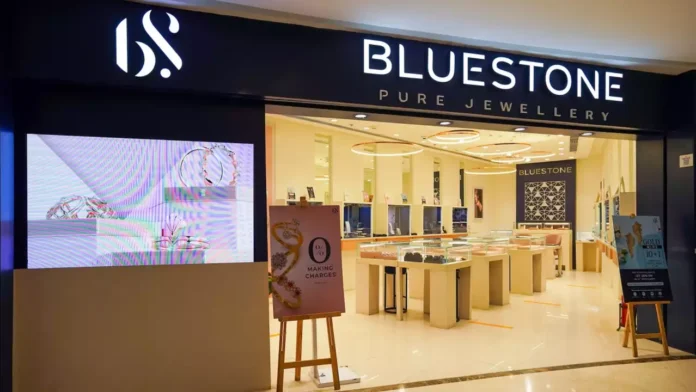
BlueStone, an omnichannel jewellery startup, is currently in the process of raising $9 million (about INR 75 crore) in debt from venture capital firm Trifecta Capital. Last month, the board of directors of the Bengaluru-based startup approved the allocation of ‘Series X1 Debentures’ to Trifecta Venture Debt Fund-III for the aforementioned amount.
The startup plans to use the capital to support its business operations and finance its expansion initiatives.
The latest development follows reports from several months ago indicating that the startup aimed to raise approximately $65 million or INR 550 crore from various investors, including Nikhil Kamath, Deepinder Goyal (the founder of Zomato), Info Edge, and Ranjan Pai from the Manipal Group. This funding round was proposed at a valuation of around INR 3,600 crore or roughly $440 million.
According to a report by ET, the startup is exploring the possibility of going public and aims to raise INR 2,000 crore through its initial public offering (IPO). The IPO will include both a fresh issue of shares and an offer-for-sale component, wherein existing shareholders are expected to collectively sell a 10-15% stake in the startup.
Established in 2011 by Gaurav Singh Kushwaha and Vidya Nataraj, BlueStone is an omnichannel jewellery startup renowned for its vast collection of over 8,000 designs spanning rings, pendants, earrings, and various other products. In a significant move last year, the startup promoted its chief operating officer, Sudeep Nagar, to the position of co-founder.
During March 2022, BlueStone secured a $30 million funding round spearheaded by Sunil Kant Munjal of Hero Enterprises.
The startup’s net loss, excluding one-time expenses, soared by 183% to INR 167 crore in FY23 from INR 59 crore in FY22. However, operating revenue surged by 67% to INR 771 crore from INR 461 crore in FY22.
In the startup landscape, BlueStone rivals companies such as CaratLane, Melorra, and GIVA.
In its competitive sphere, Tata Group’s Titan acquired the remaining 27% stake in Caratlane for INR 4,621 crore last year. Concurrently, GIVA secured $33 million in its Series B funding round spearheaded by Premji Invest in July 2023.
A plethora of homegrown food and beverage brands across categories such as pizzas, bubble teas, and burgers are drawing funding from early-stage institutional investors and high net-worth individuals (HNIs).
Investors are eager to capitalize on the increasing demand for specialized products, as well as the rapid expansion of these young startups into markets beyond tier I cities.
Pizza Wings secured a $4 million investment from Gruhas, the venture capital fund co-founded by Nikhil Kamath of Zerodha, along with notable angel investors including Sujeet Kumar, co-founder of Udaan. Based in Rohtak, Haryana, the startup boasts nearly 50 stores spread across its home state, Delhi-NCR, and Goa. Over the past year, Kumar has collaborated closely with co-founders Aditya Dhanda and Rajpal Sangwan.
Bengaluru’s Boba Bhai is currently in talks with Snapdeal cofounder Kunal Bahl’s Titan Capital, among others. The bubble tea offered by Boba Bhai, a milk-based concoction with tapioca pearls, has become a popular trend among Gen Z.
This trend can be attributed to several factors, including an unmet demand for food retail outside major metropolitan areas, a notable absence of enduring loyalty towards global brands (barring a select few), and evolving consumer tastes and preferences.
“The growth potential in the food retail market is massive,” said a person in the know of such funding deals.
Referring to Pizza Wings as an example, he mentioned that the brand not only competes with established players like Pizza Hut and Domino’s but also attracts new customers by offering its products at a 10-15% lower price through supply chain optimization.
A high net-worth individual investor described it as a “highly intriguing market,” noting that consumers are increasingly open to exploring new brands spanning various price ranges.
Pizza Wings refrained from providing a comment, while an email sent to Boba Bhai founder Dhruv Kohli remained unanswered at the time of press.
The recent wave of funding for medium-sized brands includes Burger Singh, which saw its pre-Series B round led by Turner Morrison Ltd, with involvement from Homage Ventures LLP. Additionally, AKU’s, supported by Burger Co, has secured investments from Vikram Bakshi, former managing director of McDonald’s North and East.
“Investing in AKU’s gourmet handcrafted burgers, given the rising demand for specialised food services among the growing affluent consumer base in India, is a strategic move,” said Bakshi who reckons this shift towards gourmet products indicates a broader trend towards sustainability, health consciousness and premium dining experiences.
Investor enthusiasm extends internationally as well. Malaysia’s Khazanah Nasional Bhd spearheaded Wow Momo Foods‘ INR 350-crore funding round, which also involved a secondary share sale, in January.
“Homegrown QSR (quick service restaurant) chains have turned into fertile grounds for investors,” said Sagar Daryani, cofounder of Wow Momo. “This is largely due to the expansion opportunities with lower capex and higher returns, as Bharat (non-metro markets) catches up in terms of eating out, disposable incomes and technology.”
In February, Bengaluru-based Biggies Burger, boasting 130 stores nationwide, secured pre-Series A funding at a valuation of INR 210 crore, while cloud kitchen firm Ghost Kitchen concluded a $5 million funding round.
Cheelizza, an all-vegetarian pizza chain, has raised INR 10 crore through a blend of debt and equity in the past 18 months. Sources familiar with the negotiations suggest that the company is currently finalizing another round of INR 20 crore.
“Change in consumption patterns is leading to faster store rollouts, while 4G infrastructure has helped to scale digital footprints and given brands viable business structures,” said Daryani, who is an investor in Cheelizza.
Both Pizza Wings and Boba Bhai generate revenue through their proprietary platforms in addition to selling on marketplaces such as Zomato and Swiggy.
According to a report by the National Restaurant Association of India, the Indian Quick Service Restaurant (QSR) sector is valued at $25.46 billion in 2024, with projections indicating a growth to $38.71 billion by 2029.
Industry watchers note that the surge in interest towards homegrown brands is largely attributed to the challenges faced by major international food chains, with only the top three or four Quick Service Restaurant (QSR) chains managing to effectively engage and retain Indian consumers.
Global chains like Papa John’s and Carl’s Jr have either closed their operations or experienced limited growth.
“Homegrown chains are a massive opportunity now. Understanding local nuances, collaborating with suppliers, backend linkages – all are crucial. Some of the bigger global chains have not been able to crack this; something local ones are managing to,” said Gaurav Marya, chairman of licensing and franchising consultancy Franchise India, which is working closely with three to four food services startups-in-the-making.
Several gourmet and artisan pizza makers are also pitching for funding to a group of investors, according to a person who has reviewed such proposals.
Additionally, there are supplementary benefits through alternative sales channels. Chaitanya Bhamidipaty, co-founder of Roastea, emphasized that securing funding is an ongoing endeavor, particularly for vending machines in corporate settings and cafes.
“We are funding our expansion plans through internal accruals, promoter equity and debt. For FY25, we hope to raise INR 30-40 crore, of which we have closed about INR 15-20 crore,” he said. The coffee and tea vending machine platform has recently expanded to cafés and kiosks.
Last week, Nexus Venture Partners led a $3.4 million round in AbCoffee, highlighting its focus on the grab-and-go model.
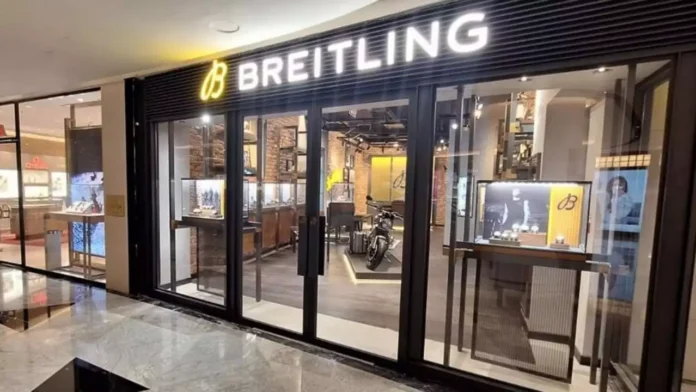
Breitling, the renowned Swiss luxury watch brand, has unveiled its first exclusive boutique in Chennai, as confirmed by an industry official on social media. The new outlet is situated on the upper ground floor of Phoenix Palladium Mall in Velachery, Chennai, Tamil Nadu.
“Breitling opened its store at the upper ground floor of Palladium Chennai. This is Breitling second exclusive boutique store in India,” said Sarath Kumar, assistant manager at The phoenix Mills Ltd. in a LinkedIn post.
Additionally, the mall boasts a selection of luxury watch brands including Horology, Ethos, Montblanc, Omega, and others.
The brand is preparing to launch two additional exclusive boutique outlets in Hyderabad and Bengaluru soon.
Established in 1884 in Saint-Imier by Swiss watchmaker and entrepreneur Léon Breitling, Breitling has a rich history. In 2022, Partners Group, a Swiss investment and private equity firm, acquired the majority stake in the company. Presently, this 140-year-old brand has a presence in more than 23 countries worldwide.
Currently, the watchmaker sells its products in India through its exclusive store in Hyderabad, as well as through multi-brand watch stores like Ethos, Horology, and Kapoor Watch, among others.
We use cookies to ensure that we give you the best experience on our website. If you continue to use this site we will assume that you are happy with it.