Heiko, who presently serves as President of Bayer Consumer Health, brings extensive expertise and a proven record of success in the worldwide foods and nutrition sector. Commencing his career at Nestlé, he accumulated over two decades of experience in sales and marketing roles across Asia, eventually assuming the role of chief executive officer of Nestlé’s global Nutrition business division in 2014.
Having joined Bayer in 2018, he has been instrumental in spearheading notable enhancements in performance, resulting in Bayer’s Consumer Health division achieving industry-leading growth.
Unilever chief executive officer Hein Schumacher said, “Heiko is a global business leader with deep expertise and experience of the foods and nutrition industry and a long track record of delivering sustained high performance. He is a very impactful, values-driven leader. I look forward to working with him as we continue our focus on accelerating the growth of Unilever’s Nutrition business, including our leading Knorr and Hellmann’s global Power Brands.”
Heiko will join Unilever and its Leadership Executive on 1 May 2024.
JAB also granted an option to the underwriter, Morgan Stanley, to purchase up to an additional 13,043,478 shares within the next 30 days.
According to Bloomberg, JAB is selling the block of shares for $29.10 to $29.25 each, potentially generating up to $2.5 billion for the company. This pricing reflects a discount of 2.2% to 2.7% compared to KDP’s closing price on February 29, 2024, which was $29.91 per share.
CEO of JAB Joachim Creus said, “The proceeds from our sale of KDP shares allow us to maintain our leverage target in line with our financial policies, as we continue to build out our investment portfolio. KDP will continue to be one of our most important investments and we expect to continue to be a long-term anchor shareholder in KDP, at or above the 20% ownership level.”
Following the completion of the transaction, assuming full exercise of the underwriter’s option to purchase additional shares, JAB will own around 21% of KDP’s outstanding common stock, bringing KDP’s public float to approximately 79%.
KDP has stated that several of its directors and officers have expressed interest in acquiring the shares. As per the transaction terms, the remaining shares held by JAB will be bound by a 180-day lock-up agreement with Morgan Stanley.
A lock-up period restricts the quantity of shares that can be sold within a specified timeframe, which in this instance is 180 days. These periods commonly pertain to insiders, encompassing a company’s founders, owners, managers, and employees, but may also involve early investors like venture capitalists.
According to a knowledgeable source, JAB intends to utilize the funds to support its recent ventures in pet insurance. Additionally, the source noted that the sale of KDP shares is a singular event, with JAB currently having no imminent intentions to divest further shares in KDP or any other publicly held assets.
Beiersdorf, the company behind Nivea, projects a deceleration in organic sales growth for 2024. This comes after a notable 10.8% surge in the previous year, with the company implementing measures to moderate price hikes.
Known for its cautious projections, Beiersdorf achieved total sales of 9.5 billion euros ($10.3 billion) for the full year, compared to 8.8 billion euros in 2022, in line with Beiersdorf’s guidance for low-double-digit organic growth.
The German company cautioned that sales growth would slow to a mid-single-digit percentage this year.
It anticipates more restrained growth for its consumer business segment in 2024, aiming for “more reasonable” price increases compared to 2023. However, it remains cautious due to high commodity prices, inflation rates, and strained consumer budgets.
The sector is facing subdued demand as consumers, contending with inflation and rising borrowing costs, have become more discerning in their purchases.
At 10:15 AM GMT on Thursday, shares declined by 3% to 133.4 euros.
“Consumer segment sustained sector-leading growth in (the fourth quarter), but market expectations were high…hence we may see some modest profit taking today,” Stifel analyst Rogerio Fujimori said in a note to investors.
Fujimori noted that Beiersdorf’s core division reported quarterly organic sales growth of 9%, falling short of analysts’ estimates of 11%. This was primarily attributed to a decline in sales at its luxury brand La Prairie.
Luxury companies like L’Oreal have raised concerns about the impact of increased scrutiny by the Chinese government on the “Daigou” business model. This model involves resellers purchasing goods at lower prices from other markets and selling them at a discount in mainland China.
Sales at Beiersdorf brands La Prairie and Chantecaille fell by 15.4% and 18.4% respectively in 2023 due to such limitations affecting China and South Korea.
“Even though the Daigou business was a relevant part of our business, we are happy to see that unauthorized distribution contributing to price erosions is now regulated,” CEO Vincent Warnery said in a call.
Beiersdorf said it aimed to return to growth with La Prairie and Chantecaille in 2024.
According to a statement on March 1st, the FDA stated that it would not oppose specific claims as long as they are accurately worded to avoid misleading consumers and meet other necessary criteria for claim usage.
The food safety regulator described a qualified health claim as one that is backed by scientific evidence but doesn’t meet the stricter “significant scientific agreement” standard necessary for an authorized health claim.
Danone, a dairy giant, had filed a petition for a qualified health claim with the FDA, urging the agency to assess the connection between consuming yogurt and lowering the risk of type 2 diabetes. The FDA has since concluded that there is “credible evidence” supporting this association.
According to the US regulator, a minimum of three servings of yogurt per week is required for this claim to be considered credible.
The decision arrives as an increasing number of US citizens are turning to GLP-1 weight-loss medications in their fight against the disease.
In November, a survey conducted by US investment bank Stifel emphasized the growing use of GLP-1 weight-loss drugs.
Stifel determined that there is a potential risk to the packaged food sector due to the heightened utilization of drugs, notably Ozempic and Wegovy, produced by Danish pharmaceutical company Novo Nordisk.
According to recent research by Trilliant Health, approximately nine million Americans were using a GLP-1 anti-obesity drug by the end of 2022, and Stifel’s survey indicates that this figure could now be significantly higher.
The bank’s research revealed that 15% of respondents over a three-survey average used a GLP-1 drug, with an additional 21% reporting they would be interested in using one if they were universally FDA-approved for weight loss, had proven results, and became widely available.
Sports nutrition brand Warrior has added a new protein water product to its portfolio of high-protein snacks and supplements.
The high-protein, low-calorie beverage comes in two flavors: tropical and berry. Each bottle is enriched with essential vitamins and electrolytes for enhanced hydration. Additionally, it contains ten grams of collagen peptides, providing nourishment for skin, hair, and nails.
Warrior’s protein water is free from sugar and has under 50 calories per 500ml bottle. Both flavors are suitable for vegetarians and vegans, and they are also free from genetically modified ingredients.
Kieran Fisher, founder of Warrior and parent company KBF Enterprises, commented, “Last year was a phenomenal year for product innovation and we are thrilled to be starting 2024 by introducing Warrior Protein Water to the market”.
He added, “This provides an easy and convenient solution for people to boost their protein intake whilst on-the-go and we are confident this new addition will excite new and existing customers”.
The protein water is available online and at selected SPAR stores across the UK.
Established in 1993, BDS Vending manages around 2,000 vending machines, offering food and beverage vending services across Ireland. After the deal’s finalization, founders David Mullan and Brian Berry will assist in the transition of BDS Vending’s ownership.
As per the company’s statement, acquiring BDS Vending is in line with Coca-Cola HBC’s strategy to enhance its route-to-market capabilities, particularly in last-mile delivery. Additionally, it presents opportunities across a wide array of cold and hot beverages as well as snacks.
Coca-Cola HBC stated that BDS Vending provides “a valuable foundation, equipped with proven technology and services,” which Coca-Cola HBC intends to leverage for developing further capabilities across its markets.
The completion of the transaction is contingent upon approval by the Competition and Consumer Protection Commission in Ireland, with expectations for it to be finalized in the upcoming months.
Since the announcement of the wedding between Anant Ambani, the youngest member of the Ambani family, and Radhika Merchant, daughter of Indian businessman Viren Merchant, there has been significant buzz surrounding the event. Anant Ambani is renowned for his dedication to animal welfare, while Radhika Merchant is passionate about the classical Indian dance form Bharatnatyam. With attention focused on every detail from the guest list to the gifts and food, the upcoming wedding promises to be an extravagant affair. The couple, Anant and Radhika, were engaged in a traditional Gol Dhana ceremony in January of the previous year, and their wedding is scheduled to take place on July 12th.
According to media reports, the pre-wedding celebrations are scheduled to take place from March 1st to March 3rd in Jamnagar, Gujarat. An estimated 1,000 guests are expected to attend the festivities. The three-day event will feature various themes and dress codes, following a pre-planned itinerary. The first day, themed ‘An Evening in Everland’ (March 1st), calls for evening cocktail attire. On the second day, guests will experience ‘A Walk on the Wildside’ (March 2nd), followed by activities at Mela Rouge with a ‘jungle fever’ dress code. The final day includes two events named ‘Tusker Trails and Hashtakshar’ (March 3rd), where guests will explore the beauty of Jamnagar and dress in ethnic Indian attire for Hashtakshar.
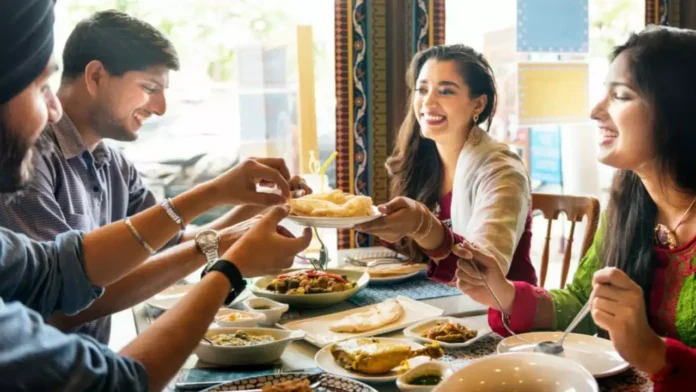
When it comes to the cuisine served during the pre-wedding ceremonies, reports suggest that a team of 21 chefs from Indore will be crafting delectable dishes for the guests. These three days are anticipated to offer the ultimate culinary delight for those attending the festivities.
According to ABP News, the chefs have been recruited from the Jardin Hotel. Among the 21 chefs, only one is male, while the remaining 20 are female. The Director of Jardin Hotel revealed to the media outlet that over 2500 dishes will be prepared during the three-day pre-wedding celebrations. The menu will feature a diverse range of cuisines including Japanese, Thai, Mexican, and Parsi Thali, in addition to Pan Asian cuisine.
Providing further details, Sharma revealed that there will be 75 varieties of dishes for breakfast, over 225 varieties for lunch, 275 varieties for dinner, and 85 items included in the midnight meal. The midnight meal is scheduled from 12 midnight to 4 am, and meticulous arrangements have been made to ensure that no item is repeated throughout the duration.
Guests can look forward to a dedicated Indori Sarafa food counter, featuring authentic dishes from Indore such as Indori Kachori, Bhutte Ka Kees, Khopra Patties, Upma, and Indori Poha Jalebi. Additionally, the chefs will bring spices from Indore to ensure an authentic Indori flavor, as reported.
According to media reports, the roster of confirmed attendees for the eagerly anticipated pre-wedding celebrations includes prominent figures such as Facebook CEO Mark Zuckerberg, Alphabet CEO Sundar Pichai, former Microsoft CEO Bill Gates, Walt Disney CEO Bob Iger, Morgan Stanley CEO Ted Pick, Adobe CEO Shantanu Narayen, BlackRock CEO Larry Fink, and Bank of America Chairman Brian Thomas Moynihan.
Furthermore, numerous distinguished individuals from the realms of sports and entertainment, both in India and abroad, are set to honor the occasion with their presence.
Renowned Bollywood luminaries including members of the Bachchan family, Shah Rukh Khan, Aamir Khan, Salman Khan, Ranbir Kapoor, Alia Bhatt, Deepika Padukone, and Ranveer Singh are among the esteemed guests expected to grace the event. Additionally, star performers such as American pop icon Rihanna and India’s singing sensation Arijit Singh will captivate the audience with live performances.
Kicking off the pre-wedding festivities, the Ambani family recently performed the Anna Seva (community food service) in villages located around Jamnagar.
On Friday, Pepsi, the American beverage giant, unveiled its new global logo worldwide, marking its first significant global redesign in 14 years.
In India, the company revealed its new globe logo at the Gateway of India in Mumbai, showcasing a digital artwork that introduced the brand’s updated color palette of electric blue and black.
“The new logo thoughtfully borrows equity from Pepsi’s past, whilst incorporating modern elements to create a look that is unapologetically current and undeniably Pepsi,” the company said in a release.
“We are thrilled to reveal Pepsi’s refreshed visual identity and new logo, embodying unapologetic modernity and the iconic status of Pepsi. The fresh design language reflects the invigorating spirit of Indian youth and their boundless pursuit of possibilities,” said Shailja Joshi, Category Lead, Pepsi Cola, PepsiCo India.
Myntra has recently secured a $54 million investment from its parent company Flipkart. This infusion of funds comes at a crucial time for the online fashion platform, as it grapples with intense competition from rivals such as Reliance’s Ajio and Tata Cliq.
As per regulatory filings in Singapore, Myntra’s holding company, FK Myntra Holdings Pvt Ltd, received the funds in January, marking the second investment from Flipkart within a year. In March 2023, Flipkart had injected $105 million into Myntra.
Myntra did not provide a response to an email requesting comment.
In the fiscal year ending on March 31, 2023, Myntra recorded a 25% increase in operating revenue compared to the previous year, reaching INR 4,375 crore. However, despite this growth, the net loss expanded to INR 782 crore.
In January, Myntra’s India unit, Myntra Designs Pvt Ltd, received INR 689 crore (approximately $83 million) from FK Myntra Holdings, a Singapore-based entity.
Myntra has been actively expanding its range of international brand collections, particularly focusing on premium offerings experiencing rapid growth. Meanwhile, there has been a recent downturn in demand for online fashion in the lower-price segments.
On February 9, it was reported that Myntra would exclusively retail products from the Turkish brand Trendyol, owned by the Alibaba group. Then, on February 14, the French apparel brand Kiabi made its entry into the Asian market through a collaboration with Myntra in India.
As of the latest report on January 24, Myntra’s portfolio comprises over 420 global brands, with approximately a quarter of its revenue generated from these international labels. This marks a significant increase from two years ago when it had 280 international brands in its lineup.
The fashion e-commerce platform has shifted its focus towards specific private labels instead of expanding its array of in-house brands in the apparel sector. In line with this strategy, Myntra conducted a restructuring initiative last July, leading to the termination of 50 employees.
According to a research note by Bernstein in January, Myntra held a 55% market share in the fashion e-commerce segment based on monthly active users (MAUs). Reliance-owned Ajio, meanwhile, maintained its user acquisition momentum, securing approximately 33% market share. Nykaa Fashion, operated by the publicly listed company FSN E-commerce Ventures, accounted for roughly 6% of the MAU share. “In December 2023, Myntra exhibited the highest growth rate amongst peers at 25%,” the report said.
However, according to the report, a closer look at the business suggested that users on Myntra’s app were not transacting as much as previous trends. Myntra’s gross merchandise value grew only 12% in FY23 as compared to 35% in FY22, Bernstein noted.
“The fashion market is extremely fragmented offline, and the online market is seeing similar trends with multiple players emerging to gain share,” it added.
Flipkart’s investment in Myntra has come close on the heels of the horizontal marketplace itself receiving a $600 million commitment from US-based parent Walmart, as part of a $1 billion funding round.
South Africa’s Tiger Brands has reorganized its organizational structure into six business units, with the goal of “improving profitability.”
The food conglomerate has established divisions for bakeries, grains, culinary, treats and beverages, home and personal care, snacks, and baby food. Each division will report directly to the CEO through designated executives.
Tiger Brands further mentioned that it is implementing restructuring below the newly appointed managing directors for the various units. In a trading update, the company stated its expectation to finalize the second phase of the restructuring by the end of its second quarter.
The group also stated, “The renewed focus on rationalising SKUs will reduce complexity, resulting in manufacturing and procurement efficiencies in due course. Additionally, achievements in portfolio and SKU rationalisation are expected to reduce the number of brands requiring support, allowing for more focused investment yielding a higher return on investment.”
In the filing, the company said, “Tiger Brands’ domestic performance reflects the difficult trading environment, with inflation in food and non-alcoholic beverages rising ahead of CPI. Prices of essential items such as sugar, vegetables, meat, eggs, and rice surged by almost 20% (Stats SA). As a result of the higher inflation over the period, consumer shopping habits shifted towards buying more on promotion and limiting their spend to essentials.”
Group revenue for the four months ended 31 January 2024 declined by 1% year-on-year, driven by volume declines of 8% offset by price inflation of 7%. The grains unit experienced volume regression across all segments, “due to a difficult trading environment,” the group noted.
Within the consumer brands division, year-on-year volume growth was achieved in the snacks, treats, and baby segments, as well as “strong volume growth” in beverages.
Groceries saw a decline in volume due to “absolute volume declines across categories.”
In Tiger Brands’ full-year results up to 30 September, it disclosed a 10% rise in revenue to R37.4 billion ($2 billion), but highlighted “low to no growth” for the upcoming fiscal year.
Tiger Brands’ operating profit also experienced a decline, as anticipated in October. It dropped by 9% to R3.1 billion for the year.
Earnings per share fell by 2% to 1,725 South African cents, contrasting with the 2-9% lower projection highlighted in October.
Last year, South Africa grappled with frequent power outages, known as load-shedding, attributed to insufficient investment in the country’s electricity infrastructure. This situation has led to a series of profit warnings from companies like Tiger Brands, Astral Foods, and Libstar, among others.
We use cookies to ensure that we give you the best experience on our website. If you continue to use this site we will assume that you are happy with it.