The Face Shop, a Seoul-based skincare and cosmetics company, has announced Bollywood actress Khushi Kapoor as the first-ever face of the brand in India, as stated in a release by the company on Tuesday.
The company eyes Kapoor’s Gen Z appeal and popularity among young audiences, the release added.
“I am honoured and thrilled to be chosen as the face of The Face Shop. As an actor, skincare is an essential part of my daily routine, with long hours on set, coupled with shoots and meetings, I always seek out extra hydration and nourishment to my skin,” said Khushi Kapoor.
“We are thrilled to welcome Khushi Kapoor to The Face Shop family,” said a spokesperson at The Face Shop.
With roots dating back nearly two decades, The Face Shop boasts a network of over 3000 stores spanning 35 countries. In India, the brand has established itself across offline and online channels, operating its own direct-to-consumer (D2C) websites and e-commerce platforms. Additionally, it distributes its products in over 60 Nykaa stores, as indicated on its official website.
Cosmetics brand Fenty Beauty by Barbadian singer and businesswoman Rihanna will enter the Indian market with fashion and beauty retailer Nykaa, the Mumbai-based company said in a press release on Tuesday.
The beauty brand will be making its debut on the Nykaa Cross-Border store on 7 March 2024. Nykaa will offer a line-up of Fenty Beauty’s products including the foundation, highlighter, lip gloss and more.
“We are thrilled to begin our partnership with one of the most innovative and disruptive beauty brands in the world, Fenty Beauty. The brand’s ethos of diversity and inclusivity is a perfect fit for Nykaa’s mission of democratizing beauty for all Indians,” said Anchit Nayar, executive director of Nykaa Beauty.
Founded in 2017 under the leadership of chief executive officer Rihanna, the global makeup brand is a partnership between the renowned singer and the French multinational conglomerate LVMH.
“Fenty Beauty was created so that people everywhere would be included. Expanding to India is so exciting because the more people that can feel beautiful, recognized and empowered, no matter their ethnicity, culture, skin tone or style the better,” said Rihanna.
The products can be ordered from the Nykaa app via the Cross Border Store with a shipping fee of INR 500. Orders will be delivered directly to consumers within 5-7 days, post successful photo ID and address proof verification.
Founded in 2012 by Indian entrepreneur Falguni Nayar, as a digital-first omni-channel beauty platform, Nykaa currently has over 165 retail stores in formats like Nykaa Luxe, Nykaa On Trend and Nykaa Kiosks.
Since its launch, Nykaa has expanded its product categories by introducing online platforms Nykaa Fashion, Nykaa Man and Superstore and it offers a selection of products from over 6,200 brands through its digital platforms and stores.
The Bengaluru-based company, a part of Tata Digital, will turn profitable in another 6-8 months, once the newly launched ‘BB Now’ vertical starts making money, its co-founder and chief executive Hari Menon said.
When asked about plans for an IPO, he said, “We will probably have it in 2025. But we are leaving it to the Tatas, there cannot be anybody better to guide us and advise us on that.”
He hinted that the issue will include both primary and secondary share sales, but did not share any more details.
He stated that the business necessitates capital for continuous investments, which will be sourced from the Tata Group leading up to the IPO. He further added that the majority of these investments will be directed towards technology, marketing, and personnel.
The company, which competes with similar offerings from Amazon and Flipkart, is targeting to close FY24 with a revenue growth of 30-35% over the previous fiscal, with a topline of about INR 12,000 crore, Menon said.
On profitability, he said the enterprise will turn profitable once the newly launched BB Now under which it delivers products in 10 minutes turns profitable, which is in the next 6-8 months, Menon said, adding that the older business lines including slotted and BB Daily are in the black.
He said it is easier for the new business to turn profitable because the back end is common across the three business lines.
At present, over 70% of its revenues come from the slotted business, while the relatively newer BB Daily, under which it delivers items like milk early in the morning, and BB Now, account for the remaining 30%, Menon said.
The company does not have any plans of entering the broader e-commerce space, unlike its competition, Menon said, adding that it will concentrate on the kitchen-related space and continue being a grocer.
It is currently piloting a concept of having an offline presence to try out the omnichannel format, Menon said.
Over 36% of its current sales come from private labels, Menon said, adding that it is aiming to take the higher margin business’ contribution to 40-45% in the next two years.
It, however, does not have any plans of having a strategy of selling its private labels from offline outlets.
When asked about the traffic coming from the Tatas’ super app, Menon declined to comment. He also declined to comment on working under Tata Digital’s new chief executive and managing director Naveen Tahilyani, saying these are still early days of working with him.
When asked about some reports before the takeover of the company by Tatas, which stated that he would be leaving the company after some time, Menon said there were no such plans.
Earlier, BigBasket launched a line of frozen foods in a tie-up with celebrity chef Sanjeev Kapoor to tap an estimated $1.5 billion opportunity.
Menon said it is targeting sales of up to INR 150 crore from the line christened “Precia” by 2026, and will be focusing on marketing the products, which also include items like momos and desserts.
Sanjay Kumar Jain, chairman and managing director, IRCTC and Rohit Kapoor, CEO, Swiggy Food Marketplace.
Swiggy, the food delivery platform, has announced a partnership with the Indian Railway Catering and Tourism Corp (IRCTC) to deliver pre-ordered meals to travelers at four major railway stations in India. This move follows the footsteps of rival Zomato, which already offers a similar service.
Under the Memorandum of Understanding (MoU), Swiggy is set to commence delivering food from its vast network of restaurants to passengers on specific trains. Initially, this service will be available at Bangalore, Bhubaneswar, Visakhapatnam, and Vijayawada stations. Plans are underway to extend this service to an additional 59 stations nationwide in the upcoming weeks.
“One of the challenges encountered by travellers during extended journeys is the paucity of diverse culinary options. Through this integration, passengers aboard designated trains now have the option to savour good-quality, warm meals delivered right to their seats, thereby transforming their travel into a convenient and delightful culinary experience,” Swiggy said in a statement announcing the partnership.
Annually, the Indian Railways facilitates transportation for more than 8 billion passengers. In October of last year, it unveiled a parallel collaboration with competitor Zomato, initially focusing on railway stations in New Delhi, Prayagraj, Kanpur, Lucknow, and Varanasi.
The pre-ordered meals will be delivered via IRCTC’s e-catering portal.
“At IRCTC our focus has always been to explore new ways to make train journeys comfortable and convenient for the billions of passengers aboard the Indian railways every year. This partnership with Swiggy will bring more convenience and food options to our passengers, making their journeys more memorable,” said Sanjay Kumar Jain, chairman and managing director, IRCTC.
Rohit Kapoor, CEO of Swiggy’s Food Marketplace, described the venture as an exploratory move, highlighting the company’s dedication to enhancing consumer experience through a diverse array of food options.
Regarding a potential collaboration with Swiggy Instamart, the company’s quick commerce service, Kapoor mentioned that while they haven’t actively considered it, he finds the concept intriguing.
Travelers interested in utilizing Swiggy’s food delivery service can simply input their PNR on the IRCTC app and choose their desired station for meal delivery.
Swiggy connects consumers with more than 280,000 restaurant partners across numerous cities. Additionally, its quick commerce grocery service, Instamart, operates in over 25 cities.
Kapoor expressed optimism about receiving a positive response from both passengers and restaurant operators along these routes. This enthusiasm may lead Swiggy to expand the service to additional stations and routes in the future.
IRCTC offers catering, hospitality, packaged drinking water, online ticketing, and travel and tourism services throughout India.
Through its e-catering services division, IRCTC recorded 1.48 billion meals booked in the fiscal year ending on March 31, 2023. As per its annual report for the year, the service was accessible at around 338 stations, with an average of 40,669 meals booked per day.
Additionally, IRCTC provides static catering services, encompassing offline food amenities such as refreshment rooms, food plazas, fast-food units, and more, located on railway platforms.
In the fiscal year 2023, IRCTC recorded revenues of INR 3,541.47 crore, with a net profit of INR 1,005.88 crore.
Deepender Singh & Vrinda Singhal, Co-Founders of Swizzle
Swizzle, the trailblazing Made-in-India mocktail provider, has secured an undisclosed sum in seed funding from a consortium of angel investors, spearheaded by current investor Mrs. Monika Rao. Dr. Akshay Singhal, Founder & CEO of Log9 Materials, along with new investors Mr. Deepak Gambhir and Sri Harsha Thota, participated in this equity-based seed investment round.
The startup, having previously raised funds in 2022, utilized the proceeds for product development and achieving product-market fit. With this recent round, Swizzle has now amassed a cumulative funding of over INR 1 Cr. Co-Founders Vrinda Singhal and Deepender Singh expressed their excitement about this funding round, highlighting its importance in propelling Swizzle’s mission to revolutionize the Indian beverage industry.
“We are super excited to announce our latest seed fundraise, which marks a pivotal milestone in Swizzle’s journey, and catalyses our mission of revolutionizing the beverage industry in India,” said Vrinda Singhal and Deepender Singh, Co-Founders of Swizzle.
The funding will play a crucial role in expanding Swizzle’s presence in both B2C and B2B segments. The goal is to be accessible in over 1000 locations by August 2024, reaching new cities and bolstering the distribution network. The co-founders outlined their plan to implement effective marketing and go-to-market strategies for accelerated growth, aiming to become the preferred choice for beverage enthusiasts across India.
Lead Investor Ms. Monika Rao commented, “Swizzle has demonstrated a unique ability to innovate and bring to market a range of high-quality mixers. Their revamped hip and cool branding and packaging will help them scale and acquire the upwardly mobile young customer base across Tier 1 cities.”
Renowned for its natural beverages crafted from authentic fruits and herbs, Swizzle experienced an impressive 210% growth in FY 2023. The startup is set to attain its forecasted revenue of INR 15 Crore by the end of FY 2025. Swizzle’s assortment of ready-to-drink (RTD) mocktails, featuring diverse flavors and boasting 100% vegan ingredients, are retailed through its website and prominent e-commerce platforms such as Amazon, JioMart, Flipkart, and Swiggy-Mini.
In the retail realm, Swizzle has earned recognition across more than 350 locations in Bengaluru, encompassing vending machines, Nature Basket stores, MRP outlets, and supermarkets. The startup is committed to accelerating its offline retail expansion, targeting over 3000 locations by the close of the current fiscal year, with the objective of serving up to 5 lakh mocktails per month. Swizzle also has plans to venture into Hyderabad, Mumbai, Pune, and Chennai, tapping into the HoReCa and QSR segments.
“The verification confirms the brand’s assertion that it uses 100% Real Cheese and that it does not use any cheese analogues or substitutes in any of its products,” the company said.
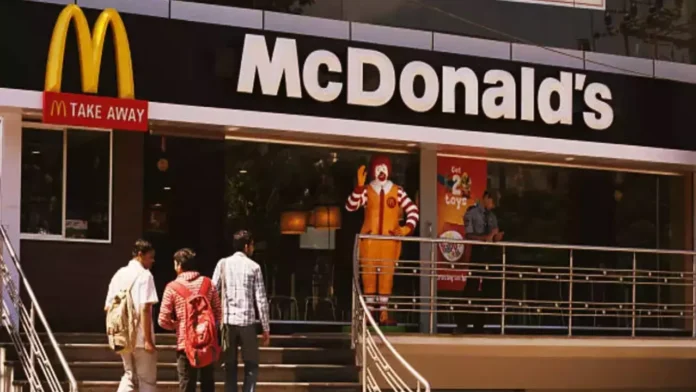
Additionally, Westlife reported that the west and south zones of McDonald’s India have received test results from an NABL-accredited laboratory, affirming the utilization of 100% authentic cheese throughout their product range.
Westlife Foodworld stands as the largest franchisee of McDonald’s in India, managing a network of McDonald’s outlets primarily in the western and southern regions of the country. With operations spanning across Telangana, Gujarat, Karnataka, Maharashtra, Tamil Nadu, Kerala, Chhattisgarh, Andhra Pradesh, Goa, Madhya Pradesh, and Puducherry, it oversees nearly 380 units spread across 62 cities.
Westlife Foodworld drew attention recently when reports surfaced that one of its outlets in Maharashtra allegedly substituted real cheese with alternatives in burgers and nuggets. Subsequently, the state government announced an inspection.
“We are planning to check all outlets of McDonald’s,” Abhimanyu Kale, the FDA chief told Reuters. “We will also take action on other well-known and frequently visited global fast-food chain outlets,” he added, but declined to identify the brands being targeted.
Saurabh Kalra, the Managing Director of Westlife, the company responsible for overseeing McDonald’s operations in the west and south of India, has responded to concerns raised by the Food and Drug Administration (FDA). Kalra confirmed the company’s willingness to cooperate with any inspections, emphasizing McDonald’s commitment to upholding the “highest standards.”
Following FDA action, the license of a McDonald’s outlet in Ahmednagar was temporarily suspended, resulting in the removal of the term “cheese” from several menu items. However, the suspension of the license was subsequently lifted.
The regulatory authority alleged that McDonald’s had utilized cheese substitutes without adequate disclosure, raising concerns about potential consumer deception regarding the authenticity of the cheese. The state FDA has called upon the fast-food chain to implement corrective actions, not only at the local level but also on a wider scale, possibly extending nationwide.
Papa John’s, the pizza restaurant chain, intends to shutter around 50 of its company-owned outlets in the UK as part of a strategy to cut operational losses.
All closures are slated for the second quarter of this year.
The decision forms part of the pizza chain’s strategic evaluation of its portfolio.
The objective is to focus on locations that accounted for two-thirds of the company’s operating losses in the UK during the fourth quarter of 2023.
Since March 2023, Papa John’s has converted 61 underperforming franchised sites to “more established franchisees” and acquired ownership of 118 franchised restaurants.
It operates 450 stores across the UK, encompassing outlets in service stations, holiday parks, and attractions.
A report in KentOnline quoted a Papa John’s spokesperson as saying, “As our second largest global market, Papa John’s remains committed to driving growth in the UK.
“We are undertaking a comprehensive review of our UK-based restaurants to assess viability. Based on our current analysis, we are planning to close approximately 50 underperforming corporate-owned locations.
“The strategic closure of these restaurants would give us the opportunity to invest back into the right locations with the right partners, optimising the brand for long-term growth.”
Established in 1984, Papa John’s International is renowned for its pizzas crafted with mozzarella cheese, vine-ripened tomato sauce, and meats free from fillers.
Papa John’s has a presence in over 5,900 restaurants spanning 50 countries and territories. Its co-headquarters are located in Atlanta, Georgia, and Louisville, Kentucky, USA.
In February 2023, Papa John’s International also disclosed a slight uptick in total global revenues, reaching $2.14 billion, marking a 2% increase from the previous year.
Total revenues for the fourth quarter of 2023 saw an increase of 8.6%, reaching $571.3 million compared to $526.23 million in the previous year’s fourth quarter.
During a recent conference call addressing the financial performance of 2023, Papa John’s International CEO Rob Lynch stated that the company will continue assessing its UK portfolio, encompassing both company-owned and franchised locations, and might contemplate further closures if deemed necessary.
Mondelez International has made an investment in Pack2Earth, a startup based in Spain focused on the development of “bio-based” packaging.
The snacks giant participated in a $1 million seed round investment in Pack2Earth, which is actively developing alternatives to plastic.
In a brief statement, the Cadbury maker said, “This investment, part of Mondelez International’s Sustainable Futures impact investing platform, is very much aligned with our long-term ambition for packaging circularity and an example of the company acting as a catalyst and collaborator.”
Mondelez set up Sustainable Futures in 2021 to finance “environmental and social projects that can help drive meaningful, long-term change”, CEO and chairman Dirk Van de Put said at the time.
Founded in 2022, Pack2Earth, S.L. is working on the development of bio-based flexible film and injection materials that are compostable at ambient temperature and described as “organically recyclable,” according to the Barcelona-based company.
These materials can be utilized to produce packaging suitable for long-life ambient and “semi-liquid” products.
Pack2Earth asserts that its packaging materials can break down into compost that is free from toxins and microplastics.
The Zurich-based investor Sagana also participated in the funding round of the startup.
In a statement, Sagana said the funds would allow Pack2Earth to “complete client pilot projects and start to grow revenues”.
It added, “The advanced biomaterials startup has developed robust food-grade materials that compost quickly at ambient temperature whenever they end their lifecycle. This also helps reduce the use of petroleum-based plastics.”
Mondelez aims to have all its packaging “designed to be recyclable” by 2025. In the 2022 ESG report of the Milka chocolate maker, the company indicated that 96% of its packaging met this criterion.
The group has established a goal of reducing its consumption of virgin plastic by 5% by the same year compared to the procurement level in 2020. It also aims to decrease its utilization of “virgin rigid plastic” by 25% by 2025. Additionally, Mondelez aims for its packaging to incorporate 5% recycled content by the same year.
In the 2022 ESG report of the Milka chocolate maker, the company reported a 7% decrease in the amount of virgin rigid plastic compared to 2020 levels. However, its utilization of virgin plastic increased by 1.5% following a 4% reduction in 2021.
Regarding the goal for recycled content, Mondelez stated that it had achieved 1%.
Other investments made by the company through Sustainable Futures include the Circulate Capital Ocean Fund, which aids in the development of recycling infrastructure in India and Southeast Asia.
The government-backed Open Network for Digital Commerce (ONDC) has achieved a milestone by completing more than 7.1 million cumulative orders in February since its inception in January last year.
In January, the ONDC surpassed 6.75 million cumulative orders. Of these, 3.56 million, accounting for 52.8%, were mobility orders, whereas 3.19 million, constituting 47.2%, were non-mobility orders.
The network currently boasts over 370,000 sellers and service providers, ranging from renowned brands to farmers and taxi drivers. Additionally, it is operational in 588 ‘countable cities’, encompassing approximately 70% of cities across India.
The network defines countable cities as cities or districts with more than 100 orders per month in the last three months. Overall, ONDC has facilitated transactions in over 800 cities throughout India.
ONDC’s mobility service is currently active in seven cities: Bengaluru, Mysuru, Kolkata, Hyderabad, Delhi, Chennai, and Kochi. The inclusion of Chennai Metro train services into ONDC marks a significant stride towards achieving multimodal mobility through the network.
Additionally, ONDC has commenced a pilot to onboard street food vendors in Delhi and Lucknow. The plan is to onboard 500 street food vendors in the next two months in both these cities followed by a nationwide scale-up with more seller and buyer apps. Seller apps onboard merchants while buyer apps are customer-facing apps on which orders are placed.
On February 22, three seller apps affiliated with the network—Ninjakart, Shiprocket, and Mystore—organized a seller onboarding program in Chhattisgarh. The event catered to 95 primary agricultural credit societies (PACS), eight farmers’ producer organizations (FPOs) and fish farmer producer organizations (FFPOs), seven dairy cooperatives, and five handloom cooperatives.
Nature Spell has officially introduced its product line in India, granting customers access to top-tier natural extracts and powerful actives, responsibly sourced from across the world and produced in the UK.
Famed for its high-quality formulations suitable for diverse skin and hair types, Nature Spell brings forth a collection of over 100 products to the Indian market. Among these offerings are the widely praised Rosemary Hair Oil, celebrated for its remarkable hair benefits, and the Growth Complex Hair Growth Range, leveraging the power of Indian herbs to foster robust hair growth.
Sunny Gandhi, Co-Founder said, “We noticed a gap in the market for products that were not just effective but also sustainable, clean, and most importantly, transparent. This realization led us to the concept of blending the richness of earth’s natural goodness with the efficacy of modern high-performance based active ingredients and as a result, build effective products suitable for all hair and skin types.”
Nature Spell’s skincare line showcases effective formulations tailored to address various skin concerns, blending natural extracts, potent active ingredients, and pre-diluted cold-pressed oils. Covering everything from facial cleansers to moisturizers and treatments, this range advocates for overall skin well-being and adheres to cruelty-free practices. Moreover, with 90% of the products being vegan, it underscores a commitment to ethical and sustainable choices.
Exercising full control over the manufacturing process, from ingredient procurement to packaging design, Nature Spell guarantees top-notch quality in both product formulation and presentation. The brand captivates customer interest with visually appealing and environmentally friendly packaging solutions.
The brand’s introduction into the Indian market marks a significant change in the beauty industry landscape, providing an extensive array of efficacious and scientifically validated natural products designed for various skin types. Nature Spell makes its debut with 22 SKUs covering hair, skin, and body care, with intentions to roll out an additional 80 SKUs in the near future.
Customers have the opportunity to discover Nature Spell’s diverse product range through its Shopify store, as well as on prominent e-commerce platforms such as Nykaa, Amazon, Myntra, and Flipkart. Additionally, retail availability will soon begin, ensuring convenient access for customers to the brand’s sustainable beauty offerings.
We use cookies to ensure that we give you the best experience on our website. If you continue to use this site we will assume that you are happy with it.