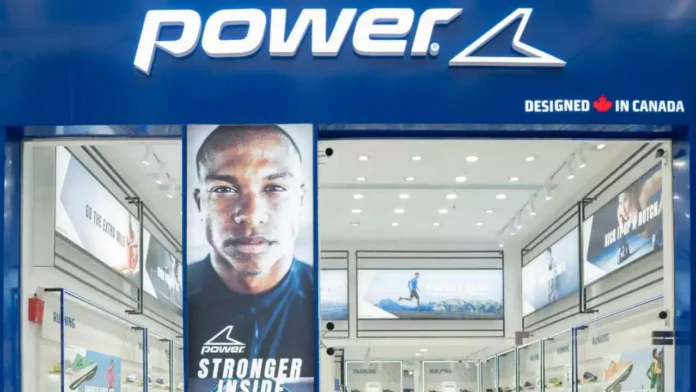
Stride, the premium footwear destination operated by Arvind Fashions Ltd., has inaugurated its inaugural shop-in-shop concept at Club-A Indiranagar, a multi-brand fashion and lifestyle store in Bengaluru, as per a recent social media post by a company official on Monday.
“We are thrilled to unveil our inaugural Shop-in-Shop concept, debuting exclusively at Club-A Indiranagar. Stride emerges as the quintessential destination for discerning patrons seeking premium footwear and handbags. This pioneering collaboration marks a convergence of style, sophistication, and convenience, redefining the shopping landscape within Club-A,” said Venkat Krishnan, visual merchandising manager, Arvind Fashions Limited.
Founded in 2015, Stride offers an array of footwear and handbags that epitomize luxury and elegance. The idea behind the brand was to introduce a variety of footwear brands to the Indian market. It presents a mix of homegrown, acquired, licensed brands, and joint ventures, providing an extensive range of high-quality shoes.
As per the official website of the company, Stride currently showcases brands such as Aeropostale, US Polo Association, Arrow, Cole Haan, and Flying Machine.
Established in 1931, Arvind Fashions Ltd (AFL) reported a multifold rise in consolidated net profit to INR 51.08 crore for the December quarter Financial Year (FY) 2024.
AFL’s net profit from continuing operations stood at INR 30.12 crore, up from INR 26.39 crore in the same quarter of the previous fiscal year. Revenue from operations totaled INR 1,125.05 crore, compared to INR 1,072.78 crore in the corresponding period last year.
India, the world’s biggest importer of vegetable oil, is anticipated to increase its procurement of soyoil in 2024, while purchases of palm oil are likely to decline, as stated by a top dealer on Monday.
Sandeep Bajoria, CEO of Sunvin Group, a vegetable oil brokerage and consultancy firm, forecasts that India’s soyoil imports will increase to 4.3 million metric tons during the 2023/24 marketing year, up from 3.5 million tons in 2022/23.
Bajoria, speaking at the Palm and Lauric Oils Price Outlook Conference 2024, mentioned that palm oil imports are projected to decrease to 9.2 million tons in 2023/24, down from 10 million tons in 2022/23.
Traders report that negative refining margins in palm oil compared to positive margins in soyoil have led to a recent shift from palm oil to soyoil.
Reduced palm oil purchases by India might maintain high inventories in leading producers Indonesia and Malaysia, exerting downward pressure on benchmark futures.
According to Bajoria, India’s sunflower oil imports are expected to hold steady at approximately 3 million tons for the ongoing marketing year. This would result in the country’s total vegetable oil imports remaining unchanged at 16.5 million tons in 2023/24 compared to the previous year.
“Overall, domestic production of vegoils is going to be around 10 million tons and imports will be at 16.5 million tons. So total consumption will be around 26.5 million tons.”
At present, domestic reserves of soybean, cottonseed, rice bran, and mustard oils are constraining India’s need for imports. Nonetheless, Bajoria anticipates an increase in palm oil imports from May to July.
Bajoria mentioned that the country is expected to import between 700,000 to 750,000 tons of palm oil per month in May, June, and July.
In January, India experienced a decline of over 12% in palm oil imports compared to the previous month, reaching a three-month low of 782,983 tons.
India primarily purchases palm oil from Indonesia, Malaysia, and Thailand, while acquiring soyoil and sunflower oil from Argentina, Brazil, Russia, and Ukraine.
Last month, Ghazal Alagh, co-founder of Mamaearth, India’s leading direct-to-consumer (D2C) brand, shared on social media platform X: ‘We continue to strengthen and expand omnichannel distribution with over 1.7 lakh retail touch points, increasing distribution by 37% year-on-year.’
The post confirmed a strategic shift by personal care company Honasa Consumer, owner of Mamaearth, to significantly expand its presence in physical retail over the past year, mirroring the trajectory of several other major D2C or internet-first brands in the country. Meanwhile, companies like meat delivery startup Licious and cosmetics firm Minimalist have opted for an omnichannel approach.
Millet-based snack brand Slurrp Farm, cosmetics makers Just Herbs and Sugar Cosmetics, lingerie brand Zivame, eyewear retailer Lenskart, wearables brand boAt, and beauty retailer Nykaa are among those that have launched brick-and-mortar stores.
Executives emphasized that for such D2C brands, entering retail channels entails a variety of strategies, including critical elements like workforce recruitment, which plays a pivotal role.
“When a pure play online brand goes into offline, it needs to adapt itself to the new channel at multiple levels, starting with the product assortment itself,” said Arush Chopra, CEO of Just Herbs, in which fast-moving consumer goods (FMCG) company Marico has invested. “Products that sell well online may not do as well offline as you are not catering to the ‘long tail’ niche customer anymore. So tweaks are required in the product strategy.”
Chopra suggests that when brands pursue offline expansion through distribution channels, earning the trust of trade participants is essential. Having an established online presence can significantly aid in this endeavor.
“Having the right team to execute and educate the consumer is also critical. You sometimes need seasoned folks from legacy offline businesses rather than people with startup experience to do so. So you need a team that has the agility of a startup and the experience and depth of knowledge of a legacy company,” he said.
Internet-first brands encounter challenges when transitioning to offline operations, particularly as they scale up to reach broader distribution through general trade channels.
“Offline is a tough model,” said Rajat Wahi, partner at Deloitte India. “All stores are of different sizes in India, and one needs to understand the nuances of how to manage inventories, damages and so on.”
However, for digital-first brands, supplying directly to retail points from their warehouses or shipping directly from their distribution centers tends to be more straightforward.
Several D2C brands have been acquired by large companies, leveraging the distribution capabilities of these entities. As a result, they aim to double their retail presence over the next 12-24 months.
“Our offline business grew from 400 to 5,000 stores between 2022-23, and we’re targeting a retail footprint of 40,000 stores by 2026. Overall revenue has doubled every year for the last three years and offline currently accounts for 30-40%,” said Meghna Narayan, co-founder of Wholsum Foods, which makes Slurrp Farm healthy mixes.
In an increasingly digital world, the value of physical touchpoints cannot be understated, said Chaitanya Ramalingegowda, co-founder of Wakefit.co, which makes premium mattresses and sleep solutions. “We have strategically expanded our offline footprint, now with over 50 stores nationwide. While our online platforms ensure convenience and accessibility, our offline stores serve as hubs of interaction and strong engagement where customers can touch, feel and experience the quality of our products first hand,” he said.
“We have observed that our offline AOV (average order value) is two times higher than our online AOV, said Ramalingegowda. “Online platforms are excellent avenues for research and data collection, while offline touchpoints offer families the opportunity to make collective decisions in a high-involvement category like home and sleep solutions.”
Hiring is key to topping up in physical retail, said executives.
“Traditional retail is all about strong trade relationships. The retailers and distributors have to be comfortable working with your sales team and hiring experienced folks certainly helps here,” said Chopra of Just Herbs. “Also, it is very important to hire sales people who specialise in this type of trade. For example, someone with general trade experience may not be suited to do pharmacies or someone with modern trade experience may struggle with general trade where relationships with the trade participants are key.”
Nykaa‘s offline store count reached 150 in the fiscal year 2022-23, showing substantial growth from 72 stores within a two-year period. Meanwhile, for audio wearables company boAt, nearly one third of its 4,000-crore sales now originate from offline stores.
Listed wine-maker Sula Vineyards Ltd plans to open tasting rooms across the country, in addition to launching its fourth and fifth wine-tasting rooms in the next fiscal.
The company is also anticipating a record grape harvest this year.
According to the company, it will open its fourth tasting room on the Mumbai-Agra highway close to the Nashik Airport and HAL Ozar, thus catering to the fast-growing demand from the regions north and east of Nashik.
“This marks a significant step for Sula – our first tasting room outside our own winery premises – the start of a new chapter where we envision more Sula tasting rooms opening across the country. Plans are already in the works to open a fifth tasting room in the second half of FY25,” said Rajeev Samanth, CEO, Sula Vineyards Ltd.
The 2024 grape harvest is shaping up to be excellent in quantity as well as quality for a fourth consecutive year, with the wine grape harvest setting a new record of over 10,500 tonnes.
“The harvest is excellent, with red grapes comprising about 65 per cent of total wine grapes. This signifies a notable shift from five years ago, when red grapes constituted 55 per cent of the total, reflecting India’s increasing preference for red wines. Syrah and Chenin Blanc are the two top varieties in this harvest,” said Karan Vasani, COO, Sula Vineyards Ltd.
Popeyes, a US-based fried chicken restaurant chain operated by Jubilant FoodWorks Limited (JFL) in India, has opened two new restaurants in the Delhi-NCR region, as stated in a social media post by a company official.
“What a weekend to start with !! Popeyes new store launch in Delhi NCR today at Pacific Mall, Jasola and Mall of Faridabad,” said Kartik Shandilya, Lead Business Development at Popeyes – North India in a LinkedIn post.
The two recently opened restaurants are situated at Pacific Mall Jasola, NH-19, adjacent to Jasola Apollo Metro Station, Jasola, New Delhi, and the Mall of Faridabad, NIT Bus Stand, K L Mehta Road, 01, New Industrial Township, Faridabad.
The Jasola Mall establishment will mark the second Popeyes store in New Delhi. Additionally, with the Mall of Faridabad outlet, it will become the second Popeyes store in Haryana state, following the brand’s existing store in Gurugram.
Since its debut in India last year, JFL has launched 35 Popeyes stores nationwide. Its most recent addition was the inauguration of its inaugural restaurant in Delhi at Omaxe Chowk, Chandni Chowk.
In December last year, it was reported that Popeyes plans to add about two dozen stores in India in the next three months or so to take the total number of restaurants in the country to about 50 by the end of the current fiscal year.
Last week, Sameer Khetarpal, CEO and MD of JFL, expressed expectations that Popeyes, its fried chicken brand, would surpass INR 1,000 crore in sales within the next 3-4 years during an interaction with the media.
JFL, also acting as the master franchisor of Domino’s, is in the process of expanding its footprint and anticipates having approximately 3,000 outlets in the medium term.
The company is going to “rapidly expand across” its QSR brands, with a key focus on Domino’s as India is a “very rapidly expanding market” with more discretionary income, and urbanisation led by its growing economy.
JFL plans to expand Popeyes’ presence to the NCR region and other prominent cities in North India. Launched by JFL in January 2022, the brand currently operates in 10 cities across South India, with Delhi being its eleventh city.
For the current fiscal year, the company has allocated approximately INR 750 crore for expansion and the opening of new stores.
India’s sugar production declined 1.19 per cent to 25.53 million tonne so far in the ongoing 2023-24 marketing year, the industry body ISMA said on Monday.
Sugar production stood at 25.84 MT till February in the year-ago period. Sugar marketing year runs from October to September.
In its second estimate, the Indian Sugar Mills Association (ISMA) has projected sugar output to decline by 10 per cent to 33.05 MT in the current 2023-24 marketing year as against 36.62 MT in the previous year.
According to ISMA, sugar production in Maharashtra, Karnataka, Gujarat, and Tamil Nadu remained lower till February of the ongoing marketing year.
However, sugar output in Uttar Pradesh — the country’s second largest producer of the sweetener — was higher at 7.81 MT as against 7 MT in the period under review.
The production in Maharashtra — the country’s largest producer of sugar — was down at 9.09 MT till February of this marketing year, compared with 9.51 MT in the year-ago period.
Similarly, the production in Karnataka — the country’s third largest producer — was down at 4.7 MT from 5.12 MT in the period.
Sugar output reached 7,70,000 tonne in Gujarat and 5,80,000 tonne in Tamil Nadu so far this marketing year.
Around 466 factories were operating till February of the current marketing year as against 447 in the year-ago period.
“In the current season, rate of closure of mills in Maharashtra and Karnataka is slower than last year, indicating that tail of the season could be longer this year in these states,” ISMA said.
So far, a total of 49 factories have closed across these two states this year as against 74 factories closed in the year-ago period, it said.
Overall, 65 factories have closed their crushing operations across the country as against 86 in the year-ago period.
As part of India’s efforts to engage with the Global South, the government has authorized the export of 110,000 tonnes of rice to three African nations, aiming to assist them in addressing their food security requirements.
As per a notification from the Directorate General of Foreign Trade (DGFT), Tanzania has been granted permission to import 30,000 tonnes of non-basmati white rice, Djibouti has been allowed to import 30,000 tonnes of broken rice, and Guinea Bissau has been permitted to import 50,000 tonnes of broken rice.
Since July 20, 2023, exports of non-basmati white rice have been prohibited to maintain ample domestic stocks and manage inflation levels.
Nevertheless, certain exports are being permitted to allied nations to safeguard their food security, particularly affected by disrupted supplies stemming from the ongoing conflict between Russia and Ukraine.
The African countries had sought support from India to meet their needs as they were facing problems due to shortage of food supplies and runaway inflation in its wake.
In the meantime, the company has established a goal of integrating its latest acquisitions, Capital Foods (valued at INR 5,100 crore) and Organic India (valued at INR 1,900 crore), into the business within 100 days.
Ajit Krishnakumar, COO of Tata Consumer Products Ltd said, “We are in the process of integrating Capital Foods and Organic India, which is substantial and amounts to a total of INR 7,000 crore. From an operational perspective, there is no reason that we will not look for acquisitions. We remain disciplined. We have to define the criteria, which is that it should be worthwhile, and we will pursue it. We will not be running away because of the price, as long as the acquisitions meet the criteria; we have the position to continue with it.”
The Mumbai-based company revealed its acquisition of both firms on January 12th. It noted that the sectors in which these companies operate are experiencing growth rates ranging from 15 to 20 percent compared to their foundational categories. TCPL intends to consolidate the three manufacturing plants of Capital Foods into its existing manufacturing infrastructure. Previously, the company had acquired Kottaram Agro Foods, headquartered in Bengaluru.
“We have platforms that we are interested in that include pantry and mini meals. We have also talked about proteins. We have defined our interests for several reasons which start with what brands will work, distribution strategy etc. We want to grow and will tap into opportunities. It could be a mix of inorganic and organic growth,” added Ajit Krishnakumar.
The company’s distribution network spans 3.9 million outlets across India, with direct access to 1.5 million of them.
TCPL is gearing up to establish a specialized pharmaceutical distribution network featuring Organic India’s product range, which encompasses capsules containing Tulsi, ashwagandha, and Triphala. Additionally, TCPL will market its own in-house products, such as GoFit plant proteins and Soulfull products, through pharmacy channels.
Credit rating agency ICRA expects the revenue growth for its sample set of domestic poultry companies to improve mildly to about 5-6 per cent in FY2025 after an estimated modest Year-on-Year (YoY) growth of about 3-4 per cent in FY2024.
According to ICRA, the growth will be driven by demand improvement, increasing share of organised players and growing preference for value-added products.
“While broiler meat realisations continued to be strong till 7M FY2024 (YoY growth of about 2 per cent), they started tapering thereafter due to high placement and excess supply in key markets,” ICRA said in its recent report.
Subsequently, Q3 FY2024 witnessed a about 10% Quarter-on- Quarter (QoQ) drop in average realisations, resulting in overall flat average numbers in 9M FY2024 on a YoY basis. The same could revive gradually, as the oversupply scenario corrects over the next few months, ICRA said.
While realisations improved in 7M FY2024 following controlled supply and healthy demand, poultry companies’ earnings were further supported by softened feed costs, ICRA said.
Average maize prices during April-November 2023 decreased by about 9 per cent vis-à-vis FY2023. Likewise, soybean prices softened in the current fiscal and average prices in 9M FY2024 declined by about 14 per cent vis-à-vis FY2023. However, the realisations started tapering from November 2023 onwards and the grain prices, particularly maize, also started rallying since then, ICRA said.
Further, significant contraction in soybean harvest during the kharif season and delayed sowing of maize may result in a potential spike in feed costs and is likely to exert pressure on the margins of poultry companies over the next few quarters, ICRA said.
Zomato, a major player in the foodtech industry, saw its shares surge to a record peak of INR 175.5 during early trading on the BSE on Monday, March 4th.
The stock, which has been experiencing an upward trend since mid-April last year, surged nearly 5% during intraday trading to reach its all-time high.
Even last Friday, the stock surged almost 5% intraday to touch the previous all-time high of INR 173.45.
Following its rally earlier today, the shares retraced some of their gains to conclude the day with a 1.3% increase, reaching a new record closing price of INR 169.75 on the BSE.
Currently, Zomato is trading at a level last observed in November last year, when it had reached a record intraday high of INR 169.1.
Since its listing in July 2021, Zomato’s shares have experienced significant fluctuations. In the backdrop of a downturn in the global tech sector, the company witnessed a substantial 60% decline in market capitalization in 2022. Moreover, apprehensions surrounding its losses and the acquisition of the loss-making Blinkit contributed to the challenges faced by shares of the startup led by Deepinder Goyal.
However, as the startup reported its first profitable quarter in Q1 and continued to grow its profits every quarter thereafter, the market sentiment towards the stock became positive.
Although its primary food delivery segment experiences sluggish growth, the strengthening fundamentals of its quick commerce division, Blinkit, have sparked bullish sentiment on the stock among investors.
Presently, the company is expanding its roster of brands and introducing fresh categories on Blinkit, positioning itself to compete against ecommerce giants like Amazon and Flipkart.
During its most recent reported quarter, Q3 FY24, Zomato recorded a profit after tax (PAT) of INR 138 Cr, marking a substantial 283% increase quarter-on-quarter.
The company’s shares have surged by over 37% since the beginning of the year.
We use cookies to ensure that we give you the best experience on our website. If you continue to use this site we will assume that you are happy with it.