Monday, February 2, 2026
Home Blog Page 594

Zomato launches in-hall food delivery service at PVR Cinemas in Gurgaon, enhancing movie-goers’ experience

0
Zomato
Zomato

Now, movie buffs in Gurgaon can relish a seamless cinematic journey thanks to the debut of in-hall food delivery services by the online aggregator platform Zomato at PVR Cinemas. This initiative is geared towards elevating convenience and smoothing out the movie-watching adventure for patrons.

Sahibjeet Singh Sawhney, Marketing Head at Zomato, took to LinkedIn to announce the initiative, stating, “Skip the queue – at PVRs, now order from your seat on Zomato.” This innovative service allows movie buffs to order their favorite snacks and beverages directly to their seats, eliminating the need to stand in long queues during intermissions or before the movie begins.

Continue Exploring: Zomato introduces kurtas as uniform option for women delivery partners

The delivery service will extend across various halls in Gurgaon, offering moviegoers a diverse array of food choices to savor during their preferred films. Leveraging Zomato’s vast network of partner eateries and efficient delivery system, patrons can anticipate swift and reliable service, ensuring they remain fully immersed in the on-screen excitement without interruption.

The partnership between Zomato and PVR Cinemas represents a notable advancement in transforming the movie-watching experience, granting patrons the ease of food ordering without interrupting their cinematic immersion. It mirrors the increasing tendency to merge technology and convenience amenities into traditional entertainment spaces, thereby amplifying customer contentment.

Continue Exploring: Zomato reports third consecutive profitable quarter with INR 138 Cr PAT in Q3 FY24

Advertisement

Food regulatory body implements strict measures to improve in-flight meal quality

0
in-flight meal
In-flight meal

In light of increasing grievances regarding the poor quality of in-flight meals, measures are being implemented to address the issue decisively. Consequently, the food regulatory body has issued a thorough advisory to airlines, emphasizing the importance of prioritizing food quality and ensuring clear labeling of all food items supplied to passengers.

Airlines are required to include information about their flight kitchen and in-flight catering in their licensing agreements, specifying a headquarters address. Furthermore, if airlines are procuring food from external vendors but marketing it under their own brand, they must inform the regulatory authority.

The food regulatory body stresses the importance of including crucial details on pre-packaged food items, such as the caterer’s name, FSSAI license number, packaging date and time, as well as expiration information.

Numerous complaints have surfaced in recent times regarding the poor quality of food and beverages served during flights. One notable incident involved the discovery of maggots in sandwiches served on an IndiGo flight, which garnered widespread attention after a passenger shared a video of the ordeal on social media. Following this incident, the FSSAI issued a ‘show cause notice’ to IndiGo for serving what was deemed ‘unsafe food’ to the passenger.

Continue Exploring: IndiGo faces backlash after cockroaches spotted in food area during flight; passenger’s video sparks hygiene concerns

To avert such incidents and maintain food safety standards for passengers, the FSSAI is meticulously overseeing the entire in-flight food supply chain. In response to noted irregularities, the food regulator has implemented a rigorous approach, providing explicit guidelines to airlines to guarantee the delivery of safe and top-notch food during flights.

Advertisement

Zomato introduces kurtas as uniform option for women delivery partners

0
Zomato

Zomato announced that its female delivery partners now have the option to wear kurtas instead of the standard Zomato t-shirts as part of their uniforms.

This decision comes in response to feedback from numerous female employees who expressed discomfort with the Western-style Zomato t-shirts.

In a post on LinkedIn, Zomato shared a video and wrote “Starting today, Zomato women delivery partners can choose to wear a kurta.”

The video showcased several Zomato delivery women donning the new kurtas provided by the company, engaging in what seemed to be a celebratory photoshoot. It documented their expressions of appreciation and endorsement for the company’s considerate gesture.

Continue Exploring: Zomato reports third consecutive profitable quarter with INR 138 Cr PAT in Q3 FY24

“Many female delivery partners expressed discomfort with the western-style Zomato t-shirts. So, we gave them a choice,” Zomato specified.

After wearing the kurta, one of the ‘happy’ women said, “Pocket bhi hain (It has pockets too).”

The video has amassed thousands of likes and positive reactions from social media users, with many expressing appreciation for the company’s “considerate” gesture.

“I have started loving this brand more and more, not just because of their service, but because of their thoughts and culture,” a user said. “Thanks, Zomato, for creating opportunities for people and saving thousands of lives,” another person said.

“Such a great initiative to encourage a nurturing and caring workspace for all,” a comment read.

Advertisement

Aldi to expand discount grocery chain across US as high food prices squeeze American budgets

0
Aldi
Aldi

Aldi aims to expand its network of discount grocery stores by adding 800 new locations across the United States over the next five years. This expansion strategy is geared towards tapping into the market of budget-conscious Americans who are increasingly feeling the financial strain when shopping for groceries.

Inflation has led many consumers to adjust their shopping behaviors. Disgruntled by prices that remain, on average, about 19% higher than before the pandemic, consumers are seeking new approaches to economize. In grocery stores, they are transitioning from name brands to store-brand items, turning to discount retailers, or simply purchasing fewer items like snacks or gourmet foods.

The growing consumer resistance against what critics denounce as price-gouging is particularly evident in the food sector, as well as in consumer goods such as paper towels and napkins.

Continue Exploring: No rush to expand categories, grocery remains primary focus: BigBasket CEO Hari Menon

Pricing has also attracted the attention of the federal government, with the Federal Trade Commission filing a lawsuit last month to prevent a proposed merger between grocery titans Kroger and Albertsons. The FTC argues that the $24.6 billion deal would diminish competition and result in increased prices for millions of Americans. Kroger and Albertsons, both among the largest grocers in the nation, reached an agreement to merge in October 2022.

According to government data, while U.S. prices for food consumed at home usually increase by 2.5% annually, they surged by 11.4% in 2022 and another 5% in 2023.

On Thursday, Aldi announced its strategy, which involves both new store openings and store conversions. The company aims to introduce nearly 330 stores across the Northeast and Midwest regions by the conclusion of 2028. Additionally, Aldi plans to expand its presence in southern California and Phoenix while venturing into new cities, such as Las Vegas.

Following its acquisition of Southeastern Grocers, Aldi revealed plans to convert a substantial portion of Winn-Dixie and Harveys Supermarket locations to its format over the next few years.

“Our growth is fueled by our customers, and they are asking for more ALDI stores in their neighborhoods nationwide,” Aldi CEO Jason Hart said in a statement.

The company, based in Batavia, Ill., just west of Chicago, will invest more than $9 billion into its national expansion.

Continue Exploring: Flipkart expands grocery operations with fourth fulfillment center in West Bengal

Advertisement

Starbucks hits 400th store milestone in India with grand opening in Coimbatore

0
Starbucks
Starbucks

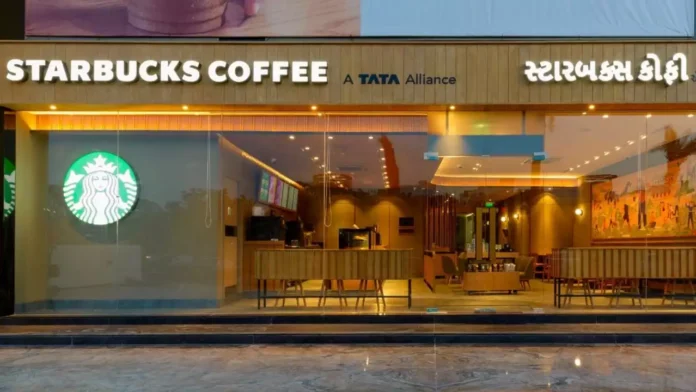
US-based coffee chain Starbucks has achieved a significant milestone in India, reaching its 400-store mark with the opening of its latest outlet in Coimbatore, as stated by an industry official on social media. The new store is located at The Lakshmi Mills – Urban Center in Coimbatore, Tamil Nadu.

“Today, we are proud to deliver the 400th Starbucks store in India, the flagship store in Coimbatore,” said Govind K Menon, executive director at Pavilions & Interiors in a LinkedIn post.

The store’s interiors have been designed by Pavilions & Interiors.

Crafted from wood, linen textiles, and woven ropes, the suspended sculpture within the store serves as a tribute to Lakshmi Mills, India’s oldest yarn and fabric manufacturer dating back to 1910.

The Starbucks-branded coffee chain in India operates as a joint venture between Seattle-based Starbucks Coffee Co. and Tata Consumer Products Ltd., with both entities holding a 50% stake.

In 2023, Starbucks expanded its presence in India by launching 71 new stores, marking its entry into 15 additional cities across the country.

The beverage giant announced its plan to double its workforce, aiming to employ approximately 8,600 partners compared to the current 4,300. This expansion strategy includes entering tier 2 and 3 cities in India, as well as expanding services to encompass drive-thrus, airports, and 24-hour store formats, in order to meet the diverse needs of customers.

The company is currently aiming to operate 1,000 stores in India by 2028 or one new store opening every three days.

Continue Exploring: Starbucks CEO bullish on India’s coffee market, targets 1000 cafes by 2028

Advertisement

FAT Brands’ net loss narrows to $26.23M in Q4 2023, revenue surges

0
FAT Brands
FAT Brands (Representative Image)

In the fourth quarter of 2023, FAT Brands recorded a net loss of $26.23 million, contrasting with a net loss of $70.8 million in the same period the previous year.

The adjusted net loss for the fiscal fourth quarter (Q4) of 2023 was $17.3 million, in contrast to $43 million in Q4 of 2022.

For the quarter concluding on December 31, 2023, FAT Brands experienced a 52.8% increase in total revenue, reaching $158.6 million compared to $103.8 million in the preceding year.

The increase was credited to a 10.4% uptick in royalties, a significant 80.5% spike in company-owned restaurant revenues, and a 10.0% boost in manufacturing facility revenues.

During Q4 of 2023, the company saw a system-wide sales growth of 16.5% when compared to the corresponding quarter of the prior fiscal year.

Continue Exploring: FAT Brands to sweeten Texas with ten co-branded stores across the state

Its system-wide same-store sales experienced a 0.6% decline compared to the corresponding period of the prior fiscal year.

During this period, 29 new stores were opened.

Adjusted earnings before interest, taxes, depreciation, and amortization for the quarter amounted to $27 million, marking an increase from $19.6 million in the fiscal fourth quarter of 2022.

FAT Brands co-CEO Ken Kuick said, “While franchise interest remains high across all of our brands, we continue to be focused on the expansion of Twin Peaks. This year we opened 14 new lodges and ended the year with 109 lodges, a 33% increase since acquiring the brand in 2021.

“Our growth pipeline includes 113 lodges and the Smokey Bones’ healthy real estate portfolio provides us with the opportunity to convert locations into Twin Peaks lodges, with the potential to significantly accelerate the growth of the brand.”

Advertisement

British supermarket sales growth slows in February, reflecting decline in food inflation: Industry data

0
Vegetables
(Representative Image)

In February, British supermarket sales growth decelerated to 5.3% from January’s 6.6%, indicating a decline in food inflation, as per industry data.

The market research firm NIQ reported a drop in food price inflation to 5.0% last month, down from 6.1% in January.

In the four weeks leading up to February 24, market data indicated that 24% of all fast-moving consumer goods (FMCG) sales were purchased through promotional offers. For branded goods, this figure rose to 35%, an increase from 31% compared to the previous year. Meanwhile, for own-label items, it stood at 16%, up from 13% a year ago.

“Whilst industry volumes remain positive, many brands are now chasing growth having lost category share during the high period of inflation,” said Mike Watkins, NIQ’s UK head of retailer and business insight.

Continue Exploring: Marks & Spencer’s food retail arm continues strong sales streak, challenges leading grocers in UK

He forecast levels of promotion would continue to creep up over the next few months.

“With Euro 2024 and Paris Olympics on the horizon, branded promotions will be the drivers of increased discretionary spend post Easter,” he said.

NIQ reported that in the 12 weeks to Feb. 24, online grocer Ocado and Marks & Spencer were the UK’s fastest-growing grocers, with year-on-year sales growth of 12.2% and 11.9%, respectively.

Tesco, the market leader, and Sainsbury’s, the second-largest retailer, both gained market share, achieving sales growth of 6.8% and 8.0%, respectively.

Continue Exploring: British supermarket Morrisons adopts discounters’ pricing to stay competitive

Sales momentum at the German-owned discounters Aldi and Lidl decelerated, recording growth rates of 6.0% and 10.4% respectively, whereas Asda and Morrisons continued to trail behind with growth rates of 2.0% and 3.6% respectively.

Also on Tuesday, a survey conducted by the British Retail Consortium revealed a decline in overall UK spending for February. Poor weather conditions discouraged shoppers from venturing out, while households maintained a cautious approach due to elevated borrowing costs and inflationary pressures.

Advertisement

Roar Organic receives $10 Million boost from CPG Investor Factory to accelerate growth and expansion across the US

0
Roar Organic
Roar Organic

Roar Organic, a US-based functional beverage brand, has secured a new $10 million investment from CPG investor Factory.

Roar announced that the funding will be utilized to strengthen its role as a catalyst for category growth through strategic partnerships, enhance its distribution network, and expand consumer accessibility across the United States.

The brand stated that it concluded 2023 as the leading flavored non-carbonated water and sports drink brand in the natural channel within the United States.

Continue Exploring: Kylie Jenner enters beverage alcohol sector with ‘Sprinter’ RTD brand launch

Keith Caldwell, partner at Factory, said, “From the moment we first encountered Roar, we knew there was something special here. Our continued investment reflects our unwavering belief in the team, their vision, and their ability to disrupt the beverage industry.”

Roar Organic’s CEO Bill Lange added, “2023 was a fantastic year for the brand, but we believe we’re just getting started. Our on-trend product portfolio aligns with the shifting consumer preferences towards healthier, functional yet great tasting beverages – and we couldn’t be more confident in our ability to continue to make significant impact.”

Advertisement

Kerala to introduce advanced security label for Indian-made foreign liquor

0
Alcohol
(Representative Image)

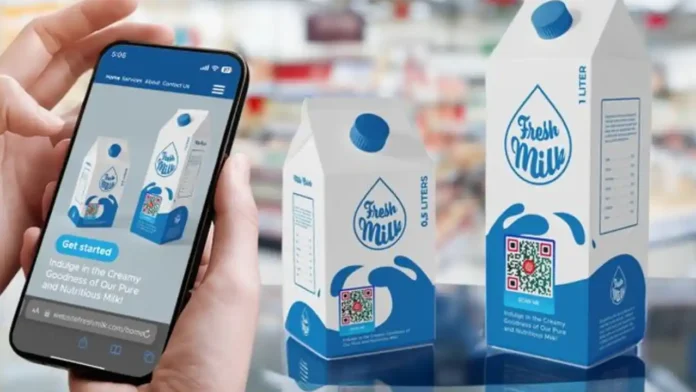
The Kerala government has decided to introduce security labels for Indian-made foreign liquor (IMFL) within the state. These new labels boast 30 distinct security features aimed at facilitating track and trace capabilities. Central to this initiative is a taggant-based holographic tax label featuring a QR code for enhanced security measures.

The state’s newly devised track and trace system for its liquor supply chain aims to guarantee product safety, streamline inventory management, and empower customers with comprehensive information about their preferred liquor choices. Through QR code scanning, any customer will have access to detailed information regarding the liquor product.

This new version of the hologram inbuilt security system will replace existing 15 security features enabled system that have been in place since 2002 in Kerala.

Continue Exploring: Karnataka govt to revise liquor duty rates to bolster revenue and curb trade diversion

Advertisement

Global food prices hit three-year low as cereal costs decline, FAO data reveals

0
Food prices
(Representative Image)

Global food commodity prices continued to fall in February, marking the lowest average since February 2021, mainly as a result of lower world cereal prices.

The FAO Food Price Index, monitoring the prices of five food commodities, dropped by 10.5% compared to the corresponding month last year and decreased from 118.2 points in January. Compiled by the Food and Agriculture Organization of the United Nations, the index averaged 117.3 points in February.

The cereal price index decreased by 5% from January to 113.8 points, marking a 22.4% decrease from its February 2023 value. The FAO reported that international prices for all major cereals experienced a month-on-month decline, with maize exports registering the most significant drop.

Wheat prices were down due to “lower export quotations due a strong export pace from the Russian Federation, which exerted downward pressure on prices from other origins, in particular the European Union”, the FAO wrote in a statement.

Continue Exploring: Kellogg’s CEO faces backlash after suggesting Americans eat cereal for dinner amid soaring food prices

In a separate report on cereal supply and demand, the FAO raised its forecast for 2023 cereal output by 1.1% from 2022 to 2,840 million metric tons due to increased maize supplies in Brazil, China, and the US.

Vegetable oil prices declined by 1.3% compared to the previous month and were down by 11% compared to the previous year, primarily attributed to reduced world prices of soy, sunflower, and rapeseed oils. The agency noted that this decrease offset marginally higher palm oil quotations.

Dairy prices were marginally up on January but stood 13.4% lower than 2023. The FAO said, “In February, world butter prices rose the most, underpinned by higher import demand from Asian buyers and seasonally declining milk production in Oceania.”

The meat price index increased by 1.8% compared to January and was only 0.8% below its corresponding value from one year ago. This marked a reversal from seven months of consecutive decreases.

Continue Exploring: Govt rolls out ‘Bharat’ rice at INR 29/kg to tackle rising food prices

The FAO said international price quotations for poultry meat rose the most, followed by bovine meat, “underpinned mainly by a rise in demand from leading importing countries”.

Meanwhile, sugar prices rose by 12.5% compared to the previous year and 3.2% compared to the previous month, indicating the second consecutive monthly increase.

“Persistent concerns over the outlook for the upcoming season in Brazil following a prolonged period of below-average rainfall continued to support world sugar prices, exacerbating the seasonal upward pressure. Furthermore, forecasts pointing to likely production declines in Thailand and India, two leading exporting countries, contributed to the price increase,” the FAO wrote.

Advertisement