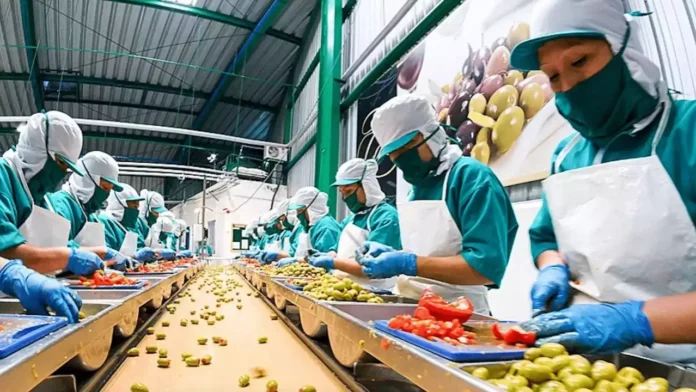
Anita Praveen, the Secretary of the Ministry of Food Processing, highlighted the crucial role of research and development (R&D) in advancing the Indian food processing sector to new heights.
Speaking at the FICCI Scientific Symposium on ‘Processed Foods for Purpose’, Praveen emphasized the sector’s considerable growth potential and its importance as a priority area in India’s agricultural sector.
Praveen remarked, “The Indian agricultural sector is experiencing strong growth, marked by record production levels, and the food processing sector has emerged as a key area for development.”
She added, “We have already achieved substantial growth with our existing resources. Now, it is crucial for the food processing sector to prioritize R&D to propel it to the next level.”
She emphasized the crucial role of the food processing sector in stimulating economic growth and creating employment opportunities, especially for micro and small enterprises.
“Food processing is a major investment driver, especially for the micro and small sectors, and has the potential to attract more private investments,” stated Praveen.
“We’ve made substantial progress with the resources we currently possess. In order to take the industry to the next level of growth, it is now imperative to prioritise R&D,” she said.
The Secretary highlighted the strategic benefits of the food processing industry, pointing to the abundant availability of raw materials at competitive prices and the growing consumer demand both at home and abroad.
“This sector benefits from the availability of abundant raw materials at competitive prices and strong consumer demand both domestically and internationally. Now is the time to boost the food processing industry,” Praveen stated.
Praveen also discussed the critical issue of food wastage, stressing the importance of implementing comprehensive waste management strategies at every stage, from farm to table.
She emphasized the significance of direct collaboration between industry stakeholders, farmers, and small-scale processing units to improve efficiency and reduce wastage.
“Now is the opportune moment to connect these micro units with large industries. The bottom-up linkage approach will benefit large industries in controlling quality, upholding standards, and ensuring a consistent supply chain,” she added.
“The industry should prioritize consumer education, and we need to take a balanced approach to this educational effort. Consumers should be aware of what they are consuming, and ensuring quality food production is the industry’s responsibility,” she added.
To enhance export capabilities, Praveen advocated for increased collaboration between major industries and smaller units, highlighting the significance of quality control and the maintenance of strong supply chains.
She emphasized the industry’s role in consumer education, promoting transparency and a well-rounded approach to raising awareness about food quality and safety.
Siraj Hussain, Advisor to the FICCI Food Processing Committee and Former Secretary of the Ministry of Food Processing Industries, echoed Praveen’s views, underscoring the crucial role of food processing in safeguarding food safety and nutrition.
“Food processing plays a vital role as the bridge between the farm and the table. It serves as a catalyst for economic growth, creates employment opportunities, and fosters innovation throughout the food sector. The significance of food processing in delivering safe, healthy, and nutritious food has now become paramount,” Hussain remarked.
He emphasized the sector’s potential to drive economic growth and foster innovation.
Sanjay Khajuria, President of CIFTI-FICCI and Director of Corporate Affairs at Nestle India Ltd, praised food processing as an emerging sector, applauding its advancements in modernization and sustainable economic growth.
“The food processing sector is seen as an emerging sector & has accomplished major achievements in modernization & sustainable economic growth in recent years,” he said.
Dr. Seema Bathla, a professor at the Centre for the Study of Regional Development, Jawaharlal Nehru University, emphasized the four fundamental elements of the Indian agricultural food system: production, consumption, ecology, and environment.
“The Indian agricultural food system comprises four key elements: production, consumption, ecology, and environment,” she stated.
With projections pointing towards an upward trajectory, the output of India’s food processing sector is anticipated to exceed USD 600 billion by the fiscal year 2025-26.
Jean-Christophe Babin, the CEO of Bulgari, an Italian luxury jewellery brand, picks up the B.zero1 Kada bracelet, priced at approximately INR 12 lakh, from a collection of iconic pieces at the brand’s Mumbai store in Jio World Plaza. “We are likely the only global jeweler offering Indian items like the mangalsutra and the kada,” he remarks. “The mangalsutra sold out very quickly, and we had to produce more,” he adds. Bulgari’s mangalsutra is priced over INR 4 lakh, yet it consistently sells out in stores.
Bulgari’s jewellery and watches have been enthusiastically embraced by Indians. “We achieved our highest-ever sales performance in India in 2023,” says Babin. According to the consulting firm Bain & Co, the luxury goods market in India, which encompasses personal luxury items, jewellery, home décor, cars, boats, and spirits, is currently valued at $17 billion and is projected to reach $90 billion by 2030.
Within the $17 billion market, the segment of personal luxury goods, encompassing watches, leather, apparel, and beauty products, accounts for $4 billion. In contrast, the global luxury market is colossal, reaching €1.5 trillion ($1.6 trillion). The ranks of affluent Indians are swelling, and their appetite for luxury is insatiable. The count of high net worth individuals (HNIs), possessing assets worth at least $1 million, stood at 790,000 in 2022 and is anticipated to surge to 1.65 million by 2027. According to Bain, the number of ultra-high net worth individuals (UHNIs), with assets valued at a minimum of $30 million, was approximately 12,000 in 2022 and could exceed 19,000 by 2027.
Meanwhile, Mumbai has surpassed Beijing as Asia’s billionaire hub for the first time, boasting 93 members in this exclusive club, according to the Hurun Global Rich List 2024. This trend is clearly reflected in the sales figures across various luxury categories. Luxury car sales in India reached a record high of 42,731 units in CY2023, marking a 20% year-on-year increase, as reported by Jato Dynamics. This growth can be attributed to rising disposable incomes and a tendency among consumers to upgrade their purchases following the Covid-19 pandemic. The upward trend is expected to persist in 2024, propelled by new product launches and increasing consumer aspirations.
In 2023, super-luxury car sales, priced above INR 2 crore, reached record numbers, albeit from a smaller base. Lamborghini, with models starting at INR 3.8 crore in India, sold 103 units last year compared to 92 units in 2022. Additionally, luxury sports car manufacturer Porsche reported its highest retail sales in India, selling 914 units in 2023, a 17% increase from the previous year.
Luxury housing priced at INR 50 crore and above has seen remarkable growth.
According to data from JLL India, luxury homes valued at INR 4,319 crore were sold in CY2023, up from INR 2,859 crore in 2022. This increase in sales value was coupled with a rise in the number of transactions, with 45 luxury homes sold in 2023 compared to 29 the previous year.
“There has been a notable evolution in India’s luxury market, driven by a rise in HNIs and UHNIs. Interestingly, there’s a shift as consumers, who previously looked for luxury overseas, are now focusing on India,” remarks Anurag Mathur, a partner at Bain & Co. “As international brands broaden their presence, domestic luxury brands are also on the rise. This dynamic environment indicates a promising path for growth,” he adds.
Experts suggest that social media has served an important role in the growing popularity of brands, particularly in the textile and fashion industries. Mathur says, “Social media has significantly increased the visibility of brand messages. Collaborations with celebrities have made brands more accessible to a wider audience.”
Gopal Asthana, CEO of Tata CLiQ, sees the rise of the luxury sector as a long-term trend. “Online shopping is important for luxury brands, given the spread of wealth across the nation,” Asthana said. He says that Tata CLiQ Luxury, with its nationwide presence & consumer-friendly regulations, has aided and promoted the shift to online luxury purchasing. Last year, Tata CLiQ Luxury’s top-performing categories were clothes, footwear, and watches.
As wealth increases, people’s tastes and preferences evolve, especially among the younger generation, according to many companies. Neeraj Walia, MD and CEO of Montblanc India, points out that despite the ubiquity of gadgets, there is a growing culture of writing and journaling in the luxury segment. “A significant number of young individuals are financially successful and are becoming consumers of luxury goods. The younger generation looks for products with personal significance and compelling stories. Our limited-edition collections, such as Writers Edition and Masters of Art, appeal strongly to this demographic,” he adds.
In addition to India-centric innovations by brands and the inauguration of the luxury mall, Jio World Plaza, in Mumbai, one standout event on the calendar was Dior’s fashion show. The renowned fashion house incorporated India into its seasonal lineup, transforming the marigold-adorned Gateway of India into a runway for its pre-fall 2023 collection.
Designer Sabyasachi Mukherjee also considers 2023 as “highly significant” for him, marked by the opening of his largest flagship store in Mumbai and the introduction of his jewelry boutique at Taj Krishna in Hyderabad. His global partnerships include a limited-edition lipstick collection with Estee Lauder and the debut of eyewear with Morgenthal Frederics. He also highlights a concern: “The infrastructure and distribution channels needed for a luxury boom are still a challenge. However, once we overcome this hurdle, India is poised for significant growth.”
To facilitate this transition, the Indo-French Chamber of Commerce & Industry (IFCCI) has established a committee featuring brands like Louis Vuitton, Dior, and Hermès. The aim is to help these brands grasp the opportunities in India and to foster collaboration with Indian craftsmanship, which is gaining international recognition. “India is a pivotal market and a priority for many foreign companies, particularly those in the luxury sector. Meanwhile, Indian designers such as Rahul Mishra and Gaurav Gupta frequently showcase their collections at Paris Fashion Week,” says Payal S Kanwar, Director General of IFCCI.
“There is a convergence of international brands exploring the Indian market and Indian craftsmanship gaining recognition abroad. Many new, small-scale luxury players are also considering entering the Indian market.”
A shortage of quality retail space poses a significant challenge for brands aiming to expand in India. Pushpa Bector, Senior Executive Director at DLF Retail, notes that despite this obstacle and occasional disruptions in the supply chain since 2020, the luxury retail industry experienced substantial growth in 2023, especially in segments like high-end fashion, accessories, and jewelry. Brands made a more “focused effort” last year to better connect with Indian consumers. “They implemented measures such as aligning pricing strategies with global standards and diversifying product offerings in local stores to cater to a variety of preferences,” she adds.
The opening of the Ram temple in Ayodhya also had a positive impact on the Spanish luxury porcelain brand Lladró. Nikhil Lamba, CEO of Lladró India, reveals that sales of its Ram Darbar collection, priced at INR 2.3 lakh for the open edition and INR 13.45 lakh for the limited-edition set, tripled in the first quarter of 2024 compared to the previous year. In August, the company will introduce a limited-edition sculpture of Lord Hanuman as part of its Spirit of India collection. Their limited-edition Lord Balaji, initially launched in 2018 with only 299 units, saw a 38% increase in price last year and now retails for INR 33 lakh each, with fewer than five unsold pieces worldwide.
The surge in Swiss watch exports to India further confirms the growing luxury market in the country. According to the Federation of the Swiss Watch Industry (FH), exports of Swiss watches to India reached 218.8 million Swiss francs ($240 million) in 2023, marking a 16% increase from 2022.
Pranav Saboo, CEO of Ethos Watch Boutiques, a luxury watch retailer, announced a 22.4% growth in operational revenue during an earnings call for Q3 FY2024. The sales increased from 229.7 crore to INR 281.2 crore year-over-year. “Our aim is to accomplish the yearly sales of 100,000 watches over the next ten years, with an average ex-factory price of CHF 2,500 per watch,” he said.
It’s not limited to watches alone. According to Riti Gupta, spokesperson for Läderach India, sales for the Swiss chocolate retailer Läderach have skyrocketed more than fivefold since its introduction in India last year. Gupta notes that global brands are increasingly entering the Indian market, acknowledging its luxury market potential and fueled by a growing affluent class seeking high-end experiences.
“This momentum is driving our expansion plans, and we anticipate announcing the opening of additional stores this year,” she remarks. Bector from DLF Retail indicates that the outlook for 2024 is optimistic, with positive expectations across the industry. “The growth is anticipated to be propelled by the increasing segment of affluent Indian consumers and a young demographic eager to adopt luxury products,” she adds.
“With brands anticipated to adjust their strategies and offerings to align with the changing preferences of the Indian market, the groundwork is laid for another year of strong growth and innovation in the luxury sector.”
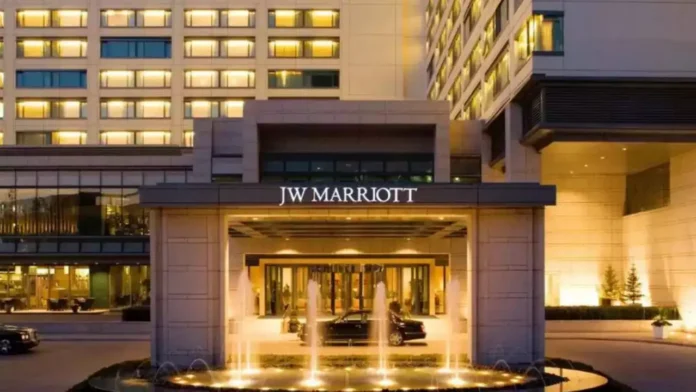
India continues to be a ‘shining star around the world’ in terms of growth opportunities for Marriott International, according to a top executive at the planet’s largest hotel chain by number of rooms. Rajeev Menon, president of Asia Pacific excluding China for Marriott International, stated that about 80% of the new deals in India are in the luxury and premium space, which marks a difference from the pre-Covid era.
“Before the pandemic, we witnessed growth primarily in the upscale segment, particularly for brands like Courtyard and Fairfield by Marriott,” stated Menon. “Having established our presence in this country over the past 25 years, we’re excited to announce the opening of our 150th Marriott hotel in Katra next month, situated near the Vaishno Devi temple. This milestone marks the inauguration of Katra’s first five-star hotel.”
“We’ve signed the latest JW Marriott Resort & Spa project for Alibag.” Our Ritz Carlton property, which we signed in Jaipur just a few weeks ago, will be a spectacular 250-key hotel stretched across 43 acres of land. We have over 80 hotels under development and are well-positioned to run 250 hotels and 50,000 keys in India within the next five years,” he added.
Menon expressed Marriott’s optimistic outlook on the long-term prospects, noting India’s economic transition from the fifth largest to the third largest economy in the world within the next five years.
Since last year and year to date, Marriott International has inked 30 deals in South Asia, comprising over 5000 keys. Of these, 28 deals are specifically for properties in India.
Shawn Hill, Chief Development Officer for Asia Pacific (excluding greater China) at Marriott, expressed that while the company anticipates achieving record-high signing figures in India this year, it also hopes for a slight relaxation in the lending environment and a reduction in the number of permits necessary for hotel construction.
“I believe it takes approximately 100 permits to make a hotel operational here, which differs from our experiences in other markets. Additionally, the land and construction costs are notably high,” he elaborated.
Menon highlighted that the company has been advocating for enhancements in the licensing and lending environment, as well as for streamlined single-window approvals, both collectively with the industry and individually, for some time. He emphasized that this is an ongoing effort that requires continuous attention and work.
“We’ve been continuously pushing for the industry to be granted infrastructure status in most states, as this could significantly improve the lending environment,” he went on to say. “I frequently encounter a question such as: How do we justify the record-high rates in India?”
“You have to juxtapose this with mature markets in the West, where loans are typically granted for longer periods,” he explained. “In India, due to the high land costs, we’re typically limited to 15-year loans, with interest rates hovering around 10.5-11% at best. When you examine the financial model, it indeed presents challenges. If your hotel takes four to five years to build, it further compounds the financial sustainability challenge.”
Marriott currently operates in over 40 cities across India and has recently inaugurated new hotels in Gorakhpur, Siliguri, and Shillong. The company observed a remarkable 35% increase in revenue per available room in India last year compared to 2019 levels, and it continues to experience double-digit growth this year too.
Hill mentioned that the company has also witnessed unprecedented signings in other Asian markets like Indonesia, Vietnam, and Japan last year. “We’re witnessing significant momentum throughout the entire region this year,” he emphasized.
Key industry leaders anticipate that improving macroeconomic indicators and favorable expectations for a good monsoon and rabi crops will boost consumer demand for FMCG products in the current fiscal year. Despite a challenging operating environment in the March quarter, consumer demand for FMCG goods has been sluggish.
The industry anticipates a growth of mid-to-high-single-digit in both value and volume during the January-March period. This growth is expected to be supported by the ongoing expansion of gross margins, facilitated by a deflation in input costs.
In the last few quarters, rural demand had been slow, but it has gained momentum from January-March. Additionally, some FMCG companies have reported a reduction in the gap compared to the urban market.
Rural India accounts for approximately 35 to 38 percent of the FMCG sales in the country.
Additionally, increasing profit margins will enable companies to boost their advertising and promotional expenditures for their brands, as indicated by leading FMCG firms such as Dabur, Marico, and Godrej Consumer Products in their quarterly updates.
Marico stated, “We anticipate significant year-on-year growth in gross margins,” and added, “We project a low double-digit increase in operating profit driven by a robust expansion in operating margins.”
In the March quarter, Marico, the owner of well-known brands such as Saffola, Parachute, and Livon, reported a modest increase in volume growth in its domestic business compared to the previous quarter, attributed to stable trends across most of its product portfolios.
Marico reported that consumer demand for FMCG products remained steady throughout the quarter, showing a consistent pattern compared to previous quarters, with urban and rural consumption trends aligning closely.
The company anticipates that consolidated revenue will increase, with domestic revenue growth expected to surpass volume growth in the upcoming quarters.
Godrej Consumer Products stated that the operating conditions in India continue to be challenging.
The FMCG division of the Godrej group stated, “Our organic business in India maintained robust underlying volume growth in the high-single digits, with growth spread evenly across both Home Care and Personal Care segments.”
GCPL, the owner of brands such as HITS and Goodknight in Household Insecticides, reported subdued performance due to an extended winter in the North and East regions. However, its newly acquired brands, Park Avenue and KamaSutra, performed in line with seasonal trends in their respective categories.
“Consolidated at an organic level, we anticipate achieving underlying volume growth in the high single digits and sales growth in the mid-single digits, primarily driven by currency fluctuations,” stated GCPL, which derives half of its revenue from international markets.
Dabur India reported that demand trends were “slow” during the quarter.
“Rural growth improved due to price reductions in essentials, reducing the gap between the urban and rural areas,” it stated.
However, the company added that “with a positive outlook for the rabi crop harvest and a normal monsoon forecast,” it anticipates consumption to increase in the upcoming months.
Dabur, the owner of brands such as Dabur Chyawanprash, Dabur Honey, Real, and Vatika, stated that its “consolidated revenue is projected to experience mid-single digit growth in Q4 FY24.”
Furthermore, FMCG companies such as GCP, Marico, and Dabur anticipate double-digit growth from their international operations on a constant currency basis.
However, Dabur anticipates an impact from currency depreciation in Turkey and Egypt. Meanwhile, GCPL foresees a revenue impact of INR 70 crore due to the restructuring of its East Africa business.
Regarding the outlook, Marico stated that it remains committed to achieving sustainable and profitable volume-driven growth over the medium term.
Dabur stated that the previous year presented challenges in terms of consumer demand.
“We anticipate an uptick in consumption as macro-economic indicators remain strong. Our commitment to investing in our brands, expanding distribution networks, enhancing manufacturing capabilities, and strengthening our organization will position us well to seize opportunities in the market,” it further elaborated.
Atle Vidar Nagel Johansen, CEO of Orkla Foods Europe
Norwegian investment firm Orkla stated that India’s food tastes align with those of certain European countries. However, the Indian market is more intricate and competitive due to a growing preference for branded spices.
The consumer goods supplier owns MTR and Eastern Condiments, with three-fourths of its sales coming from the southern states.
“In India, engaging the consumer is more challenging than in European markets that we are familiar with. The competitive environment is more intense. “Just as there are significant differences between Italian and Scandinavian cuisines, similar distinctions exist between South India, East India, North India, and even more nuanced regions,” stated Atle Vidar Nagel Johansen, CEO of Orkla Foods Europe. “We have defined the role of each portfolio company within Orkla, and India is certainly categorized as ‘grow and build’.”
While the spices market in India is valued at over INR 90,000 crore, only a third of it comprises branded products. Among organized spice brands, Everest holds the top position, closely followed by MDH. Additionally, in the segments of masala, herbs, and spices, domestic players like MTR, DS Foods, Ramdev, and Eastern maintain dominance in specific regions. Nevertheless, other FMCG companies are increasingly establishing their foothold in both spices and ready-to-cook categories.
Two years back, Dabur acquired a 51% stake in Badshah Masala for INR 588 crore, while ITC completed an all-cash acquisition of spices manufacturer Sunrise Foods four years ago, valued at INR 2,150 crore.
With sales reaching INR 2,300 crore in the last calendar year, MTR derives approximately 70% of its revenue from spices. “The significance of spices in the Indian kitchen far surpasses what we see in European markets. The spice consumption here is much more developed and diverse. While the shift from unorganized to branded spice markets may take some time, the trend is evident. As suppliers, our focus should be on promoting our brands and meeting consumer expectations,” Johansen further commented.
The company consolidated its Indian operations last year under a single business entity, Orkla India, comprising three business units: MTR, Eastern, and International Business (IB). This restructuring aimed to harness their collective business capabilities and foster accelerated growth. Orkla initially ventured into India in 2007 through the acquisition of MTR Foods. Approximately four years ago, it further expanded its presence by acquiring a majority stake in Kerala-based Eastern Condiments.
Unlike other FMCG companies aiming to expand into new states, Orkla has chosen to concentrate primarily on southern India. “Our goal isn’t to capture the entire Indian market but to excel in the states where we operate. We emphasize local growth and the development of local brands. Therefore, with MTR, our focus is on Karnataka and Andhra Pradesh, and with Eastern, we concentrate on Kerala,” stated Sanjay Sharma, CEO of Orkla India.
Amazon, a leading player in the e-commerce industry, has entered the unbranded market by introducing a new vertical called ‘Bazaar’.
The new vertical is now available on Amazon India’s Android app, providing unbranded and affordable products including apparel, watches, shoes, jewellery, and luggage priced under INR 600.
With this move, the marketplace is likely targeting a larger share of price-conscious Indian customers in Tier-II, III, and beyond cities. The company stated that Amazon Bazaar will feature products from sellers, particularly those based in manufacturing hubs across the country.
“We continue to remain committed to making investments and breaking new ground for our clients and third-party suppliers. An Amazon representative said, “We’re thrilled to introduce the Amazon Bazaar marketplace on Amazon.in, where customers can browse and buy incredibly low-cost fashion and home products from sellers, especially those from manufacturing hubs across India.”
This development comes just two months after reports emerged indicating that the e-commerce giant was preparing to launch its new vertical, Bazaar.
Sources informed the Economic Times that the new offering will be accessible only to a specific group of users. They also mentioned that Bazaar will be prominently featured on the app.
While the company typically offers a two-day delivery timeframe, products featured on Amazon Bazaar come with a delivery estimate of four to five days.
The move is anticipated to create a new channel for Amazon to attract additional customers and will aid in diversifying its product range.
The introduction of the new offering closely follows Amazon’s foray into the logistics sector in India and the launch of a new vertical named Amazon Shipping. Moreover, Amazon’s US parent firm recently invested INR 830 Cr in Amazon Seller Services, the business’s India marketplace division.
With the introduction of this new vertical, Amazon is directly competing with SoftBank-backed Meesho and Flipkart‘s Shopsy, both of which provide affordable options to customers and have a significant presence in the budget-friendly e-commerce segment.
The recent development comes as the e-commerce sector continues to expand throughout the country, driven by affordable internet access and increasing smartphone usage. According to a recent report by AllianceBernstein, e-commerce is experiencing significant growth in Tier II+ markets.
Based on data from December 2023, the report highlighted that Meesho experienced robust growth in markets beyond Tier-II, achieving a 32% year-on-year (YoY) increase, while competitor Flipkart observed a YoY growth of 21%.
During the same period, Amazon experienced a more modest user growth of 13%, likely due to the marketplace’s relatively higher-priced offerings compared to its competitors.
At the core of this trend is the flourishing domestic e-commerce sector, expected to reach a valuation of $400 billion by 2030, according to projections.
Pressed Juicery, a US-based cold-pressed juice brand, has broadened its product range by introducing ready-to-drink nootropic coffees and matcha beverages.
The lineup includes cold brew, coffee latte, and matcha latte enhanced with mushrooms such as reishi, lion’s mane, and chaga. The brand states that these beverages are “designed to transform the morning coffee routine without causing jitters.”
The cold brew features a blend of reishi, lion’s mane, chaga, and cordyceps, delivering a powerful morning pick-me-up. This mix of functional mushrooms boosts energy and mental clarity, providing multiple health benefits. The coffee latte includes functional mushrooms such as reishi, lion’s mane, chaga, and cordyceps, supporting sustained energy and mental focus without any added sugars.
The matcha latte, on the other hand, provides a balanced combination of matcha’s high theanine content for long-lasting energy without a crash. Equipped with components such as lion’s mane, l-theanine, chaga, and cordyceps, it improves focus and cognitive performance.
The nootropics collection is now available both in stores and online on the brand’s website.
Varchas Whiskey, the pioneering Indo-American craft distillery, is excited to introduce its acclaimed small-batch whiskeys to Goa. Residents and spirit aficionados in both North and South Goa can now find Varchas Straight Bourbon and Varchas Straight Rye whiskeys available at their preferred retail stores and supermarkets.
The name “Varchas” originates from the Sanskrit term meaning “Soaring High,” symbolized by the eagle in the brand’s logo and bottle topper. Varchas whiskey offers a harmonious blend of flavors for the discerning palate. Aged for six years in new American Oak barrels, Varchas Straight Bourbon delivers a smooth and intricate taste featuring hints of wood, vanilla, caramel, and cocoa. Similarly, Varchas Straight Rye, also aged for six years in new American Oak, showcases a unique character with notes of chocolate, apricot, pepper, and a subtle smokiness. The key to Varchas’ distinctive smooth finish is attributed to the pristine waters sourced from the Michigan Great Lakes, renowned for their exceptional quality.
India’s alcoholic beverage industry is witnessing a surge, fueled by an increasing appreciation for premium spirits and mixology among younger consumers. Varchas meets the demands of this evolving palate by providing a distinctive craft whiskey experience that goes beyond just a drink.
Varchasvi Shankar, a visionary leader driven by a lifelong love for whiskey, is the creative force behind Varchas Whiskeys. Under his guidance at Shankar Distilleries, Varchas was meticulously crafted as a spirit that connects cultures and continents. Reflecting this ethos, Shankar, originally from Mysore, India, shifted from the US tech industry to pursue his genuine passion – the world of whiskey. Varchas serves as a tribute to his American home and Indian heritage, creating a bridge through the universal language of premium craft whiskey, blending tradition with modern innovation seamlessly.
“Varchas honours the dedication of our skilled distillers. Every sip is a harmonious balance of flavours, reflecting generations of experience and a steadfast commitment to excellence,” said Varchasvi Shankar, founder and president.
Cricket icon Vivian Richards, with his global acclaim, serves as the Brand Ambassador for Varchas, elevating the brand’s prestige.
The Noida Metro Rail Corporation (NMRC) has created a unique dining experience at Noida Sector 137 station, which resembles a metro rail carriage. The organisation pioneered a revolutionary fine dining idea, allowing customers to enjoy their meals in the immersive environment of a metro train.
Situated within a stationary coach, the restaurant provides seating for about 100 guests, making it ideal for gatherings, parties, and meetings with family and friends. Additionally, patrons can opt to dine outside the coach and select from a menu offering a wide range of dishes to suit various tastes.
The restaurant, which is presently open to the public on a trial basis, will officially open on April 20. After that, customers can visit the establishment between 11:30 and 12 a.m.
The NMRC has announced a soft opening for the restaurant, allowing people to place orders and enjoy a dining experience before the official launch.
However, upon the completion of staff training and infrastructure setup, the restaurant will be fully operational from April 20.
For managing the restaurant inside the metro network, the NMRC has given a nine-year contract to an agency. This action is a component of the company’s overall plan to enhance passenger experiences and generate new income.
Earlier, the NMRC leased commercial spaces to private companies for business operations and established small kiosks at metro stations, thereby fostering revenue growth and drawing in more passengers.
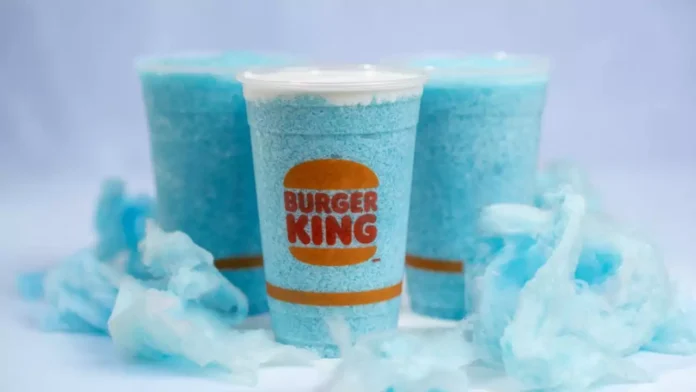
Burger King has introduced a new Frozen Cotton Candy drink to its menu.
The beverage is now available across the country and features a blend of blue raspberry and cotton candy flavors. Customers can enhance it by opting for a new cold foam cloud topping for an extra fee.
“Following the hot success of our Frozen Fanta Kickin’ Mango last summer, we’re aiming to chill out this season with our latest Frozen Cotton Candy drink,” commented Pat O’Toole, CMO of Burger King North America. “Our creative cold foam topping is yet another example of how we’re embodying ‘Have It Your Way’, offering customers the choice to enhance their frozen drinks with an extra burst of flavor.”
The brand has also introduced a digital game named Cloud Float exclusively for its reward members within the BK app. In this game, guests can earn points to redeem for crowns, food and drink rewards, as well as limited-edition merchandise.
Burger King has over 19,000 restaurants in over 100 countries worldwide.
We use cookies to ensure that we give you the best experience on our website. If you continue to use this site we will assume that you are happy with it.