The report, which was released ahead of the International Day of Zero Waste (March 30), stated that in 2022, 1.05 billion tonnes of food waste (including inedible parts) was generated, amounting to 132 kilogrammes per person and nearly one-fifth of all food accessible to consumers.
The report revealed that in 2022, households accounted for 60% of the total food wasted, while food services were responsible for 28%, and retail contributed to 12%.
The report emphasized the necessity of enhancing and fortifying data infrastructure to facilitate the monitoring and oversight of food waste. It highlighted the deficiency in tracking systems in many low- and middle-income countries to achieve Sustainable Development Goal 12.3, aiming to halve food waste by 2030, especially in retail and food services sectors. Currently, only four G-20 nations (Australia, Japan, U.K., U.S.) along with the European Union possess food waste estimates adequate for monitoring progress towards 2030.
Contrary to common belief, the report indicated that food waste was not solely a ‘rich country problem’. It highlighted that the average levels of household food waste differed by only 7 kg per capita among high-income, upper-middle-income, and lower-middle-income countries. The report also pointed out, “Hotter countries seem to produce more food waste per capita in households, possibly due to increased consumption of fresh foods with significant inedible parts and a lack of reliable cold chain systems.”
Highlighting the connection between food waste and climate change, the report revealed that food loss and waste accounted for “8-10% of annual global greenhouse gas (GHG) emissions – nearly five times the emissions of the aviation sector – and resulted in substantial biodiversity loss, occupying the equivalent of nearly a third of the world’s agricultural land.” The report estimated the economic impact of both food loss and waste on the global economy to be $1 trillion.
The data also indicated a trend where, compared to urban areas, rural areas generally wasted less food. This was attributed to “greater diversion of food scraps to pets, livestock, and home composting.”
The report highlighted that as of 2022, only 21 countries had incorporated food loss and/or waste reduction into their climate plans or Nationally Determined Contributions (NDCs). The report urged governments to “elevate climate ambition by integrating food loss and waste” into their NDCs.
The report defines “food waste” as “food and its associated inedible parts removed from the human food supply chain.” In contrast, “food loss” is defined as “all crop and livestock quantities suitable for human consumption that, either directly or indirectly, are lost from the post-harvest/slaughter production/supply chain… up to, but excluding, the retail level.”
The Food Waste Index tracks the global and national production of food and inedible parts that are discarded at the retail and consumer levels, including households and foodservices. UNEP acts as its custodian.
Cleantech startup Bambrew has secured INR 60 Cr (approximately $7 Mn) in its Series A funding round through a mix of equity and debt. The round was led by Blume Ventures.
The startup plans to utilize the funding to expand into primary packaging for FMCG and food and beverage product categories. Additionally, the funds will be allocated towards expanding manufacturing capabilities, enhancing research and development, and growing the team.
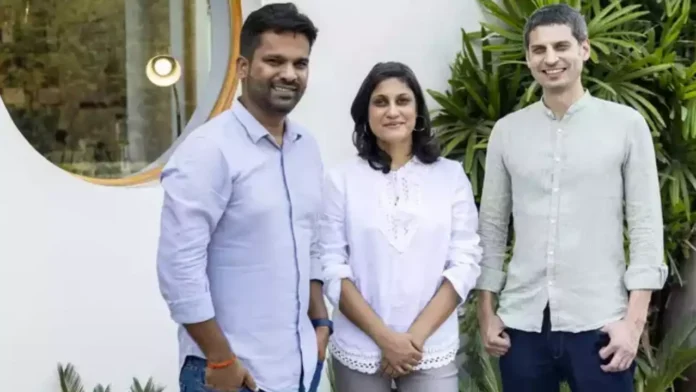
Established in 2019 by Vaibhav Anant, Bambrew provides sustainable packaging alternatives to single-use plastics. According to the startup, their products are biodegradable and environmentally and animal-friendly.
Regarding the funding, Anant stated, “We plan to expand into multiple regions with diverse solutions in both primary and secondary packaging. We will use the funds to broaden our offerings in various forms of primary packaging and assist brands in adopting materials that are both sustainable and functional.”
Adding to this, Blume partner Arpit Agarwal commented, “Just as the FAME II subsidies propelled the growth of EVs, we anticipate that the EPR (extended producer responsibility) regulations in India will foster the emergence of circular economy companies. There is a growing demand for sustainable packaging solutions, and there are few comprehensive products available in the market to meet this need. The team’s ability to offer end-to-end solutions for FMCG and ecommerce clients, coupled with their innovative edge over competitors, makes this an excellent investment opportunity.”
Bambrew asserts a growth of 100X since its establishment. The company states that its products are certified by the Indian government and the Central Pollution Control Board as plastic-free and are compostable within 130 days.
Bambrew’s clientele includes major companies such as Amazon, Nykaa, My Glam, Bata, Snitch, Harris Brushes, and Mahindra.
With the increasing awareness about the necessity of reducing environmental damage and addressing global warming, as well as the growing importance of environmental, social, and governance (ESG) norms, cleantech products are experiencing high demand. This surge has led to the emergence of numerous cleantech startups in the country, drawing significant attention from investors towards this sector.
Earlier this month, Sprih, a cleantech startup that assists companies in reaching their sustainability objectives, secured $3 million in funding. The investment will be used to enhance its sales and marketing efforts, recruit talent to develop AI models focused on climate, and expand its partner network.
Earlier this year, INDRA, a provider of water recycling solutions, secured $4 million in funding to deliver water treatment and industrial waste management solutions to businesses.
The company announced that IHCL has opened 34 hotels this fiscal year, surpassing its 300-plus hotels target set under Ahvaan 2025 ahead of schedule.
During FY24, IHCL, known for its luxury properties under the Taj brand, achieved its highest-ever hotel signings. In contrast, it signed 19 and 36 hotels in FY22 and FY23 respectively. This surge in signings is attributed to robust domestic demand, leading to higher average room rates and enhanced profitability for owners.
With 218 hotels now in operation and 91 more under development, IHCL currently has 309 properties under its belt.
“With India’s increasing prosperity and growing desire for travel, IHCL will target burgeoning segments with innovative offerings such as upscale full-service hotels.” Our next phase of growth will also include leveraging our existing alliances for multi-hotel projects,” said Suma Venkatesh, IHCL’s Executive Vice President of Real Estate & Development.
The 52 signed properties include hotels in foreign locations like South Asia and Frankfurt, as well as airports in Delhi, Kochi, and Goa.
“With a robust pipeline of over 90 hotels, IHCL’s supply growth is poised to accelerate in the coming years, maintaining its leadership in the domestic market while venturing into selected international markets,” said Deepika Rao, Executive Vice President of Hotel Openings and New Businesses.
In May 2022, IHCL unveiled its three-year plan, Ahvaan 2025, aiming to expand its portfolio to over 300 hotels and eliminate net debt, among other objectives.
Joy, the personal care brand under RSH Global, aims to achieve a revenue of INR 750 crore in FY2025. The company is prioritizing the expansion of its distribution network within the domestic market
Targeting the mass-market segment, the company is aiming for a revenue of INR 575 crore in FY2024. Based in Kolkata, the company plans to broaden its distribution to 500,000 outlets over the next three years.
“We anticipate ending the year with a 20% increase in our top line compared to last year and are targeting a growth of 30-35% for the next year. Our primary focus is on our core markets in North, West, and East India. The growth will be driven by the expansion of our distribution channels, both in general and modern trade. Currently, we are present in approximately 1,50,000 outlets and aim to triple this number,” stated Sunil Agarwal, Founder and Chairman of RSH Global.
With manufacturing facilities located in Kolkata and Baddi, Himachal Pradesh, the company has injected INR 80 crore into a new facility. Set to be operational by August, this facility will elevate the overall capacity to 50,000 metric tonnes.
Online sales currently account for 10% of the company’s total revenue and are projected to rise with the increase in demand.
In the last three years, we have seen an increase in our online business. Up to 18% of sales in the industry are made online. Online sales of our firm are expected to reach 20% over the next three years,” he stated.
Centered around a mass-market brand, the company will strategically explore avenues for premiumization.
The company has a presence in 25 countries and is actively working to broaden its reach in additional international markets.
“We are expanding into new markets, including the US, Vietnam, Indonesia, Malaysia, and the Philippines. We are also thinking about growing into Brazil. By 2026–2027, we expect these new markets, which the business intends to enter during this fiscal year, to flourish,” said Sunil Agarwal.
Elevate Foods, owned by Singapore-based GBN Food Solutions, plans to use the funding to set up a network for processed agricultural products. Additionally, the company will form a specialized team dedicated to sustainable food systems and improve quality management tools as it expands its presence in the Gulf and Southeast Asian markets.
With a focus on addressing food loss and waste, Elevate Foods empowers small-scale farm-gate food processors throughout India. The platform facilitates access to global markets and ensures adherence to rigorous quality standards, while also establishing a traceable and sustainable source of produce. Leveraging technology and market insights, Elevate Foods upgrades existing processors and contributes to building a more sustainable and resilient food ecosystem.
Elevate Foods operates at the inception of the supply chain, establishing a sustainable and traceable solution for agricultural produce buyers. Simultaneously, they collaborate with farm-gate manufacturers to enhance their operations and uphold rigorous quality standards.
Its aim is to attain a revenue of US$100 million while reducing 100 million tons of carbon dioxide (CO2) emissions in the future.
Elevate Foods CEO and Founder Gayatri Bhatia said, “We are thrilled to announce the successful closing of our pre-seed funding round with the support of Wavemaker Impact.” “This investment is a significant step towards our goal of enabling Indian farm-gate processors to export their produce around the world and fostering a more robust and sustainable food system.”
In line with Elevate Foods’ objectives, The Asian Food Factory, a local food distribution company operating in Singapore and other Southeast Asian countries and owning its own retail chain called “Bazaar,” expressed excitement about the collaboration.
“We’re thrilled to partner with Elevate Foods to introduce top-tier Indian agricultural products to global markets through our private labels,” commented Abhay Sharma, Founder & CEO of The Asian Food Factory. “Their dedication to upholding quality standards and supporting local processors resonates perfectly with our goal of promoting sustainable cross-border trade.”
“We recognise significant potential in Elevate Foods’ innovative strategy of supporting Indian farm-gate processors to address the trillion-dollar food waste problem, presently contributing more than 4.5 Gigatonnes of Carbon Dioxide Emissions Equivalent (GtCO2e),” said Quentin Vaquette, Founder and CEO of Wavemaker Impact. “By addressing the hurdles encountered by processors through enhanced profit-purpose alignment, Elevate Foods is positioned to unveil fresh opportunities that will catalyse substantial transformation in both the agricultural and food processing domains.”
The Noida International Airport has announced that it has awarded HMSHost India a contract to construct and manage restaurants, cafes, and other food establishments at the soon-to-be-opened Jewar airport.
HMSHost India, a subsidiary of Avolta AG, is a global leader in travel experiences, operating in 75 countries with 1,200 locations and 5,500 points of sale spanning the three sectors of F&B (food & beverage), duty-free, and convenience.
This marks the second F&B contract granted by Noida International Airport (NIA).
NIA operates under the umbrella of Yamuna International Airport Private Limited (YIAPL), the entity responsible for the airport’s development. YIAPL is a wholly-owned subsidiary of the Swiss company Zurich Airport International AG.
On March 6, NIA partnered with TFS, appointing them as the first concessionaire to set up a premium lounge and multi-cuisine food and beverage outlets at the airport.
The airport, located about 75 kilometres from New Delhi and situated in the Jewar region of Gautam Buddh Nagar in the western part of Uttar Pradesh, is expected to begin operations by the end of this year.
Through its collaboration with HMSHost India, NIA aims to offer a diverse and high-quality range of food in a clean environment, thereby enhancing the overall passenger experience at the airport.
“The establishments will offer a premium yet affordable dining experience to customers,” stated the airport.
Christoph Schnellmann, the CEO of Noida International Airport, expressed confidence that with their global expertise in the hospitality industry, HMSHost will introduce a distinctive and customer-friendly ambiance to the airport’s dining experience.
“We strive to create a diverse range of offerings that combine local flavours with global cuisine, striking the right balance to cater to varied appetites,” he commented.
Jagvir Rana, Managing Director for India Subcontinent at Avolta, commented, “We are truly honoured and grateful for the opportunity given to us by Noida International Airport… and to operate seven new outlets.”
Currently, the construction of the airport’s first phase is in progress.
In the initial phase, which includes a runway and a terminal, the airport will accommodate up to 12 million passengers annually. Upon the completion of all four phases, officials state that the airport will have the capacity to serve 70 million passengers per year.
The Confederation of Indian Alcoholic Beverage Companies (CIABC), a lobby representing the liquor industry, has communicated with the Ministry of Consumer Affairs. In their communication, they advocate for brand extensions to be allowed advertisement rights under the condition that such promotions are free from misrepresentation or misleading information that could suggest the product to be different from what it actually is.
The development comes days after the government issued a directive to alcohol manufacturers, instructing them to submit a list of products sold as surrogate extensions within 15 days. Additionally, they have sought information on revenue generated from brand extensions, which include water, soda, music festivals, payments to celebrities, and other related items.
Liquor manufacturers market packaged water, music CDs, playing cards, soda, and various other products using brand names that are identical to their alcoholic beverage brands, since advertising the alcohol itself is not allowed. Nevertheless, advertising for these associated products remains widespread despite the regulations.
In a letter signed by Vinod Giri, the Director General of CIABC, addressed to Anupam Mishra, Joint Secretary at the Ministry of Consumer Affairs, Food and Public Distribution, it was stated: “The regulatory emphasis on alcohol should prioritize the development of quality brands, promoting responsible behavior, and minimizing health risks.”
Sula Vineyards, Allied Blenders & Distillers, Mohan Meakin, Radico Khaitan, Devans Modern Breweries, Globus Spirits, Jagatjit Industries, and Amrut Distilleries are among the members of CIABC.
“Brand extensions are valid initiatives. Due to past limitations, companies have mitigated risks by establishing parallel businesses. Given that introducing a new brand name is costly, companies often opt to extend existing brand names familiar to consumers, even across different product categories, as this familiarity enhances credibility,” as stated in the letter on behalf of the alcobev companies.
Following the pandemic-induced surge in e-commerce, the momentum of business digitalization continues to grow. Companies are increasingly utilizing digital tools to streamline operations, understand market dynamics, and engage with customers. In India, the fast-moving consumer goods (FMCG) sector is placing greater emphasis on digital advertising to connect with consumers. Analysts at Dentsu report that in 2023, nearly half (47%) of the FMCG industry’s advertising expenditures were directed towards digital media platforms.
Marico‘s Chief Marketing Officer, Somasree Bose Awasthi, said, “The digital realm offers unparalleled opportunities for personalised targeting, real-time communication, and measurable outcomes.” “As customers increasingly shift towards online content consumption, prioritising digital advertising becomes vital to uphold relevance and accessibility to our target demographic.”
The surge in ad spend on digital media coincides with another digital trend, where major legacy FMCG companies have been acquiring small D2C (direct-to-consumer) businesses and introducing their own digital-first brands and omni channels.
In the last few years, a number of well-known FMCG businesses have made investments in DTC digital-led startups that acquired popularity among consumers during the Covid-19 epidemic, including HUL, ITC, Marico, Emami, Reckitt, Wipro Consumer, and Colgate Palmolive.
Many FMCG companies like Hindustan Unilever, ITC, Emami, and Marico have also launched their own microsites. Despite modest sales on these individual platforms, FMCG firms leverage their microsites as launchpads to gather consumer data, foster loyalty, and subsequently expand into larger channels for increased volumes, or direct consumers to scalable platforms such as Amazon or Flipkart.
Traditional FMCG companies cannot afford to overlook the emerging wave of digitalization. However, in this era of digital advancement, these legacy companies must grapple with new realities that may diverge from conventional business practices.
Traditionally, profitability in the market has been driven by factors such as economies of scale, bargaining power, and strong brand perceptions, leading to a correlation between market share and profitability. However, recent research suggests that this connection may weaken for digitally transformed companies. Being bigger may not necessarily guarantee profitability in the digital landscape.
According to a recent study conducted by researchers at Kuehne Logistics University in Germany, there exists no theoretical or empirical evidence supporting the notion that a high market share inevitably leads to high profitability for digitally transformed companies. Analyzing over 6,000 cases spanning approximately 800 US companies across diverse sectors, the findings convey a significant message for FMCG companies embarking on digitalization initiatives, as well as their digital-only counterparts. This insight holds relevance especially within the context of India’s rapidly expanding retail market, driven by the surging trend of e-commerce.
The study suggests that digital transformation could diminish the significance of market share. For instance, it may lower online distribution costs, enabling firms with smaller market shares to compete profitably while reducing the efficiency advantage of larger firms. Additionally, the increased accessibility of online information, such as product reviews and ratings, has diminished the relevance of market share as an indicator of product quality. This, in turn, has mitigated the risks associated with purchasing from lesser-known (i.e., lower market share) companies.
The investigators found that “Organisations can improve profitability regardless of a small market share by embracing digital transformation.” “Our research findings suggest multiple possible drivers behind this development, including efficiency gains like faster knowledge transfer as well as more viable offshoring, greater competitive advantage through easier access to global distribution as well as sourcing, and improved quality assessment facilitated by more conscious consumers and electronic word of mouth (eWOM).”
An illustrative instance is digital transformation, which offers opportunities for automation, replacing learning effects previously dependent solely on market share.”
The research highlighting the diminished correlation between market share and profitability in digitalized companies presents a challenge for legacy firms that have historically dominated with large market shares and thrived on their market dominance and power.
Although market share has traditionally served as an indicator of quality and a barrier to entry for smaller competitors, the research suggests that the digital age has the potential to undermine the dominance of larger players.
“Digitalization is diminishing the influence of market leaders; customers now have the ability to swiftly and effortlessly compare prices online,” explains Alexander Himme, one of the researchers. “This scenario renders it increasingly challenging for the ‘big players’ to maintain a profitability advantage over their ‘small’ competitors, who are also empowered to compete on a global scale due to the presence of e-commerce platforms and fulfillment service providers, and can pursue multichannel sales strategies.”
“The key takeaway is that perpetual growth isn’t necessarily the optimal route for every company,” remarks Alexander Himme. “Moreover, it underscores that the benefits of digitalization vary depending on a company’s size. Smaller companies with a lesser market share often stand to gain more.”
The major FMCG companies with substantial market shares are currently facing a dual challenge posed by the expansion of local brands and the emergence of direct-to-consumer (D2C) brands.
In recent times, there have been frequent reports of local brands chipping away at the market shares of prominent consumer product companies, particularly in categories such as soaps, detergents, hair oil, tea, and biscuits. However, disruptions caused by the pandemic and subsequent inflation in essential raw materials compelled many of these brands to either cease operations or reduce their scale. Nonetheless, the subsequent decline in commodity prices rejuvenated these brands. According to a Kantar Worldpanel report from last year, local brands experienced a volume growth of 12.7% between April 2022 and April 2023, outpacing the 8.2% growth observed among national brands.
While the rise of local and regional brands could be cyclical, as they emerge when input costs are low, digital brands present a constant threat to huge corporations. In the e-retail space, more than half of all sellers currently come from seven cities: Delhi-NCR, Bengaluru, Hyderabad, Kolkata, Jaipur, Mumbai, and Surat. This information was reported in a research published by Bain and Co. in December of last year. Still, smaller cities are currently producing the majority of new sellers.
The Bain and Co. report highlighted that in 2022, twice as many sellers were added compared to 2021, with two-thirds originating from Tier 2+ cities. Furthermore, “three-fourths of these sellers operate within the lifestyle, home, and electronics categories,” stated the report. “Insurgent online-first brands have emerged as a rapidly expanding seller cohort, experiencing more than threefold revenue growth from 2020 to 2022. These brands particularly resonate with Gen Z consumers.”
The resilience of digital-first brands will likely increase, as highlighted by the new research, indicating that the absence of significant market share may not hinder them. Simultaneously, major companies, leveraging their dominance in traditional distribution channels, are also acquiring emerging D2C brands. Digitalization has led to a democratization of the market, where dominant players may not necessarily sustain profitability or retain the ability to hinder the entry of smaller brands.
IPO-bound foodtech giant Swiggy is reported to have recorded a loss of $207 million (INR 1,730 crore) in the first nine months of the financial year 2023-24 (FY24).
In contrast, according to MCA filings, the decacorn posted a net loss of INR 4,179.3 crore in FY23.
According to a source cited by Reuters, the company is anticipated to decrease its net loss for the fiscal year ending March 2024 through reduced marketing expenditures and employee costs.
As per the report, the Bengaluru-based startup generated a revenue of $1.02 billion (approximately INR 8,505 crore at current exchange rates) from April to December 2023. The startup’s operating revenue for the entire FY23 was INR 8,264.4 crore.
This aligns with a recent report indicating that the Invesco-backed company is on track to report nearly INR 10,000 crore in revenue for FY24, driven by a surge in Instamart orders, platform fees, and increasing popularity of its dining-out business.
Sources indicated that Swiggy’s revenue from the food delivery and quick commerce vertical, Instamart, reached INR 4,735 crore in H1 FY24.
The latest report comes after a year of extensive restructuring efforts at Swiggy, marked by significant layoffs, spending cuts, and operational streamlining aimed at reducing cash burn. From partnering with IRCTC to deliver pre-ordered meals to train passengers to merging its premium grocery vertical, InsanelyGood, with Instamart, the startup has implemented various measures to bolster revenue and mitigate losses.
This development coincides with the company’s preparations for its upcoming mega $1 billion public listing later this year.
In the meantime, Swiggy has focused on boosting its daily orders and implementing platform fees (currently ranging between INR 3 to INR 4 per order) to diversify revenue streams and enhance overall revenue performance.
The push for profitability comes at a time when an increasing number of modern tech companies have become profitable despite the current funding downturn and challenging macroeconomic conditions.
Additionally, profitability is a vital factor for Swiggy as it aims to make its stock market debut, joining other companies like Ola Electric, MobiKwik, Digit, FirstCry, and ixigo, all of which are also planning their IPOs in 2024.
Despite this, the foodtech behemoth is seeing some encouraging trends. Its backer, US-based asset management firm Baron Capital Group, raised the startup’s valuation to $12.16 billion by the end of December 2023.
Swiggy was valued at $10.7 billion during its last fundraising round in 2022.
It’s worth noting that Swiggy’s listed competitor, Zomato, has become a favorite among investors. Unlike Swiggy, the Delhi NCR-based startup has reported profits in all three quarters of the current fiscal year.
Zomato’s net profit reached INR 176 crore in the first nine months of FY24, driving its shares to surge by over 200% in the past 12 months.
Honasa Consumer, the parent company of D2CunicornMamaearth, has ventured into the color cosmetics segment with the launch of a new brand called Staze.
The company stated that the introduction of the new product line aims to address a “critical gap” in India’s color cosmetics market.
The listed D2C unicorn revealed that the new brand will target Indian women in the age group of 18-24 and offer “quality” products at accessible price points. It further claimed that the products in the new line have an average price of less than INR 300.
According to Honasa, Staze has been developed by a team of 43 beauty professionals, comprising product specialists, dermatologists, and influencers. The company plans for Staze to be a digitally-focused brand, accessible through its own website as well as various marketplaces such as Nykaa, Purplle, Amazon, and Flipkart.
It was clear that there was indeed a gap in the industry because the colour cosmetics category had an impressive 12% CAGR and a sizeable INR 15,000 Cr market. Honasa Chairman and CEO Varun Alagh stated, “These factors paved the way for Staze, which serves as a strategic move for Honasa’s unique house of brand strategy to break into the colour cosmetics market.”
Adding her perspective, Ghazal Alagh, Co-founder of Mamaearth and Chief Innovation Officer at Honasa, commented, “We strongly believe that Gen Z consumers are actively pursuing value and innovation, and Staze is uniquely poised to not only meet but surpass their expectations.”
Staze marks the newest entry into Honasa’s portfolio of brands, joining established names like The Derma Co., Aqualogica, Ayuga, BBlunt, and Dr. Sheths. This launch follows closely on the heels of the company’s recent expansion into the personal wash sector with the introduction of moisturizing lotion soaps.
Within the realm of color cosmetics, the company is now poised to compete with industry giants like L’Oréal, Lakme, and SUGAR.
Established in 2016 by the couple Varun and Ghazal Alagh, Honasa entered the public domain last year. The company reported a net profit of INR 25.9 Cr in the quarter ending December (Q3) FY24, marking a notable increase of 264% from INR 7.1 Cr in Q3 FY23. Operating revenue also saw a substantial surge, rising by 28% year-on-year (YoY) to INR 488.2 Cr during the same period.
Based on these positive financial results, brokerage firm Citi Research initiated coverage on Honasa in February, issuing a ‘BUY’ rating with a price target of INR 550.
Honasa Consumer’s shares concluded Thursday’s (March 28) trading session 1.54% higher, reaching INR 402.00 on the BSE.
We use cookies to ensure that we give you the best experience on our website. If you continue to use this site we will assume that you are happy with it.